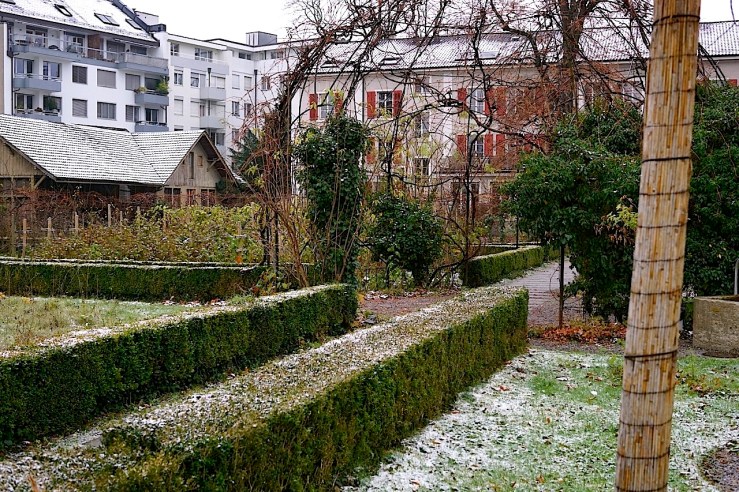
During our Thanksgiving visit to Basel, Switzerland, we stayed at Hotel Bildungzentrum 21 or Hotel Educational Center 21.
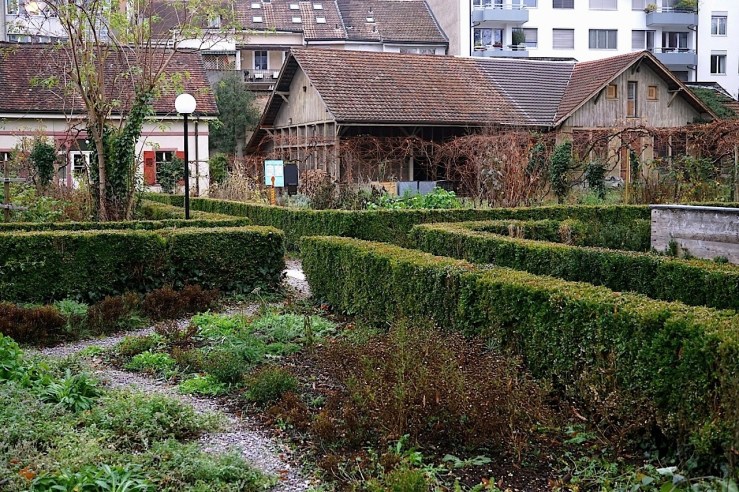
Although a large garden was mentioned on TripAdvisor when I was booking, I had guessed that this would mean — particularly in late November — neat gravel paths, some dormant shrubs and lawn, and beds of chilly purple pansies on a 8″ planting grid.
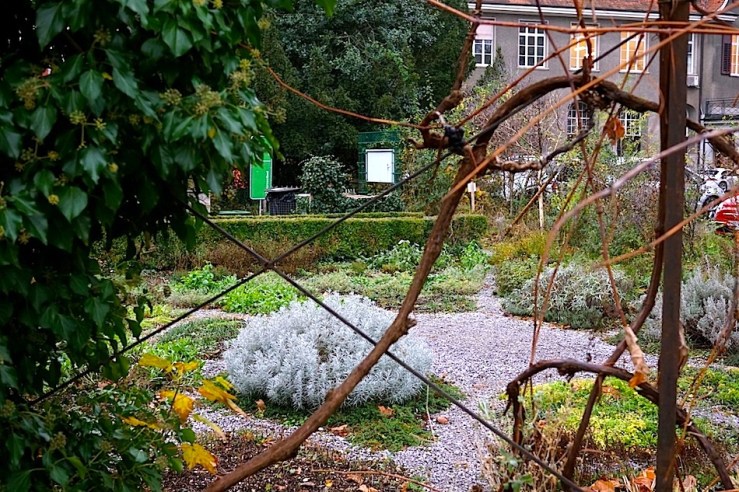
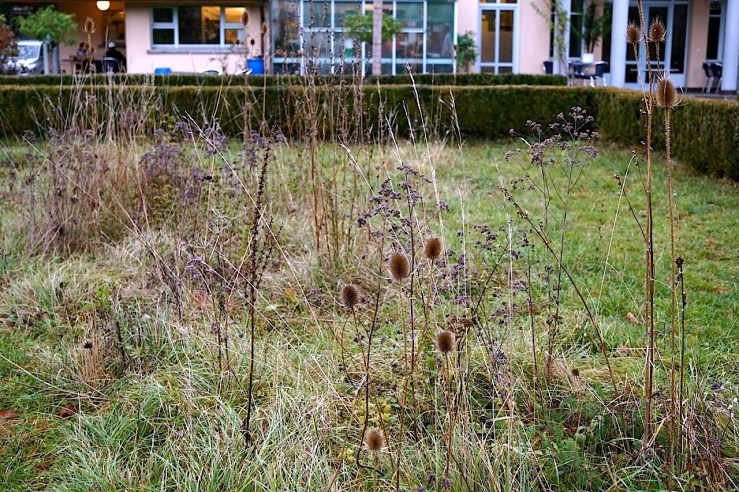
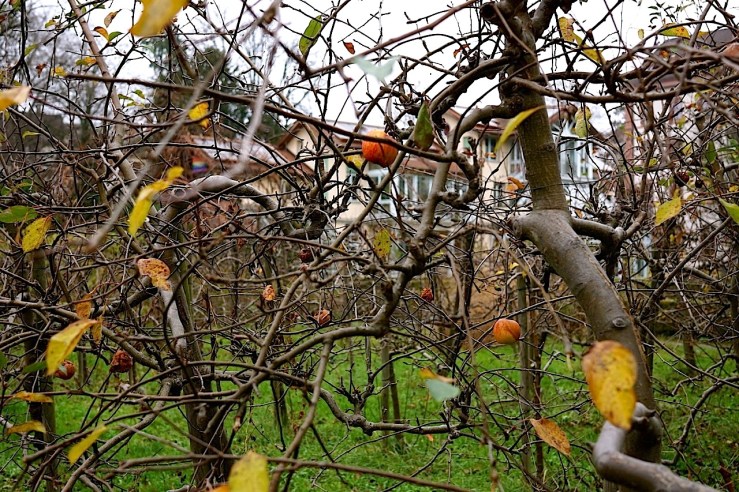
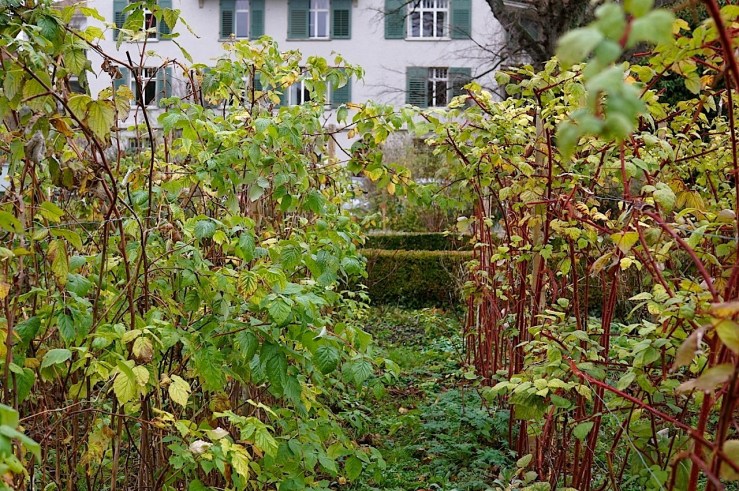
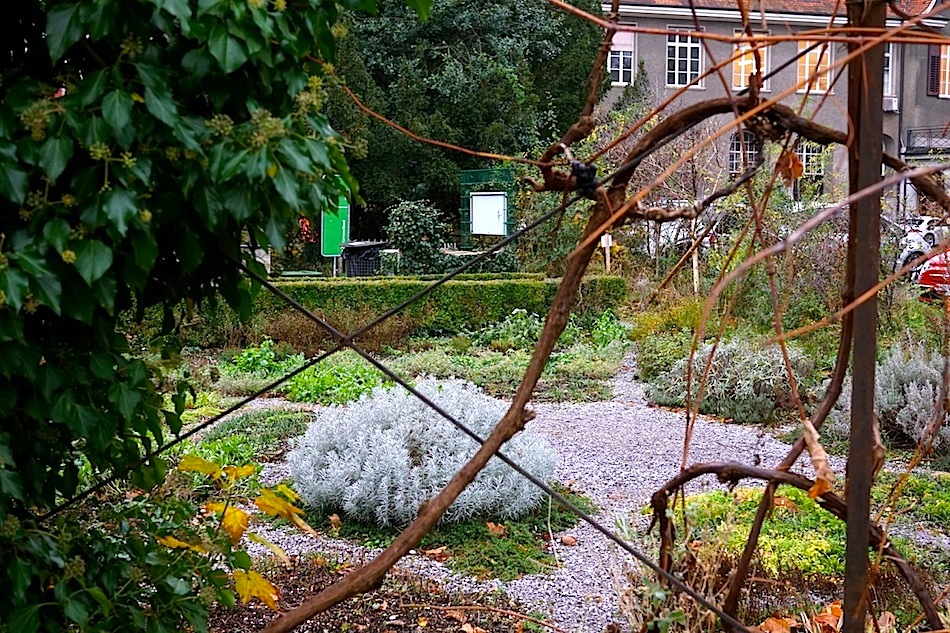
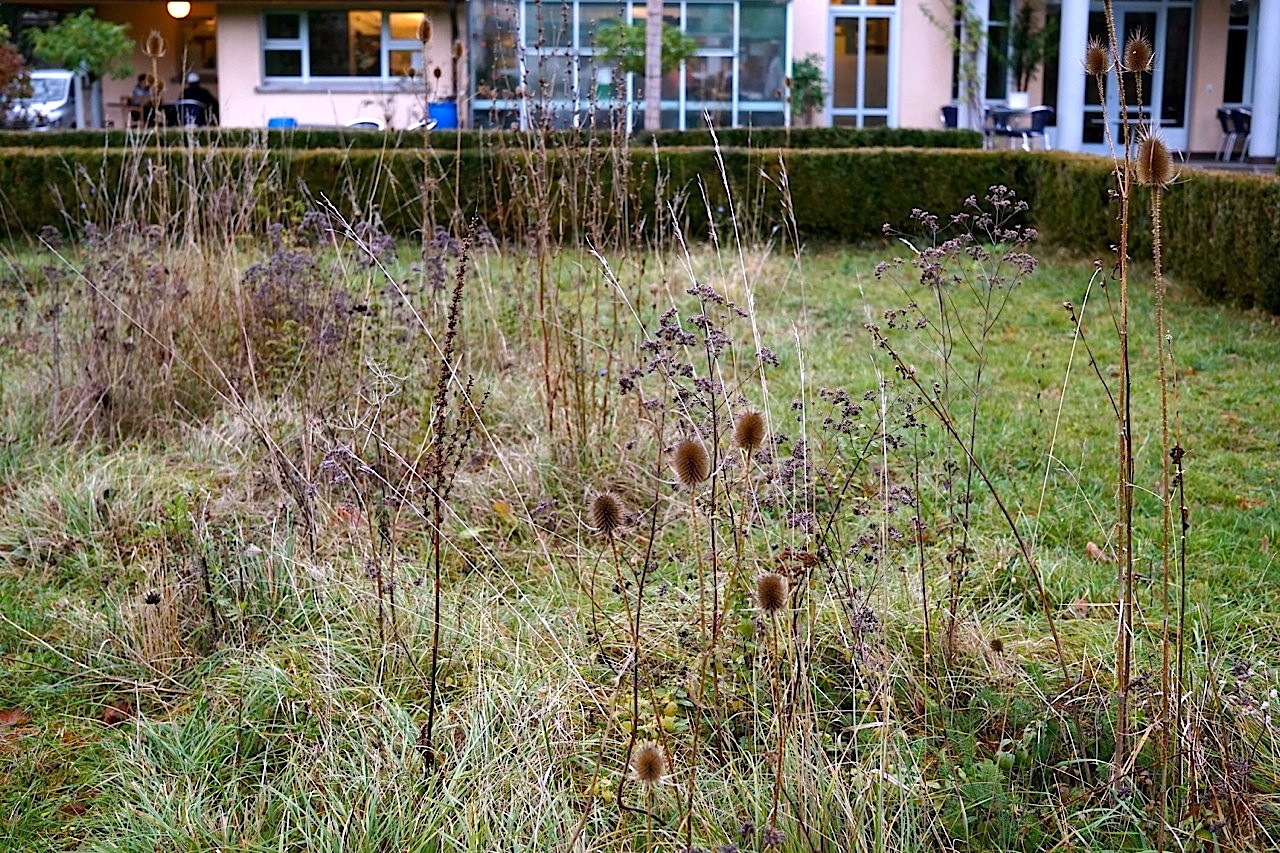
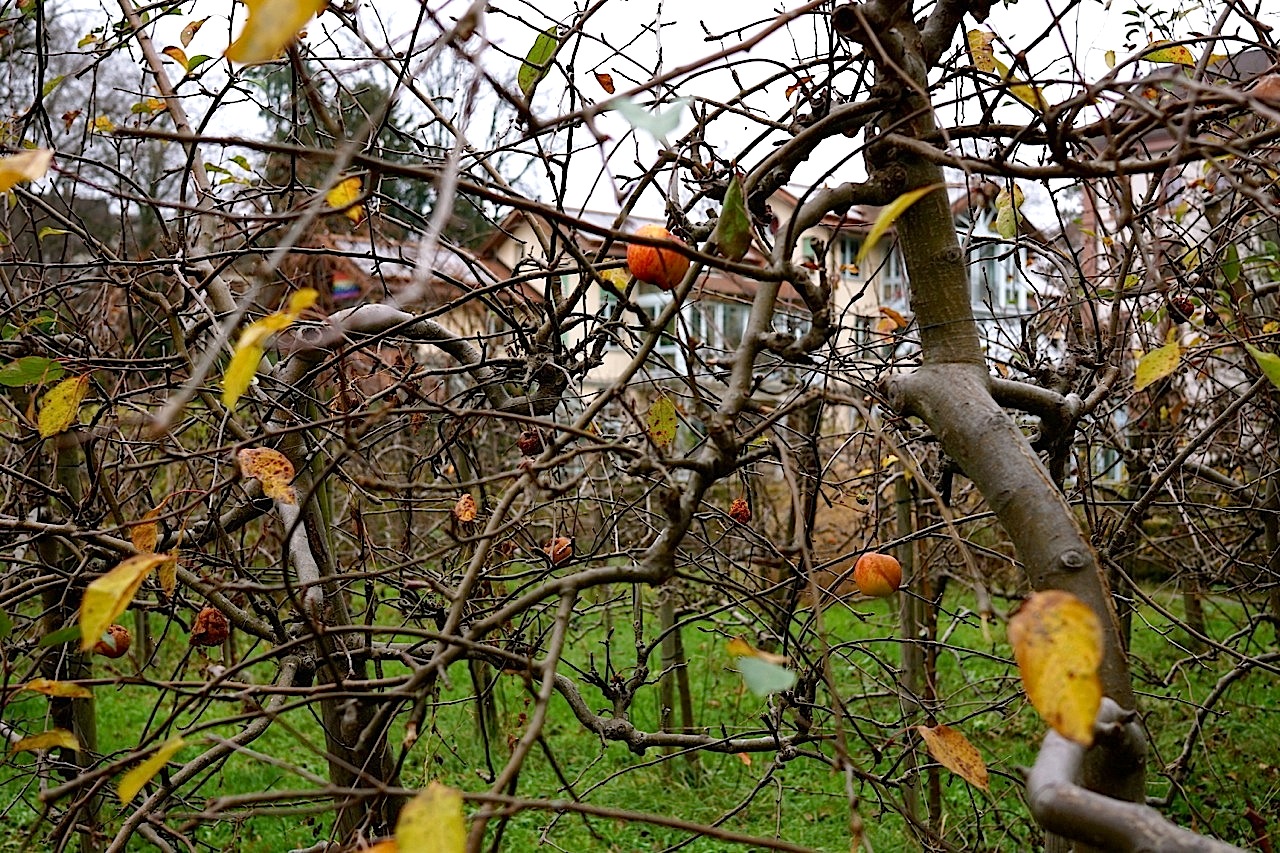
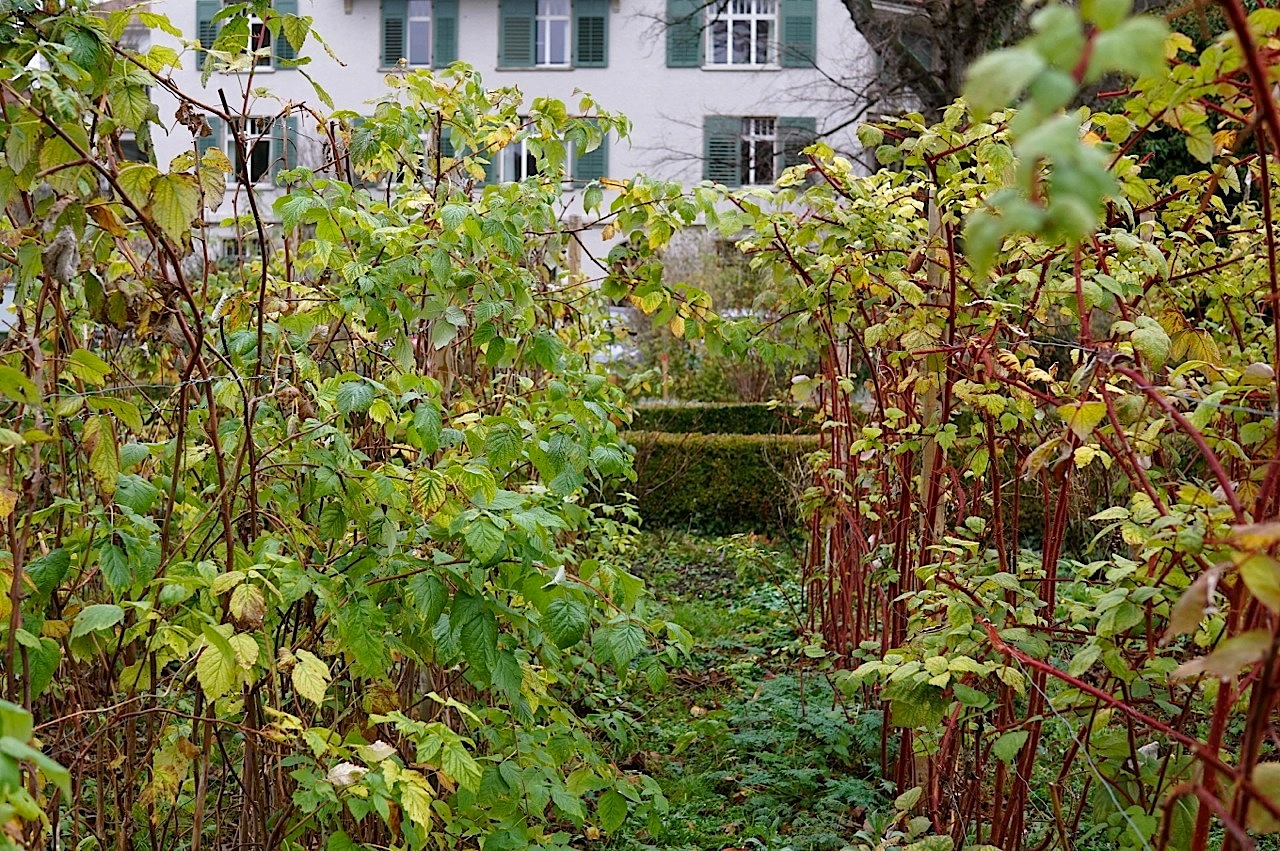
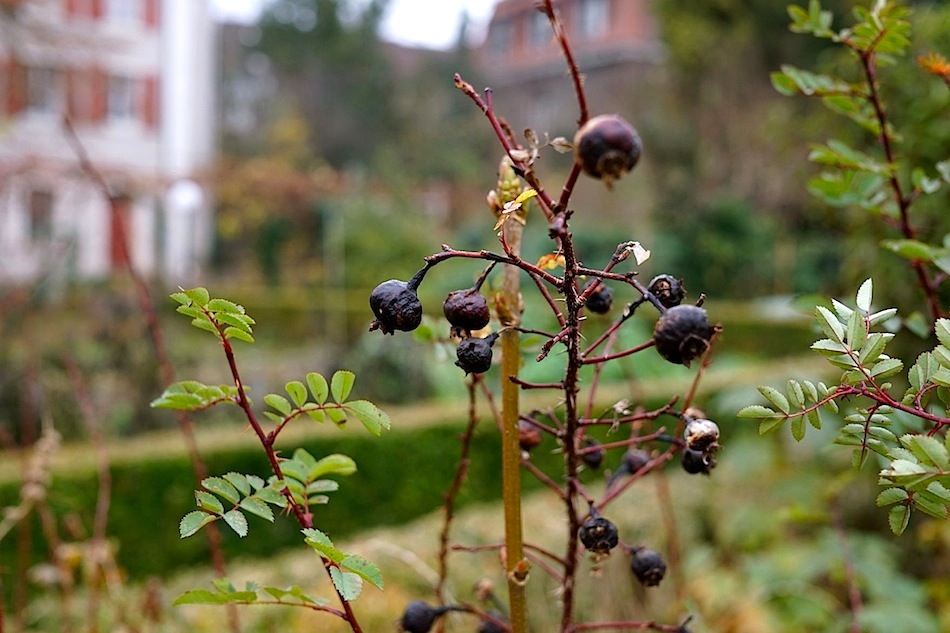
That the “private park” would actually encompass meadows, large plots for flowers, vegetables, and herbs, rows of berry bushes, and an orchard was a wonderful surprise.
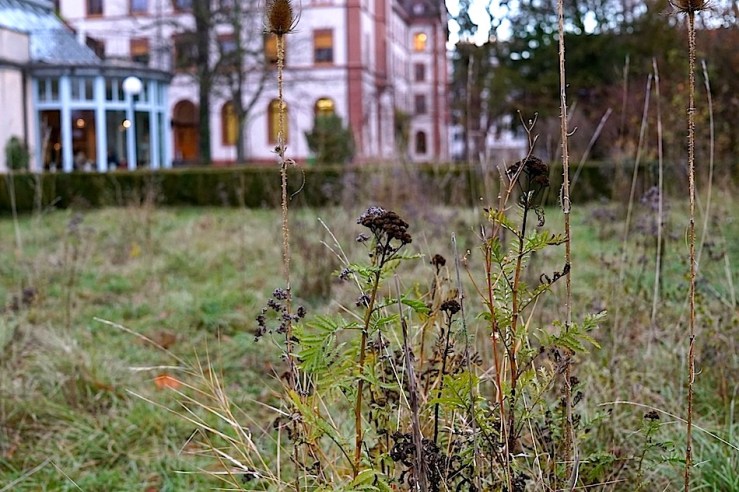
The hotel’s rooms are in one part of a building constructed in the 1860s as housing for the Basel Evangelical Missionary Society, now called Mission 21. (Hermann Hesse lived here for six years as a child.) The garden was once a place for teaching outgoing missionaries how to grow their own food.
Today, it is cared for by Unigärten Basel — a collective of University student gardeners — in collaboration with Urban Agriculture Basel and ProSpecieRara.
Unigärten’s goal for the Mission 21 garden is to show the “greatest possible diversity of plants” within a permaculture system. They believe the garden, open to hotel guests and the surrounding neighborhood, can inspire both experienced and novice gardeners.
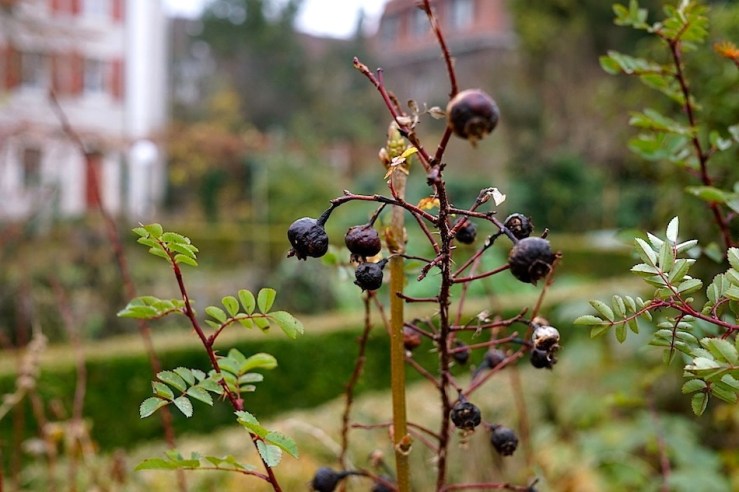
I loved this practical and romantic garden. I spent the beginning and end of every day we were there taking dozens and dozens of pictures — which is why it has taken me so long to post this. (There’s also a good photo of the garden in summertime here.)
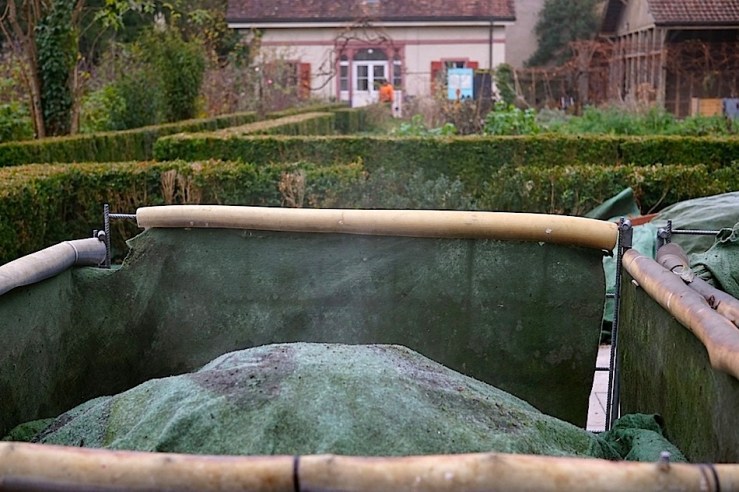
(At the bottom of this post, you can click on ‘Continue reading’ and then on any thumbnail in gallery, and you can scroll through larger versions of all these photos, plus several more.)
The back garden
This slideshow requires JavaScript.
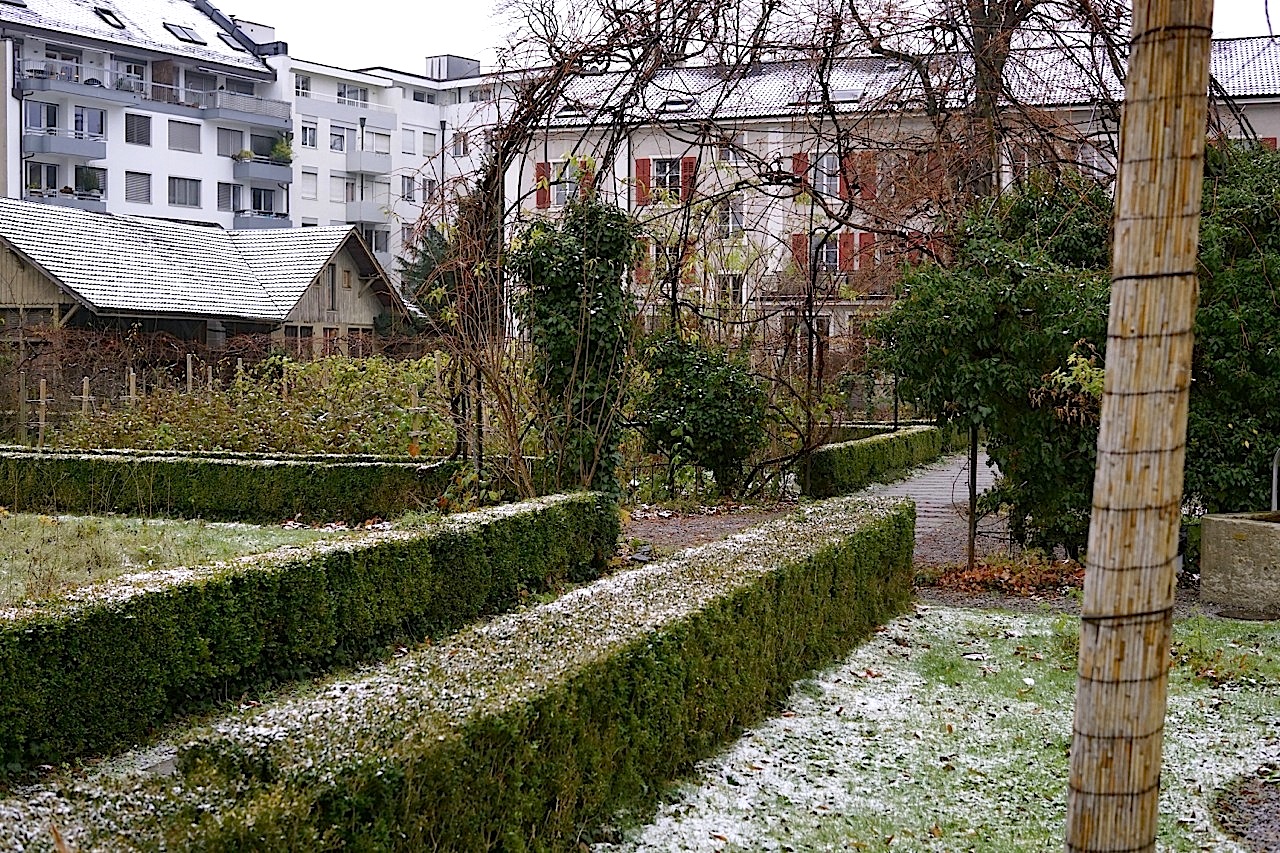
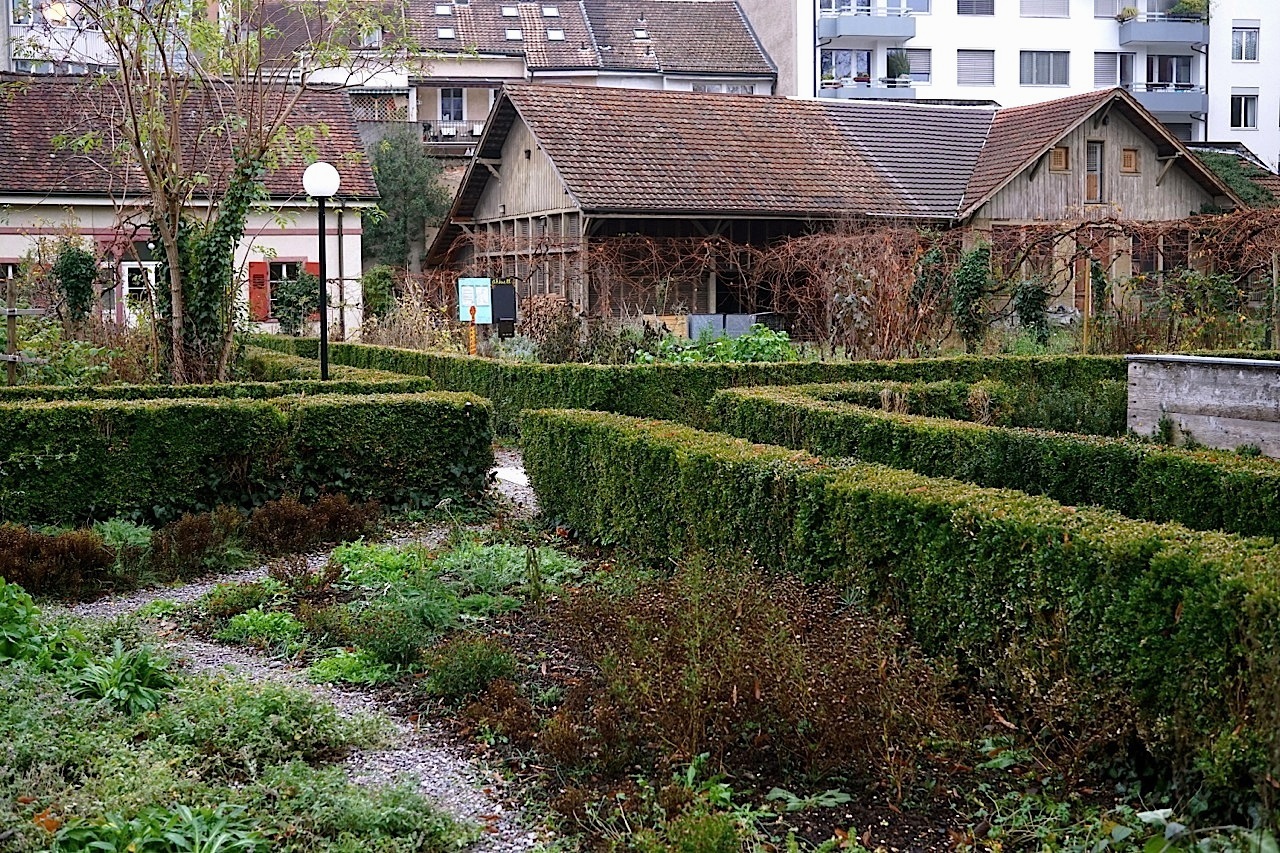
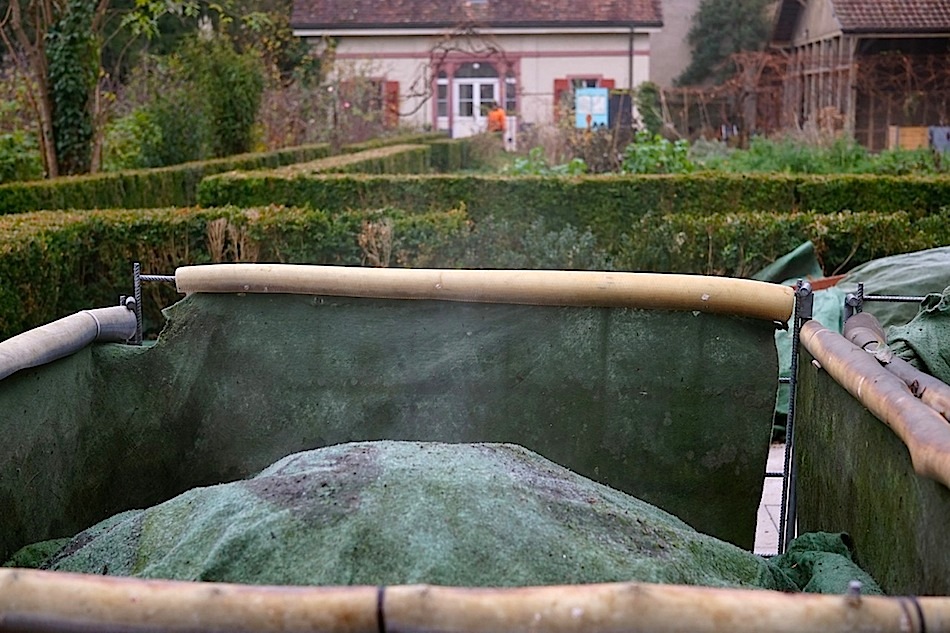
In the back garden, seven rectangular and square sections are outlined in sheared boxwood.
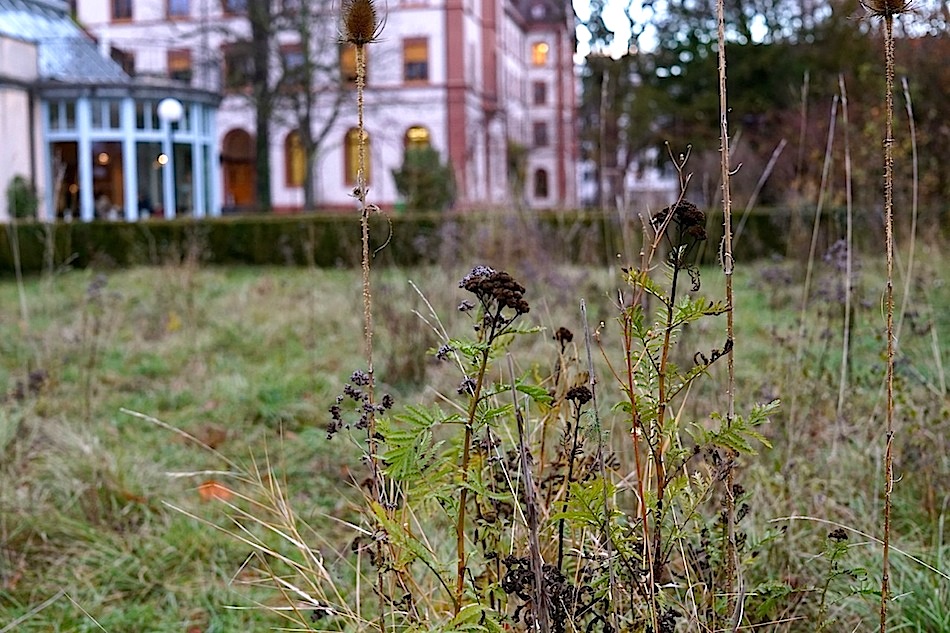
Wild plants (Wildpflanzen) — particularly those that thrive in dry and waste or disturbed ground (Ruderalflächen) — take their place alongside the urban agriculture. They have been left to spread largely undisturbed along the pathways and under shrubs and fruit trees. And in the two meadows, there are forty species, “providing joy to many insects,” according to a sign posted outside the restaurant.
The front garden
This slideshow requires JavaScript.
The front garden, across from the hotel entrance, does contain curving gravel paths and lawn, but also a number of large, old trees underplanted in a very rough and natural way with native plants from the region — mostly those with the downy oak forest as their native habitat.
You can also see that this front area has been designed to accommodate the hotel’s and the Mission’s entertaining needs and is surely at its best in the warmer months, full of tables and chairs, lights, and people.
Basel travel tips
Hotel Bildungszentrum 21 is two blocks from the historic city center. The rooms are simple, but comfortable. Their rates are very reasonable.
Meals are the biggest expense for a tourist in Basel. Main dishes in all the guidebooks’ lists of budget restaurants are $20-$45. A Whopper meal at the local Burger King is around $15, although sandwiches from bakeries, eaten standing up, can be had for $6 – $10.
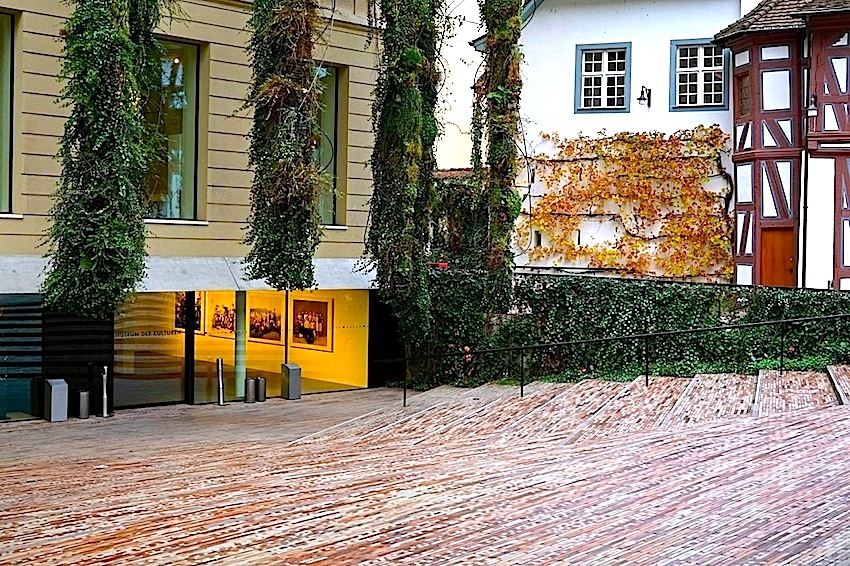
I can recommend Zum Isaak and the bistro of the Museum der Kulturen (nice for lunch), both on Münsterplatz; Manger & Boire at Barfüsserplatz; and ONO deli cafe bar at Spalenvorstadt and Kornhausgasse (their generous Zmorge breakfasts are good for lunch too).
All public city transportation is free for anyone staying in a Basel hotel. Just ask for a pass when checking in.
Continue reading “The mission garden, Basel” →






 enclos*ure