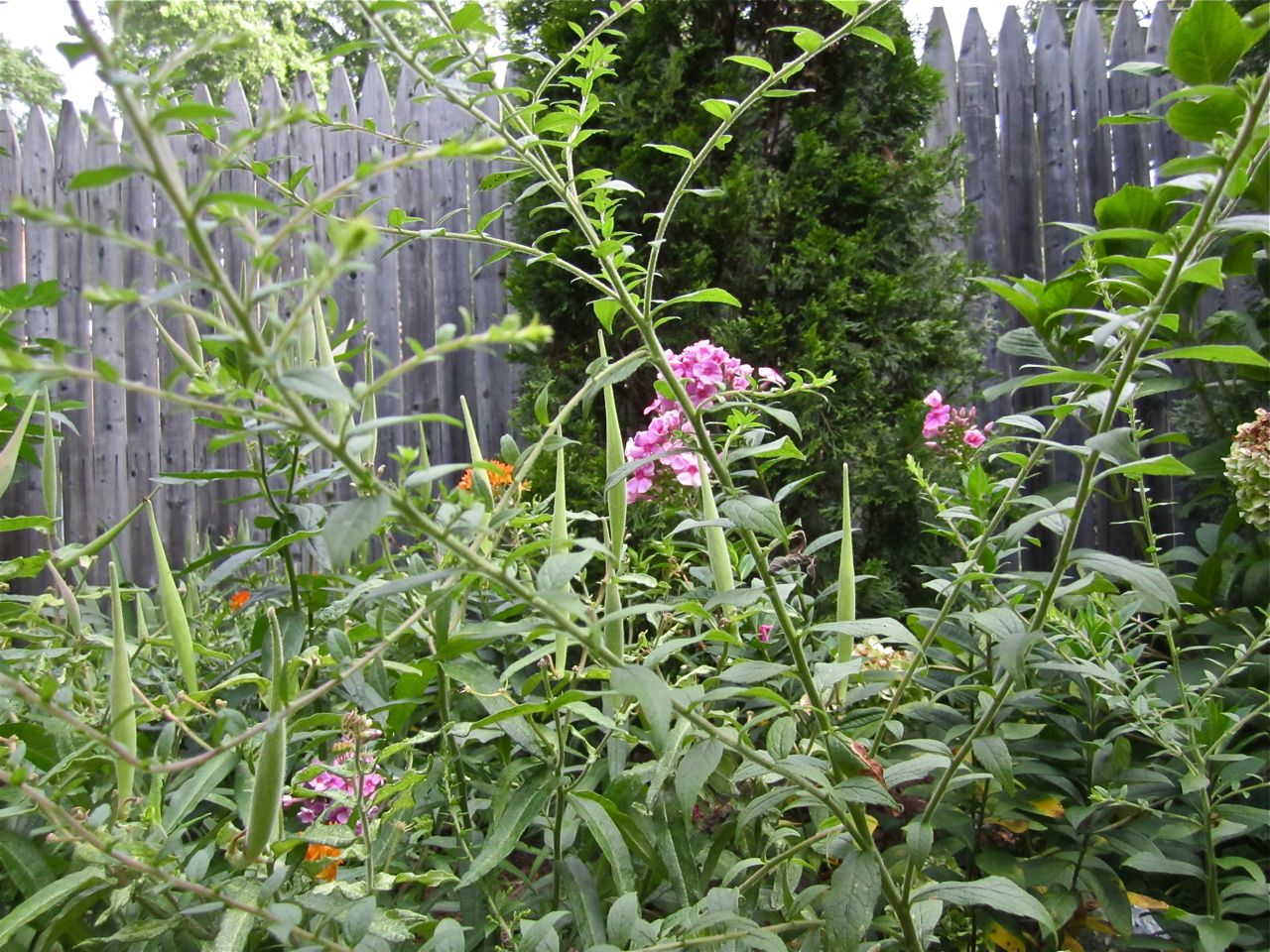
Goldenrod, butterfly milkweed, and common tall phlox.
I’m having more of an in-between-bloom day. The milkweed has about finished, although the pods are nice, but the goldenrod and cutleaf coneflowers need another week or so. I do have some nice phlox blooming though. Continue reading “Garden Bloggers’ Bloom Day in July”→
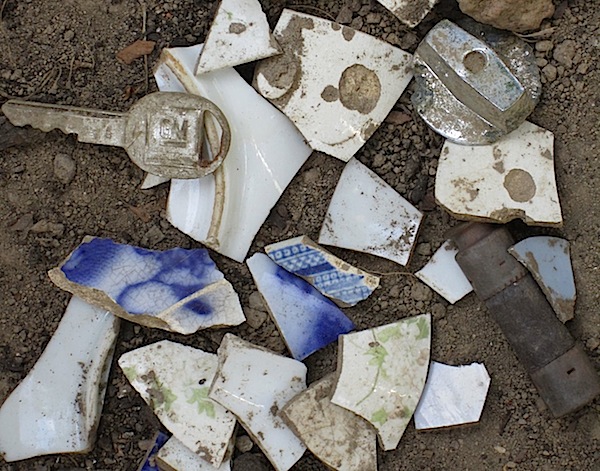
Since I started digging in my new garden this spring, I have found old tile, broken bricks, a GM key, the on/off knob of some large appliance, and something that looks like a fuse (the dog found that and was quite hurt when I put it out of reach).
I also keep finding small pieces of china, mostly in plain white, but some with patterns in blue, pale green, and orange. I keep a jar under the cherry tree to collect them.
I always feel sad about these broken dishes and wonder about their history. Did a child drop a tea cup or run into a cabinet? Did a mother knock a plate off the counter, upset after a fight? Why toss the pieces in the garden?
In my old yard in Chevy Chase, I seemed to hit copper pipe in the ground almost every place I wanted to put a tree or shrub. The original owner, who built the house in 1928 and lived there over 50 years, was a plumber and had installed garden faucets in four spots. Near the big stone grill he also built, I unearthed iron stakes for a horseshoe pit, three duckpin balls, a lot of beer and Orange Crush bottle tops, and a wonderful old concrete flamingo, which still had some pink paint but no legs.
I picture him relaxing among the well-watered flowers in the 1930s, perhaps expecting guests later and perhaps reading Popular Mechanics on how to construct your own round concrete pond, which could be ornamented with regularly spaced, embedded white quartz stones (oh yes).
The round concrete pond.
What bits and pieces from the past have you found while digging in your garden and what story do you tell yourself about them? Please click on “Leave a Comment” below.
Note: There is gallery of photos at the end. I’m still having trouble successfully inserting pictures into my posts without tears.
This spring I started my seventh garden. As a Foreign Service spouse, that’s how it’s been: move, make a garden; move, make a garden . . . . Five in Africa, one in Chevy Chase, Md. Now, here we go again.
We bought our 1920’s rowhouse last August. The back garden is about 16′ x 74′. We’re really lucky to have this much space in Glover Park, where normal is a tiny plot in front and a deck overlooking a parking pad out back.
What was already in our long narrow garden was not bad. We have a deck, which sits about 4′ above the ground, a 6 1/2′ tall stockade fence — nicely weathered — and a flagstone sidewalk to the back gate.
There’s a huge old holly tree (a male apparently, no berries) about two thirds of the way back. It provides morning and mid-day shade and shields us from the view of some Wisconsin Avenue shops and restaurants (and their noise). Unfortunately, it also drops its prickly little leaves like crazy in mid spring. Continue reading “The new garden”→
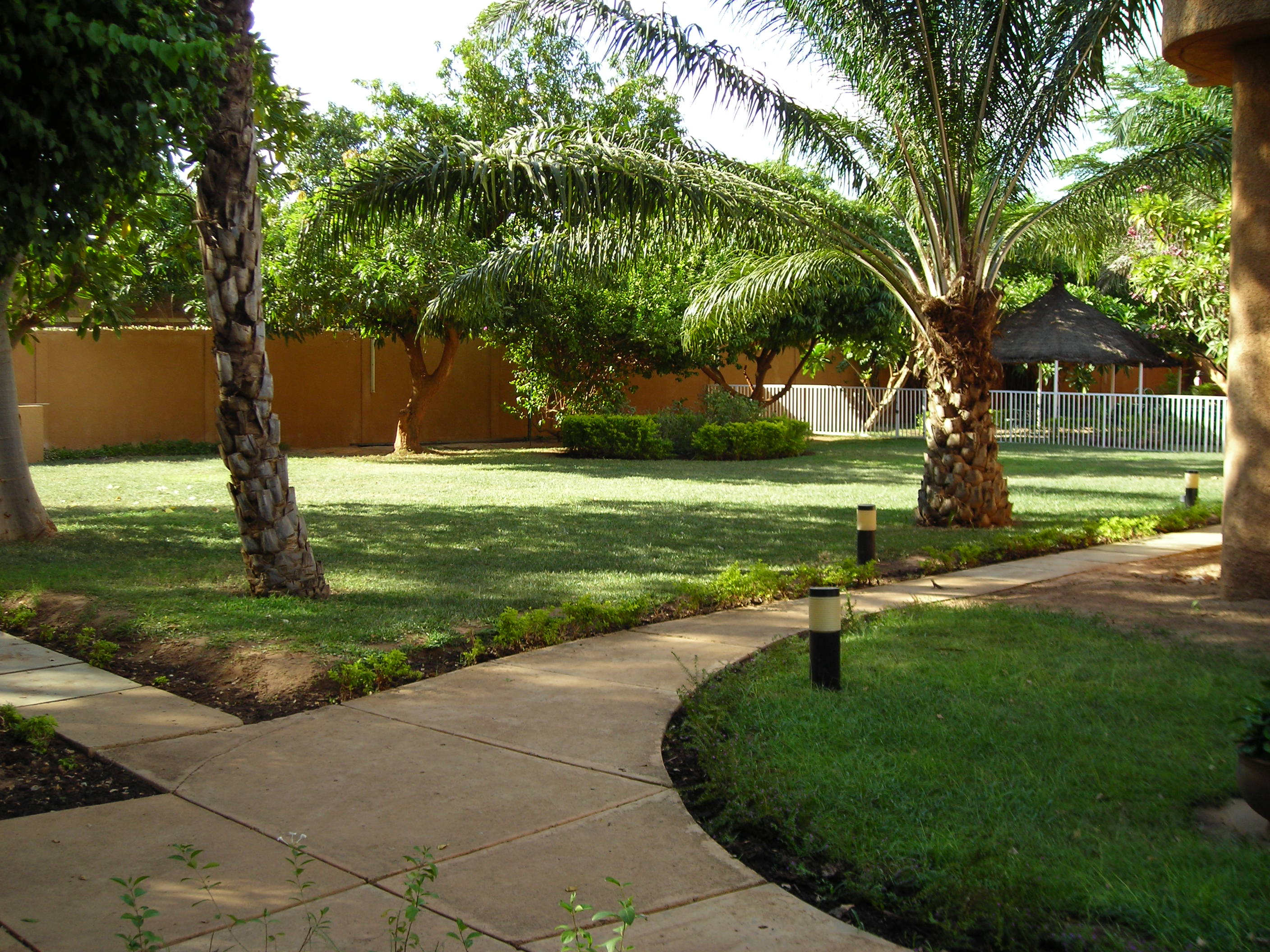
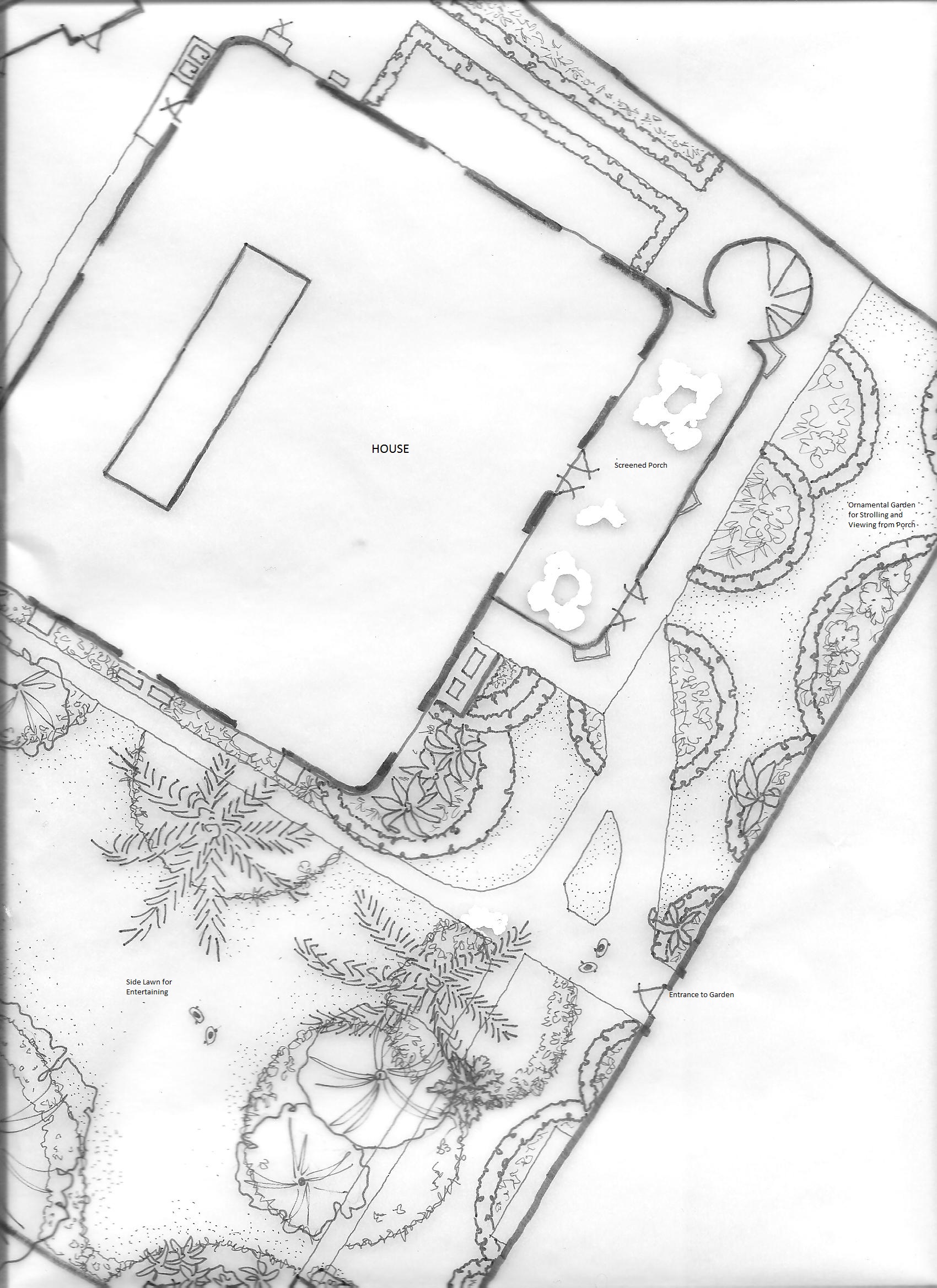
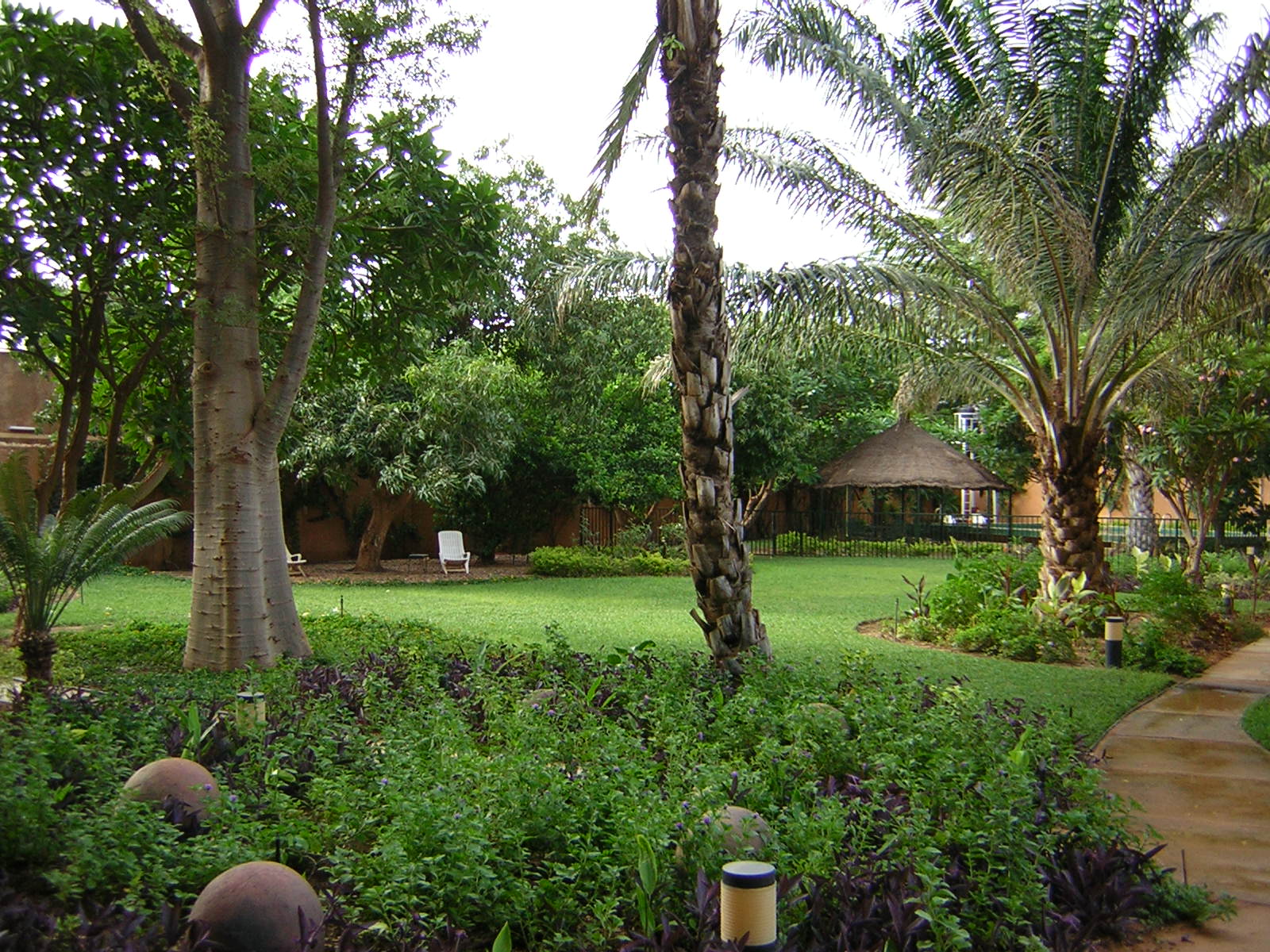
We arrived in Niamey, Niger, in August 2006. My husband worked at the U.S. Embassy there, and this house had been assigned to Embassy families for many years. It had always been much appreciated for its nice patio, flat rooftop (reached by spiral staircase), and large lawn for outside entertaining. However, by the time we took possession, there wasn’t much to the garden except grass.
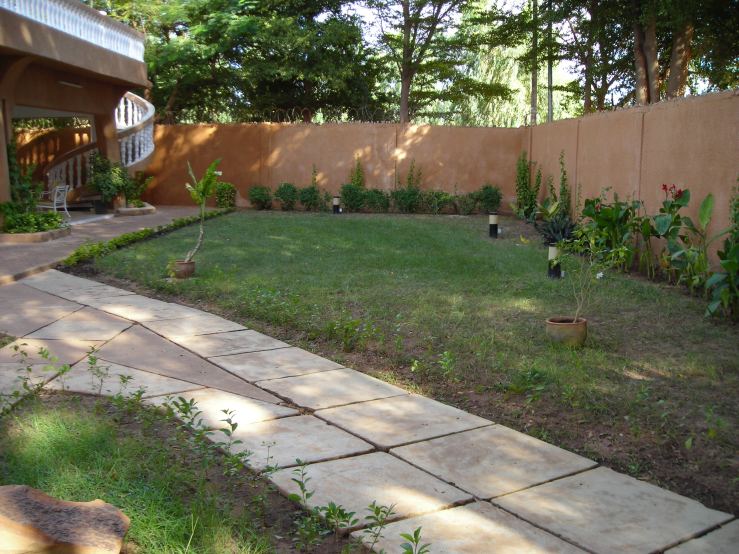
BEFORE: the side lawn
Very short, ragged hedges bordered the sidewalks that went around the house. You had to step over them to get on to the lawn. Most of the few other plants were lined up at the base of the front wall. The areas around the backdoor and the pool were bare dirt — except during the rainy season, when they turned to mud. On the plus side, however, there were mature palms, a baobab, mangoes, frangipanis, and some roses.
On the ground, I wanted curves to echo the circular outlines of the tops of the palms, the fanned out clusters of the frangipani leaves, and the spiral of a staircase leading up to the roof. I needed to link a small front garden (planned as an ornamental display of plants to be viewed while sitting on the patio), a large side lawn (an entertainment area for large groups), and a back fenced rectangular pool area. I played with various wavy planting bed shapes, but the various parts of the whole space weren’t merging smoothly.
Partial garden plan
Then I had a strange inspiration: I noticed the way the razor wire topping the 8 ft. walls looped round and round. This gave me a concept for form and organization. All the planting beds became loops — some circles, others a little more oval like a smushed roll of the wire. The loops overlapped, two or three in a set; the walls, walkways, and the house sliced through them. The loops were smaller in the front garden and got bigger as they led into the big side lawn. They passed through the open metal fence of the pool area, joining it to the lawn.
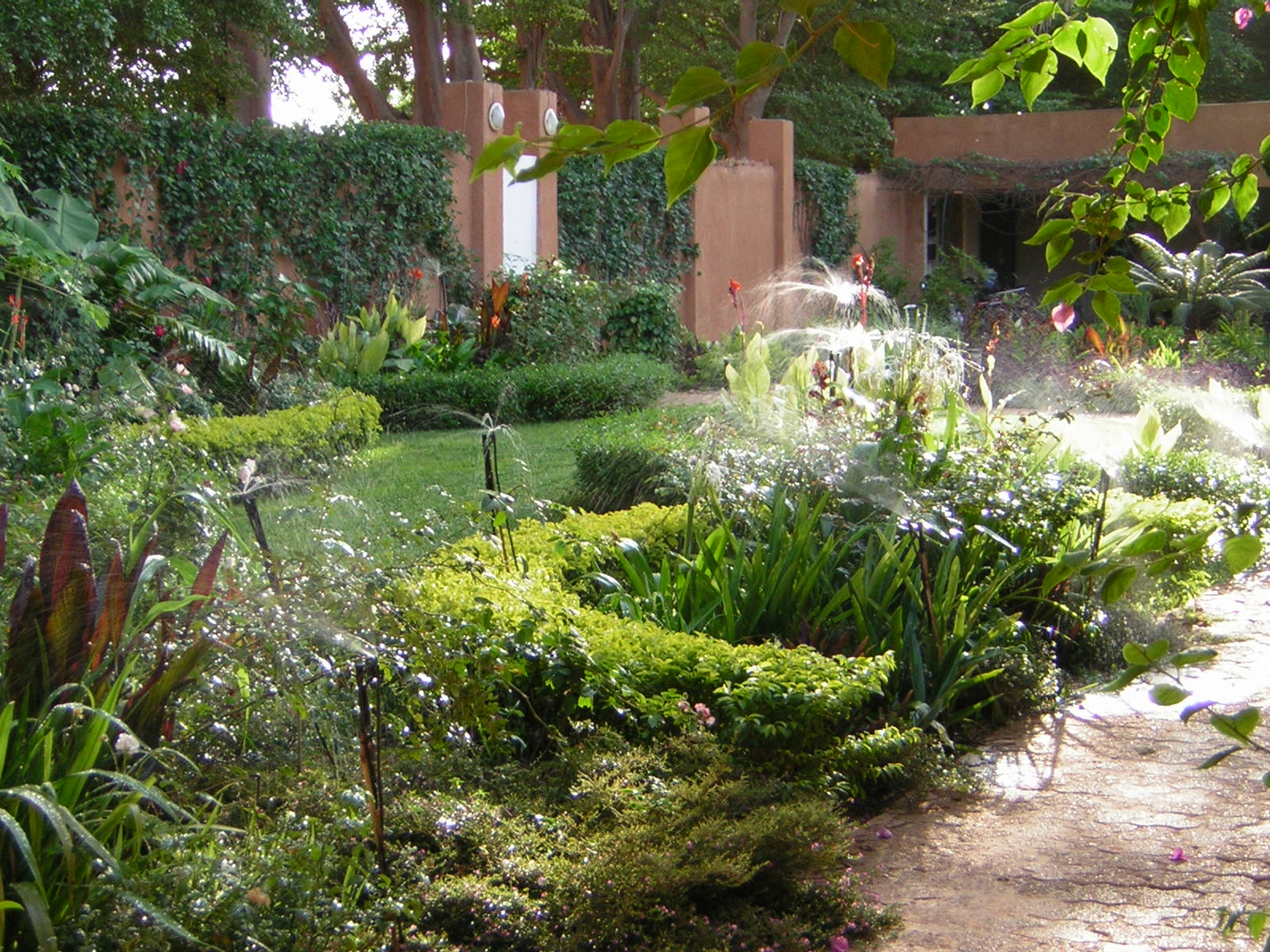
We rimmed all the edges of the smaller front beds with short hedges. Half the bushes had lime green leaves, half were darker, which set off the overlapping effect. We filled in the beds with a variety of tropical and temperate-climate flowers, as well as banana and papaya plants. The plantings in the larger circles on the side lawn were more freeform without hedges. Using the concept of loops of wire/flower beds, each area of the garden was defined, yet flowed into the other areas.
AFTER: early growth on the lawn
What my concept did not include, however, was a good plan for water, or rather the lack of it. It took a lot of watering to keep those beds looking lush (although much the same was true for the grass they replaced). We did let the grass and some of the bedding plants go brown at the height of the dry season and experimented with timed irrigation. Toward the end of our time there, I began to find more drought-resistant plants like agaves. (The local plant sellers farmed down at the river’s edge and generally catered to the expats’ desires for tropicals and for the flowers they knew from home, not to a need for dry-climate plants.)
AFTER: irrigating the front garden
If we had stayed longer, I would have consolidated the more water-greedy plants in the beds in the front garden and put more drought-resistant plants and maybe some gravel in the side lawn beds.
Click on the first photo below to scroll through a series of pictures of the garden. The time difference between BEFORE and AFTER was about 20 months. We lived in this country for 2 years.
BEFORE: the side lawn
BEFORE: the front garden
SOON AFTER: the lawn. The round ornaments in the left foreground are large local water pots buried bottom-side up.




 enclos*ure