Life in gardens: dahlias

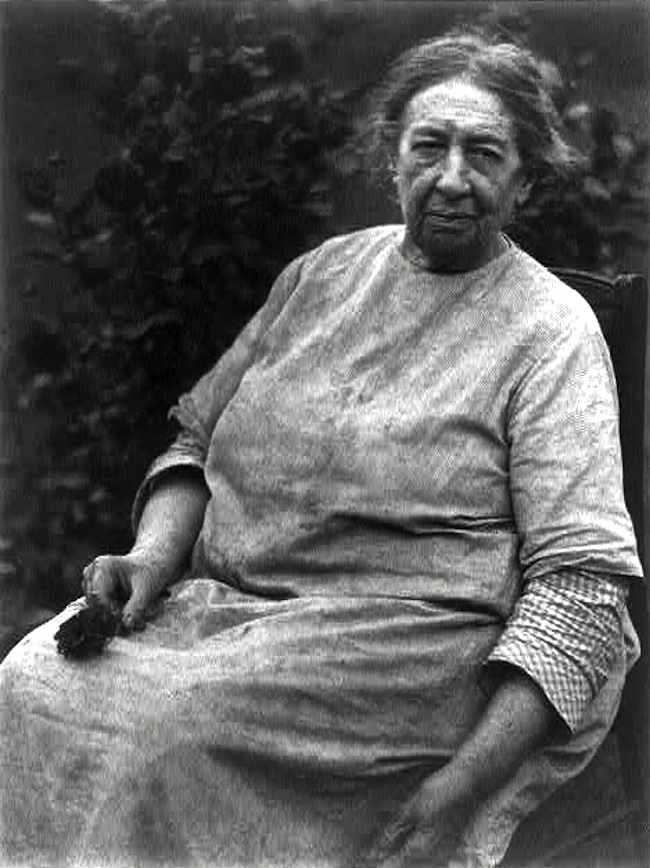
Woman with dahlia, Library of Congress“Woman with dahlias,” ca. 1930, by Doris Ulmann, via Library of Congress Prints and Photographs Division.

In this beautiful portrait of an older Appalachian women, you can just see her stand of dahlias behind her.

In the traditional language of flowers, the dahlia is usually said to represent dignity, sometimes elegance.

A well-to-do New Yorker, Doris Ulmann trained as an art photographer with Clarence H. White in the 1910s. In the 1920s, she began traveling to the southeast to photograph rural people, particularly in the hills of Kentucky and the Sea Islands of South Carolina — people “for whom life had not been a dance.” She also documented Appalachian folk arts and crafts, working with musician and folklorist John Jacob Niles.

Life in gardens: 1967

Tompkins Square Park, 1967, George Eastman HouseTompkins Square Park, East Village, New York City, 1967, by James Jowers, via George Eastman House Commons on flickr.

Tompkins Square Park . . .  was reconstructed [in the mid 1960s,] just in time for an era of sweeping changes. The surrounding neighborhood became the east coast version of ‘Haight-Ashbury.’ Rock musicians, poets, hippies, and political activists transformed downtown Manhattan into a center for counter-cultural activities and political protest. It was during the mid- to late-1960s that the area surrounding Tompkins Square Park came to be called ‘The East Village.’ . . .

Tompkins Square had once before been the site of powerful expressions of joy and rebellion. A century earlier, German-Americans had transformed the square with their volkefestes and mass demonstrations. Their spirit and command of the space were being revived— only now in 1960s terms. Young people demonstrated at the bandshell against American involvement in Vietnam and in favor of women’s and third world liberation movements. They gathered to hear bandshell concerts put on by the Fugs, the Grateful Dead and Charles Mingus. They were certainly ignoring signs that cautioned ‘keep off the grass.’ . . .

— Laurel Van Horn, from “A History of Tompkins Square Park

The Sunday porch: Breitenbush

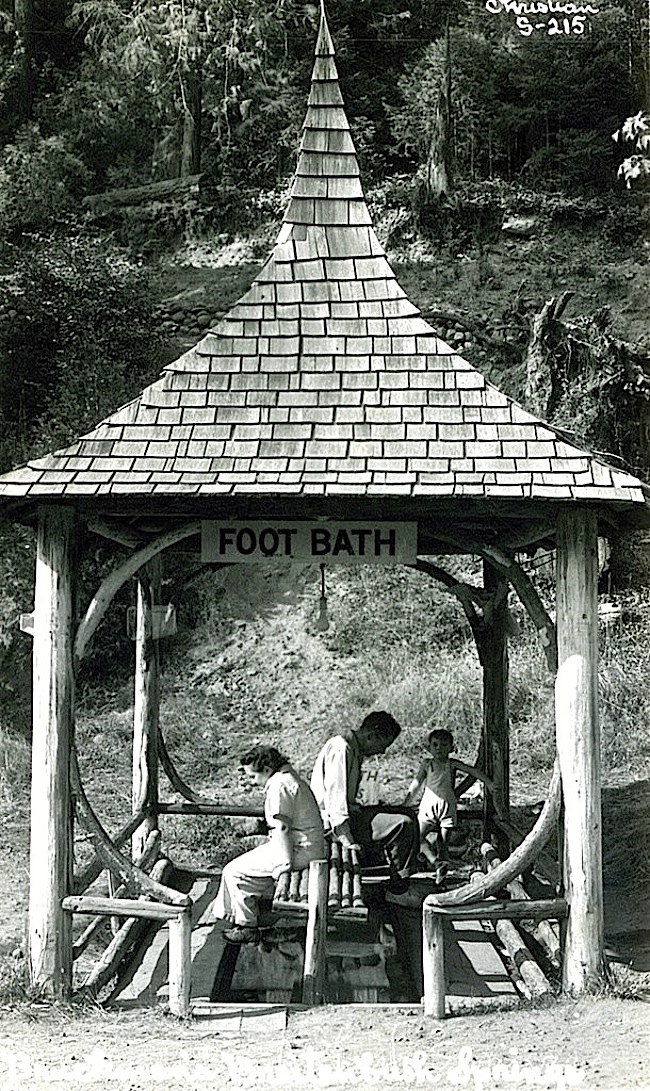
Foot bath, Oregon, OSU Archives“Bruckman’s Breitenbush Springs Foot Bath, Breitenbush, Oregon,” ca. 1937, via OSU Special Collections & Archives Commons on flickr.

Ah, come on folks. . . take off those shoes.

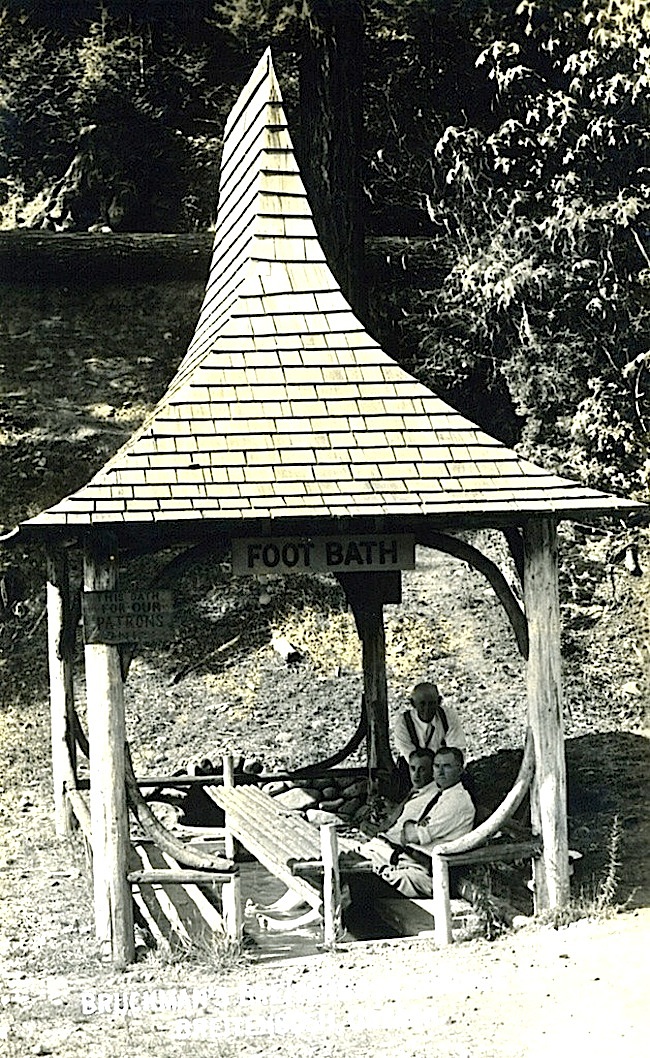
2 Foot bath, Oregon, OSU Archive

Like these guys. (Tie removal optional)

Merle Bruckman bought the property around the Breitenbush hot springs in 1927 and turned it into a wilderness health spa. He sold it in the mid-1950s, and the operation changed hands a few more times before closing in 1972 after two large floods.

In 1981, it re-opened as a retreat and conference center — owned by its workers since 1989.

Vintage landscape: Thornewood

A little Monday morning prettiness. . .

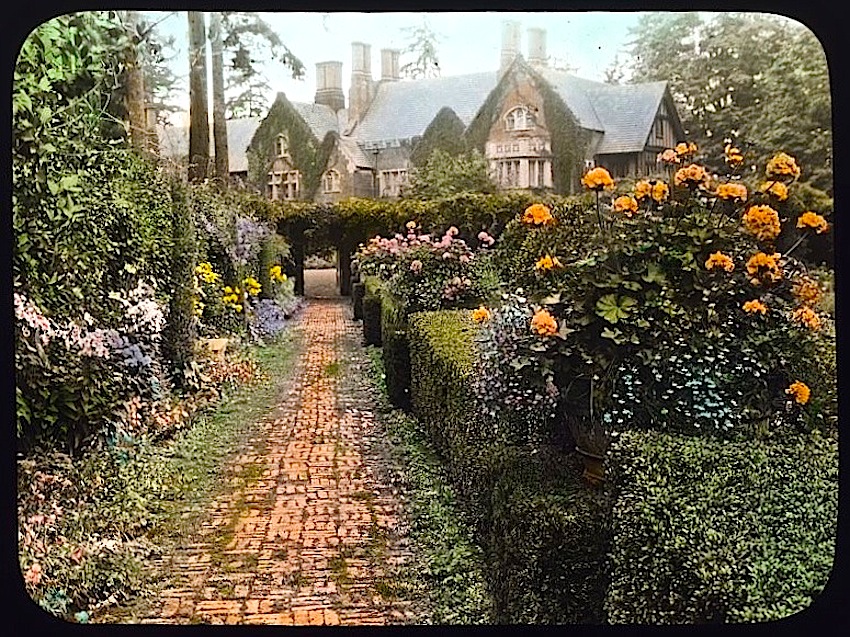
Thornewood, 1923, F.B.Johnston, via LibraryCongressThe walk to the house from the flower garden at “Thornewood,” Lakewood, Washington, 1923, a hand-colored glass lantern slide by Frances Benjamin Johnston, via Library of Congress Prints and Photographs Division.

The house was built between 1909 and 1911 for Chester and Anna Thorne — constructed partly  from a 400-year-old Elizabethan manor house, which Chester purchased in England and had dismantled and shipped to Lakewood.

Thornewood’s over 30 acres of formal “English” gardens were designed by James Frederick Dawson and John Charles Olmsted of Olmsted Brothers from 1908 to 1913.  They were originally cared for by 28 gardeners.

In 1926, House Beautiful magazine named Thornewood one of the five most beautiful formal gardens in America. In 1929, the Garden Club of America held its national convention there.

Today, the property still exists as the Thornewood Castle Inn and Gardens.

It is magnificent. It is what God would have done if he had the money.

— [of a perfectly groomed estate] Noel Coward

The Sunday porch: Savannah, Ga.

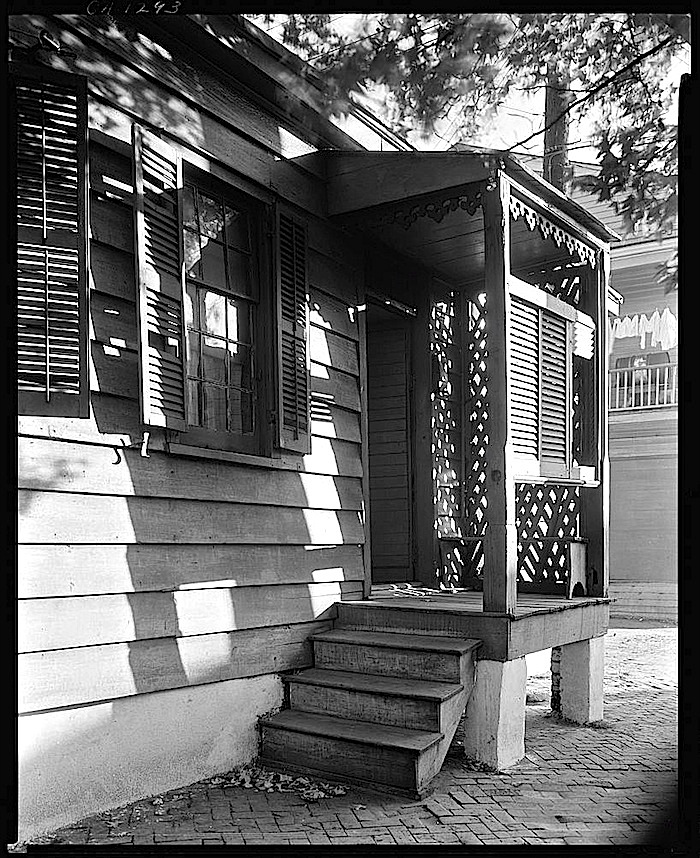
Price Street, F.B. Johnston, via Library of Congress“Price Street corner York Lane,” Savannah, Georgia, 1939 or 1944, by Frances Benjamin Johnston, via Library of Congress Prints and Photographs Division.

The Library of Congress catalogue entry for the image above includes the note: “Once in the ‘Restricted District,’ hence the lattice work” — meaning the house had been a bordello. (That would also explain the panel of shutters across the front.)

Looking at Google Maps street view, a very similar house (built 1828) at one of the four possible corner sites still stands in good condition. Across York Lane from it is a two-story building that was probably there at the time of the photo. There are new condos on the other side of Price Street.