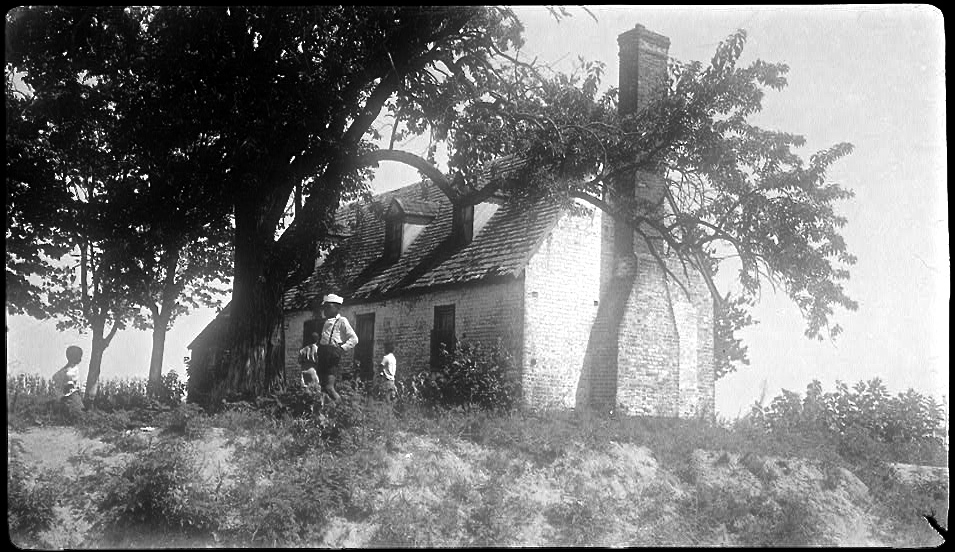
Mount Ephraim, Chincoteague Bay Vicinity, Worcester County, Maryland. Photo taken 1940, by D. H. Smith for the Historic American Buildings Survey (HABS) via Library of Congress Prints and Photographs Division.
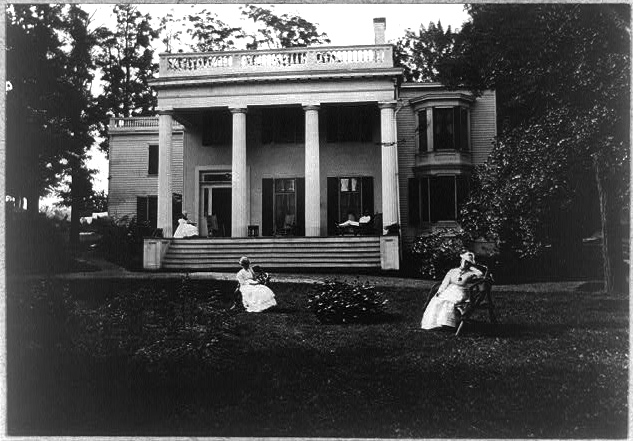
The photo shows Tranquility, the rented summer home of the Theodore Roosevelt family at Oyster Bay Cove, New York, in 1872. The photographer is unknown.
Mr. and Mrs. Roosevelt — the parents of future President Theodore Roosevelt — lounge on the verandah; Edith Kermit Carow (later Mrs. Theodore Roosevelt) and Corinne Roosevelt are on the lawn. The house was demolished in the mid-1940s.
. . . so sweet as drowsy noons,
And evenings steep’d in honey’d indolence;
O, for an age so shelter’d from annoy,
That I may never know how change the moons,
Or hear the voice of busy common-sense!
I posted 173 times and received 39,923 views from readers from 147 countries.
(I do, however, take WordPress’s “My Stats” with a grain of salt. A few mornings ago, it showed me with 10 views from 4 visitors in 6 countries. Maybe one viewer was on an airplane?)
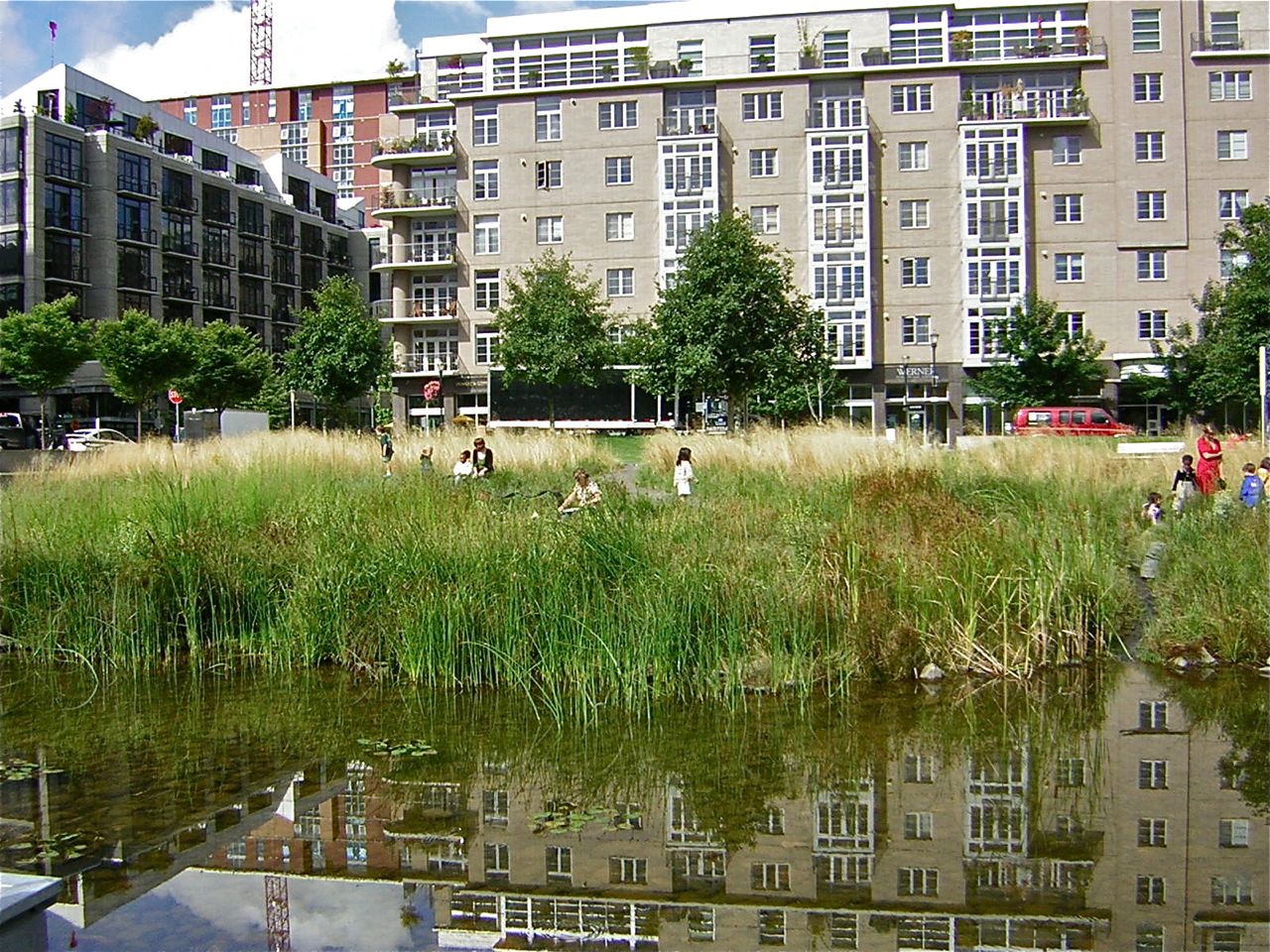
A summer camp visits Tanner Springs Park in Portland, Oregon.
Thumbnails of both are featured on pages one and two of Google Image Search for those topics.
Search term bringing the most views to this blog: “Chateau Gaillard.” I have never posted about Chateau Gaillard.
Strangest search term bringing (2) views to this blog: “why would someone enclos [sic] a front porch and make their side entrance the main address.” Please, I would never do that.
Best blogging lesson learned: In a country where the power goes off several times a day, click on “save draft” constantly.
Most popular enclos*ure photo on Pinterest:
from “A visit to GOFTC.” “A pole is placed in the middle of the [compost] pile so it can slide in and out. If it is pulled out warm and damp, the pile is in good shape.”
Most annoying WordPress feature: a spellcheck that changes ‘enclos*ure’ to ‘enclose*ure.’ Also, quote marks are frequently facing the wrong direction — see just above.
My own favorite image this year: I really couldn’t pick one, but I did love the pouring teapot in the garden of the Sowathe Tea Factory last January (below).
Thank you all for visiting enclos*ure in 2012.
I leave you with this interesting quote:
People often ask us, in an amazed way, “how do you possibly garden together?”. . . [O]ne person’s strengths fill in for the other’s weaknesses. The human eye contains two kinds of receptors: rods respond to light or darkness; cones are sensitive to color and detail. Men’s eyes have more rods, a thousand times more sensitive to light than cones, so men wait for low light, often seeing better in the dark. With a plethora of cones, women may stumble in the dark but are better able to respond to the subtle blush of a rose. It doesn’t stop there. Men and women process the information that comes in through their eyes differently. Women store visual information on both sides of their brains, men on one side only: this give men better depth perception, but at the price of color recall, which is easier for women. Ten percent of men are functionally color blind, and almost none have the selective capacity of a woman’s eye, well trained.
— none particularly new, but indications of my current interests.
I just finished re-reading Peter Martin’s The Pleasure Gardens of Virginia: From Jamestown to Jefferson. I recommend it — along with Barbara Wells Sarudy’s Gardens and Gardening in the Chesapeake, 1700 – 1805 — if you garden in the U.S. mid-Atlantic. Martin is particularly good on Mount Vernon and Monticello and on Jefferson’s changing enthusiasms and false starts. (Martin and Sarudy differ somewhat on the extent of the influence of the English landscape garden style in 18th century America.)
Right now I’m really taken with the Game of Thrones books (I know, I’m behind the trend; I’m in Rwanda.) I’m thinking of making the jump to an e-reader this month and then loading on the second book (aka Season Two) to watch in February. I also want Hillary Mantel’s Bring Up the Bodies soon (I had to re-read Wolf Hall last month first — it’s so good).

 Mount Ephraim, Chincoteague Bay Vicinity, Worcester County, Maryland. Photo taken 1940, by D. H. Smith for the Historic American Buildings Survey (HABS) via Library of Congress Prints and Photographs Division.