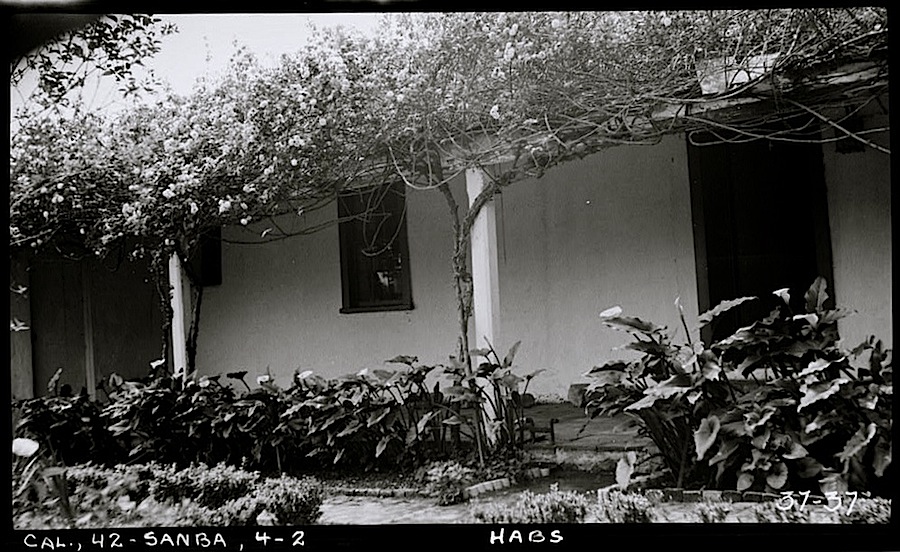
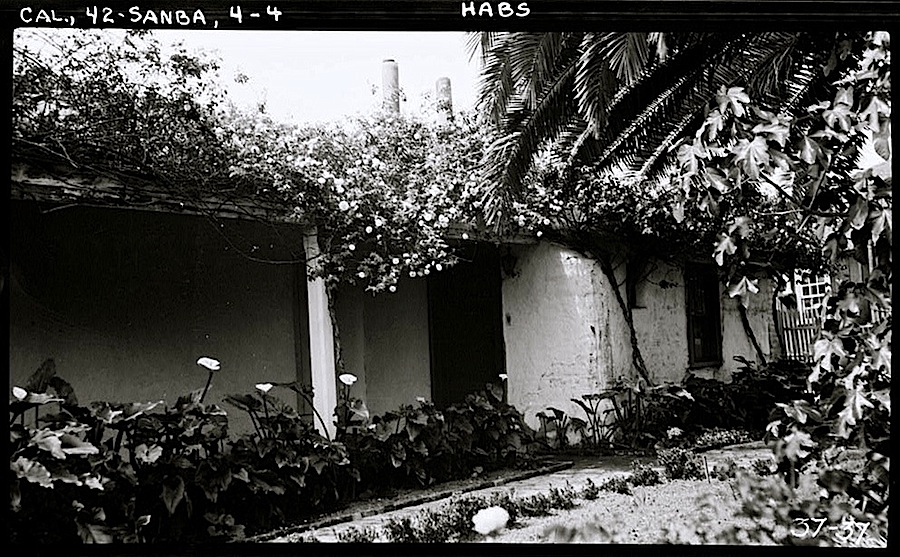
The north porch of the Vhay House, 835 Leguna Street, Santa Barbara, California, April 1934, by C. A. Fletcher for an Historic American Buildings Survey (HABS), via Library of Congress Prints and Photographs Division.*
The Rafael Gonzalez House, which was owned by Louise and David Vhay at the time of these photos, was built in 1825. It is a typical adobe townhouse of the Mexican California period, with walls over 2′ (.61 m.) thick.
Gonzalez was a soldier and landowner when he built the house for his Italian bride. He became mayor or alcalde of Santa Barbara in 1829. His daughter, Salome, inherited the home in 1866 and lived there until 1923.
Above: bougainvillea above and calla lilies below, along the north porch, by C. A. Fletcher.
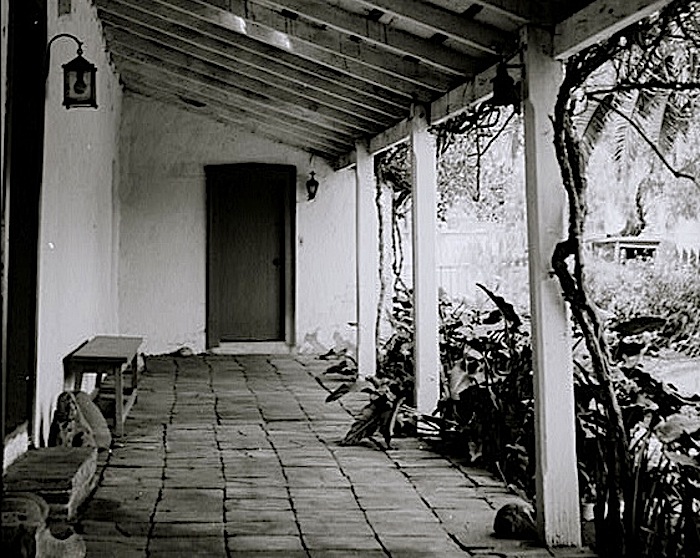
Above: north porch, by C. A. Fletcher (cropped by me).
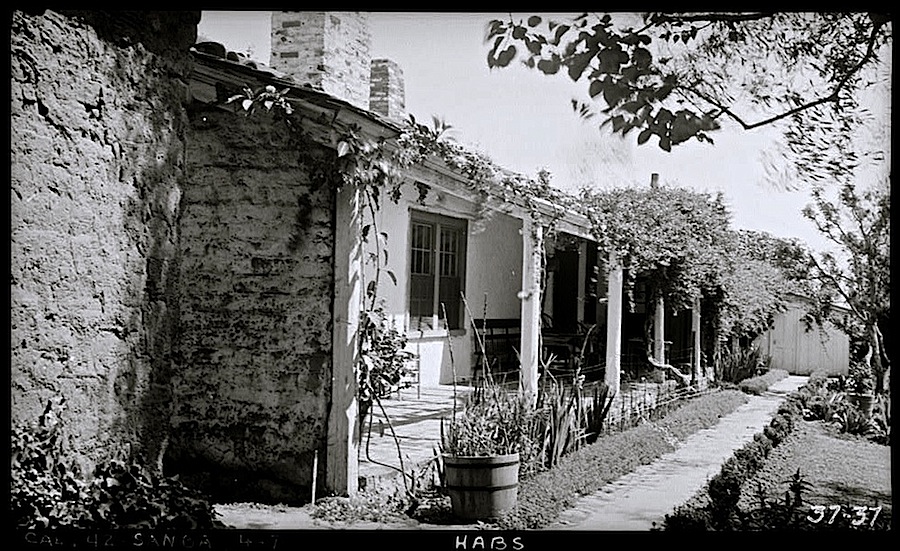
Above: south porch from the southwest. Photographed April 1934, by H. F. Withey.
Above: detail of south porch, east end, by H. F. Withey.
Above: 1934 drawing by Frederick C. Hageman (also the small plan above).
Above: 2010 photo of the Rafael Gonzalez House, now a rare book store, by Dilly Lynn, via Wikimedia Commons. There’s also a nice painting of the house in 1953 here.
The house was designated a National Historic Landmark in 1970.
. . . — for a sec
he even sees the calla lily’s furl
in the gesture of voilà!
He was also an early photographer — beginning in 1859 — and was particularly interested in using the medium for science. He eventually took almost 15,000 images and authored a number of books, including Photography Applied to Archaeology and Photography Applied to Natural History.
Trutat took many beautiful pictures of his family and friends, including the one here, of his sons, Paul and Henri. He took several photos of Bébé, a little girl, in October 1897.
There’s more in words than I can teach:
Yet listen, Child! — I would not preach;
But only give some plain directions
To guide your speech and your affections.
Say not you love a roasted fowl
But you may love a screaming owl,
And, if you can, the unwieldy toad
That crawls from his secure abode
Within the mossy garden wall
When evening dews begin to fall,
Oh! mark the beauty of his eye:
What wonders in that circle lie!
So clear, so bright, our fathers said
He wears a jewel in his head!
And when, upon some showery day,
Into a path or public way
A frog leaps out from bordering grass,
Startling the timid as they pass,
Do you observe him, and endeavour
To take the intruder into favour:
Learning from him to find a reason
For a light heart in a dull season.
And you may love him in the pool,
That is for him a happy school,
In which he swims as taught by nature,
Fit pattern for a human creature,
Glancing amid the water bright,
And sending upward sparkling light.
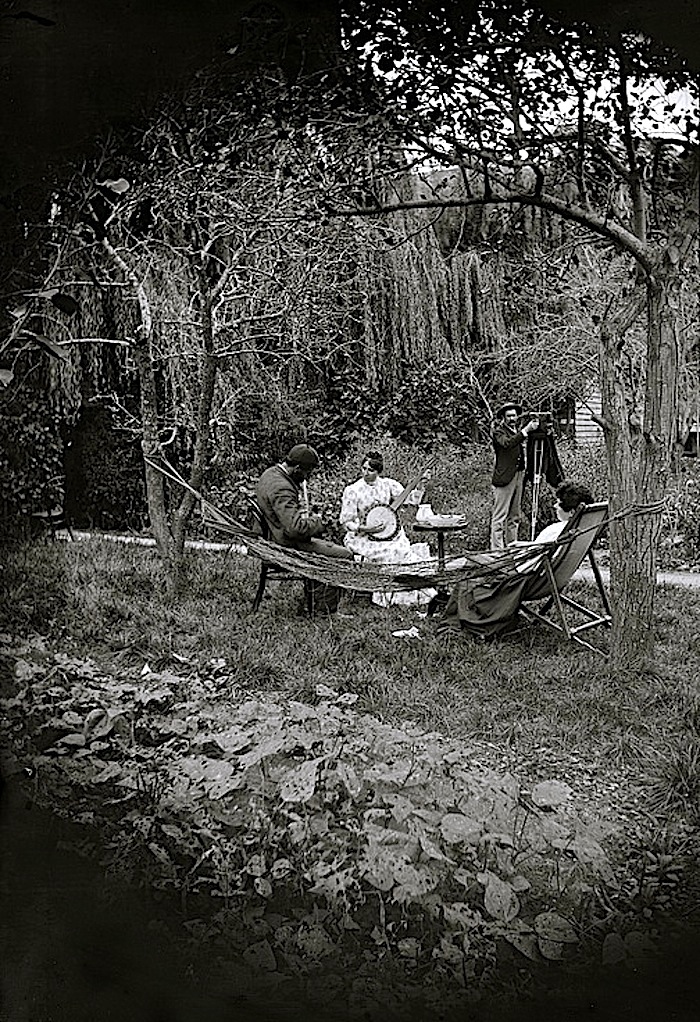
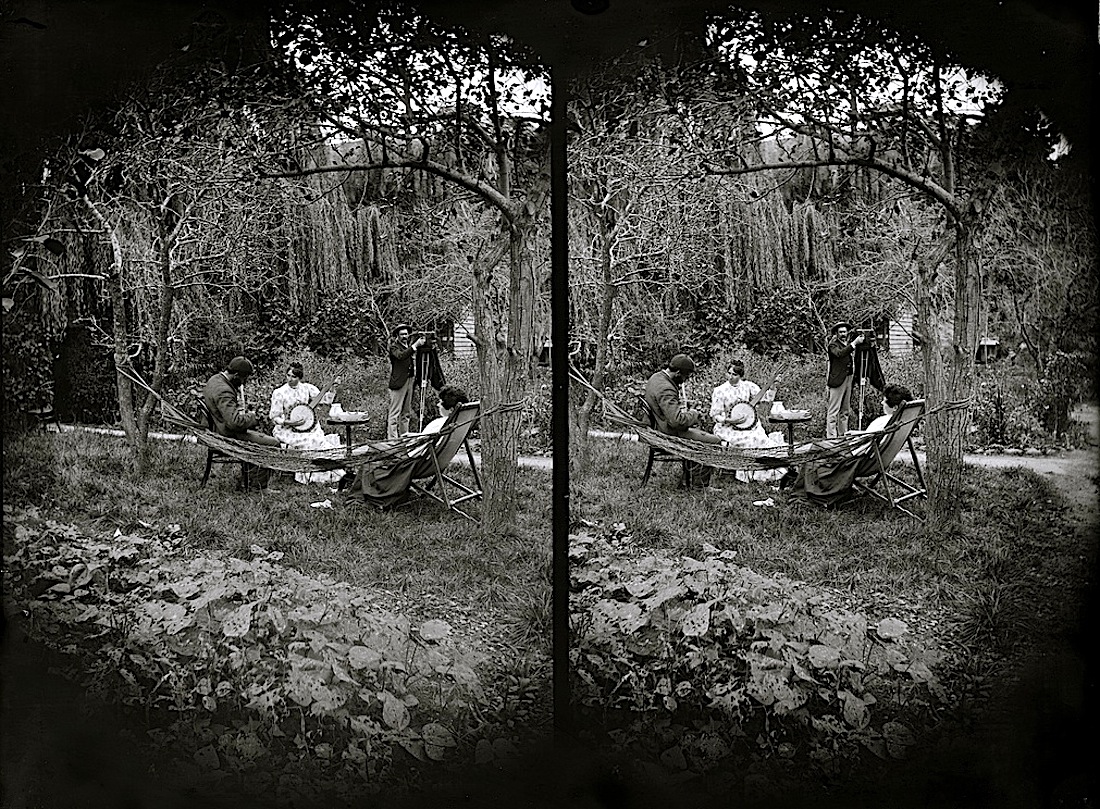
“Group in the garden of William and Lydia Williams, Carlyle Street, Napier,” ca. 1890, a stereographic image by William Williams, via the National Library of New Zealand Commons on flickr.
The online catalogue of the Alexander Turnbull Library in Wellington provides further details:
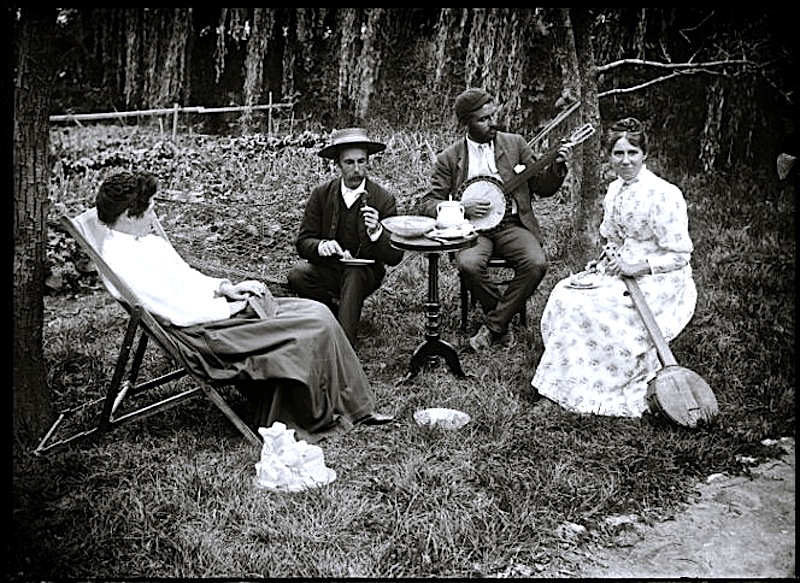
Lydia Williams is in the centre, playing the banjo. Seated at the right is her sister, Amy Devereux. The man with the camera is Russell Duncan. The other man’s identity is unknown but it is possible he was a member of a group such as the Fisk Jubilee Singers, a troupe of Negro singers and musicians who toured New Zealand in the late 1880s. Photograph taken by Lydia’s husband William Williams.
Russell Duncan was later to become a well known photographer and historian of Napier.
Another photo by Williams, below, also from the Alexander Turnbull Library, seems to show the same group, on the same day.
The man eating may be Williams, rather than Duncan.
What junipers are these, inlaid With flame of the pomegranate tree? The god of gardens must have made This still unrumored place for thee To rest from immortality, And dream within the splendid shade Some more elusive symphony Than orchestra has ever played.
Last February, we took our visiting oldest daughter to Nyungwe National Park and hiked the first half of the trail that includes a tree canopy walkway. Last week, with second daughter and friend in tow, we completed the entire circuit.
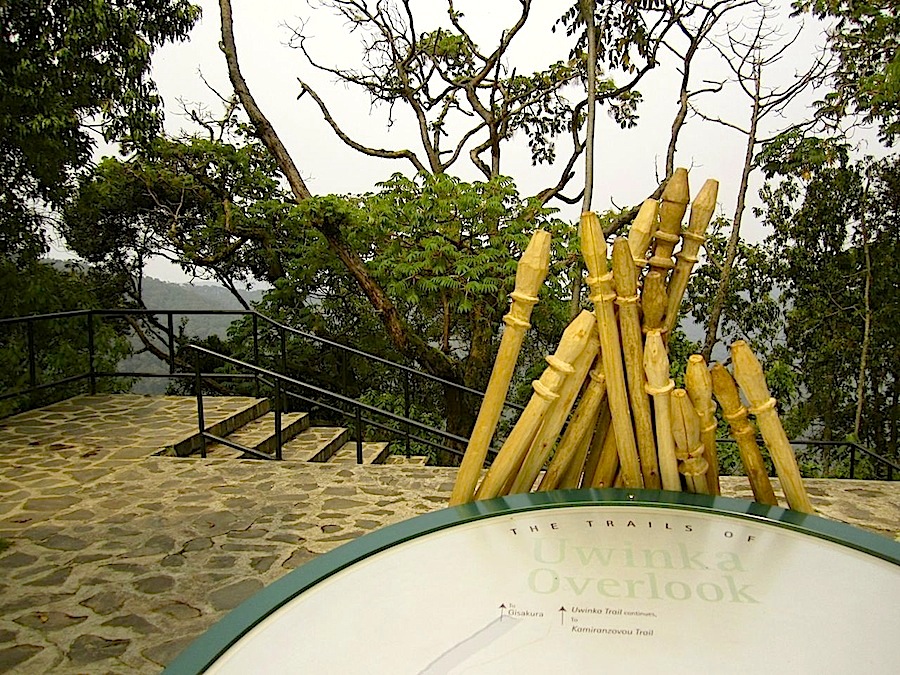
The hike started with us tucking our pants legs into our socks (against ants) and receiving walking sticks.
Although the paths are well-maintained, the sticks are necessary for the steeper, sometimes slippery sections.
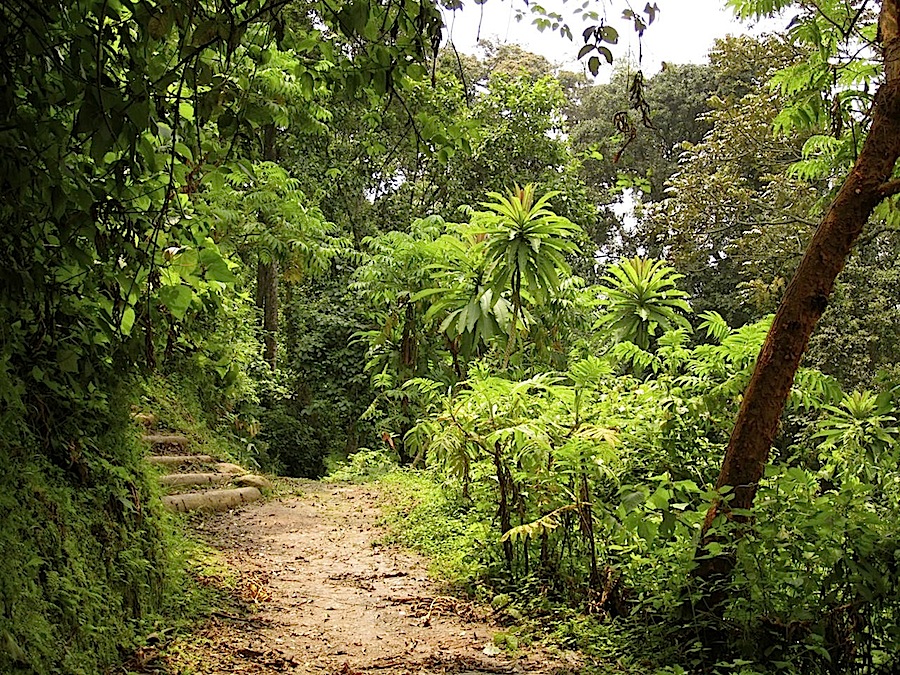
The steps shown above are the first of many, many, many on a long descent to the canopy walkway. (The welcome center is at one of the highest points in the park.)
It was a hazy day, so I can’t show you the great mountain views that are otherwise visible along the way, but you can click here to see my photos from last February.
Photo by Laura Koran
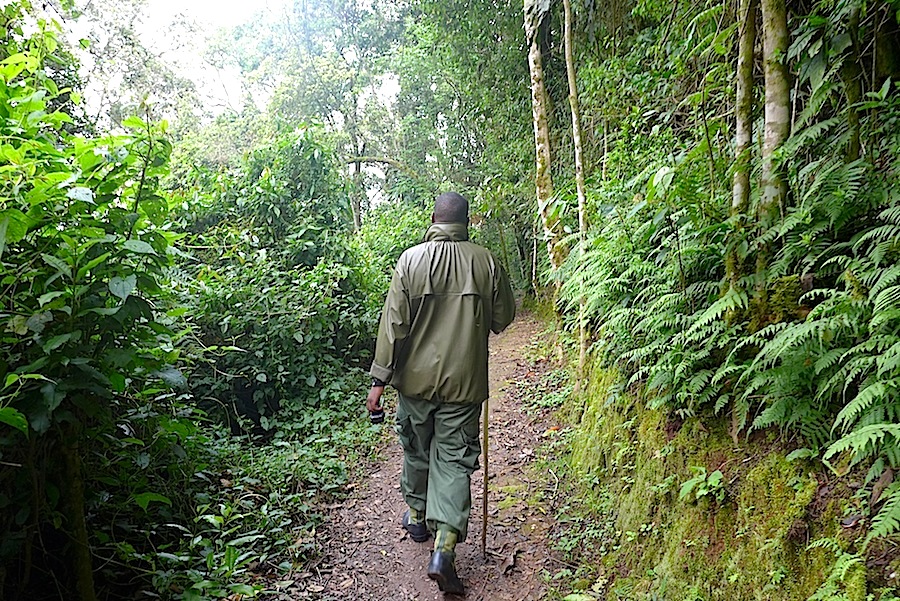
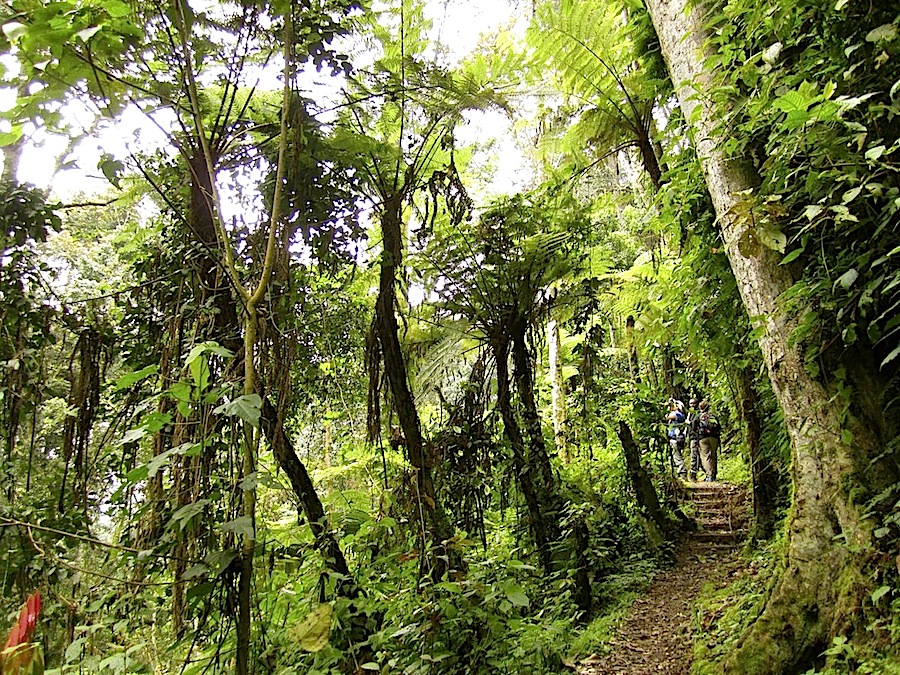
Above: Our guide led the way. He spotted a number of blue monkeys and turaco birds for us.**
(The earth walls that were cut when the trail was created — to the right of the guide above — bring the smaller plants of the forest floor to almost eye level. I’ve put pictures and names of some of them in a photo gallery, which you can scroll through by clicking on ‘Continue reading’ at the end of this post.)
Photo by L. Koran
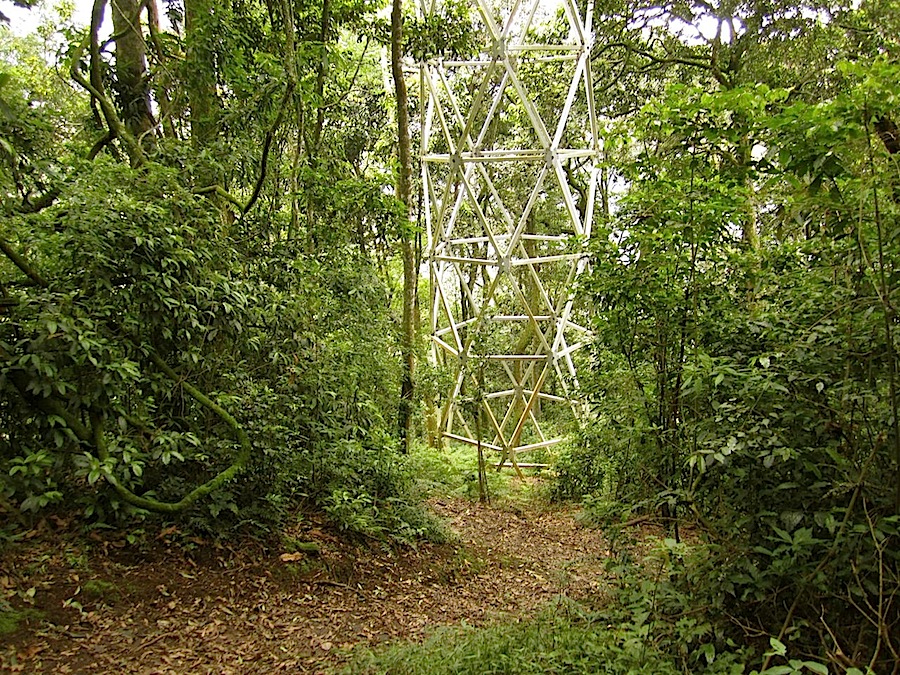
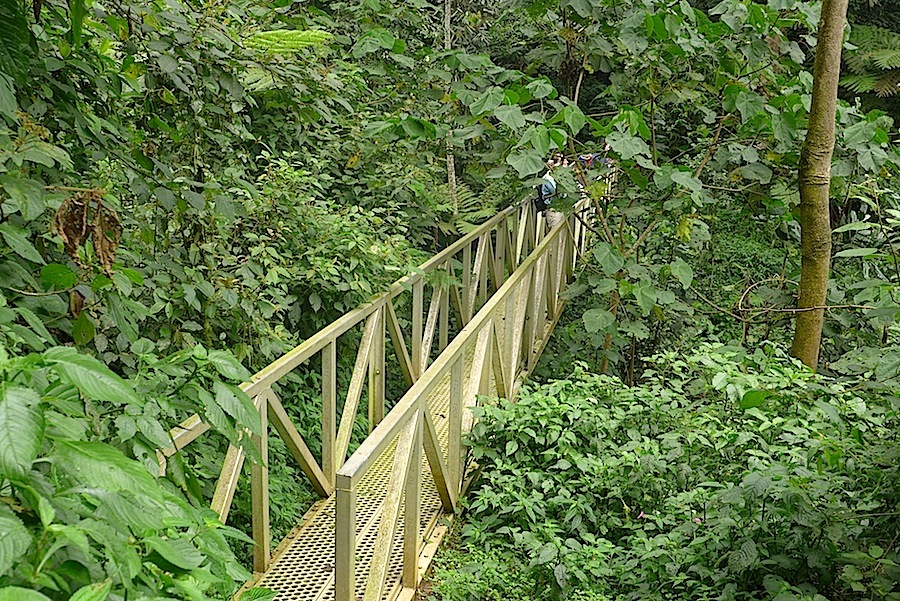
Above: We arrive at the beginning of the canopy walkway.
Photo by L. Koran
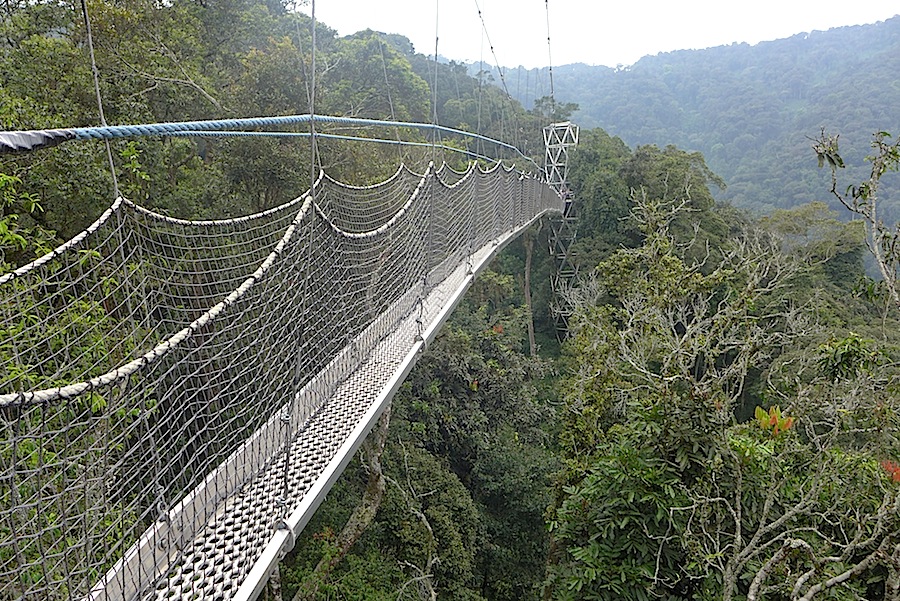
Above: The middle and highest section is 187′ (57 m.) above the ground.
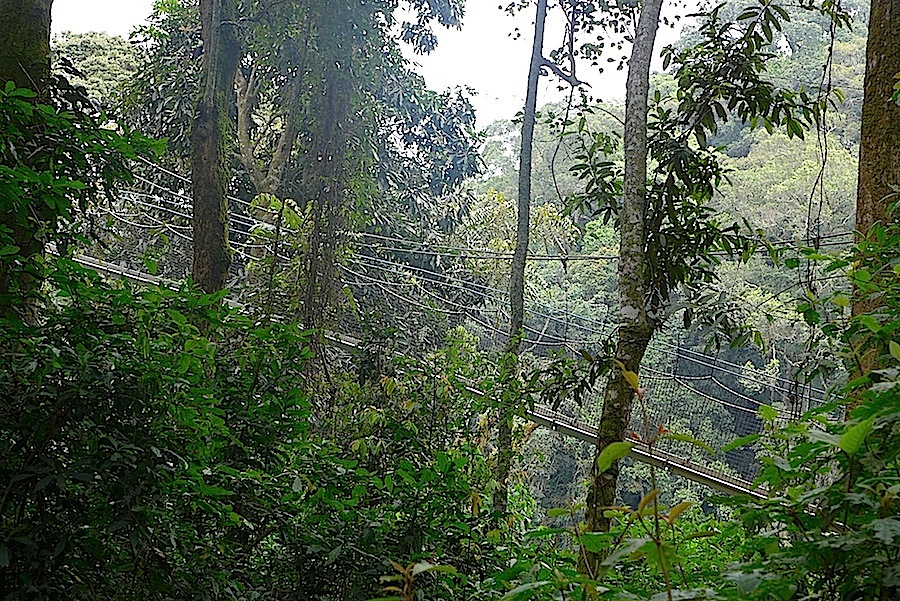
During last year’s visit, with only the three of us and the guide, the walkway swung less, and I stopped a few times to look down and take pictures. (You can see them here.)
This time, in a group of about fifteen — with eight people crossing the walkway at a time — the shaking made me keep my eyes on the back of the person in front of me.
Photo by L. Koran
Above: Our guide starts across.
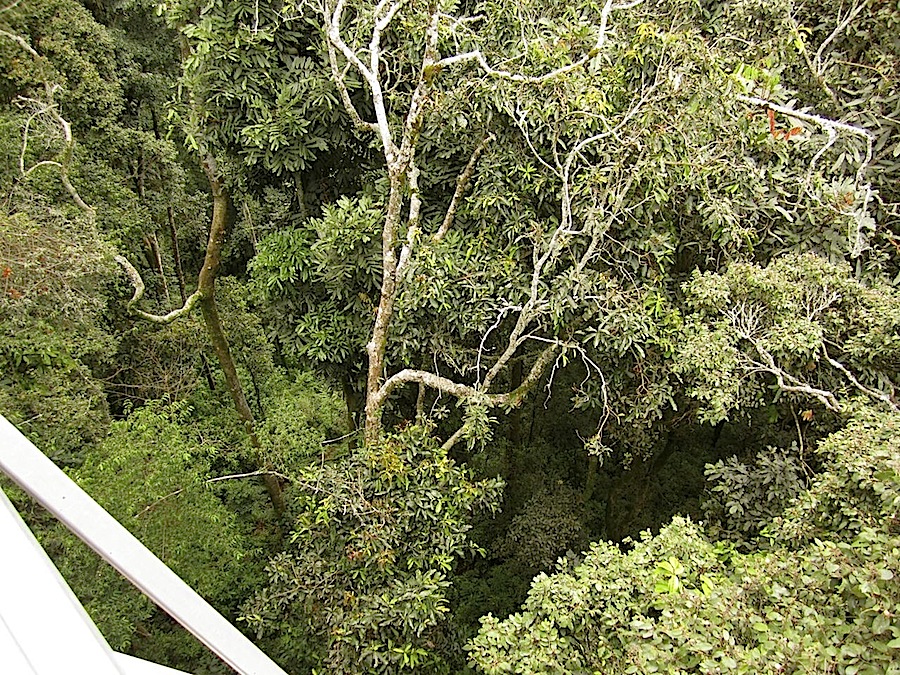
Above: I did look down after I reached the top of the second tower.
Above: Back on the ground below the second tower.
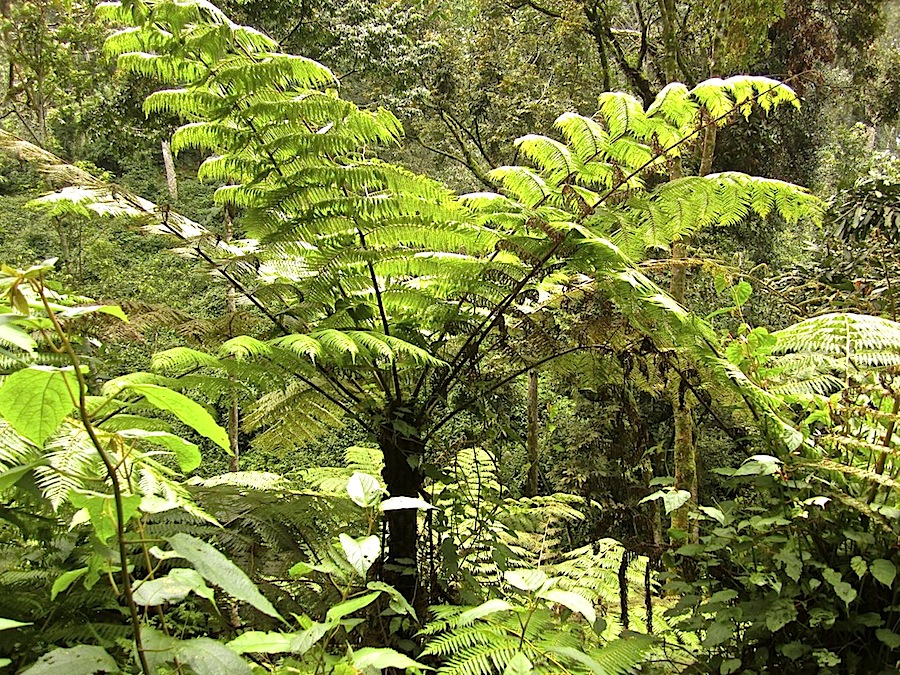
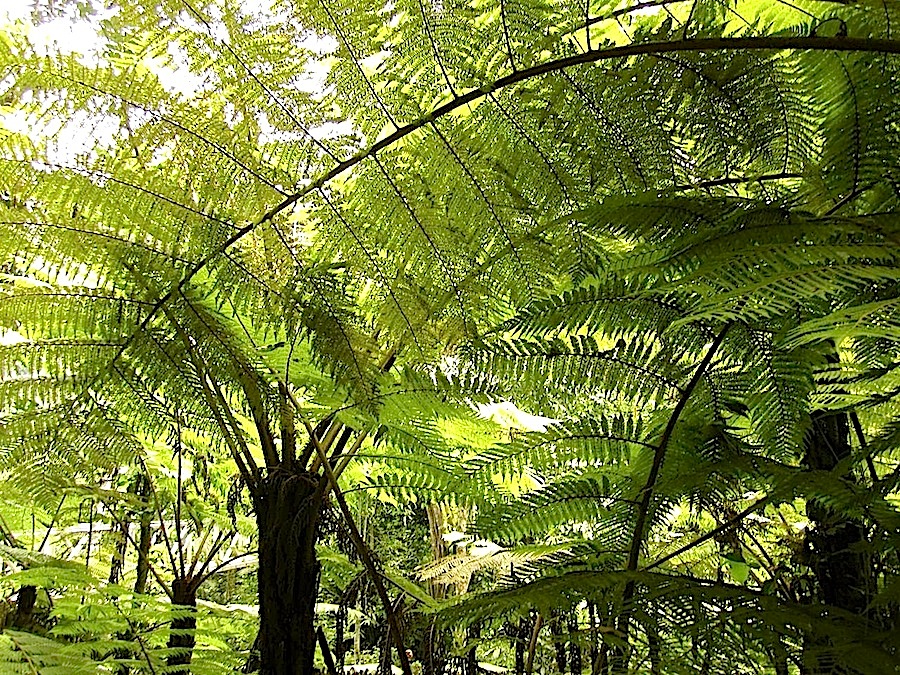
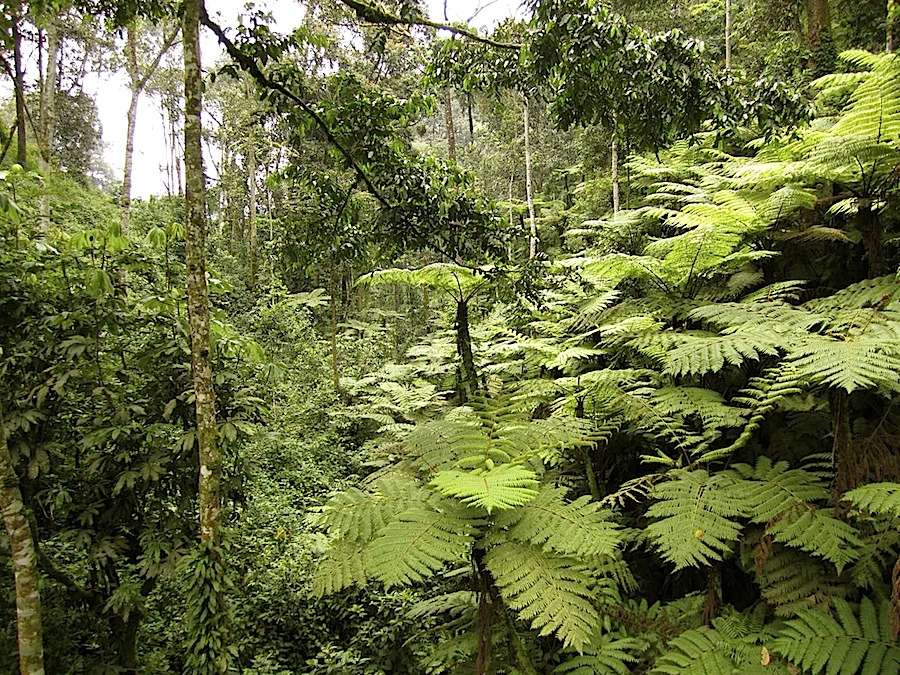
When you cross the middle section of the walkway and (dare to) look down, you see a narrow valley of tree ferns and hear the moving water of a stream. The second half of the hike continues on to that valley. There, we saw hundreds of the tall ferns.
In fact, this trail is named — in Kinyarwanda — for the tree ferns: the Igishigishigi Trail.
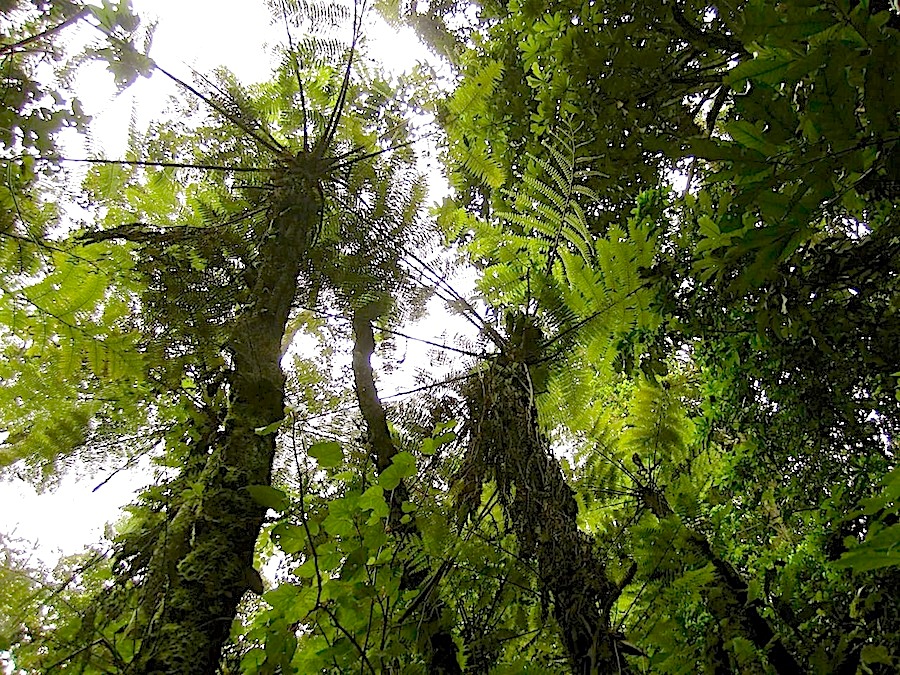
Cyathea manniana is one of two tree ferns in the park. The other is C. dregei. Manniana only grows in undisturbed forest, while dregei can be found along the sides of the road through the park (it also has persistent old leaves).
Above: Looking up into the ferns. C. manniana can grow to almost 20′ (6 m.) tall.
“C. manniana is traditionally used as a medical plant to treat snake bites,” according to my field guide.*** There are nine kinds of snakes in the park, but only one is poisonous.
Photo by L. Koran
Above: A small bridge crosses the stream that we heard from the canopy walkway. The guide meant to take us down to the water, but there were too many biting ants on the path.
Tree ferns are one of my favorite plants, but unfortunately, they would not grow well in the cold or the heat of our Washington, D.C., garden.
Above: Leaving the ferns behind, we started back to the welcome center.
The Igishigishigi Trail is 1.3 miles (2.1 km.) long and takes 1 1/2 to 2 hours. It is rated ‘easy,’ but a large part of it involves descending and ascending steps. It’s a solid workout.
The trail begins at an elevation of 8,038′ (2450 m.) and descends to 7,530′ (2295 m.).
Above (on the right): Nearing the final set of steps, we found a large group of Lobelia gibberoa or giant lobelias.
With their long candles of greenish white flowers, the plants can grow to 29′ (9 m.) in height. Latex from the stems is traditionally used to treat irritation from stinging nettles.
Above: After the hike, we went back to the Nyungwe Forest Lodge on the Huye-Rusizi Road. The yellow flowers along the edge are a Senecio species.
** It’s also quite possible to see turacos flying from tree to tree from the pool at the Nyungwe Forest Lodge.
***An excellent book about the park is the Illustrated Field Guide to the Plants of Nyungwe National Park [of] Rwanda by Eberhard Fischer and Dorothee Killman. It’s 770 pages long, with color photographs of 650 plants. You can buy a copy here. Unfortunately, it’s $71. Some copies were printed for the Rwandan tourism office, and I bought mine in a Kigali bookstore for about $25, but I haven’t seen any on sale here for about a year.
My daughter and her friend visited us last week — after hiking to the top of Mt. Kilimanjaro. (It took them seven days, and my daughter reached the summit during a blizzard with lightning!)
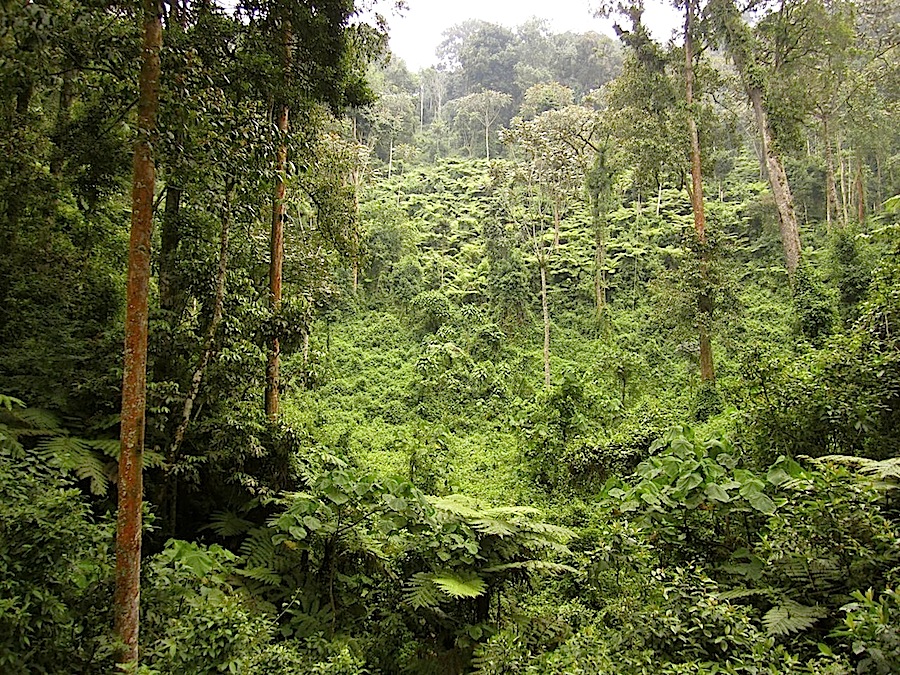
While they were here in Rwanda, we went down to the southwest to see Nyungwe National Park, the largest protected mountainous rain forest in Africa.
We spent two nights at the Nyungwe Forest Lodge, which I know I’ve written about twice before. But I still wanted to post these photos, because I find its landscape so serene. . . and so romantic — a tea garden at the edge of a rain forest.
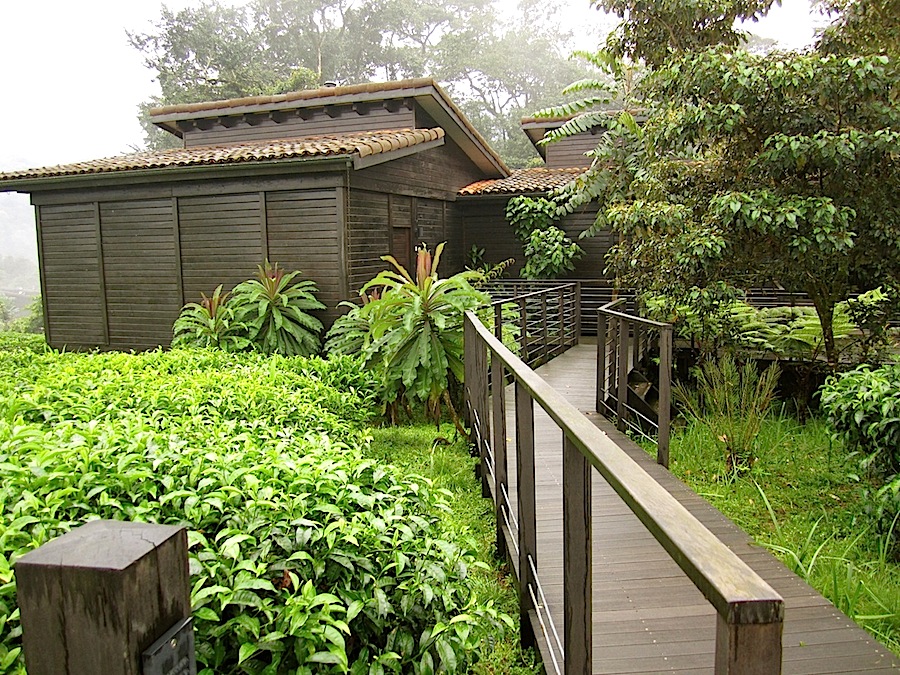
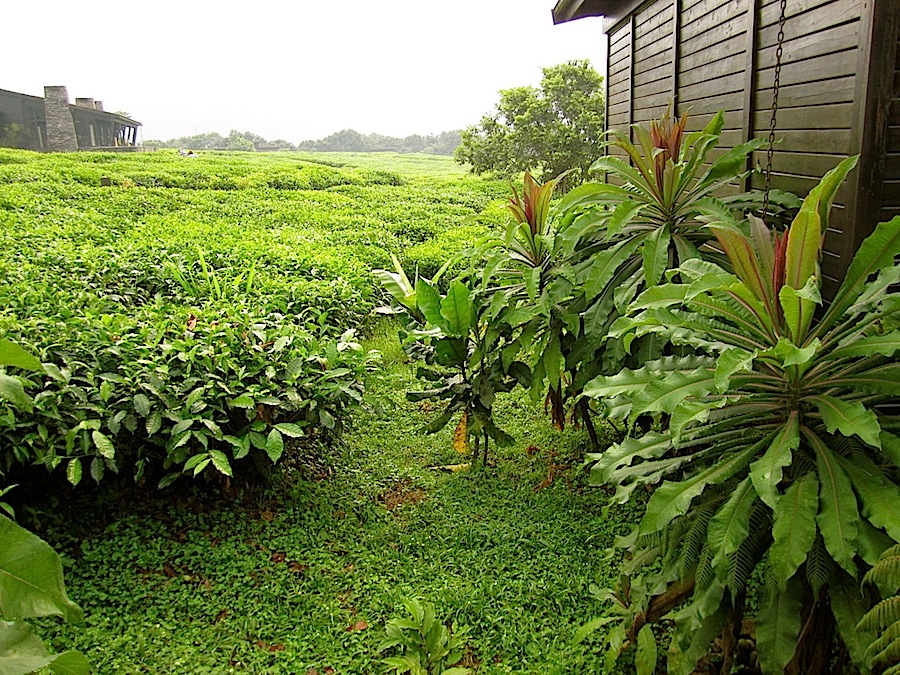
The design is simple, yet extravagant — a few curving paths through thousands of Camellia sinensisbushes.
Above: the pool house in early morning.
We arrived on Wednesday in early afternoon. There was a lot of mist, and it was so chilly that we turned on our room’s heater for about an hour. But it only rained once, briefly, during our stay.
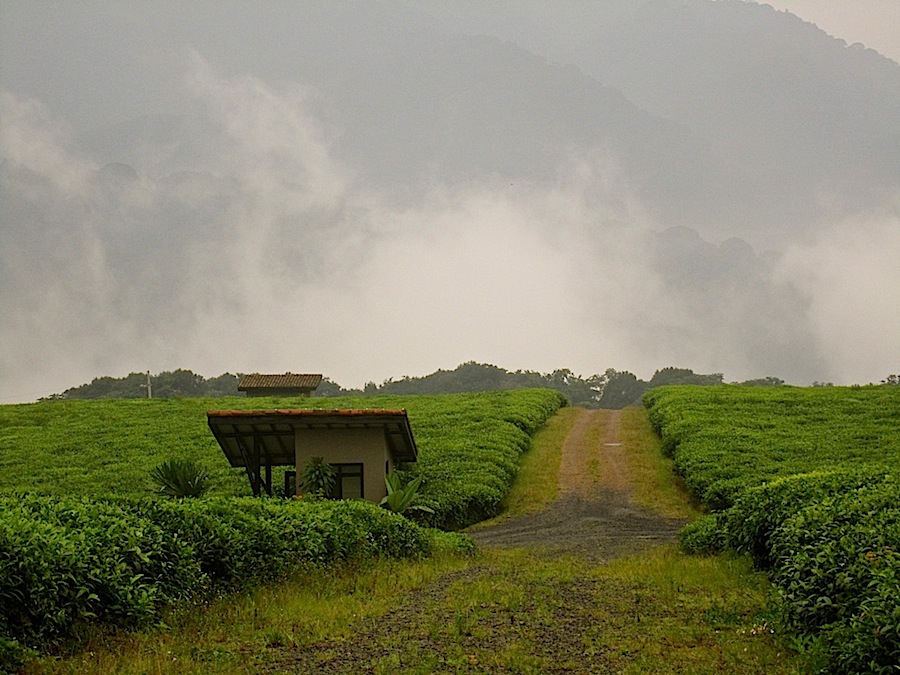
Above: the Lodge gatehouse.
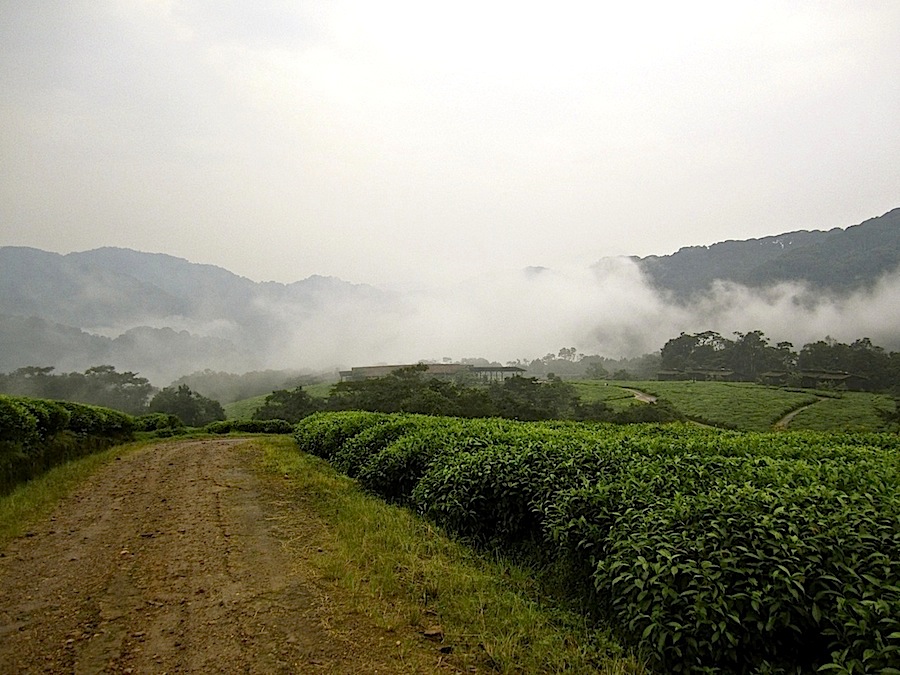
Above: the Lodge in the distance.
Above: yellow native Crassocephalum montuosum poking up through the tea bushes.
Above and below: views from the main building’s porch.
Above and below: narrow paths through the field. A local cooperative picks the tea and keeps the income from its sale.
Above: The cabins, with two to four rooms each, are sited at the edge of the tea field.
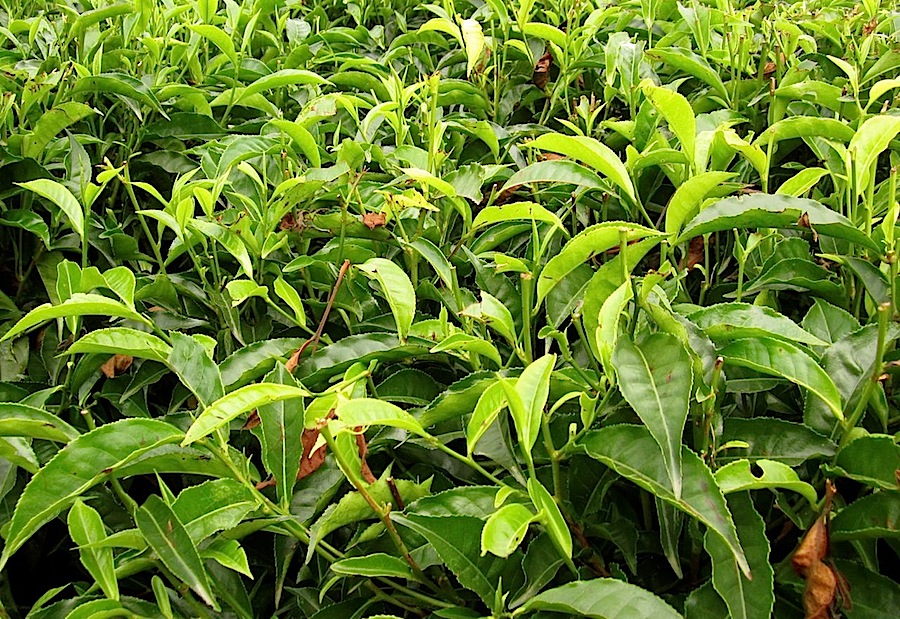
Above: the bushes around the Lodge looked like they had been picked recently. Only the terminal bud and the top two leaves of each stem are plucked off.
Above and below: the front of each cabin is planted with native perennials and small trees from the forest.
Above: these giant lobelias (Lobelia gibberoa) are planted right into the grass and other low weeds wild plants.
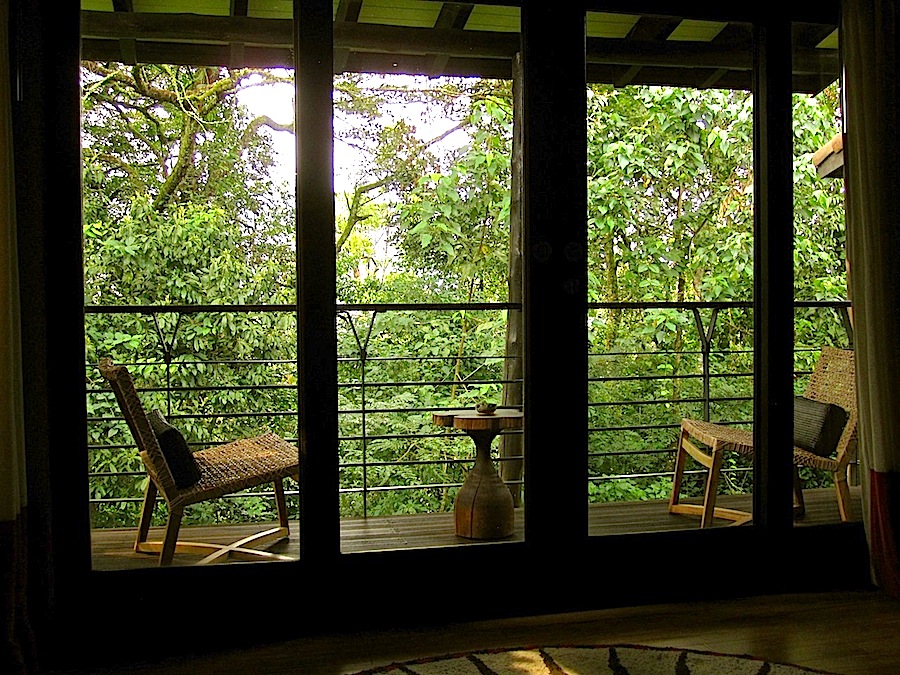
Above: each cabin’s back balcony looks out into the rain forest. The land drops down very steeply about six or seven feet behind the cabins, so their windows really look into the tops of trees. It’s not uncommon to see monkeys there.

 The north porch of the Vhay House, 835 Leguna Street, Santa Barbara, California, April 1934, by C. A. Fletcher for an Historic American Buildings Survey (HABS), via Library of Congress Prints and Photographs Division.*
 The Rafael Gonzalez House, which was owned by Louise and David Vhay at the time of these photos, was built in 1825. It is a typical adobe townhouse of the Mexican California period, with walls over 2′ (.61 m.) thick.
 Above: bougainvillea above and calla lilies below, along the north porch, by C. A. Fletcher.
 Above: north porch, by C. A. Fletcher (cropped by me).
 Above: south porch from the southwest. Photographed April 1934, by H. F. Withey.
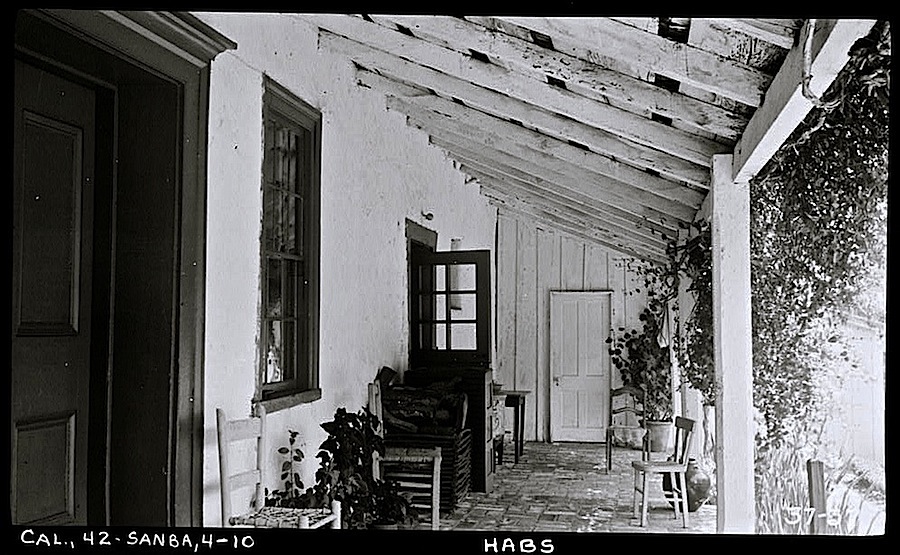 Above: detail of south porch, east end, by H. F. Withey.
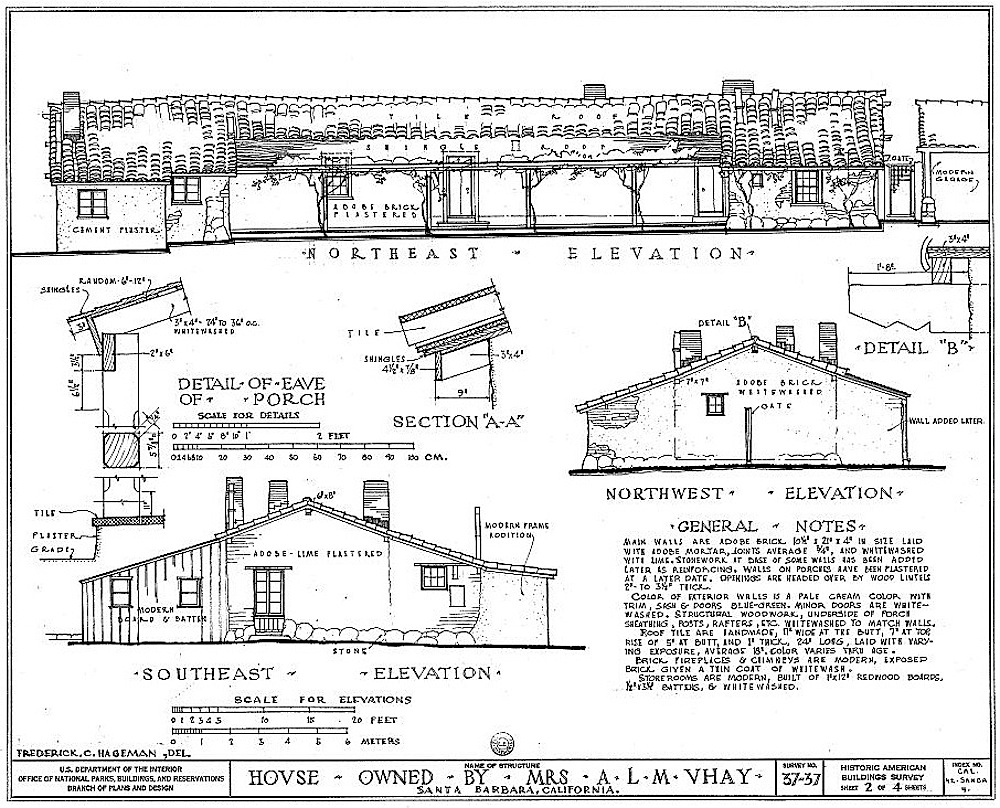 Above: 1934 drawing by Frederick C. Hageman (also the small plan above).
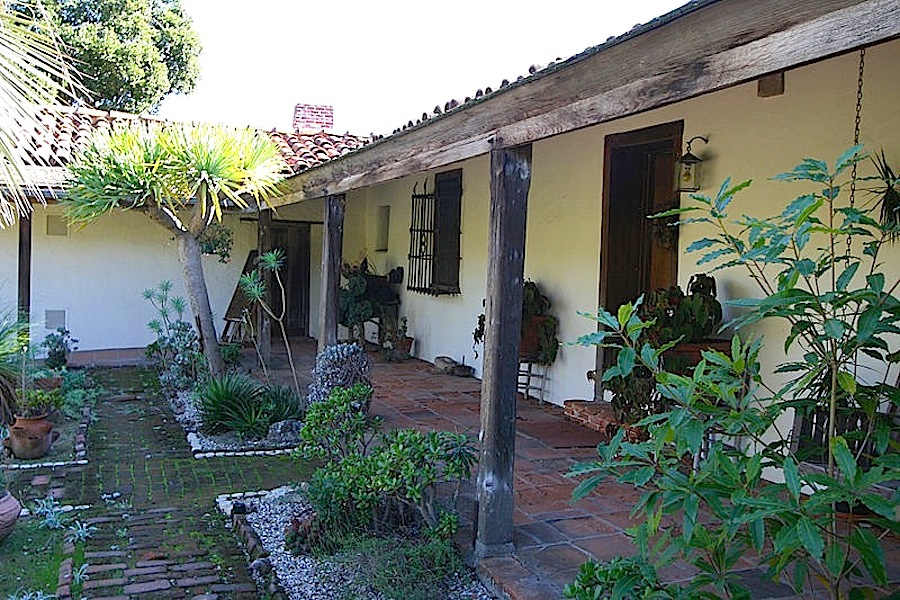 Above: 2010 photo of the Rafael Gonzalez House, now a rare book store, by Dilly Lynn, via Wikimedia Commons. There’s also a nice painting of the house in 1953 here.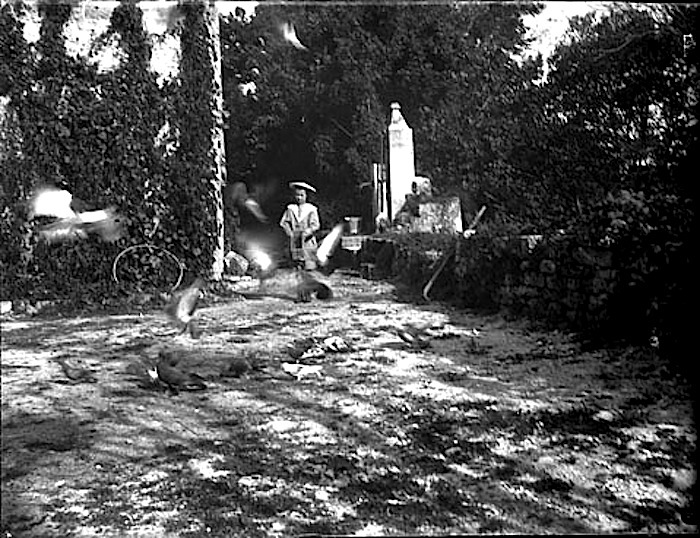










 enclos*ure