Vintage landscape: Poca, WV

Vintage landscape/enclos*ure: Poca, W.V., 1973,, via Natl. Archives“Water cooling towers of the John Amos Power Plant* loom over Poca, [West Virginia], home that is on the other side of the Kanawha River. Two of the towers emit great clouds of steam.”

This photo† (shown here with original caption) was taken in August 1973 by Harry Schaefer for DOCUMERICA, a photography project of the U.S. Environmental Protection Agency.

There are more pictures from DOCUMERICA here.


*Three-unit coal-fired power plant.

†Via the U.S. National Archives Commons on flickr.

Vintage landscape: Chicago mural

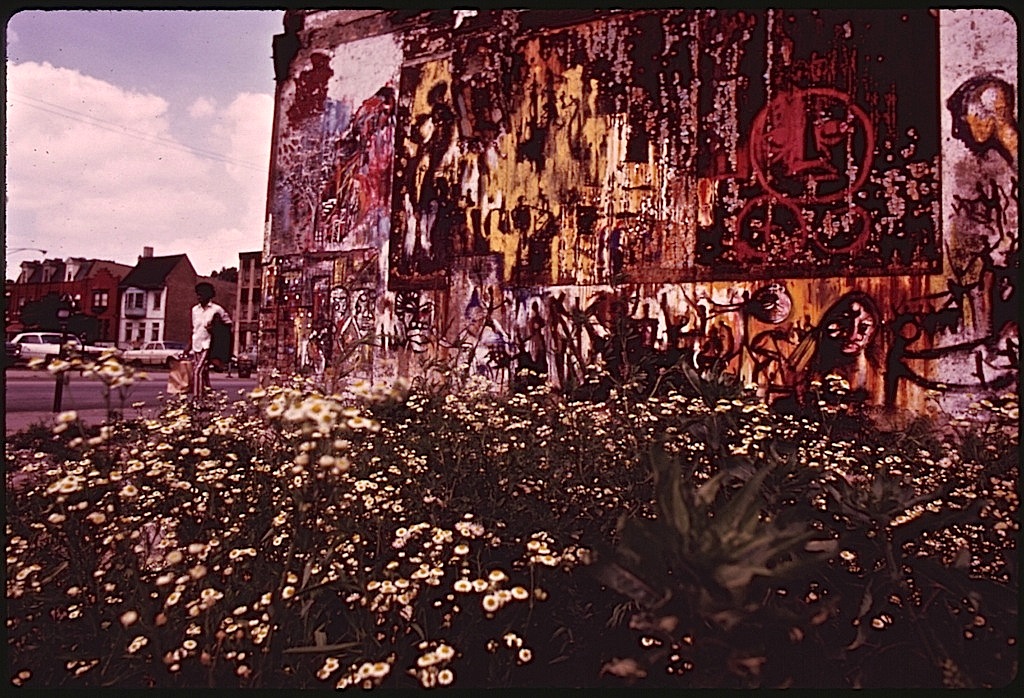
Vintage landscape:enclos*ure - Chicago mural, 1973, John H. White, via Natl. Archives“Deteriorated wall mural adjacent to a vacant lot on 35th Street in South Side Chicago. Many Black artists are active in painting outdoor murals in the city’s Black communities. They feel it is a means of sharing art with people of the ghetto who never go to the museums.”

This July 1973 photo was taken by John H. White for DOCUMERICA, a 1970’s photography program of the U.S. Environmental Protection Agency.  It’s shown here with the original caption.

The EPA hired over 100 photographers to “document subjects of environmental concern.”  The work continued until 1977 and left behind an archive of about 20,000 images.

In addition to recording damage to the nation’s landscapes, the project captured “the era’s trends, fashions, problems, and achievements,” according to the U.S. National Archives, which held an exhibit of the photos, “Searching for the Seventies,” in 2013. 

There are more pictures from DOCUMERICA here.

Vintage landscape: Los Angeles

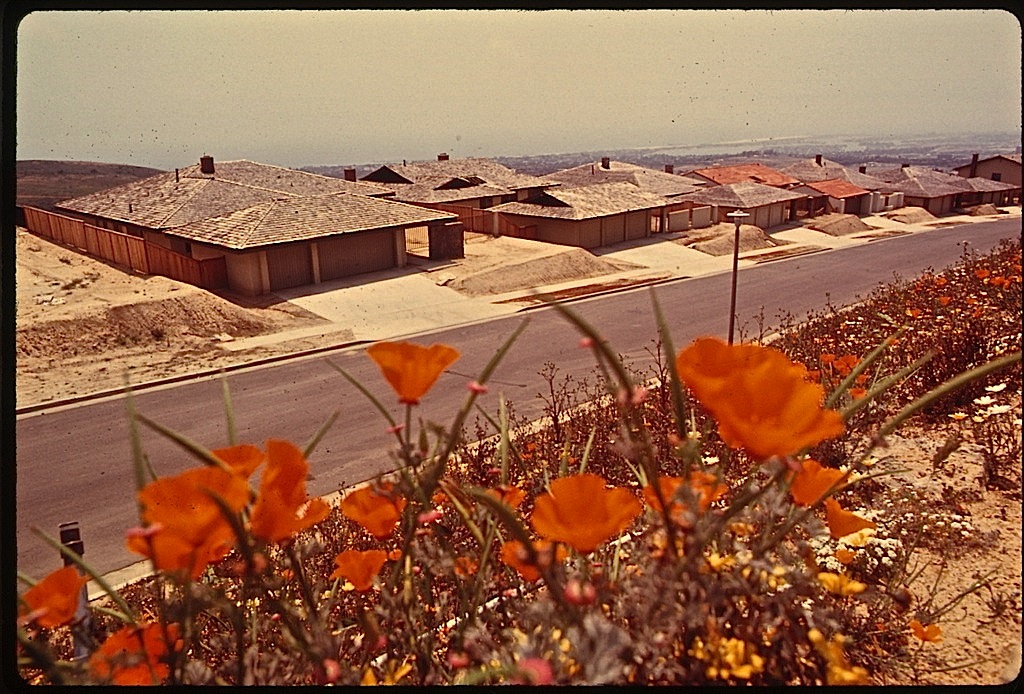
L.A. houses, DOCUMERICA, National Archives“Flowers planted around Spyglass homes built on a terraced hillside[, Los Angeles], May 1975.”

This photo was taken by Charles O’Rear for DOCUMERICA,  a 1970’s photography program of the Environmental Protection Agency.

There are more pictures from DOCUMERICA here.

Neptune Road, Boston

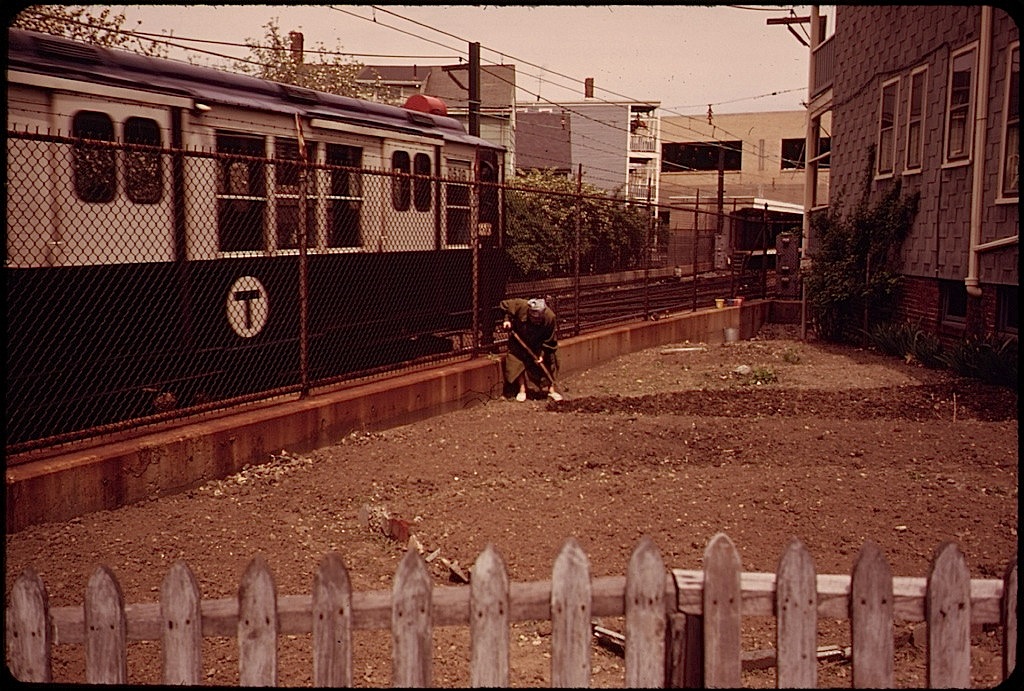
Life in gardens/enclos*ure: East Boston, 1973, by M.P. Manheim, via Natl. ArchivesA woman turns her garden soil while a Massachusetts Bay Transit Authority train rushes past the northeastern side of Neptune Road in East Boston, Massachusetts.

This photo* was taken in May 1973 by Michael Philip Manheim for the DOCUMERICA program of the Environmental Protection Agency.

Manheim captured East Boston, particularly around Constitution Beach and Neptune Road, at a moment of massive expansion of transportation infrastructure, including Interstate 90 (which terminates in East Boston) and an above-ground portion of the city’s rail system (both projects completed in the 1950s). But more than any other piece of infrastructure, Logan Airport was the source of the biggest and potentially most harmful changes.

Logan’s expansion in the mid-1960s led to the removal of a Frederick Law Olmsted-designed park (Wood Island park), and its 1970s expansion led to the displacement of residents on Neptune Road as well as mounting local noise and air pollution issues.

Forty years later, the lively neighborhood Manheim found along Neptune Road hardly exists, replaced with parking lots and runways.

— Mark Byrnes, for the CITYLAB blog of The Atlantic

There are more photos of East Boston by Manheim  here.


*Via the U.S. National Archives Commons on flickr.

Jamaica Bay, New York

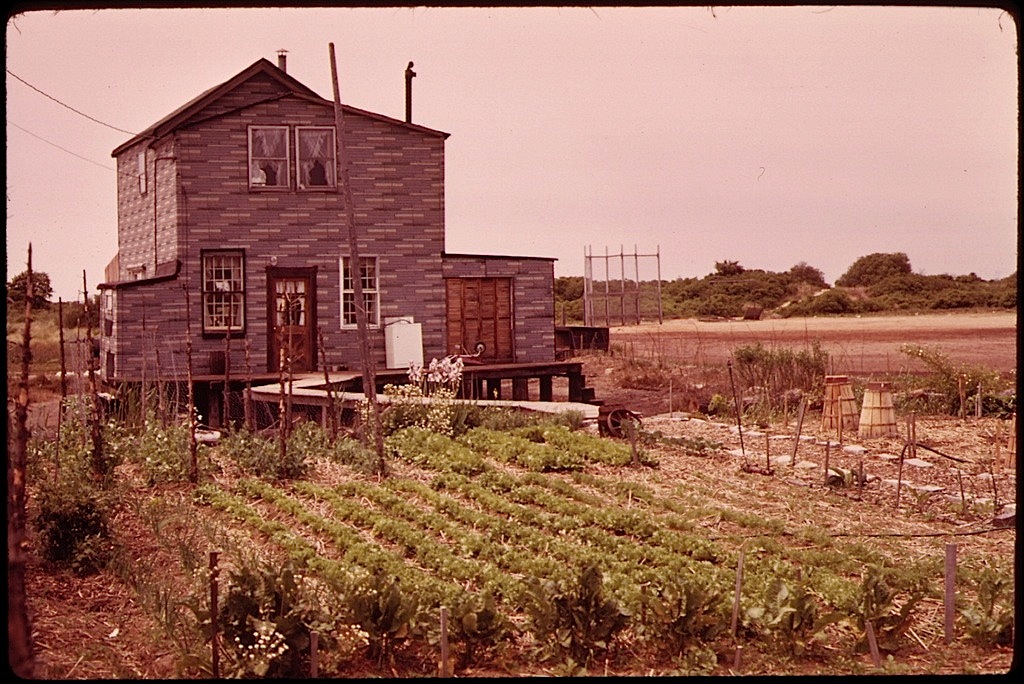
Vintage landscape/enclos*ure: Jamaica Bay vegetable garden, 1973, by A. Tress, via National Archives“Broad Channel, marginal land in Jamaica Bay near the JFK Airport. New York City owns this land and leases it for five year periods. This renter is cultivating a vegetable garden.”

Arthur Tress took this picture* in May 1973 for DOCUMERICA, a program of the U.S. Environmental Protection Agency, which “photographically document[ed] subjects of environmental concern” from about 1972 to 1977.

Note that the house is raised on pilings, as well as the walkway from the back door to the garden.

There are more pictures from DOCUMERICA here.


*Via the U.S. National Archives Commons on flickr. Caption by photographer or EPA.