The Sunday porch: Dyess Colony

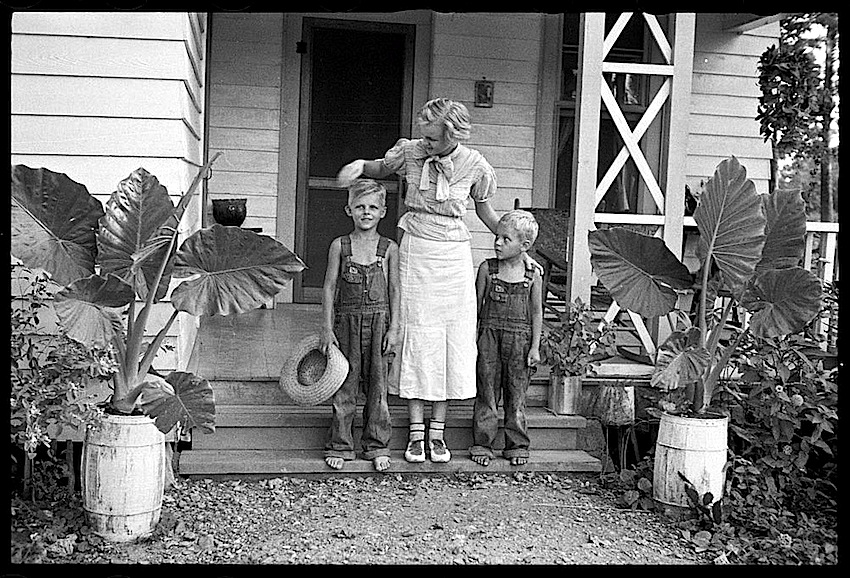
Porch, Dyess Colony, Arkansas, 1940, Library of CongressBeautiful elephant ears. This porch belonged to a farming family who were “resettled” in “Colonization Project No. 1” in Mississippi County, Arkansas.

The photos* were taken in August 1935 by Arthur Rothstein. He was on assignment for the U.S. Farm Security Administration.
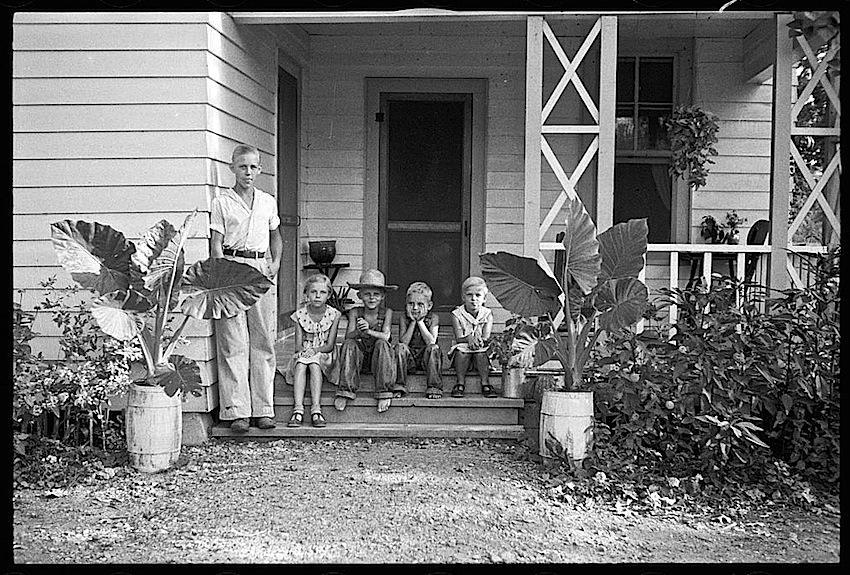
Children, Dyess Colony, Arkansas, 1940, Library of Congres

The government-sponsored agricultural community had just been established the year before — the brainchild of local cotton planter William Reynolds Dyess, who was also Director of the Arkanasas Emergency Relief Administration.
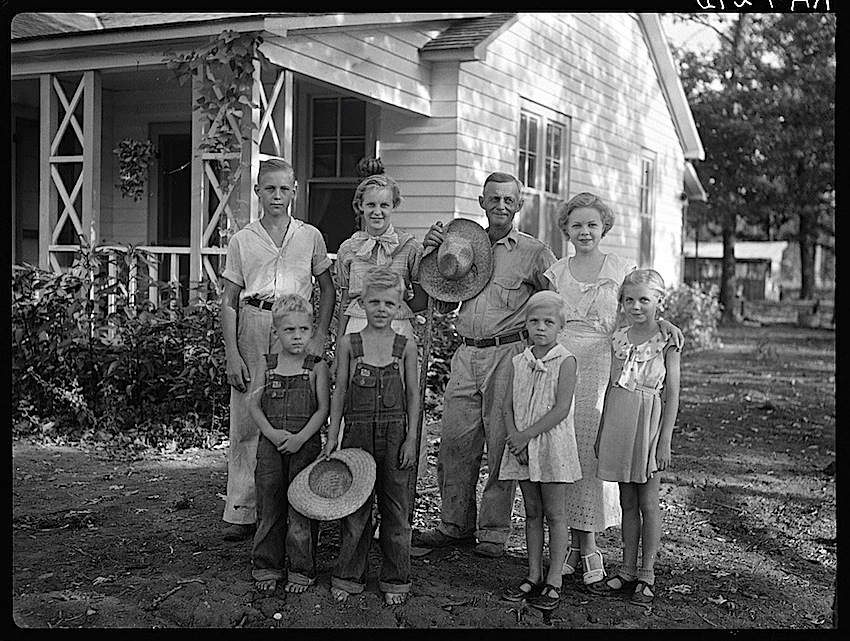
Family, Dyess Colony, Arkansas, 1940, Library of Congres

Dyess wanted to provide aid to displaced tenant farmers and sharecroppers. His idea was to put 800 families on 20 to 40-acre uncleared bottomland plots with new houses.
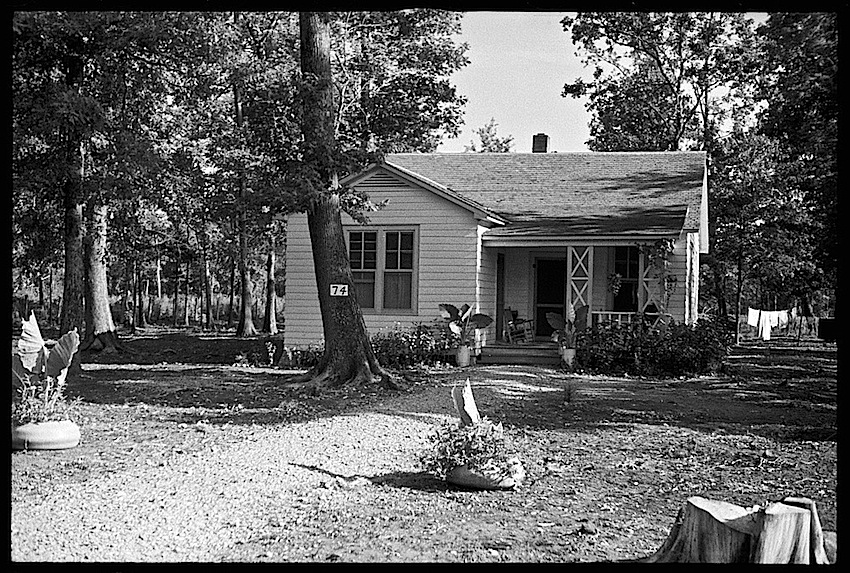
Dyess Colony, Arkansas, 1940, Library of Congres

The project — scaled back to 500 families — was underwritten by the New Deal Federal Emergency Relief Administration. (It was absorbed by the Farm Security Administration in 1944 and made independent of the federal government in 1951. )

“The colony was laid out in a wagon-wheel design, with a community center at the hub and farms stretching out from the middle. . ,” according to the online Encyclopedia of Arkansas. “Each house had five rooms with an adjacent barn, privy, and chicken coop. . . , plus a front and back porch.”
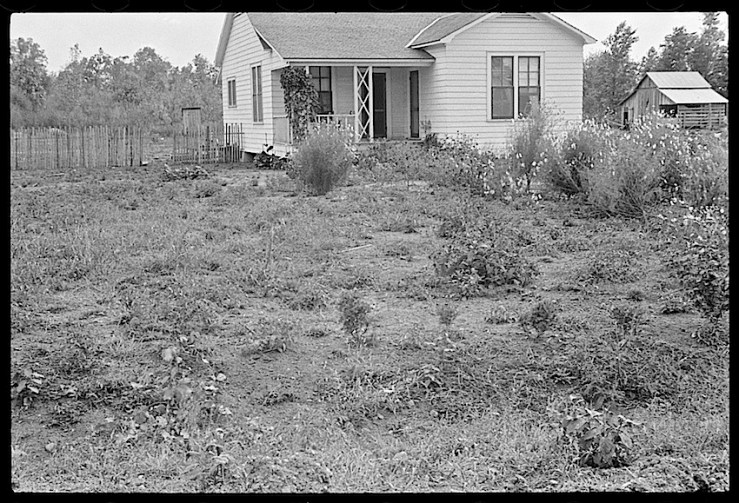
Another Dyess Colony House, Arkansas, 1935, Library of Congress
Another colony house with a mass of flowers along the front path.

Dyess was killed in a plane crash in 1936, and the colony was given his name.

Among the resettled farmers — all of whom were white — was the father of country singer Johnny Cash.  Cash lived  in house #266 from the age  of three until his high school graduation in 1950.

Today, Arkansas State University has restored the Cash home (open to the public) and is working on an adjacent original colony home, as well as the administration building and theater.
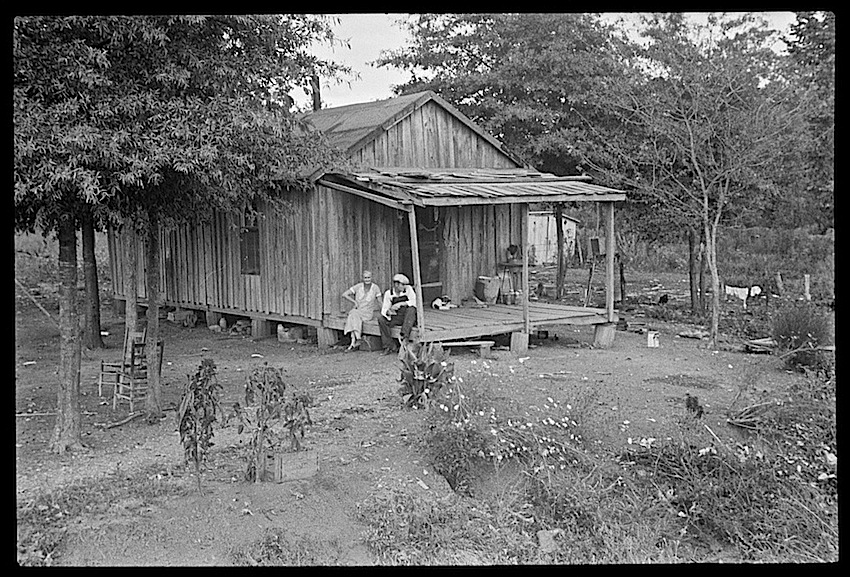
Sharecropper's house, Dyess Colony, Arkansas, 1935, Library of Congress

The 1935 photo above by Ben Shahn was captioned, “Sharecropper’s house optioned. Dyess Colony, Arkansas.”  I’m not sure what that means, but the picture gives an example of original local farm housing.

I like the small semi-circle of trees and the two chairs facing out on the left side.


*All photos but the last were by Rothstein, taken in August 1935. All are via Library of Congress Prints and Photographs Division.

Vintage landscape: food cellar

Food storage, 1940, Wabash Farms, Library of Congress“Food storage cellar, Deshee Unit, Wabash Farms [Cooperative], Indiana,” May 1940, by John Vachon, via Library of Congress Prints and Photographs Division.
I found the preserves in the cellar. . . .

The black raspberries were still
delicious, each cluster
burning like years in the brain.

— Michael Waters, from “Preserves

Life in gardens: Woodbine

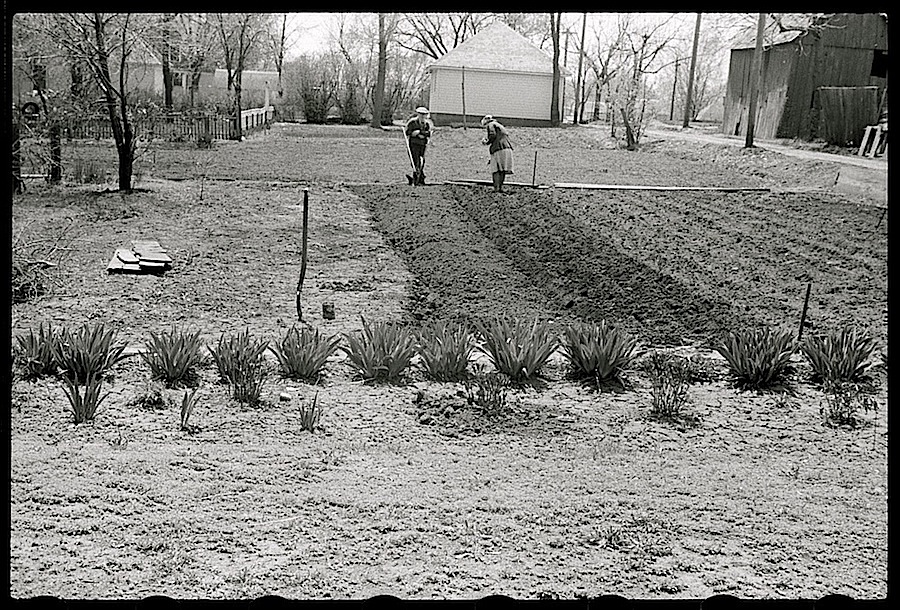
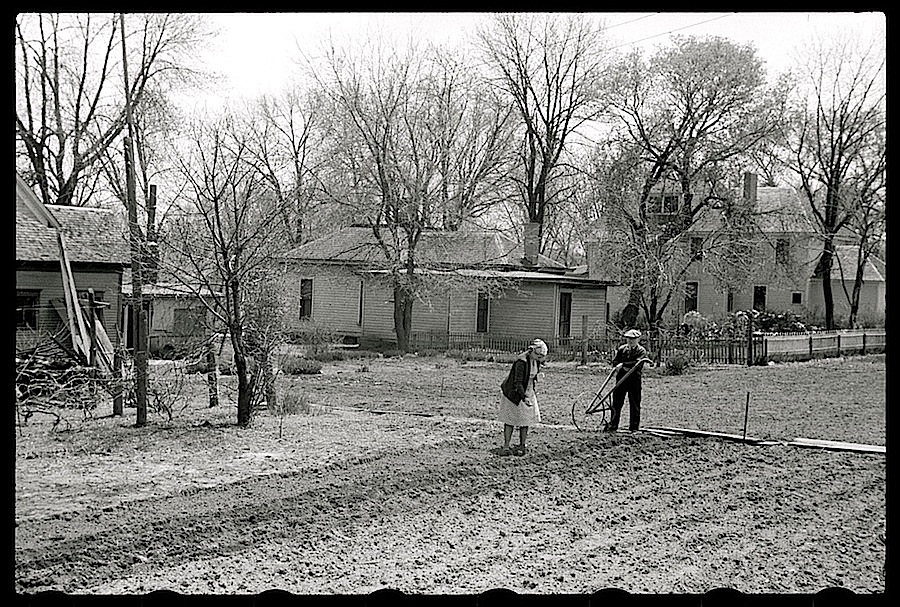
Woodbine, Iowa, 1940, J. Vachon, Library of Congress“Planting a garden in the backyard, Woodbine, Iowa,” May 1940, by John Vachon, via Library of Congress Prints and Photographs Division (both photos here).

Woodbine, Iowa, 1940, Library of Congress

In the spring of 1940, John Vachon was on assignment for the Farm Security Administration in the Midwest.

. . . I photographed Spring – clothes blowing on the wash line, kids playing marbles, women planting backyard gardens, blossoms on trees.

— John Vachon’s journal

Woodbine is a town of about 1,400 people on the Boyer River.  It was named for the woodbine vine (Parthenocissus vitacea) by the wife of the first postmaster, according to the community’s website.

A study in steps: pink umbrella

A glimpse of an old Japanese garden. . .

Steps in a Japanese garden, ca. 1900, Natl. Museum of DenmarkA hand-colored photo taken between 1860 and 1910, from a collection that belonged to journalist Holger Rosenberg,  via National Museum of Denmark.

Unfortunately, the museum does not have any other information about this image.

When has an umbrella ever
Kept the rain and the mist from entering a heart
And shaking it with dreams?

— Luis Muñoz Marin, from “Umbrella

Life in gardens: sod roof oven

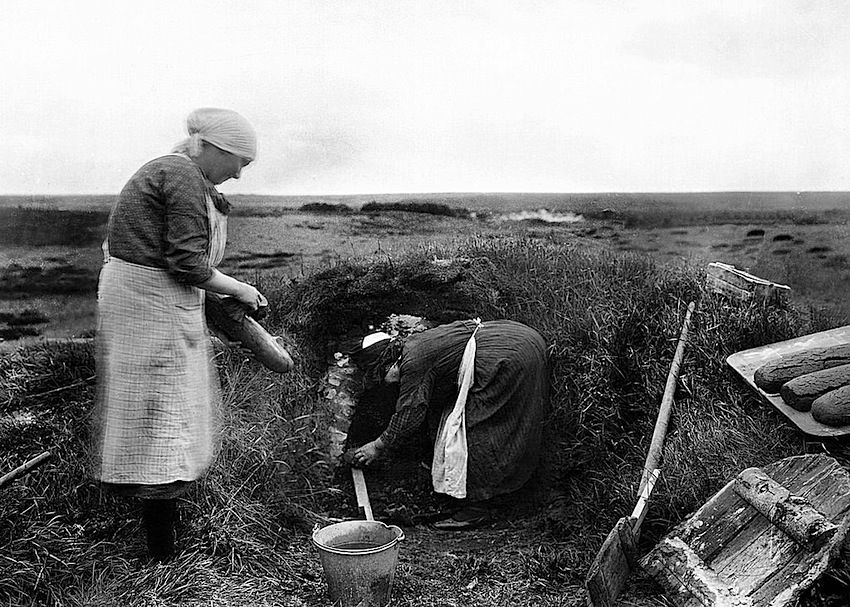
Breadbaking, West Jutland, 1929, National Museum of DenmarkBaking bread on a small farm on the moor in Koelvraa, West Jutland, Denmark, 1929, by Kai Uldall via National Museum of Denmark Commons on flickr (all photos here).

Click on the images to enlarge them. I would love to visit this landscape.

Breadbaking, West Jutland, 1929, National Museum of DenmarkTaking the bread out of the sod-covered oven.

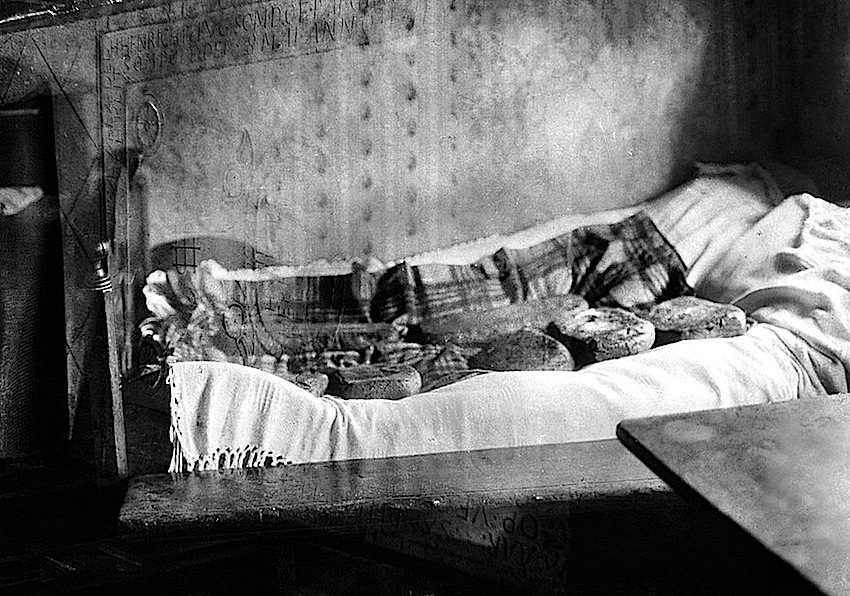
Breadbaking, West Jutland, 1929, National Museum of Denmark, slightly croppedBread cooling in a bed (photo cropped slightly by me).

Was that where the three women worked baking bread? —
Where they began at morning, by their fire under the wet boughs.
And laid the loaves in the sun?

— H. L. Davis, from “Baking Bread