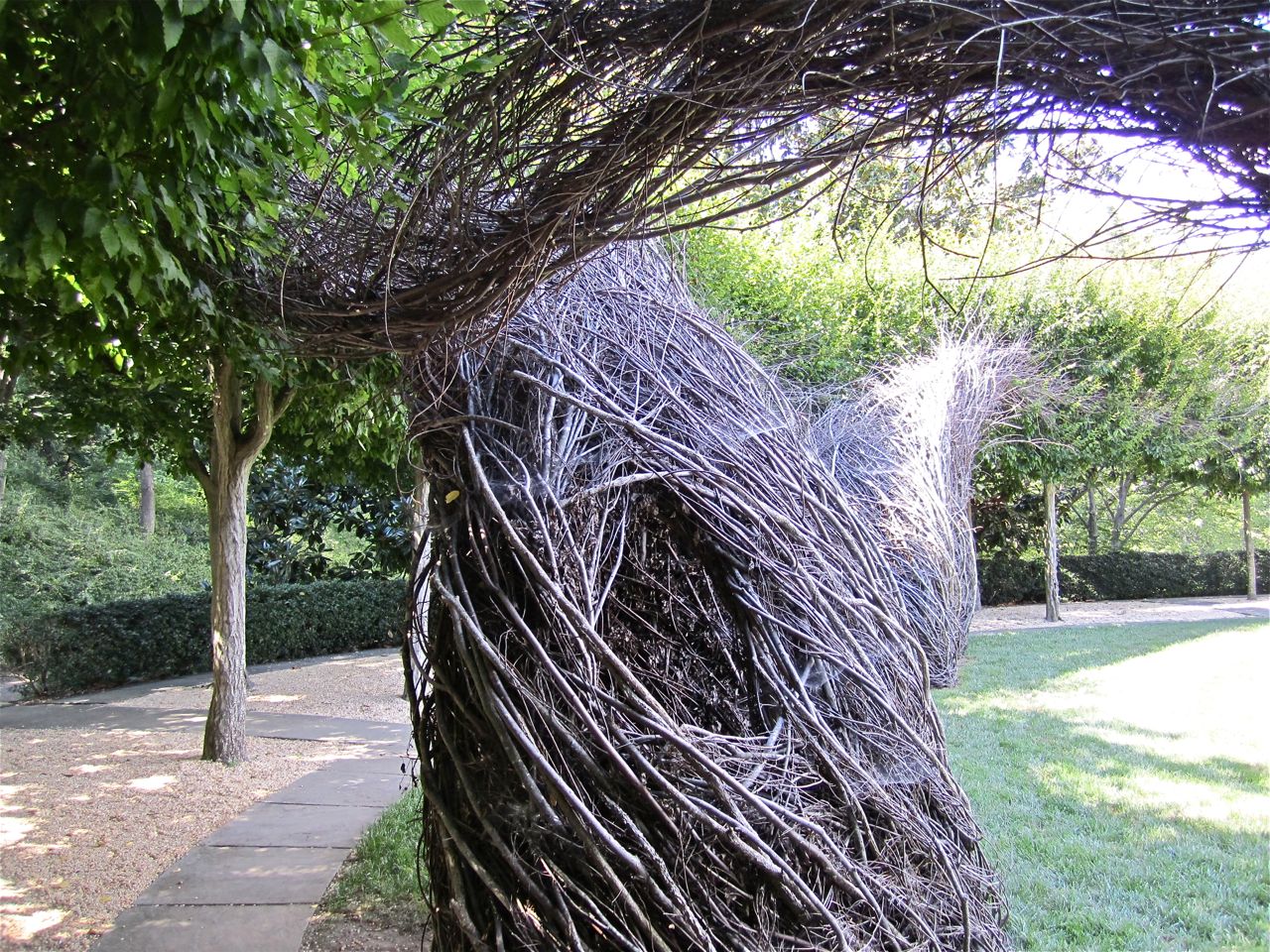
A “natural force” at Dumbarton Oaks

Easy Rider by Patrick Dougherty.  Click the photos to enlarge.

Dumbarton Oak Gardens is currently hosting  Easy Rider by the sculptor Patrick Dougherty. The installation is in the Ellipse, a large oval space rimmed by an aerial hedge of pruned hornbeams and anchored by a center Provençal fountain.

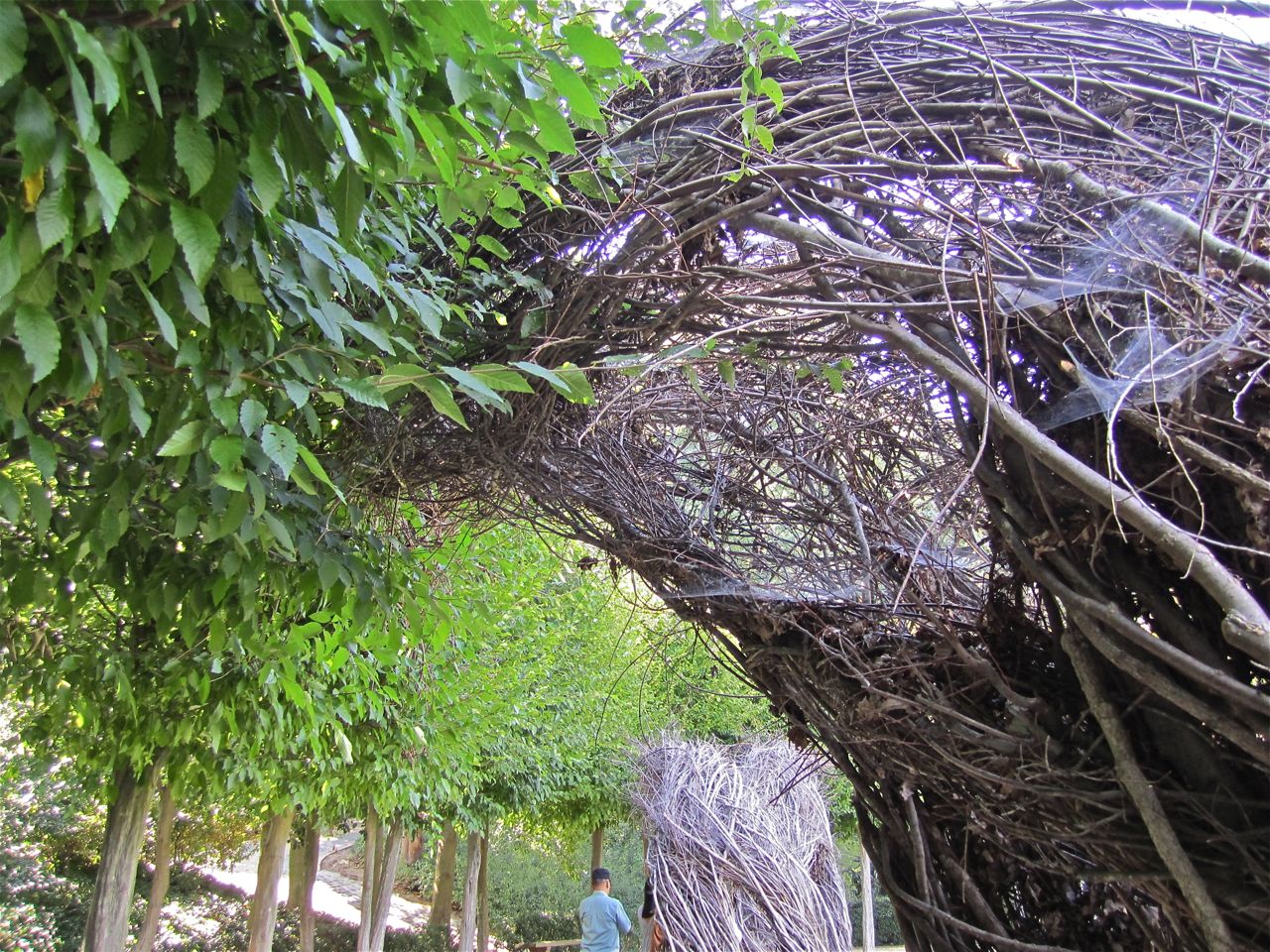
Dougherty works in woven saplings, and his sculptures evoke ancient rustic architecture, as well as nests, haystacks, and baskets.

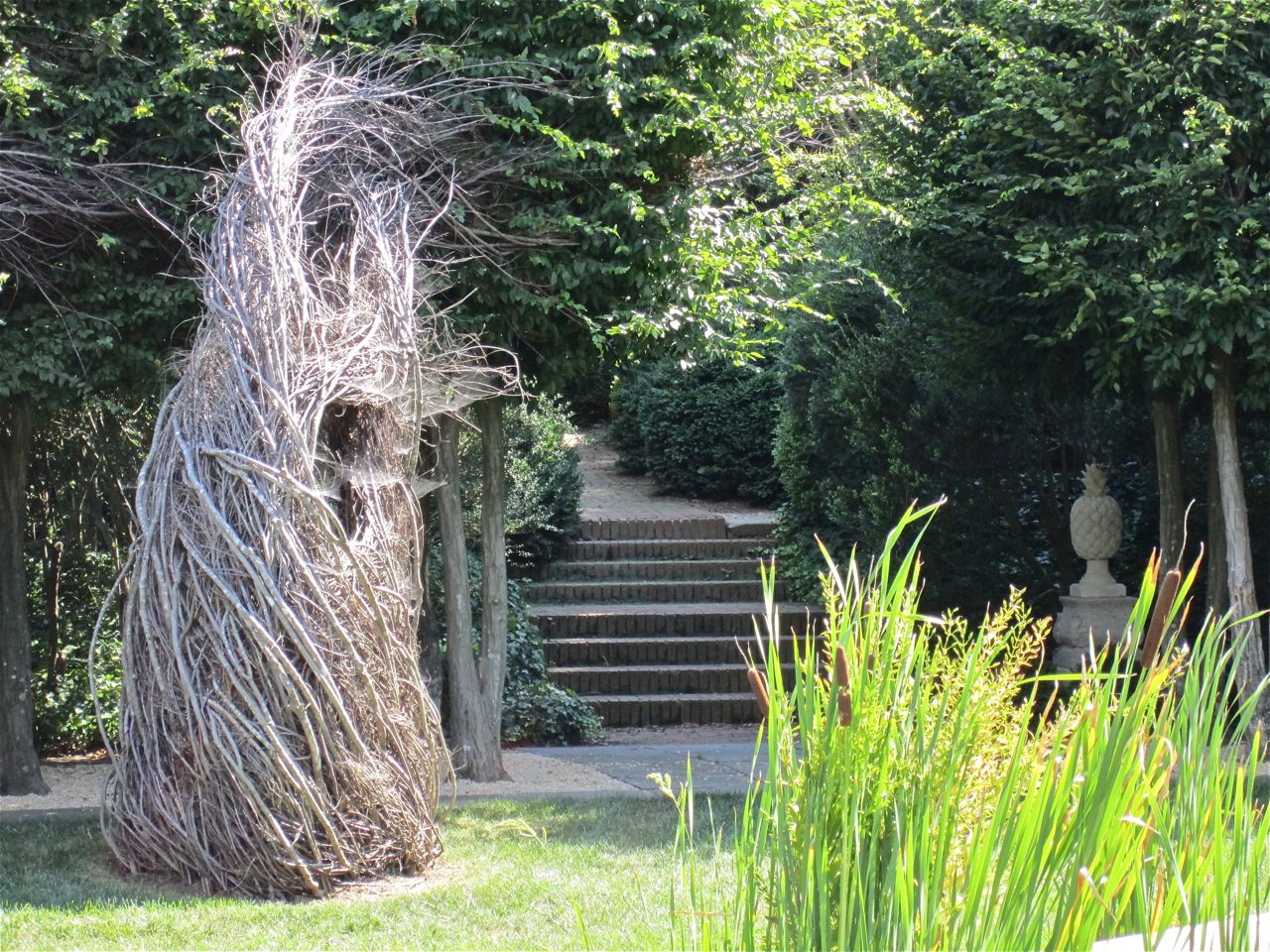
He describes the Dumbarton Oaks work “as ‘running figures,’ or twisted architectural elements, that rise into the trees and pursue each other actively and gracefully around the Ellipse.”*
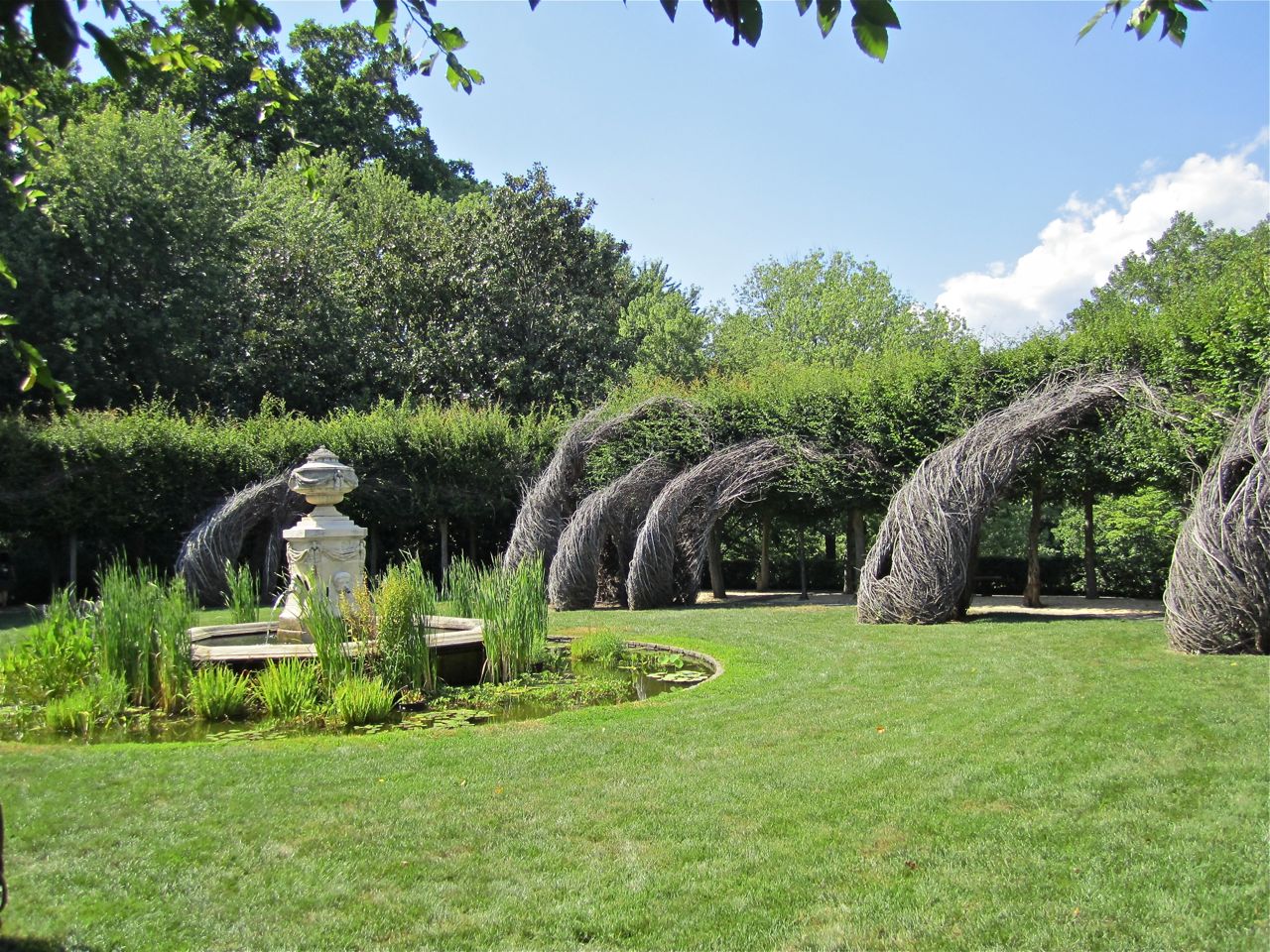
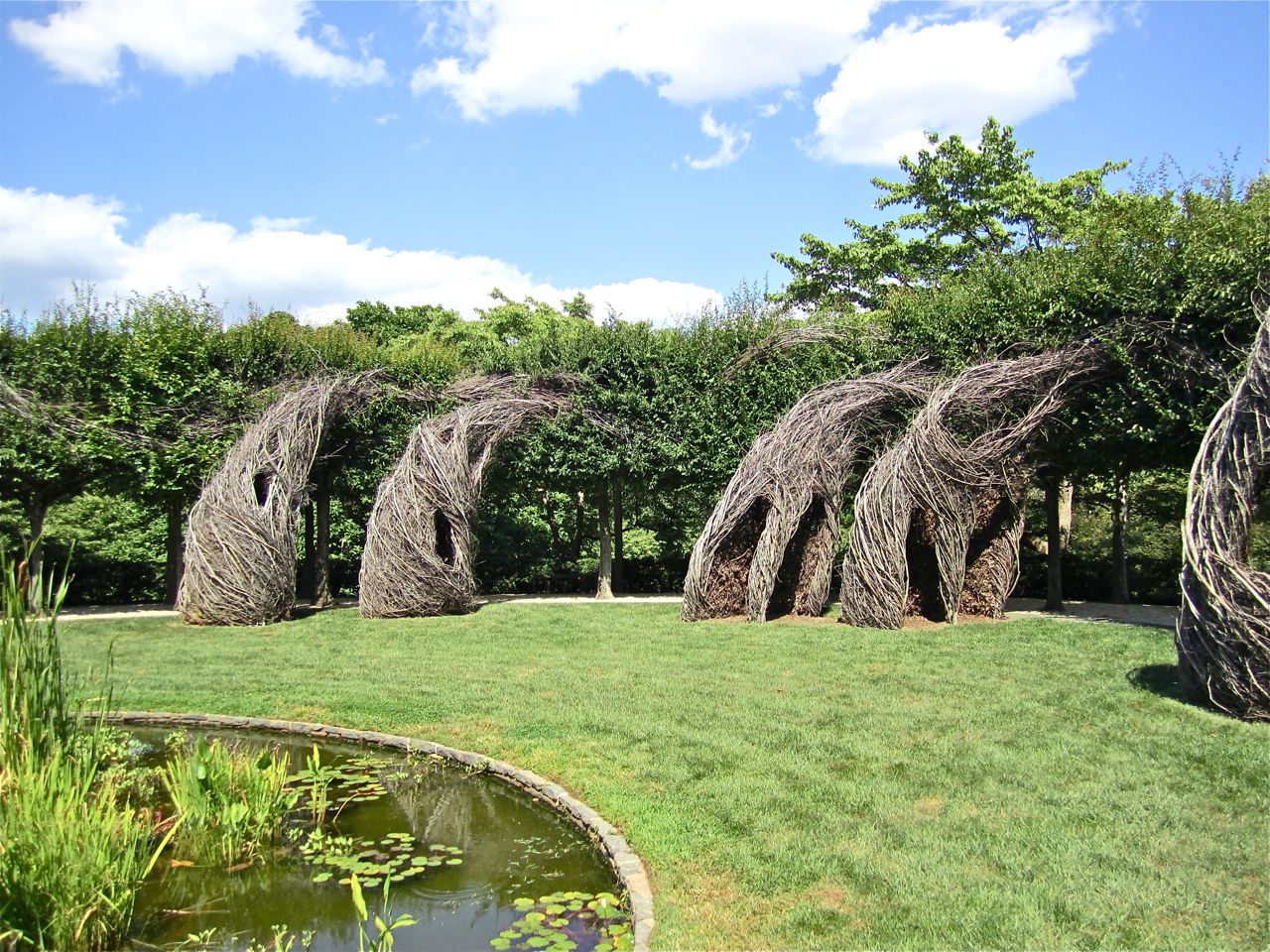
The “‘running figures’. . . rise into the trees and pursue each other . . . around the Ellipse.”
The elements of the sculpture can be seen as architectural or human-like.
The figures twist into the hornbeam.

Each element can be seen as a building or house with a doorway and window.  Each is just wide enough for an adult to stand in.  They are like sentry or guard houses.  If I anthropomorphize them, as the artist does himself, I would say they make me think of storybook soldiers running or even dancing.  They also seem to reference magical landscapes a la Lord of the Rings, yet they are not twee.

Looking at the center fountain from a window.

In an interview with The Washington Post last August, Dougherty said, “I was really thinking about how the natural world has been conscripted as manmade architecture. You don’t think about nature as being staid or over-organized, you think of it as having a life of its own. But there, they’re pruning it and fixing it up like a big living room. My idea was to throw that off kilter and bring in a natural force.”

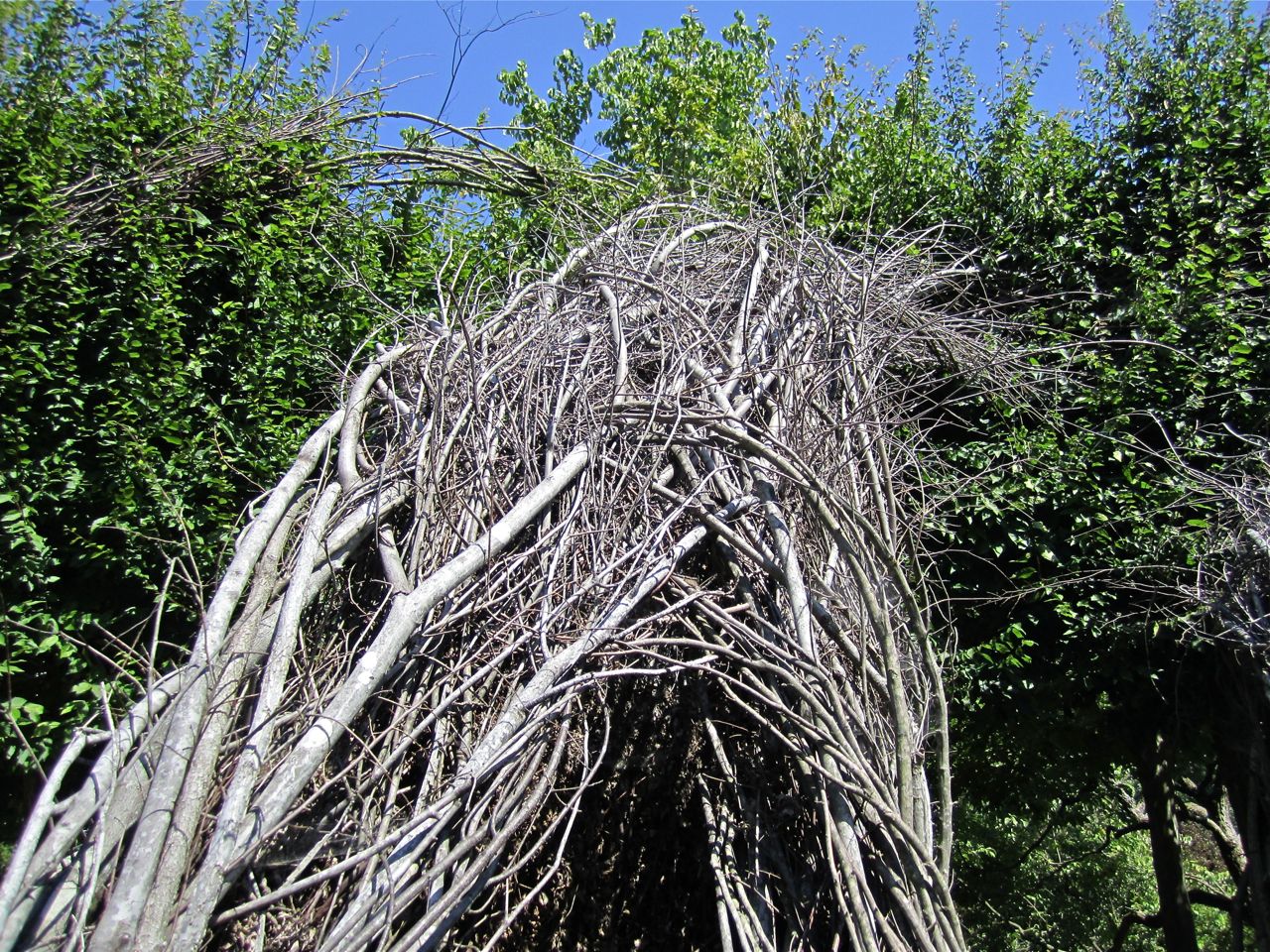
The figures evoke “a natural force.”
The “house” reaches into the trees.
The saplings and the tree leaves merge.

While the Dumbarton Oaks Gardens are primarily the work of Beatrix Farrand, Alden Hopkins, who worked on the gardens at Williamsburg and the University of Virginia, also contributed to the design of the Ellipse.  The admittedly formal, rather static space is a nice blend of old and modern forms.  With “Easy Rider,” the contrast between the brown sapling branches and the green leaves is striking.  I imagine that it will be lovely in October when the leaves start to turn.

The double row of hornbeams.  The lower, outer hedge is clipped holly.
Steps leading away from the Ellipse.
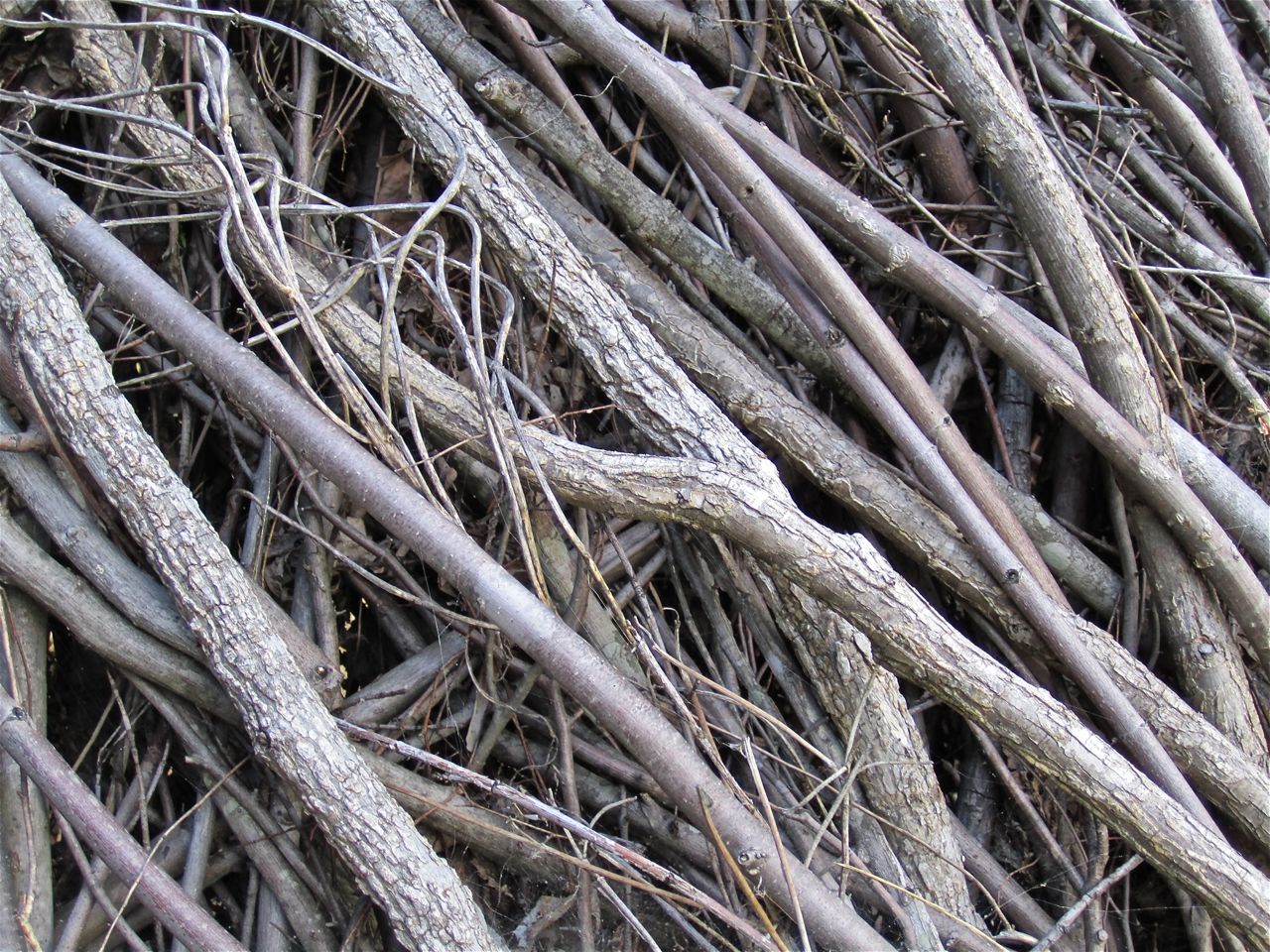
Volunteers worked 21 days using a variety of saplings, chiefly maple.
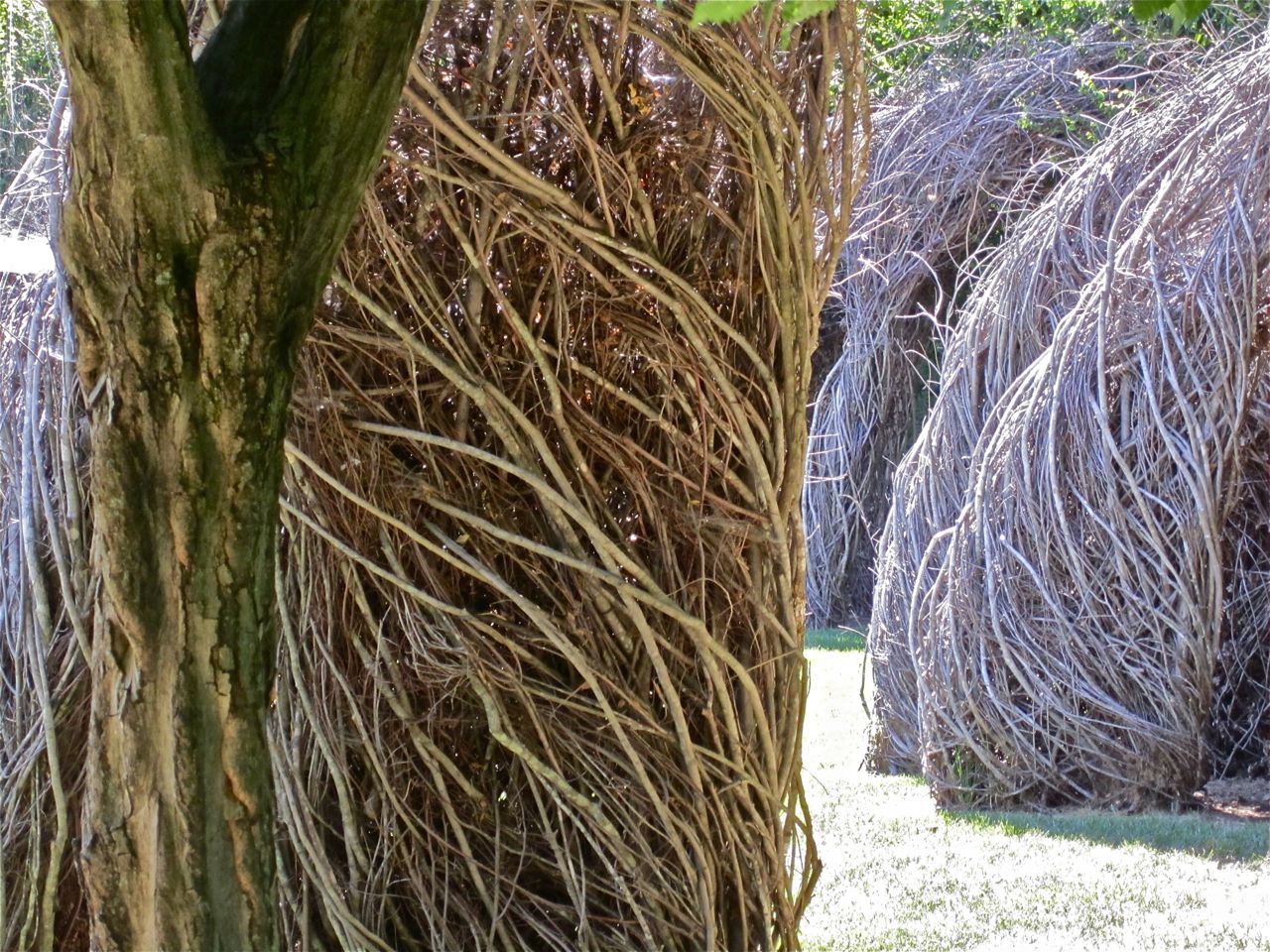
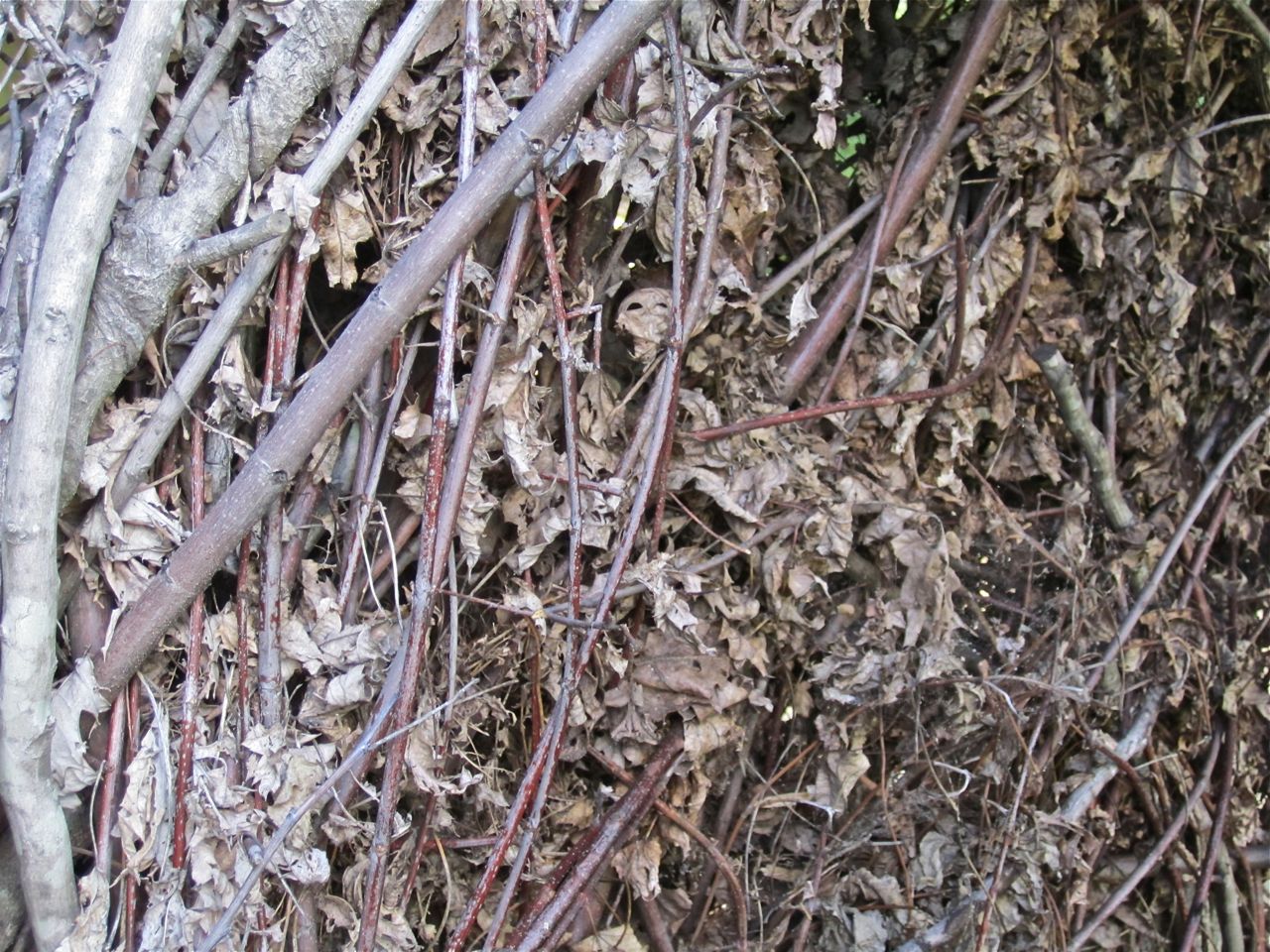
The outside texture of a figure.
The inside texture. The saplings’ leaves dried in place.

The Dumbarton Oaks installation took a team of volunteers 21 days and a variety of saplings (chiefly maples) to complete.  You can see volunteers working on a similar installation at DePauw University at this link.  Dougherty has built over 200 of these large works all over the world.

Melissa Clark, in her blog, Garden Shoots, wrote about the Easy Rider installation last September and posted some pictures of its construction.  Her blog also has a post about another Dougherty sculpture, The Summer Palace.

Easy Rider will remain through Fall 2011 (the brochure does not give an end date).  The gardens (at R and 31st Streets, N.W.) are open daily (except Mondays) from 2-6 p.m.  General admission is $8.


*Installation brochure.

To see more photos, click on “Continue reading” below and then click on any of the thumbnails in the gallery to enlarge. Continue reading “A “natural force” at Dumbarton Oaks”

Something to read

Here are some interesting articles that I have found lately:

The Buffalo News reports on Garden Walk Buffalo (New York), which is taking place this weekend. The city-wide tour of 372 home gardens is the largest in the nation and expects to draw 50,000 to 55,000 walkers/visitors.  In its 17th year (always the last full weekend in July), it’s estimated that the event will bring $3.4 million to the local economy.  (Buffalo, by the way, has highs in the low to mid 80s this weekend.)

The International Herald Tribune has an article, “Enjoy Park Greenery, City Says, but Not as Salad,” about New York park officials’ varying responses to urban foragers.

In the Los Angeles Times garden blog, Emily Green tells what happened when she sowed 1 lb. of wild sunflower seeds in her 4,000 sq. ft. garden.  (It “smells like a pan of freshly baked cookies.”)

Monet’s garden at Giverny has a new head gardener, Englishman James Priest, reports the New York Times in this article.

The New York Times also reports on Dr. Munshi-Smith and his team’s study of “urban evolution” in Manhattan’s Highland Park.

Mark Derr (again the New York Times) writes about how he speared an exotic (poisonous) toad to protect his dog and ended up restoring balance to the ecosystem of his pond and yard in “I Killed the Bufo”.

In The Telegraph, Tom Stuart-Smith, wrote about the role of influence and memory in garden design.

This was published in February, but seems more appropriate for the last two weeks’ hot weather:  Stephen Orr wrote in the Wall Street Journal about Christy Ten Eyck’s small Texas garden that’s “light on the land” from the use of Texas native plants.

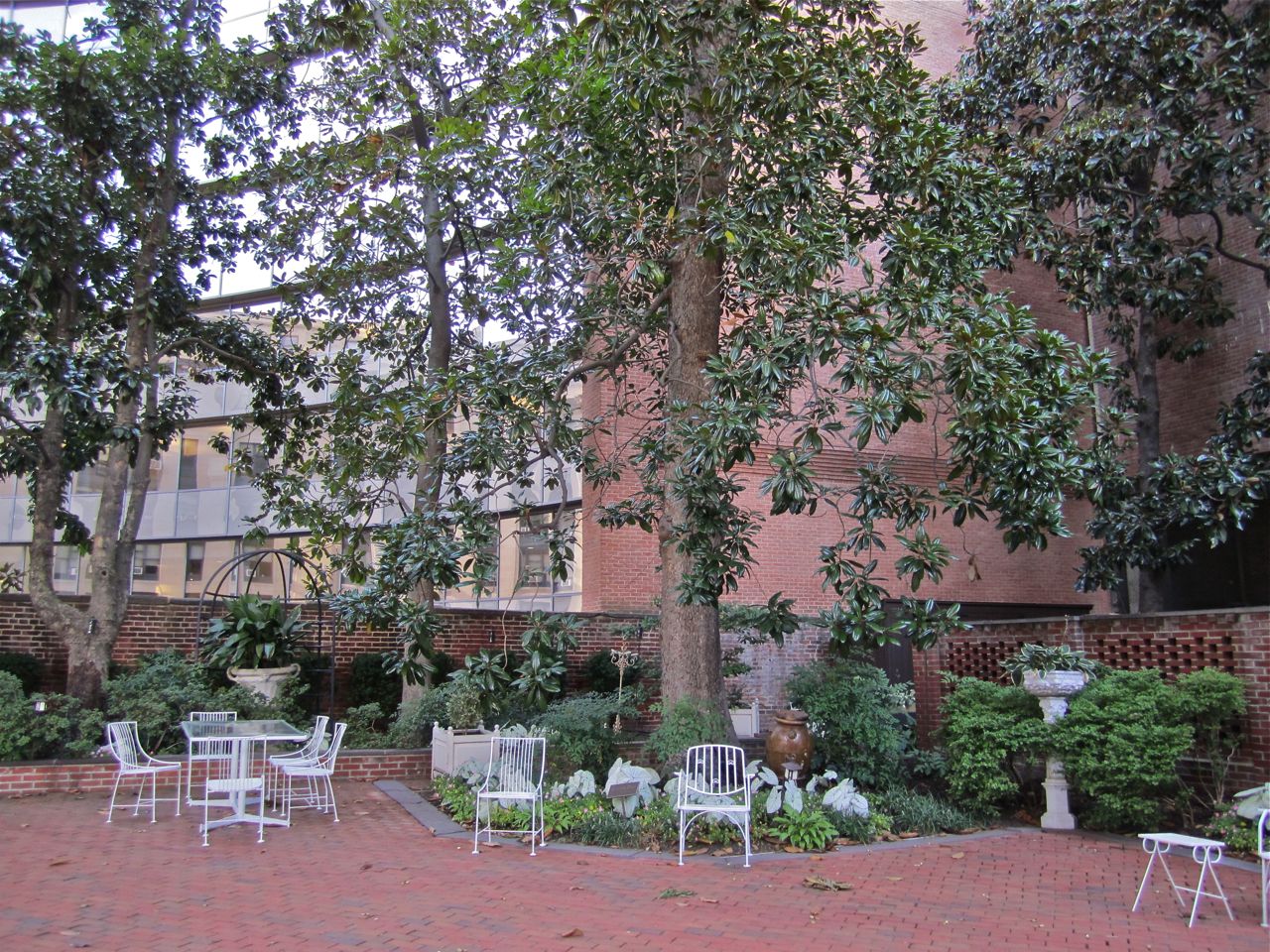
DACOR Bacon House garden

Photo from DACOR, Inc.  DACOR is an acronym for Diplomatic and Consular Officers, Retired.

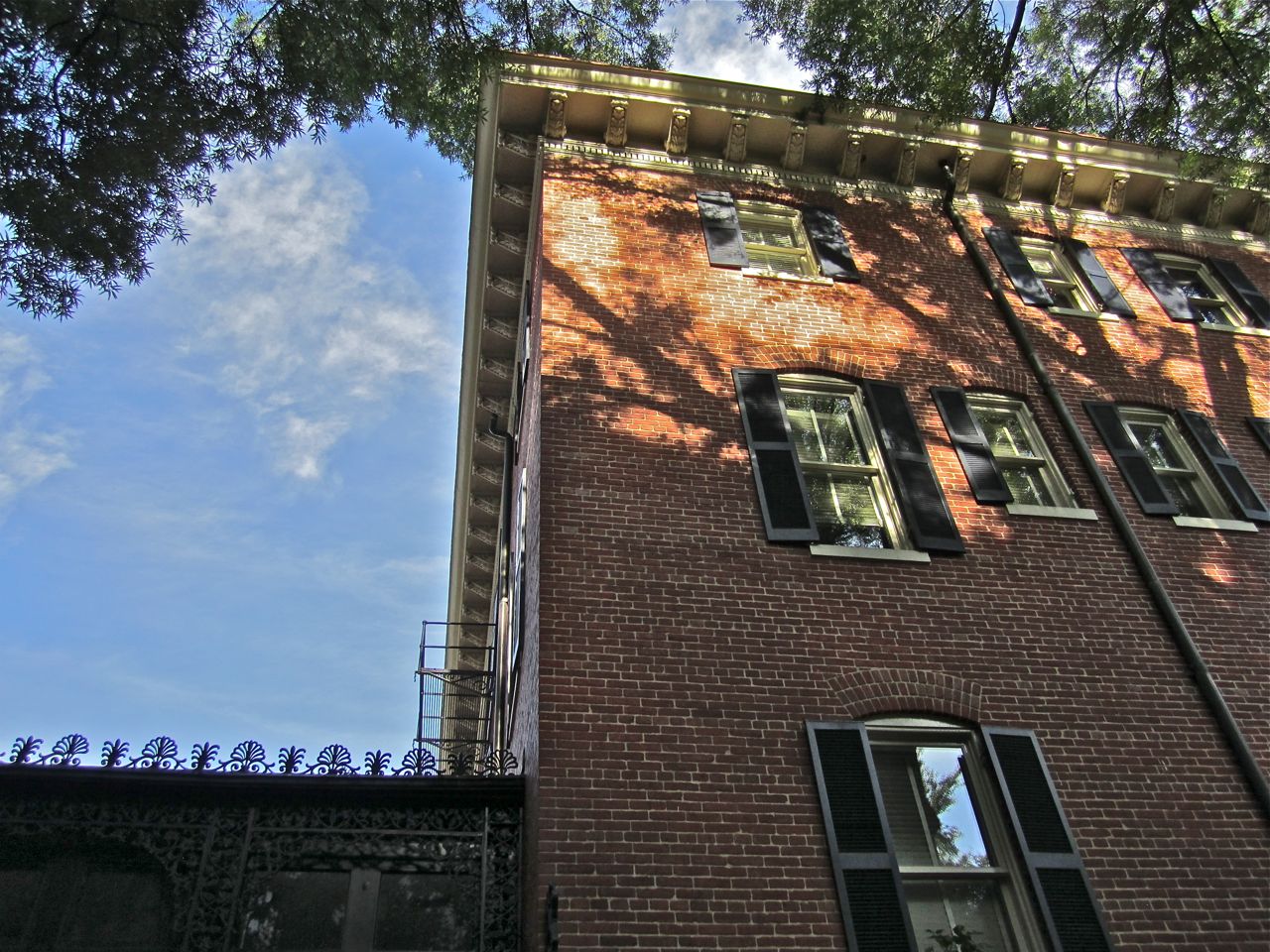
On the other side of 18th and F Streets, N.W., is the DACOR Bacon House (also known as the Ringgold-Carroll House), built in 1824/5.

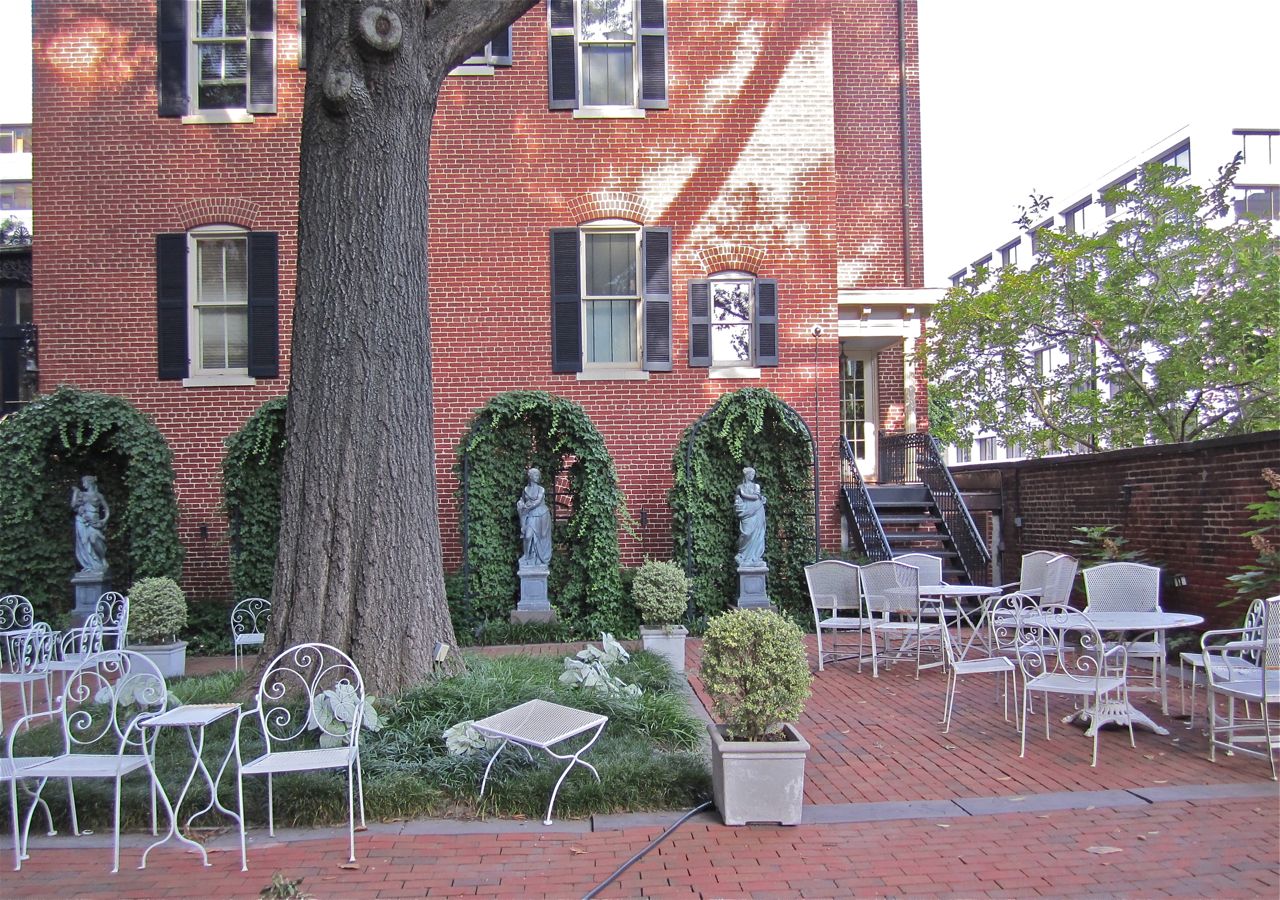
On Wednesday evening, I attended a reception there and was able to spend a little time in its nice walled garden — a serene, old-fashioned place in the midst of tall modern office buildings.

DACOR-Bacon House garden walled off from busy F Street.  Unfortunately, it was too hot that evening for the event to be held outside, so the chairs are a little scattered.
DACOR-Bacon House was built in 1824/5.
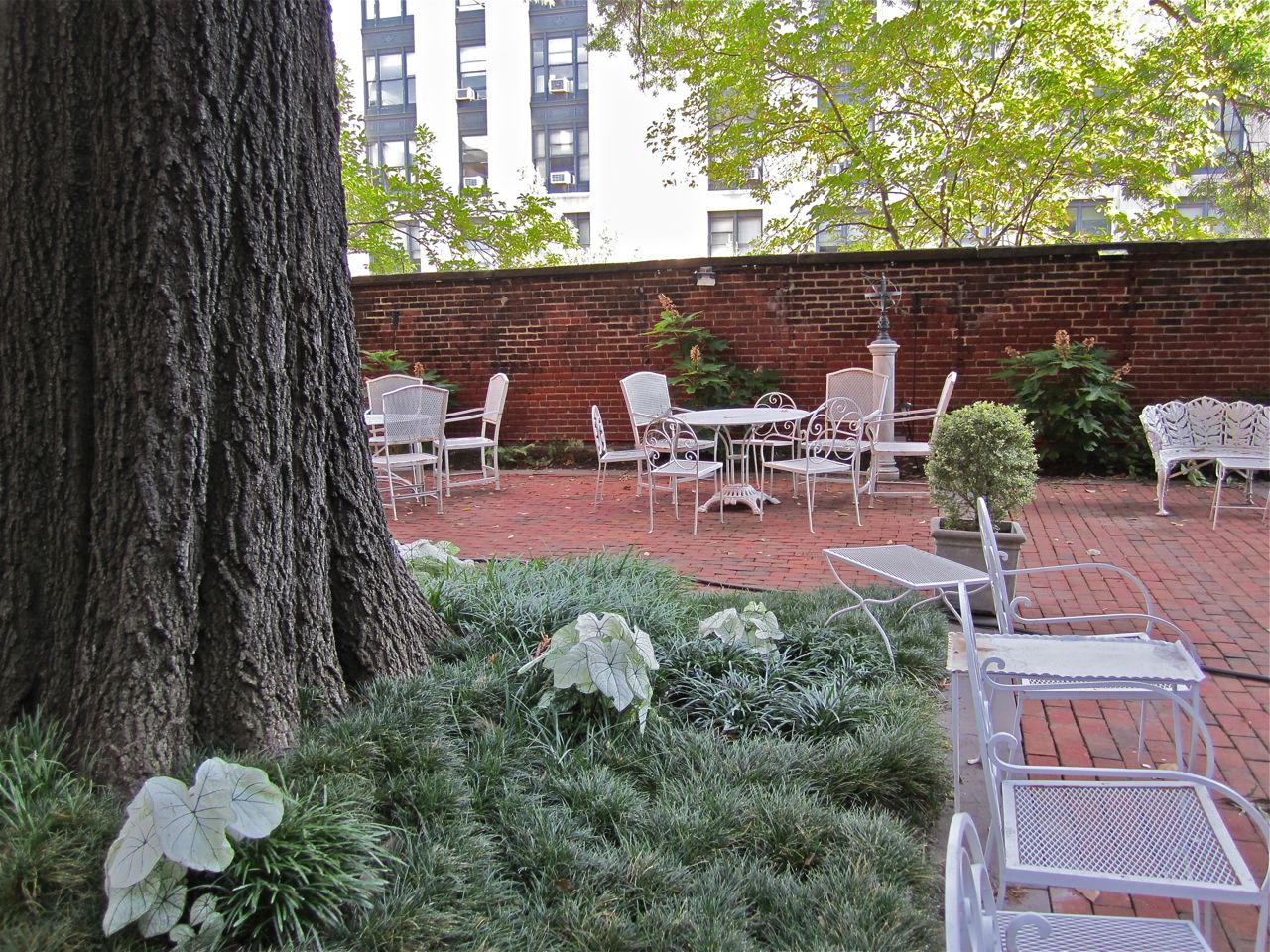
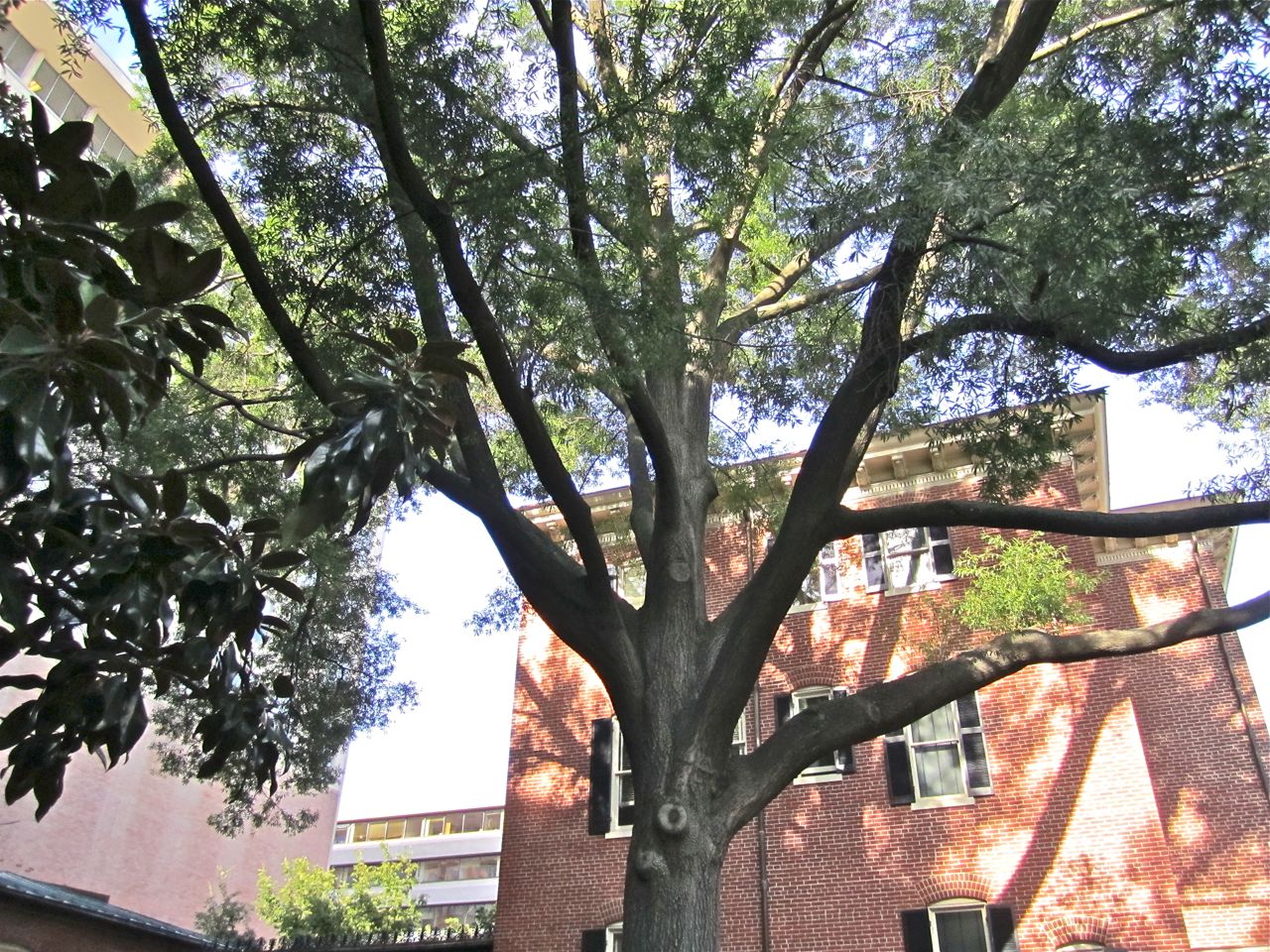
Under a willow oak tree, a planting of coleus, lirope, and mondo grass.
The garden is now surrounded by modern buildings.

Since 1980, the house has been the home of the DACOR Bacon House Foundation and DACOR, Inc.

From 1831 to 1833, it was a boarding house whose tenants included Chief Justice John Marshall and several other Supreme Court Justices. Virginia Murray Bacon and her husband, a U.S. Congressman, bought the house in 1925.  She lived there until her death at the age of 89, when she bequeathed it to the Foundation.

I was told that Mrs. Bacon spotted the garden’s huge willow oak  in the nearby town of Silver Spring about 65 years ago.  She was so taken with it that she bought it and had it dug up and trucked to 18th and F Streets, then hoisted over the garden wall by crane.

The giant willow oak in the center of the garden.

DACOR Bacon House also houses the Ringgold-Marshall Museum and can be toured Mondays, Wednesdays, and Thursdays, 2:30 – 4:30 p.m.  It is listed in the National Register of Historic Places.

The DACOR Bacon House Foundation works to develop mutual international understanding and strengthen ties between the people of the United States and other nations.  DACOR, Inc., is an association of retired officers of the U.S. Foreign Service and of other foreign affairs agencies and their spouses.

DACOR members (click the link above) may rent the house and garden for weddings, and it would be a really lovely venue.  (In the 1860s, President and Mrs. Lincoln attended a wedding there.)

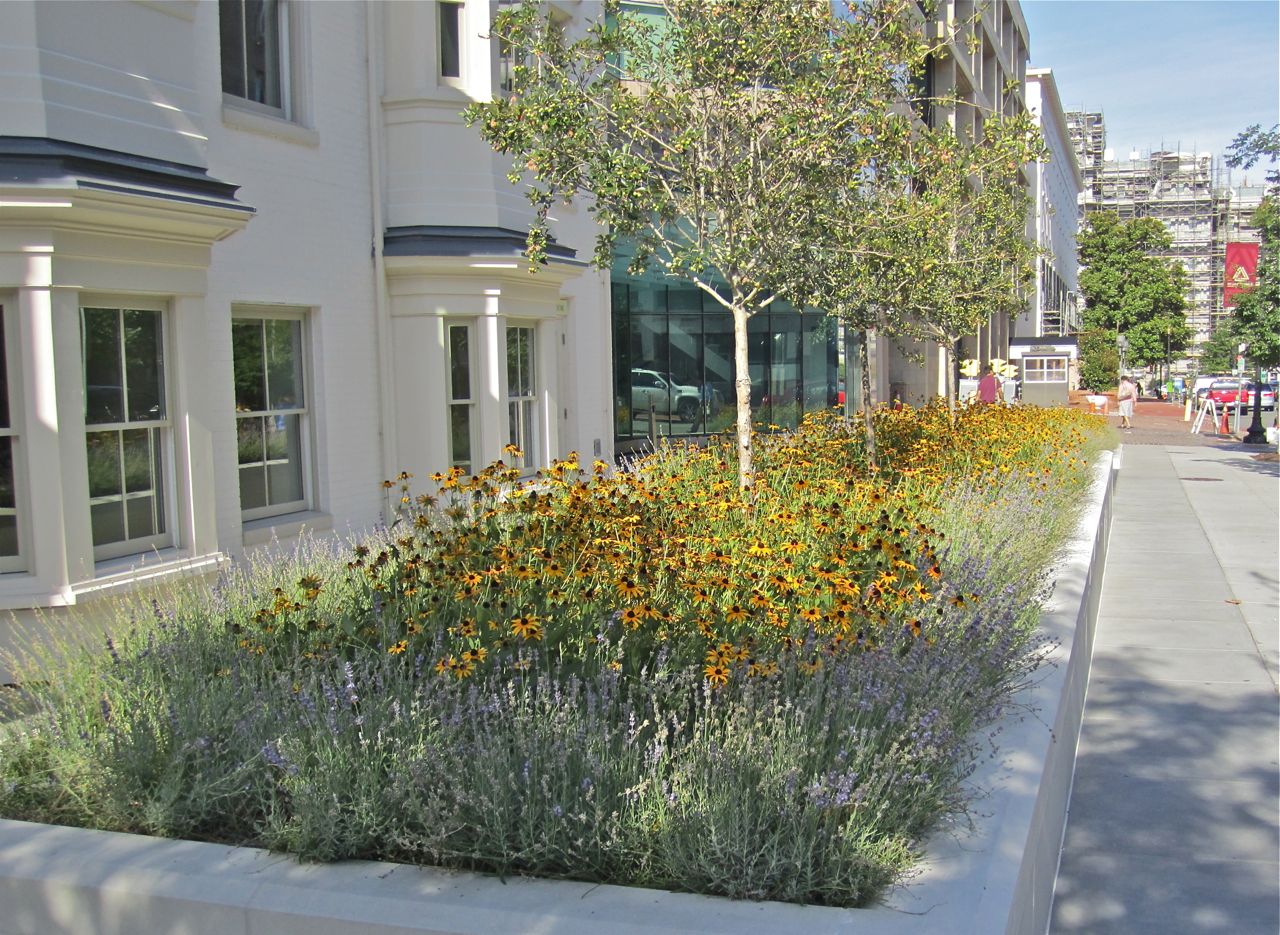
Sidewalk planter, 18th and F Streets, N.W.

Yesterday evening, I spotted this very simple, very pretty combination of black-eyed Susans and lavender on the corner of 18th and F Streets, not far from the Old Executive Building. The three small trees are crabapples.

Please click on the photo to get a closer look.

The planter is located along the side of a building occupied by The Council on Foreign Relations. Its facade is that of Michler Place, a home built in 1871 (the interior is from the 1980s).

ADDENDUM: Below is a photo of the planter in March 2012.

Tudor Place, part two

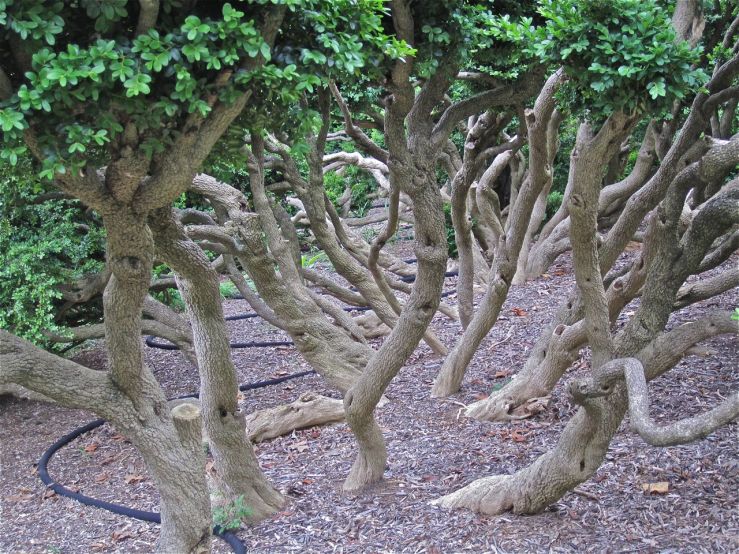
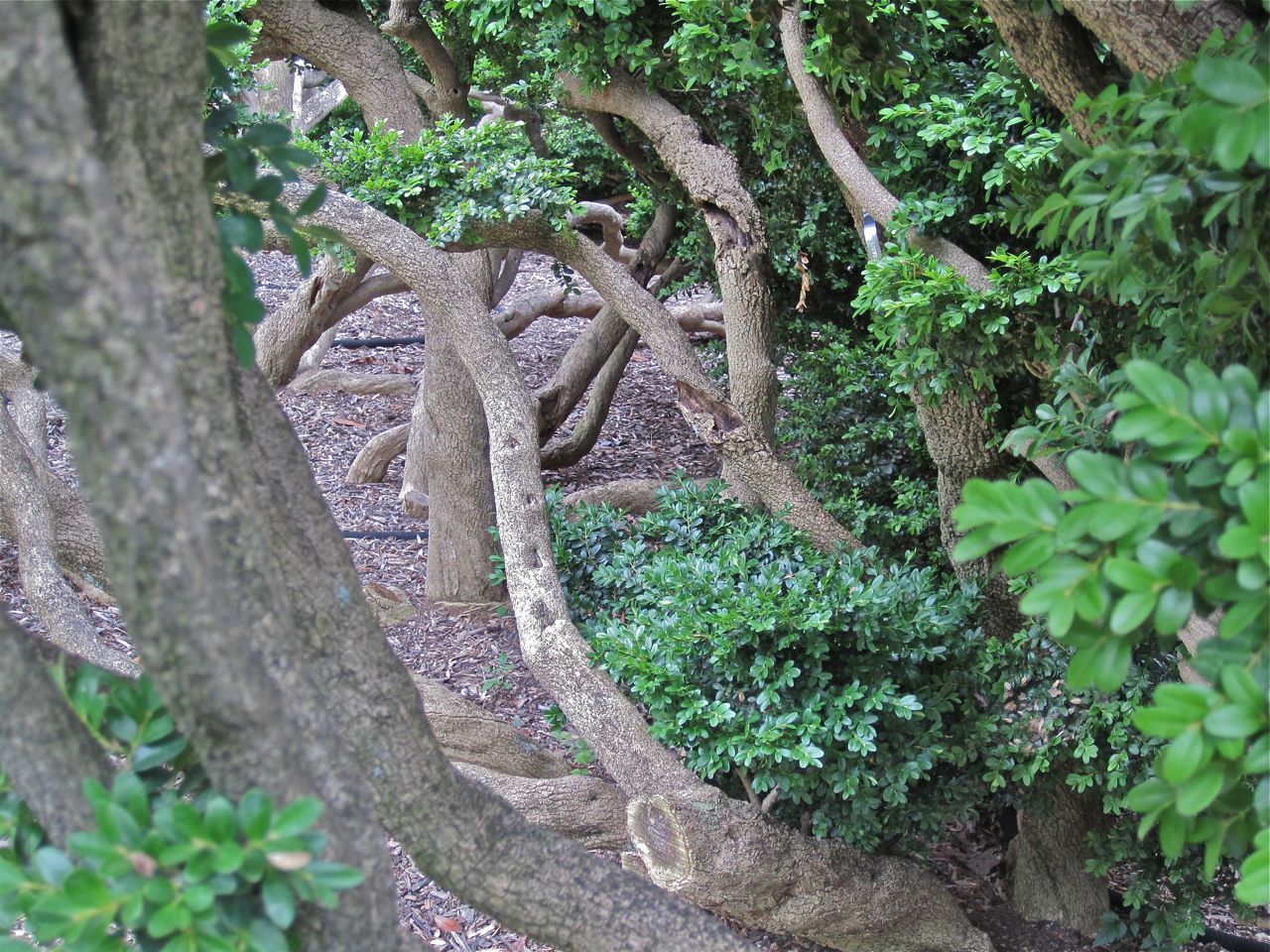
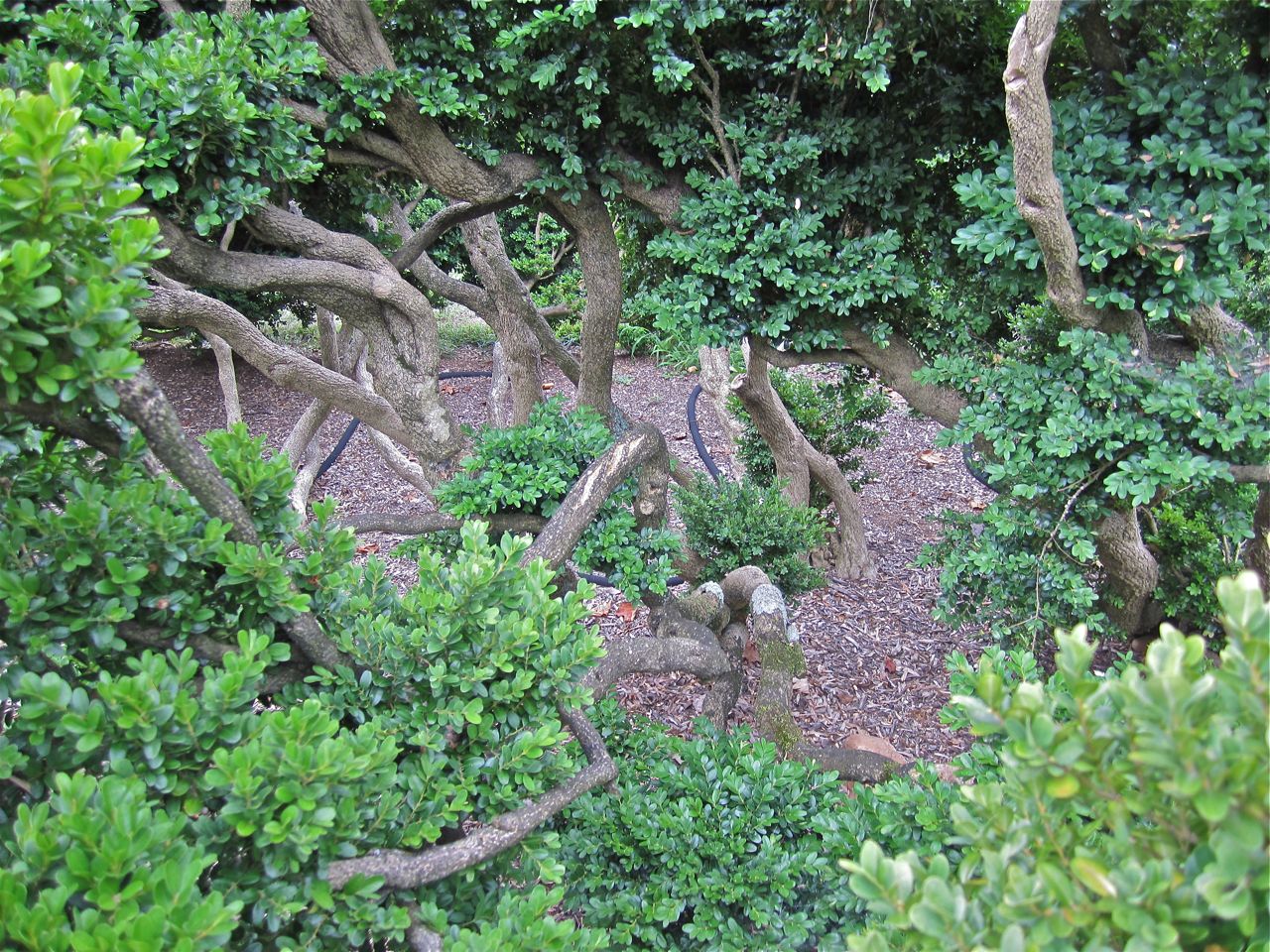
Ellipse boxwood — interior open to view.

I am fascinated by the old boxwoods of Tudor Place, an historic estate in Georgetown.

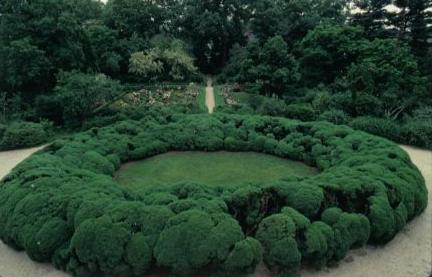
In 1805, soon after she and her husband purchased the property, Martha Custis Peter, the granddaughter of Martha Washington, planted (or more likely, directed to be planted) an ellipse of Buxus sempervirens ‘Suffruticosa’ in the center of the drive on the north side of the house.

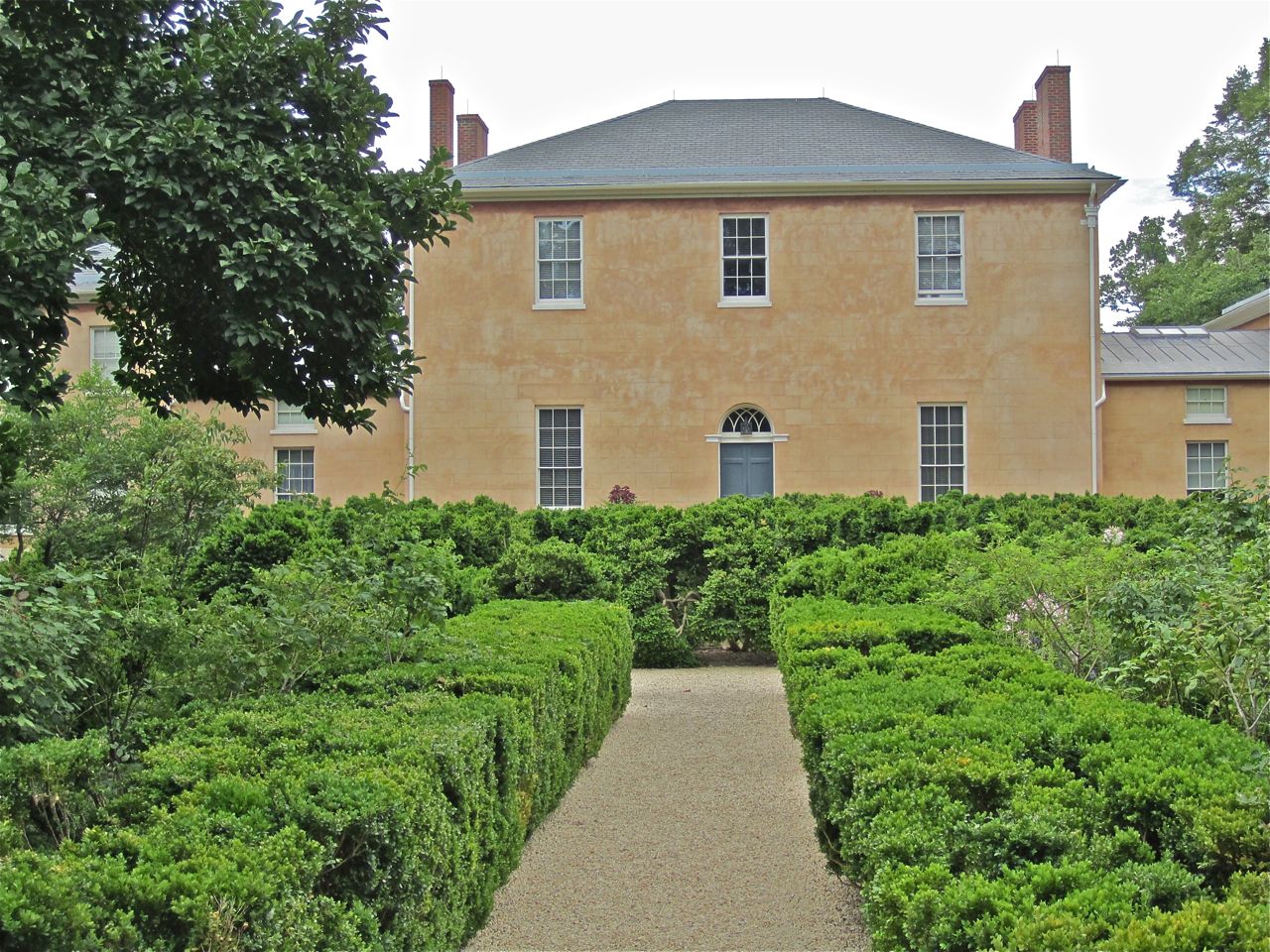
Walkway to the ellipse and house from the north side with rose garden on the right.  The neoclassical house was designed by William Thornton, architect of the U.S. Capitol and completed in 1816.  Six generations of the Peter family lived there until 1983.

For the Tudor Place Foundation, who received the estate in 1983 from a direct descendant of Martha’s, they must be a much-loved treasure and (I suspect) a big preservation headache.

Today, the ellipse is over 5′ tall, as one might expect, given its age. When I toured the property almost ten years ago during a Landscape Design class, the teacher fretted that it was too large for the original design and for the scale of the house and drive.

Boxwood ellipse before 2010. Photo via the Tudor Place Foundation website.

At that time, the boxwoods were nearly as tall as now, but still nicely filled out all around.  As such, I found them impressive, but not particularly interesting.

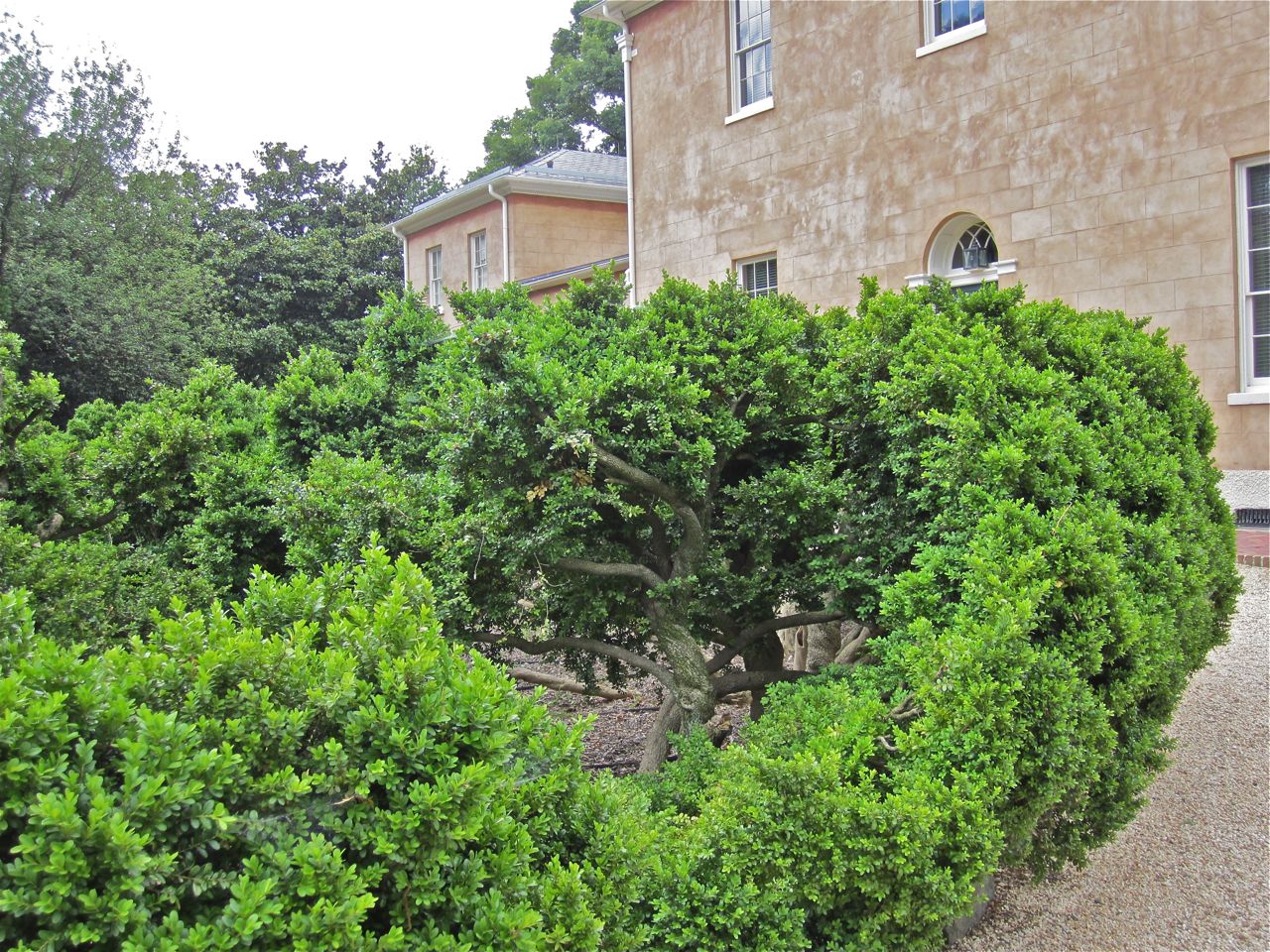
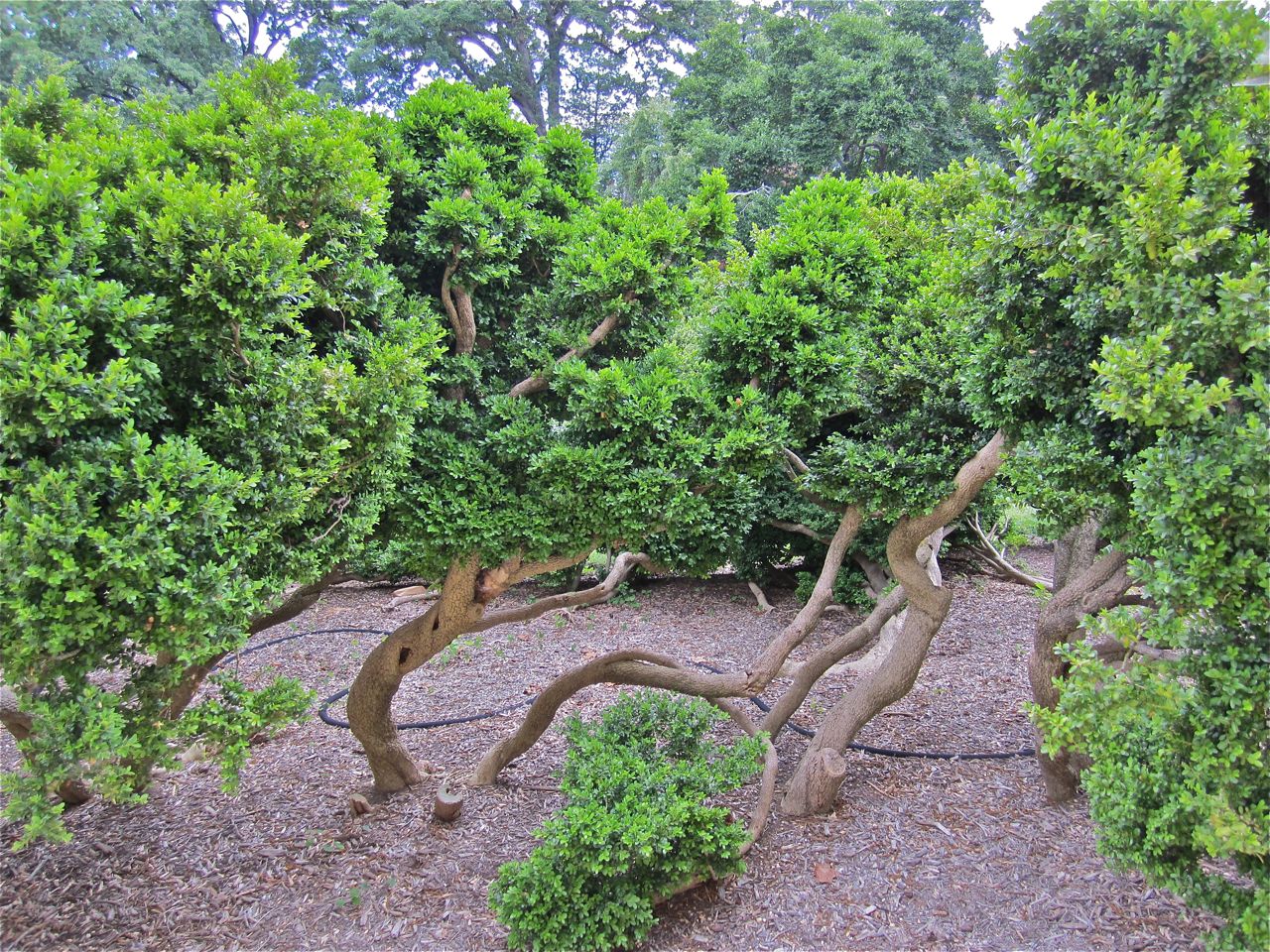
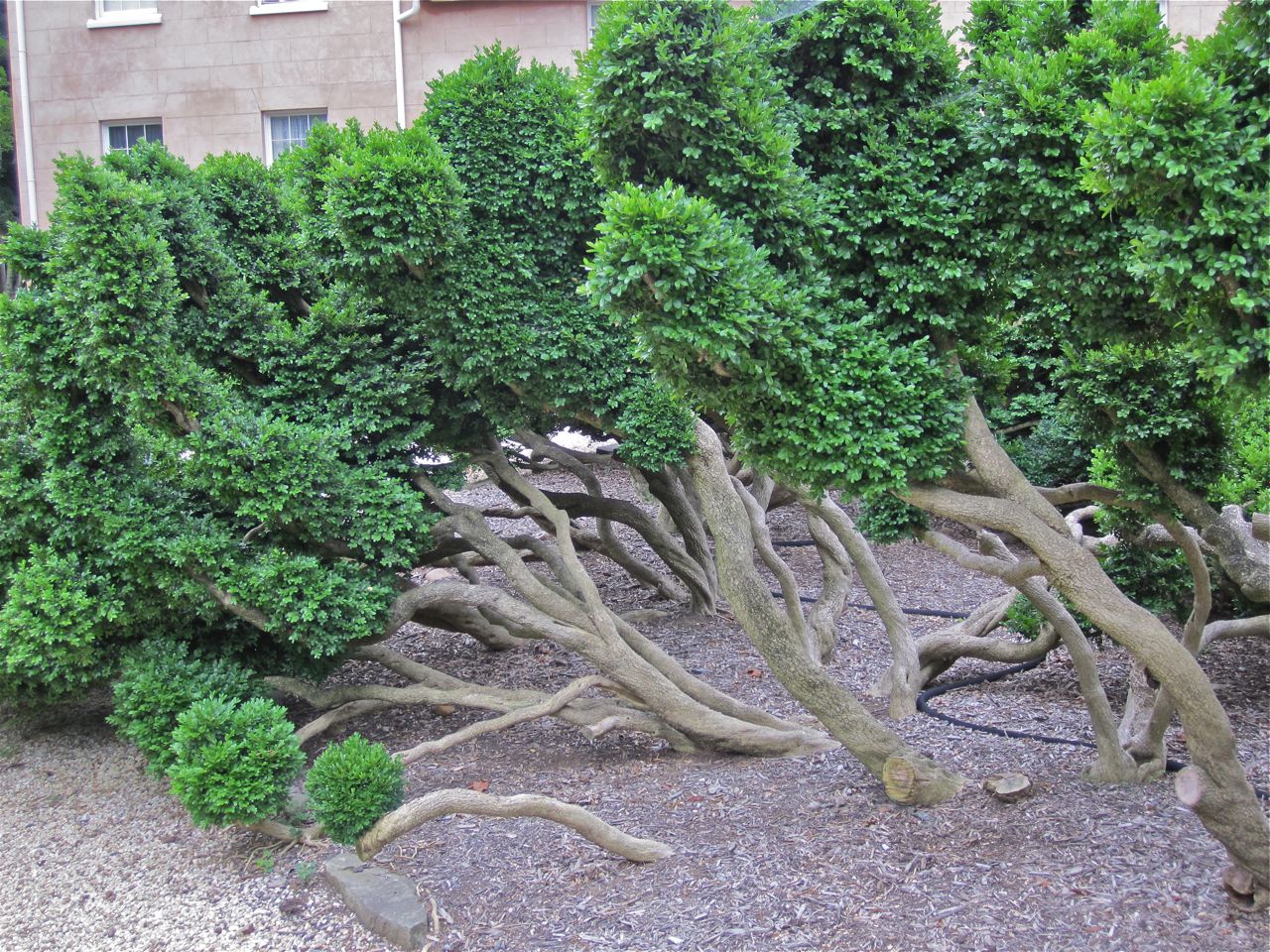
However, in February 2010, Washington had the deepest snows in over 100 years.  The damage to the boxwood ellipse and to  many other old specimens at Tudor Place was severe, and the hedge’s interior was opened to view in many places. Now the ellipse shows interior volume as well as exterior.

My sympathies to the Foundation, but I find the old shrubs’ new negative spaces and sculptural qualities beautiful and rather moving, and I took photo after photo.

Ellipse from west side.  The bushes are English boxwood.
Ellipse boxwood.  Click on the photos to enlarge.
Ellipse boxwood.
Ellipse boxwood.
Ellipse boxwood.

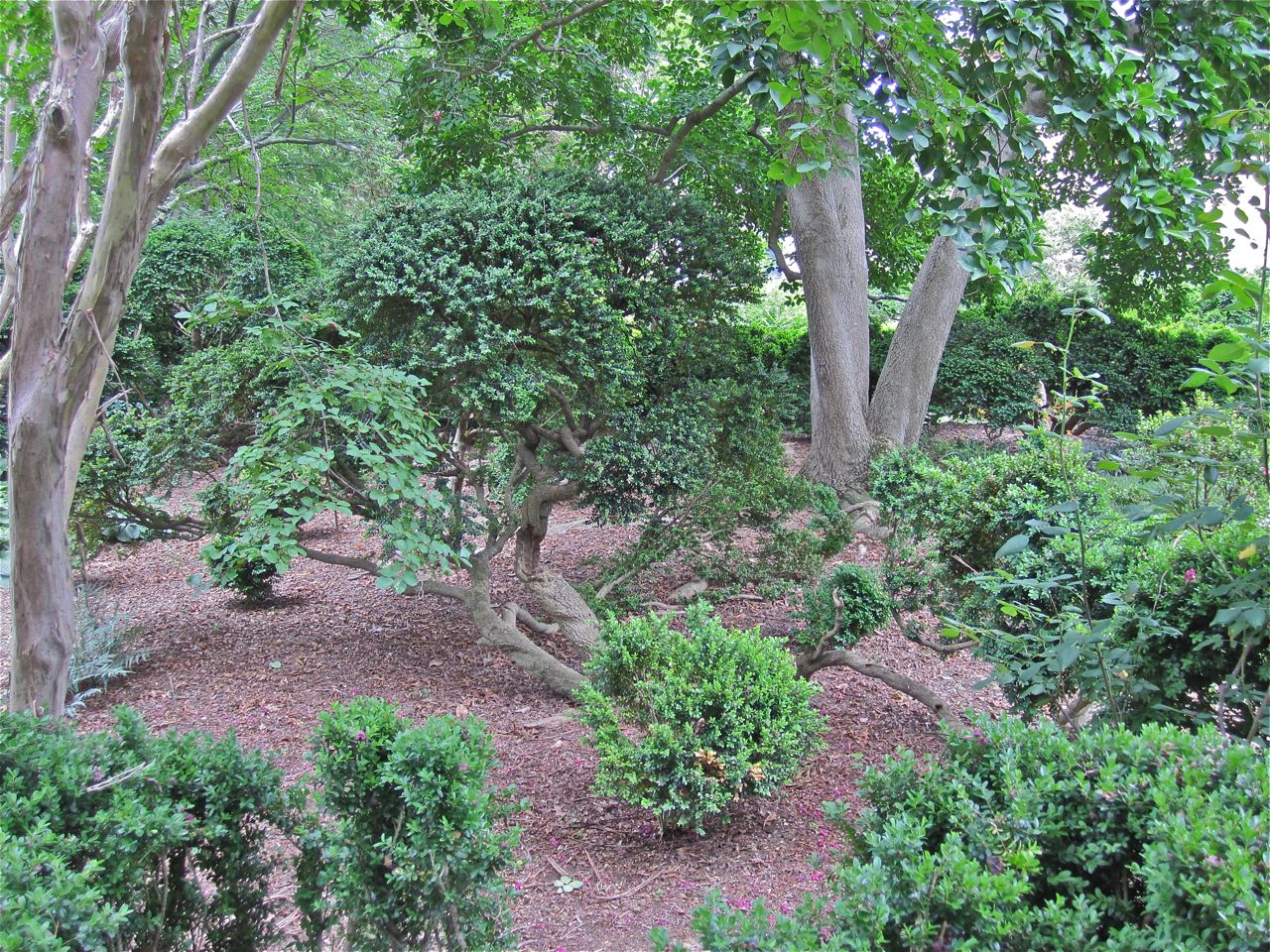
There are other old boxwoods in the north-side garden, like these in a planting bed near the old “tennis lawn.”

Boxwood in the “tennis lawn” planting bed.

And these along a walkway near the bowling green.

A walk along the bowling green seen through old boxwood. Click on photo to enlarge.

I wonder how long they will be left in place, given their current condition.  I find them beautiful, but they don’t really conform to a classic neat Federal or Colonial Revival aesthetic.  But who wants to replace bushes planted by the step-granddaughter of the father of our country?

If they were mine, I think I would want to turn the old ellipse’s design somewhat inside out and fill many of the open spaces with the contrasting foliage of other perennials planted inside them — as is happening among some of the equally ancient boxwoods at the Bishop’s Garden at the National Cathedral.  I’d like to see a few Rudbeckia maxima flowers waving over the center (although whether the ground beneath the ellipse, full of old roots, would support more plants is a practical question).

Beyond boxwood

The rest of the Tudor Place garden is lovely as well, with the center north-side area symmetrically squared off in true C.R. style with brick and gravel walkways.

The well-maintained property actually shows off an interesting continuum of original and reconstructed functions and design styles from the last two centuries.

Tennis lawn.

According to an archaeological study and plan by the University of Maryland, the planting of the south-side lawn, which contains the 200-year old tulip poplar and once had a view of the Potomac River, has changed relatively little since the building of the house (and therefore is of little archaeological interest).  And, of course, the ellipse is also truly from the Federal period.

The walkways and rose/knot garden existed in their current layouts by the 1830s. But the knot garden was destroyed in the 1860s by intruders seeking boxwood for Christmas wreaths.  It was replanted by the last Peter owner in the 1930s, using old family plans, although he moved it to the opposite side of the center walkway.

Walkway from center to west side with rose garden on left.

The northeast-side garden with lawn and curving beds was an orchard and  a tennis lawn before its current 20th century design. On the west side, there is a 20th century bowling green and a fountain on what had once been a wooded area.

A pretty 20th century patio, “Japanese” teahouse, and arbor sit off the west wing of the house, more or less in the location of the 19th century kitchen garden.  They look Tidewater southern more than anything else.

“Japanese” tea house and arbor.

The garden is open to the public Monday through Saturday, 10 a.m. to 4 p.m., Sunday, noon to 4 p.m.  There’s a small charge of $3. See this link for information about touring the house.

To see more photos and a garden plan, click “Continue reading” below and click on any thumbnail scroll through large pictures. Continue reading “Tudor Place, part two”