On the road, part two

On the second day of our recent trip to the north of Rwanda, we visited a border crossing with the Democratic Republic of Congo (DRC), this one located between the otherwise contiguous cities of Gisenyi (Rwanda) and Goma (DRC).
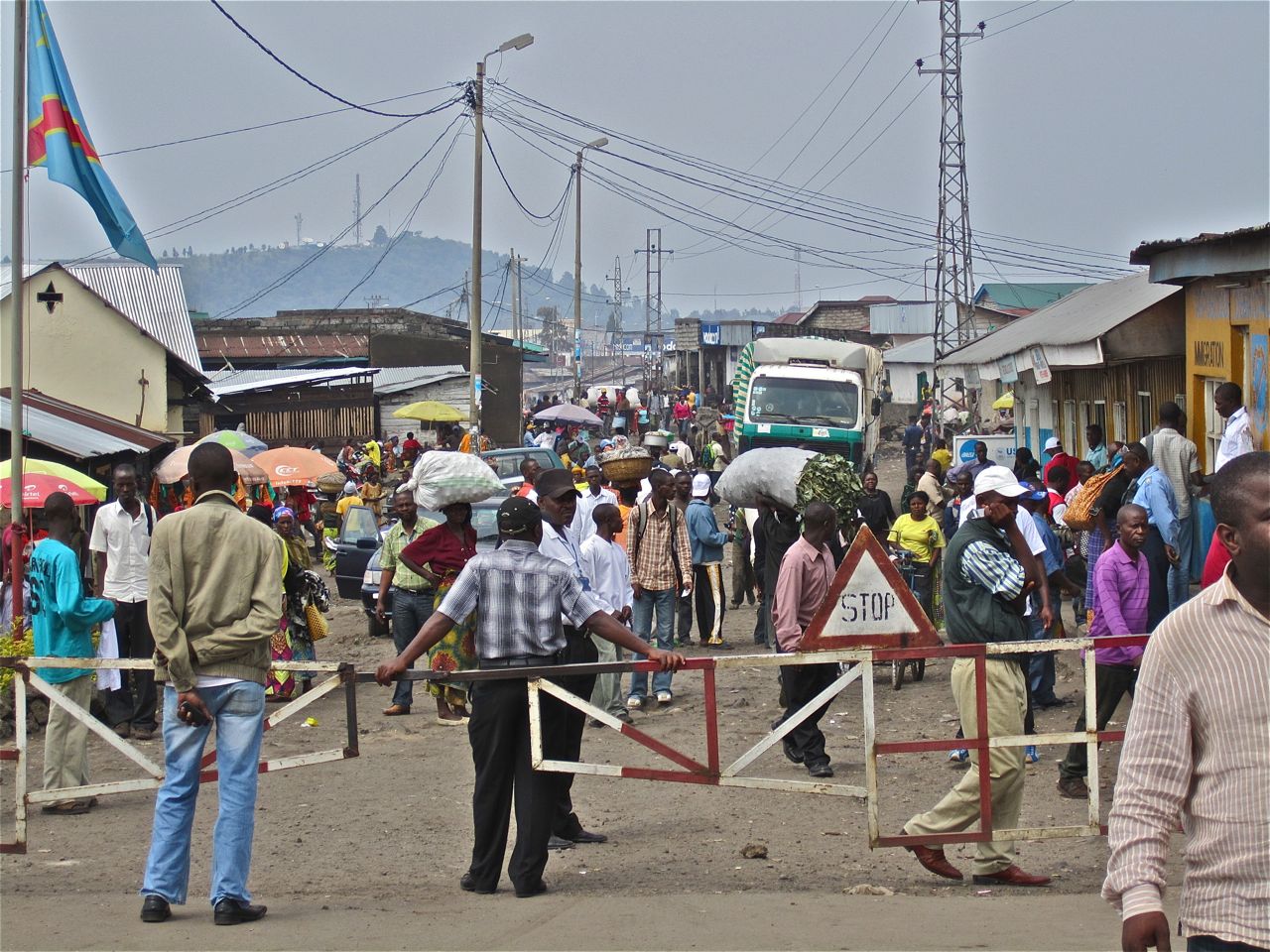
Looking over the barrier to a street in Goma, DRC.

We watched a line of people, almost all carrying large parcels of food, waiting to enter  eastern Congo.
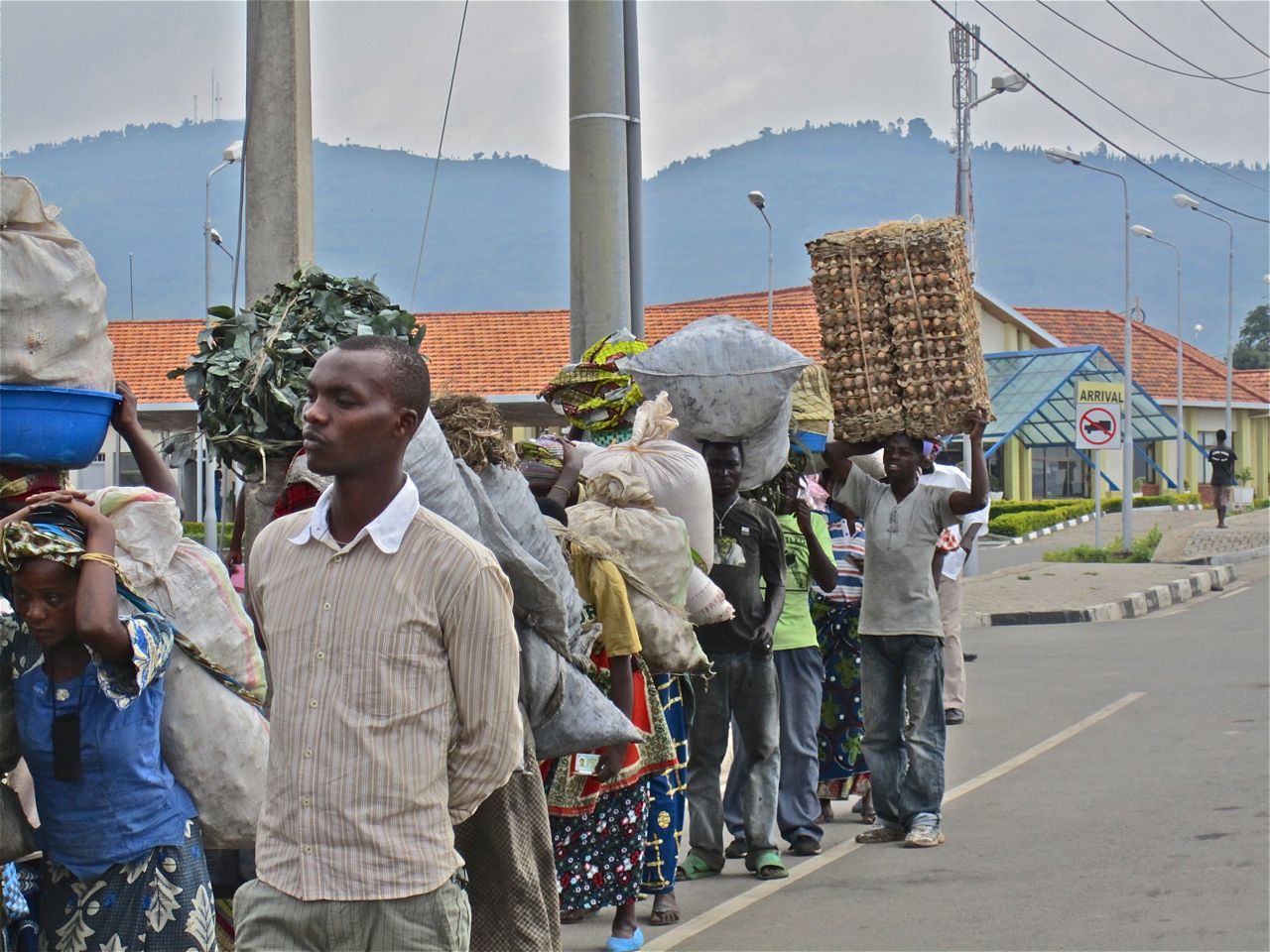
People laden with food to sell in the DRC.
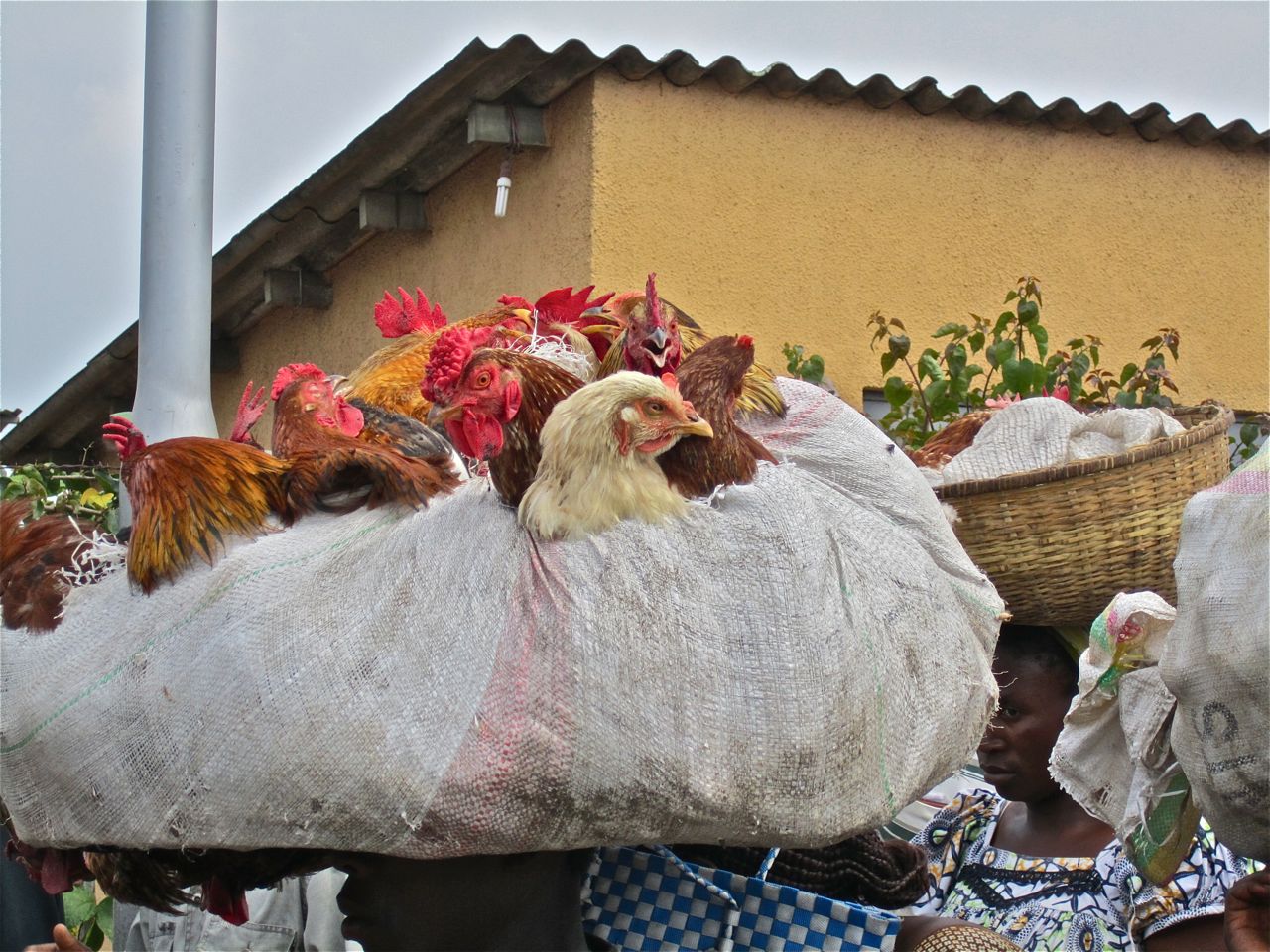
I believe these chickens (who are traveling on someone’s head) would be called non-intending immigrants.  Nevertheless, they are destined for pots in the Congo.

We watched another line of people, now almost empty-handed, coming back into Rwanda.
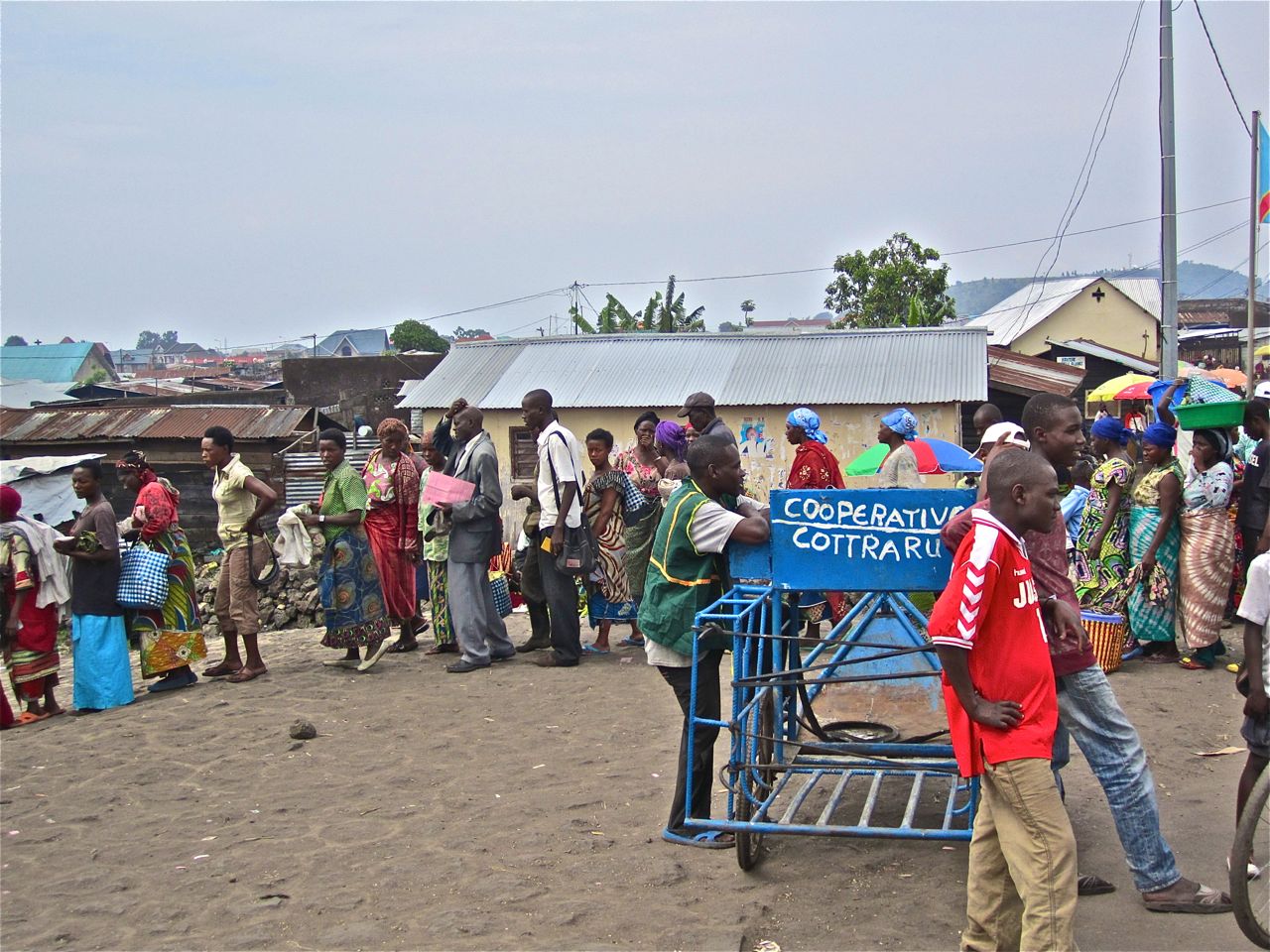
The line to leave the DRC.

Afterwards, we headed about 10 miles east to visit a small hydro-electric plant.  The unpaved road to the plant was too rough for the bus, so we had a walk through the neighboring village.
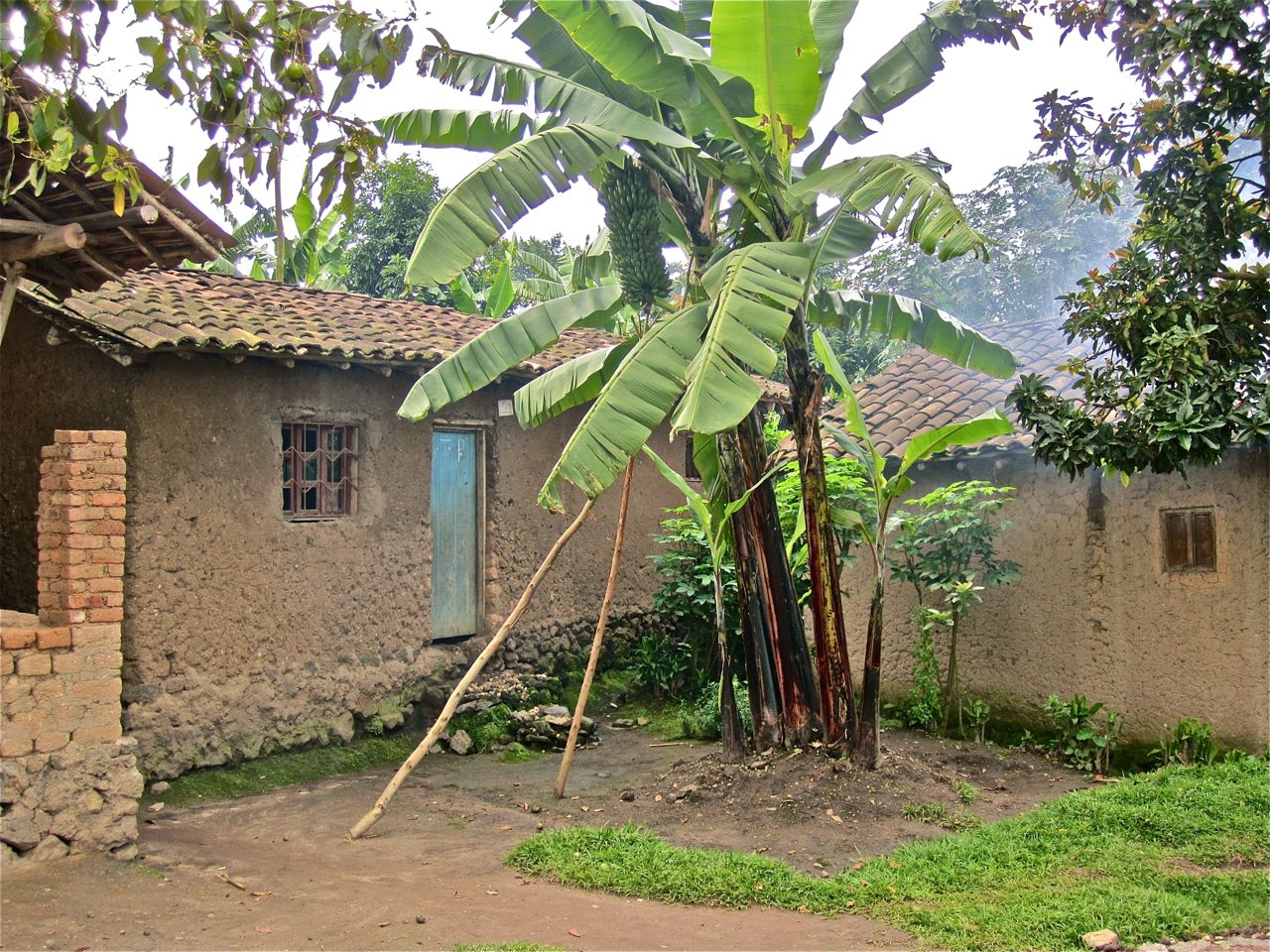
Bananas outside a village house.
House door with a blue patch.  Cassava (aka manioc) plants and beans grow in the foreground.
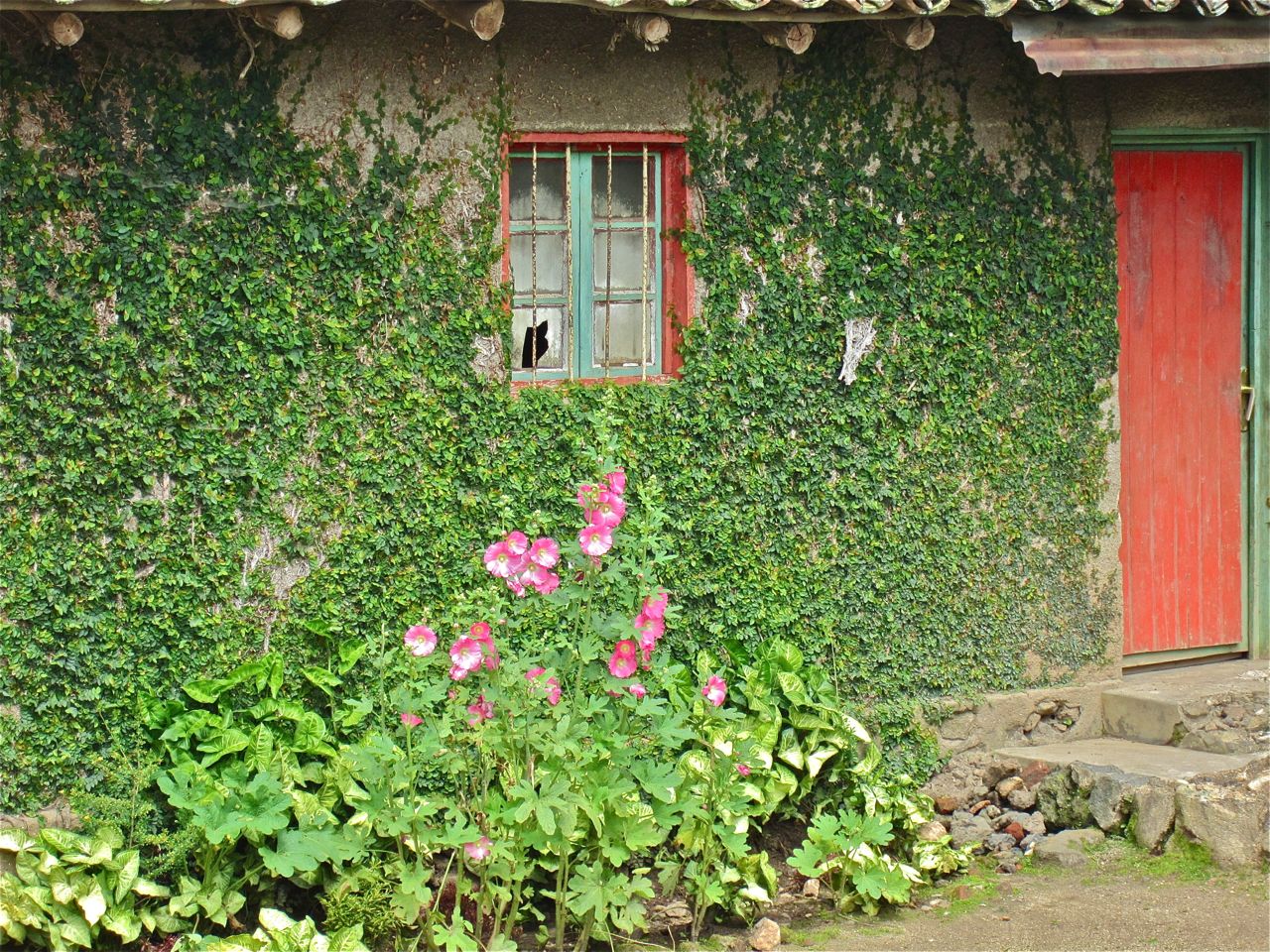
Hollyhocks by a doorway.
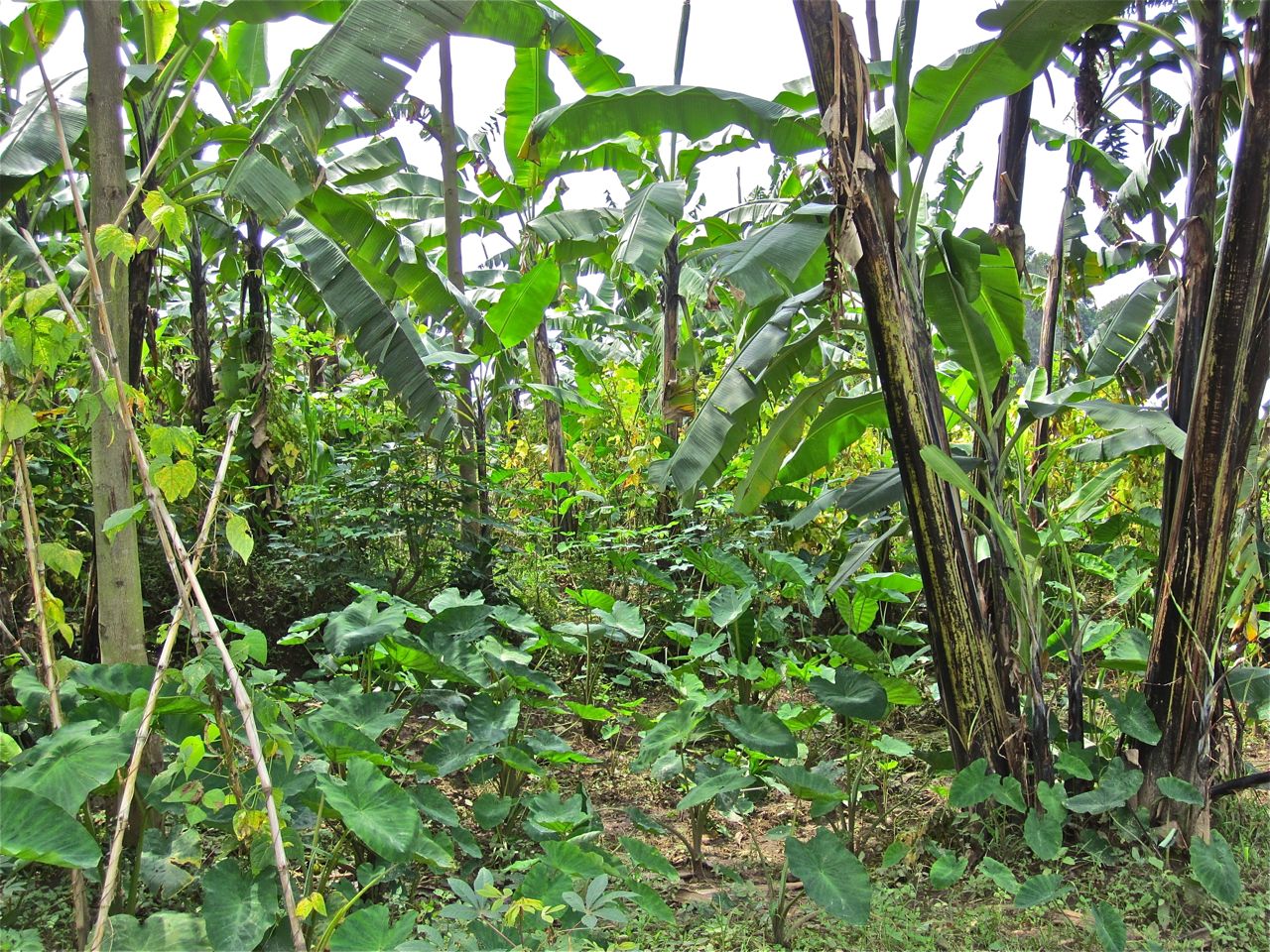
A typical garden of bananas, taro, cassava, and beans.
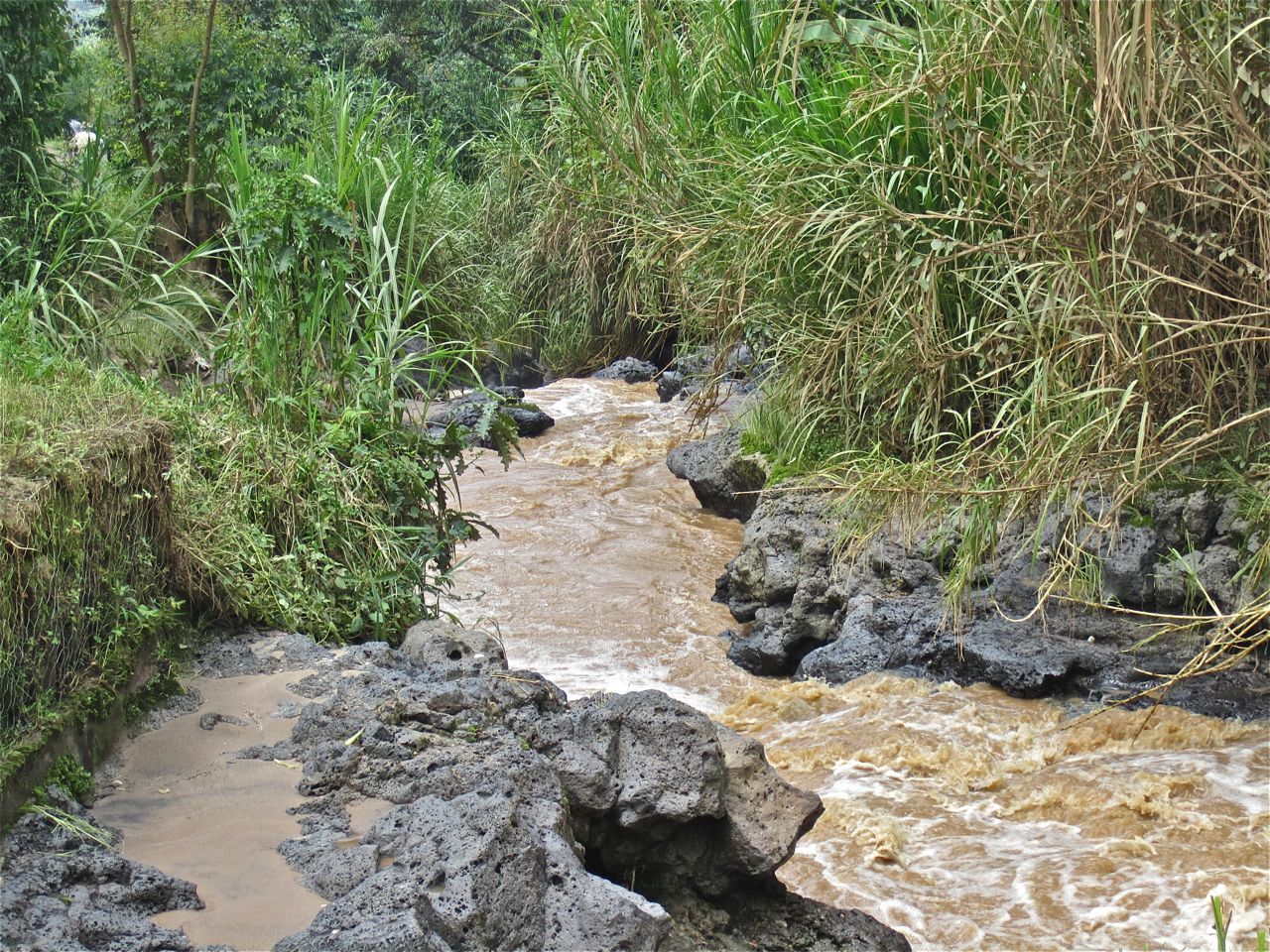
A stream bordered by long-hardened volcanic lava. The fast-moving water runs approximately parallel to the water pipe supplying water to the hydro-electric plant.
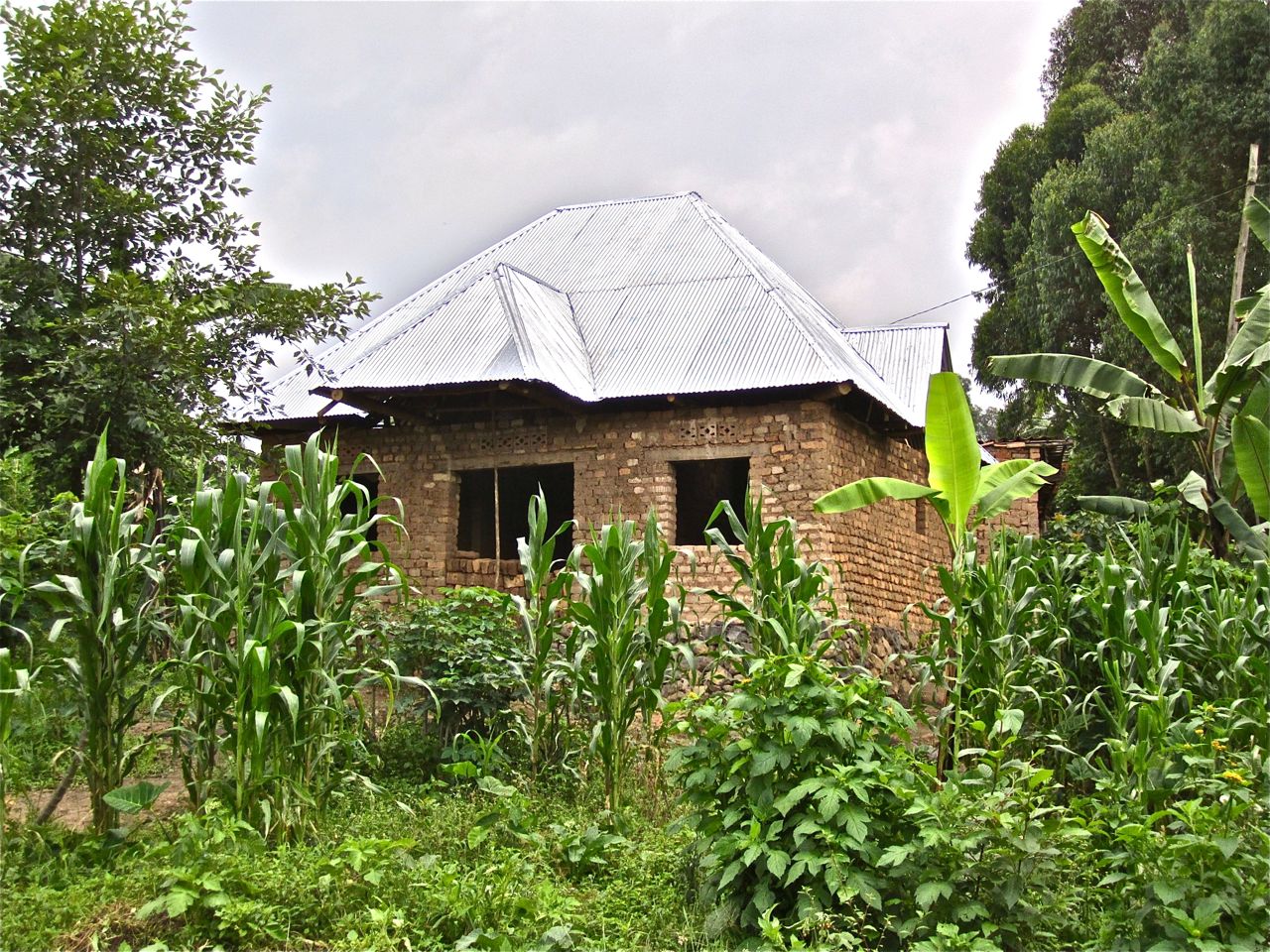
A house under construction with a roof-line typical of the Rubavu District. It seems to echo the surrounding hills and nearby volcanoes.
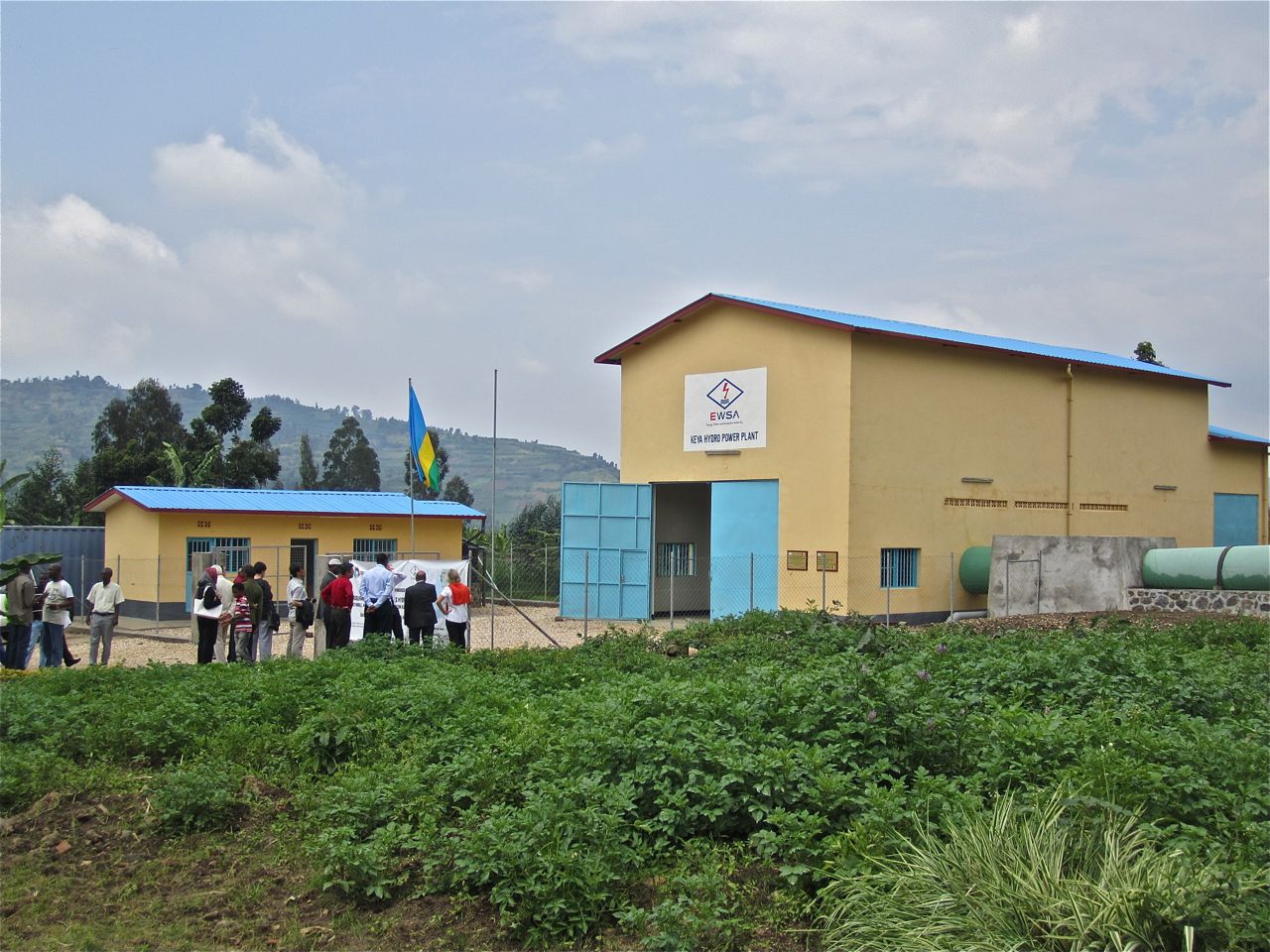
The Keya hydro-electric power plant. The water enters from the blue pipe on the right.  Built by the Rwandan government with the support of Belgium, it provides 2.2 megawatts of power.
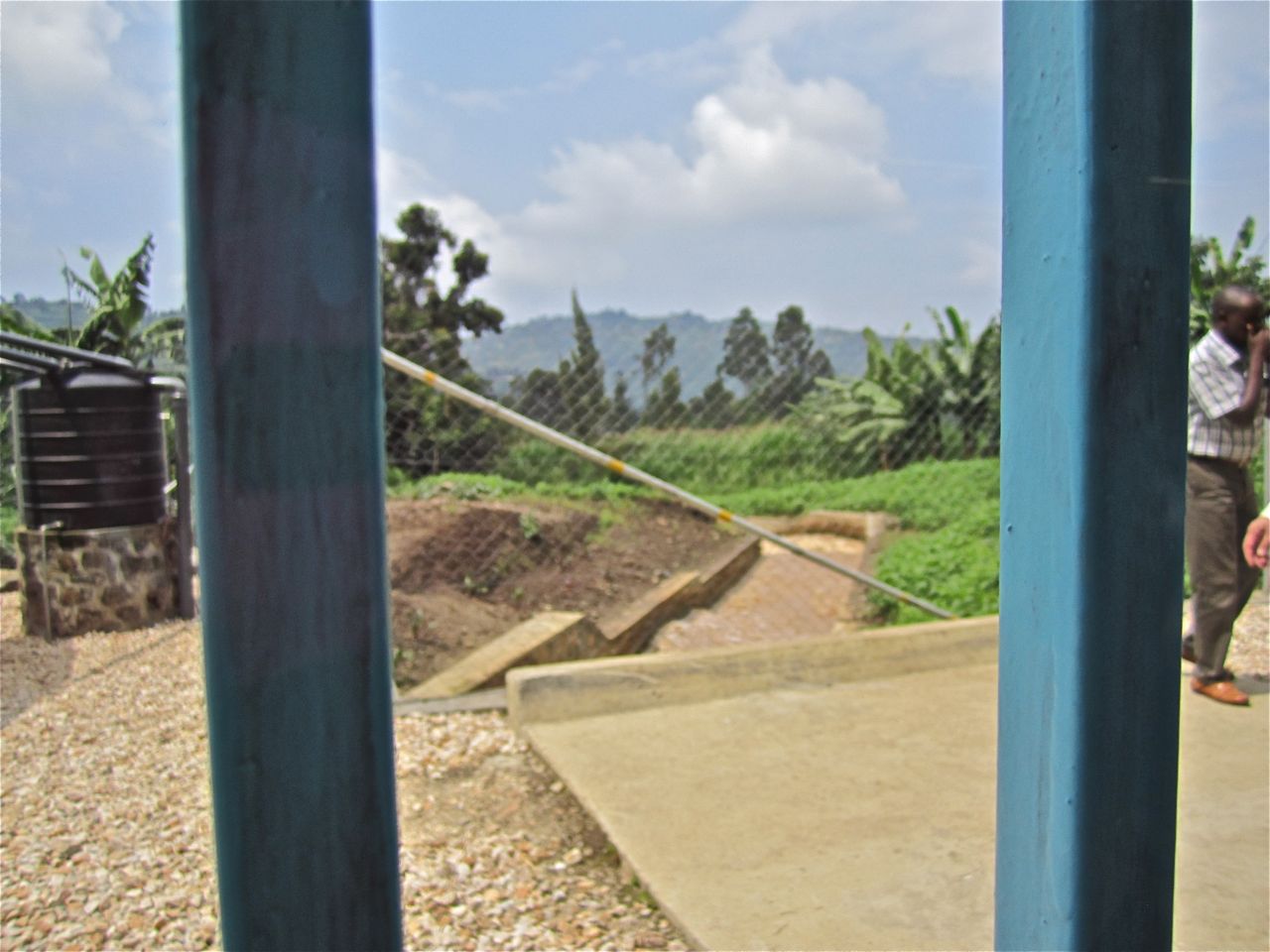
Water runs out the other side of the plant, beans planted right up to the edge. On the far left is a tank capturing rainwater from the roof of the plant’s office.

We ended our trip at the Pfunda Tea Company factory. Two thousand people work on the Pfunda Tea Estate, and the company also runs a cooperative for area tea farmers. All the tea is raised without pesticides, and, in February 2011, Pfunda Tea Company became the first company in Rwanda to obtain Rainforest Alliance certification.

One hundred and fifty people work 8 hours shifts in the tea factory, day and night. They will produce over 4.4 million lbs. (or 2 million kgs.) of black tea this year. The climate, altitude, and soil of the area is excellent for growing high-quality tea.
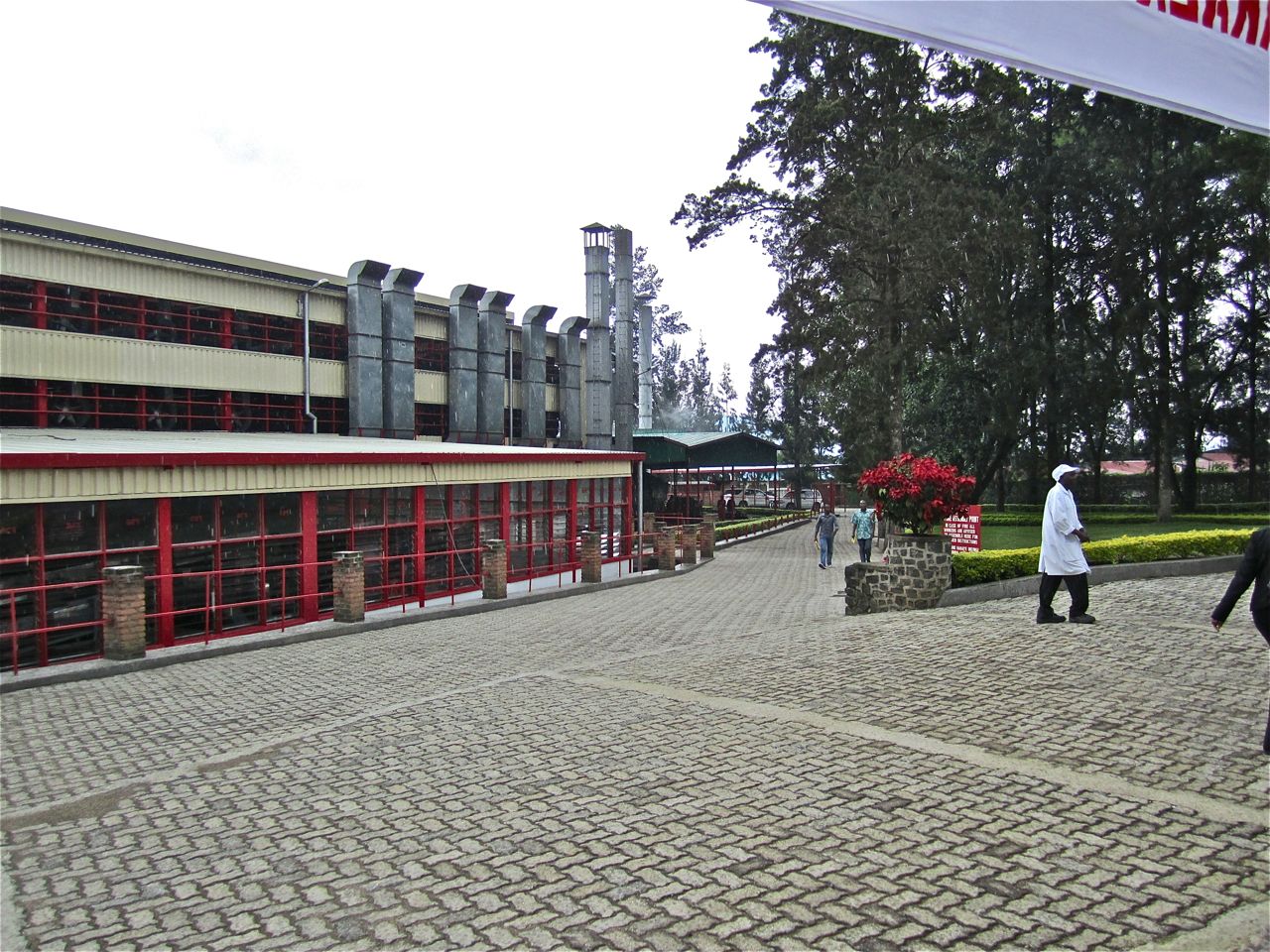
The Pfunda Tea Factory

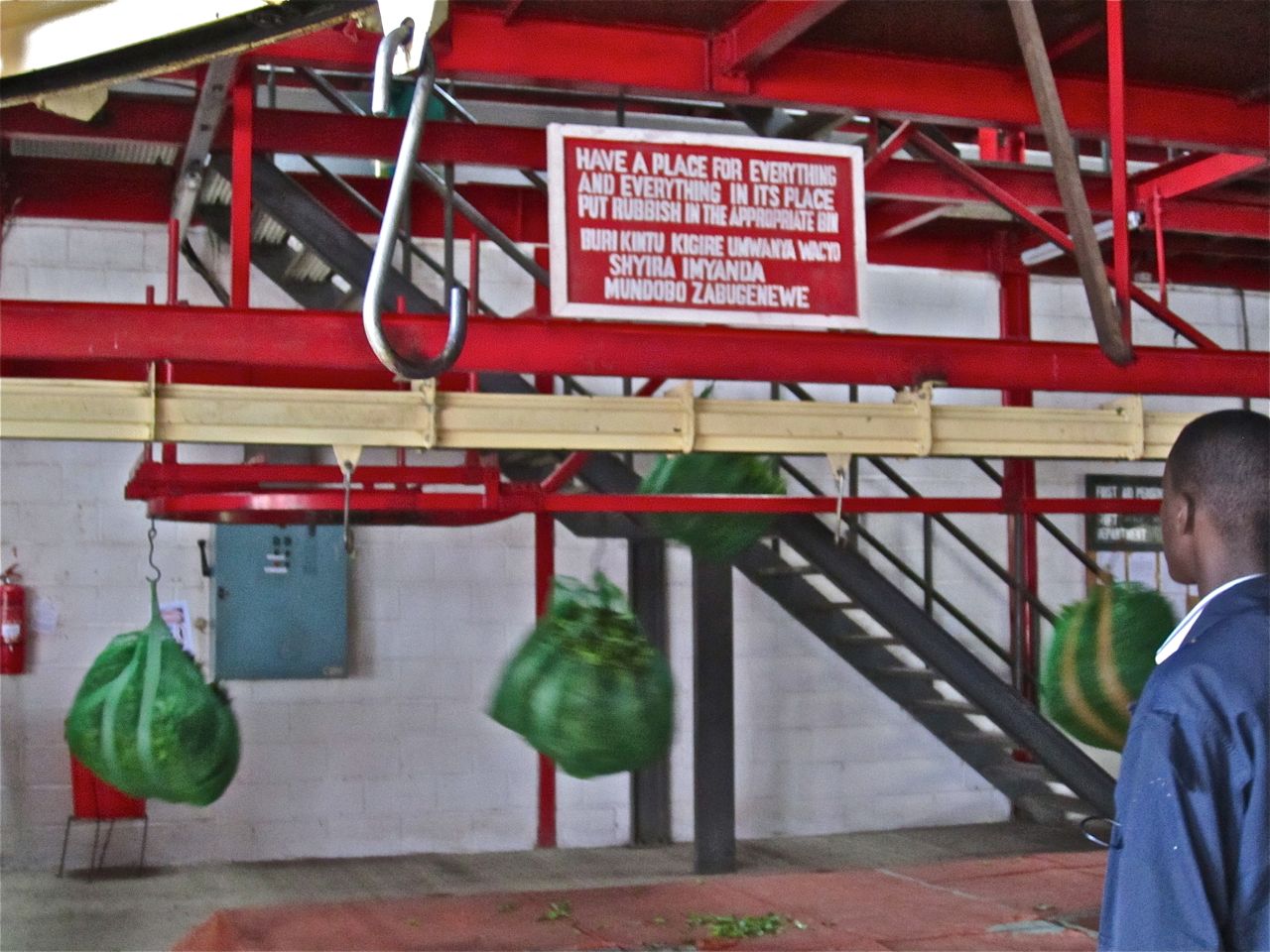
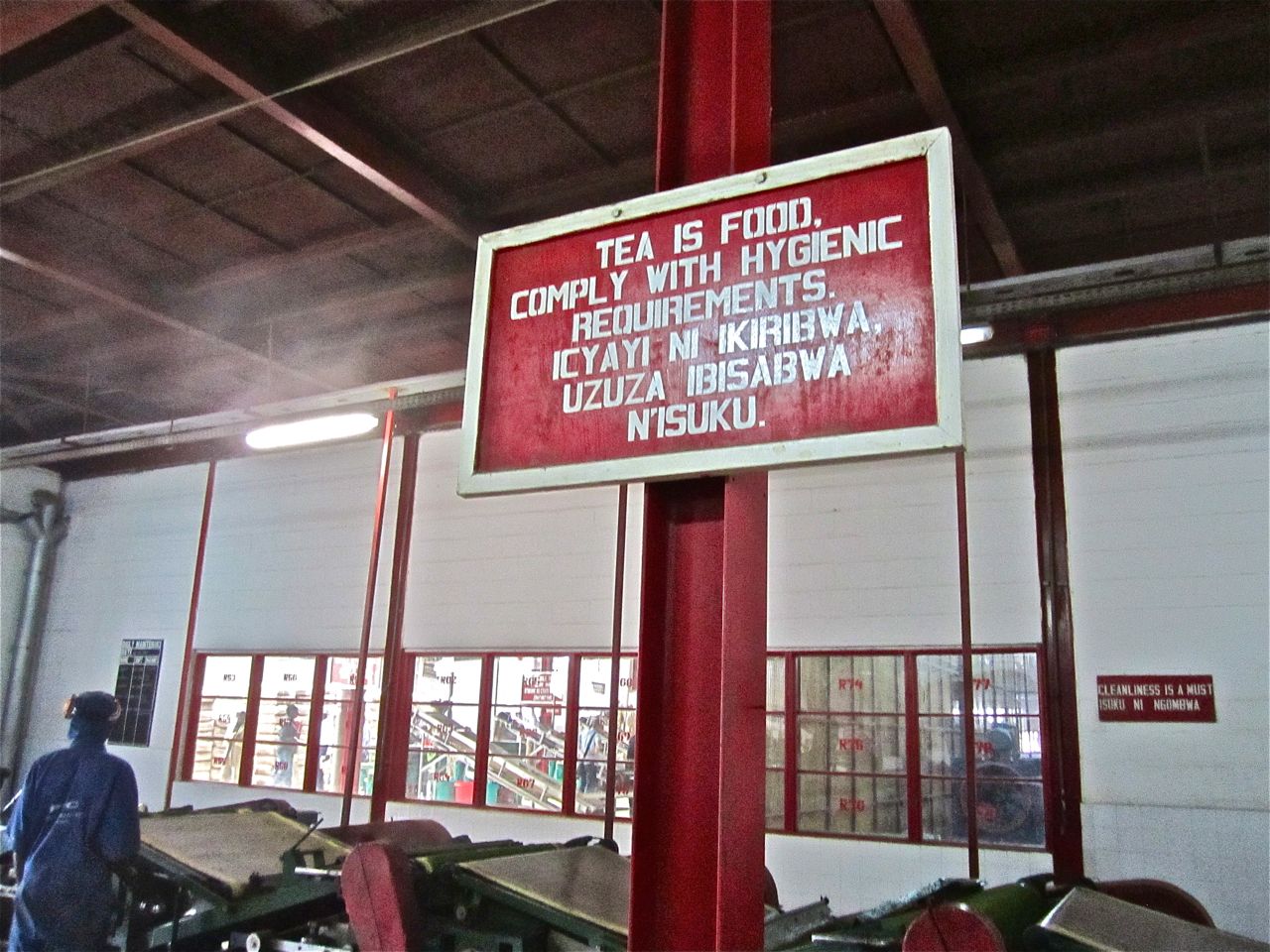
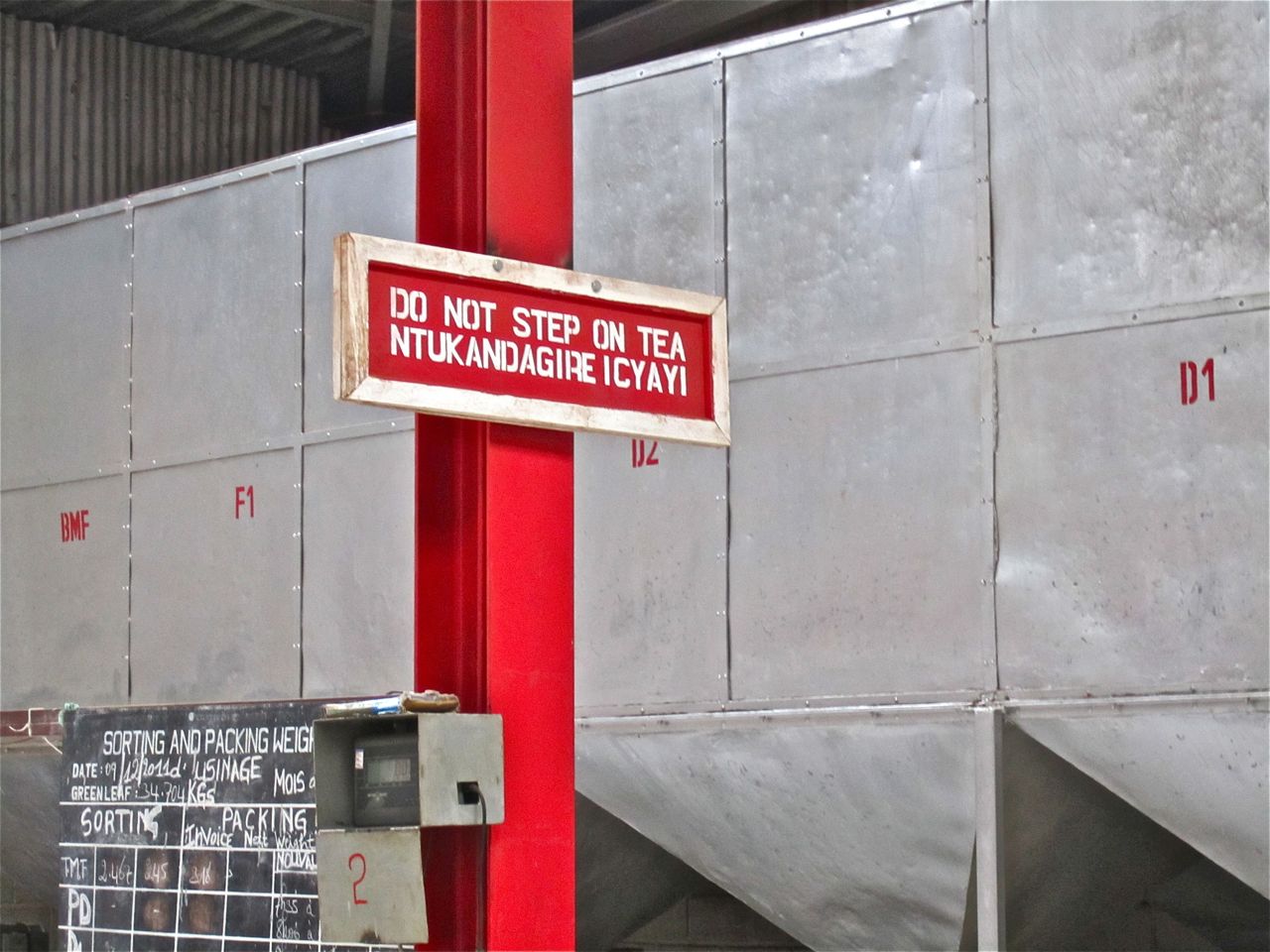
The design of the factory and its surrounding grounds — even its signage — struck me as remarkably consistent, orderly, and pleasant.  Lots of straight, clean lines in red paint and low hedges.
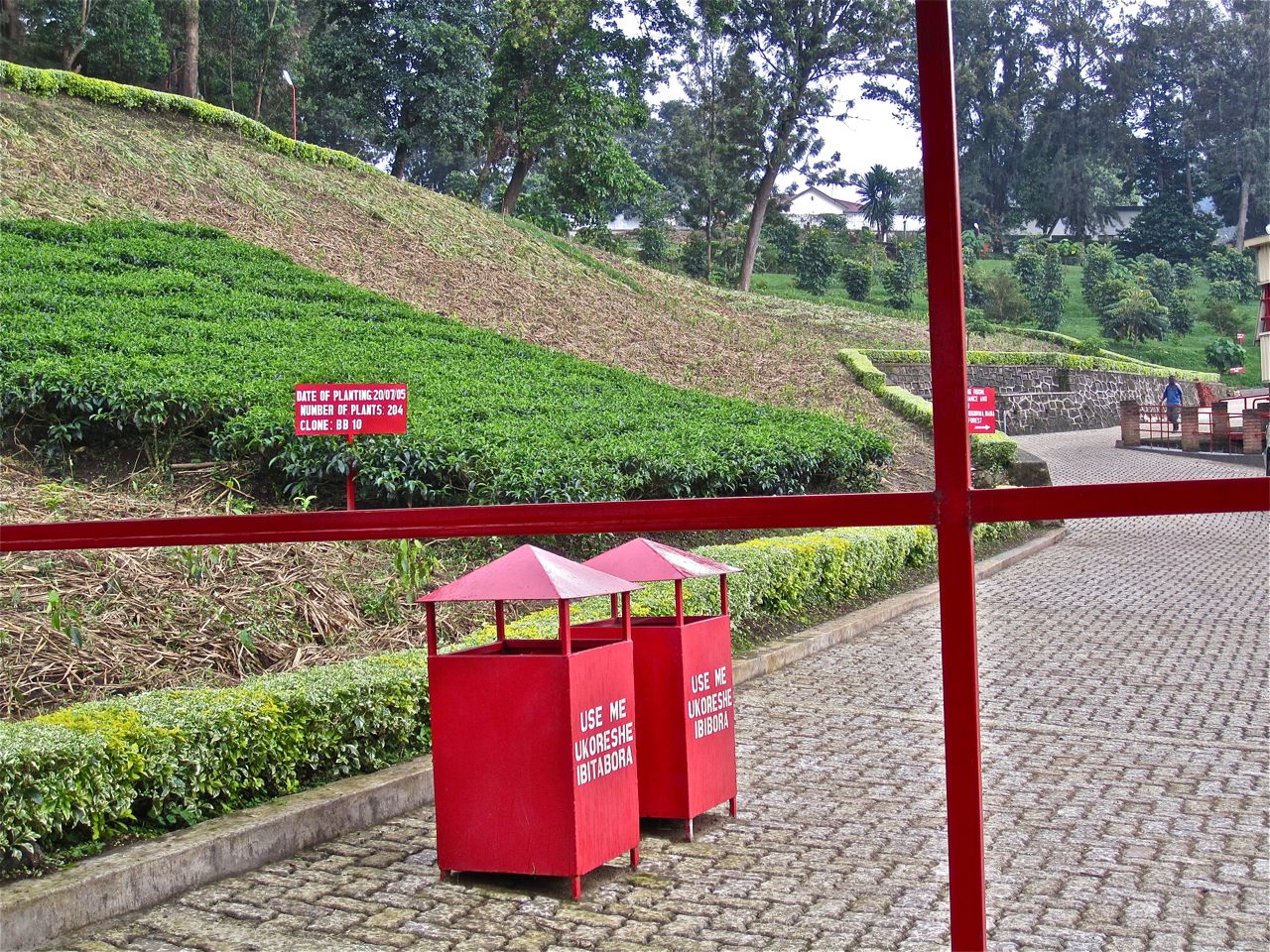
A test plot of tea bushes.
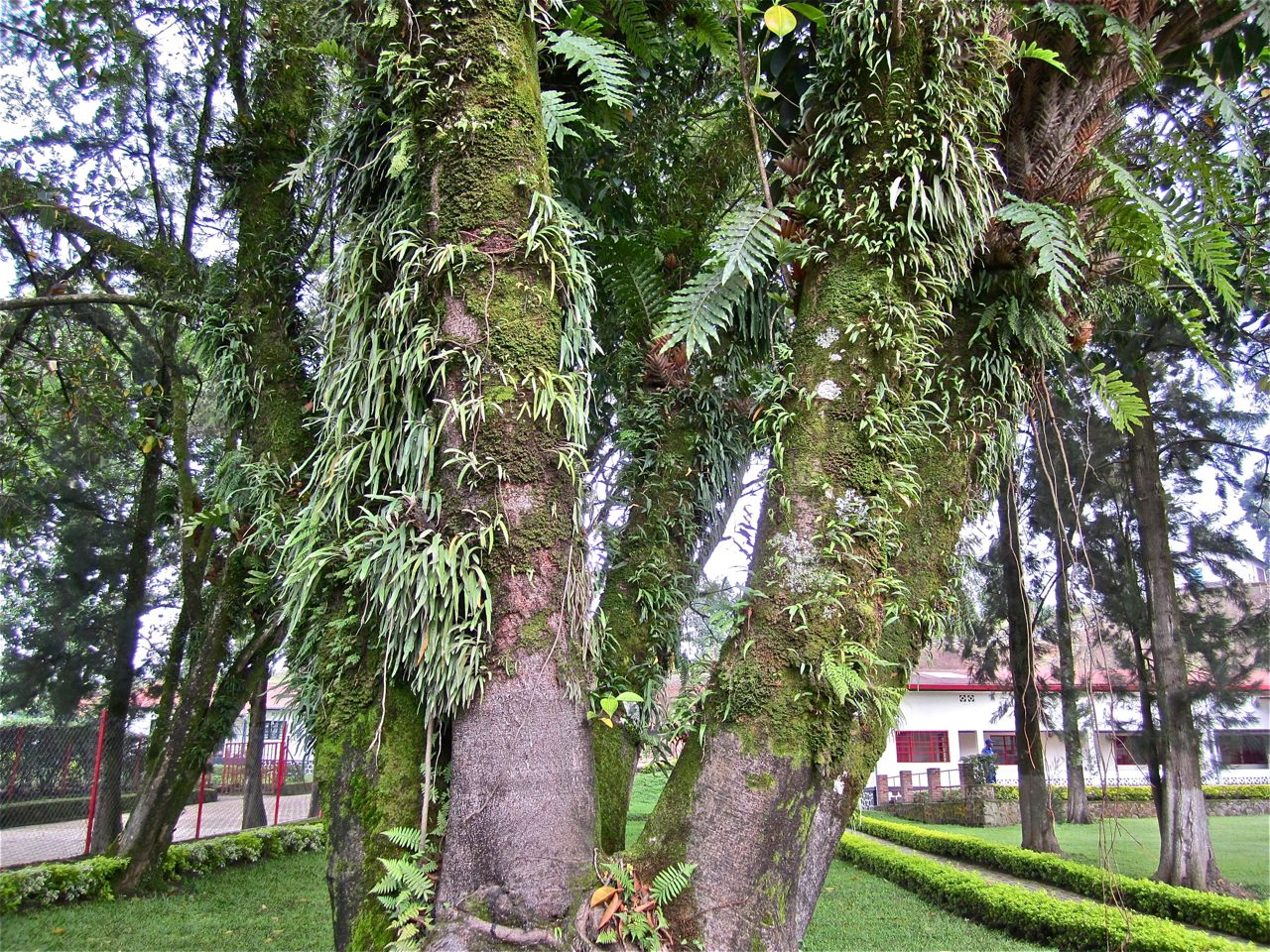
A factory tree laden with moss and ferns.
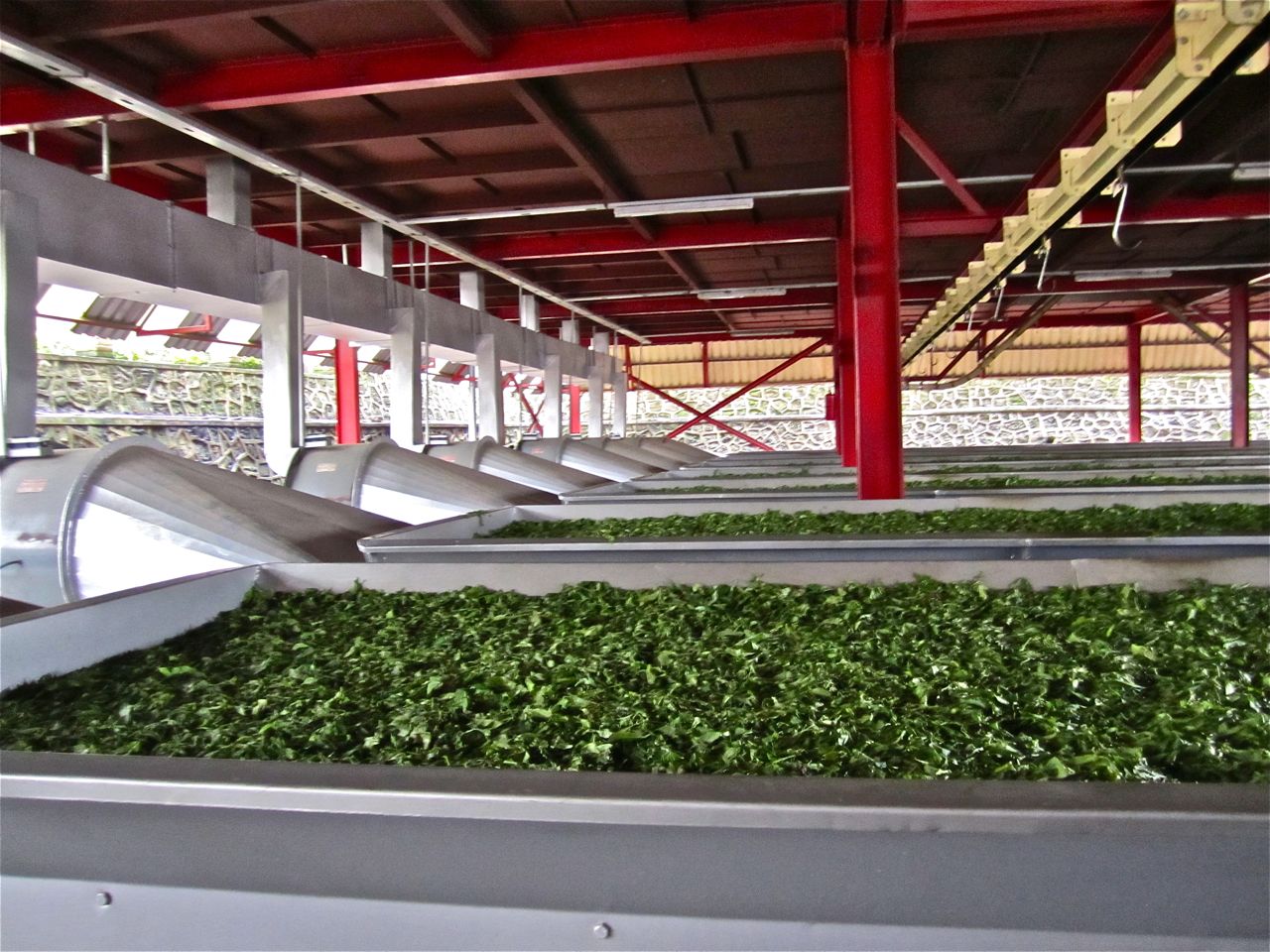
The green tea leaves dry here for approximately 15 hours. The factory smells like a combination of cut grass and brewed tea.
Dried leaves on their way to be processed. 
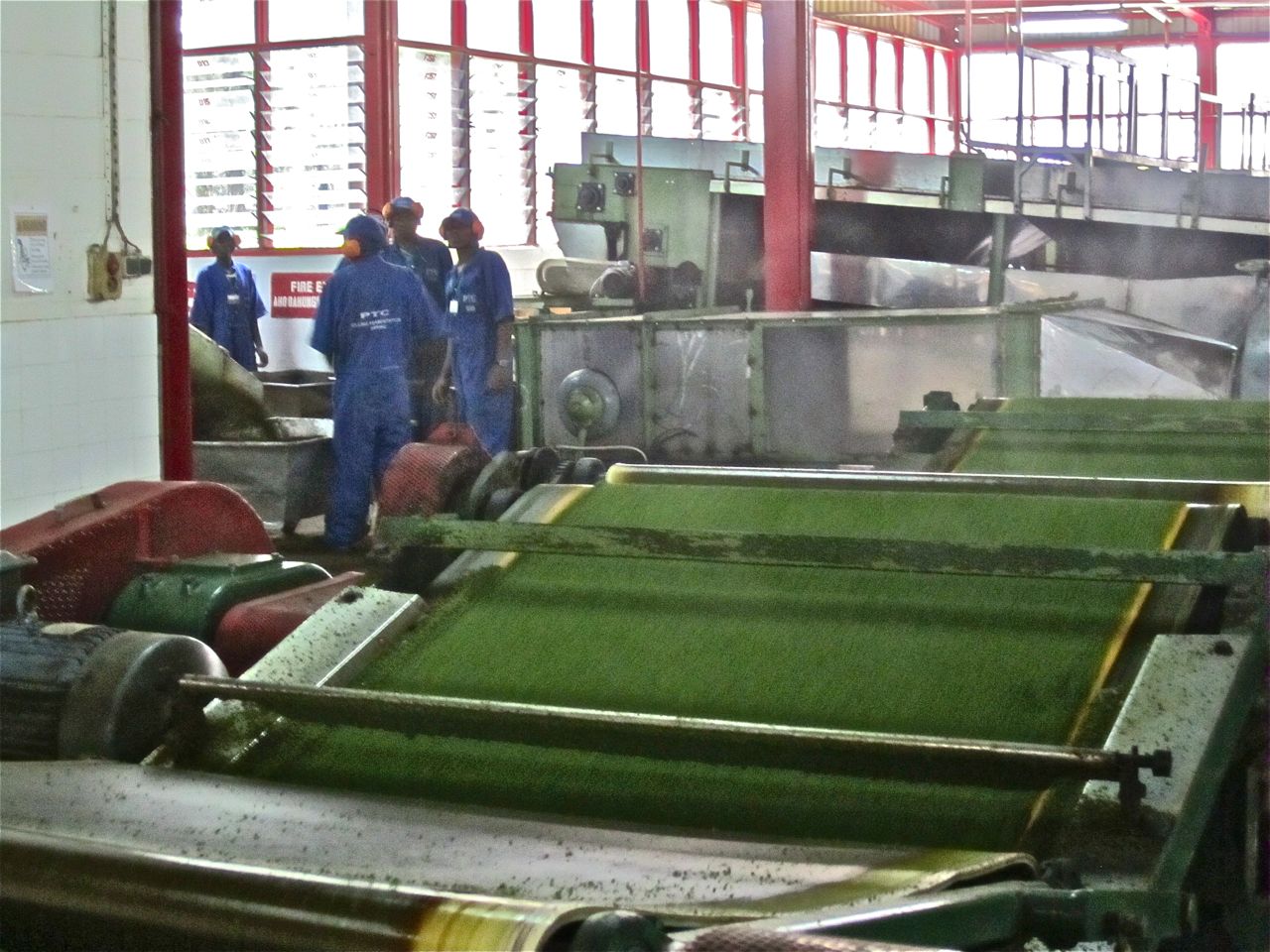
The leaves are finely chopped.
After the oxidation process, the now-black tea rolls off the belt and into buckets.
And put in piles before being bagged.
The factory is very orderly and clean.
A relief to tea drinkers.
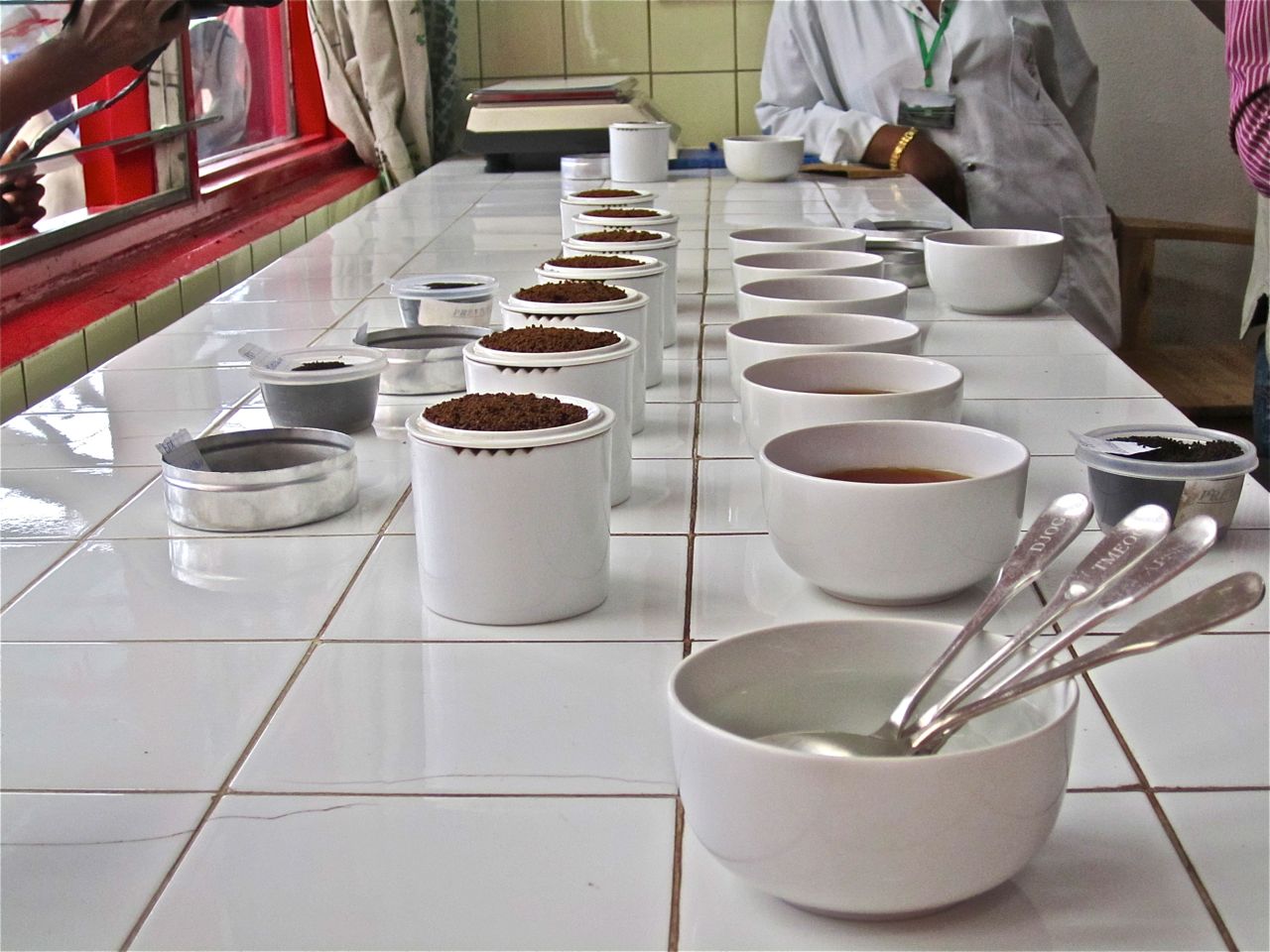
The testing and tasting room.

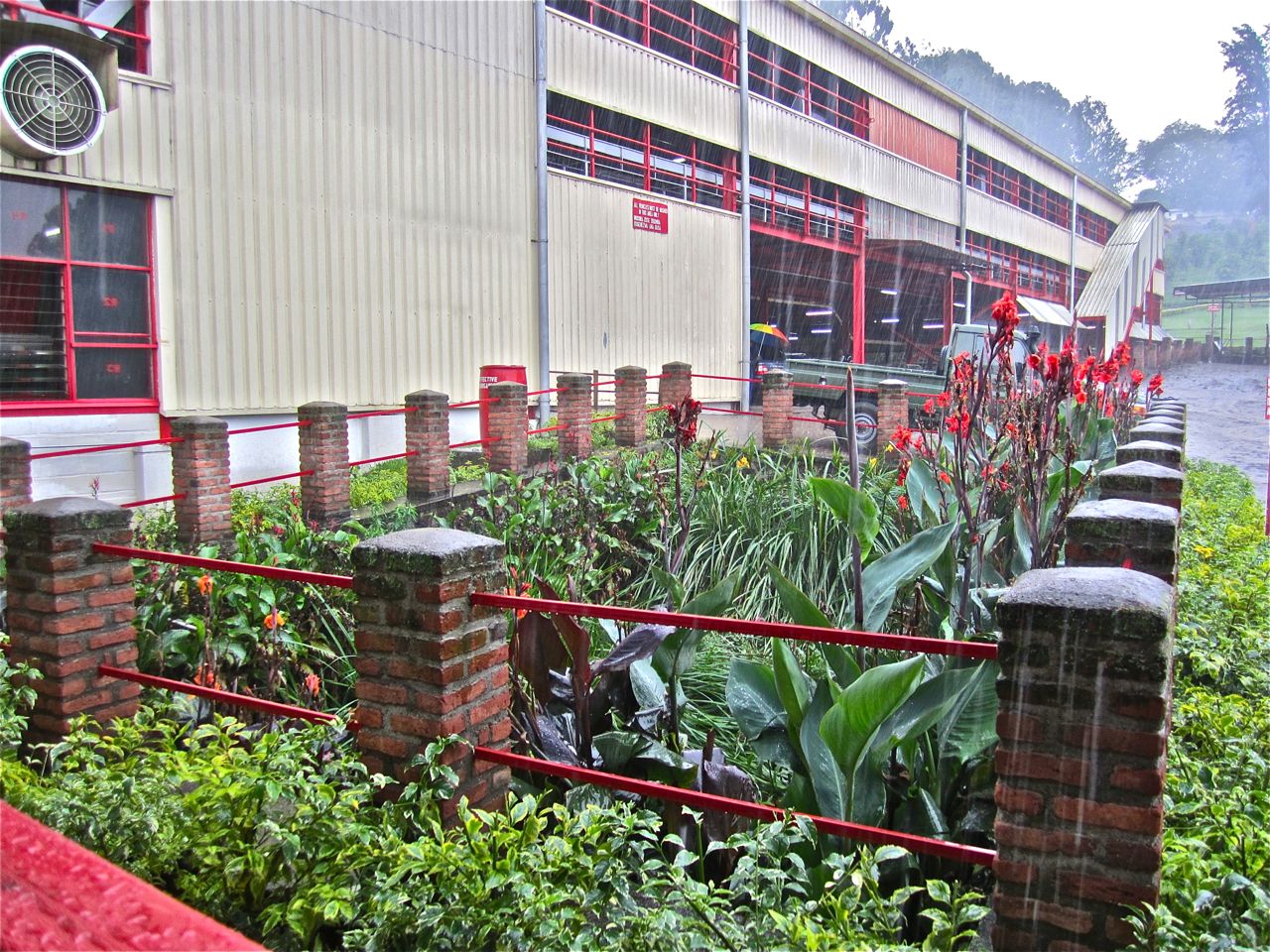
Waste water from the tea processing is diverted to a garden pool and treated with “Effective Microorganisms,” a product that cleans water and eliminates bad odors with a combination of microorganisms that were collected and cultivated naturally.
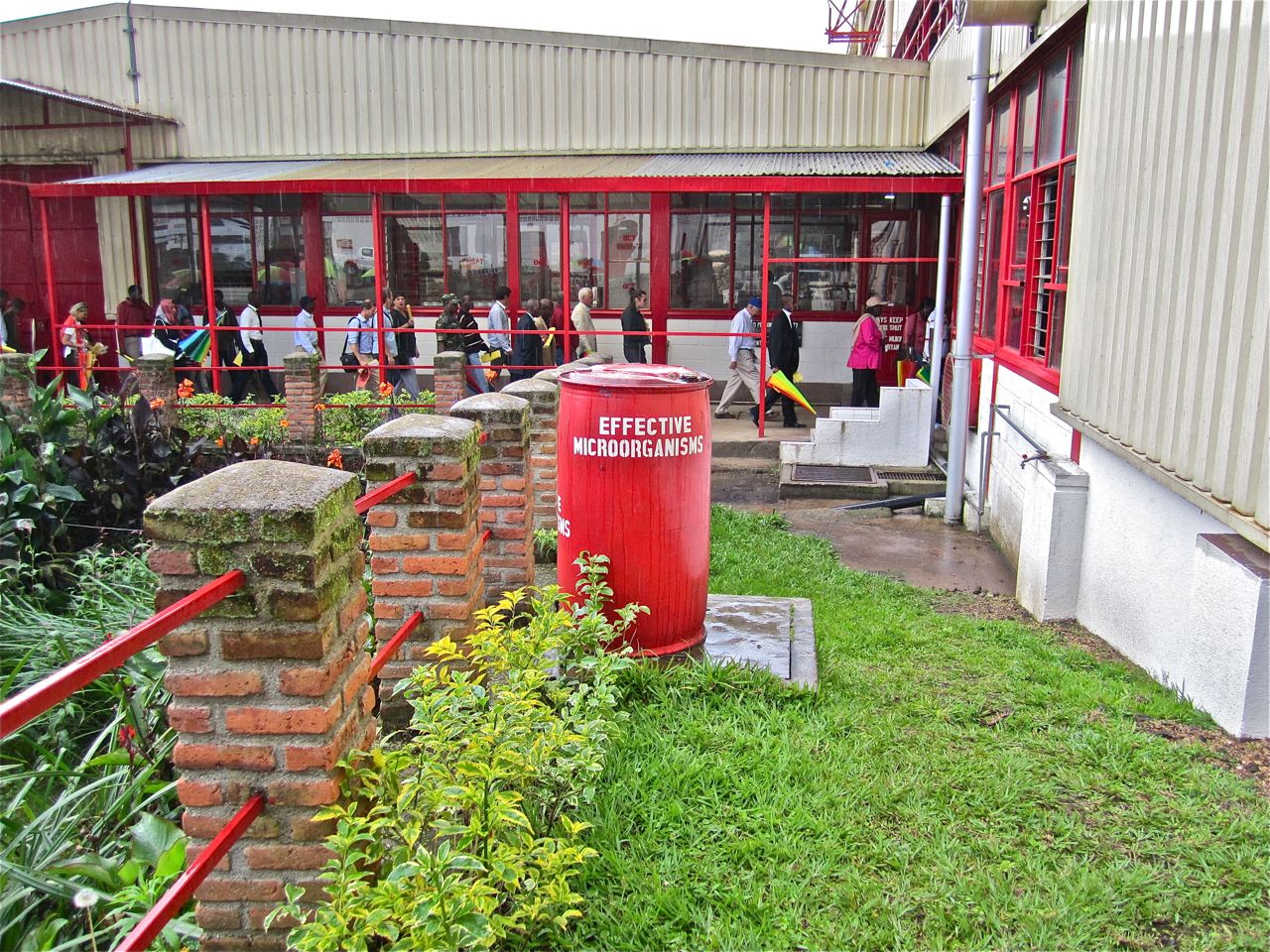
A barrel of Effective Microorganisms.
A waste water garden pool in the rain.

As we travel, I am always looking for recurrent elements in the landscapes and urban surroundings through which we pass, as well as in the architecture and craft.  I am trying to grasp what Rwanda really looks like, what it cares about, how it experiences its environment (and how I experience its environment) and how I can interpret at least some of  that in a garden design.

Bird’s eye landscape

A recent visit to the Virunga Safari Lodge in the north of Rwanda made me think of Russell Page’s book, The Education of a Gardener, and his words on handling a hilltop site with a view.

About halfway up the nearest volcano, you can see the line between cultivated fields and the park, where the mountain gorillas live protected.

The Lodge –near the Parc National des Volcans and the famous mountain gorillas — has extraordinary views. Guests can see two lakes and several volcanoes.  But Page wrote that such a location is not ideal for the gardener.

“If I were to choose a site for a garden for myself,” he wrote, “I would prefer a hollow to a hilltop.  A panorama and a garden seen together distract from each other.  One’s interest is torn between the garden pattern with its shapes and colors in the foreground and the excitement of the distant view.  Everything is there at once and one has no desire to wander to make discoveries. . . .”

If, however, one does have to have a view, he advised: “Above all avoid any garden ‘design’ or any flower color which might detract from the main theme, which in such a case must be the view. . . . If there must be flowers they should be close against the house or below a terrace wall and so only visible when you turn your back to the view.  I would arrange the gardened part of the garden — flowers and shrubs — to the sides or far enough below, so that they and the view are not seen at the same time.”

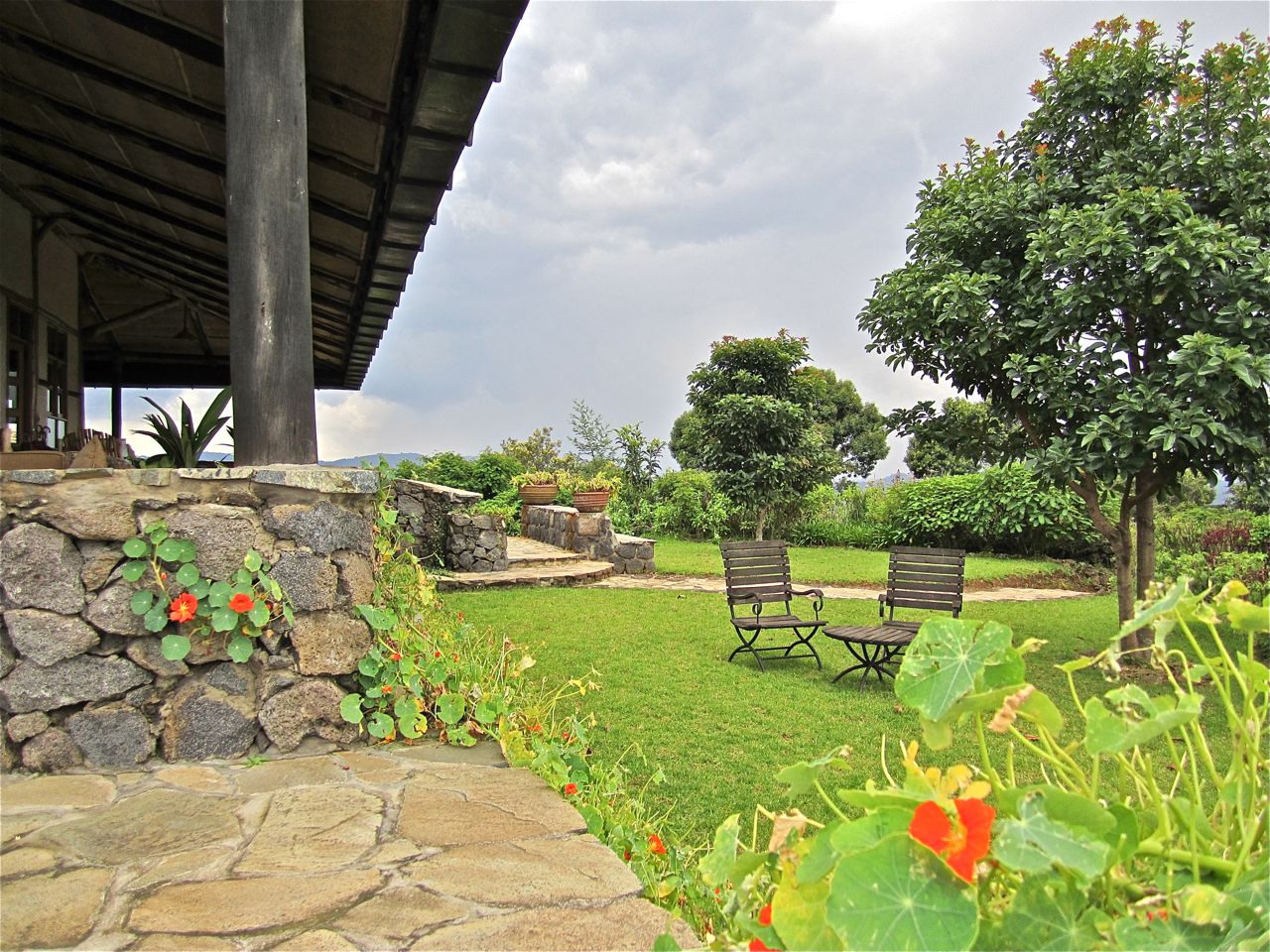
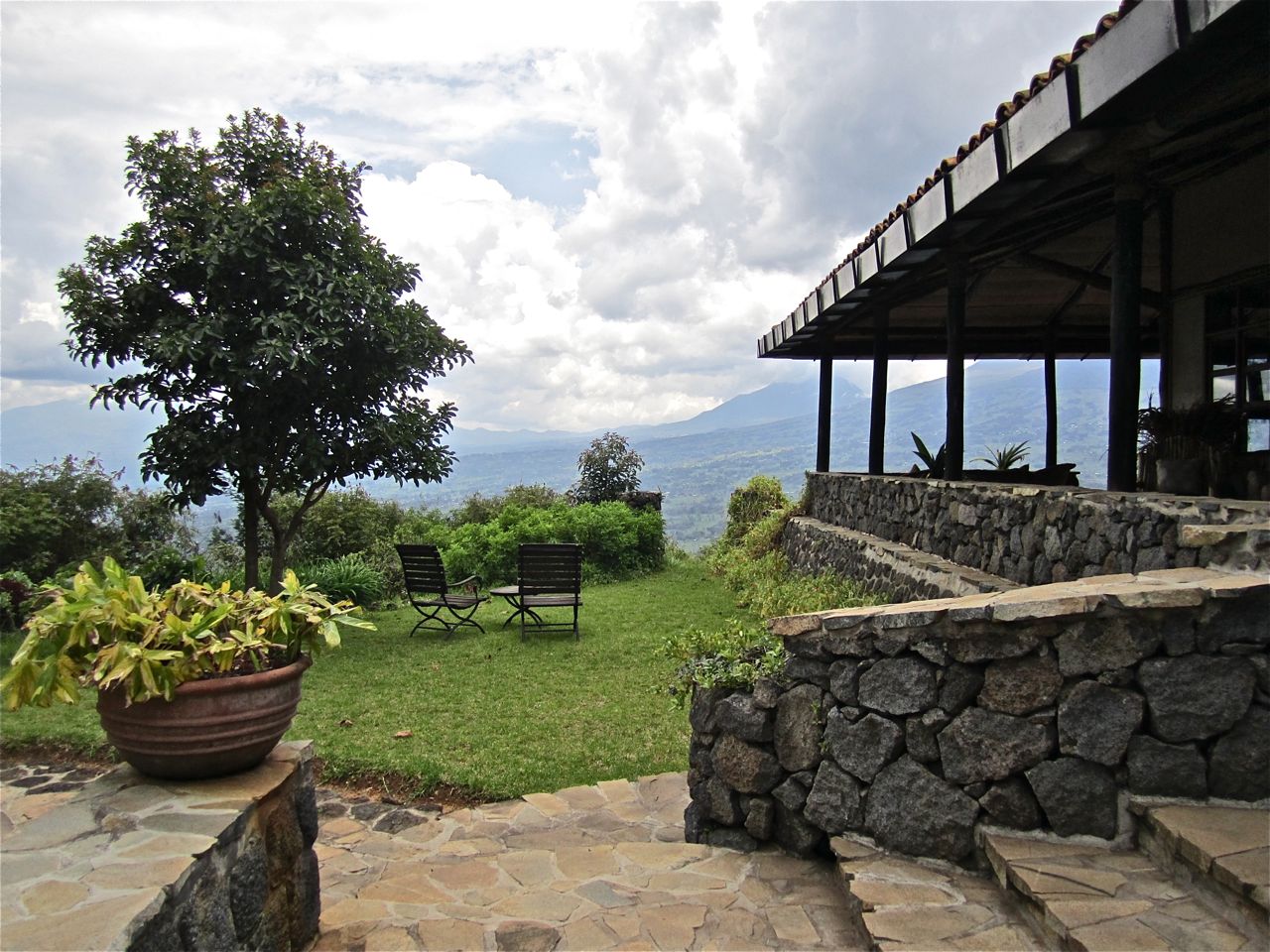
Landscaping around the dining hall and lounge is simple.

The landscape designer for Virunga Lodge seems to have worked right from the book, with beautiful results.

There are a few garden flowers and shrubs, but usually the existing wild brush has simply been cut back to allow for a few flat grassy areas and paved paths.
The focus is on the gorgeous view of Lake Burera.
Local volcanic rock was used in the construction of buildings and walls.
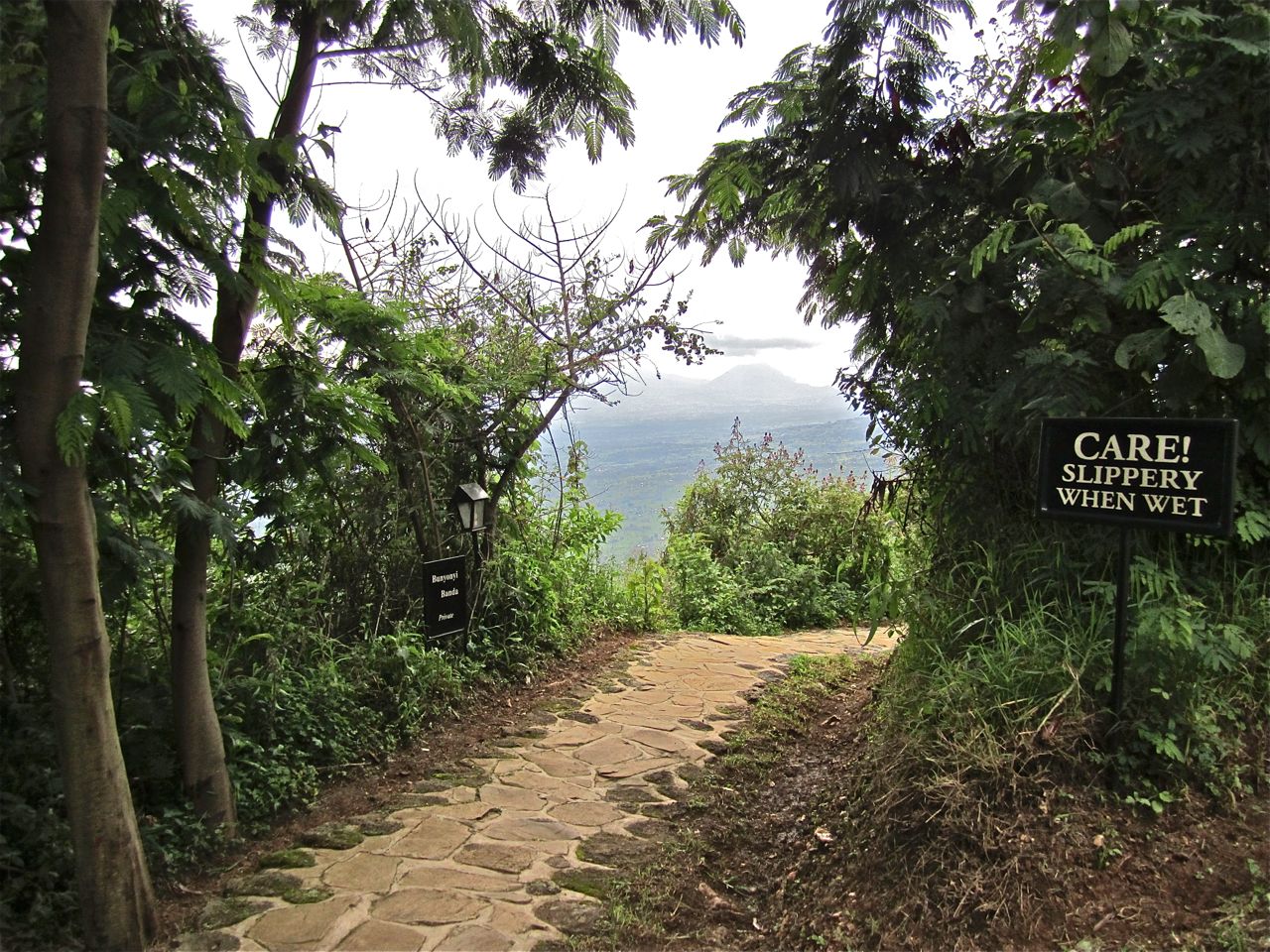
A path to a banda or individual cabin.
A trail to nearby villages. The lake is in the middle distance, topped by more hills and clouds.
About three hours drive from Kigali, the Lodge has eight “bandas” or individual cabins, which operate on solar power and use rainwater recovered from the rooftops.  It is very expensive at $600 per person per night,* although this is inclusive of all food and drink (including alcohol).  (We just stopped by for a look.)

This simple grass “room” sits along one of the main paths.
The path crosses this room, which is outlined with a low wall.
A long room with regularly spaced columns near the entrance to the Lodge.
The bandas have stone terraces.

To get a better sense of the layout and location of the Lodge (and what it’s like to arrive by helicopter), you can watch this short YouTube video.

The same morning as our stop at the Lodge, we visited two local schools and a nearby village family. Our guide was an American businessman working with faith-based development endeavors in Rwanda.  He took us to the site of a house he is building for himself. At the moment, it’s just a stone and concrete foundation set on the edge of a hill.

But again, the views were absolutely amazing.  He wisely plans to leave the land surrounding the house (which is all sloping downward) very natural, hoping to attract as many birds as possible.

Lake Burera.

Living here, one might begin to feel like a bird.


*There are reductions for Rwanda residents.

First look: Kigali, Rwanda

Muraho!  We have been in Rwanda 25 days today.

Our new home, as we expected, is beautiful. The garden is filled with wonderful plants and mature flowering shrubs that are familiar to me from previous posts in Africa and Latin America, although I have forgotten a lot of their names.  Some time on the internet should help with that.

The beautiful shrubs are filled with a variety of birds.  Unfortunately, some of them seem to live in the time zone we left behind.  We have the birds that sing at 2 a.m., those that sing at 3 a.m., 4 a.m. and so forth.  Ending with the ones who tap insistently on our bedroom window for several minutes every morning at 6. Continue reading “First look: Kigali, Rwanda”

Faithful and true ground

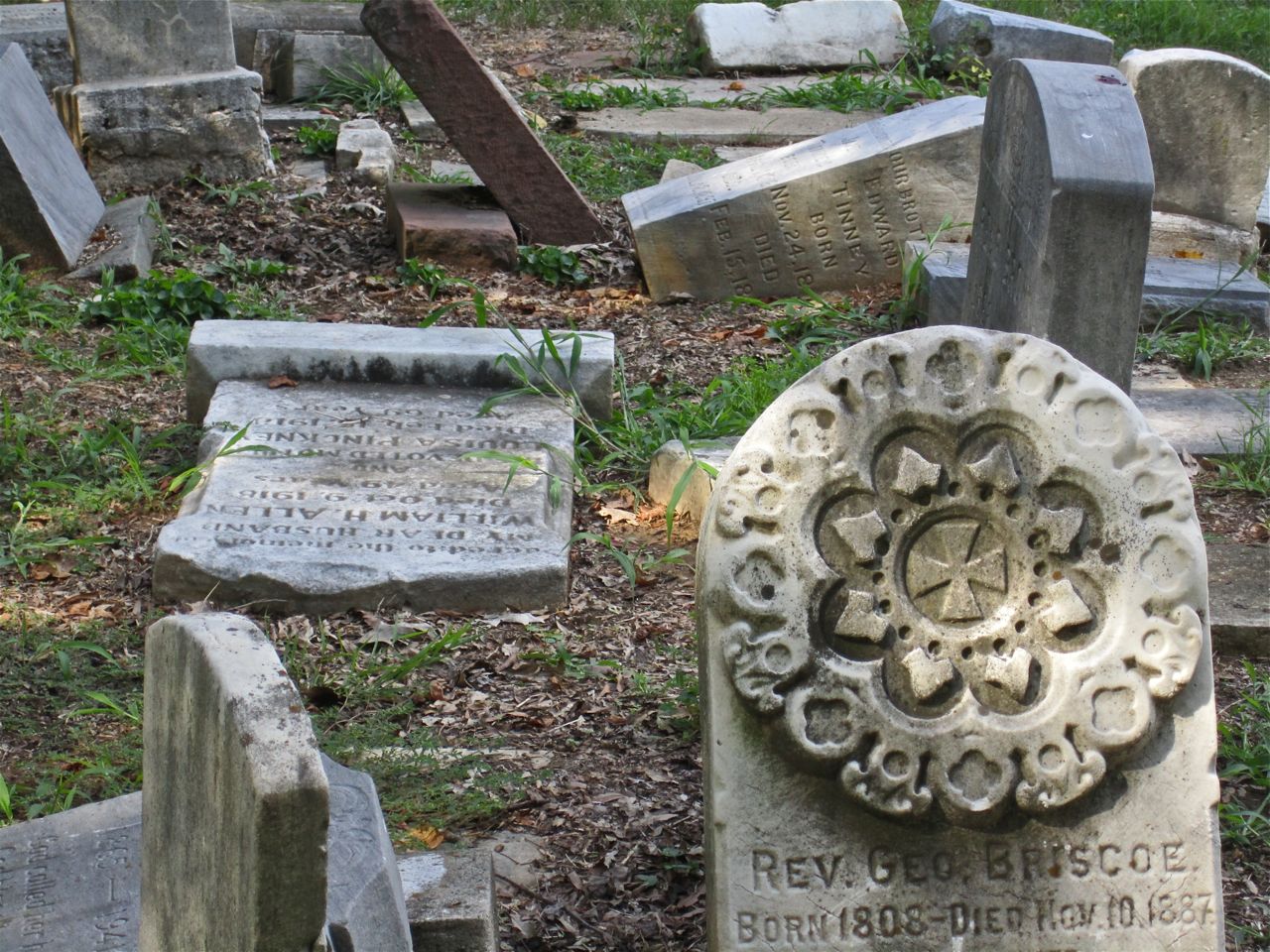
Is anything more poignant than an old graveyard?

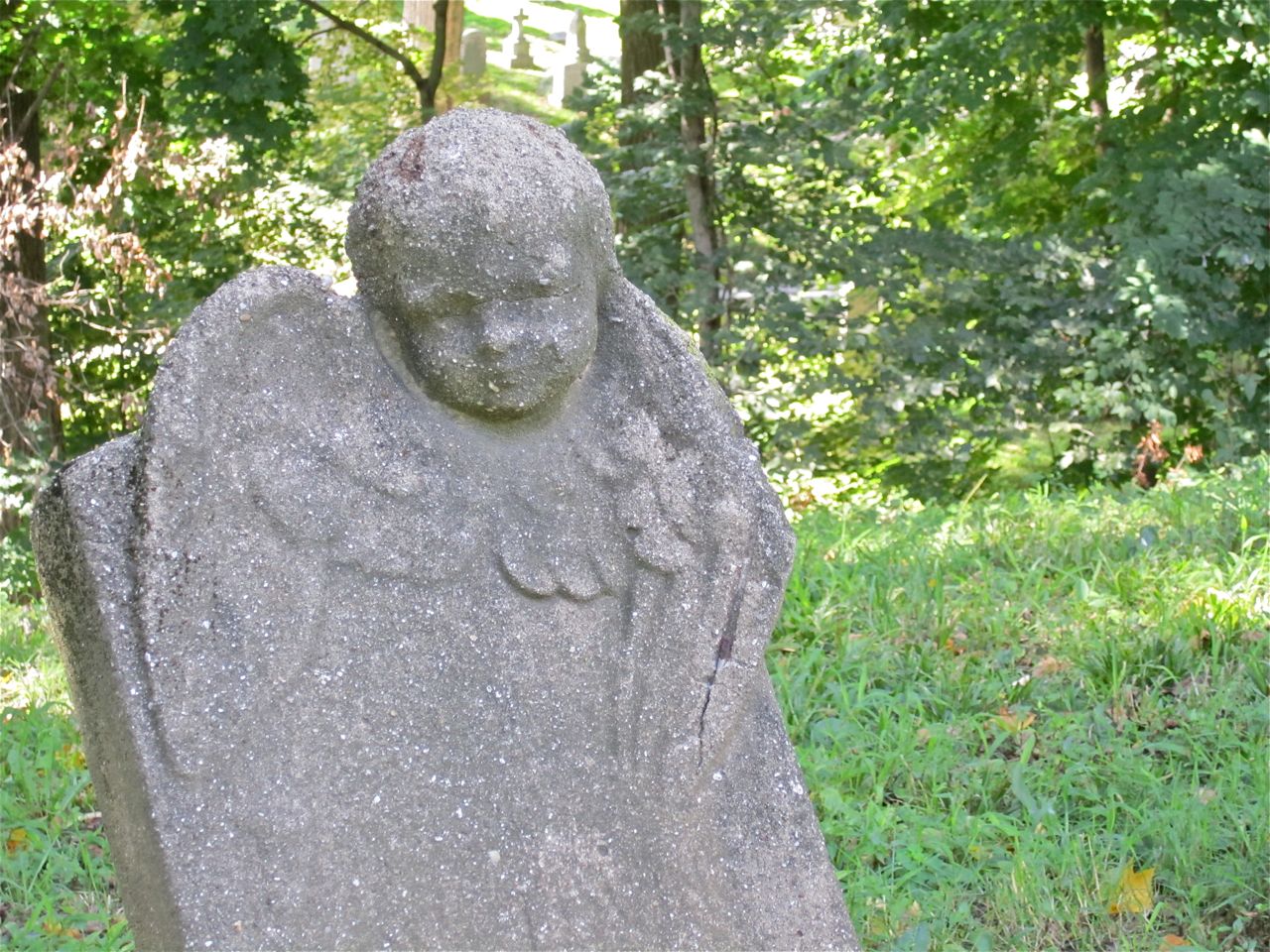
An angel headstone, the words have faded.
Mt. Zion Cemetery.  Click the photos to enlarge.

Mt. Zion Cemetery is tucked behind the apartment buildings and townhouses of the 2500 block of Q Street, NW, at the edge of Georgetown.  I often pass it on my bus ride home. On Wednesday, as I was walking home after the earthquake, I stopped to take a closer look.

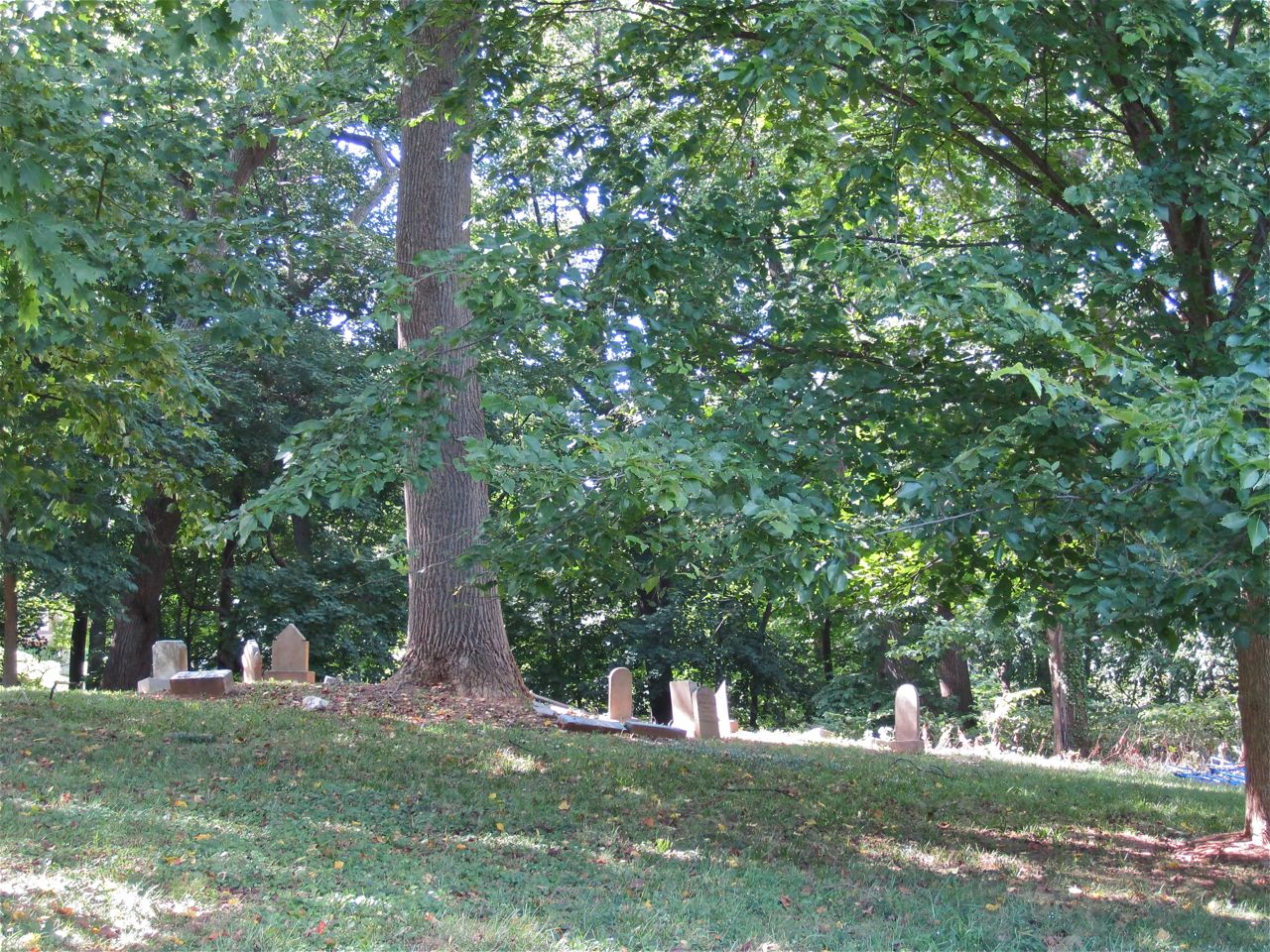
A group of headstones at Mt Zion.
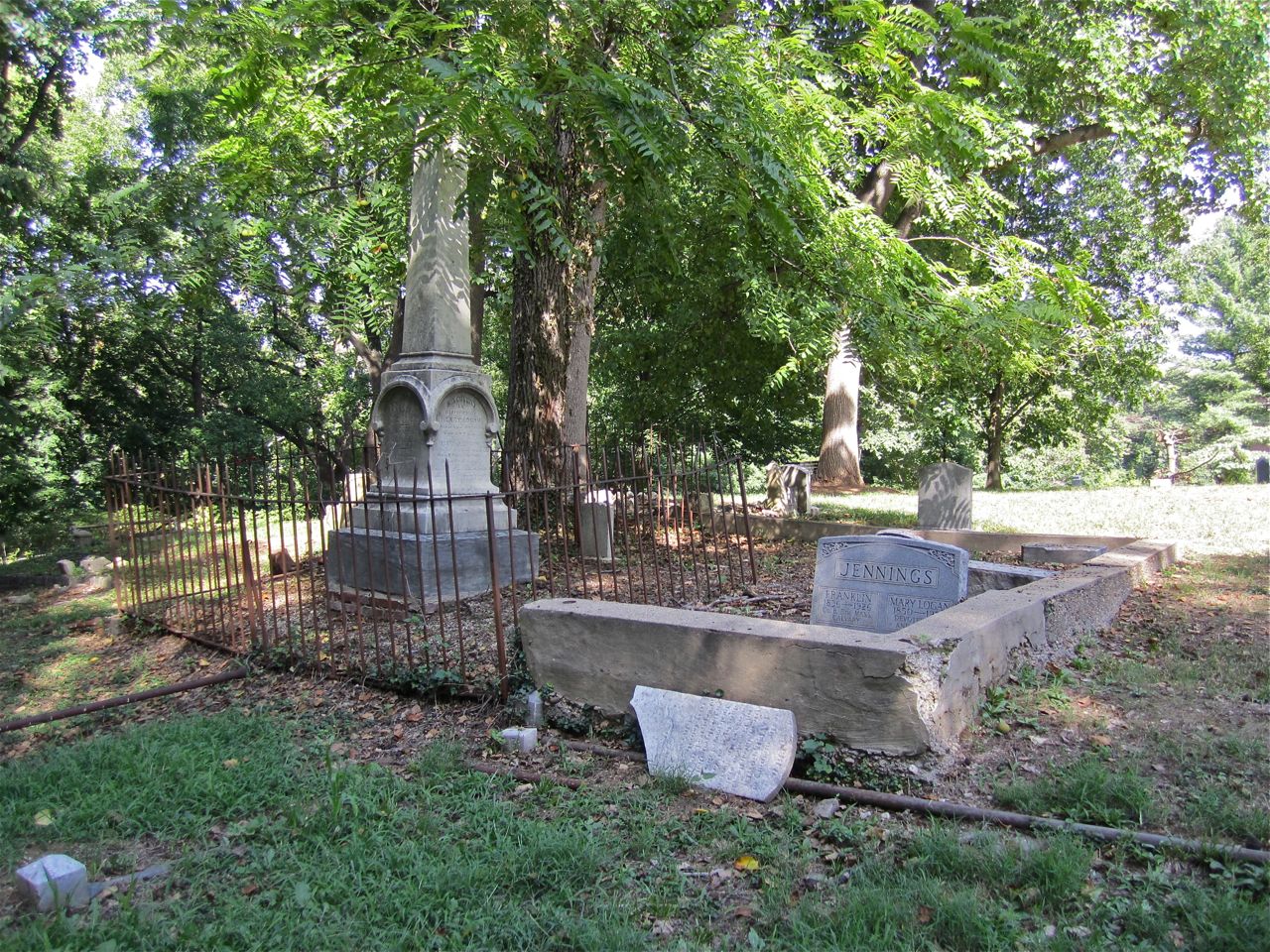
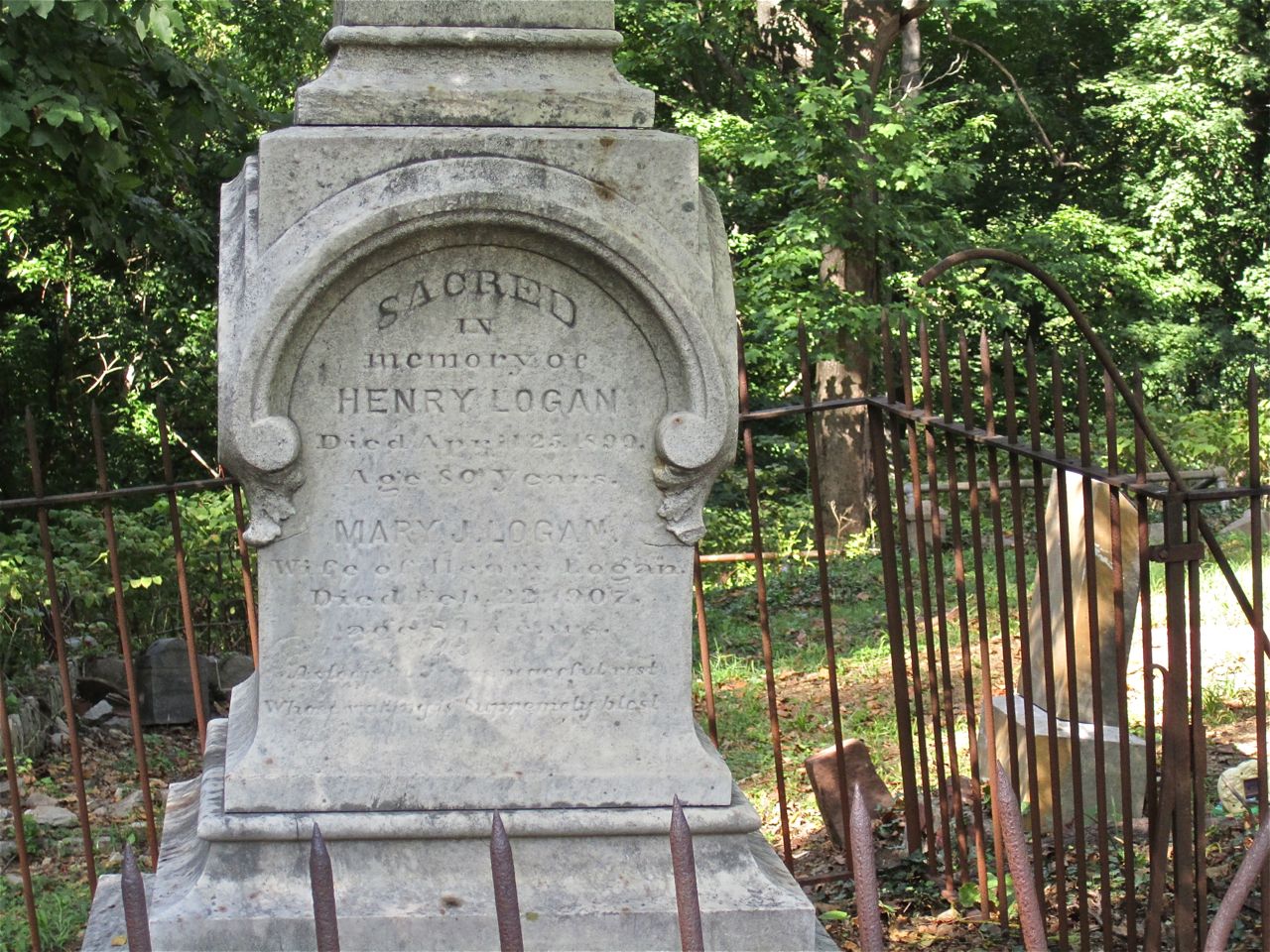
A family enclosure.
The Logans were a prominent Black Washington family.

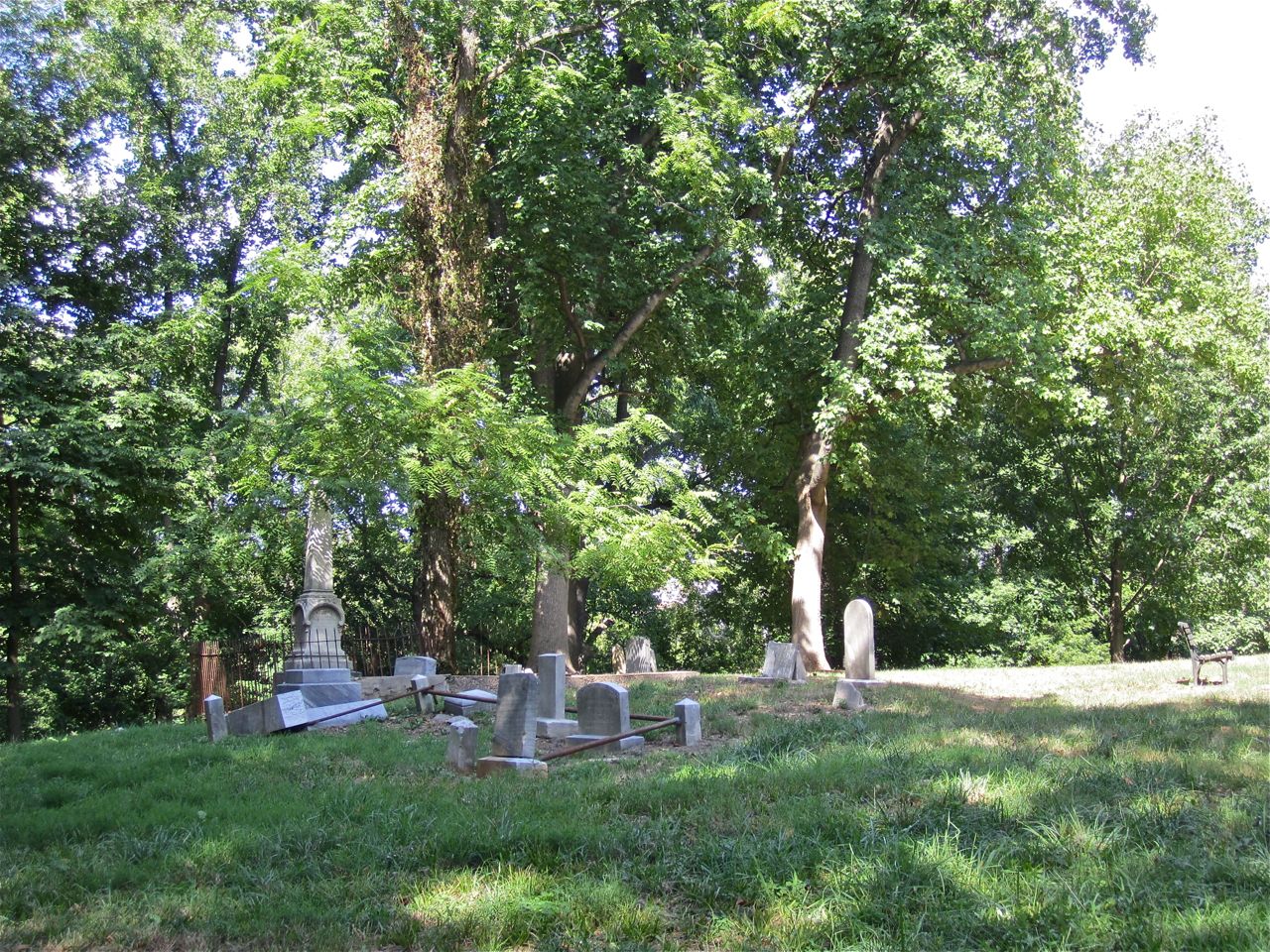
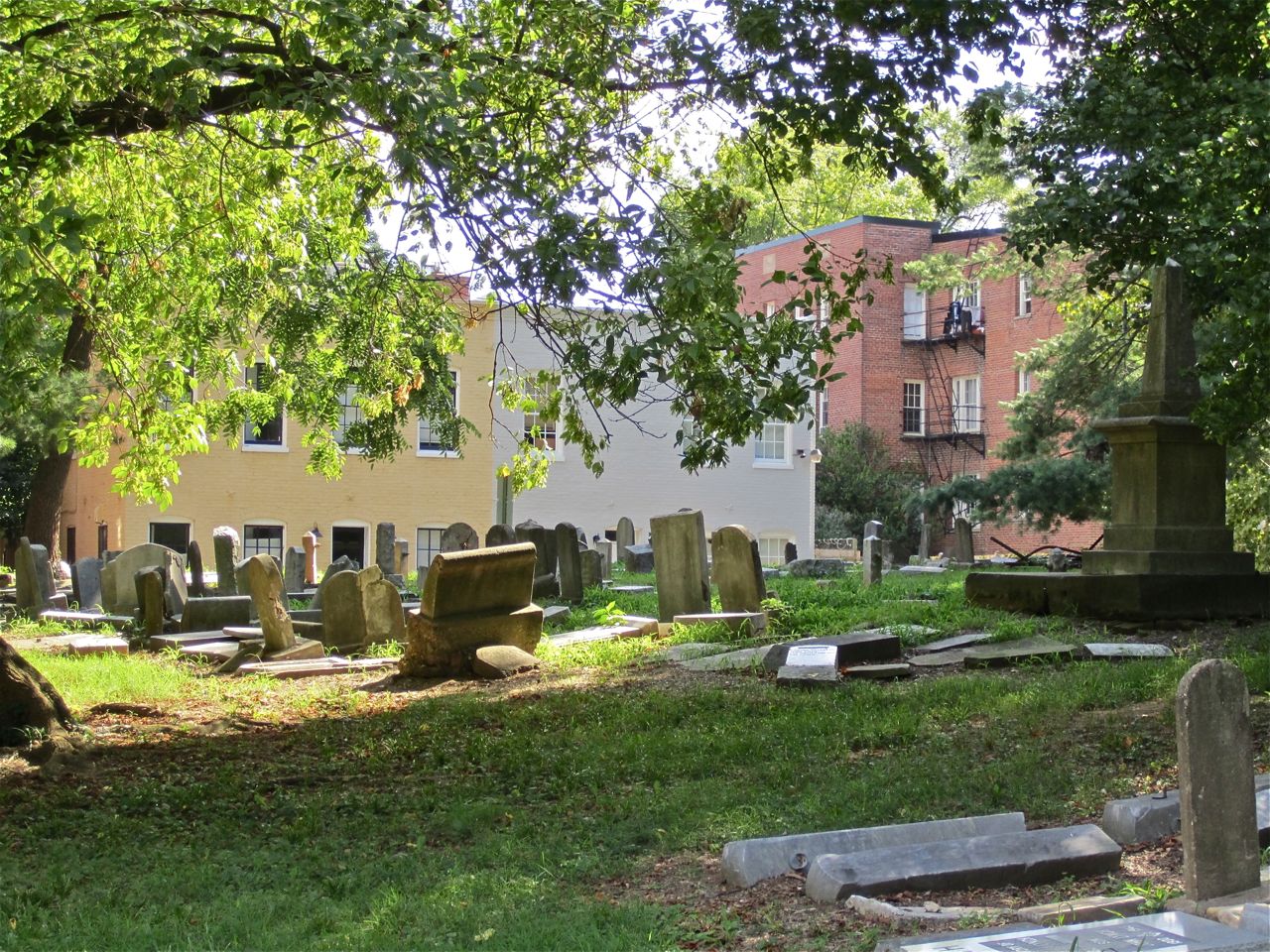
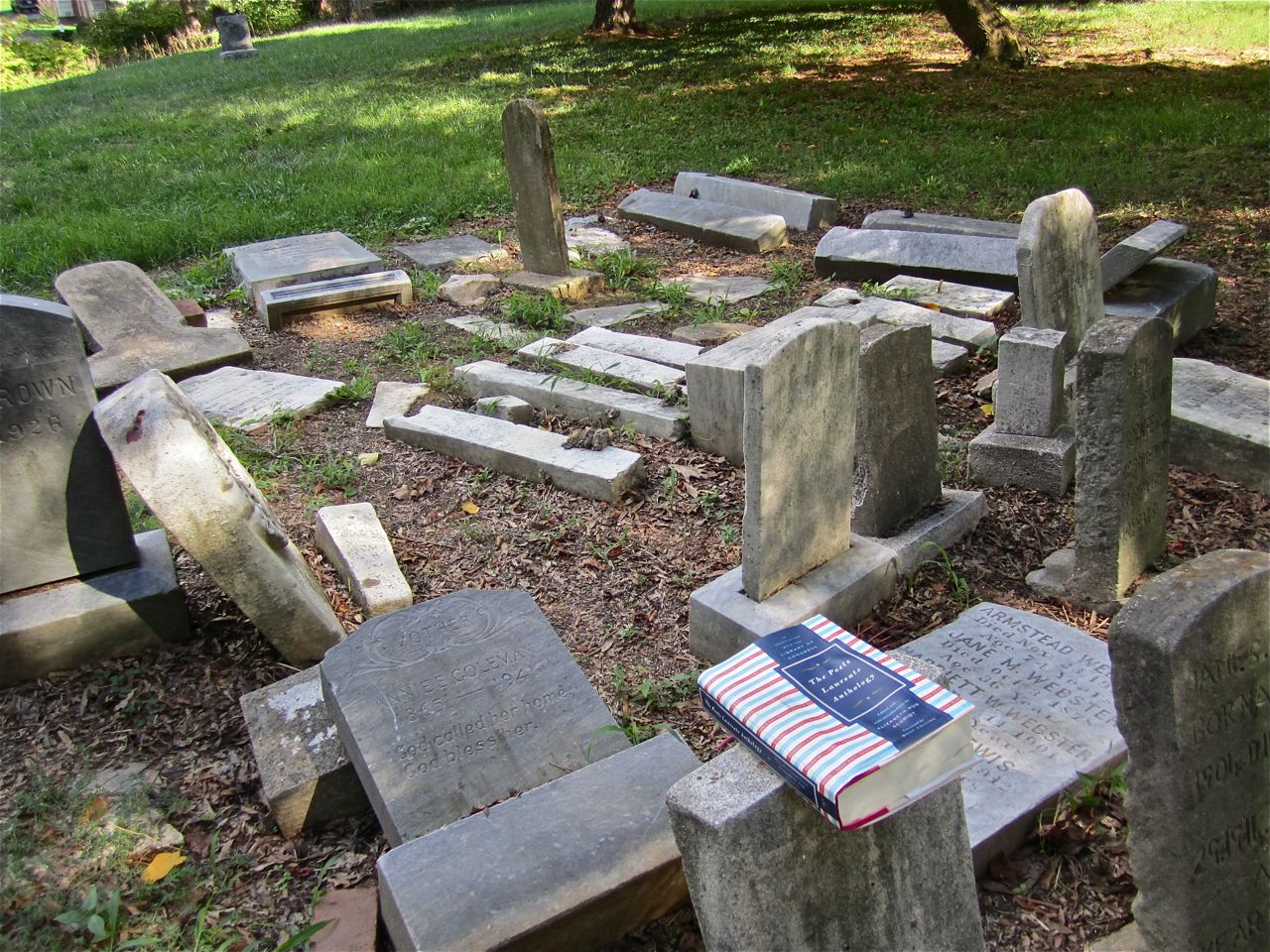
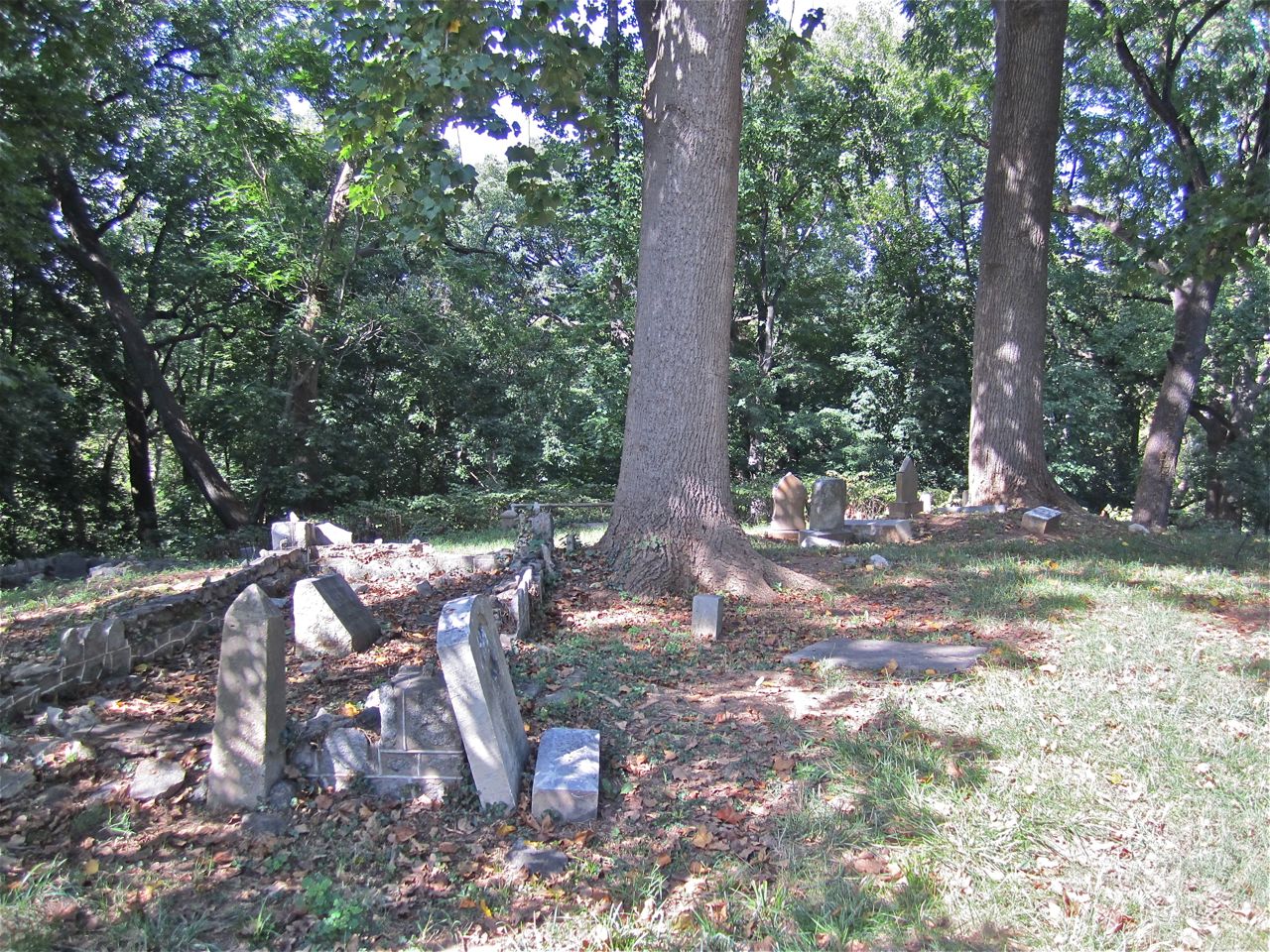
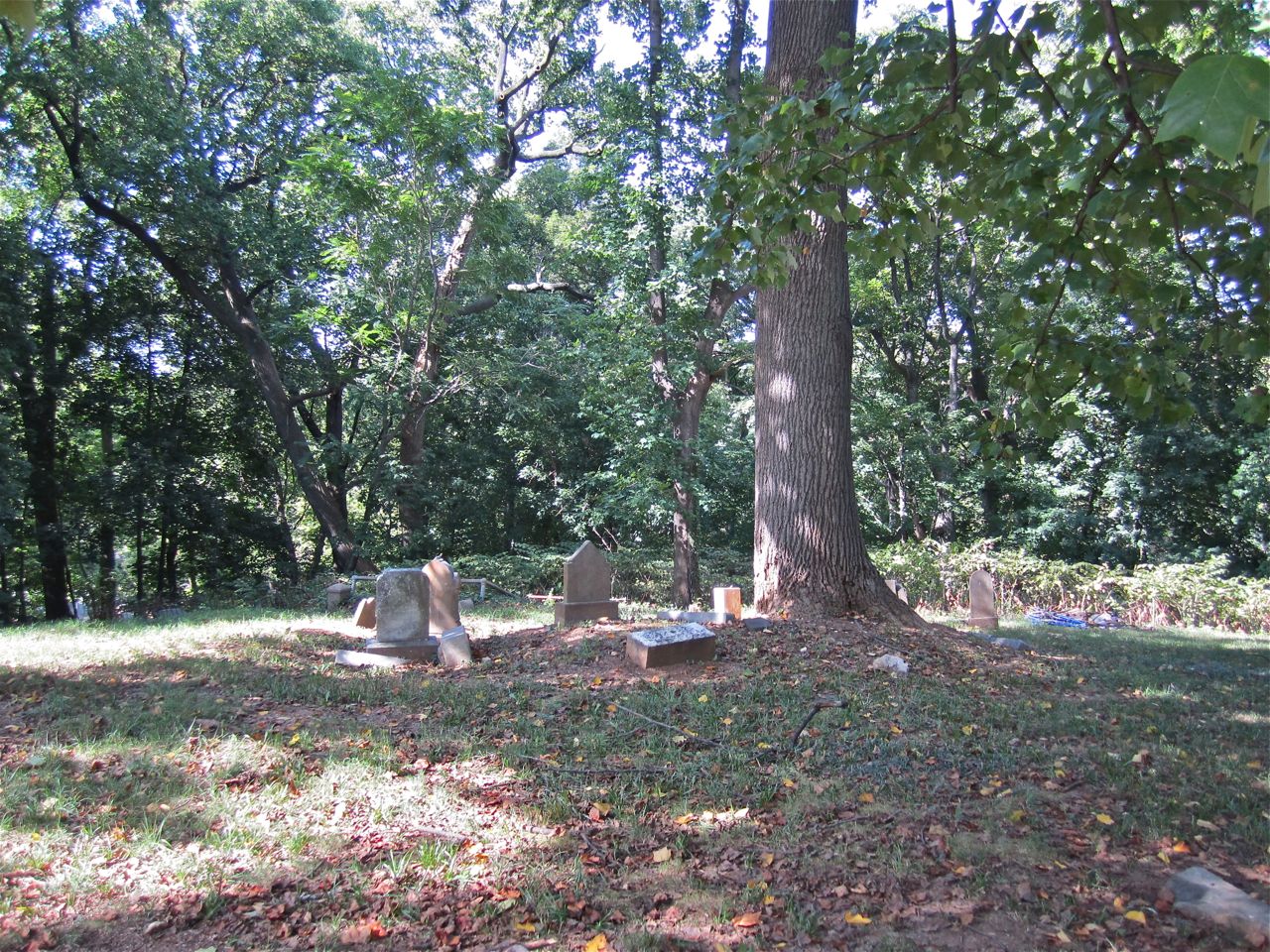
The burial ground covers about 3 acres.   Many of the headstones have fallen or have been moved over time and are now consolidated into a few groupings.  The grass is neatly cut and trimmed around the stones, but there are no flowers or other plantings.   The woods of the Rock Creek Park trail surround the cemetery to the north and east.

What I suspected as I looked around — later confirmed by some online research — was that Mt. Zion was an old African-American cemetery, a reminder of the time (from the 1700s until the 1950s) when Georgetown had a large Black population.

A group of tombstones overlooked by townhouses on Q Street.
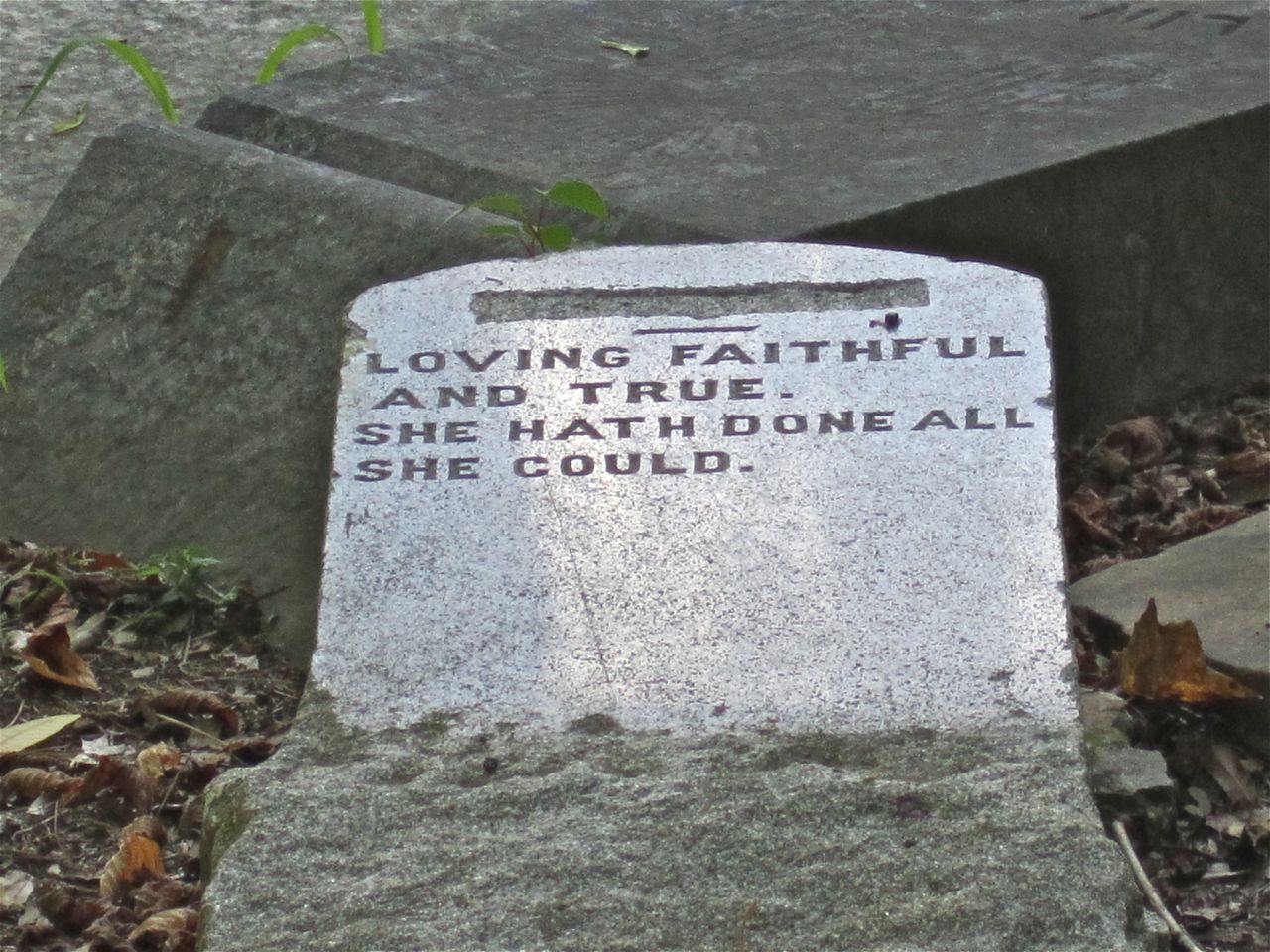
A woman’s headstone.
Nineteenth and early twentieth century headstones.
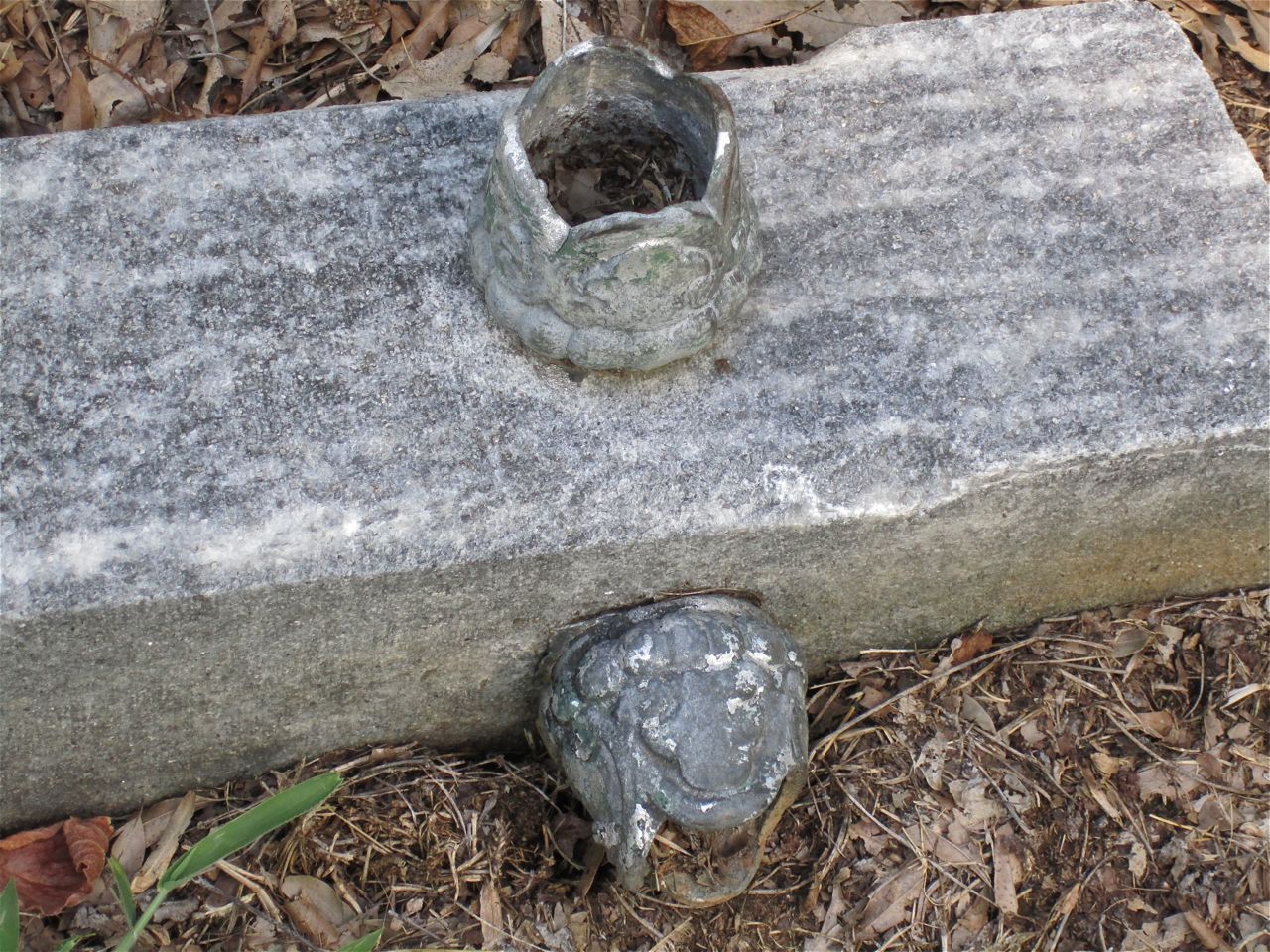
A stone pillar once stood upright and held the railings around a family’s graves.
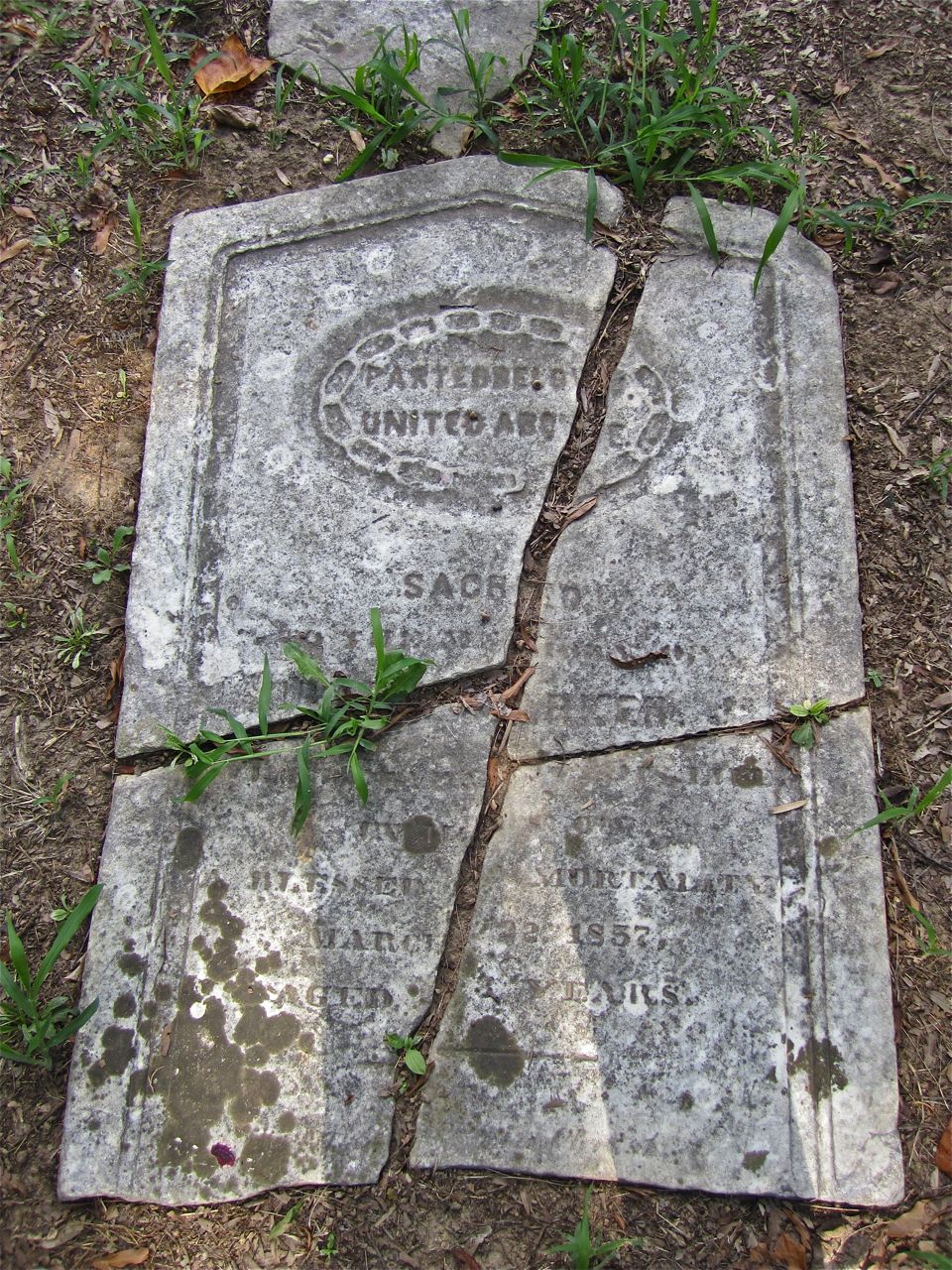
A broken headstone from the 1850s on the ground.
Someone has left behind a book of poetry.

Beginning in 1809, the cemetery’s western side was used by the Mongomery Street Church for the burials of its white members and their slaves, as well as of free African-American members.  It was known as the Old Methodist Burying Ground, and its largest monument marks the graves of the white Beck and Doughty families.  It was a biracial cemetery for a biracial (but not equal status) church while slaves were still being sold in Georgetown.

Old Methodist fell into disuse after Oak Hill Cemetery, located just to the west and north, was founded in 1849.  In 1879, the plot was leased for 99 years by Mt. Zion Methodist Church, the oldest African-American church in Washington.

A group of graves at the edge of the woods of Rock Creek Park.
Another view.

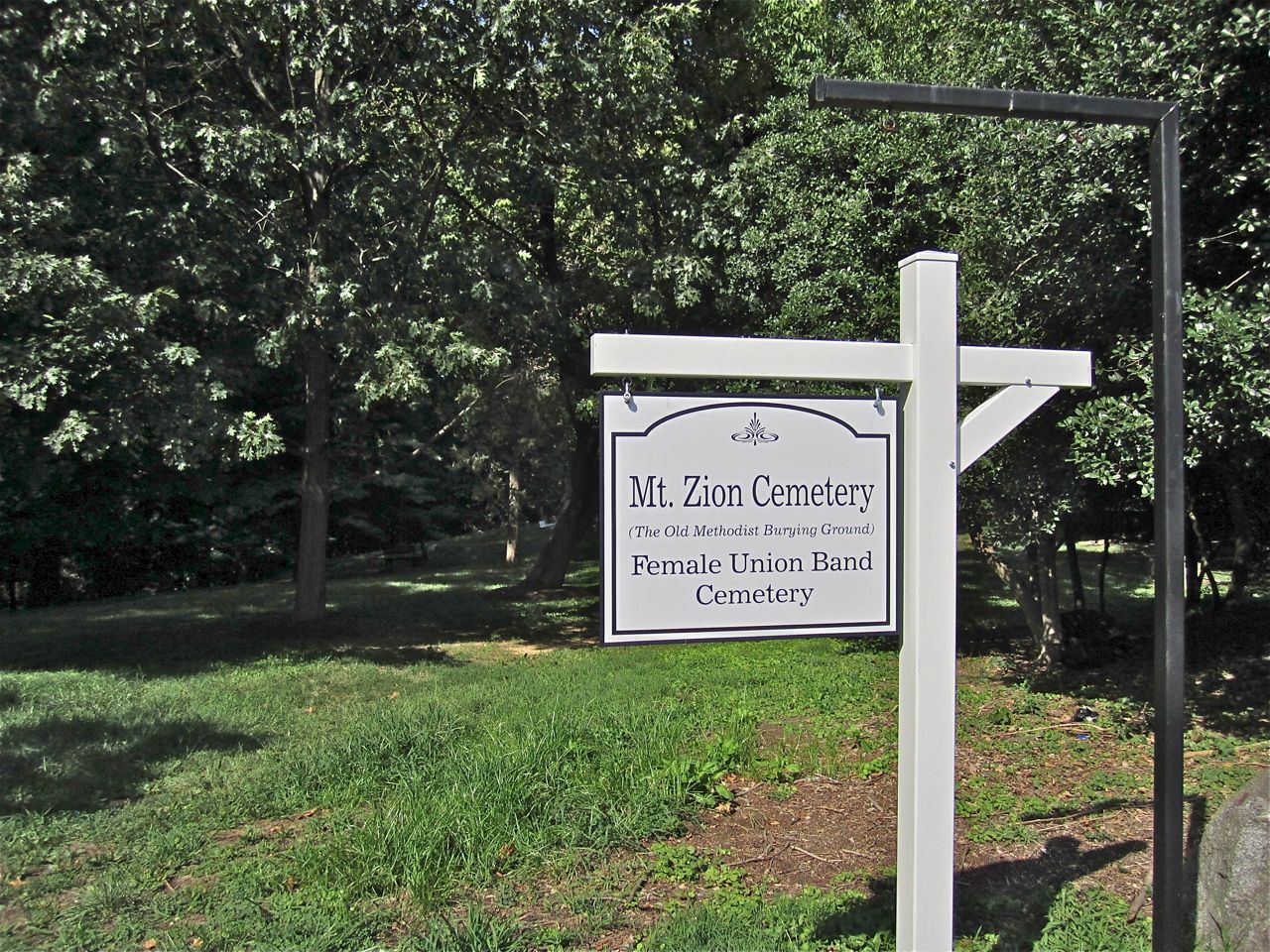
The east side of the cemetery had already been purchased in 1842 by a local cooperative benevolent association of Black women and had become the Female Union Band Graveyard for the burial of free Blacks.

The entry sign to the cemetery.

For decades, both cemeteries were well maintained, but eventually lack of funds led to disrepair, and the last burials were held in 1950.

In the late 1960s, the cemeteries were threatened with removal of the graves for development.  Various local groups and individuals worked together to save them, and, in 1975, they were declared a Historical Landmark of Washington, D.C., and listed on the National Register of Historic Places.

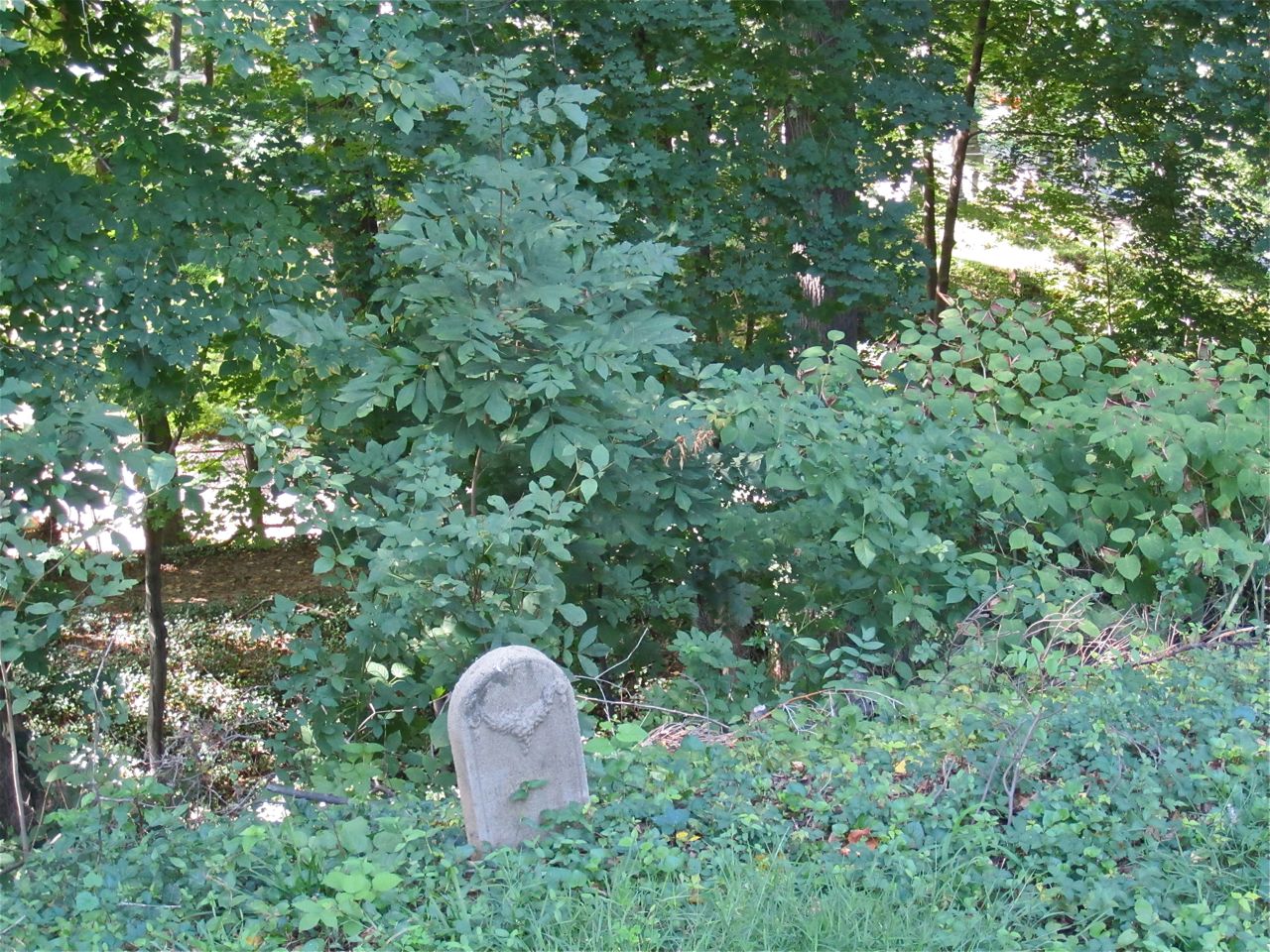
A small, lone headstone.

There’s a complete history of Mt. Zion Cemetery  by Pauline Gaskins Mitchell in the appendix of the 1991 book Black Georgetown Remembered, which can be read at this link.  The complete book can be purchased at Amazon.

ADDENDUM: “A 2 Georgetown Cemeteries, History in Black and White,” New York Times, October 21, 2016, here.

Where happiness dwells. . .

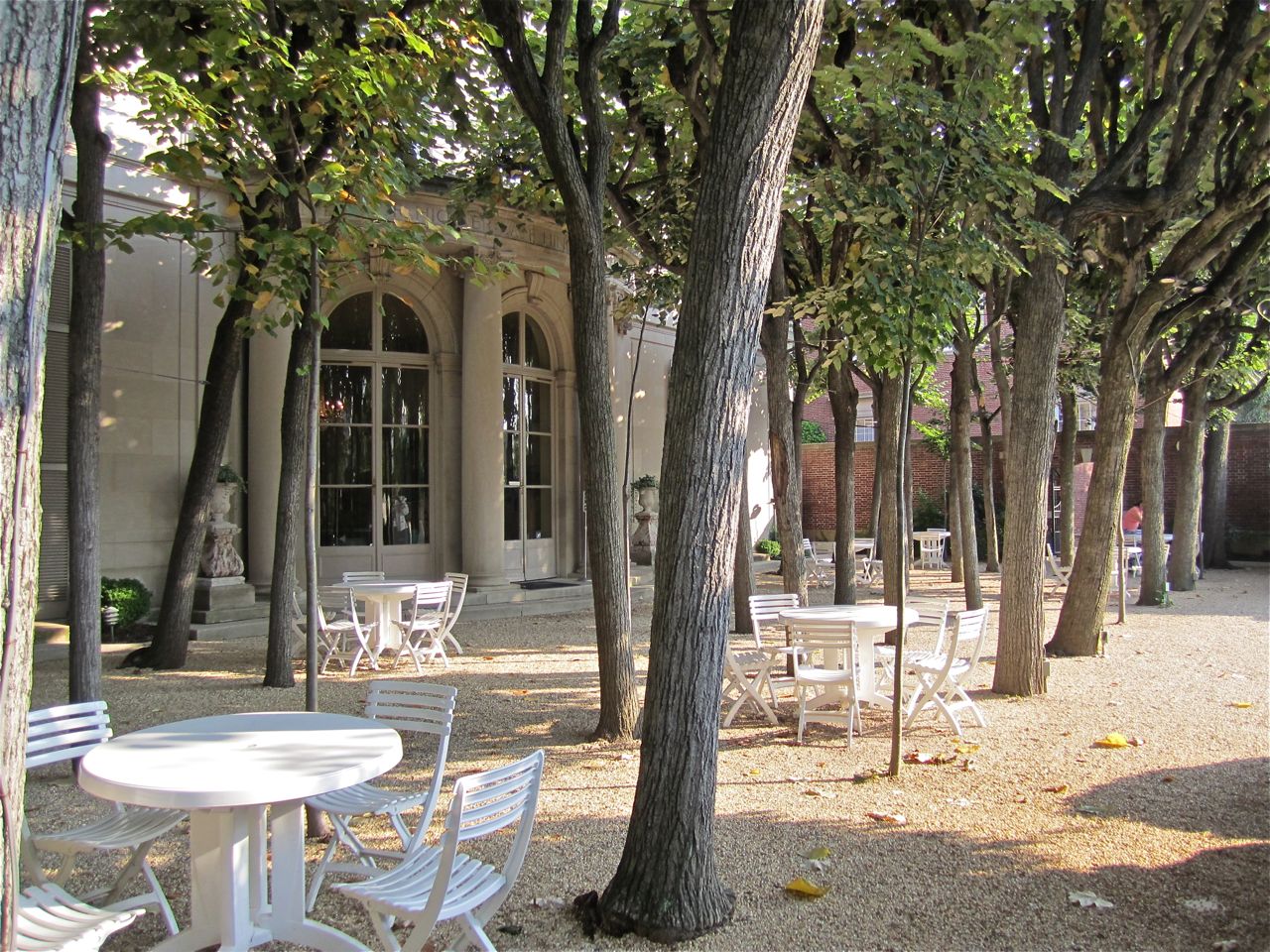
The courtyard.  The original linden trees were imported from Europe when the house was built.

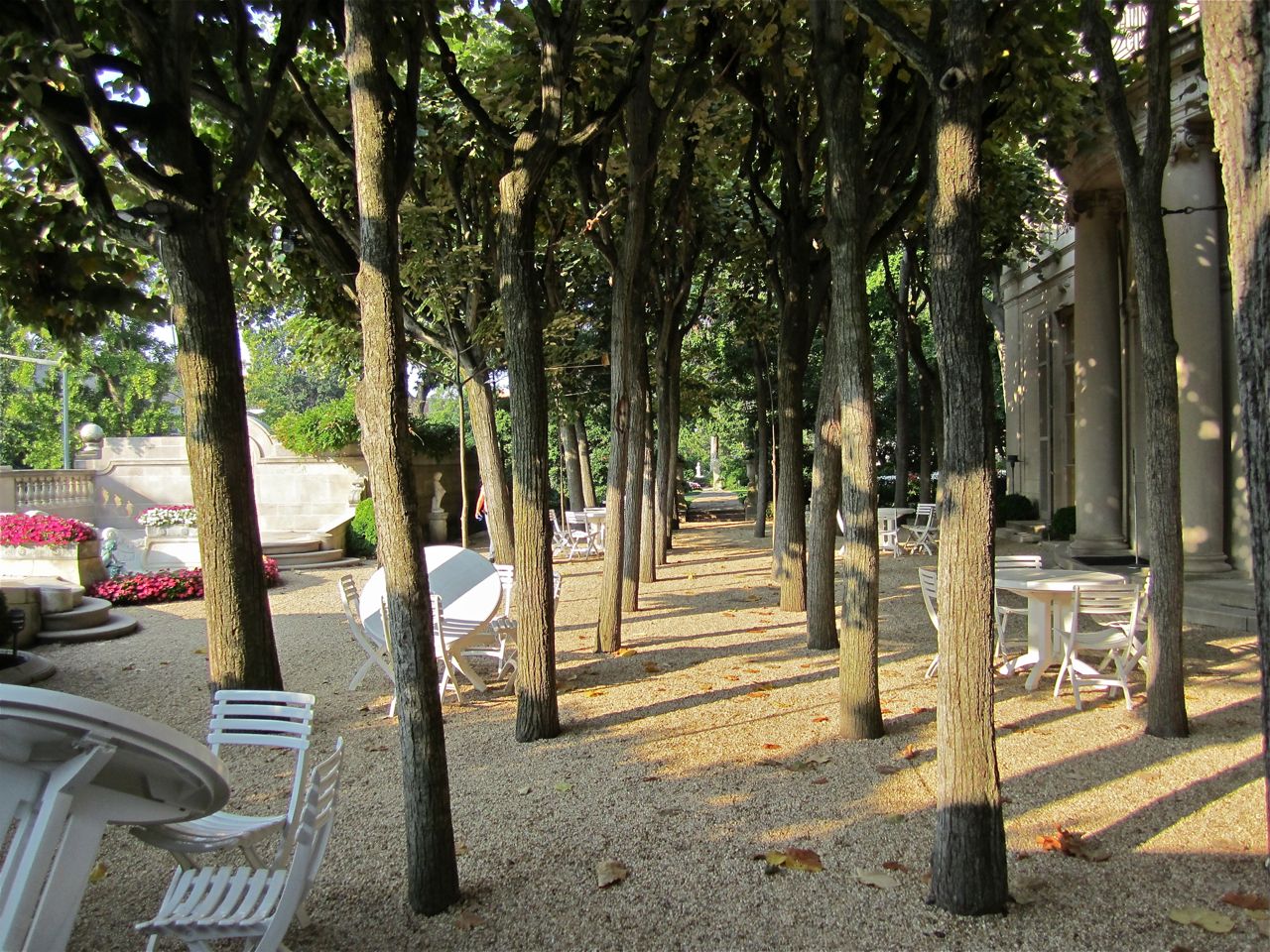
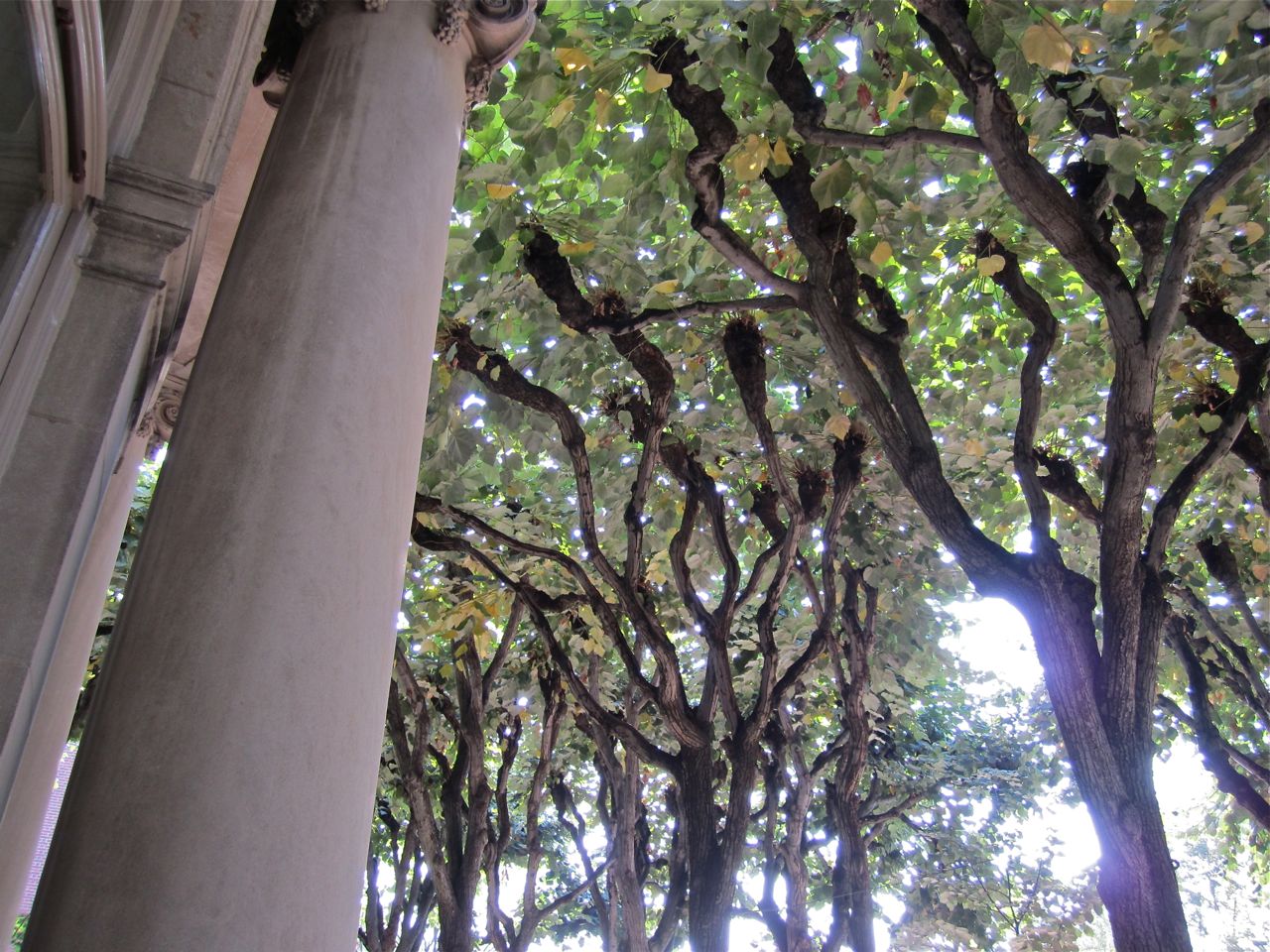
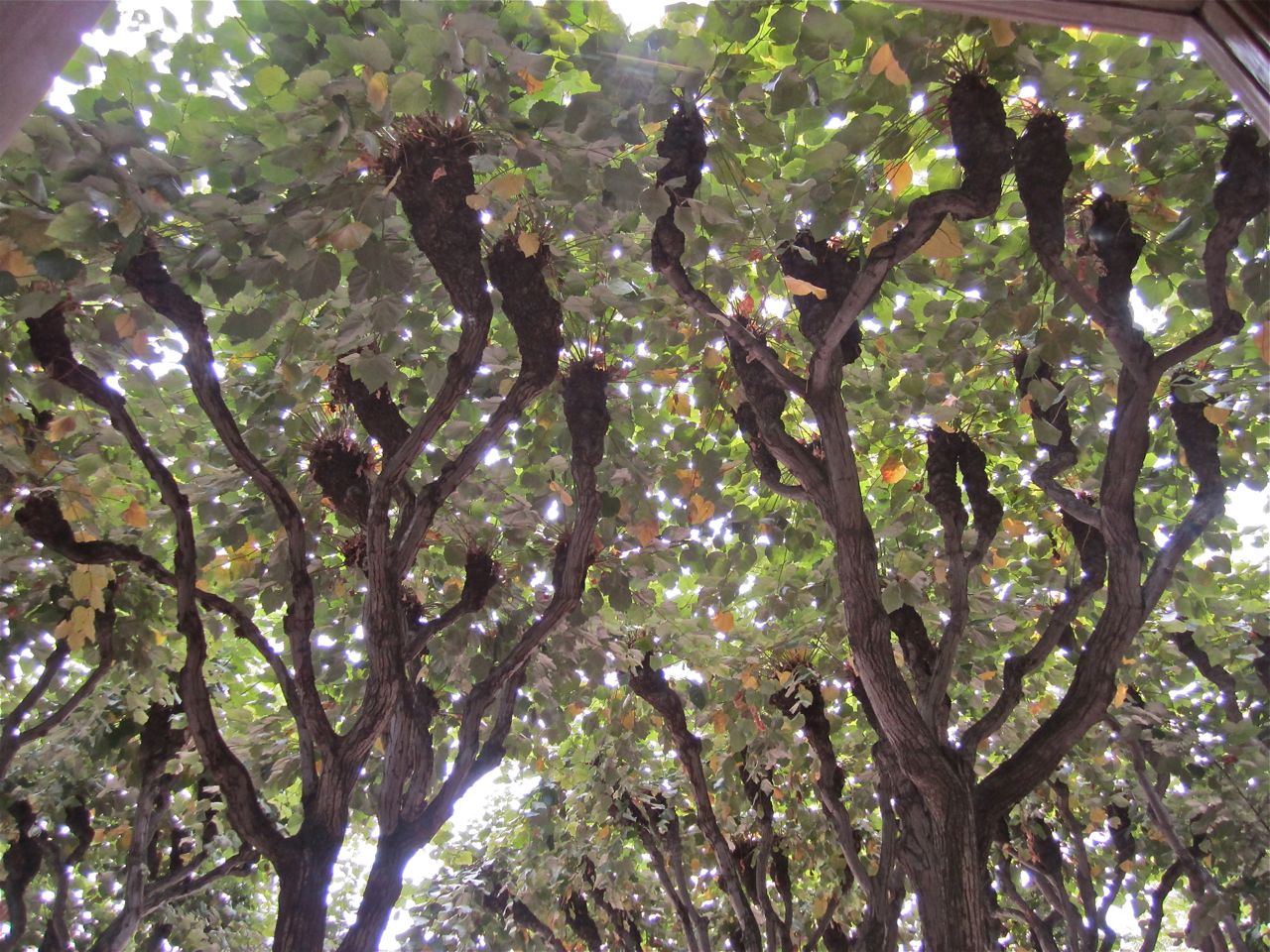
I love to see rows of  pollarded trees in French squares and courtyards. The quality of light and shade they produce, the formal rhythm of their trunks, and the sculptural qualities of their branches and old “knuckles” have a timeless beauty for me.

Pollarded trees aren’t common in the United States, so I was surprised and delighted when I walked into the lovely, serene courtyard of Meridian House on Friday morning.

Meridian House in Northwest D.C. (just a stone’s throw from Meridian Hill Park on 16th Street) is home to the Meridian International Center.  Since 1960, the Center’s mission has been to advance American public and cultural diplomacy efforts.  It manages international visitor exchanges, holds cultural exhibitions, and hosts conferences and seminars.

I was able to see it — and the garden — last week, when I attended a seminar on Rwanda.

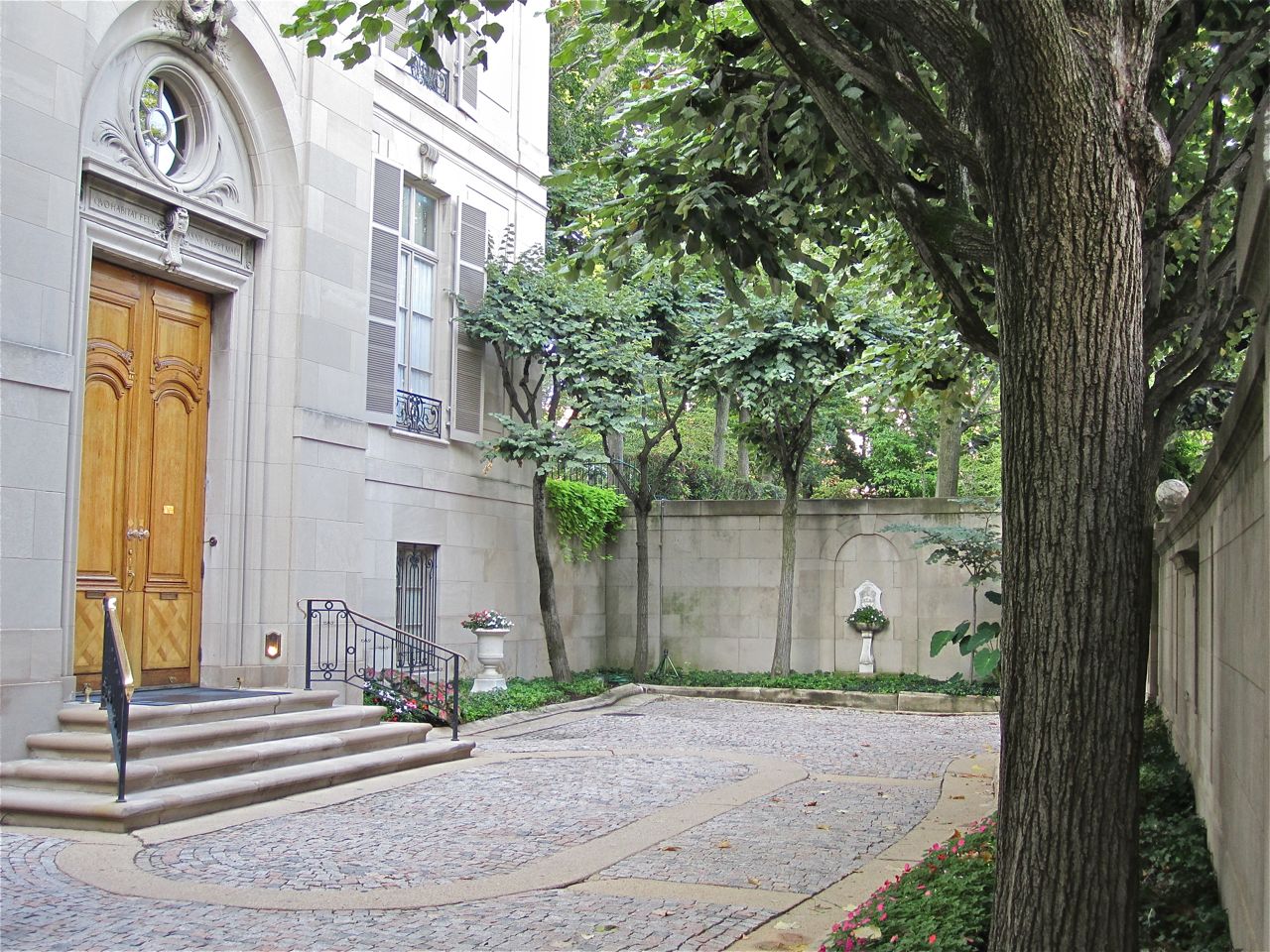
The house, built in 1920 as the home of diplomat Irwin Boyle Laughlin, was designed by architect John Russell Pope, who also designed the Jefferson Memorial, the National Gallery, and the National Archives.  The style of the house, both inside and out, is neoclassical and French.

The front of the house. The inscription over the door reads “Quo habitas felicitas nil intreat mali” —  “Where happiness dwells, evil will not enter.”

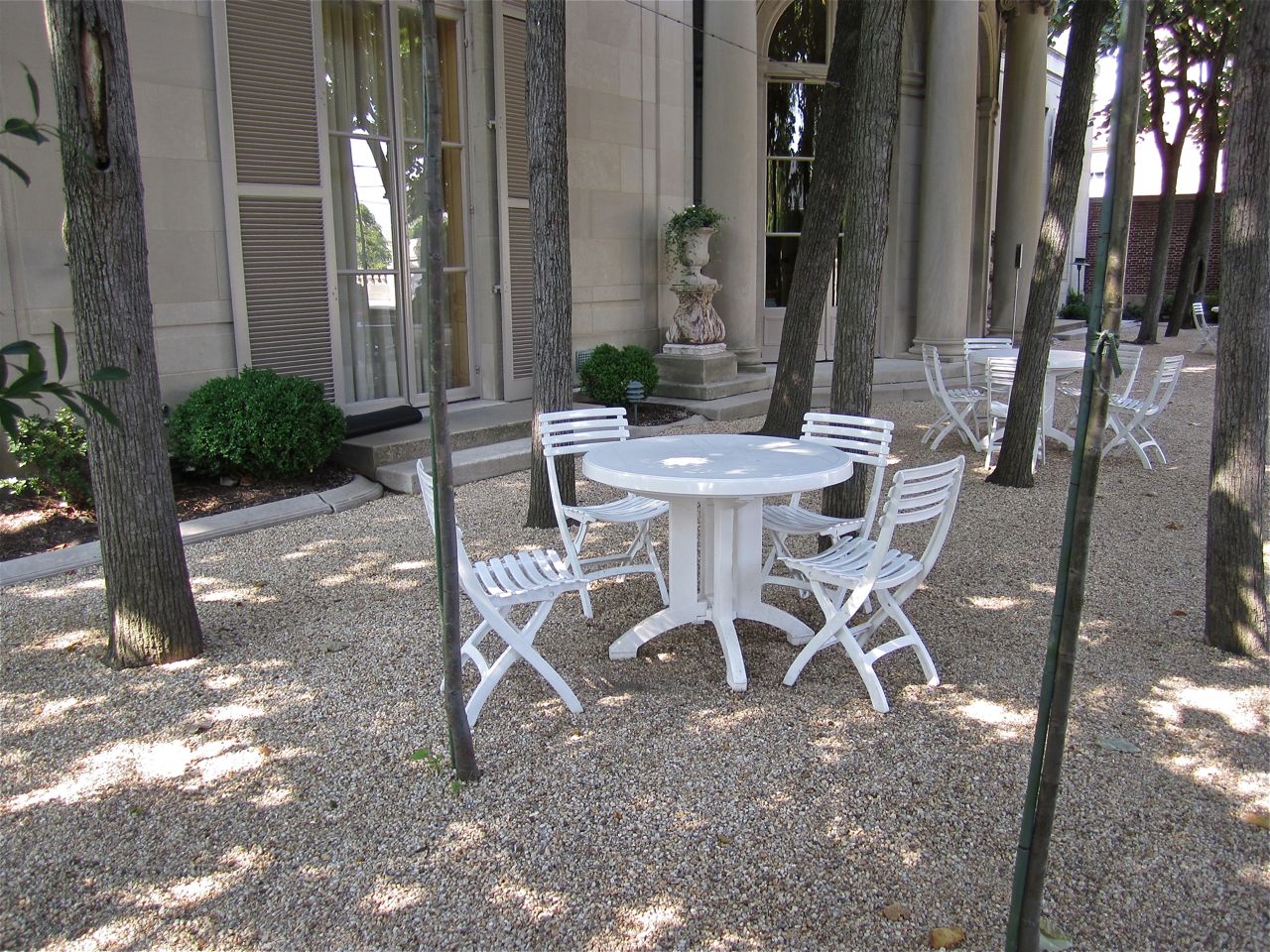
The rectangular courtyard just outside the house’s reception rooms is paved in pea gravel and canopied by 40 pollarded linden trees, which were imported from Europe when the house was built (more links on pollarding are here and here and here).

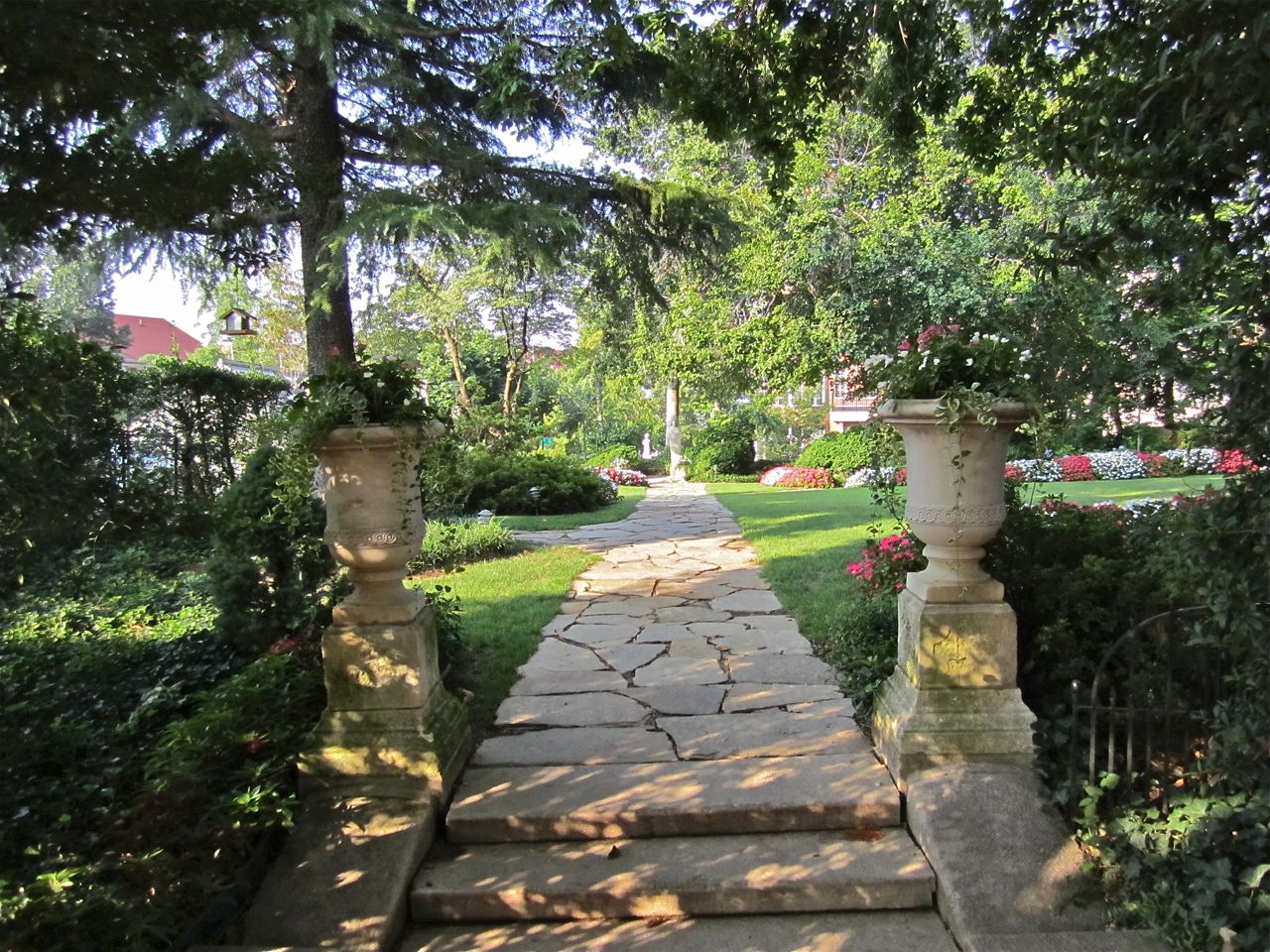
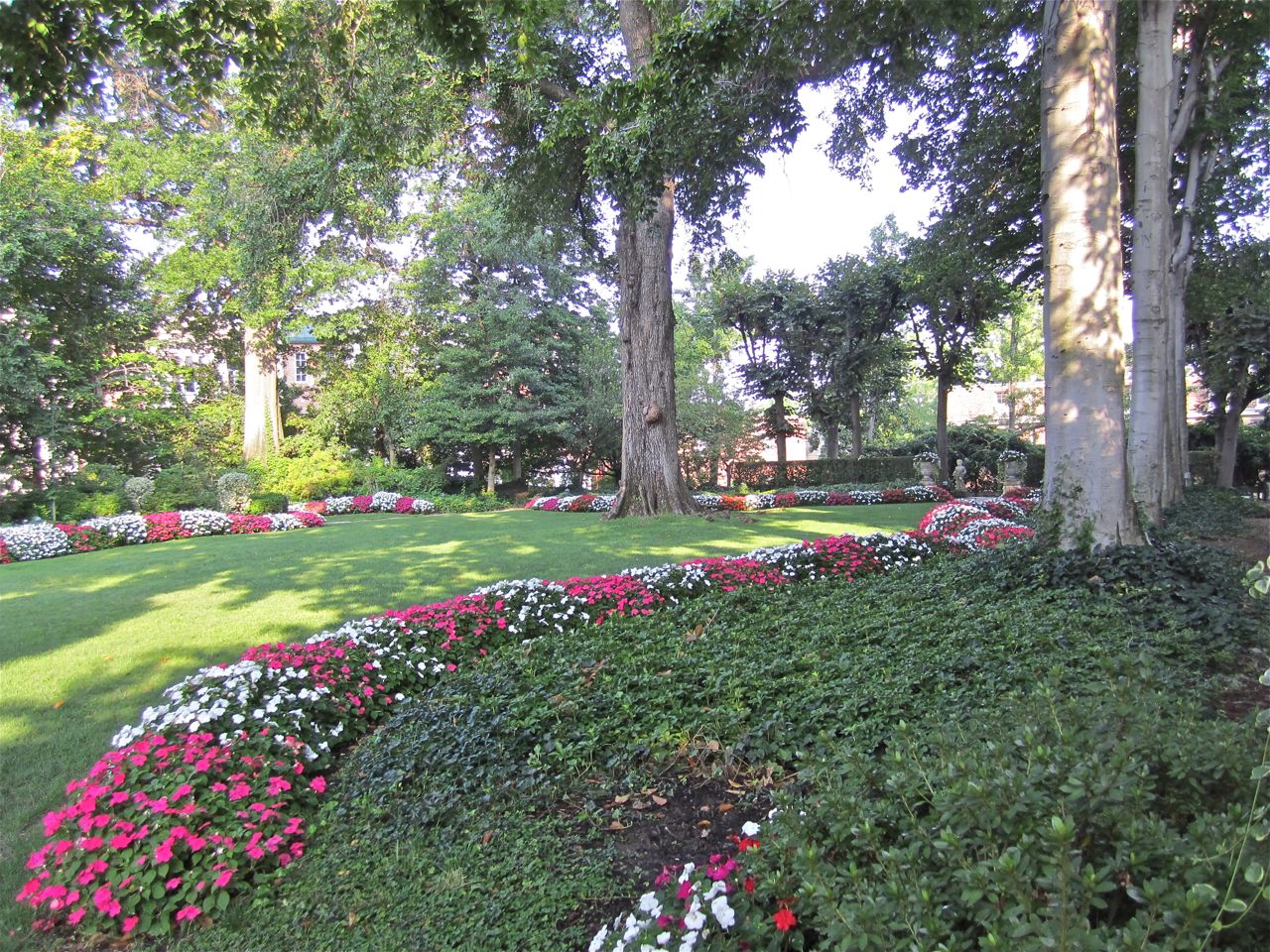
The side garden has a large lawn and planting beds bordered in pink and white impatiens.  The design of both areas is largely original to the house.

The courtyard in early morning.  Click on the photos to enlarge them. 
Young trees the size of poles have been planted to replace the old.
The umbrella-like canopy of the pollarded linden trees.
The old “knuckles” of the trees.
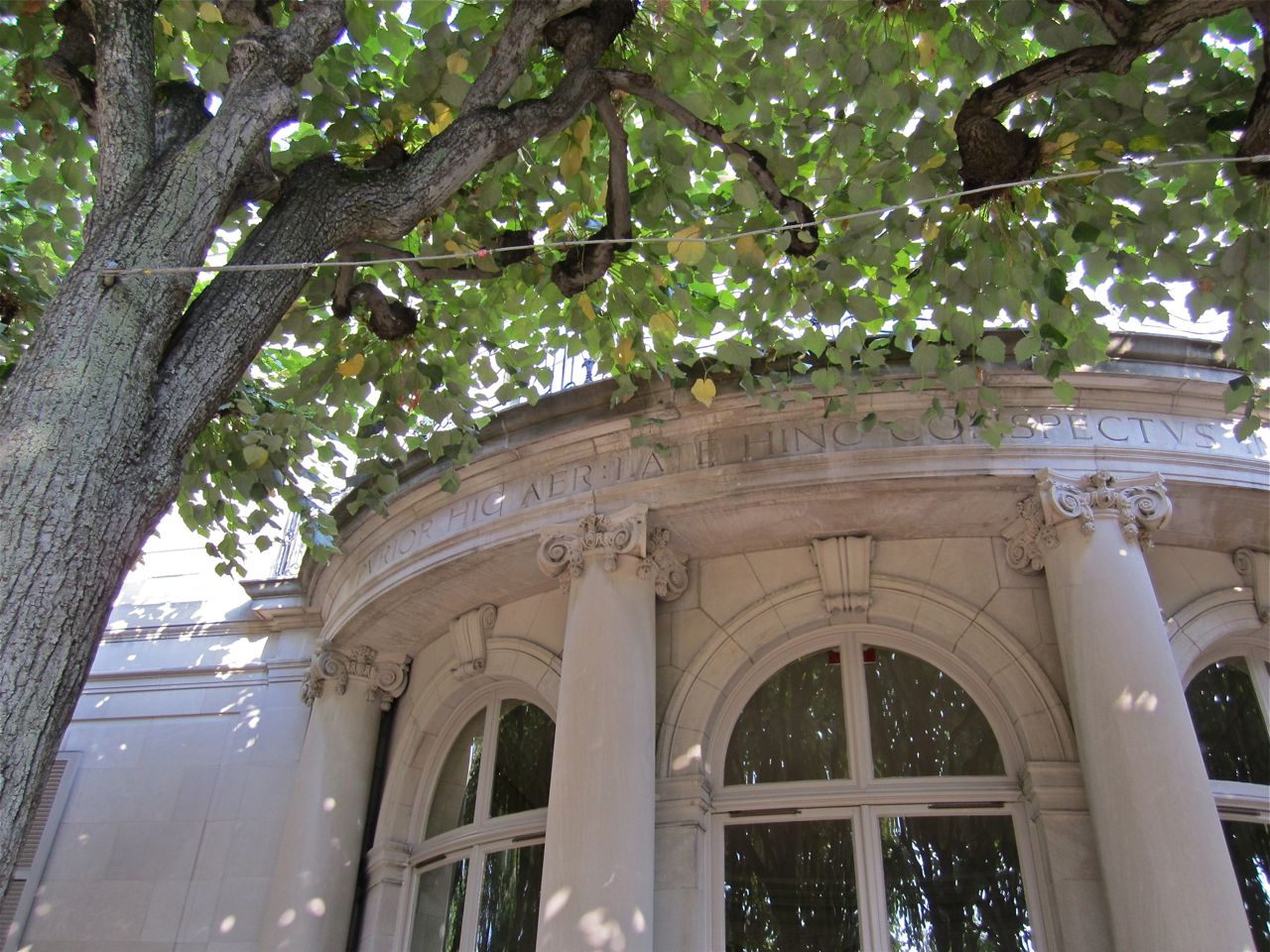
On the south side of the house, the inscription reads, “Purior hic aer: late hinc conspectus in urbem” — “Purer here the air whence we overlook the city.”
Moving from the courtyard to the side garden.
Looking to the right.
An old oak in the center of the lawn.  Its roots are protruding into the grass.
Looking up into the oak.
Looking to the south.
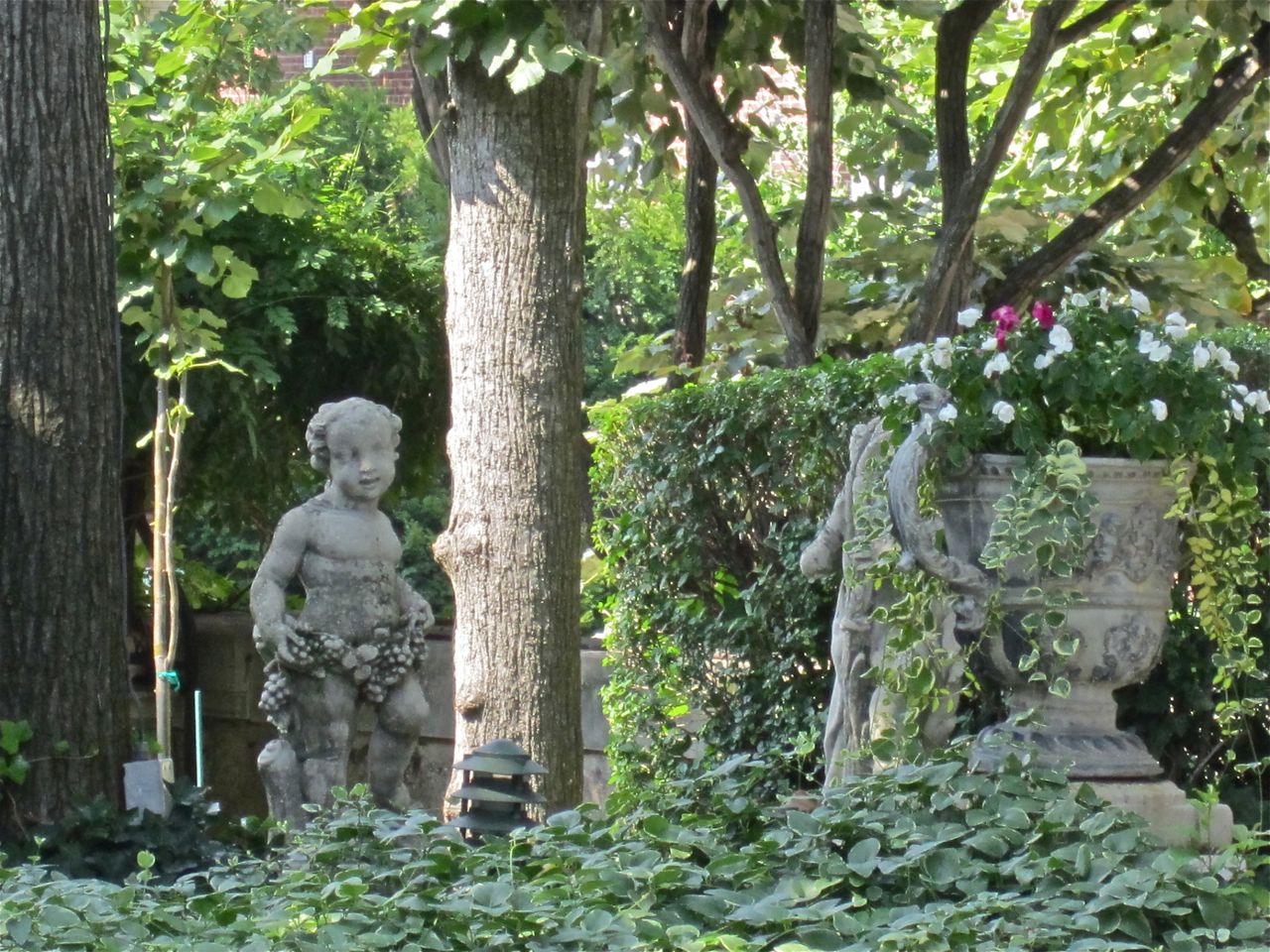
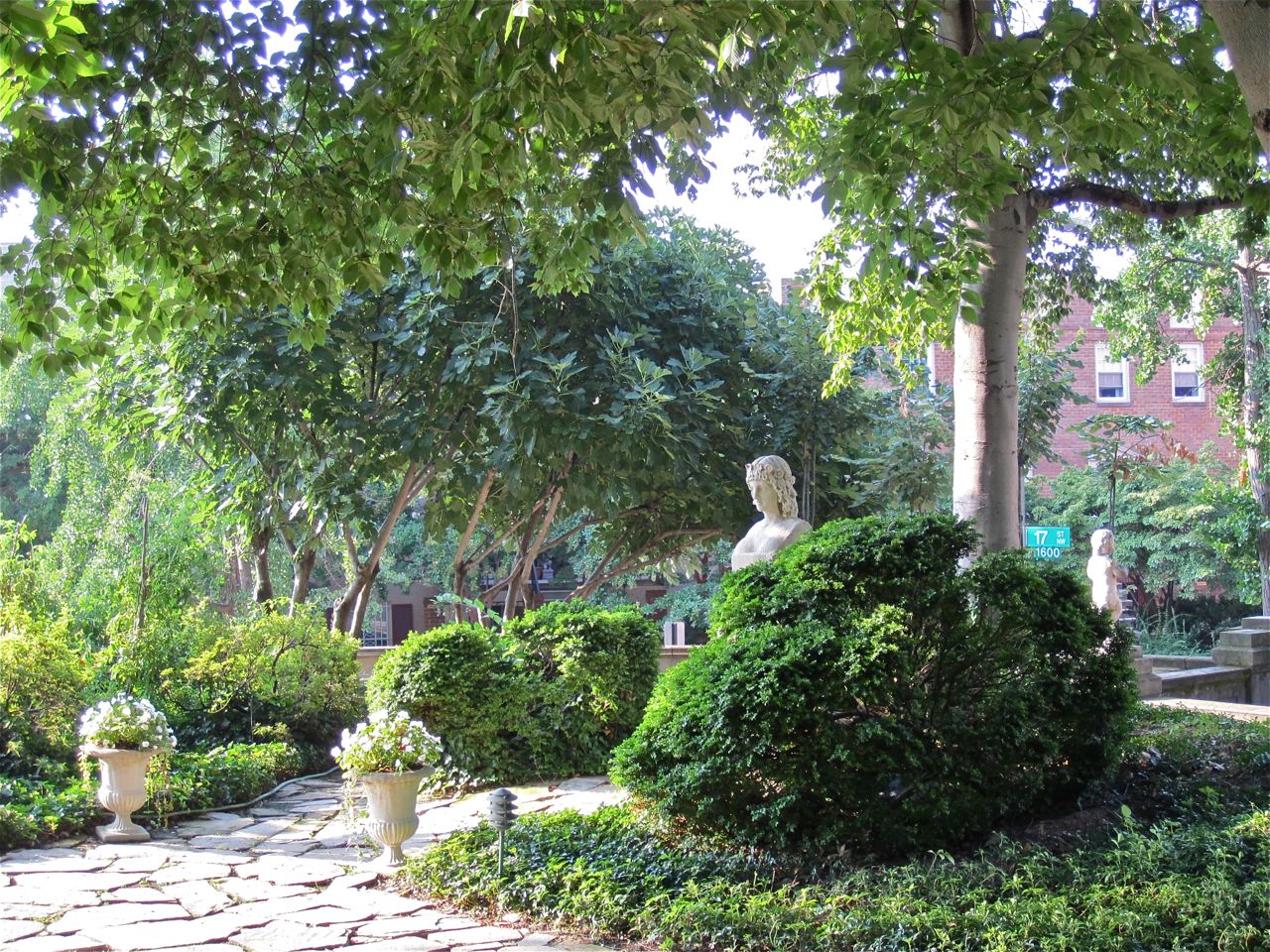
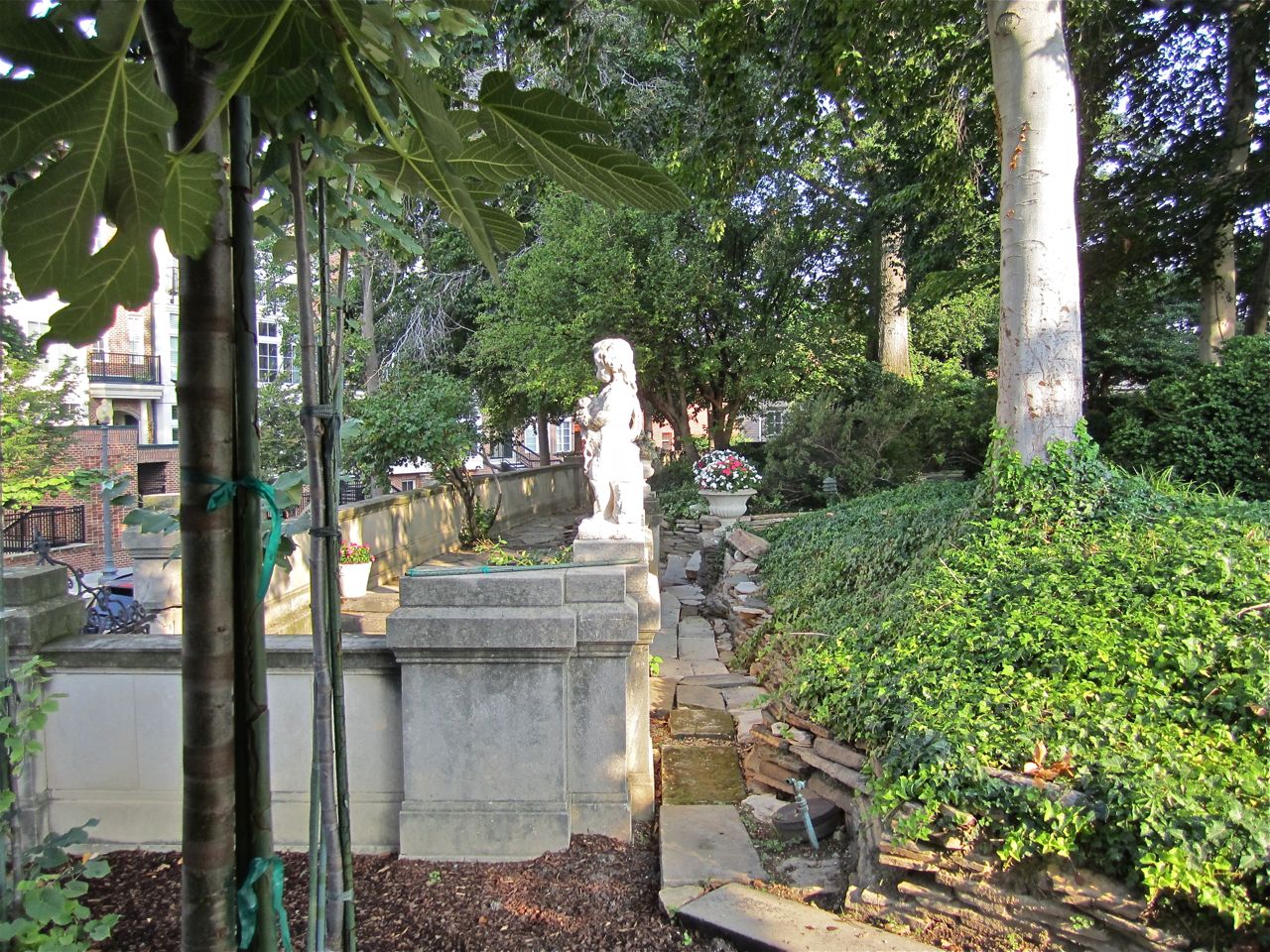
The statues throughout the garden are original to the house.
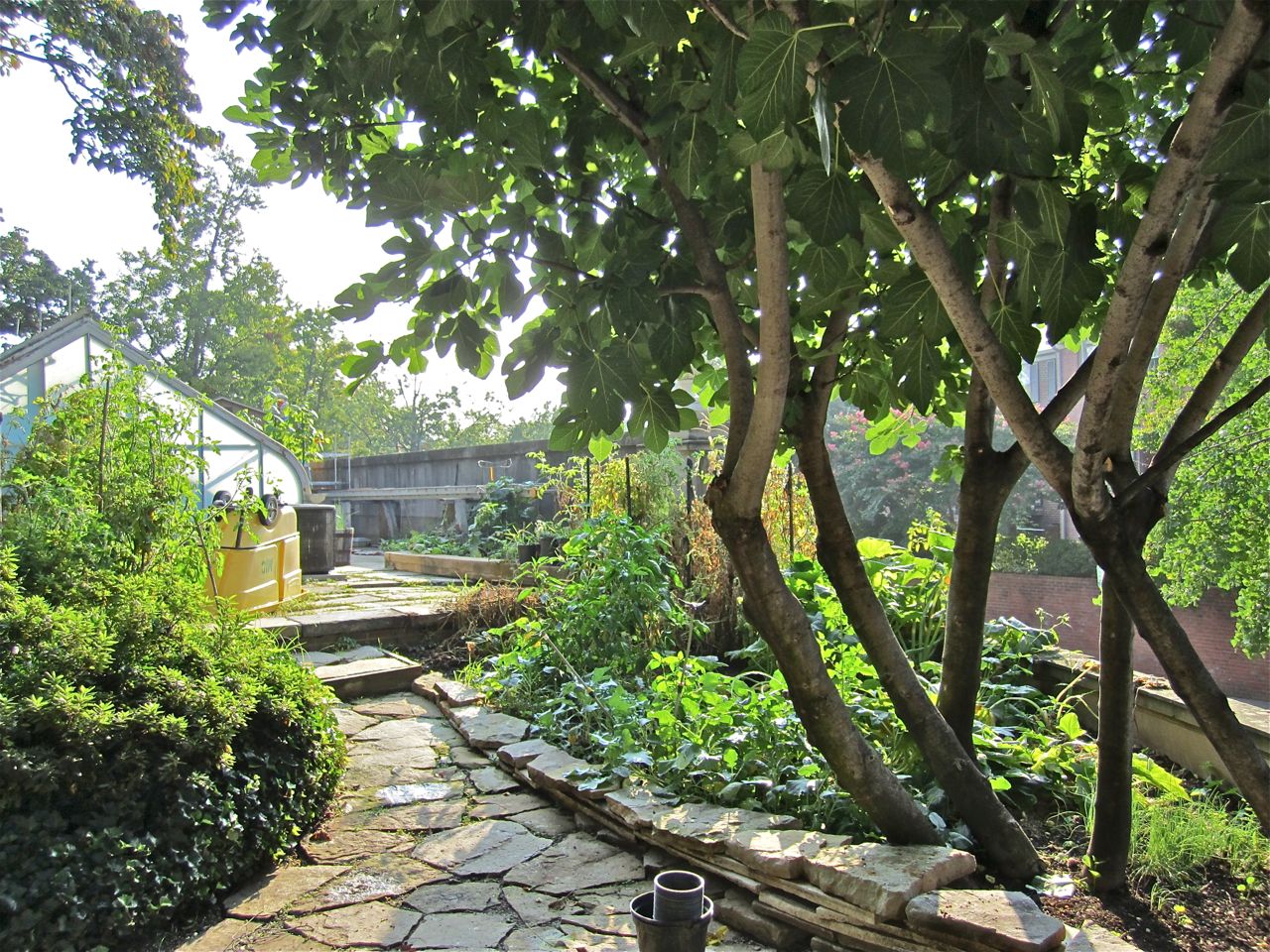
Several limbed-up fig trees in the southwest corner.
The staff have planted some vegetables around the greenhouse on the south side.
A walkway along the west perimeter of the garden.  
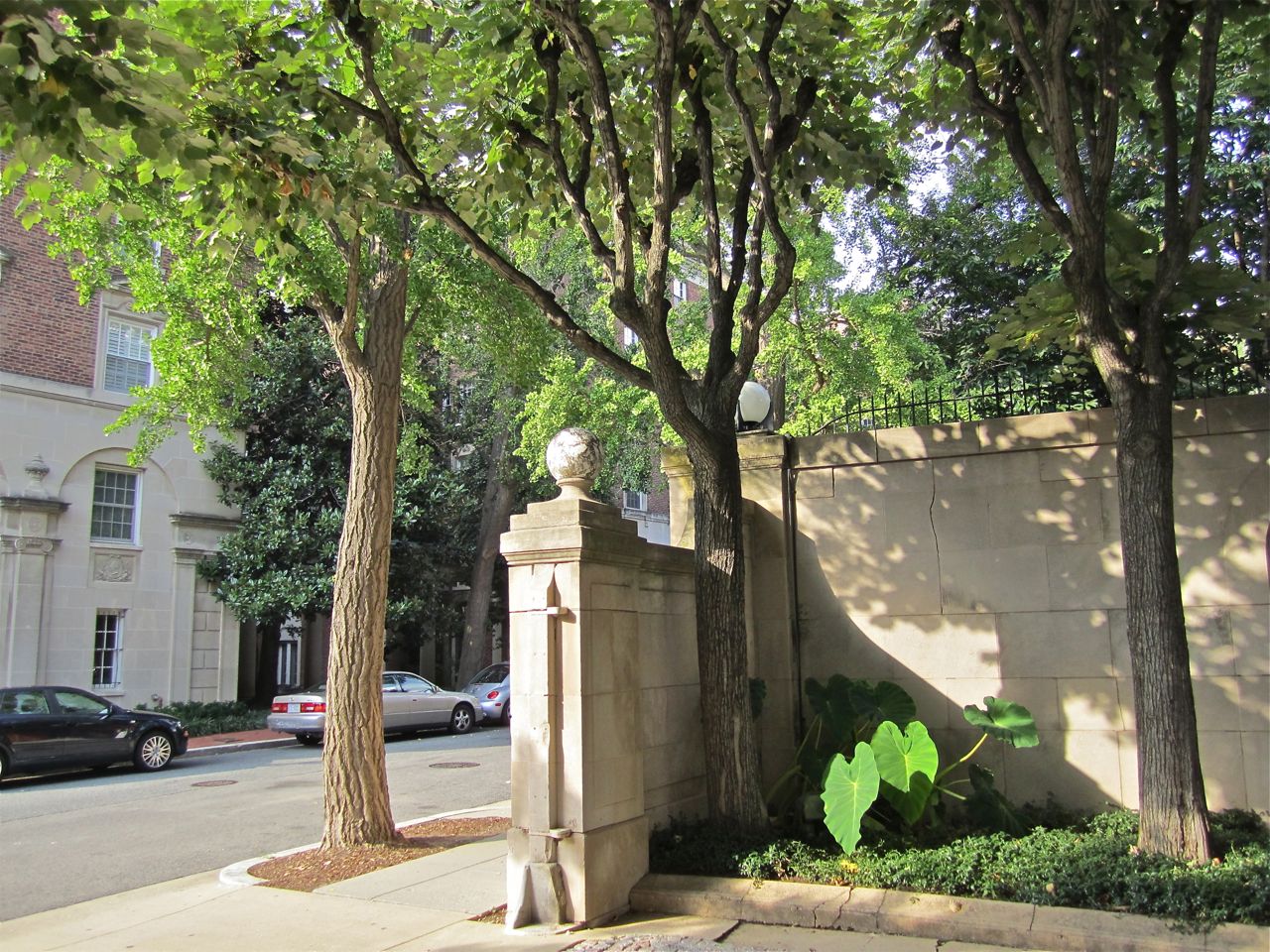
Leaving the house at 1630 Crescent Place.

Not surprisingly, Meridian House is one of the outstanding wedding venues of Washington, D.C.

To see more photos of the courtyard and garden, click on “Continue reading” below and click on the thumbnails in the gallery to enlarge them.

Continue reading “Where happiness dwells. . .”