Old Dunbar Quarters

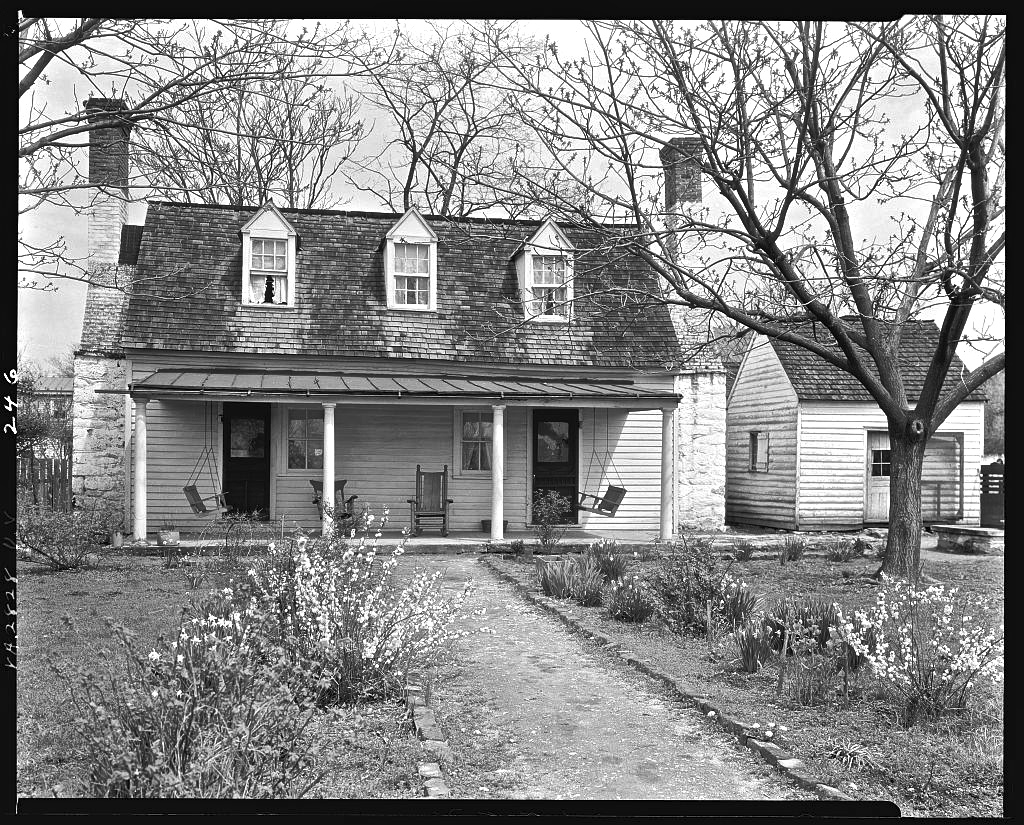
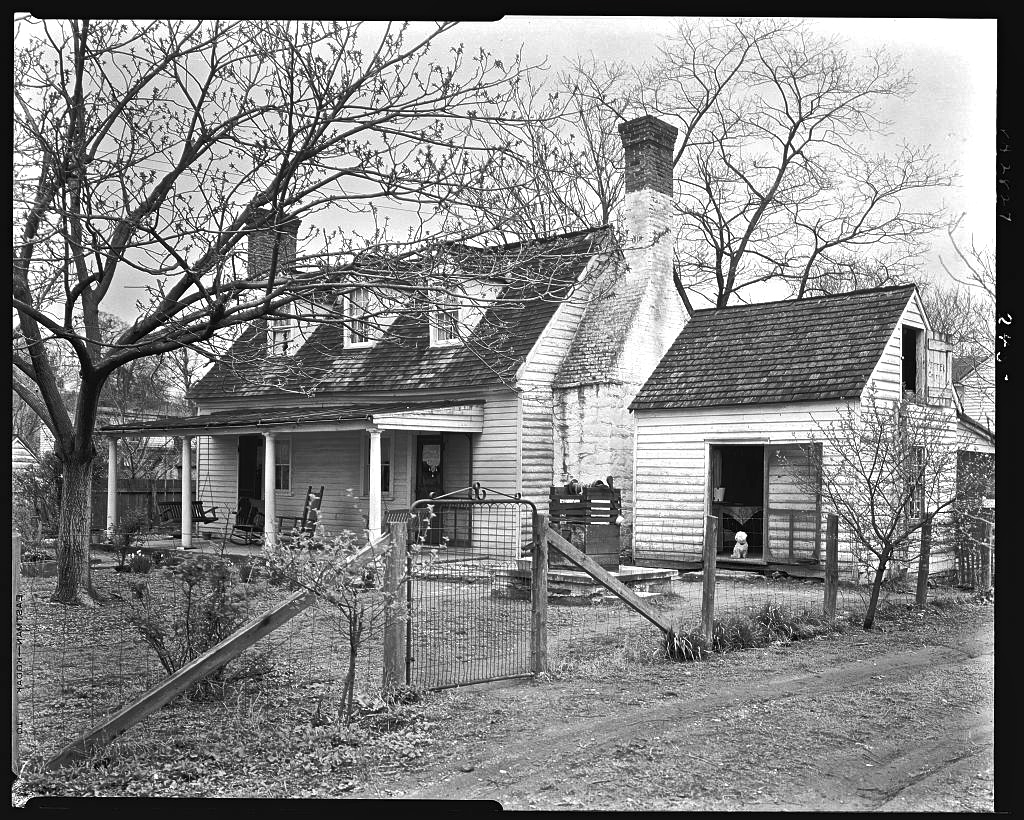
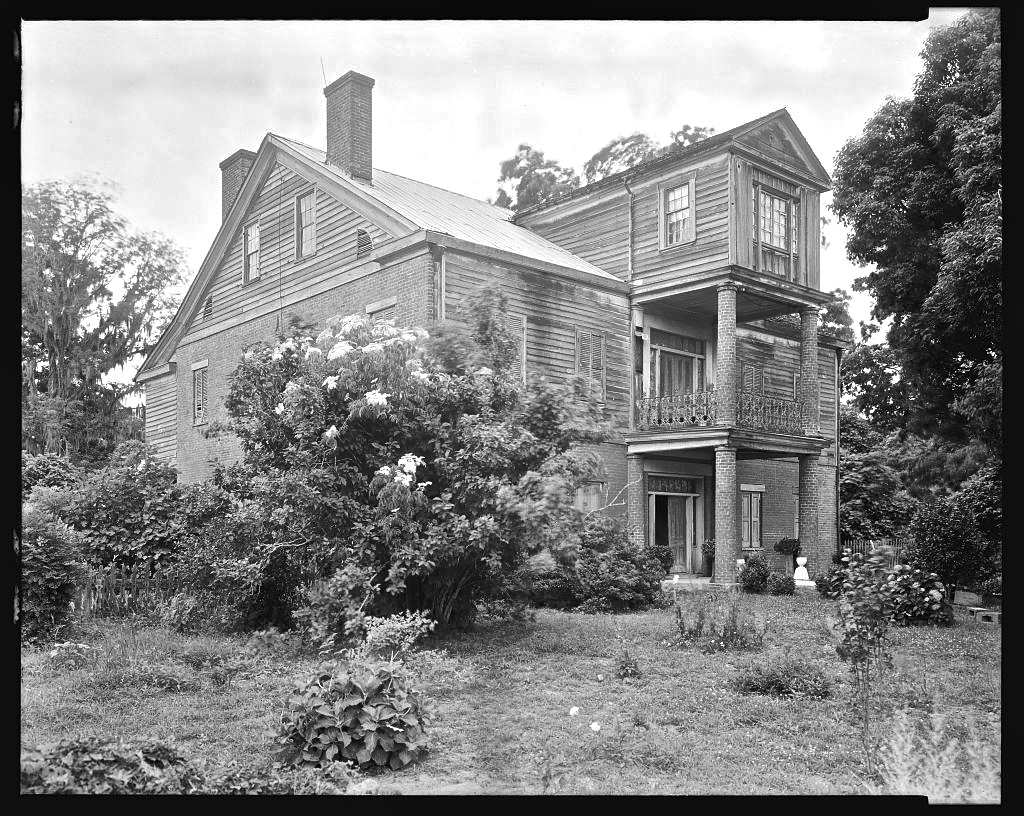
I think these early spring photos of an old house and farm near Falmouth in Stafford County, Virginia, are charming. (Click them to see larger versions.)

Unfortunately, I have not been able to find out anything about the property, which was called Old Dunbar Quarters when the photos were taken in the late 1920s.

The photos were taken by Frances Benjamin Johnston as part of the Carnegie Survey of the South (Library of Congress Prints and Photographs Division).

Chatham Manor

I’m still traveling, so most of my next posts will be of vintage photos that have caught my interest in the last month. They are from the Carnegie Survey of the Architecture of the South (at the Library of Congress).

Thanks to all who have commented on posts lately. I’m sorry that I can’t answer everyone individually right now.

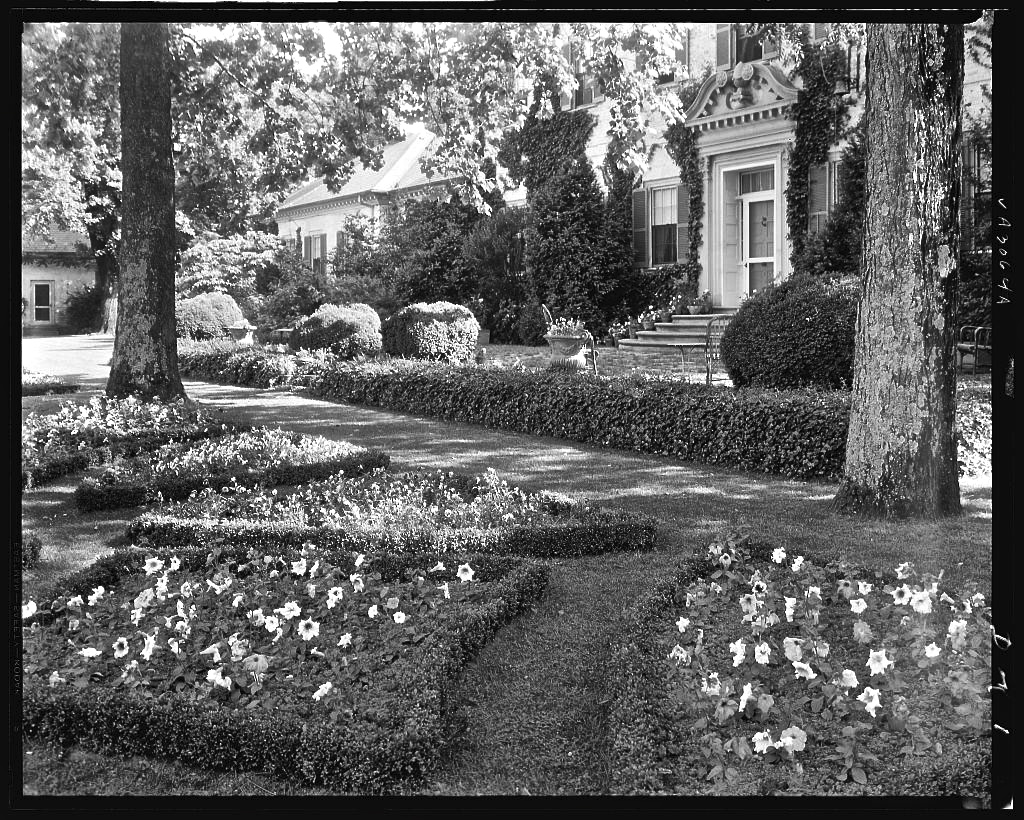
In 1927, photographer Frances Benjamin Johnston was commissioned by Helen Devore to photograph her estate, Chatham Manor, which she had restored.

Documenting the house and its gardens led Johnston to undertake the Carnegie Survey of the South during the late 1920s and all of the 1930s.

Chatham was built between 1768 and 1771 and overlooks the Rappahanock River near Fredericksburg, Virginia. It has the distinction of having hosted both George Washington and Abraham Lincoln for overnight stays.

After a nearby civil war battle in 1862, it was used as a hospital, and Walt Whitman and Clara Barton nursed wounded soldiers there.

December 1862 photo via Wikipedia.org and The National Archives.

It is now owned by the National Park Service and is open to the public.


Click on any thumbnail below to scroll through 23 enlarged photos of Chatham. Excepted where otherwise captioned, all are by Frances Benjamin Johnston via the Carnegie Survey of the South collection of the Library of Congress Prints and Photographs Division.

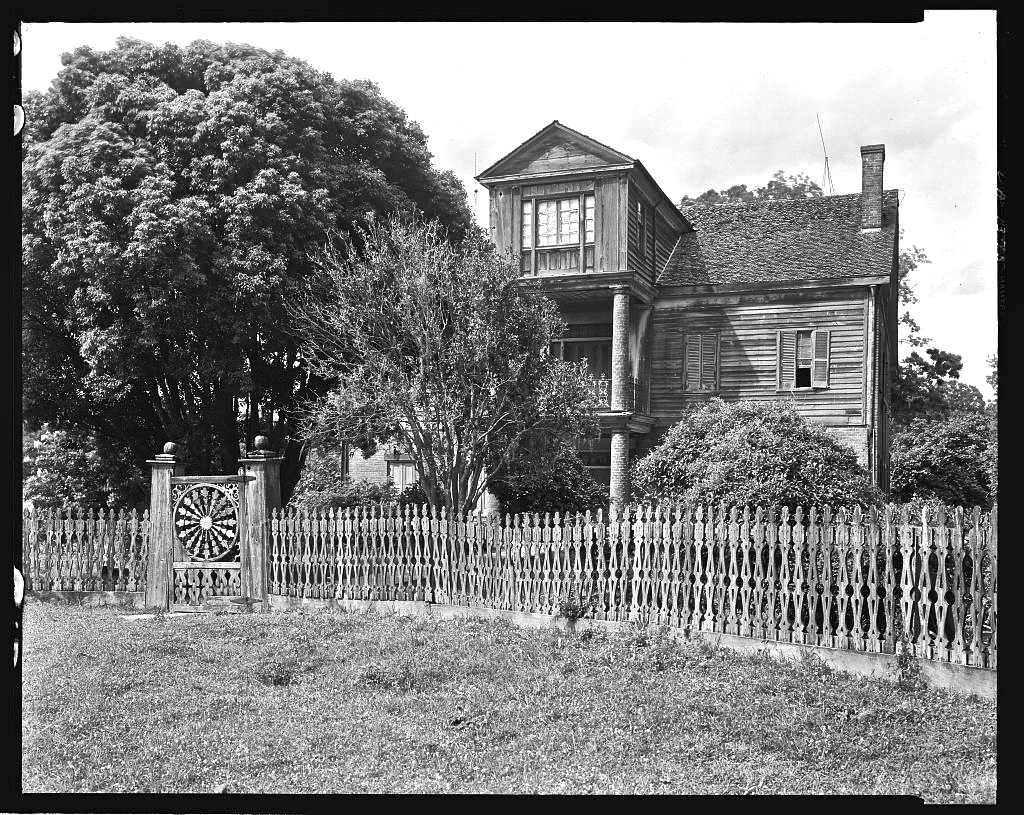
The gate

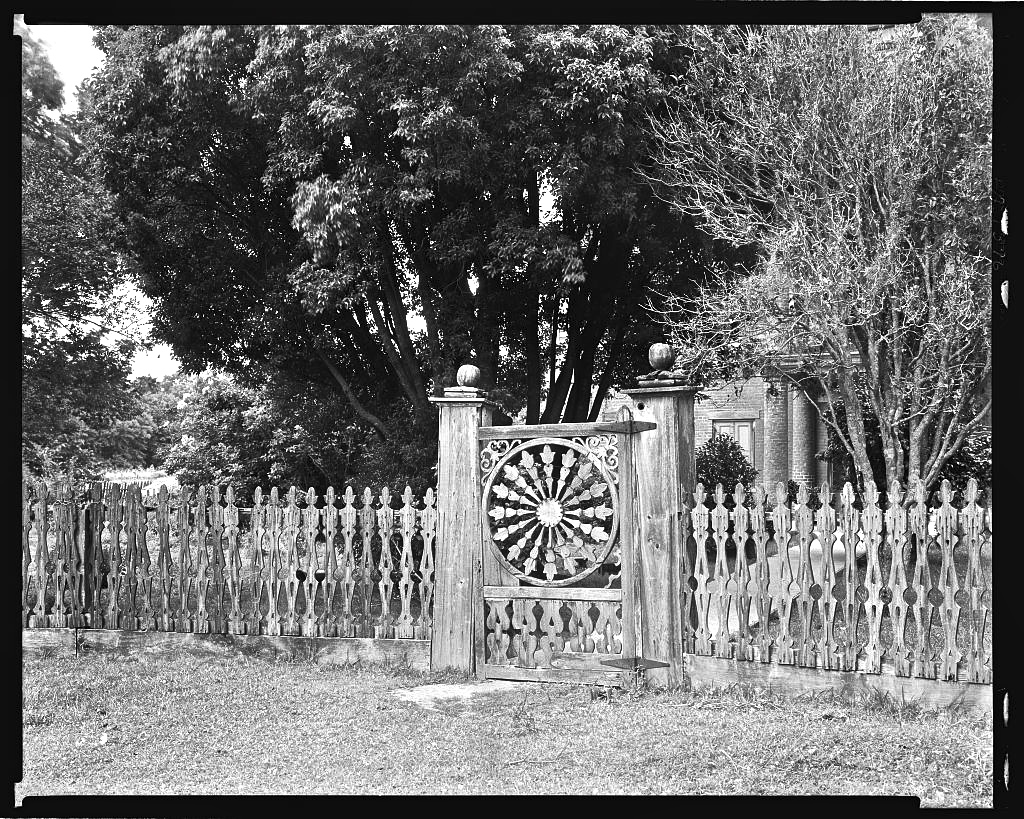
I love this gate and fence, which in 1938 enclosed the Arlington Plantation House (also called Splane) in the town of Washington, St. Landry Parish, Louisiana. The house is still standing and was entered into the National Register of Historic Places in 1982.

It was built in 1829. I have seen the style called Greek Revival, but also Mid 19th Century Revival: Exotic Revival. I have not been able to find a more recent photo of the house or garden.

In 1853, the residents of Splane would have witnessed (and might have succumbed to) a yellow fever epidemic that killed one-third of the population of Washington.

These photos were taken in 1938 by Frances Benjamin Johnston as part of the Carnegie Survey of the South (Library of Congress Prints and Photographs Division).

Clipped weeping fig

Near the same corner with the pelican tree, there is a pharmacy with several nice topiary of Ficus benjamina (weeping fig).

Friday miscellany

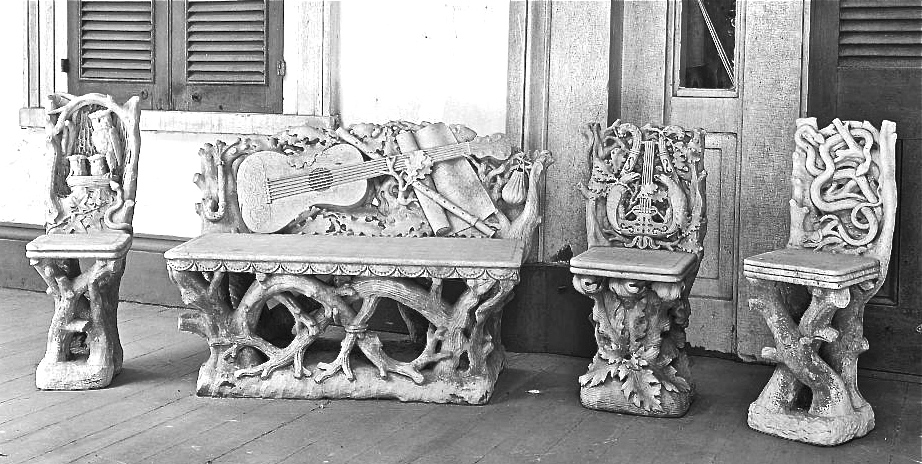
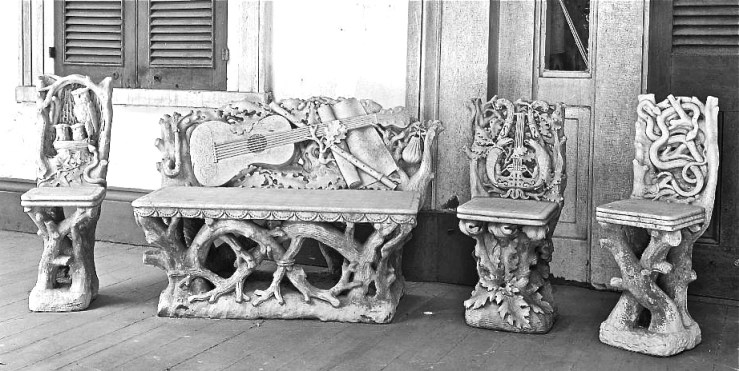
The porch of Burnside Plantation in 1938, by photographer Frances Benjamin Johnson for the Carnegie Survey of the South.

Miscellany

The Washington Post has an interesting, and rather sad, article (and colorful slide show), here, about the once-great floating gardens of Xochimilco in Mexico City. Although it is a UNESCO World Heritage Site, “the ancient plots and their life-giving canals are weedy and abandoned, overrun by cattle, invaded by exotic fish, sucked dry by urban sprawl — and a dozen agencies of government have failed to save one of the wonders of the world.”

Anne Raver in The New York Times writes about Nancy Goodwin’s celebrated Montrose Gardens in winter, here. The slide show includes a photo of her lath house, which has been on my list of favorite garden structures since I saw it in Garden Design in the 1990s.
In urban landmark news, the first Starbucks on the East Coast, at Wisconsin and Idaho Avenues, N.W., in Washington, D.C., has closed. The building it occupied will soon be demolished. However, The Huffington Post reports, here, that the new, mixed-use development will still have a Starbucks (whew!). In the meantime, if you visit the nearby National Cathedral’s Bishop’s Garden, you can get coffee (and fudge) in the gift shop.

(Also, a slideshow in the header of the National Cathedral’s website, here, has some revealing photos of the earthquake damage of last summer.)

This link from the Lady Bird Johnson Wildflower Center and the University of Texas at Austin displays a map of the U.S. Click on a state and you get a list of native plants suitable for that region. Also, here’s an interesting perspective on the honey bee as a pollinator of American native plants, at Garden Rant.

Finally, if you need a reminder to always be alert to possibilities for design, click here.