
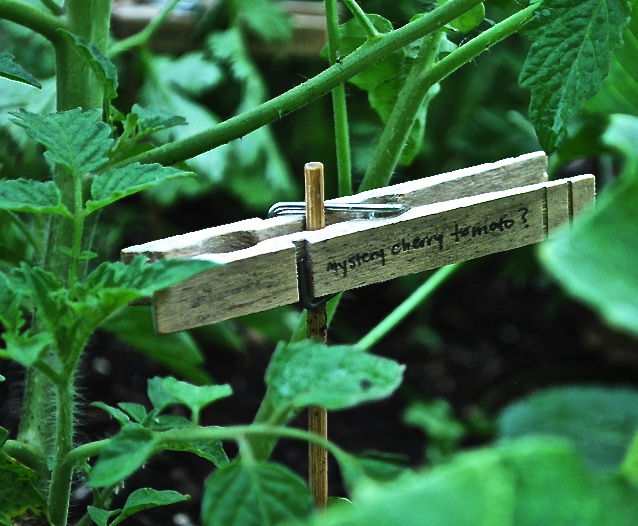
I like these plant labels — photographed by Stacey Shintani at a community garden in Chicago.
 Both photos are via flickr under CC license (and spotted on Pinterest).
More grows in the garden than the gardener sows.
— old Spanish proverb
I like these plant labels — photographed by Stacey Shintani at a community garden in Chicago.
Both photos are via flickr under CC license (and spotted on Pinterest).
More grows in the garden than the gardener sows.
— old Spanish proverb
I urge you to please notice when you are happy, and exclaim or murmur or think at some point, “If this isn’t nice, I don’t know what is.”
— Kurt Vonnegut
Our oldest daughter has been visiting us — which is very nice — so this weekend, we took her to see the Nyungwe Forest in the south of Rwanda and to stay at the beautiful Nyungwe Forest Lodge.
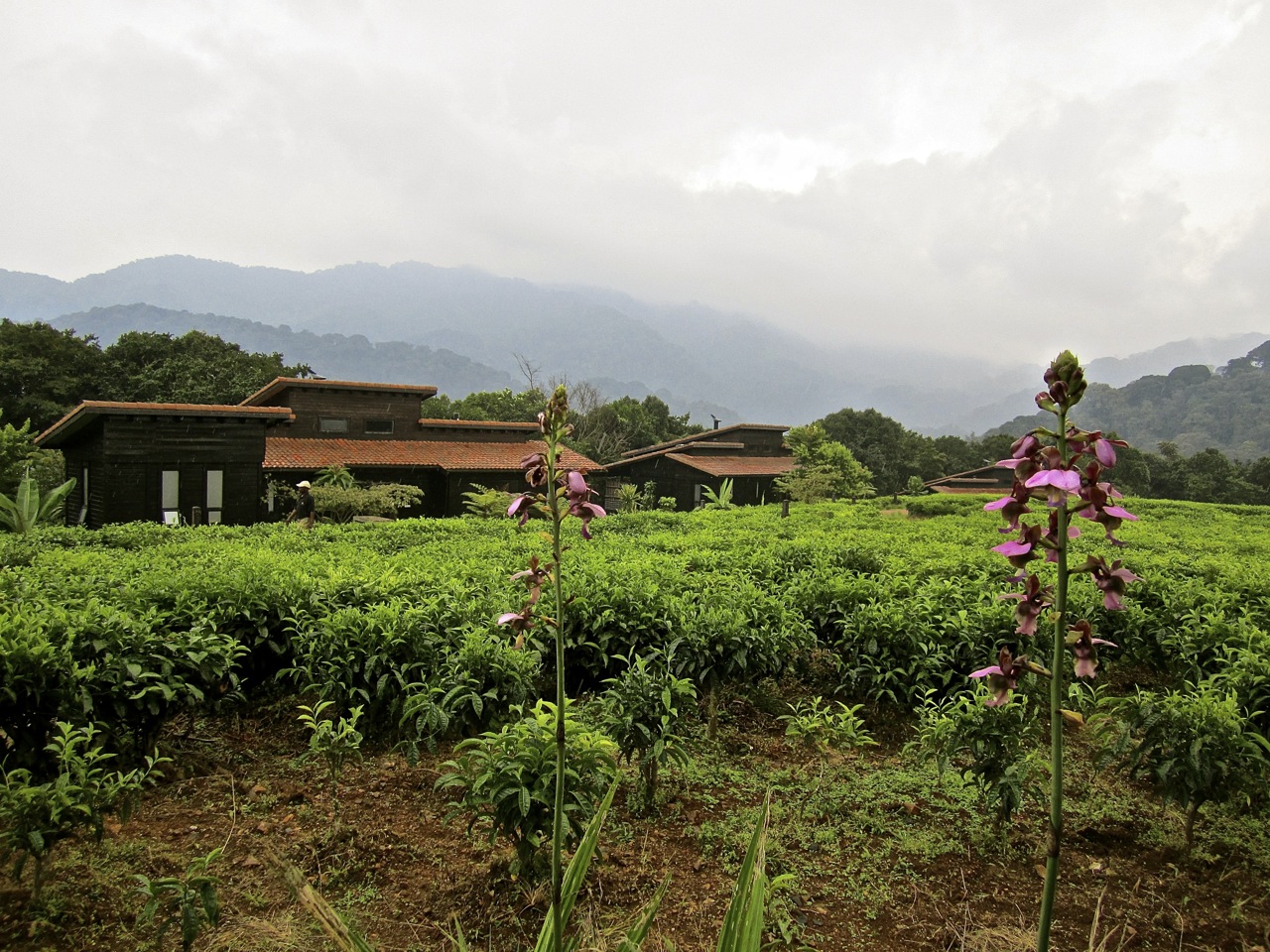
The Lodge is located on the western edge of the Nyungwe National Park in a tea plantation picked by a local cooperative. The cabins front to the tea fields and their back windows look out on the forest.
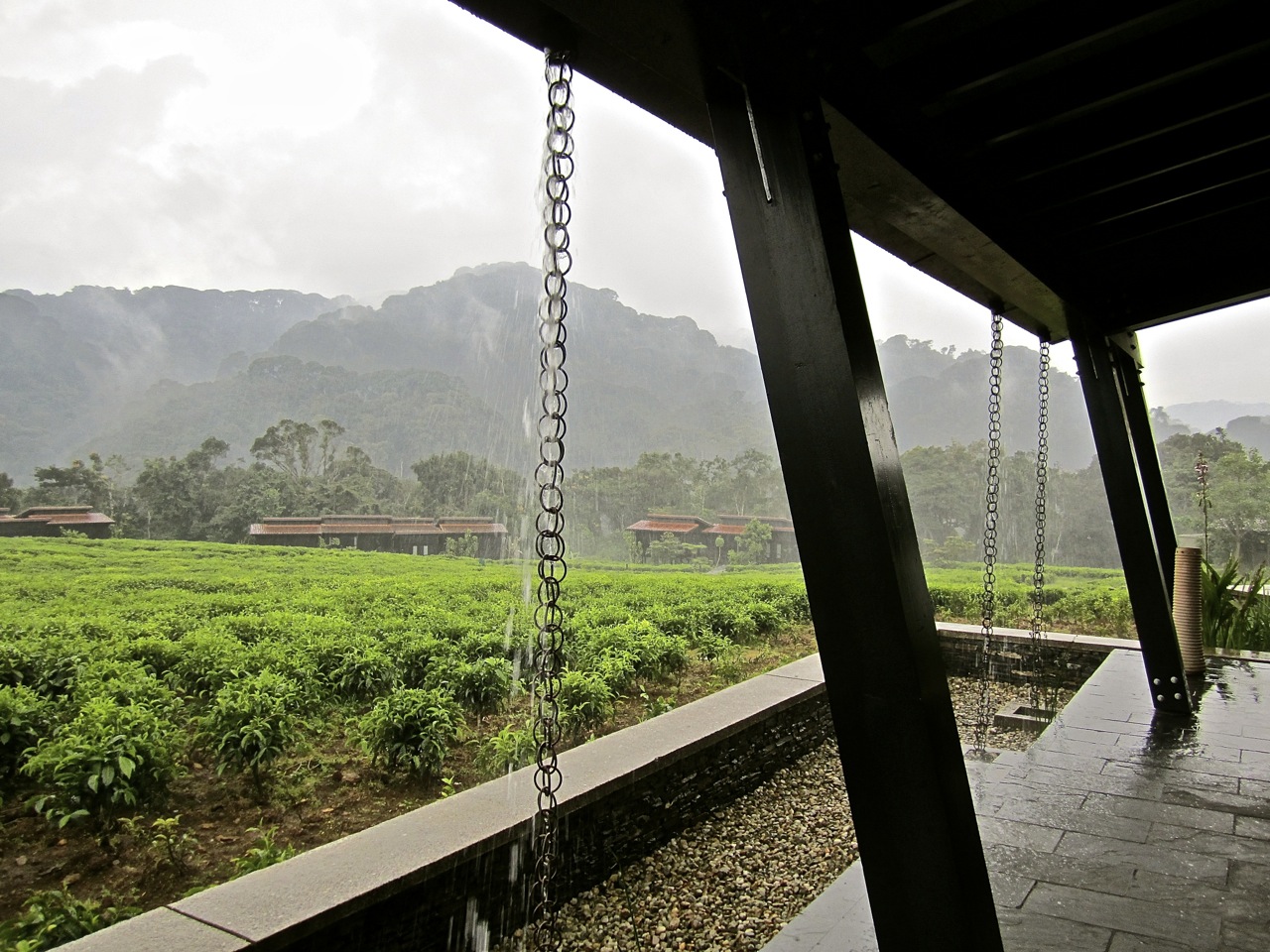
The area is currently having clear blue mornings and rainy afternoons. On Saturday, our one full day there, we hiked the canopy walk before lunch (more on that later this week). Then we actually talked about going on another hike that afternoon.
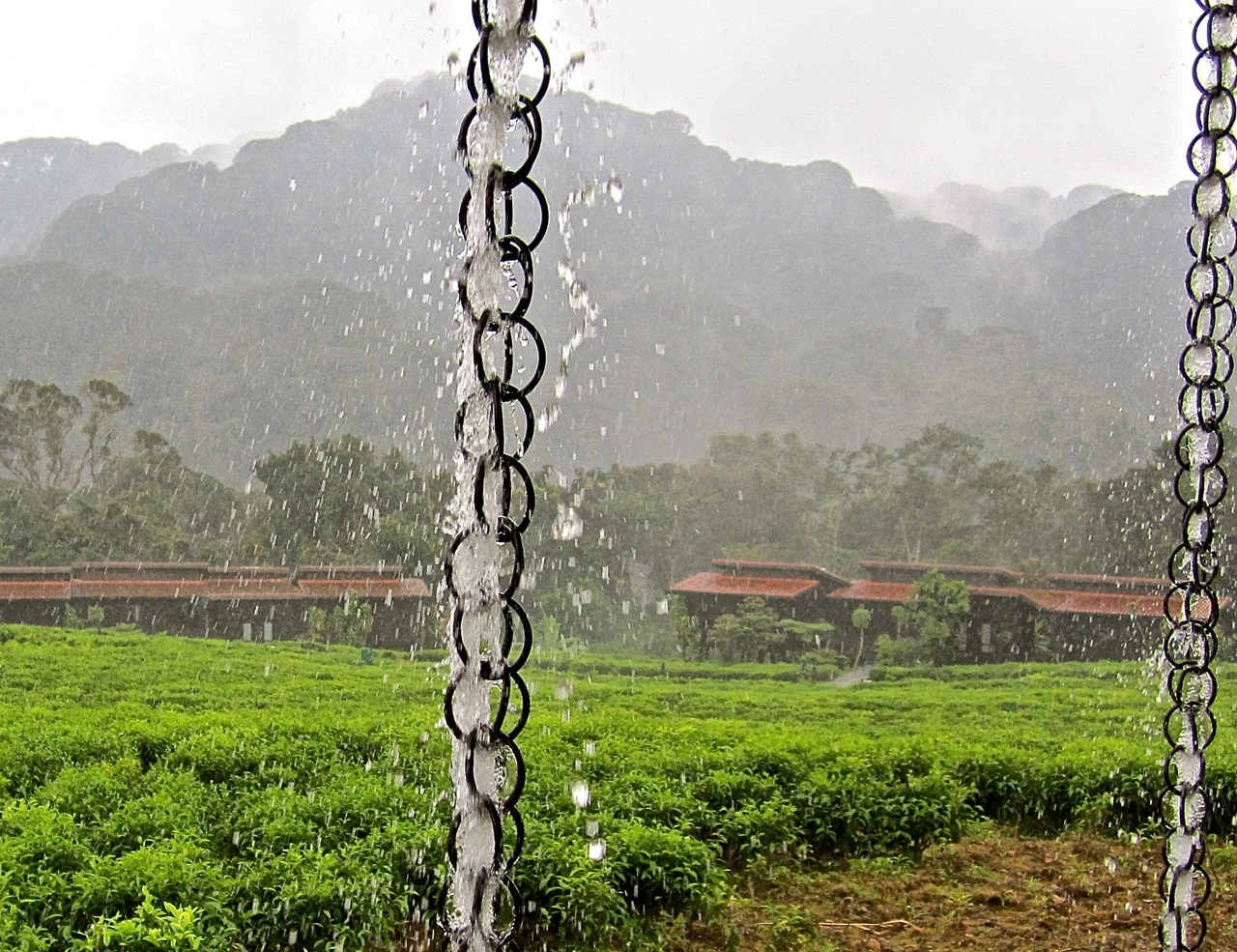
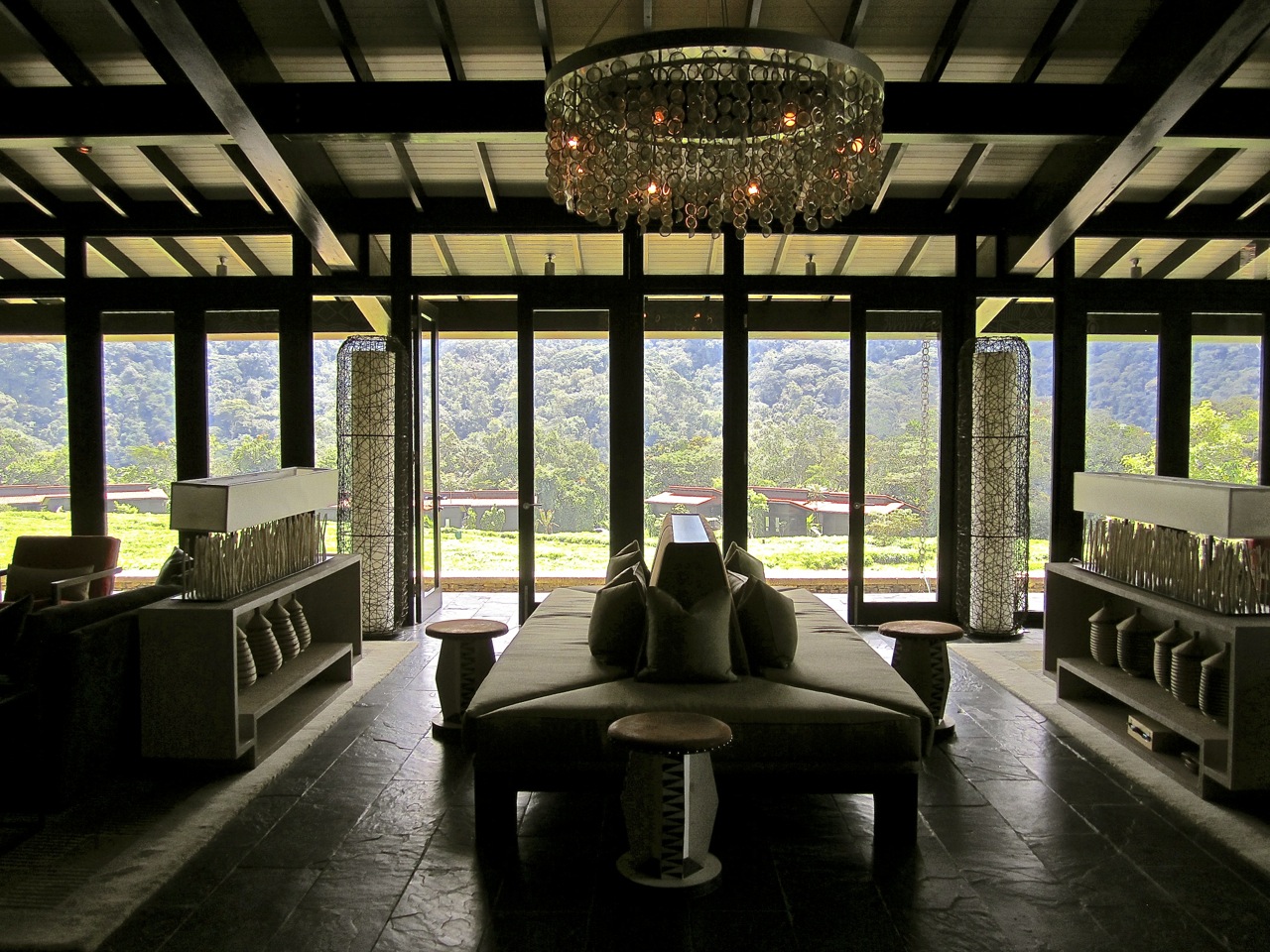
However, with the first raindrops, we gave in to the luxury of just parking ourselves in front of the many picture windows looking out on the gorgeous view and napping and reading until the 5:00 p.m. tea, cookies, and cocktails in front of a fire.


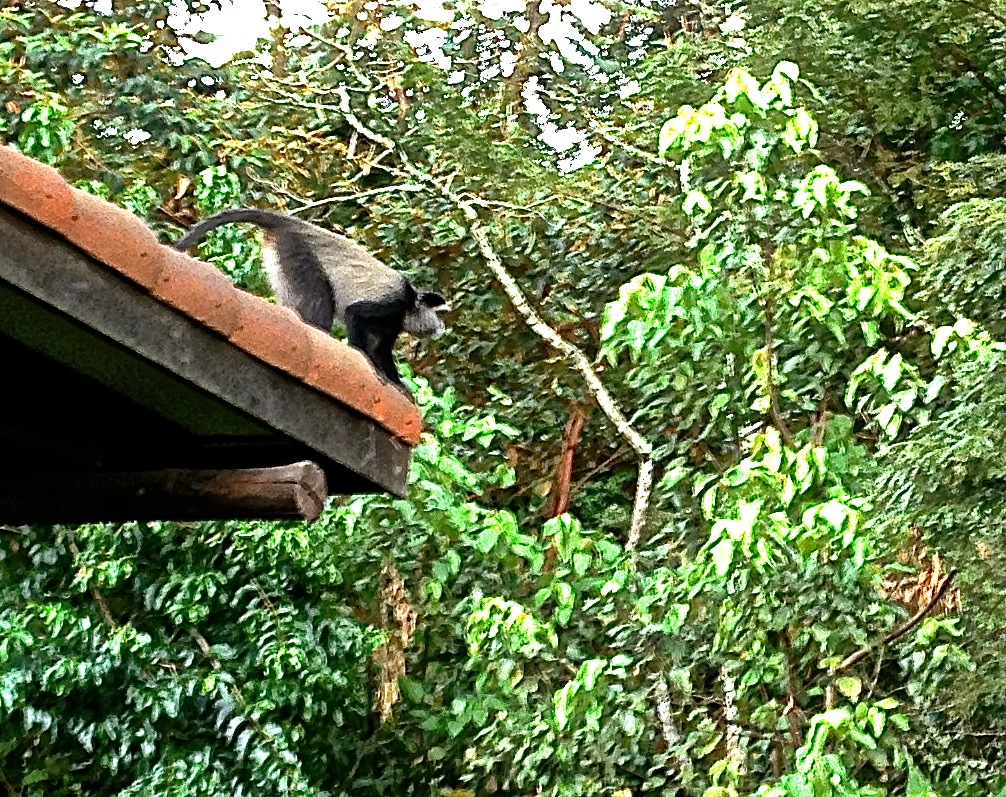
Just before tea time, we were rewarded for our indolence by finding about a dozen blue monkeys in the trees right outside our cabin’s back patios.
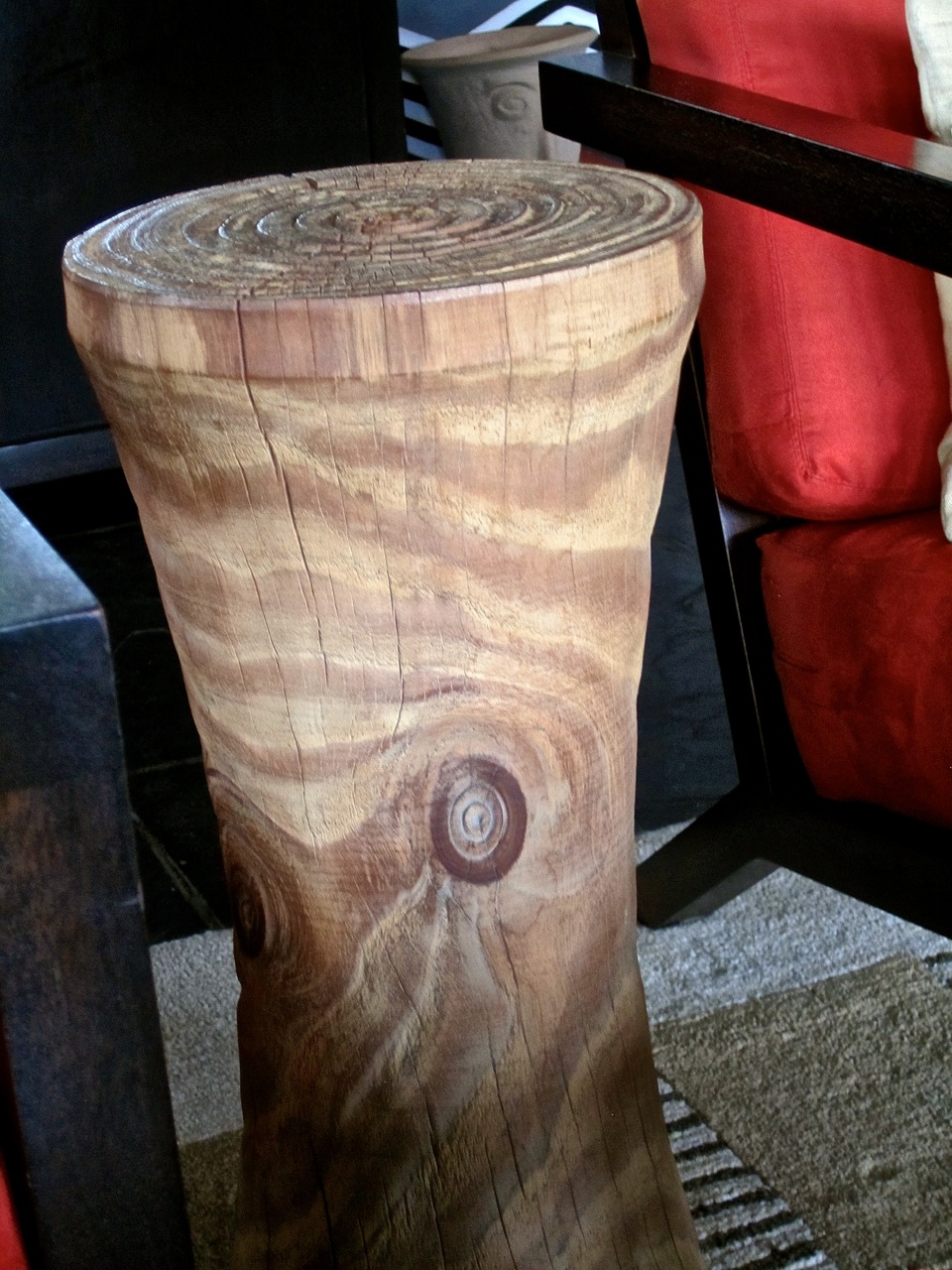
I wanted to show you these side tables in the main lounge, which I loved.
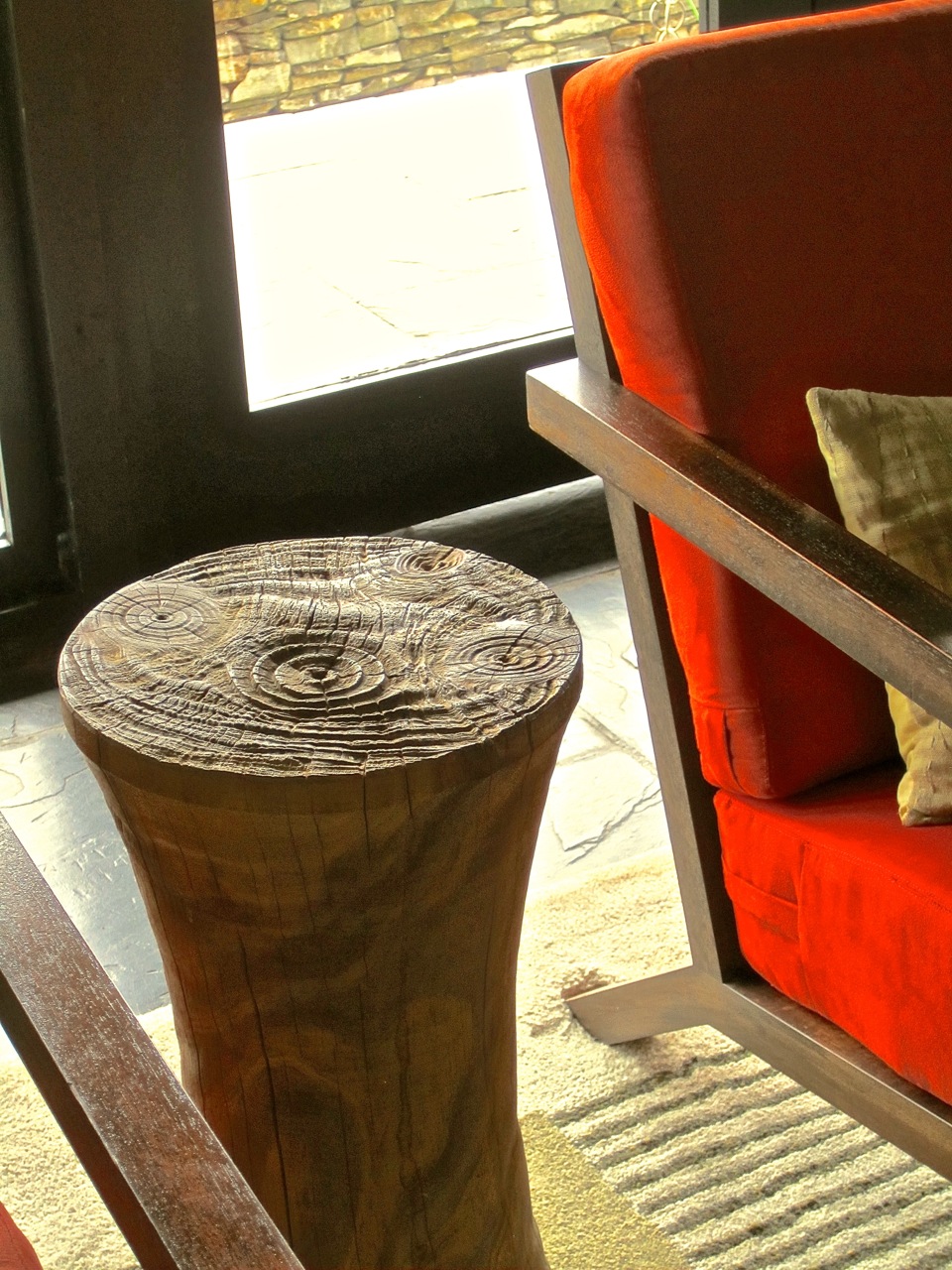
Unfortunately, I forgot to ask if they were locally made or imported — next time.
The big chandelier was appropriately made of tea strainers.
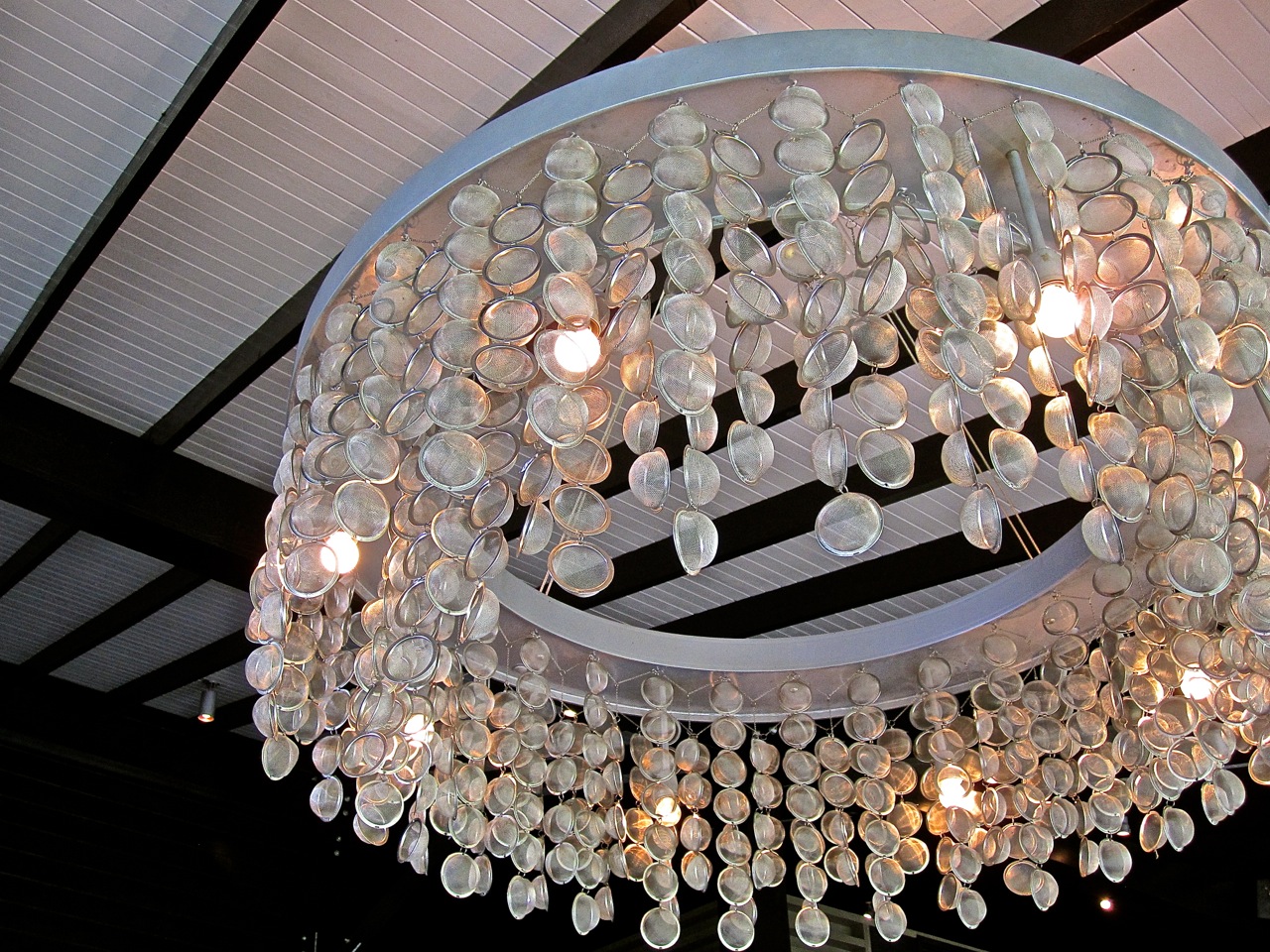


Camellia sinensis leaves have little or no smell (only if you crush them hard) until they are processed as tea. But the hotel smelled very lightly of green tea fragrance from the soap and hand lotion in the bathrooms and gift shop. So, sitting on the terrace or in the main lounge looking out, I could smell what I thought the fields should smell like (but really don’t). I thought this was an interesting little manipulation of experience in a landscape.
My daughter brought me a Kindle Fire e-reader, another really nice thing, which allowed me to spend the afternoon switching from Vogue, to the third book of the Game of Thrones series, to Hilary Mantel’s Bring Up the Bodies.
I’ve written about Nyungwe Forest Lodge previously here.
 How lovely.

Until recently, I had somehow missed the blog, Creating my own garden of the Hesperides. I found it last week, via a picture on Pinterest.

I wrote to Christina, who gardens in Lazio, Italy, and asked her if I could share some of her pictures of her “Formal Garden,” which is so beautiful and simple.
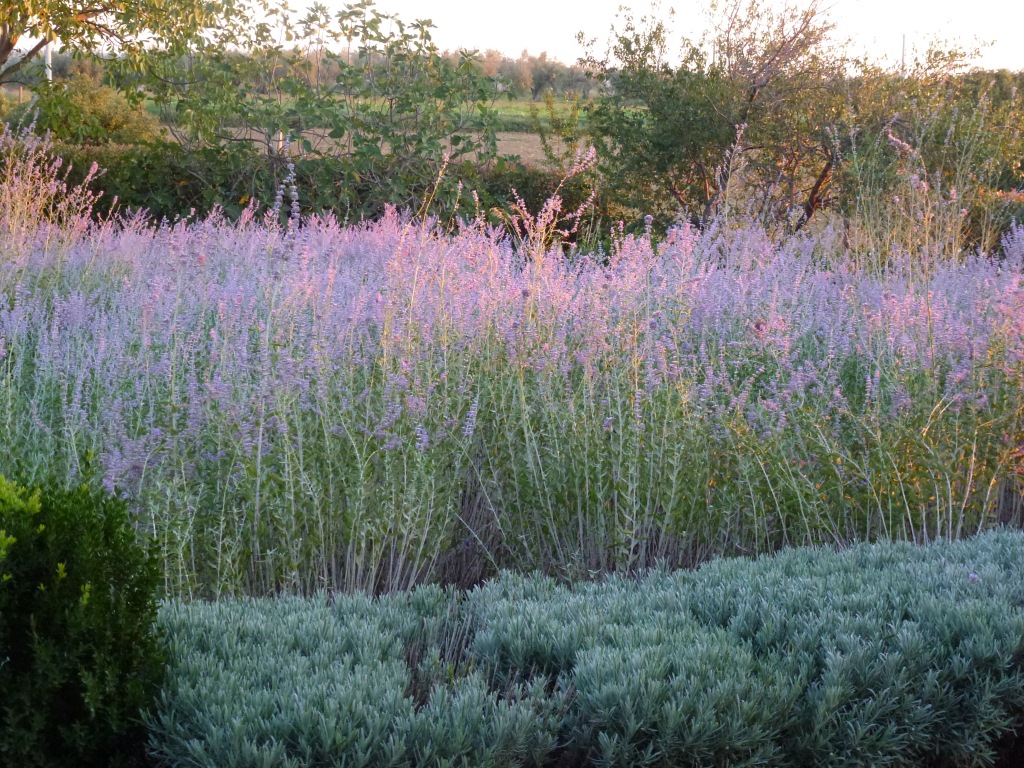
The garden was laid out and planted in 2008. The soil is soft volcanic rock, which is fertile and free-draining. The area usually receives no rain from June through August, and Christina does not irrigate. In the winter, there is “bitingly cold” wind.
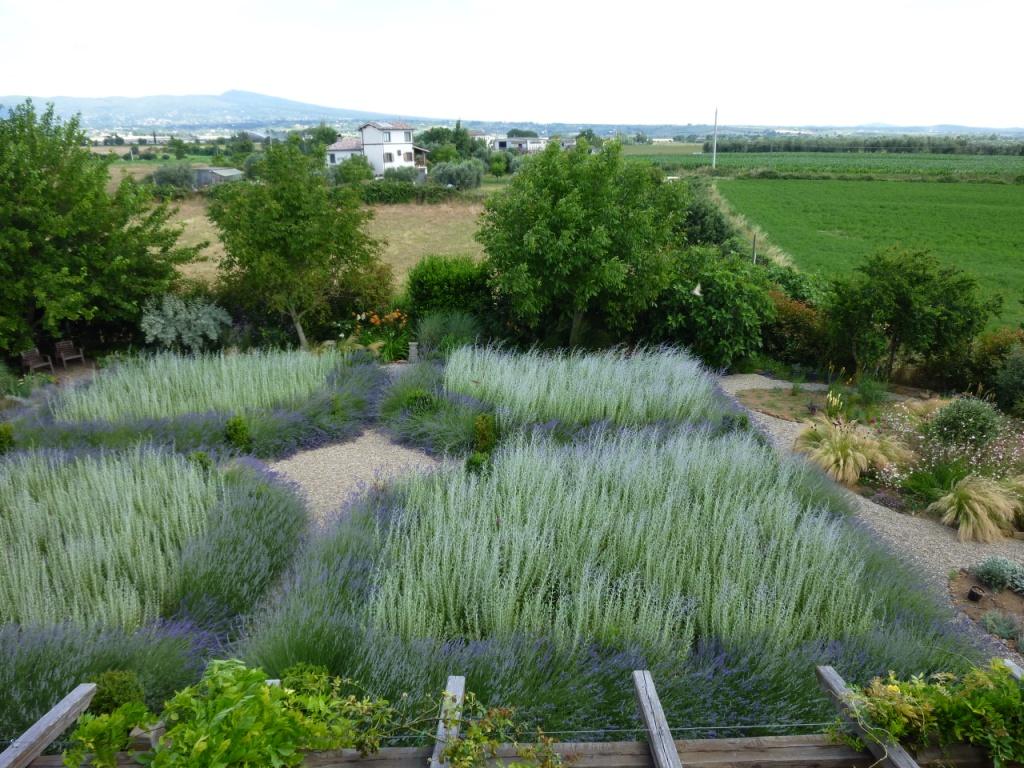
The four identical beds are planted with Perovskia (Russian sage), edged with lavender, and accented with boxwood cubes at the corners. The two beds nearest the house are underplanted with tulip ‘White Dream‘ and allium.

Christina also has large and small island-shaped borders with mixed plantings, many old roses, and a vegetable garden. Here is how she explains the name of her blog:
The garden of the Hesperides was where Hercules had to go to find the golden apples, references to it in Italian Renaissace gardens are a symbolic way of comparing the garden to paradise, a way of achieving immortality through hard work. So this garden is, for me, my paradise and certainly the hard work in achieving it will bring its own reward.
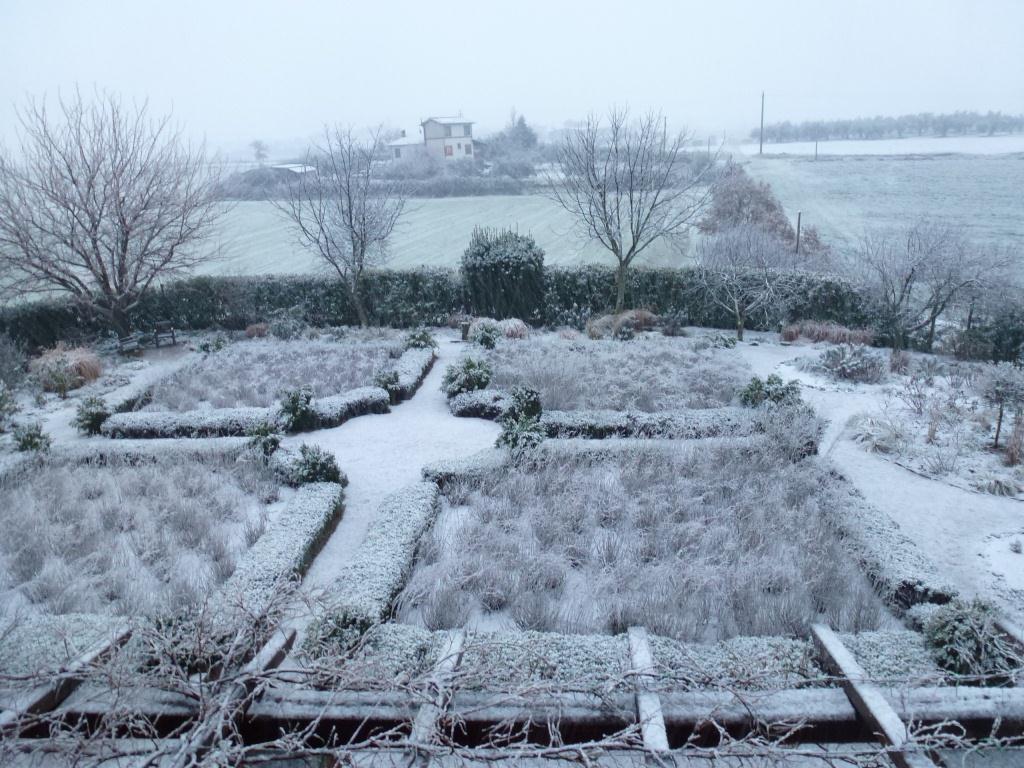
All photos above ©Christina at Creating my own garden of the Hesperides. Thanks!
How do you define ‘elegance’?
“Simplicity and imagination.”— from an interview with actress Helen Mirren
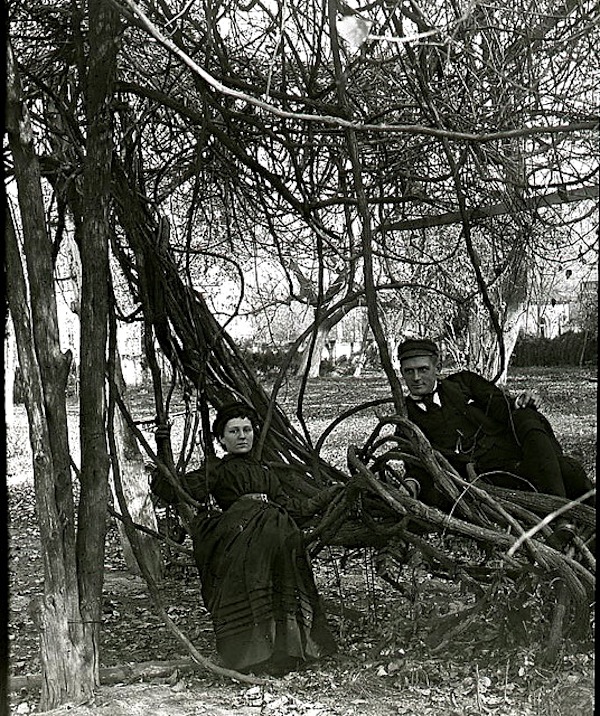 “Two people relaxing in Van Ness Park about 1880,” Washington, D.C., via D.C. Public Library Commons photostream on Flickr.
This park was not located in the present-day upper-northwest neighborhood known as Van Ness. The photo was taken in an area southwest of the White House near the corner of C and 18th Sts., N.W. — which was then known informally as “Van Ness Park.”
According to the Library’s notation on the photo, the building that can be seen in the middle of the far right side (above the man’s legs) is a “dependency of Van Ness Mansion.”
Van Ness House (Mansion) and its grounds were located on the block bordered by 17th and 18th Sts. and C St. and Constitution Ave. Built about 1816, the Greek Revival house was one of the finest in the city until the Civil War. But afterwards, it served as a “German beer garden, florist’s nursery, headquarters of the city streetcleaners, and in the end, for the Columbia Athletic Club,” according to the blog Lost Washington.
The college that became George Washington University bought the property in 1903 but later decided that its location was too unhealthy for campus facilities. At that time, the Potomac River and its marshes came up to B St., now Constitution Ave.
The State Department bought it in 1907, tore down the house, and built the Pan American Union (today OAS) Building.
I think the dependency in the photo is the old stable of the estate, which still exists at C and 18th Sts. If that’s so, the couple may be lounging in what is now Bolivar Park.
According to the blog DC Ghosts, the stables have a connection to a local ghost story in which six white horses “run wildly around the grounds” and then group together to walk to the P St. Bridge crossing to Georgetown and Oak Hill Cemetery. The full story is here.
It is good to be alone in a garden at dawn or dark so that all its shy presences may haunt you and possess you in a reverie of suspended thought.
— James Douglas, Down Shoe Lane
What if we just let it all go?
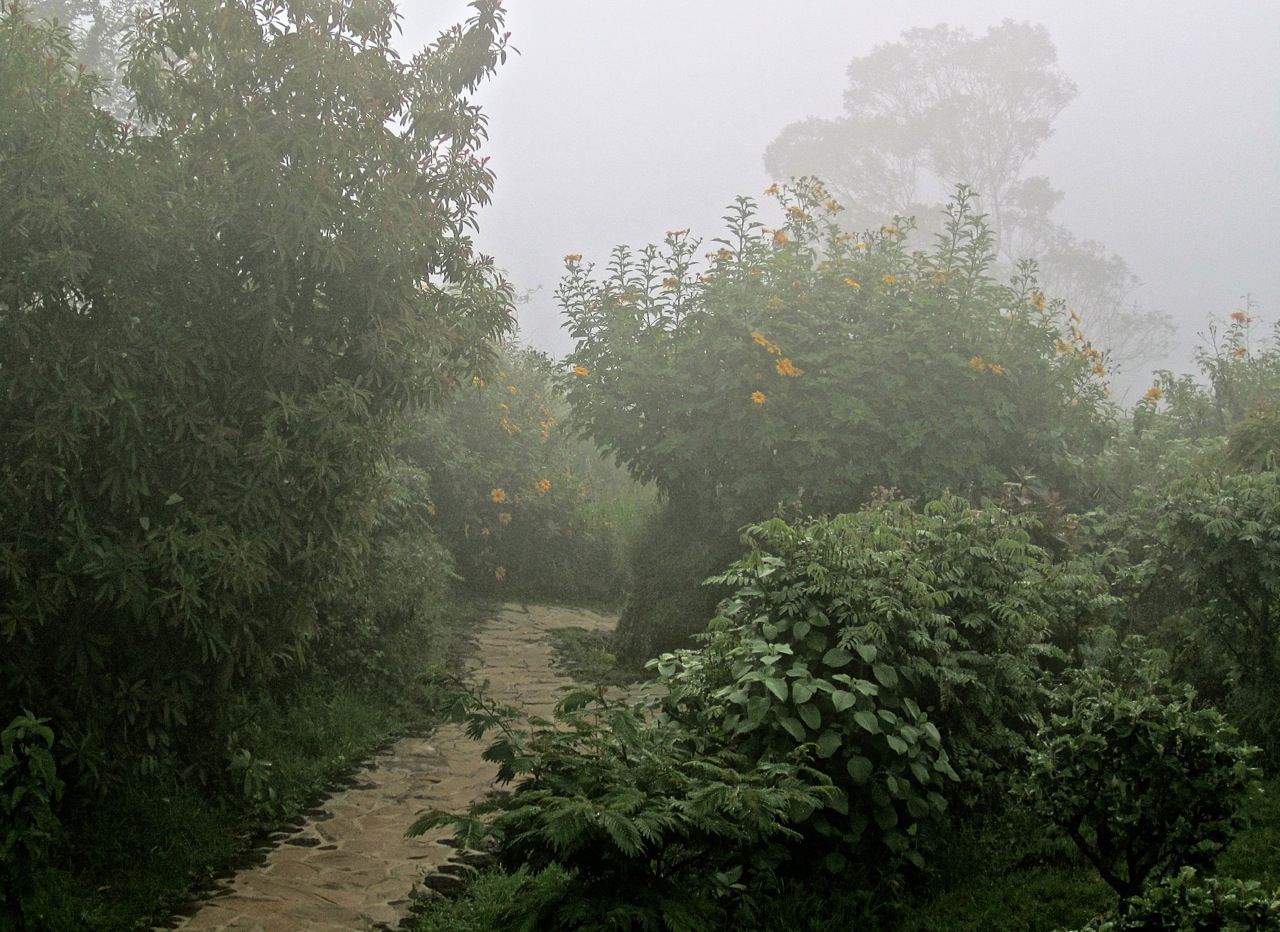
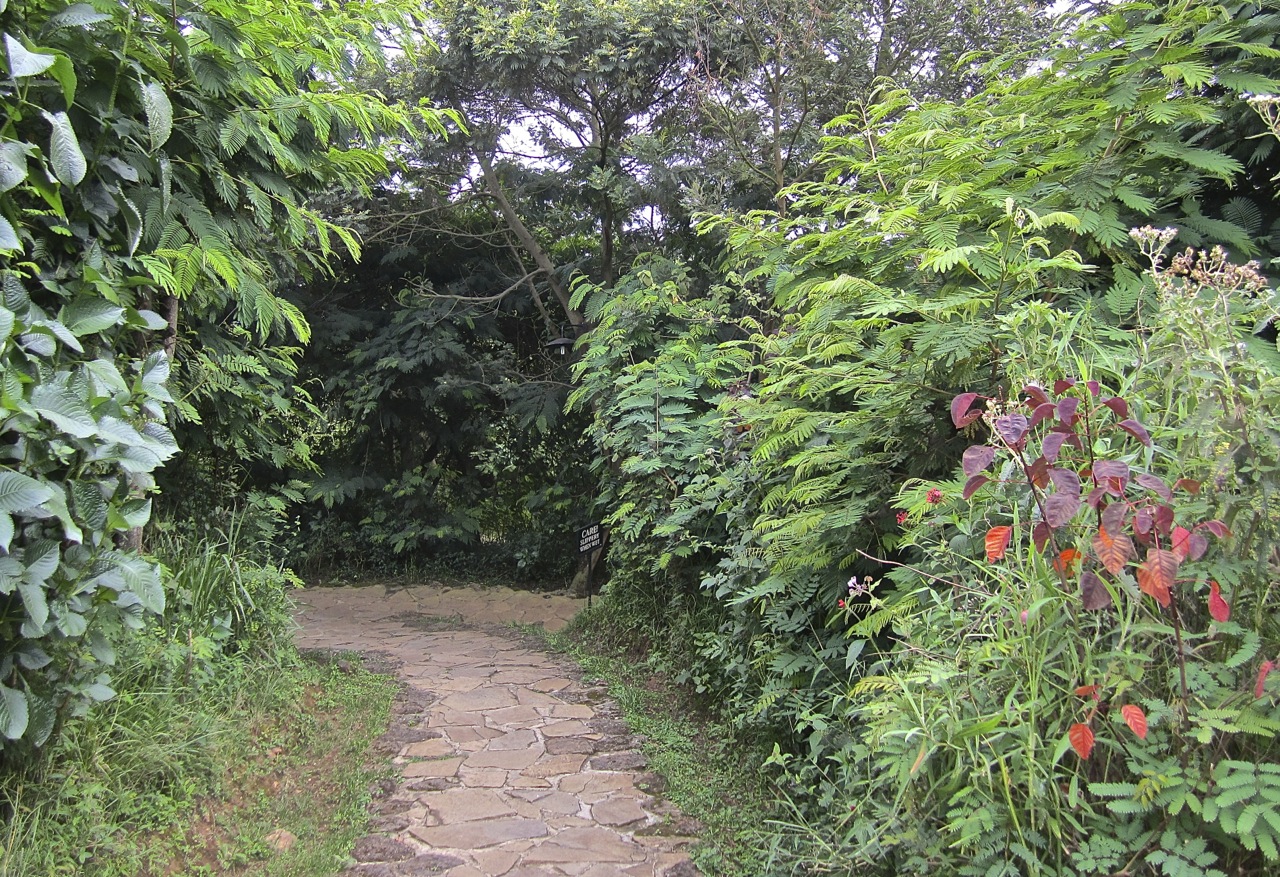
Just cut paths through the brush and then beautifully paved them?
Pushed out a few garden rooms with low walls and columns built of local stone?
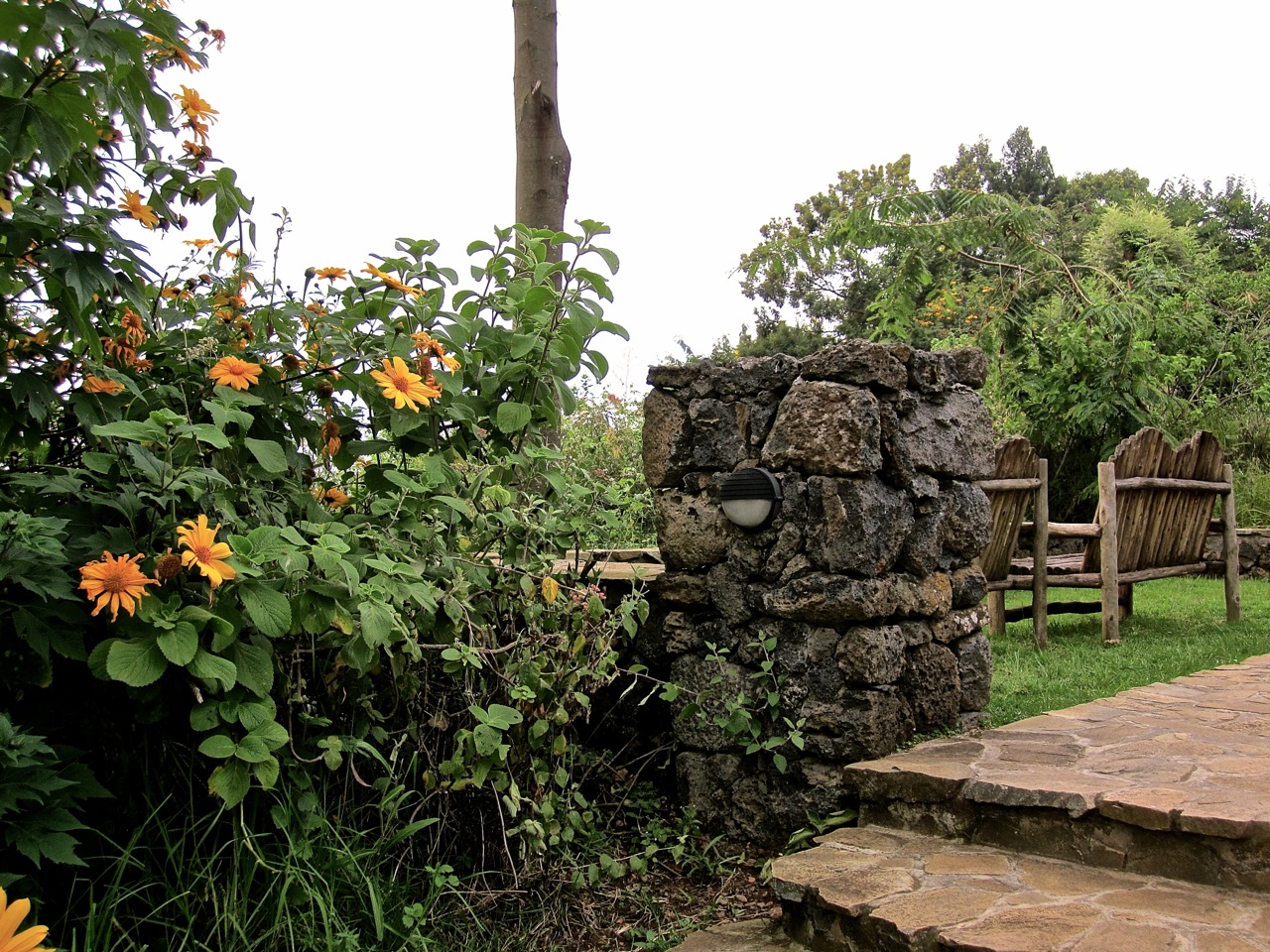
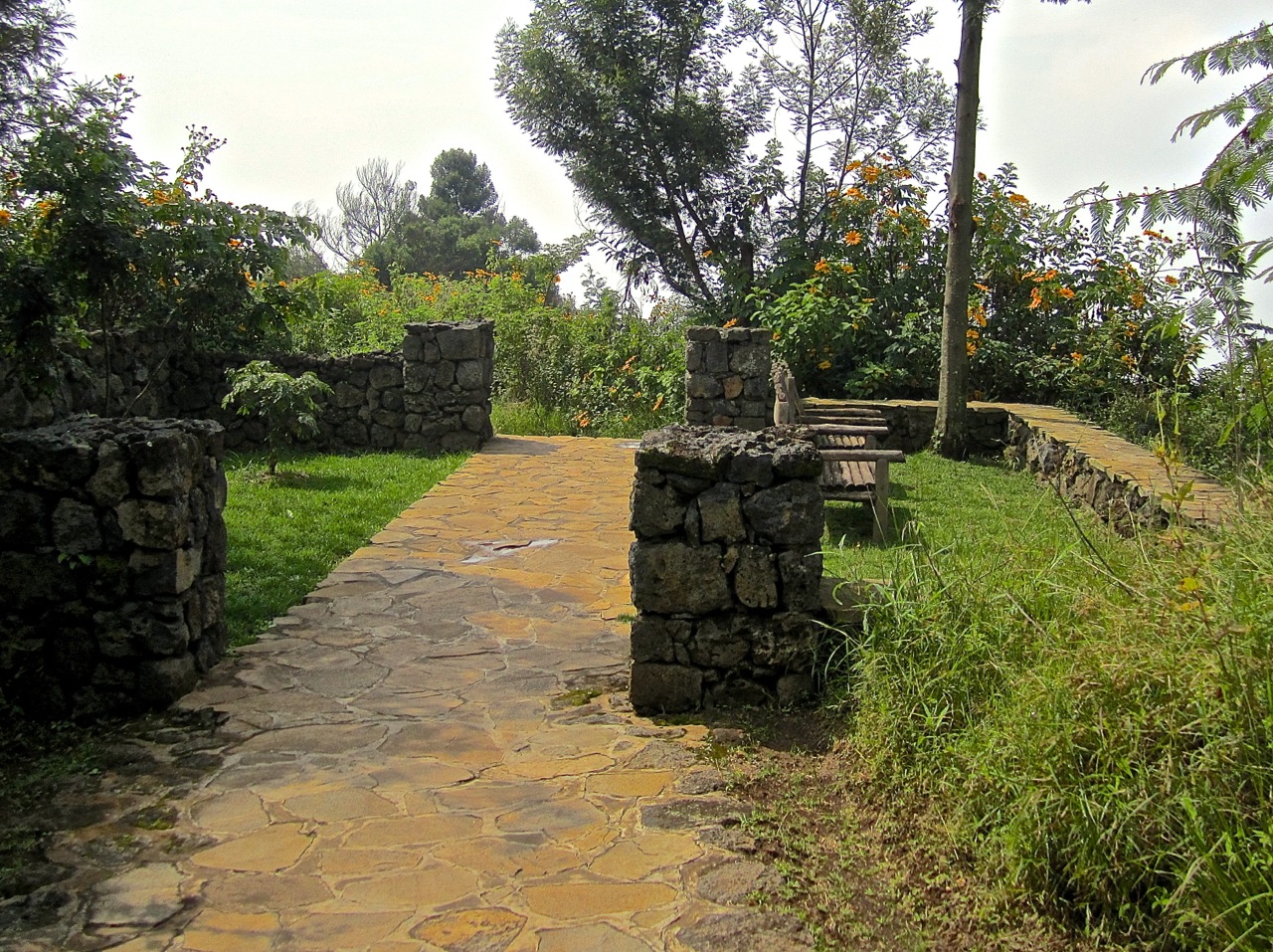
Mowed the grass only in those small spaces? Gardened (sometimes) with a machete, not hoes and shovels?
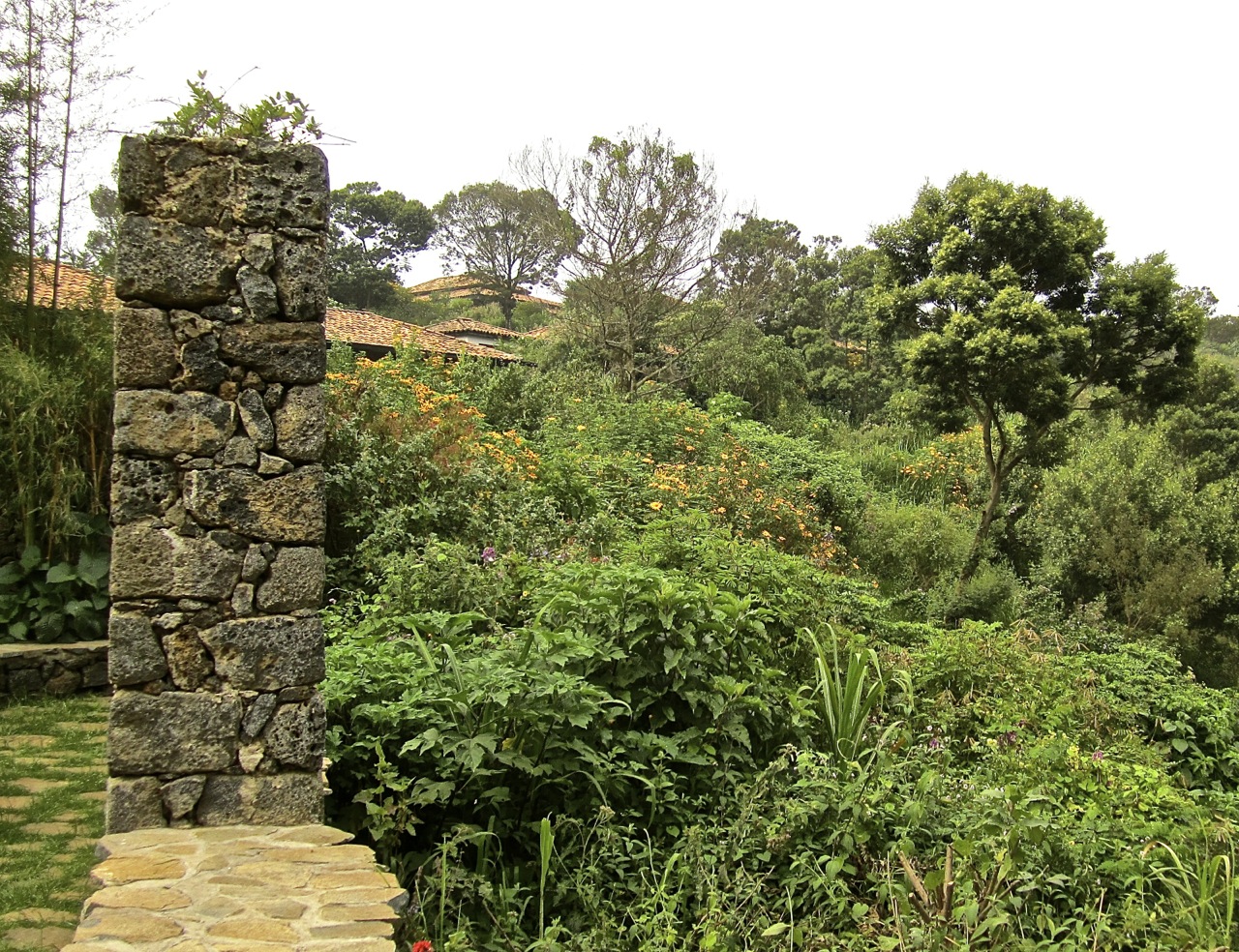
That’s what I kept thinking during our overnight stay at the Virunga Safari Lodge in northern Rwanda a couple of weeks ago.
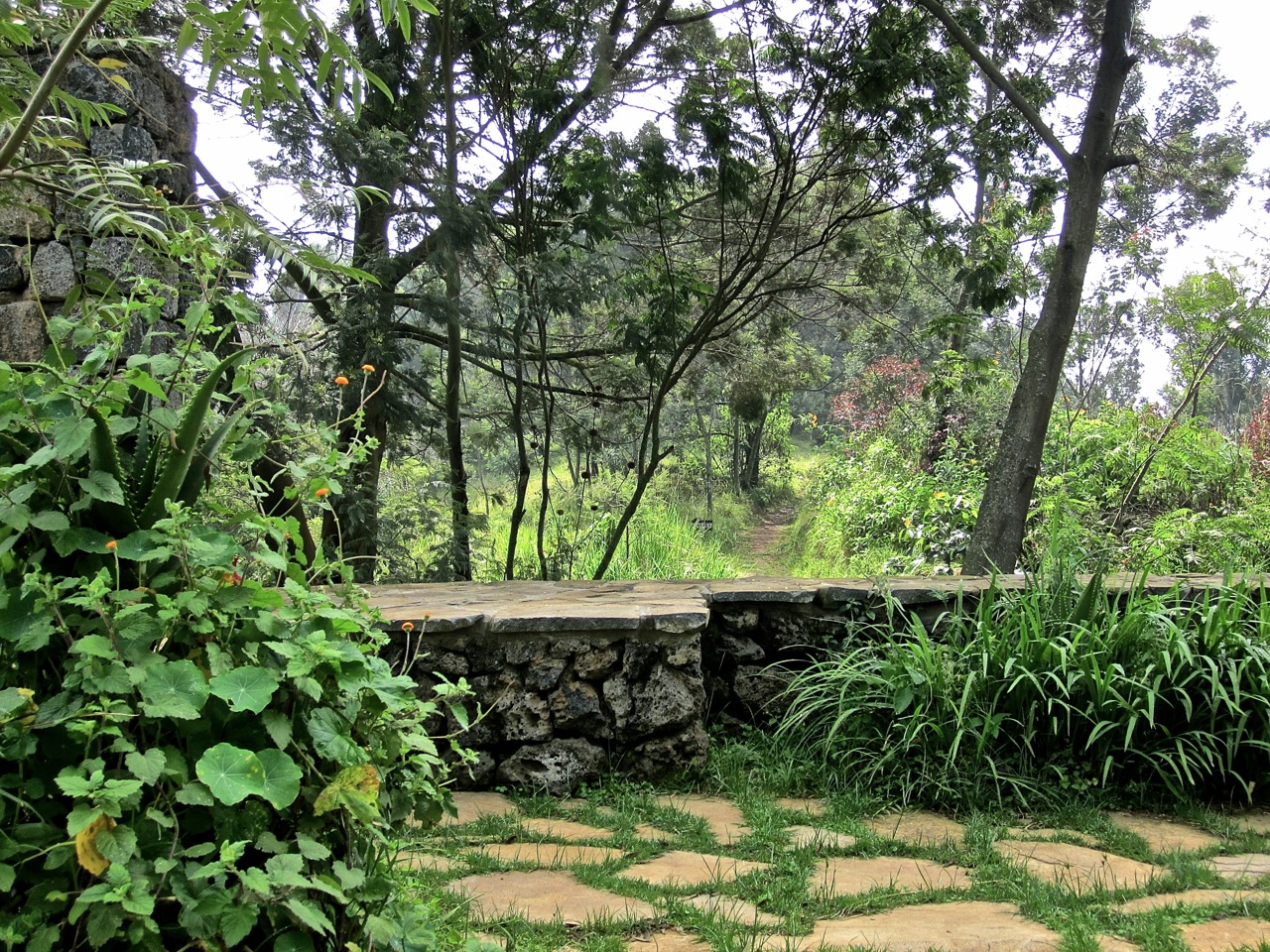
The hotel consists of a main dining/lounge building and eight very private cabins.
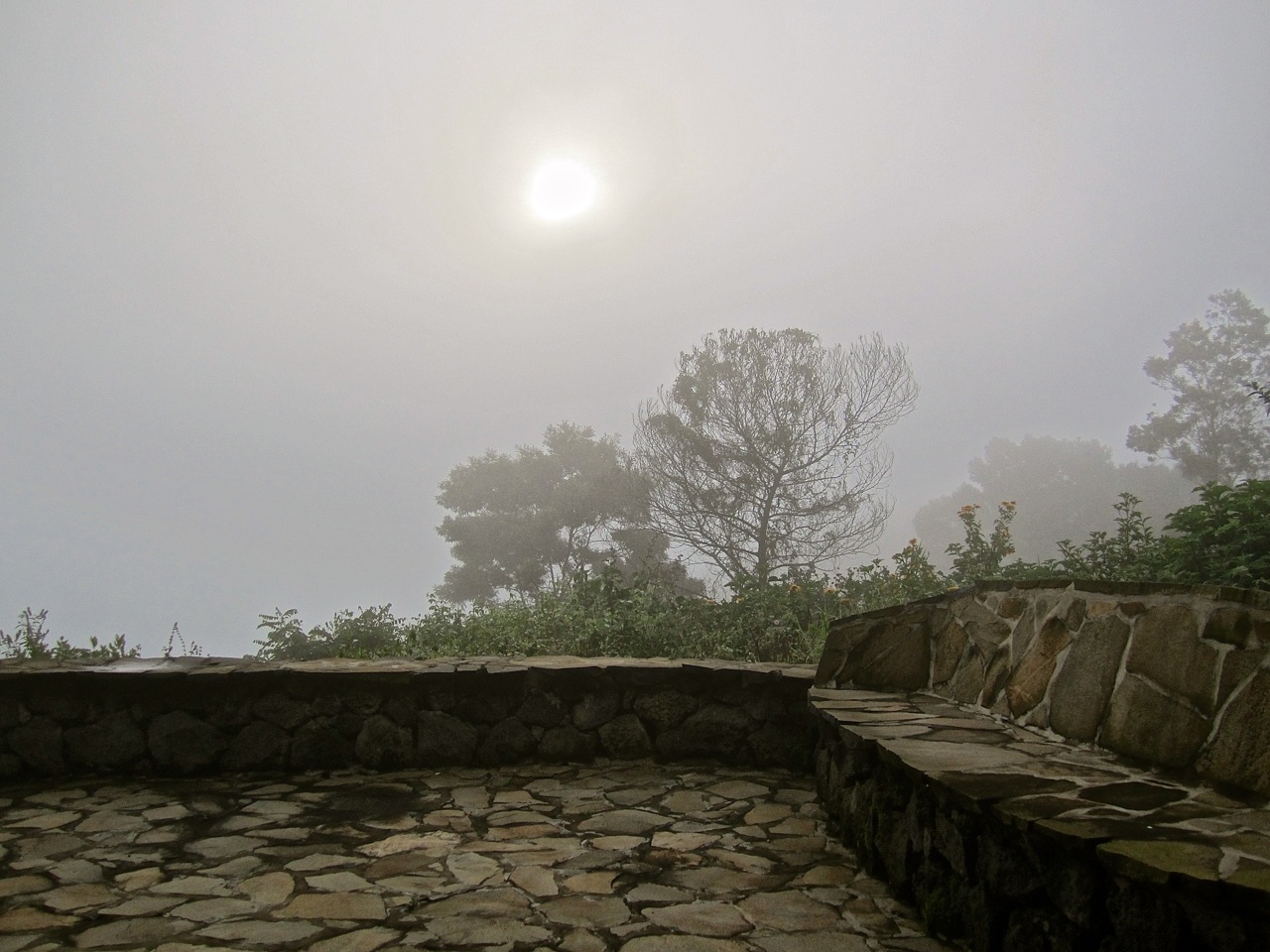
A central path through the hotel grounds runs along the top of a hill, and the cabins are sited on both sides on a level below.
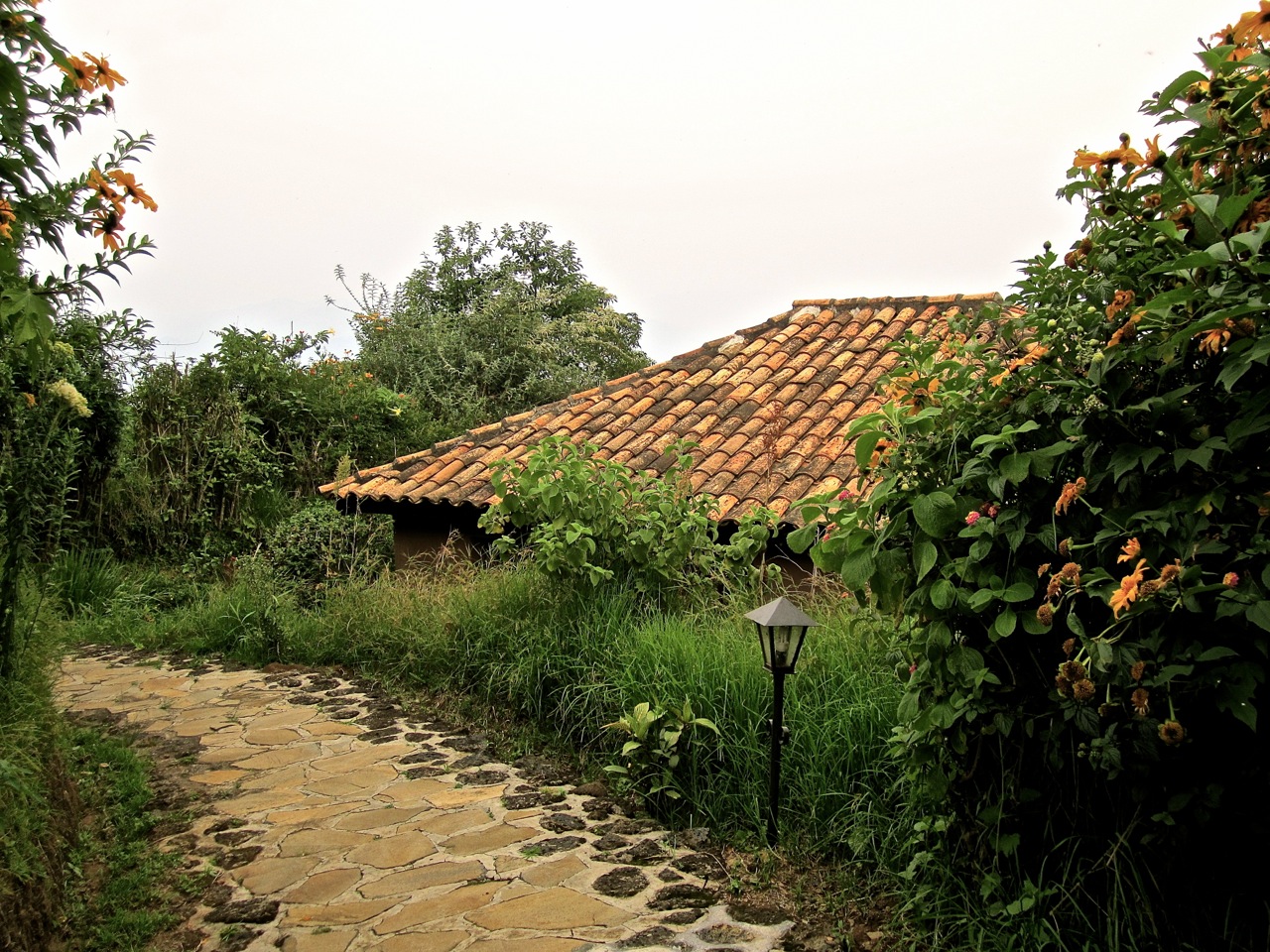
In the brush, wild natives and naturalized exotics grow together in a jumble. They were noisy with birds and insects.
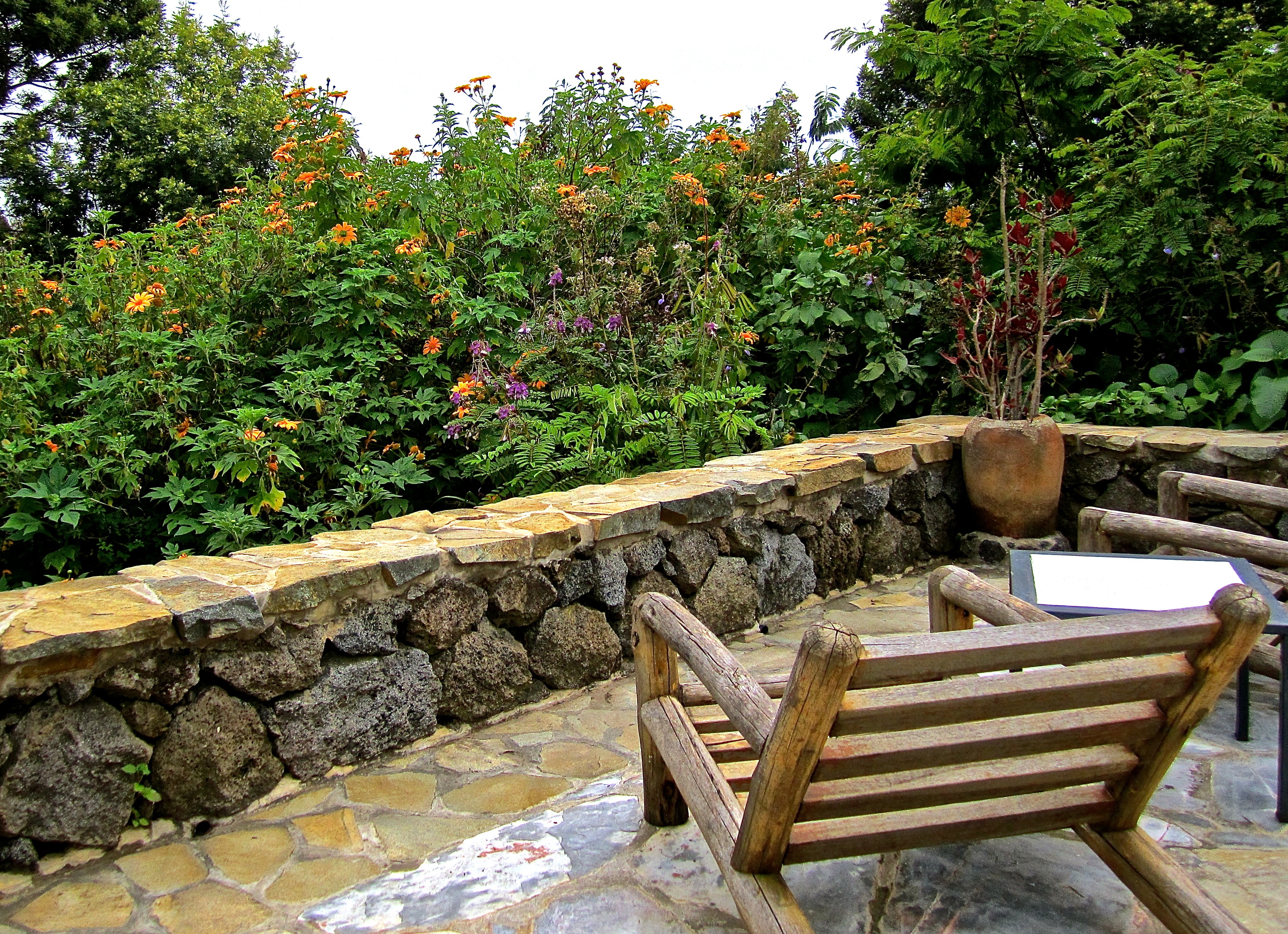
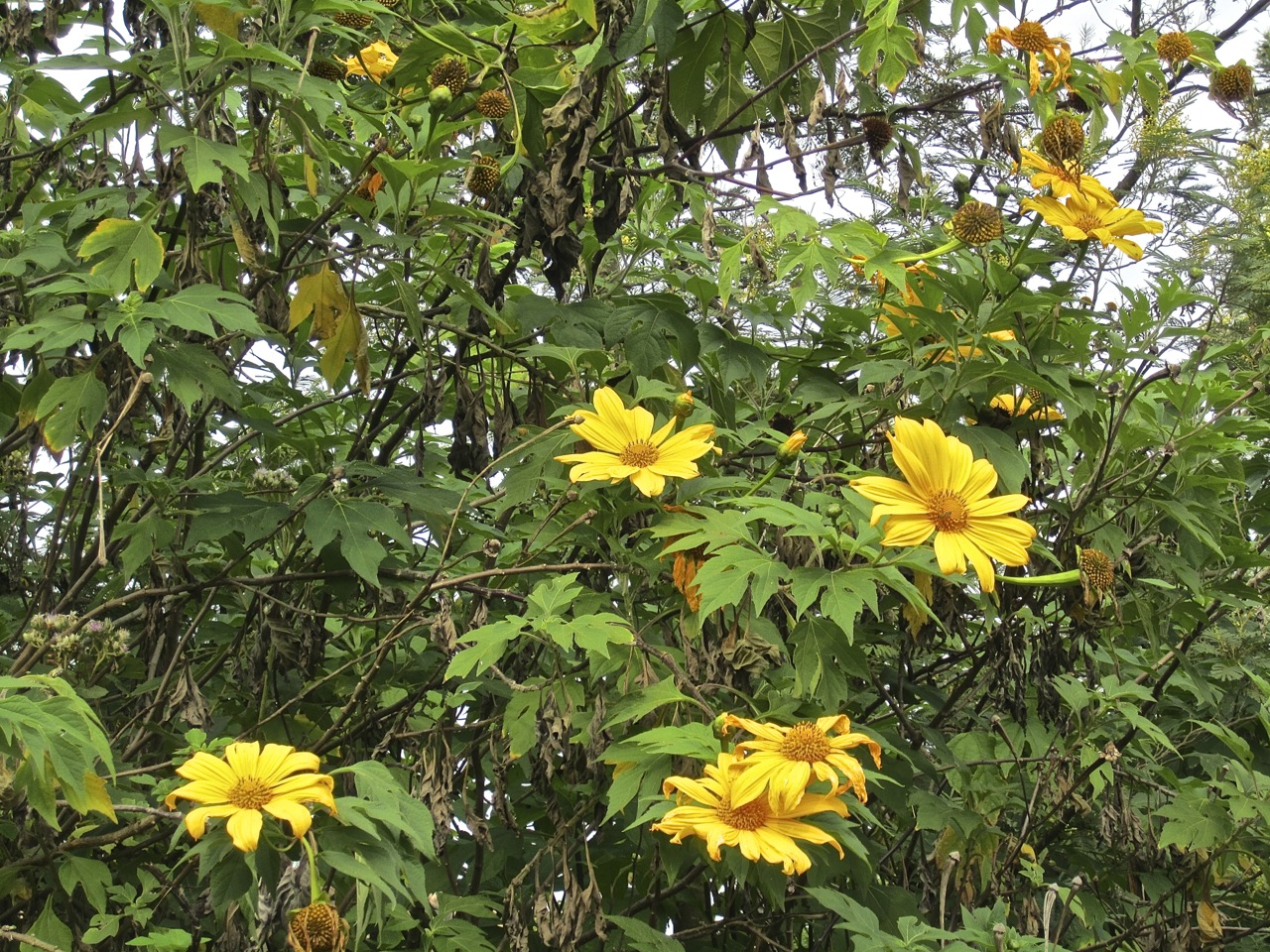
As we took a walk through the neighboring community, I realized that the light-touch landscaping of the hotel grounds created, in a sense, the least artificial environment in the area. Rwanda’s country land is highly cultivated — almost every square foot is part of a vegetable garden or field or wooded plot for timber. A steep slope is rarely an obstacle.
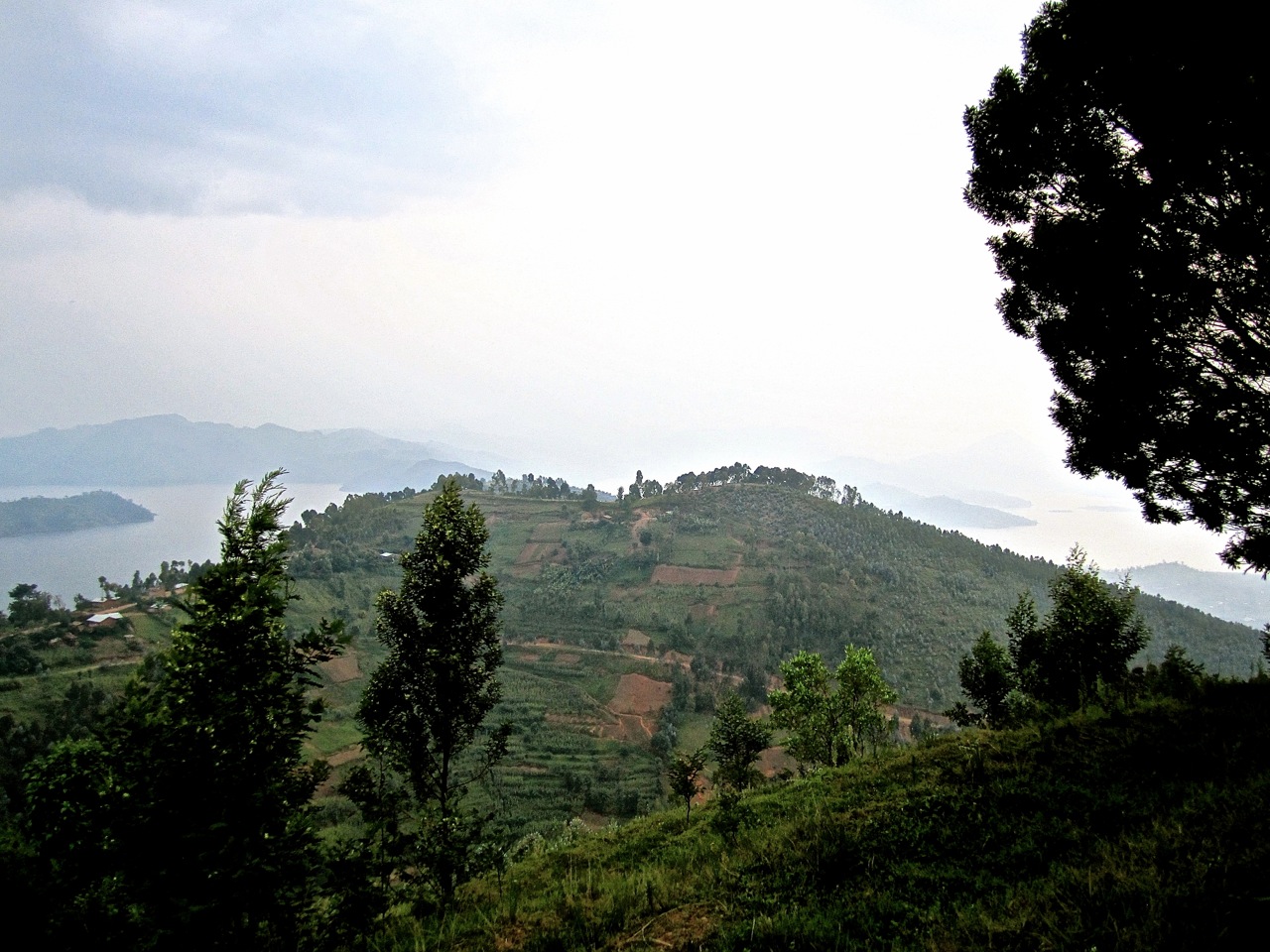
At the end of a relaxing stay, we had lunch at a table overlooking Lake Burera and its little islands. Then we were off on the 2-hour drive back to Kigali.
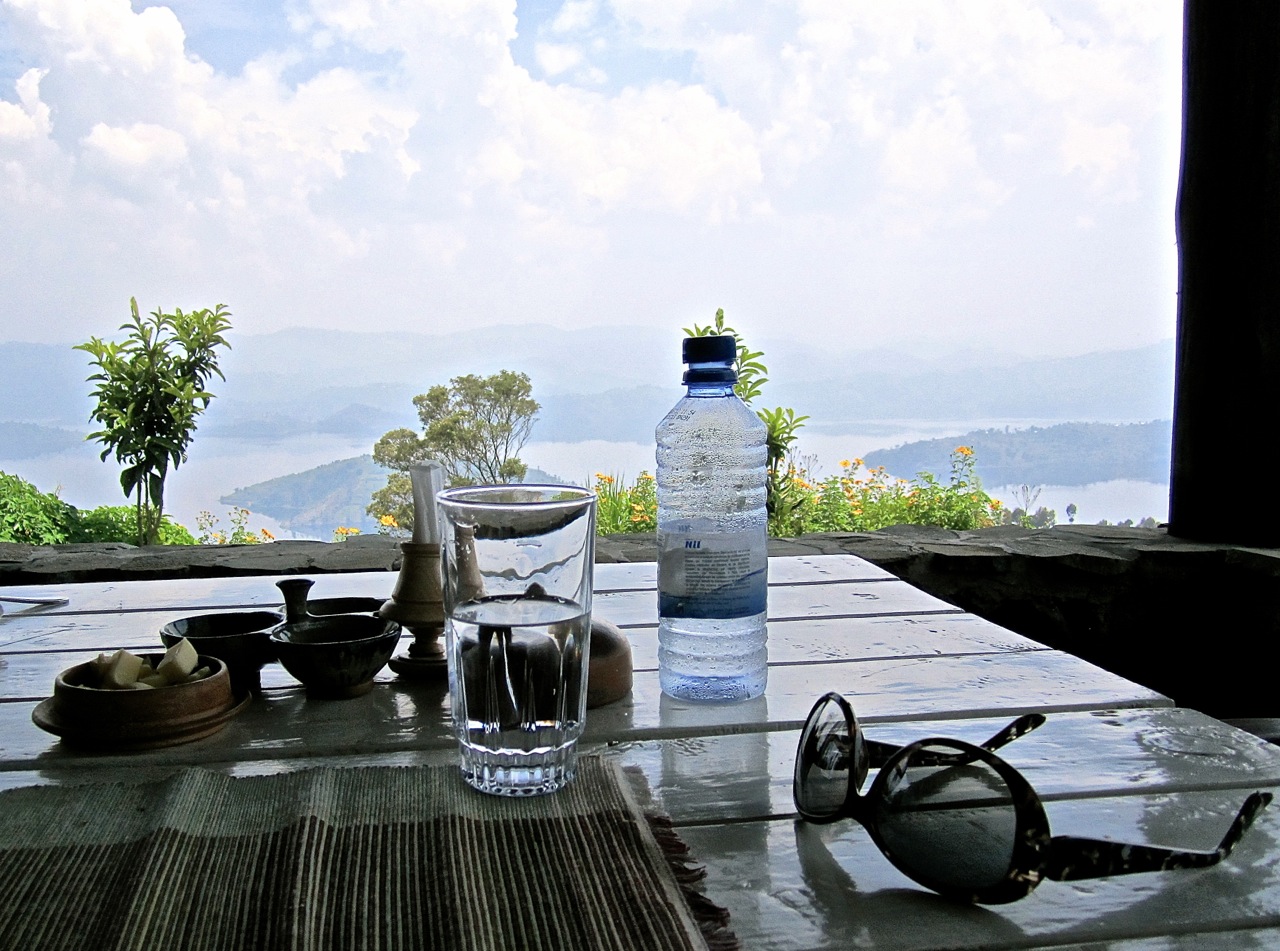
It’s sad to leave Eden.
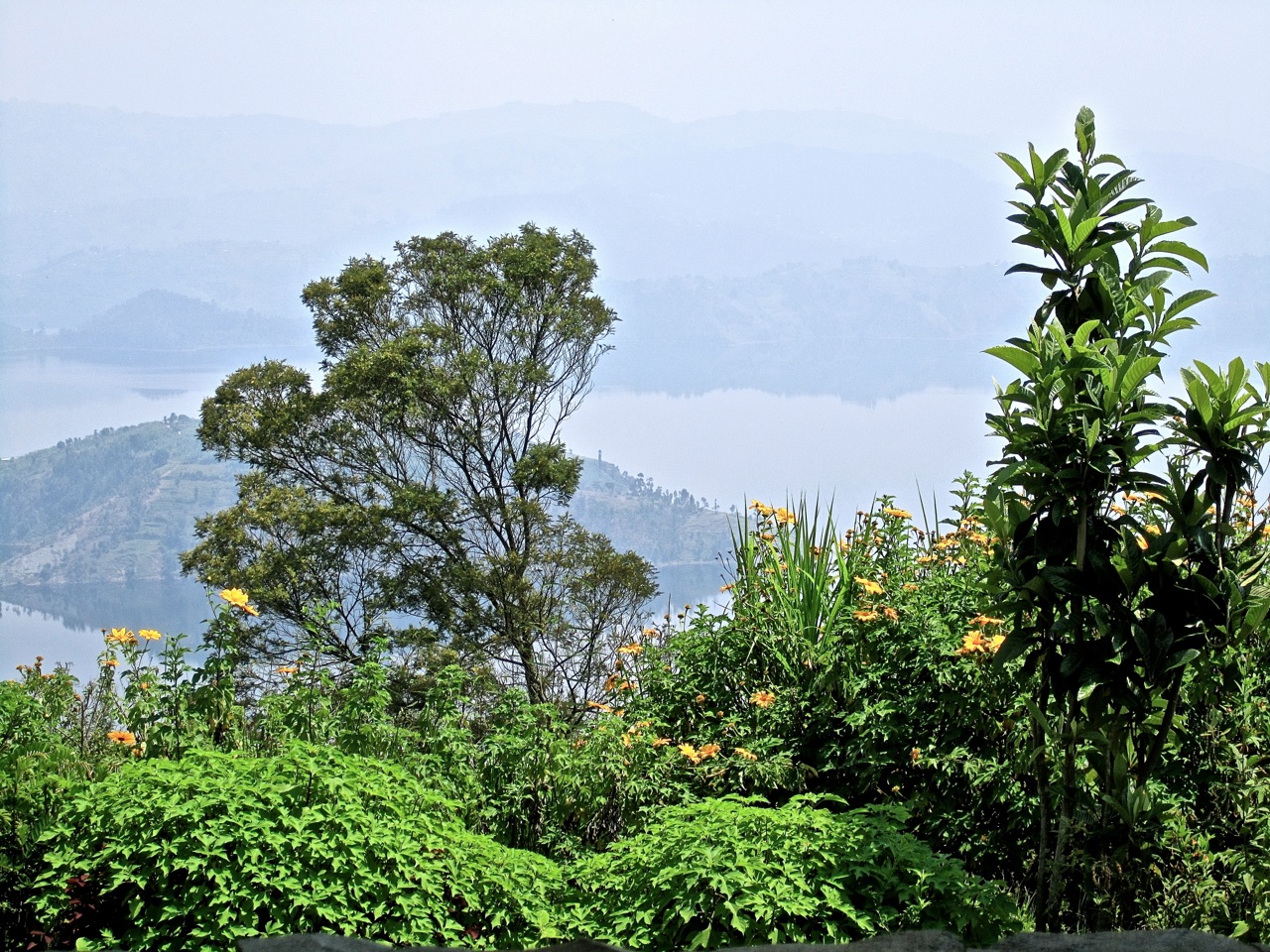
To scroll through larger versions of these images (and several more), click ‘Continue reading’ below and then on any thumbnail in the gallery.
To see more photos of Virunga Safari Lodge from a brief visit last year, click here.
 enclos*ure