Well, maybe not, but this French government ad carries an important message.
Below, the tagline in the lower right corner roughly translates as ‘eating, that’s good; throwing away, that sucks (ça craint!*).’
“I love food, I respect it.”
Chaque Français jette . . . “Every French person throws an average of 20 kgs. of food in the trash can each year.”
According to the FAO, a European generates 60-110 kgs. (130-240 lbs.) of food waste yearly; an American, 95-115 kgs. (210-250 lbs.); a person from a developing country, 6-11 kgs. (13-24 lbs.).
Among the many treasures of the Library of Congress’s online catalogue are several thousand digital images of antique photochrom prints.
The prints were colored images made from black-and-white photographic negatives transferred onto lithographic printing plates. The process was invented at a Swiss printing company in the 1880s. By the mid 1890s, it had been licensed it to many other companies, including the American Detroit Publishing Company, which had exclusive rights in the U.S.
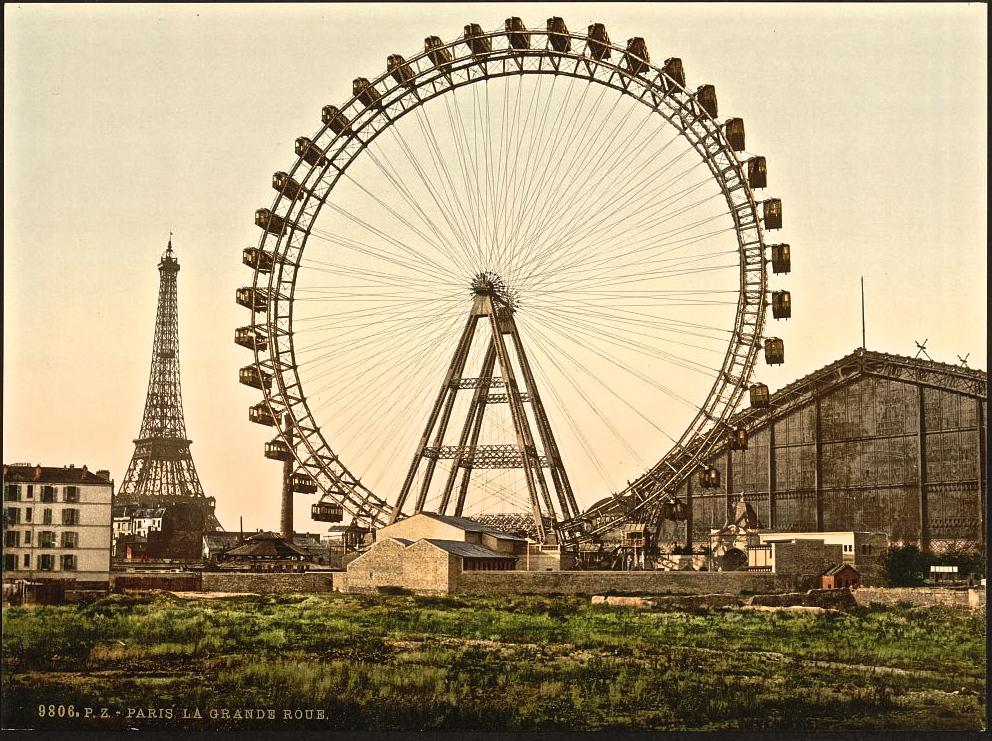
A ferris wheel (la grande roue) in Paris, near the Eiffel Tower, ca. 1890-1900.
In 1898, Congress passed an act allowing private publishers to print postcards that could be mailed for only a penny each — half the rate of a letter. Millions of photochrom postcards were purchased — and often collected in albums or framed — in the first two decades of the nineteenth century.
A tablet of lithographic limestone, known as a “litho stone,” is coated with a light-sensitive coating, comprising a thin layer of purified bitumen dissolved in benzene. A reversed half-tone negative is then pressed against the coating and exposed to daylight for a period of 10 to 30 minutes in summer, up to several hours in winter. The image on the negative allows varying amounts of light to fall on different areas of the coating, causing the bitumen to harden and become resistant to normal solvents in proportion to the amount of light that falls on it. The coating is then washed in turpentine solutions to remove the unhardened bitumen and retouched in the tonal scale of the chosen color to strengthen or soften the tones as required. Each tint is applied using a separate stone bearing the appropriate retouched image. The finished print is produced using at least six, but more commonly from 10 to 15, tint stones.
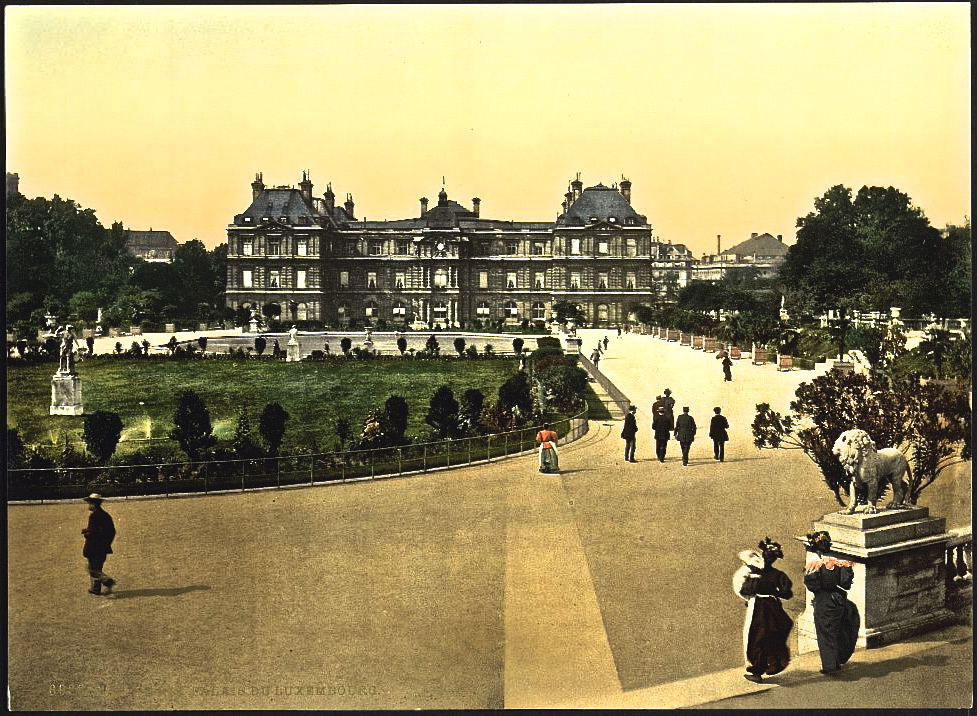
The Luxembourg Garden.
Often the printer was provided with notes about realistic colors, but sometimes he had to work from his imagination alone. However, Detroit Publishing’s catalog said that its photochrom prints joined “the truthfulness of a photograph with the color and richness of an oil painting or the delicate tinting of the most exquisite water color.”
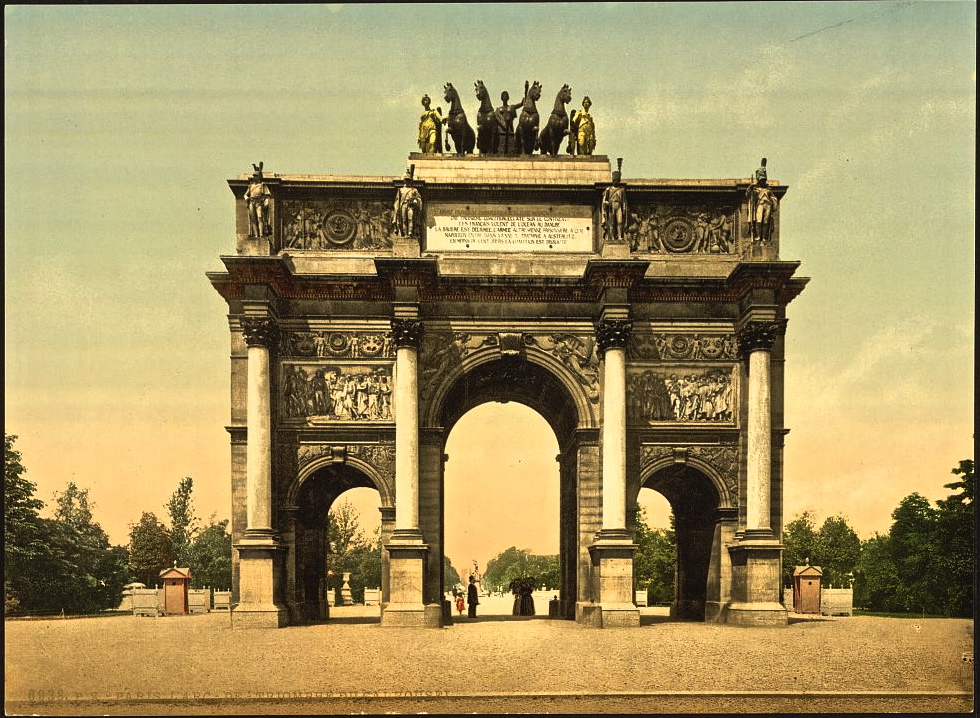
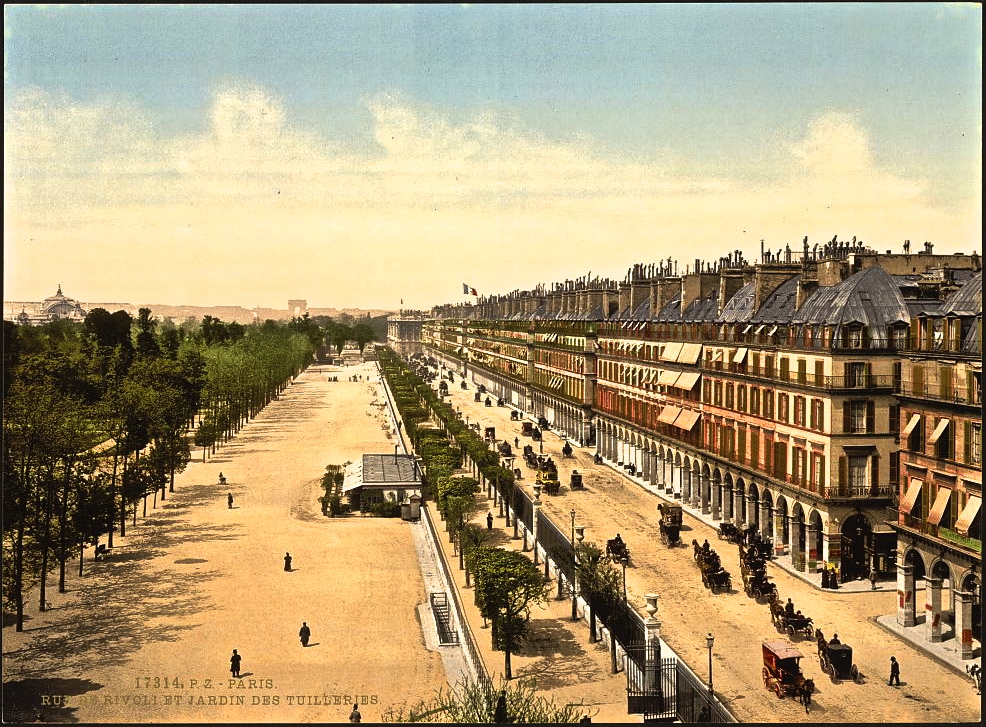
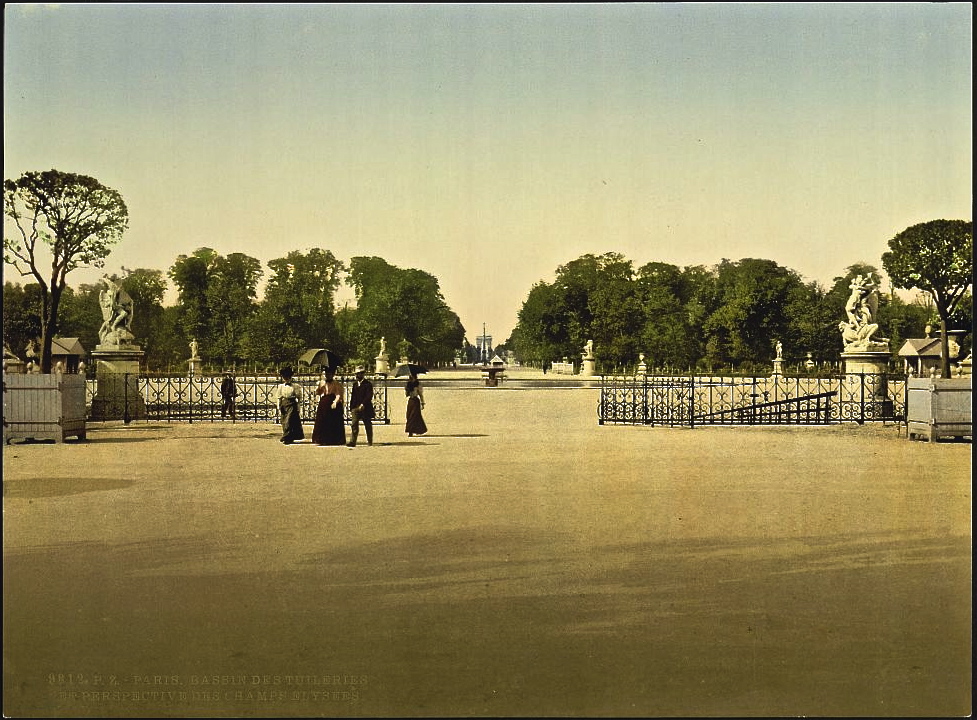
In these images of Belle Epoque Paris, the printer used ivory, pink, and apricot for the buildings and ground, quiet blues and greens for water and sky, and put a buttery light at the horizons. The tints soften and still the monumental spaces on this walk from the Louvre to the Arc de Triomphe at L’Etoile.
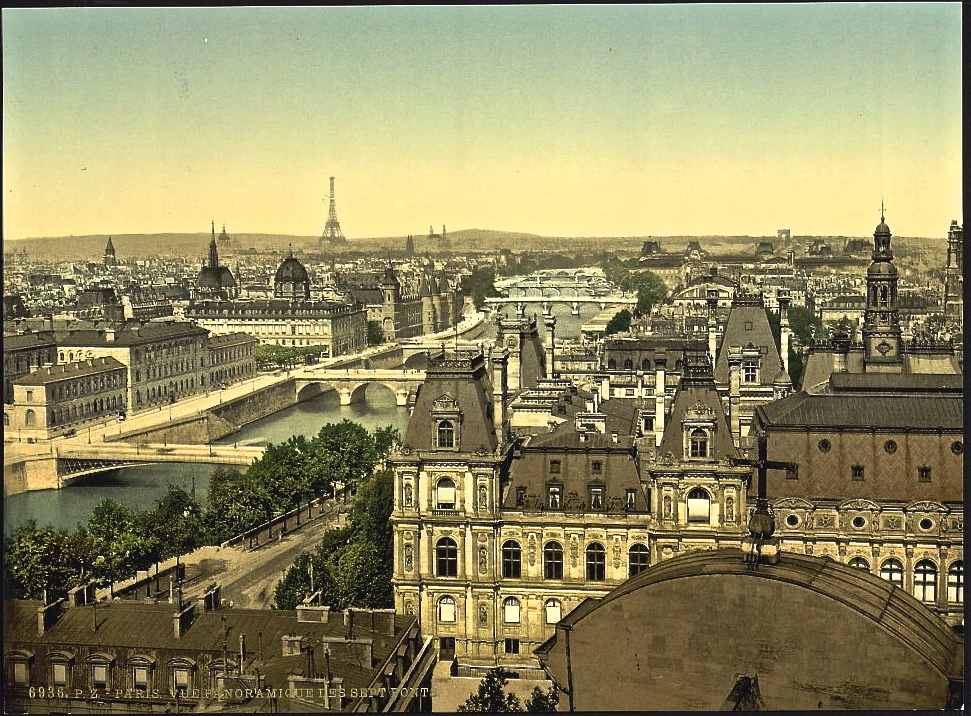
A panorama of the seven bridges over the Seine River. The Eiffel Tower in the distance was built in 1889.
(All photos were taken by the Detroit Publishing Company, ca. 1890-1900; all via the Library of Congress Prints and Photographs Division. To scroll through the images in full size, click on ‘Continue reading’ below and then on any of the thumbnails in the gallery.)
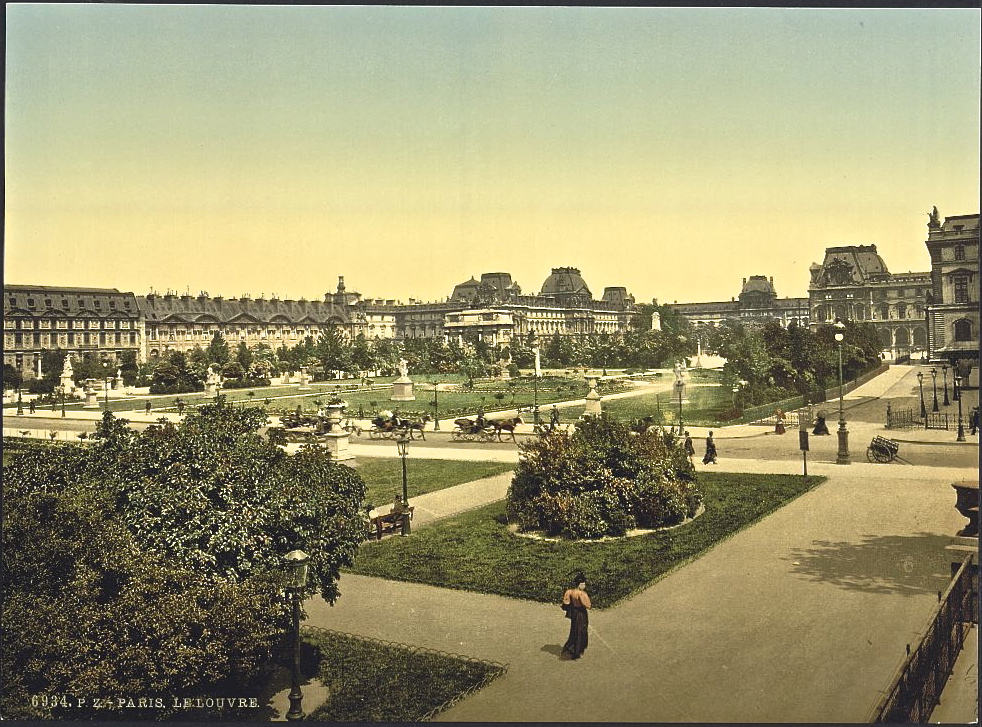
The Louvre.
The Carrousel. This arch was built in 1805 to celebrate Napoleon’s victories.
Rue de Rivoli. The arcades and shops along the street were built between the early 18th century and the 1850s.
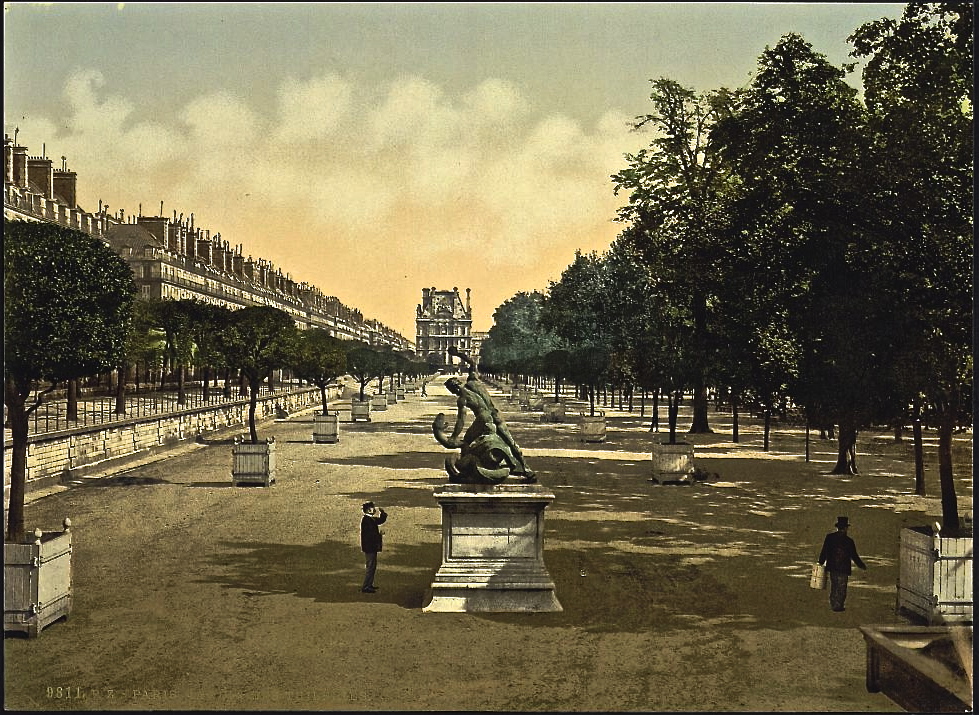
The Tuileries Garden. Its name came from the tile makers (tuileries) who were removed from the site on Catherine de Medicis’s orders so that she could build a (later-destroyed) palace and grounds. The palace garden was redesigned in the 17th century by André Le Nôtre for Louis XIV.
The Tuileries Garden.
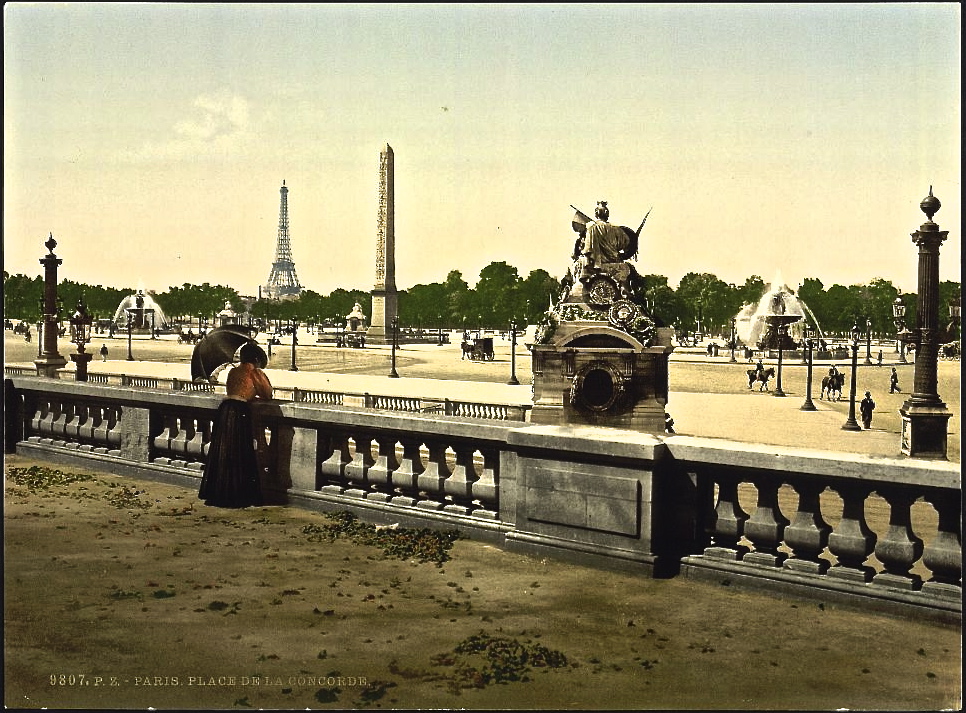
Place de la Concorde. During the revolution, the guillotine was placed here and took over a thousand lives. Later, the space was named la Concorde in a gesture of reconciliation. Since 1833, its central feature has been the 3,200-year-old obelisk from Luxor, Egypt.
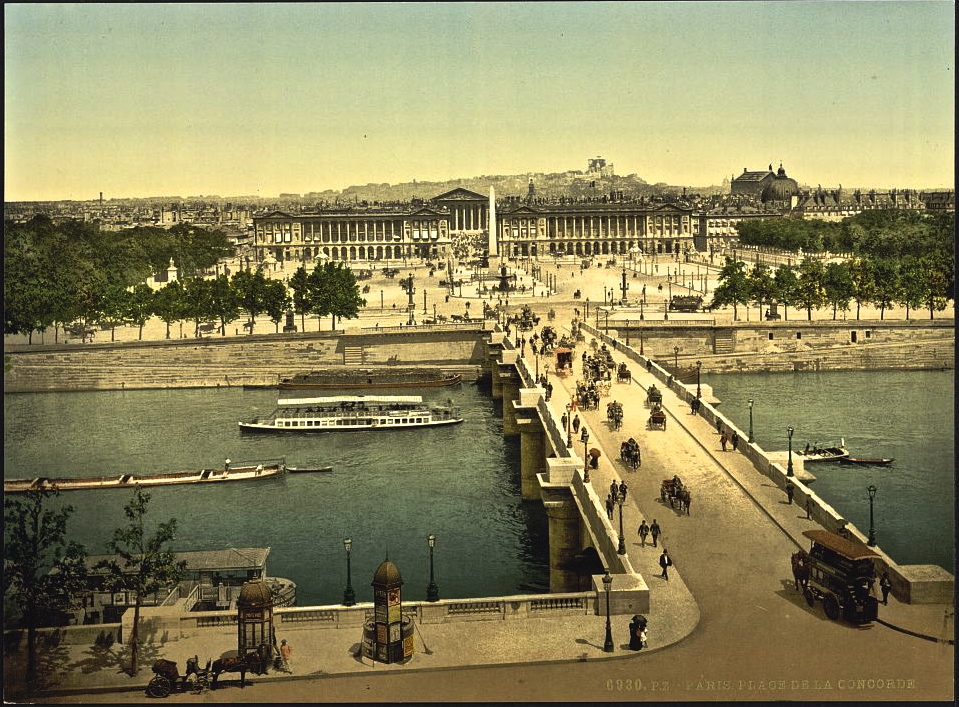
Place de la Concorde and Pont (bridge) de la Concorde.
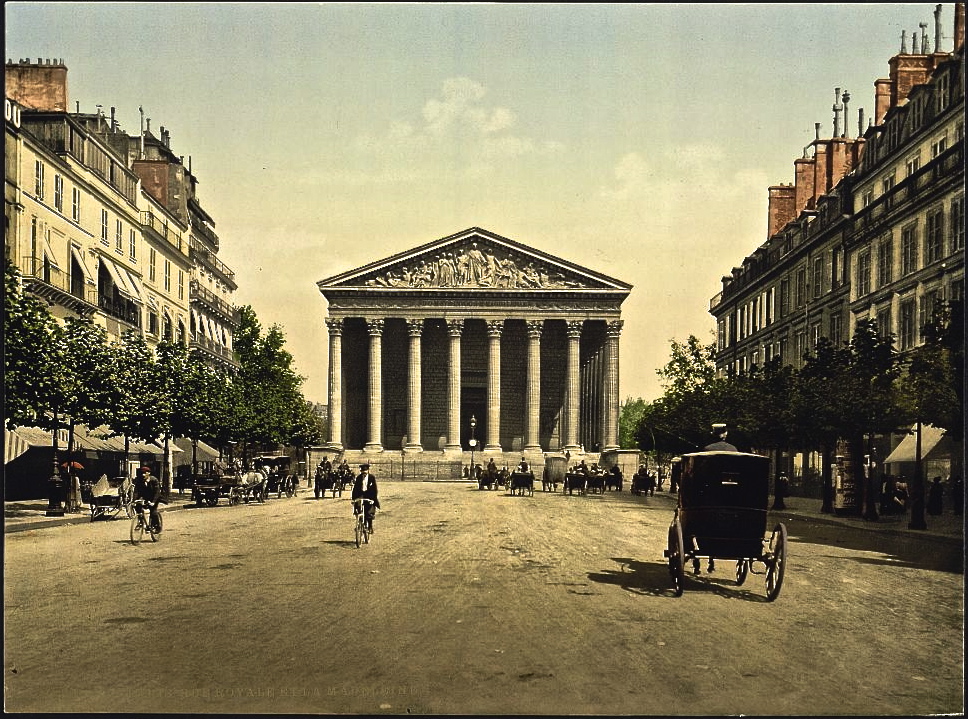
Rue Royale and Place de la Madeleine. This church is dedicated to Mary Magdalene. Its construction began in 1764, but it was not consecrated until 1845.
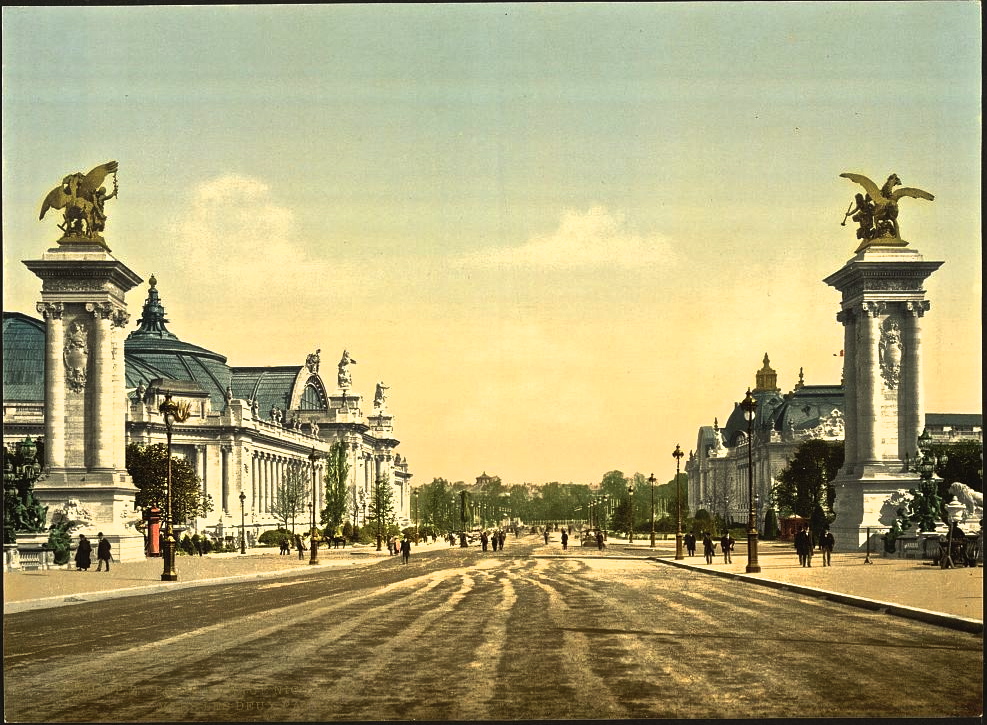
Ave. Napoleon III (now Ave. Winston Churchill) and the Grand Palais (left) and Petit Palais (right). The two display halls were built between 1896 and 1900 for the Universal Exhibition of 1900.
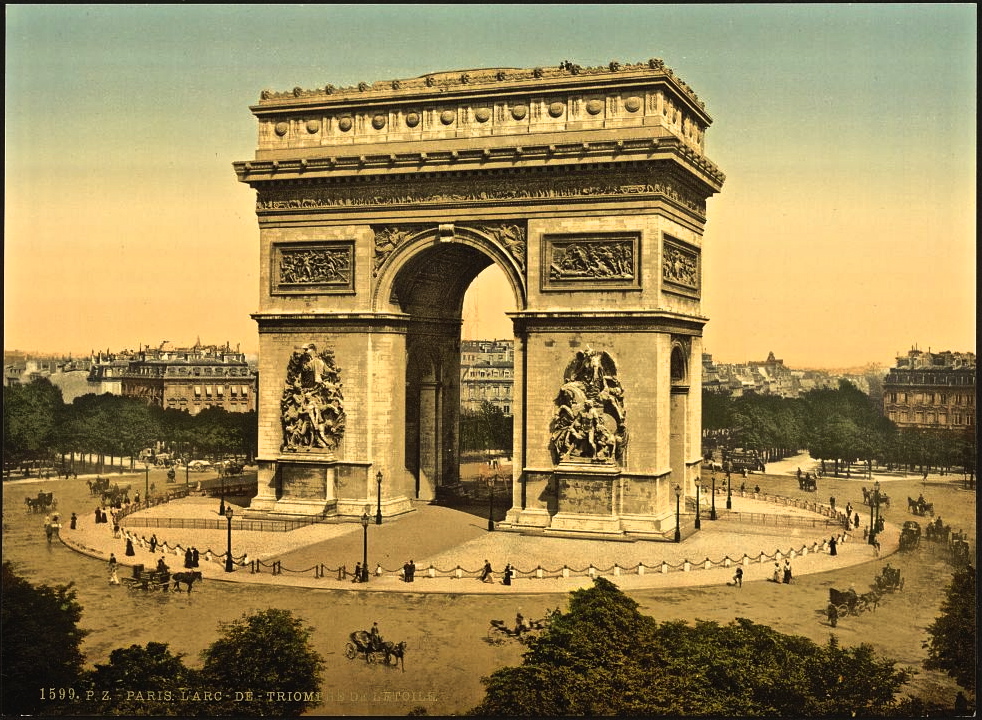
The Arc de Triomphe. The first stone of the arch was laid in 1806, but it was only completed in 1836 and dedicated to the French army.
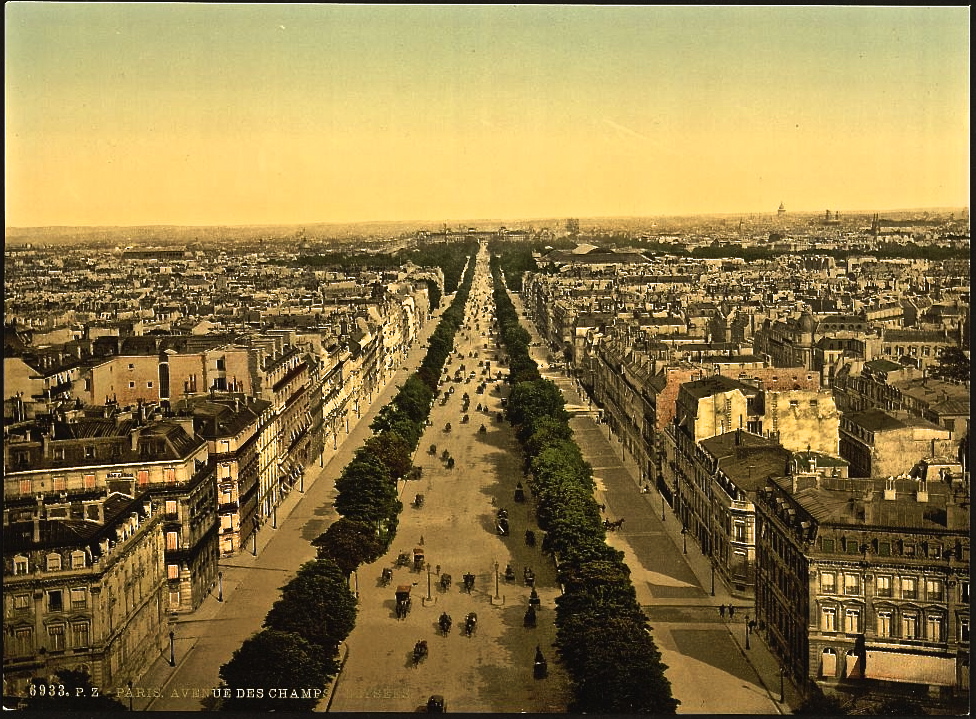
Avenue Champs Elysees, looking back toward the Tuileries Garden and the Louvre. The tree-lined boulevard was originally designed about 1667 by André Le Nôtre to extend the view from the Tuileries.
Each time we’ve travelled to the north of Rwanda, we’ve passed the small Chinese cemetery in the Rulindo District. Last month, we stopped for a few minutes.
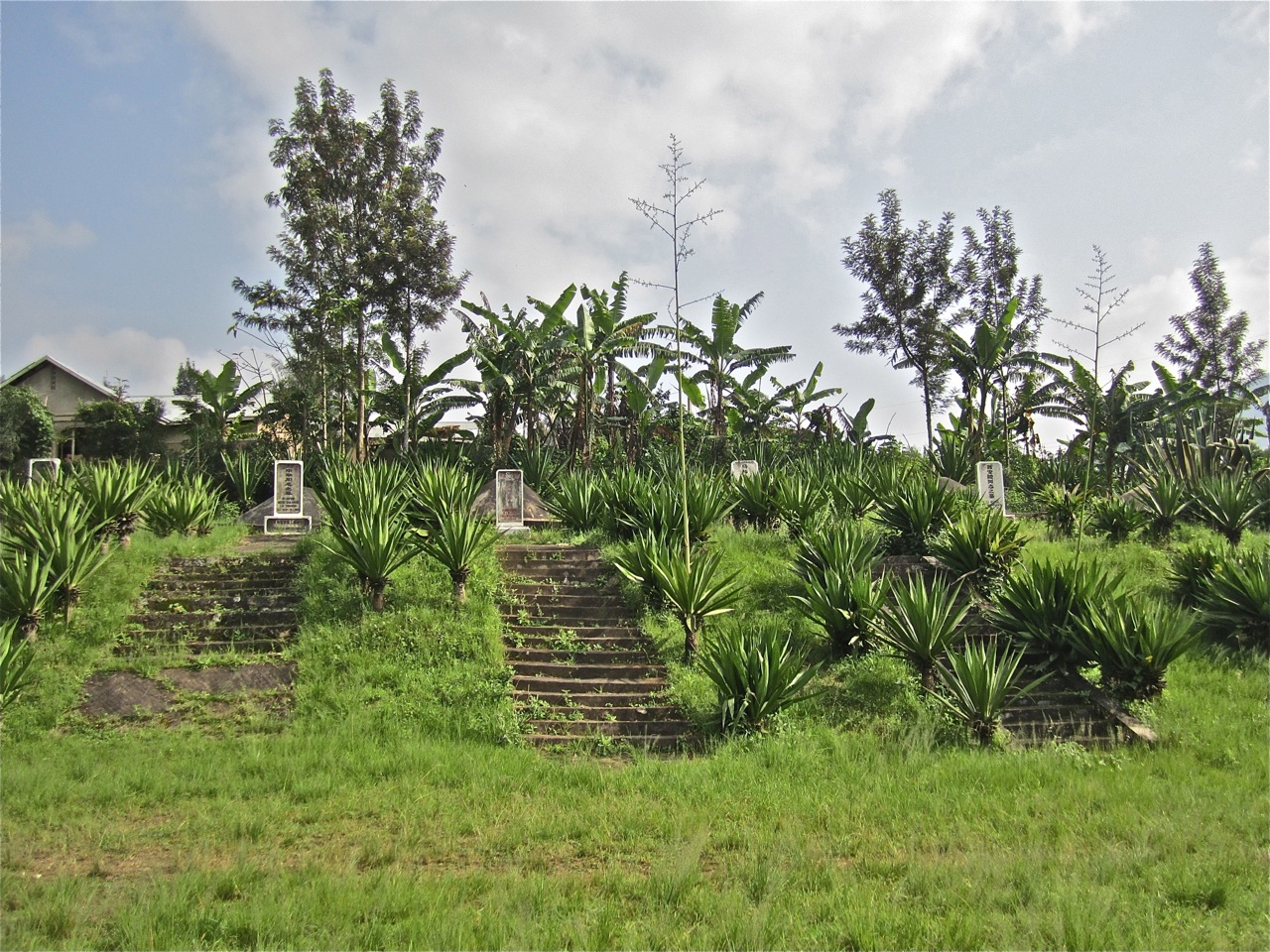
The cemetery is located just off the road to Muzanze, about 50 minutes from Kigali. It holds the remains of 10 Chinese citizens who died in Rwanda during the 1980s and 1990s, while they were working on development projects of road construction or health services.
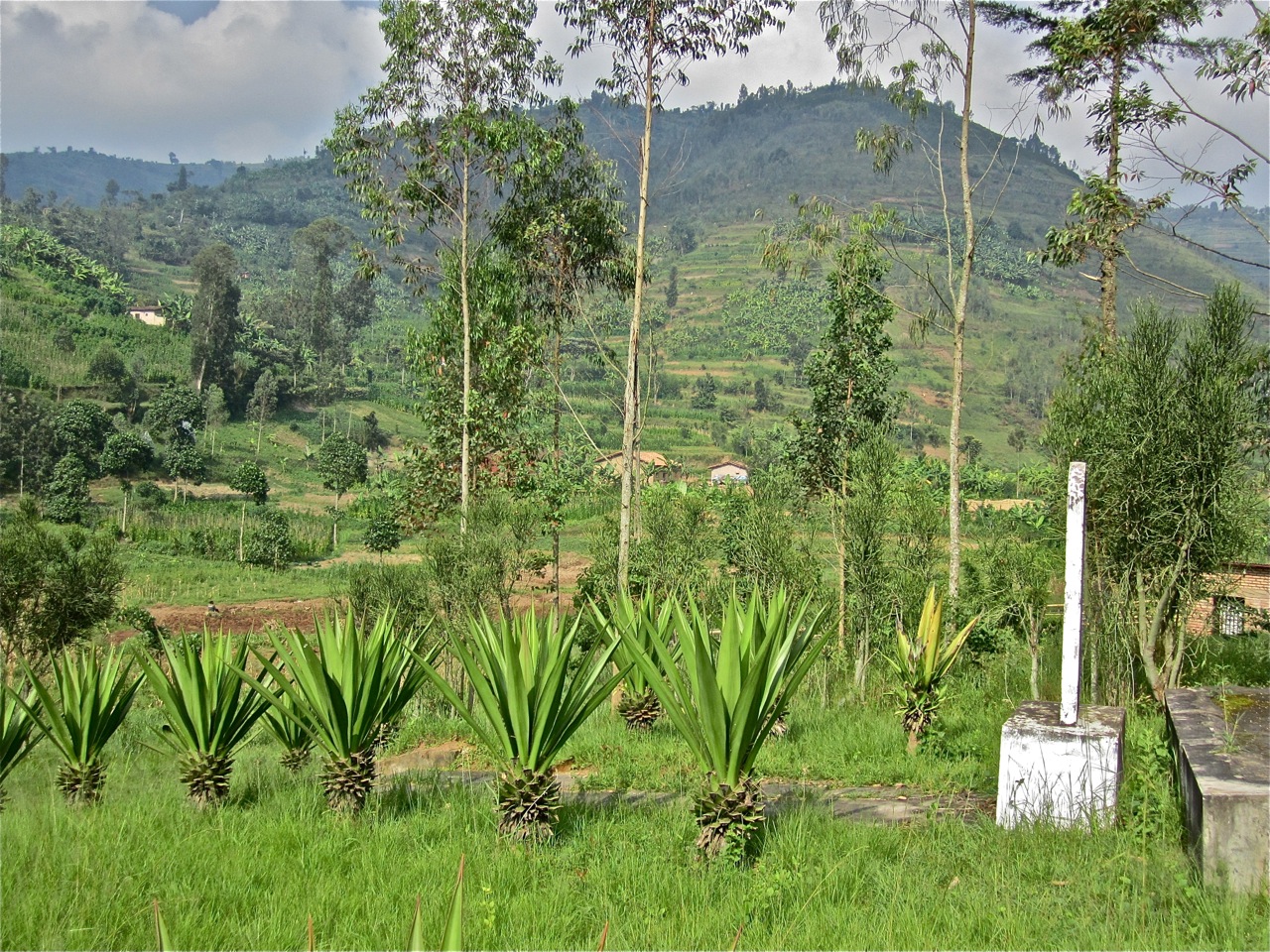
The graves are in a row near the top of a hill, with a set of stairs leading up to each one.
The material elements are now-weathered concrete, grass, and agaves.
The arrangement is simple, the effect poignant.
The cemetery is cared for, and the Chinese community, led by Ambassador Shll Zhan, held a ceremony there for the Qingming Festival on April 5 of this year.
When I looked at these pictures, I remembered two photos I had taken in 2007 of another small, touching cemetery garden. It holds the graves of eighteen Algerian retainers who had followed their Emir into imprisonment in France in 1848.
Abd al-Qadir and his household were held in the Château d’Amboise in the Loire Valley. Those who died before he was released in 1852 were buried there.
The memorial garden on the grounds of the château is beautiful. It was built in 2002, according to one source, but I have been unable to find out any more about it.
The square markers are set in a rectangle planted with low mounding plants. A hedge of rosemary diagonally intersects the space.
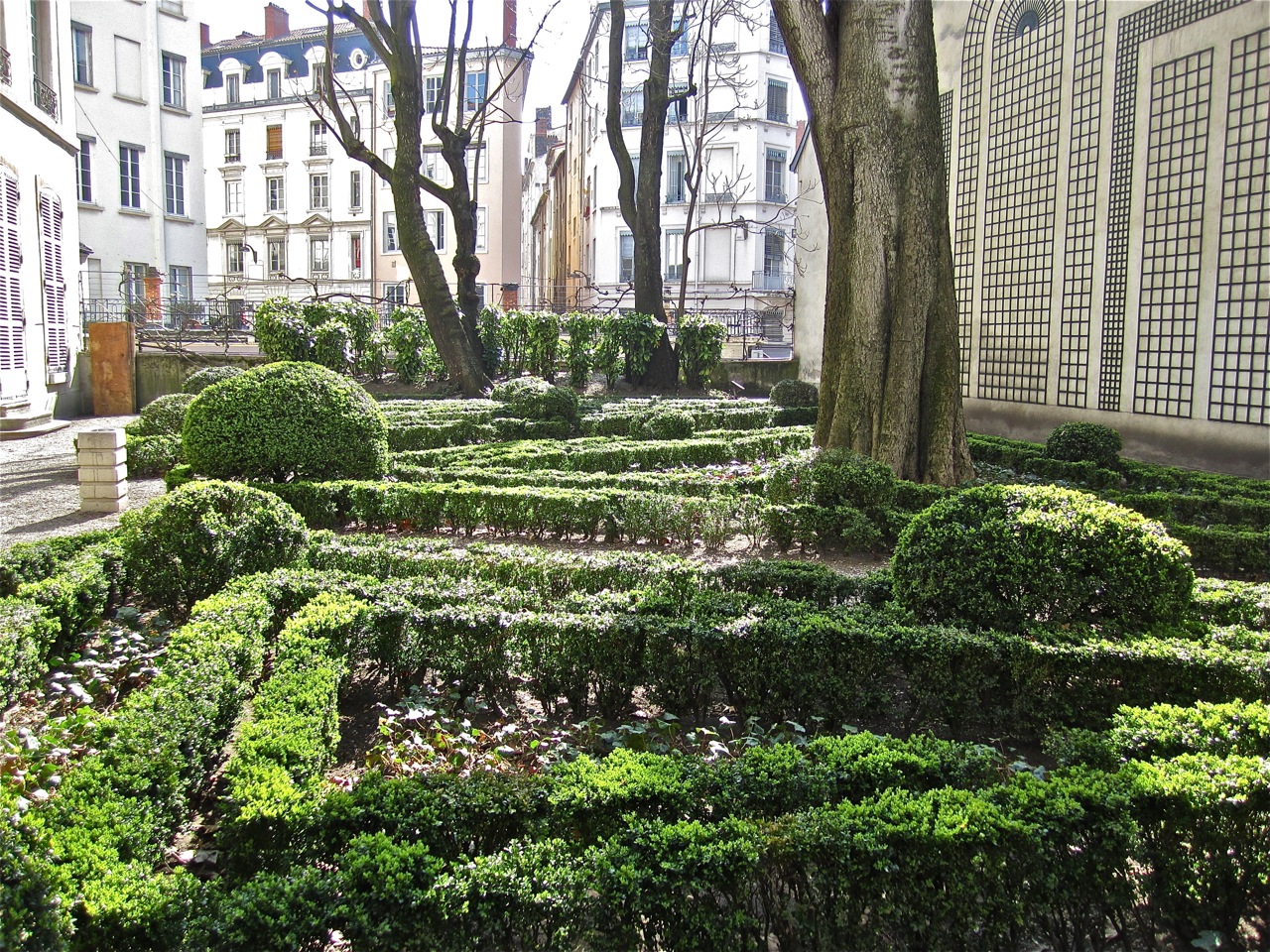
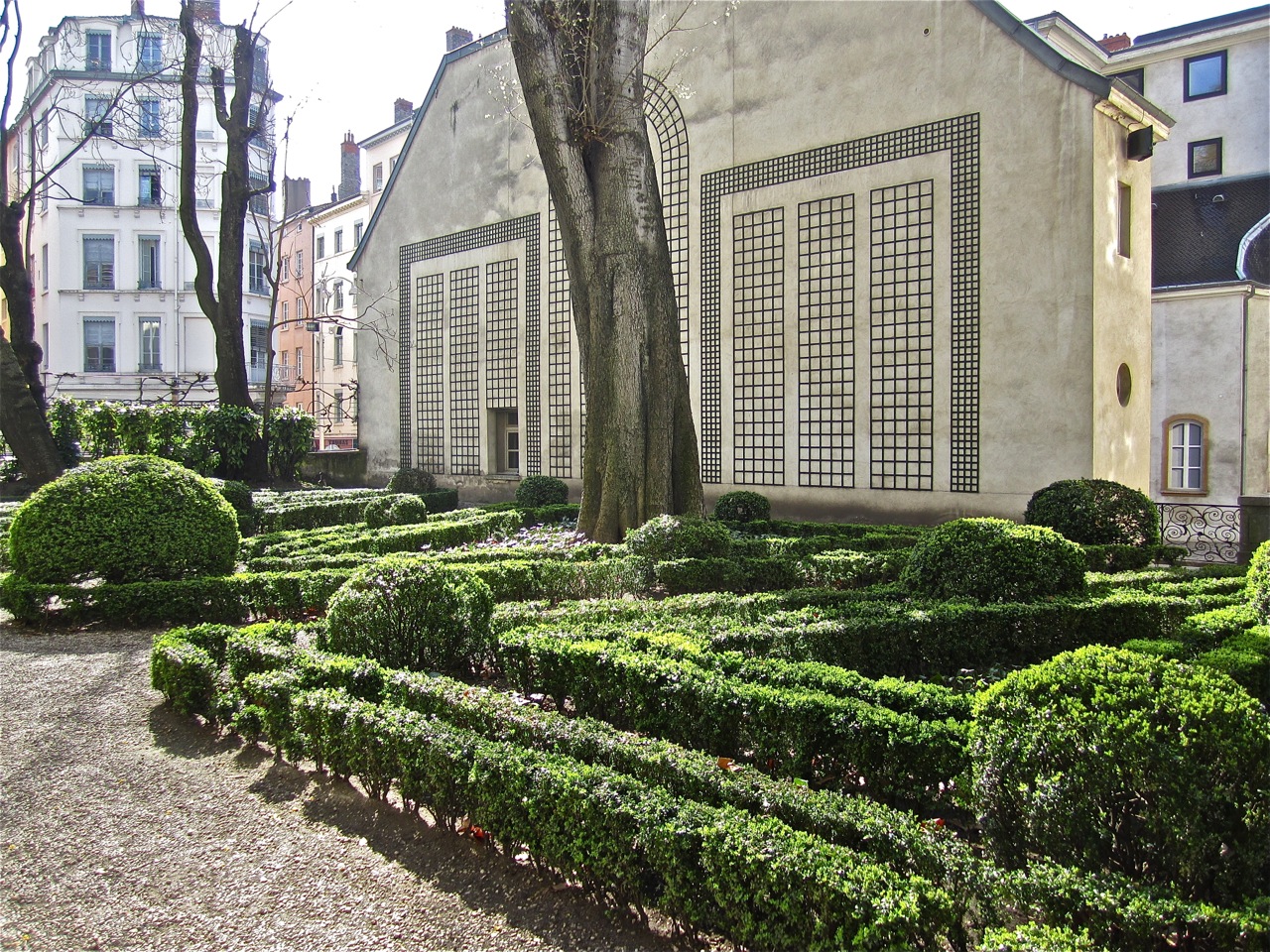
Its windows overlook a small traditional parterre — or would, were they not covered by protective shades and gorgeous silk drapes.
The boxwood hedges are laid out in concentric triangles, punctuated by clipped balls. Ivy fills the centers, and acuba is planted at either end of the space.
Inside, the museum displays beautiful complete rooms of paneling, lighting, and furniture taken from 18th c. French residences, as well as ceramics and silver.
Next door, The Textile Museum exhibits clothing, tapestries, and carpets — from ancient Egypt and Asia to modern France.
I nearly had a religious experience in its gallery of silk Persian garden carpets hung against deep gray walls.
While I was in the garden, I also remembered the triangular patterns in the Rwandan Royal Palace garden in Nyanza.












 enclos*ure