The Sunday porch: pots and pans

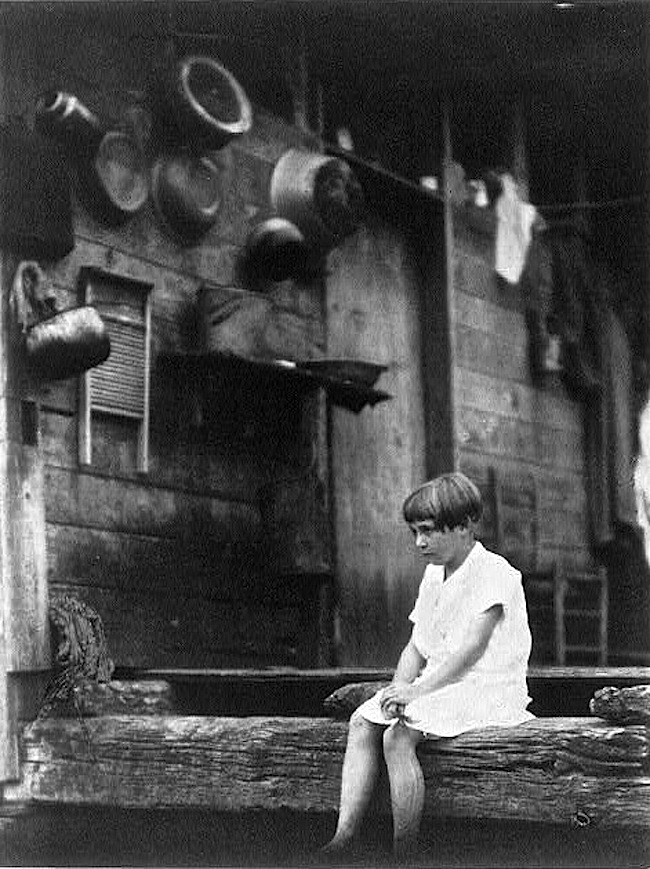
Girl on Porch, D. Ullman, Library of CongressGirl seated at the end of a porch,” ca. 1930, by Doris Ulmann, via Library of Congress Prints and Photographs Division.

A well-to-do New Yorker, Doris Ulmann trained as an art photographer with Clarence H. White in the 1910s. In the 1920s, she began traveling to the southeastern United States to photograph rural people, particularly in the hills of Kentucky and the Sea Islands of South Carolina — people “for whom life had not been a dance.” She also documented Appalachian folk arts and crafts, working with musician and folklorist John Jacob Niles.

The Sunday porch: Piazza San Marco

This slideshow requires JavaScript.

On Monday. . . running a little late this week.

We spent December 23 to 27 in Venice, Italy. The photos above show the arcades along Piazzetta di San Marco and Piazza San Marco on Christmas and on Boxing Day (in fog).

The current colonnaded buildings enclosing the square on three sides (and the west side of the Piazzetta) were built in the 16th century.  Their arcades front a number of coffee houses, including two of the oldest and most famous in Italy: Florian (1720) and Gran Caffè Quadri (1775).

Of course, we had due caffè espresso at Florian, which was easily possible because tourists are far fewer during Christmas week. The coffees were €6.50 each, but they were very good (and there was a cookie and water).

(The water carafe was adorable, and I now regret that I didn’t buy one and hold it on my lap on the plane.  I’m very tempted to order it from their website. Also, check out the wonderful terrazzo floor at their entrance here; I forgot to take a photo of it.)

To scroll through more (and larger) images, click on ‘Continue reading’ and on any thumbnail in the gallery.

Continue reading “The Sunday porch: Piazza San Marco”

‘Tis the season, Stuttgart

Cut long-stem amaryllis flowers.Almost every German city and town puts on an elaborate Christmas market during the Advent season.

The Stuttgart market — held since at least 1692 — is an excellent one. It made The Telegraph’s top 10 list this year.

As I walked around it on Thursday, taking these snapshots with my phone, I wished that I could also capture its wonderful smells: bread and pastry, sausage, and hot spiced wine (Glühwein).

Click on any thumbnail below to scroll through all my (larger) photos and captions.

Vintage landscape: repurposed

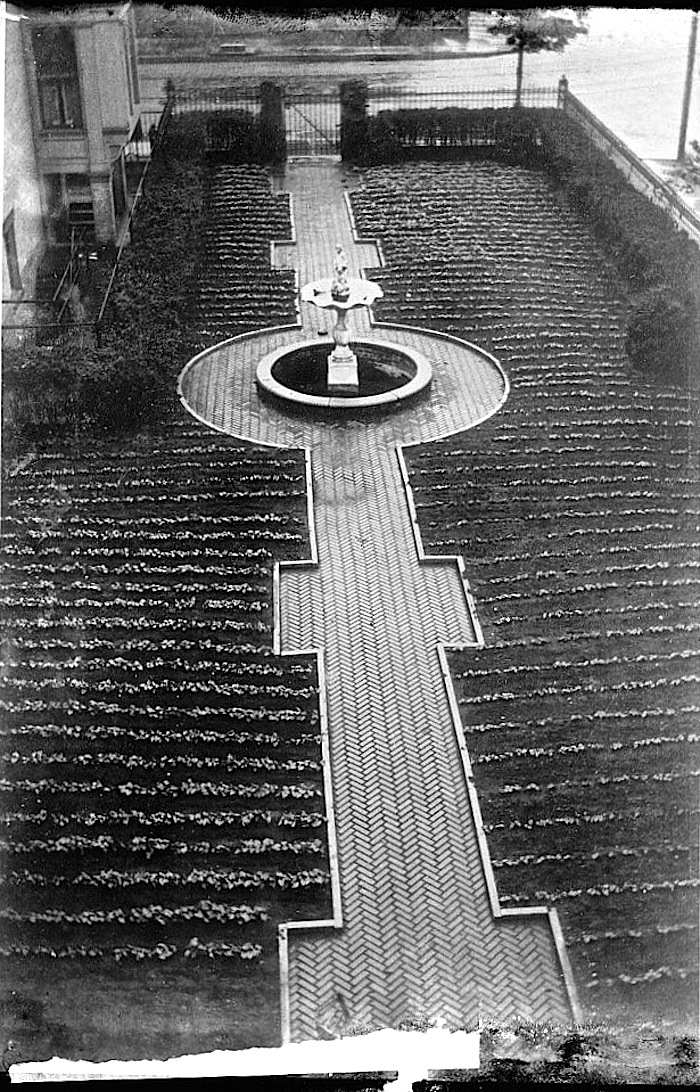
Formal victory garden, ca. 1918, Library of Congress

World War I victory garden in a formal setting, location unknown,* ca. 1917 – ca. 1920, by Harris & Ewing, via Library of Congress Prints and Photographs Division.

The photo seems to have been taken for the National War Garden Commission, also known as the National Emergency Food Garden Commission.

The organization was created in early 1917 by Charles Lathrop Pack.  It sponsored a campaign of pamphlets, posters, and press releases aimed at “arous[ing] the patriots of America to the importance of putting all idle land to work, to teach them how to do it, and to educate them to conserve by canning and drying all food that they could not use while fresh.”

Like it or not, what you do with the land around your house tells the world what sort of citizen you are.

Abby Adams, The Gardener’s Gripe Book

*Harris & Ewing was located in Washington, D.C.

Streifzug 7: Filderkraut festival

I’m sorry there was no Sunday porch yesterday. . .
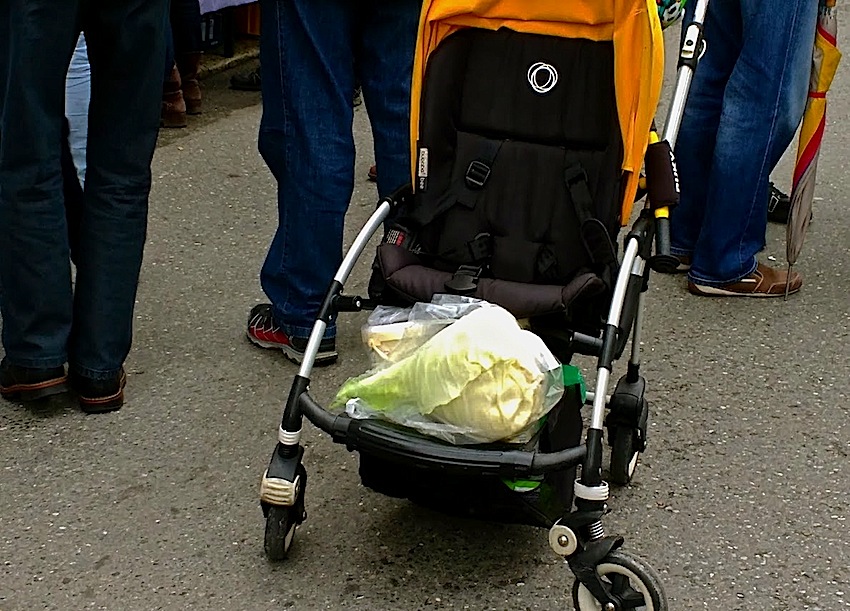
8 Cabbage Fest, enclos*ure

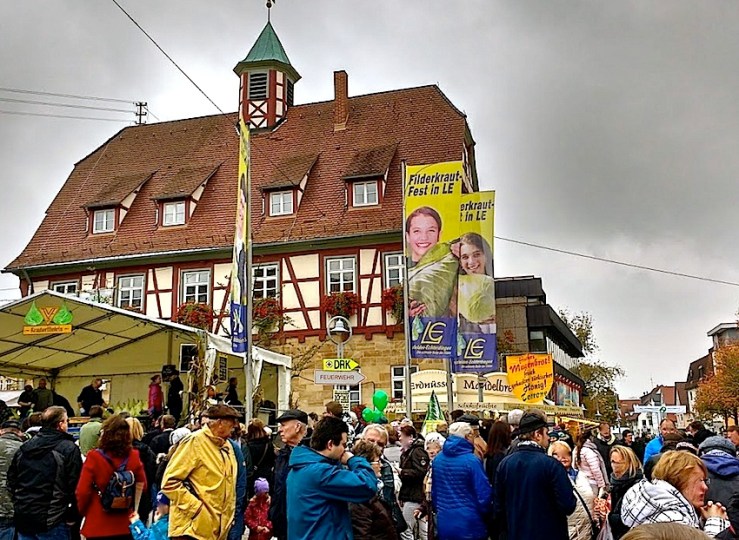
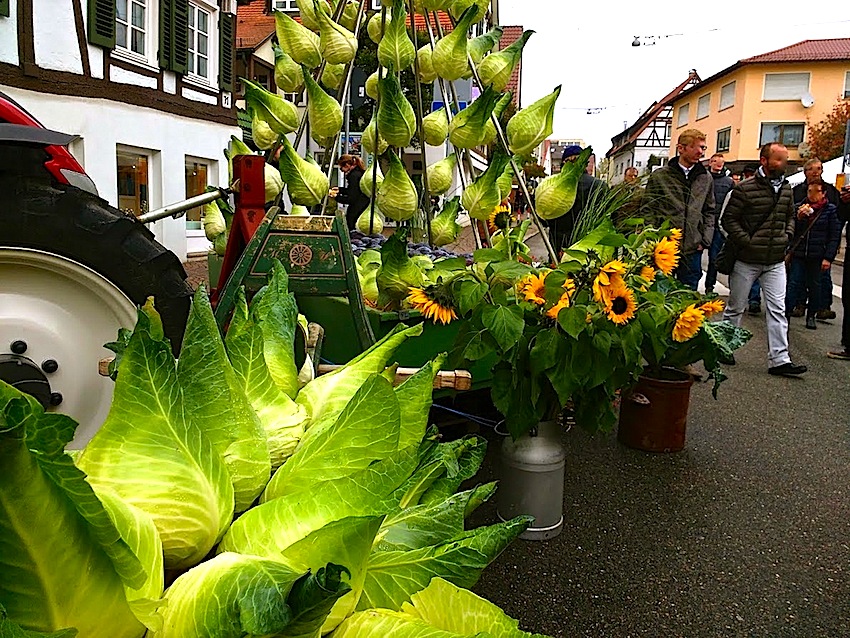
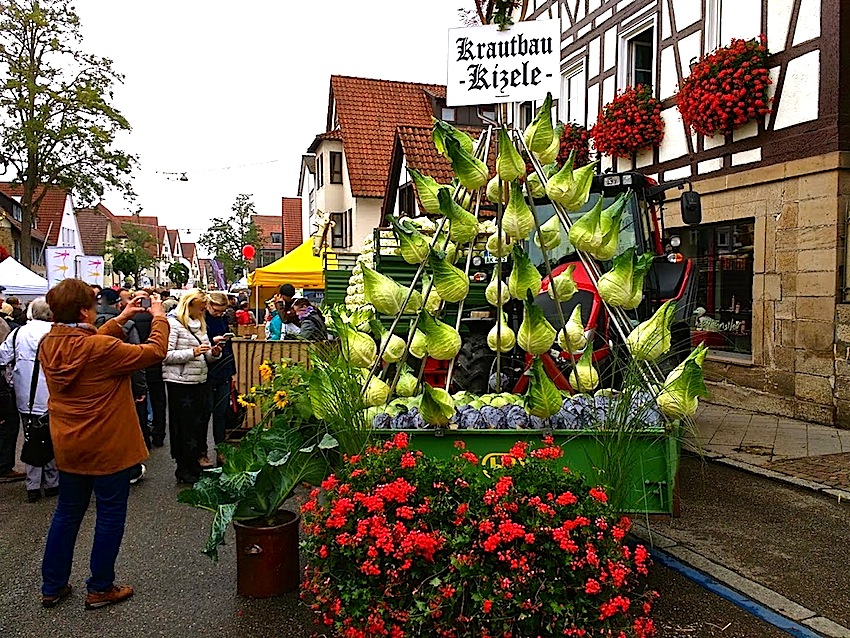
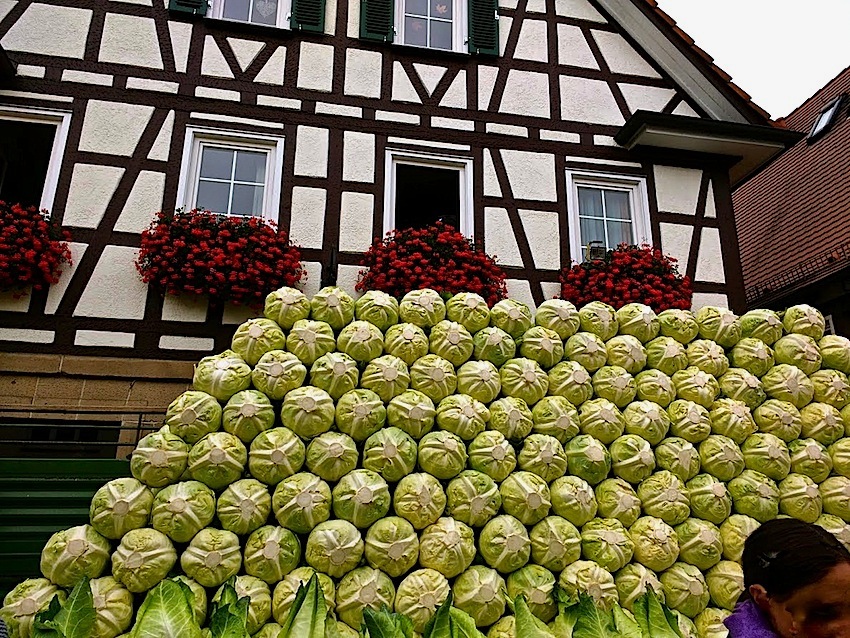
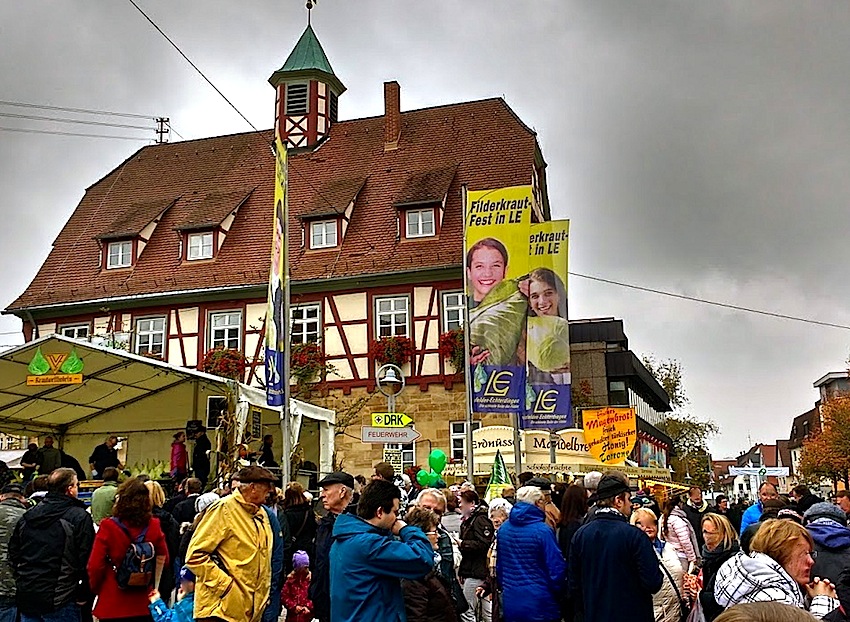
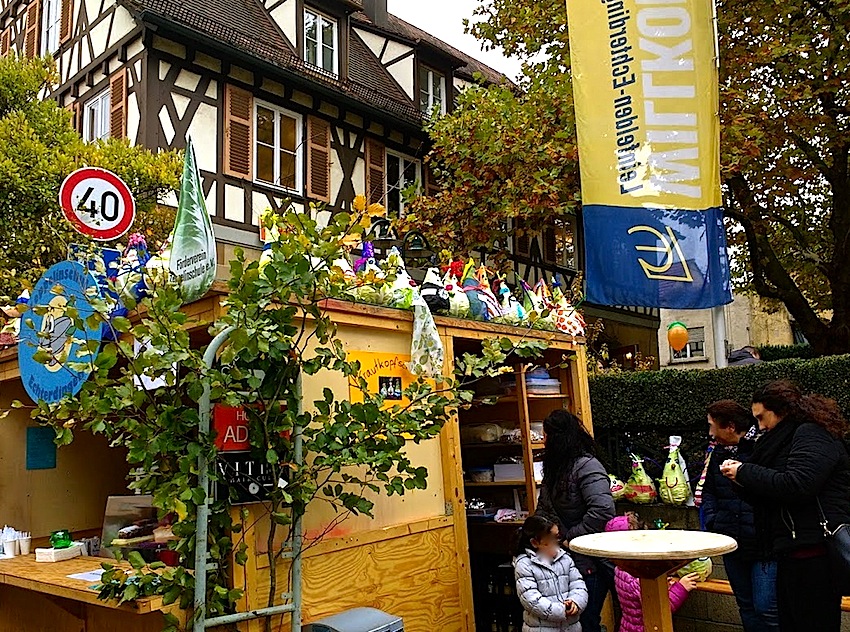
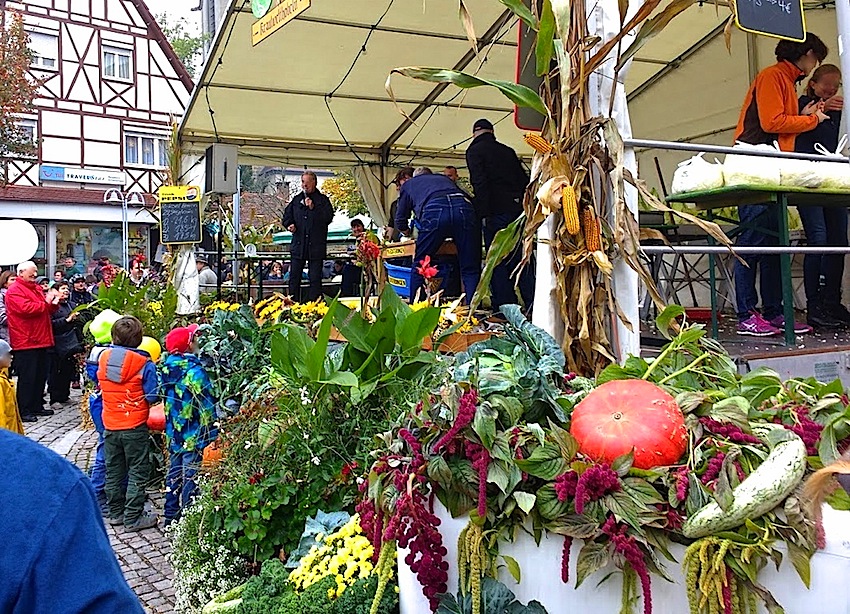
I was at the 37th annual Filderkraut-Fest in Leinfelden-Echterdingen, a town near the Stuttgart airport.

There are very few weekends in the Stuttgart area without a local fest celebrating some aspect of the season.  Since the end of summer, we have celebrated the wine harvest, the potato harvest, the pumpkin harvest, and now that of the Filderkraut.

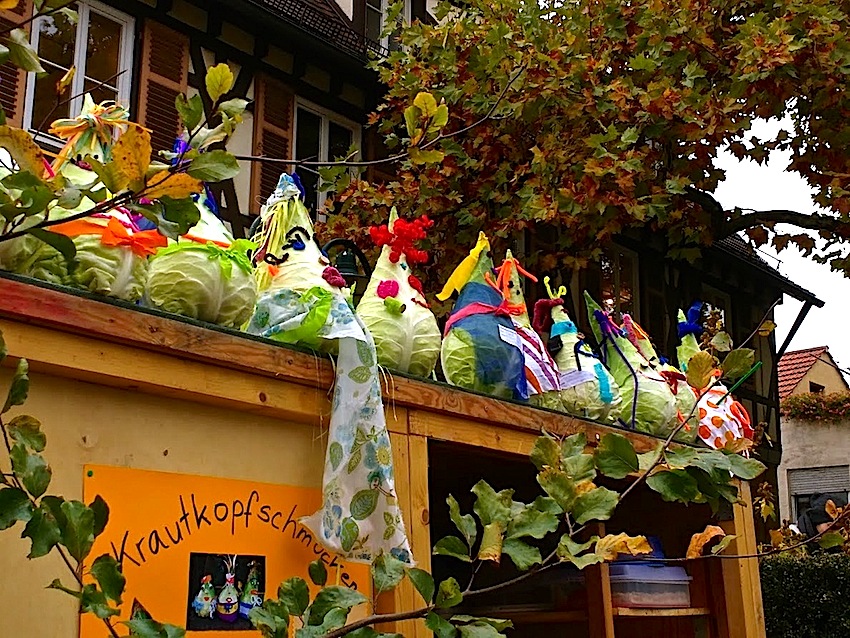
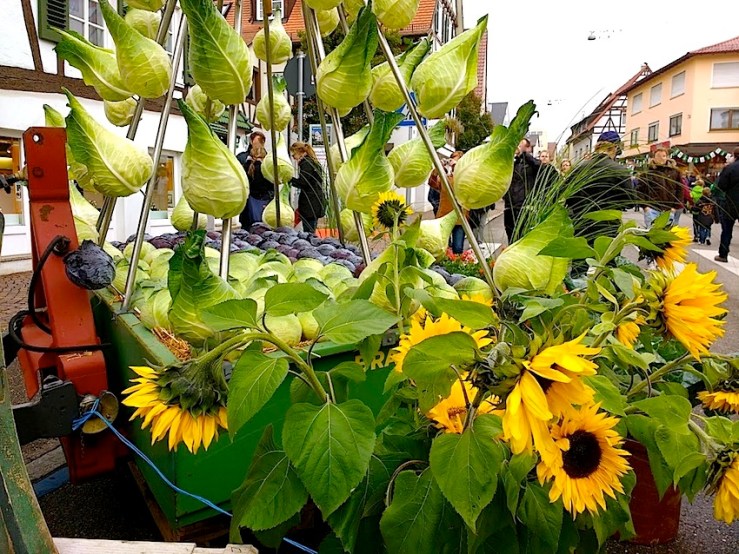
This very fine variety of cabbage has a distinctive pointy shape.*  It grows particularly well in the rich loess-loam of the Filder plateau, which surrounds the airport.
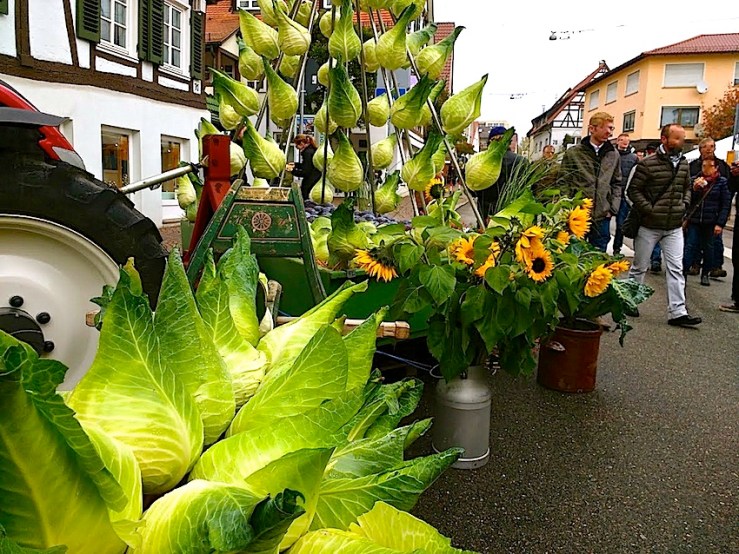
7 Cabbage Fest, enclos*ure

The fest was opened on Saturday by Mayor Roland Klenk, who tapped the first keg and, after about 40 taps, sprayed onlookers with beer.  “That’s not my core competency,” he reportedly said.

Tapping the first keg seems to be the German equivalent of throwing out the first ball in the U.S. — an honor fraught with peril for a politician.
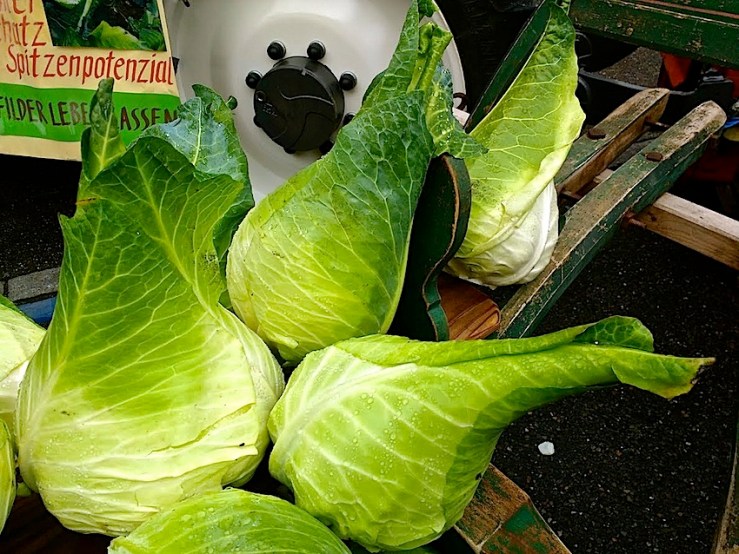
9 Cabbage Fest, enclos*ure

This was not an easy year for cabbage growers, according to an article in the Stuttgarter Nachrichten.  It was too hot and dry, and the heads were smaller than usual.
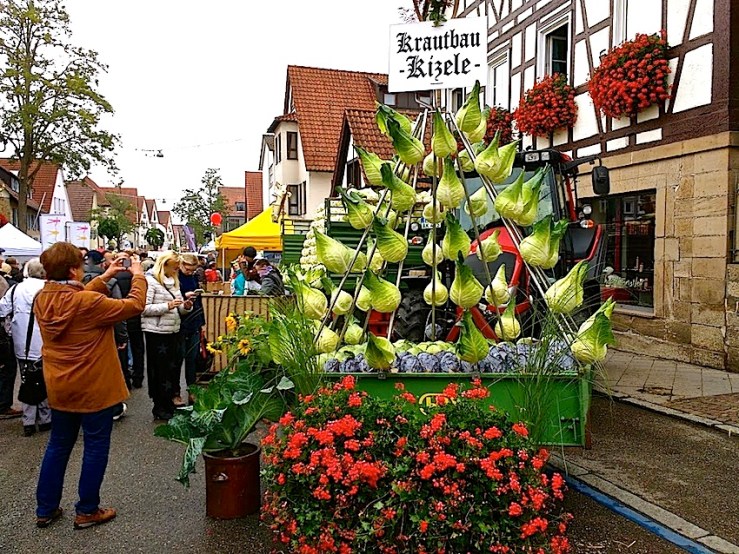
10 Cabbage Fest, enclos*ureAbove: “Kizele’s cabbage display.”

3 Cabbage Fest, enclos*ure

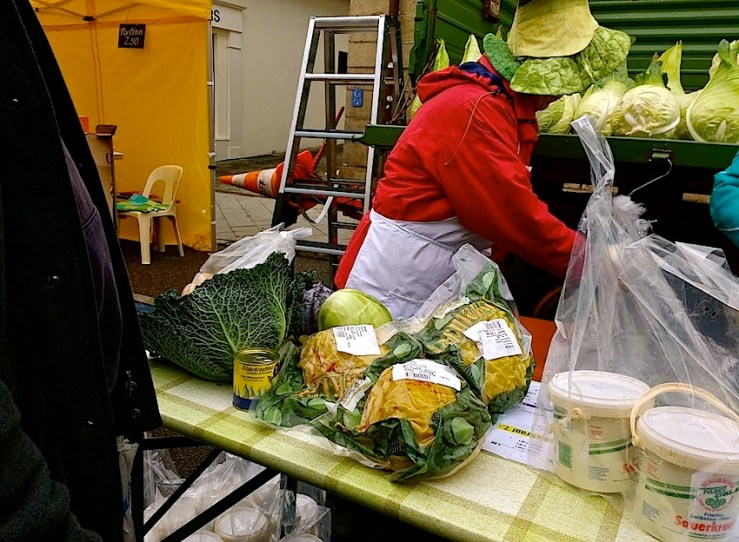
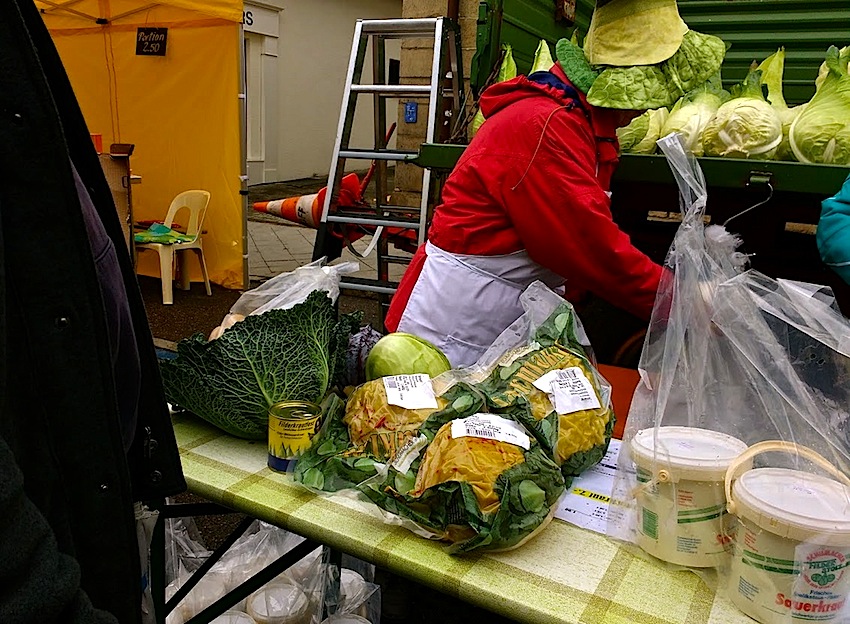
4 Cabbage Fest, enclos*ureAbove: whole heads of fermented cabbages on the table.  Note her hat.
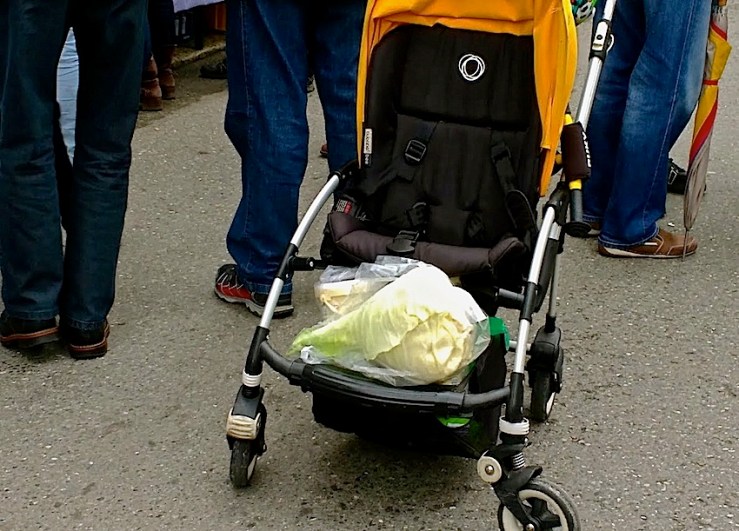
15 Cabbage Fest, enclos*ure

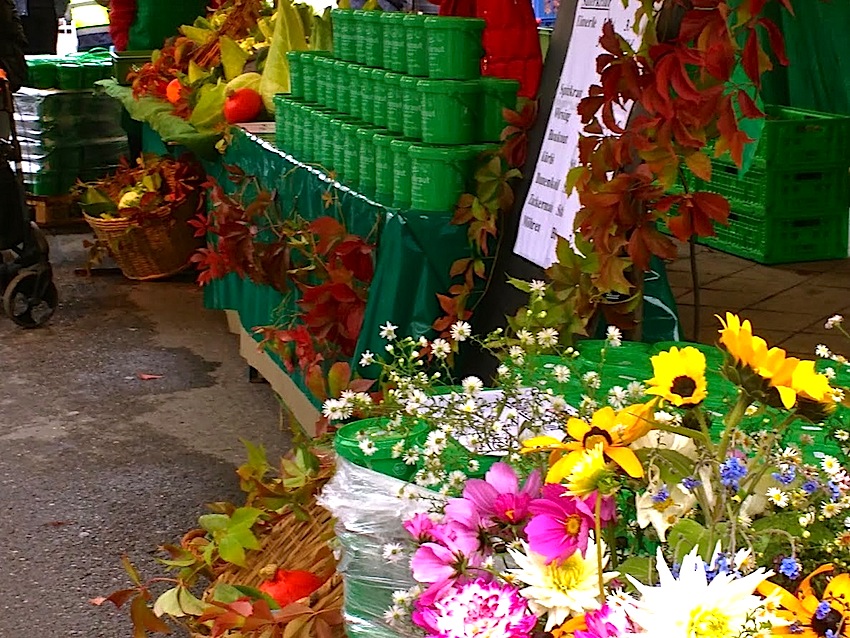
14 Cabbage Fest, enclos*ureAbove: tubs of sauerkraut to take home.
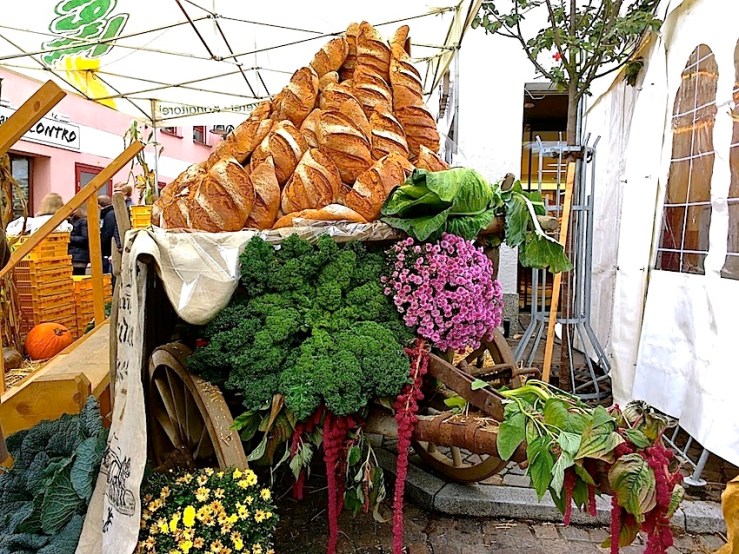
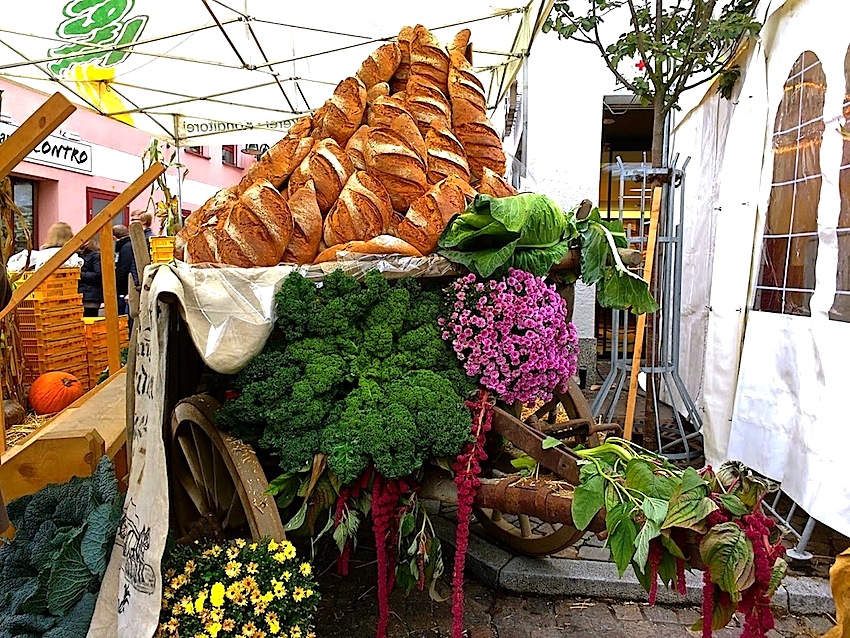
22 Cabbage Fest, enclos*ureAbove: a display of bread and cabbage.

23 Cabbage Fest, enclos*ureAbove: the Rathaus or town hall of Echterdingen.
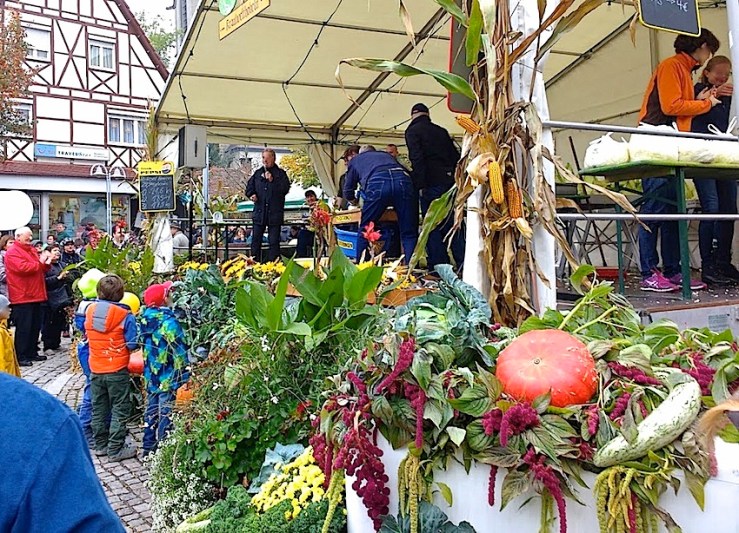
25 Cabbage Fest, enclos*ureAbove: a cabbage shredding race on the stage.
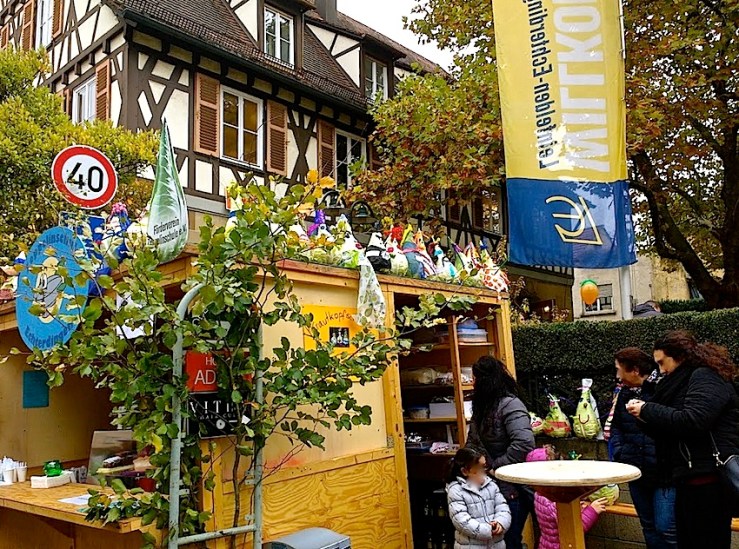
20 Cabbage Fest, enclos*ureAbove: a children’s activity booth in front of the town’s museum.
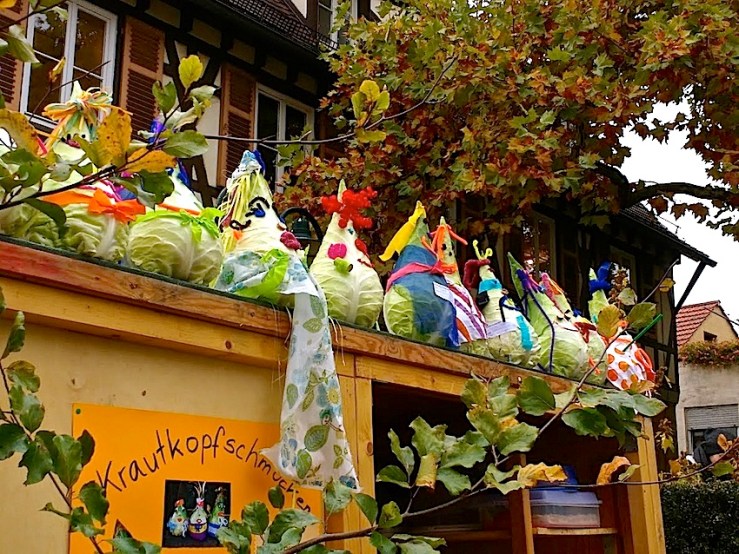
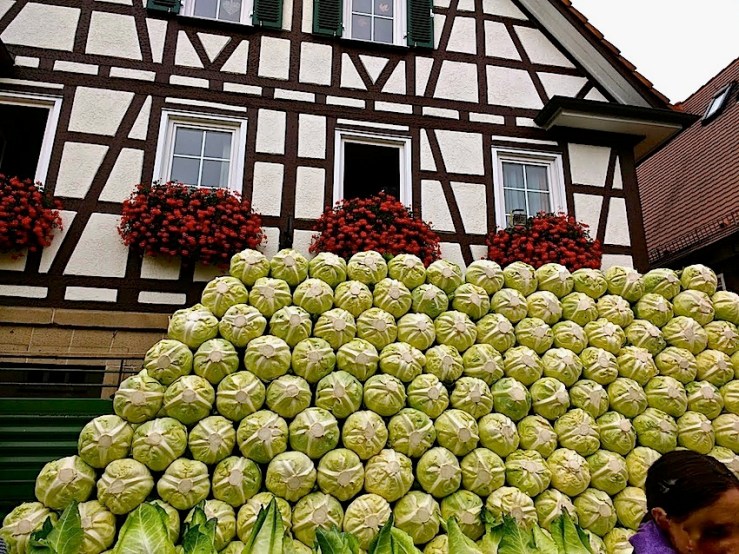
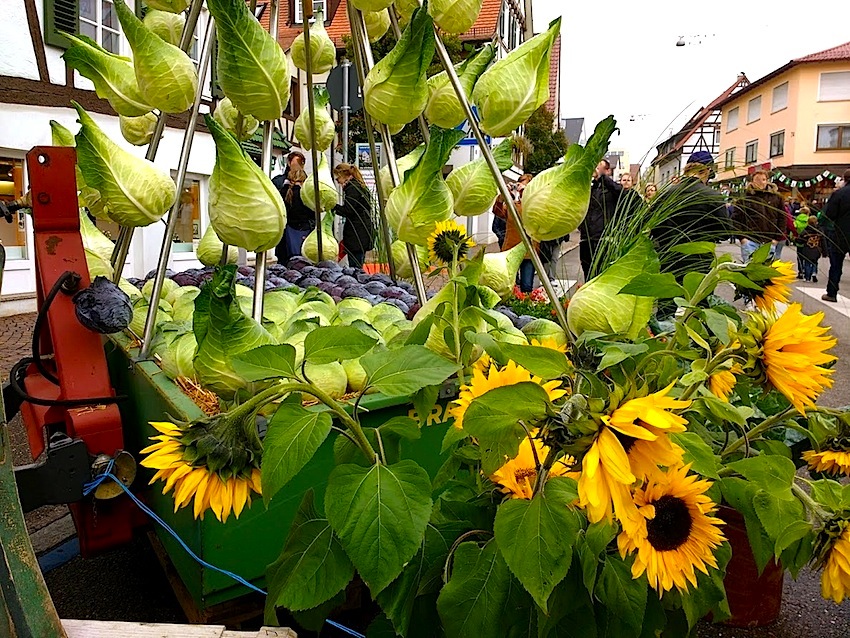
12 Cabbage Fest, enclos*ureAbove: “Pretty cabbage heads.”

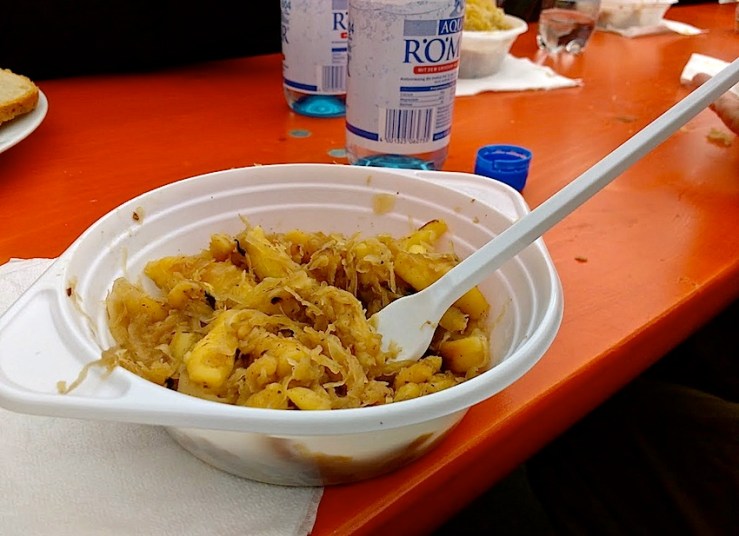
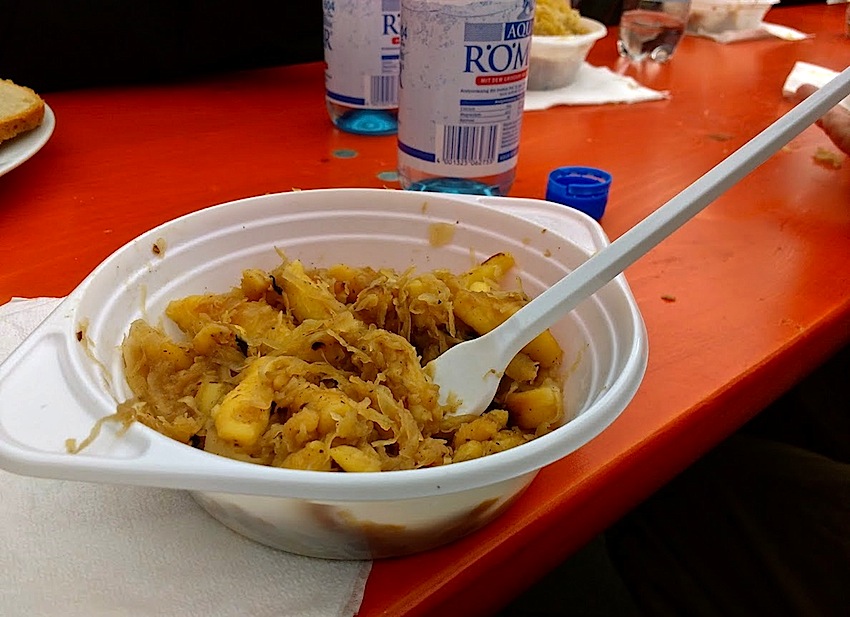
19 Cabbage Fest, enclos*ureAbove: my lunch, sauerkraut and potato dumplings (like gnocchi).
By the way, now is the time in Stuttgart to eat Zwiebelkuchen (bacon and onion flan) with Neuer Sußer or new wine — newly (barely) fermented grape juice.

Streifzug means ‘foray,’ ‘ brief survey,’ or ‘ramble.’

*I mentioned this fest to my mother, and she remembered that, back in Texas, my great-grandmother always told her that cabbages with pointed heads were the best. I don’t think I’d ever seen any until this August.

the moon moves over
the field of dark cabbage and an
exchange fills
all veins.

Jonathan Williams, from “Two Pastorals for Samuel Palmer at Shoreham, Kent”