
 “Prune Orchard near Santa Clara, California,” undated, from the Visual Instruction Department Lantern Slides Collection of Oregon State University, via flickr.
America the plum blossoms are falling.
— Allen Ginsberg, from “America“
“Prune Orchard near Santa Clara, California,” undated, from the Visual Instruction Department Lantern Slides Collection of Oregon State University, via flickr.
America the plum blossoms are falling.
— Allen Ginsberg, from “America“
 “Anniversary celebration” from the Mississippi Department of Archives and History. Unfortunately, the couple’s names, their location, and the date are unknown.
The Luther Hamilton Photograph Collection, from which the picture is taken, contains almost 1,000 photos made or collected by the Luther Myles Hamiltons — Sr. and Jr. — during the first half of the 20th century, principally in and around the town of Crystal Springs, Mississippi.
Click on the image for a larger view — or here.
Let us love nobly, and live, and add again
Years and years unto years. . . .— John Donne, from “The Anniversary“
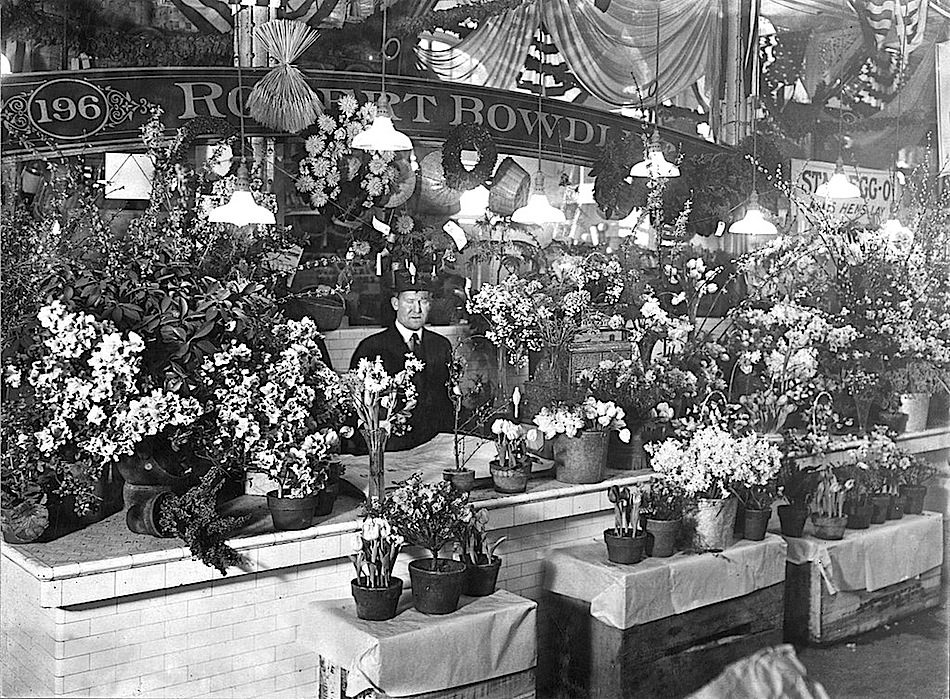 Forced azaleas, forsythias, and bulbs at a flower stand, February 18, 1915, by U.S. Department of Agriculture, via U.S. National Archives Commons on flickr.
Center Market was located at 7th Street and Pennsylvania Avenue, N.W., Washington, D.C., where the National Archives building now stands. The red brick German Renaissance Revival structure was built between 1872 and 1878 (replacing an 1801 market). It held over 700 vendors in its halls and courtyard and was possibly the country’s largest market building.
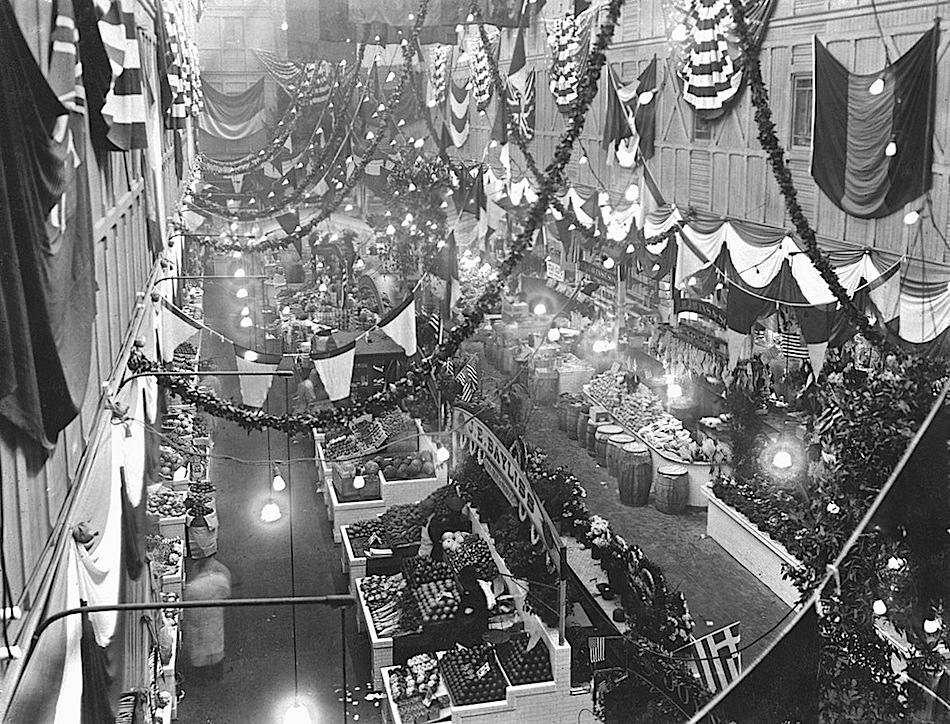
The Market closed in 1931, a victim of the rise of community chain stores and increased availability of canned and frozen foods — as well as the McMillan Commission‘s vision for a white marble, neoclassical center for the capital city.
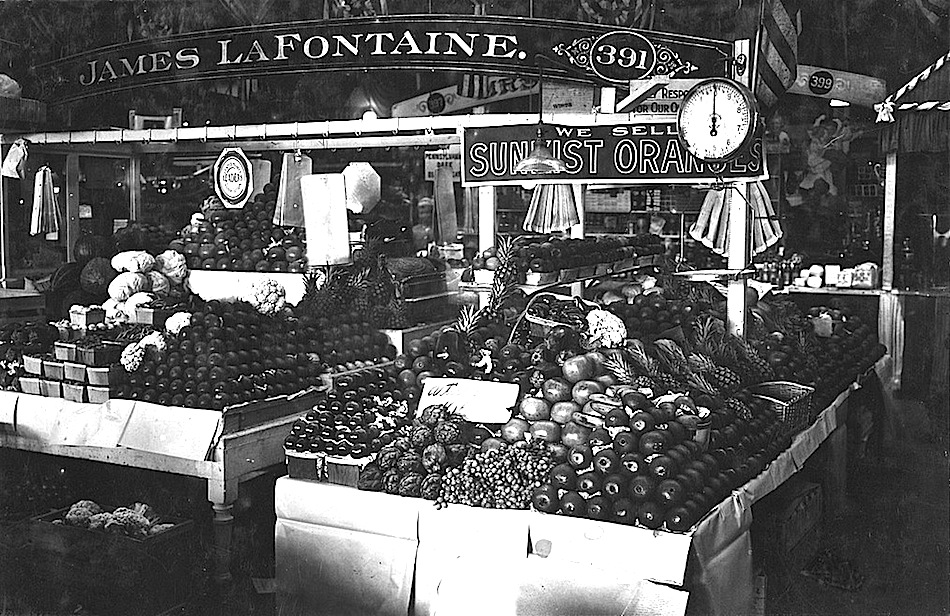
There are more photos of Center Market here and a more complete history here. Click on any photo above to enlarge it.
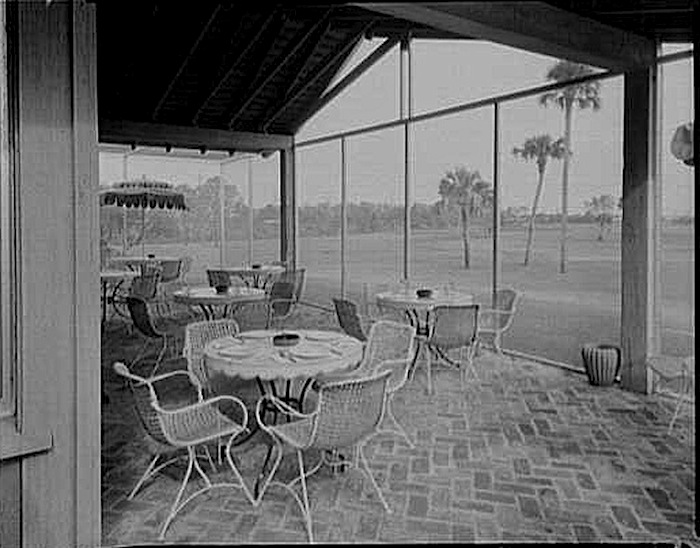 Porch at the Hole in the Wall Golf Club, Naples, Florida, February 16, 1960, by Gottsho-Schleisner, Inc., via Library of Congress Prints and Photographs Division.
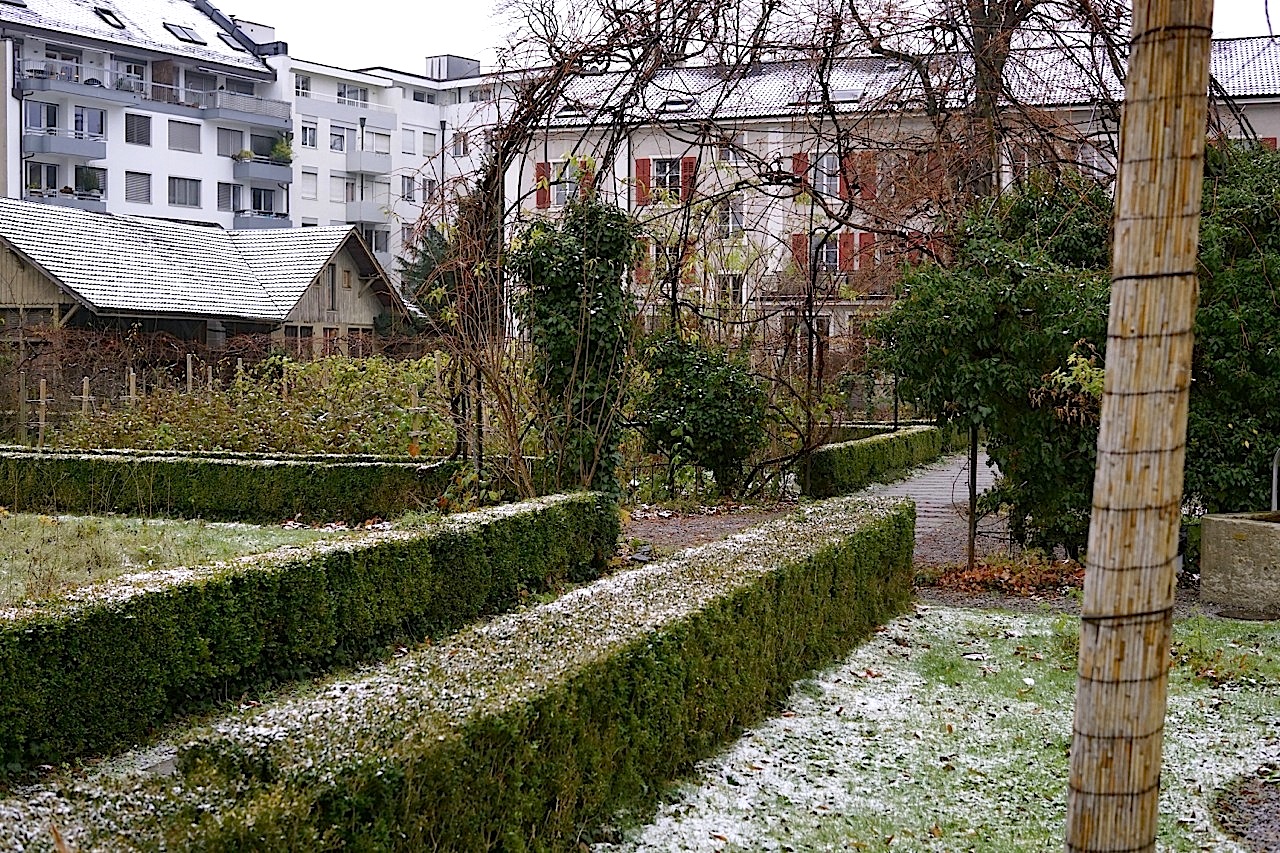
During our Thanksgiving visit to Basel, Switzerland, we stayed at Hotel Bildungzentrum 21 or Hotel Educational Center 21.
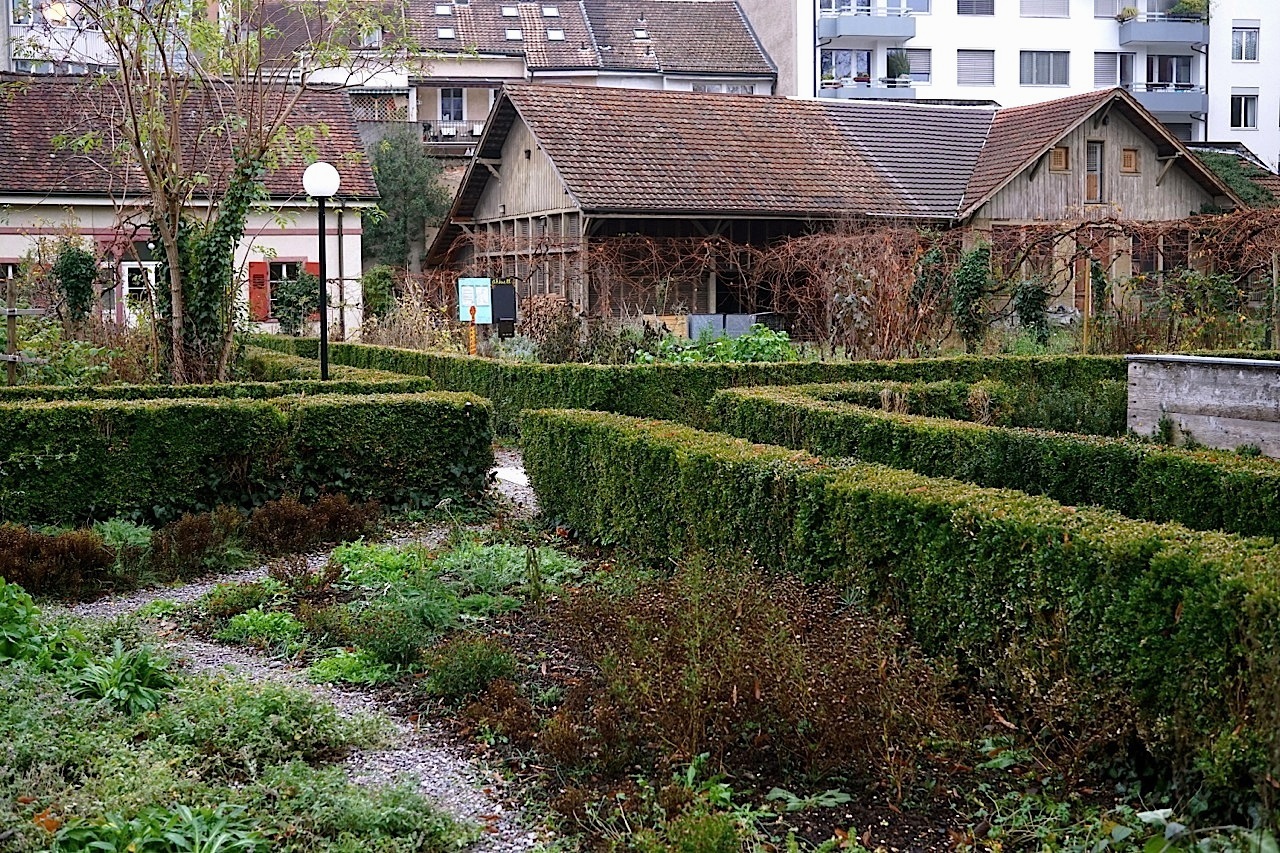
Although a large garden was mentioned on TripAdvisor when I was booking, I had guessed that this would mean — particularly in late November — neat gravel paths, some dormant shrubs and lawn, and beds of chilly purple pansies on a 8″ planting grid.
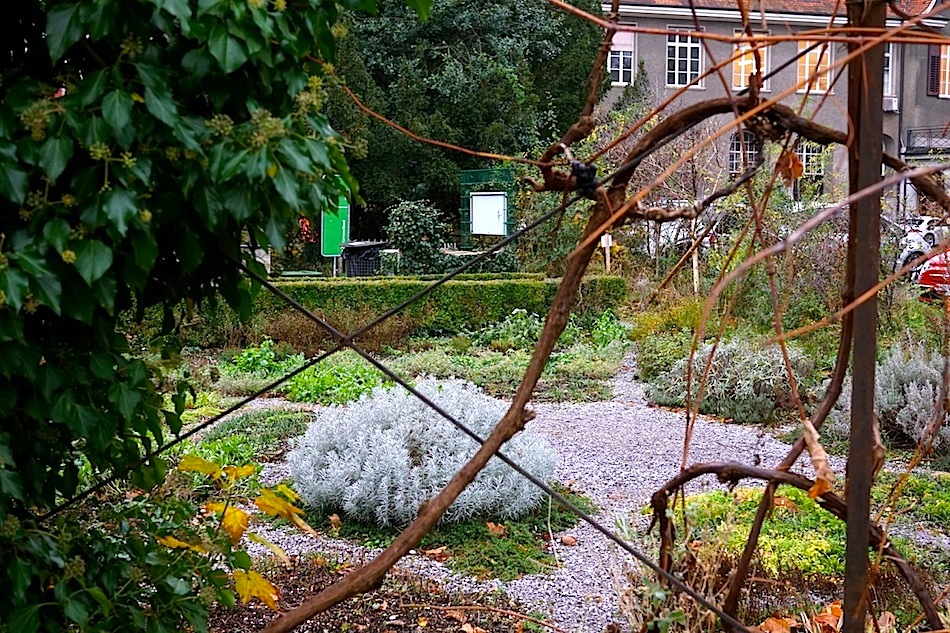
That the “private park” would actually encompass meadows, large plots for flowers, vegetables, and herbs, rows of berry bushes, and an orchard was a wonderful surprise.
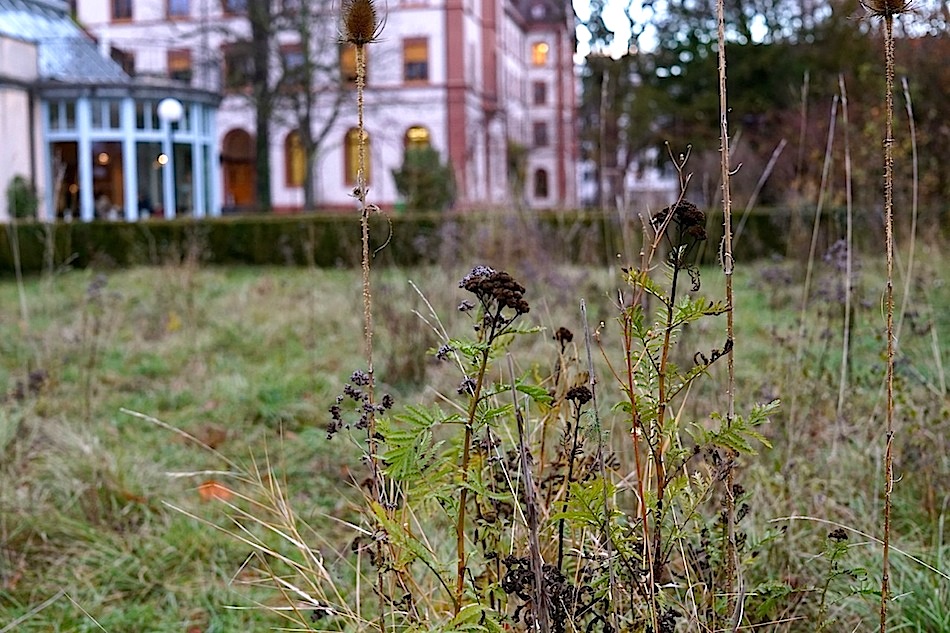
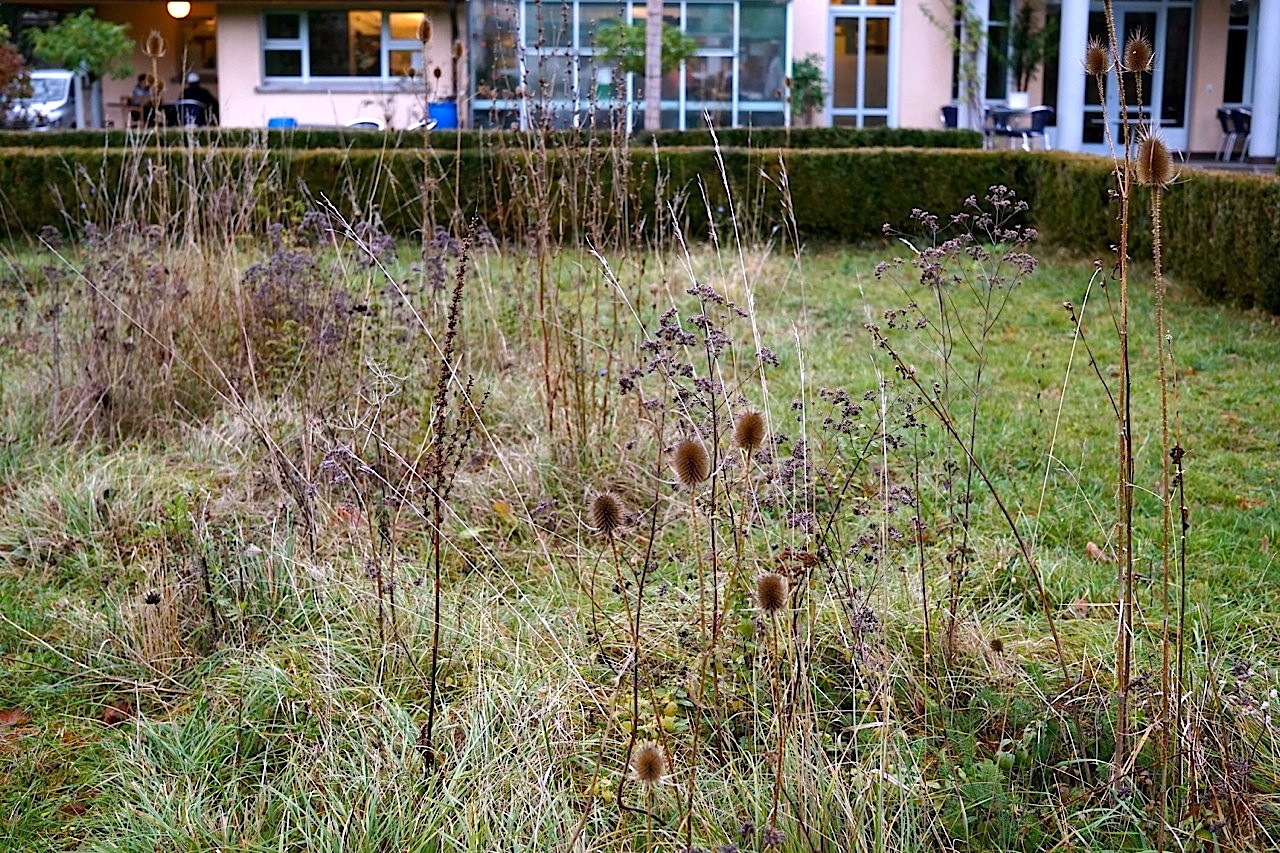
The hotel’s rooms are in one part of a building constructed in the 1860s as housing for the Basel Evangelical Missionary Society, now called Mission 21. (Hermann Hesse lived here for six years as a child.) The garden was once a place for teaching outgoing missionaries how to grow their own food.
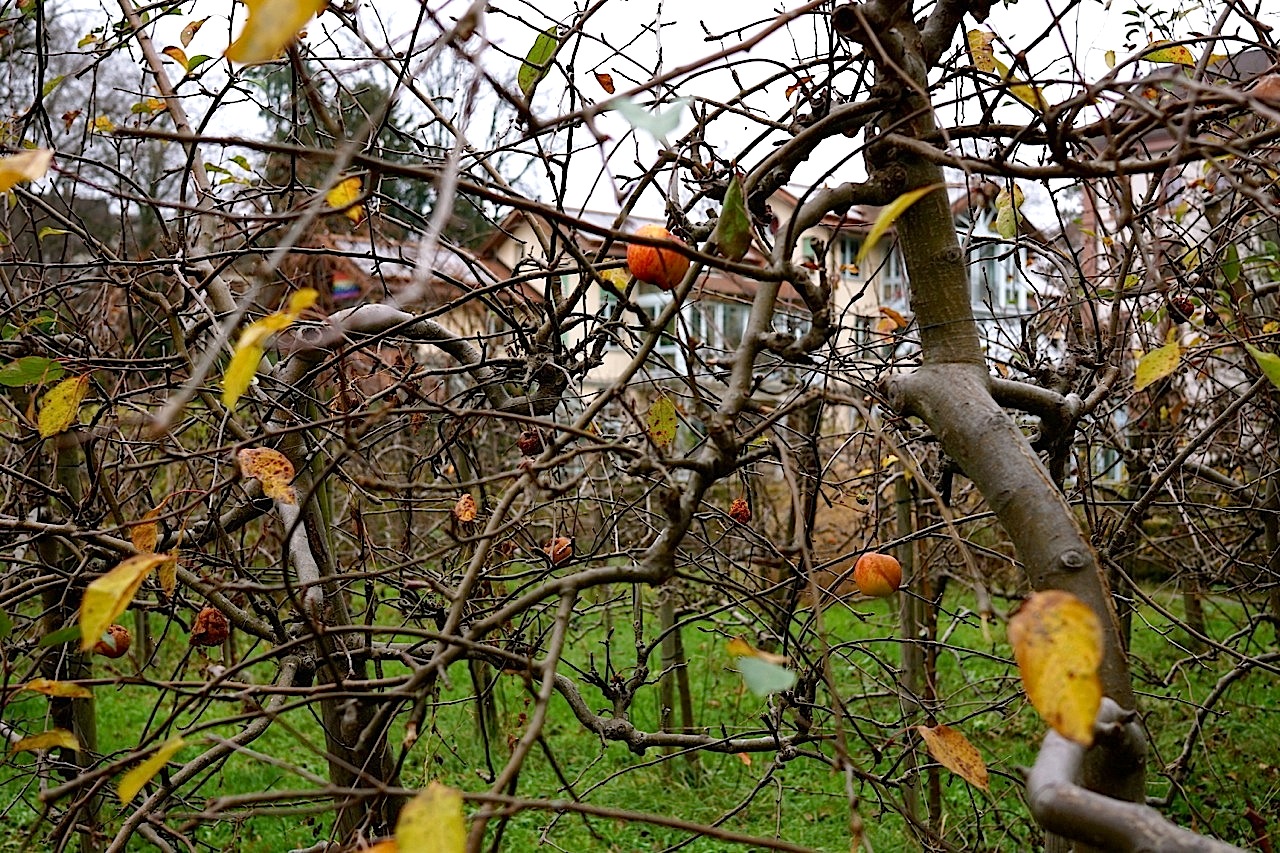
Today, it is cared for by Unigärten Basel — a collective of University student gardeners — in collaboration with Urban Agriculture Basel and ProSpecieRara.
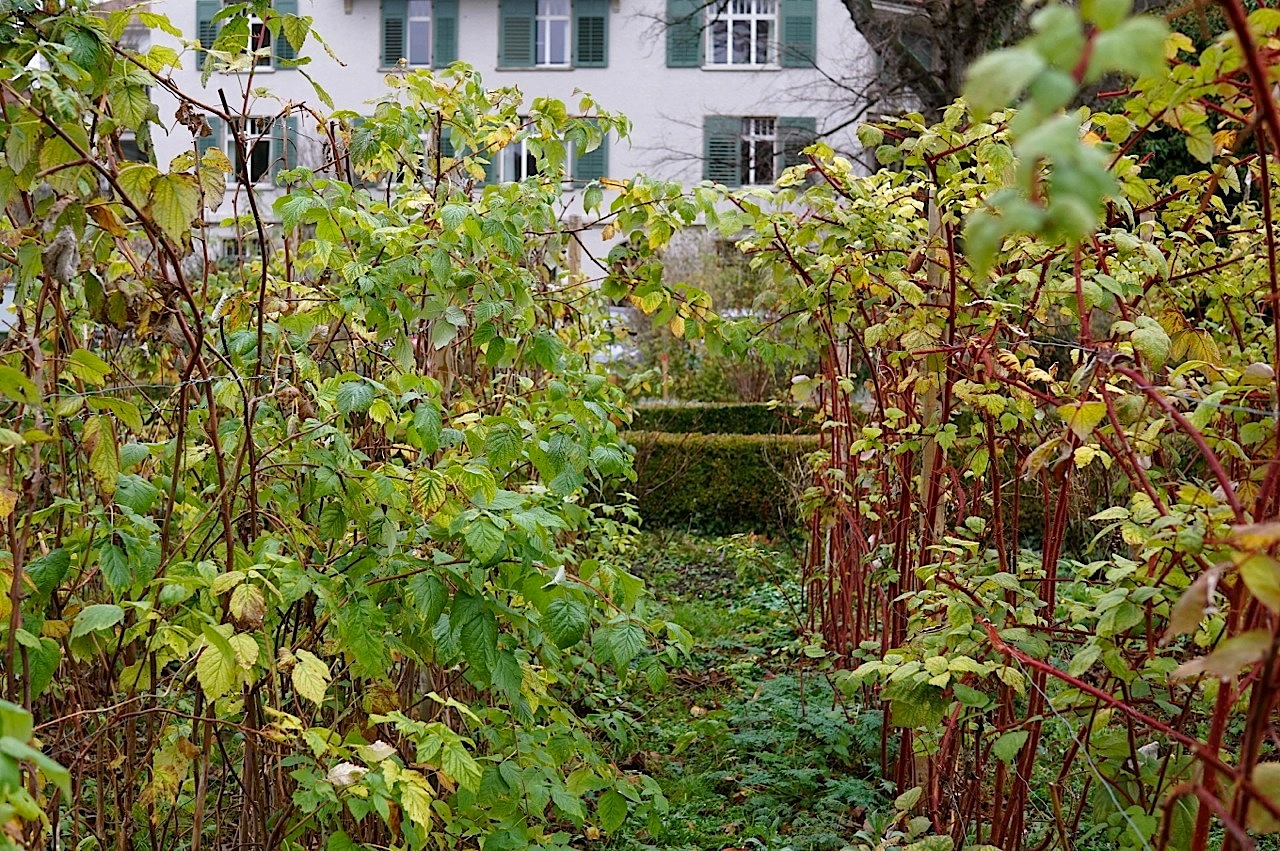
Unigärten’s goal for the Mission 21 garden is to show the “greatest possible diversity of plants” within a permaculture system. They believe the garden, open to hotel guests and the surrounding neighborhood, can inspire both experienced and novice gardeners.
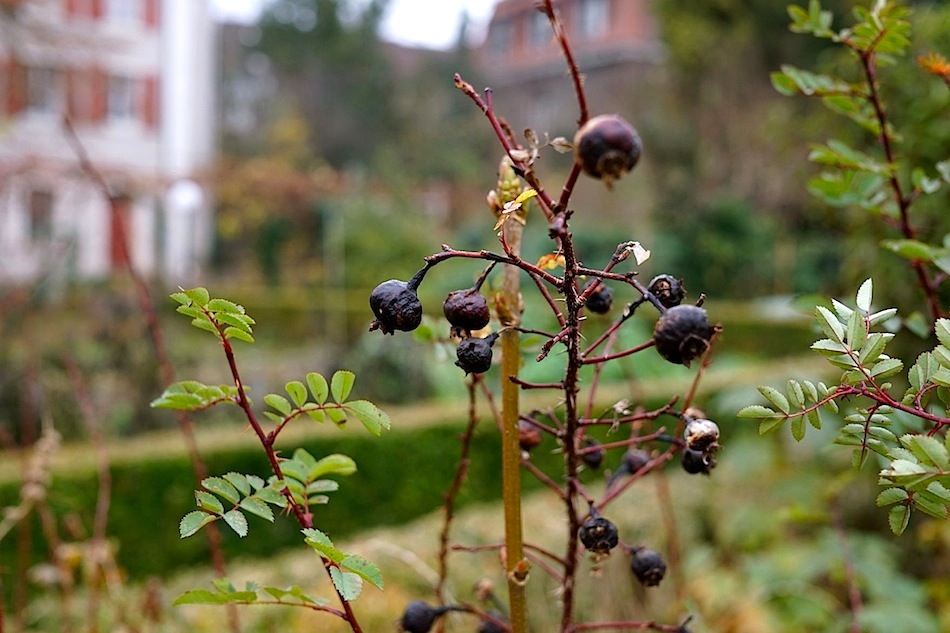
I loved this practical and romantic garden. I spent the beginning and end of every day we were there taking dozens and dozens of pictures — which is why it has taken me so long to post this. (There’s also a good photo of the garden in summertime here.)
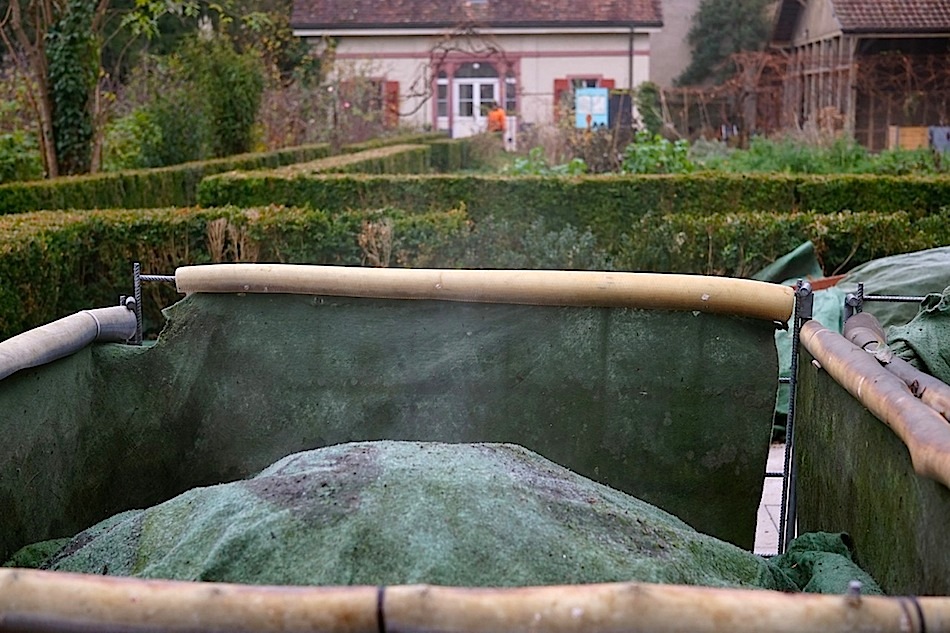
In the back garden, seven rectangular and square sections are outlined in sheared boxwood.
Wild plants (Wildpflanzen) — particularly those that thrive in dry and waste or disturbed ground (Ruderalflächen) — take their place alongside the urban agriculture. They have been left to spread largely undisturbed along the pathways and under shrubs and fruit trees. And in the two meadows, there are forty species, “providing joy to many insects,” according to a sign posted outside the restaurant.
The front garden, across from the hotel entrance, does contain curving gravel paths and lawn, but also a number of large, old trees underplanted in a very rough and natural way with native plants from the region — mostly those with the downy oak forest as their native habitat.
You can also see that this front area has been designed to accommodate the hotel’s and the Mission’s entertaining needs and is surely at its best in the warmer months, full of tables and chairs, lights, and people.
Hotel Bildungszentrum 21 is two blocks from the historic city center. The rooms are simple, but comfortable. Their rates are very reasonable.
Meals are the biggest expense for a tourist in Basel. Main dishes in all the guidebooks’ lists of budget restaurants are $20-$45. A Whopper meal at the local Burger King is around $15, although sandwiches from bakeries, eaten standing up, can be had for $6 – $10.
I can recommend Zum Isaak and the bistro of the Museum der Kulturen (nice for lunch), both on Münsterplatz; Manger & Boire at Barfüsserplatz; and ONO deli cafe bar at Spalenvorstadt and Kornhausgasse (their generous Zmorge breakfasts are good for lunch too).
All public city transportation is free for anyone staying in a Basel hotel. Just ask for a pass when checking in.
Continue reading “The mission garden, Basel”
 enclos*ure