GB Foliage Follow Up for May

This slideshow requires JavaScript.

Grass as foliage — our backyard.

Thanks to Pam at Digging for hosting Garden Bloggers’ Foliage Follow Up on the 16th of every month.

. . . Each blade
the entrance to the grass city.

Kathleen Fraser, from “Grass

(And another poem about grass for a Monday.)

GB Bloom Day in May

in the pleatpetal purring of mouthweathered May.

Karen Volkman, from “May

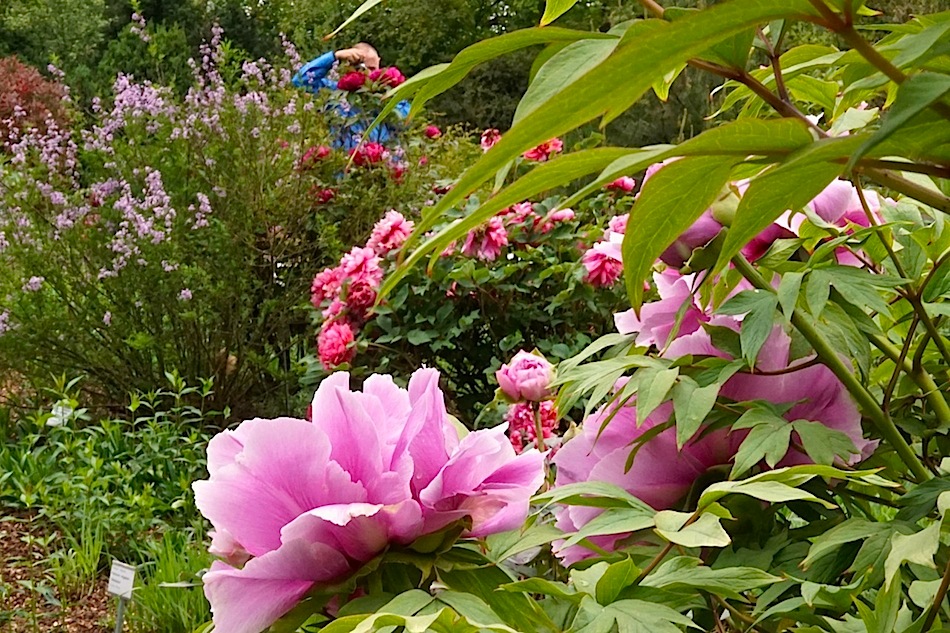
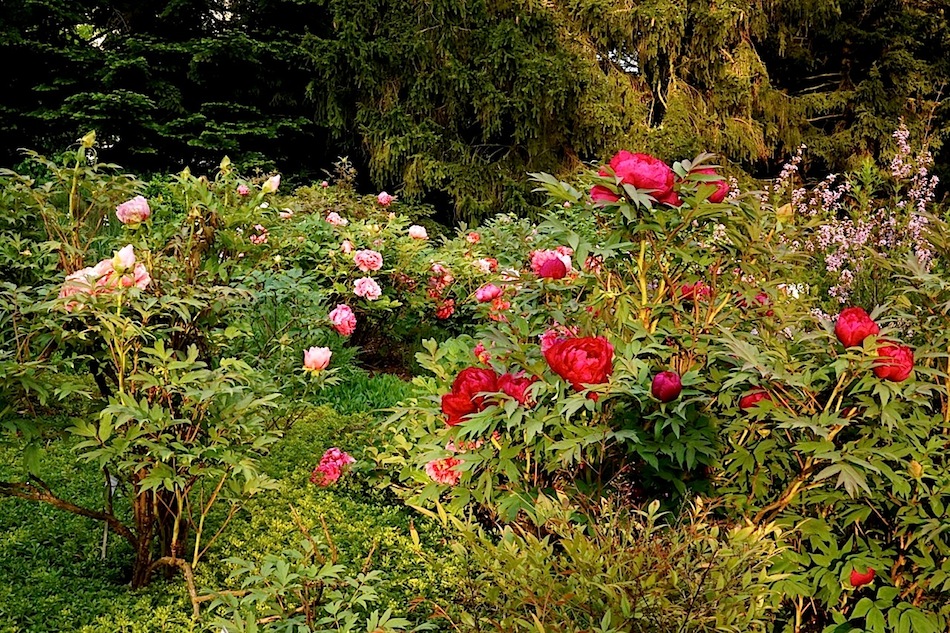
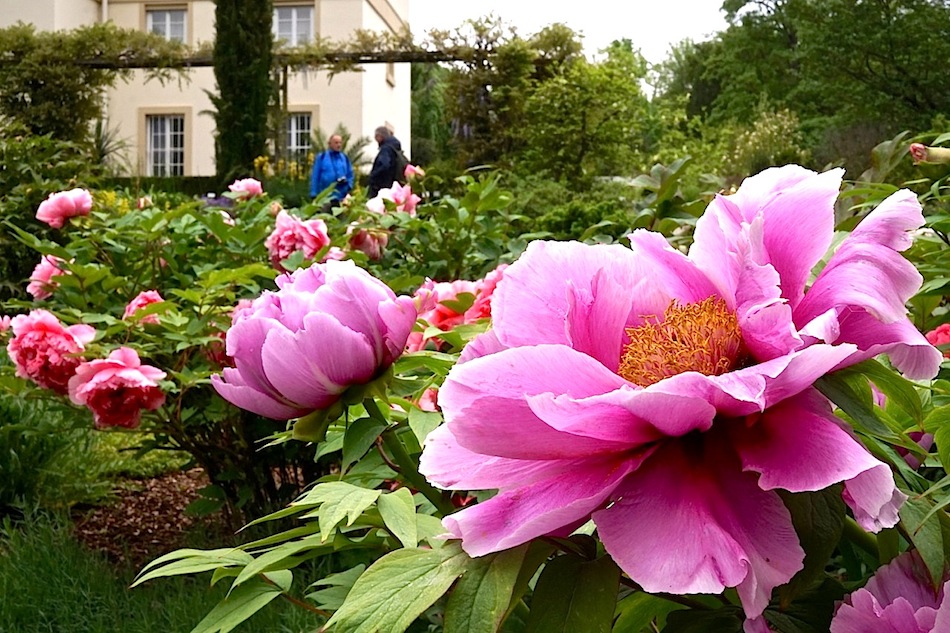
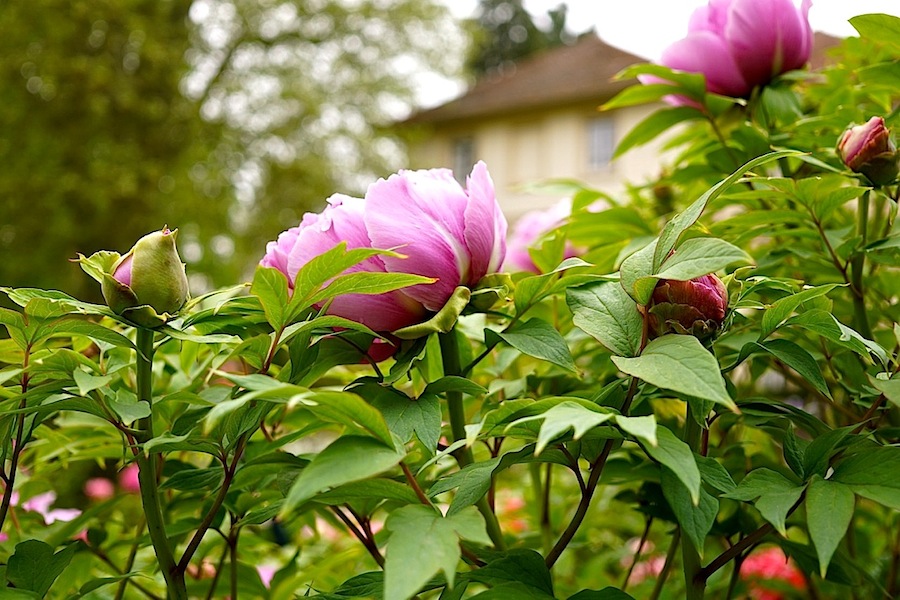
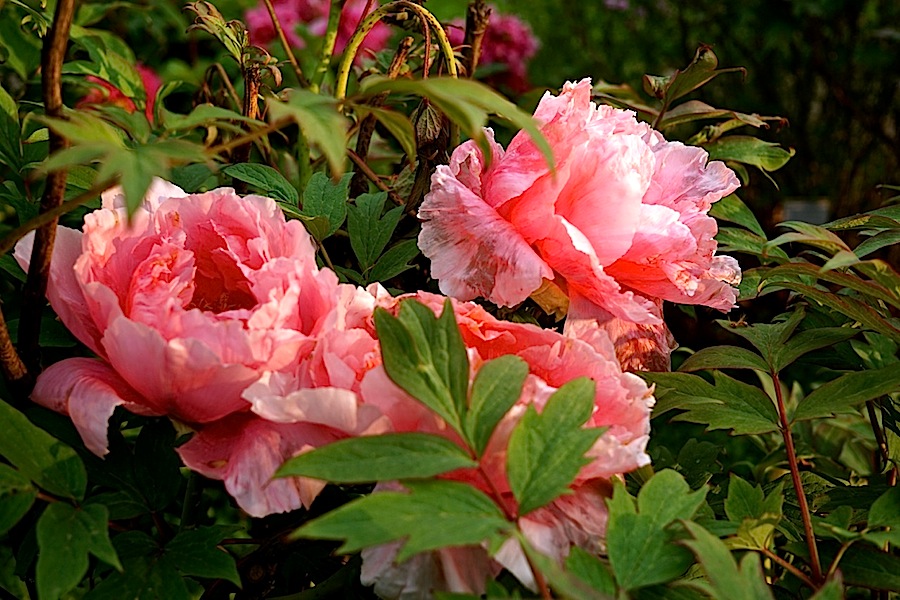
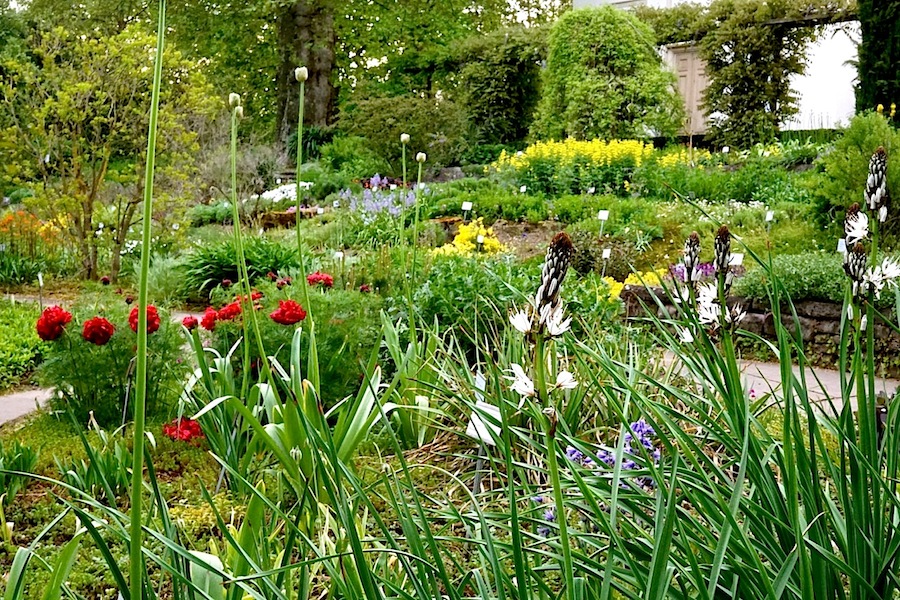
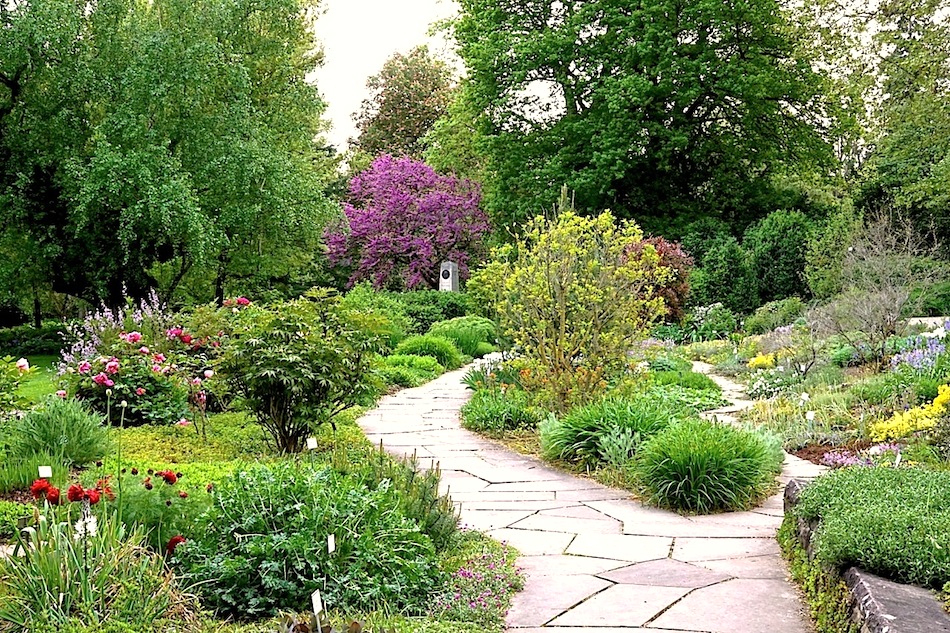
The Chinese tree peonies are definitely the stars this month in the Speilhaus garden of the University of Hohenheim.

Bloom Day, 2016,enclos*ure

I took these photos yesterday evening.

The garden has around ten mature specimens.

Paeonia Suffruticosa Hybrid ‘Yoshinogawa’

Paeonia-Suffruticosa-Hybride 'Yoshinogawa'
Paeonia Suffruticosa Hybrid ‘Yoshinogawa’

Unfortunately, we had several days of rain last week, and the blooms were not at their best.

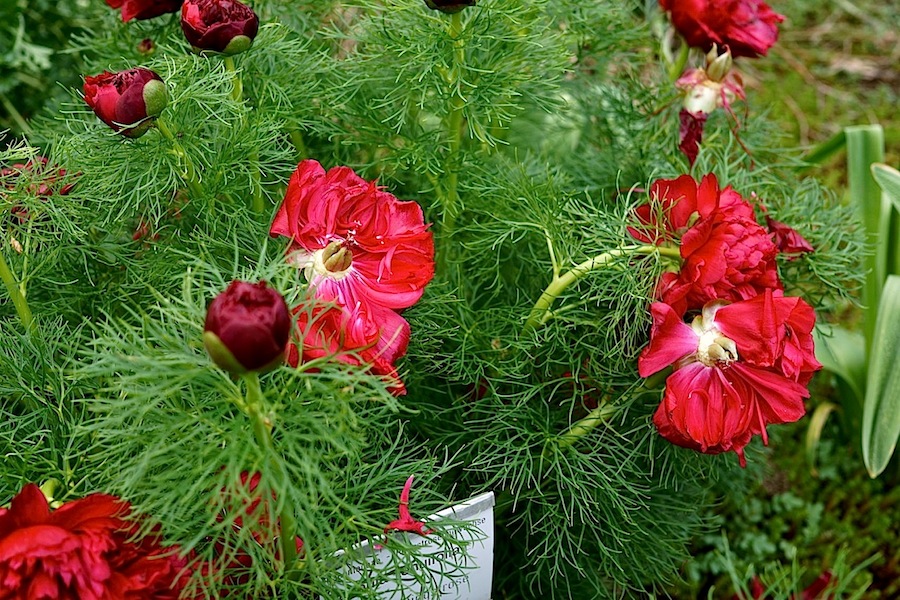
Paeonia tenuifolia 'Plena'
Paeonia tenuifolia ‘Plena’

The fern leaf peony shown above was new to me.

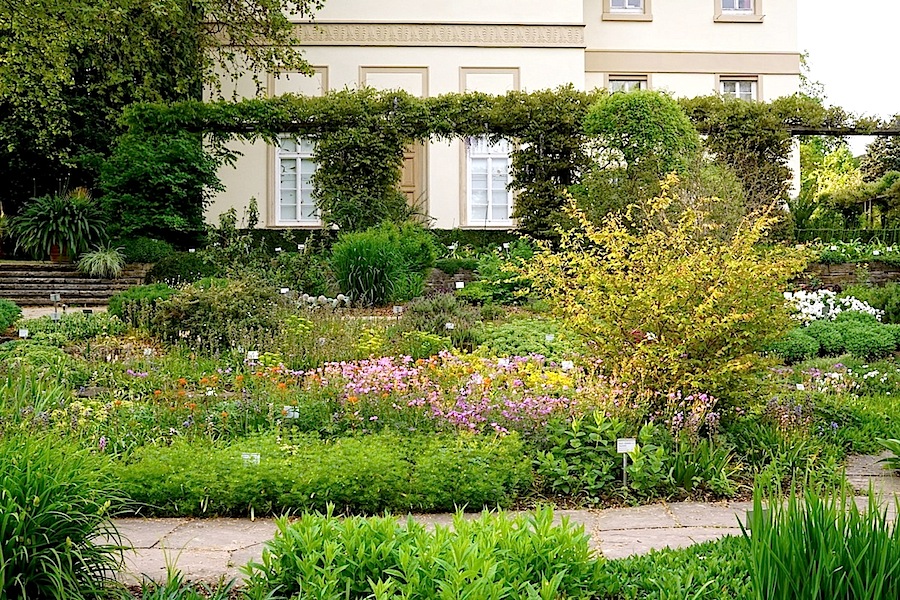
Looking across the garden to the Spielhaus.

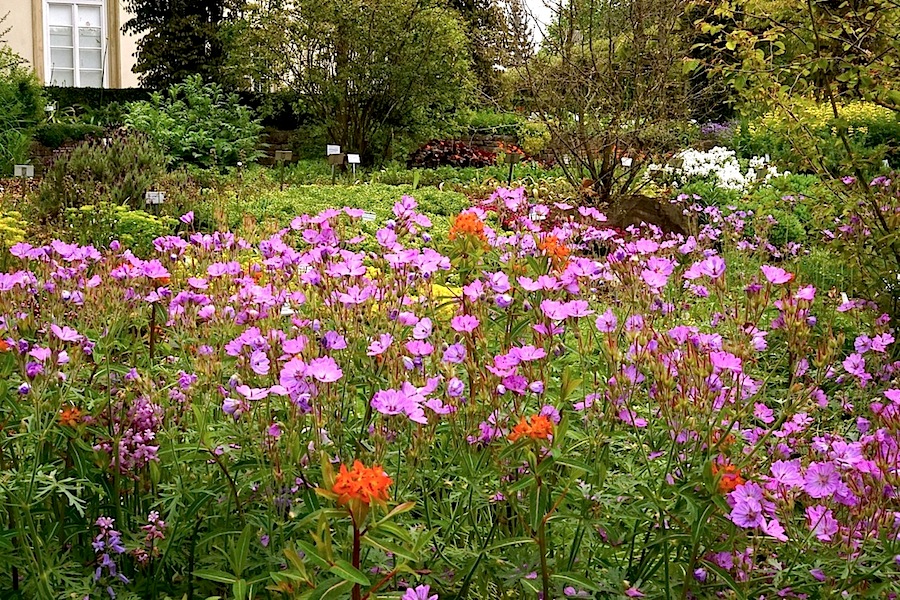
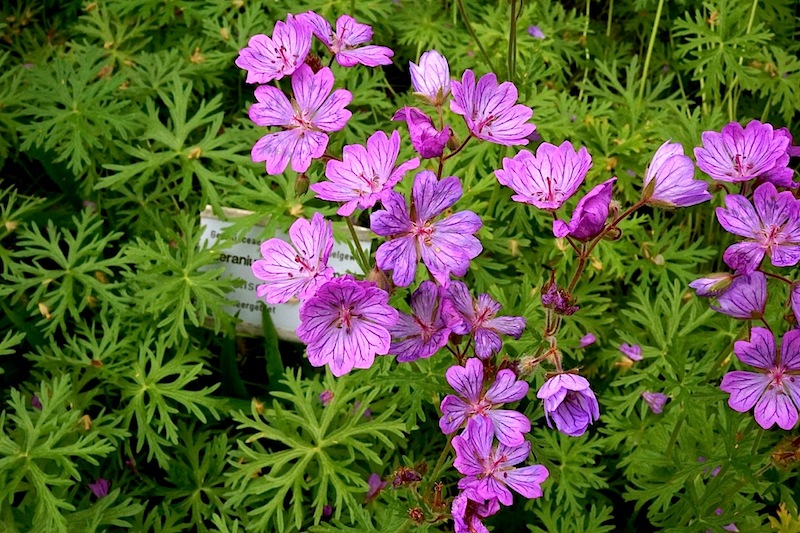
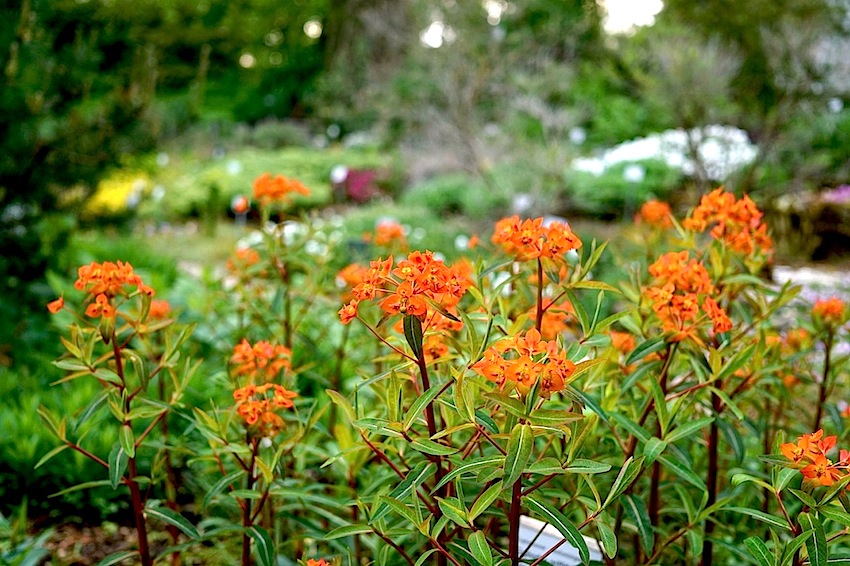
Beyond the peony bed, I liked the combination, above and below, of light-purple geraniums and orange euphorbias.

Geranium tuberosum and
Geranium tuberosum and Euphorbia griffithii ‘Fire Glow’

Euphoribia griffithii 'Fire Glow'
Euphoribia griffithii ‘Fire Glow’
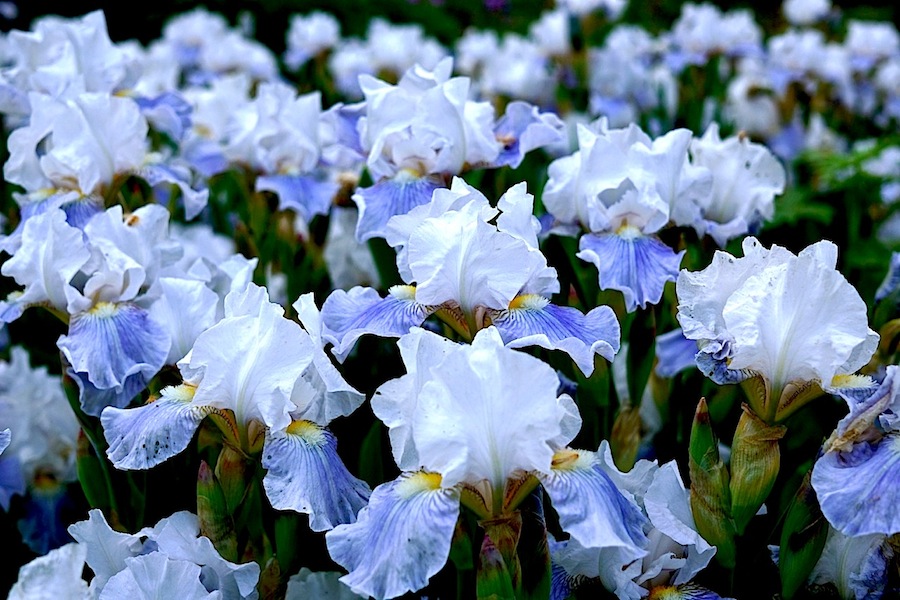
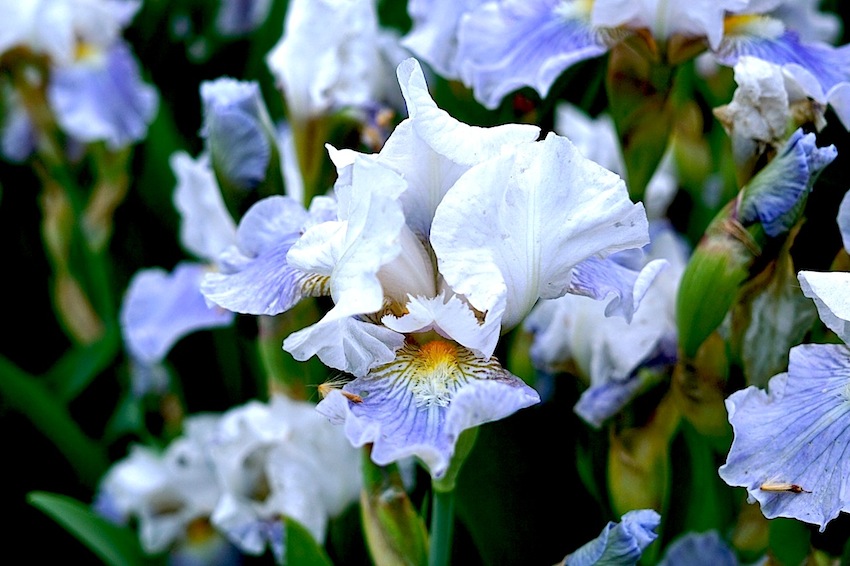
Iris Barbata-Media-Grpuppe 'Antarctique'
Iris Barbata-Media-Grpuppe ‘Antarctique’

Nearby was a planting of bearded iris.

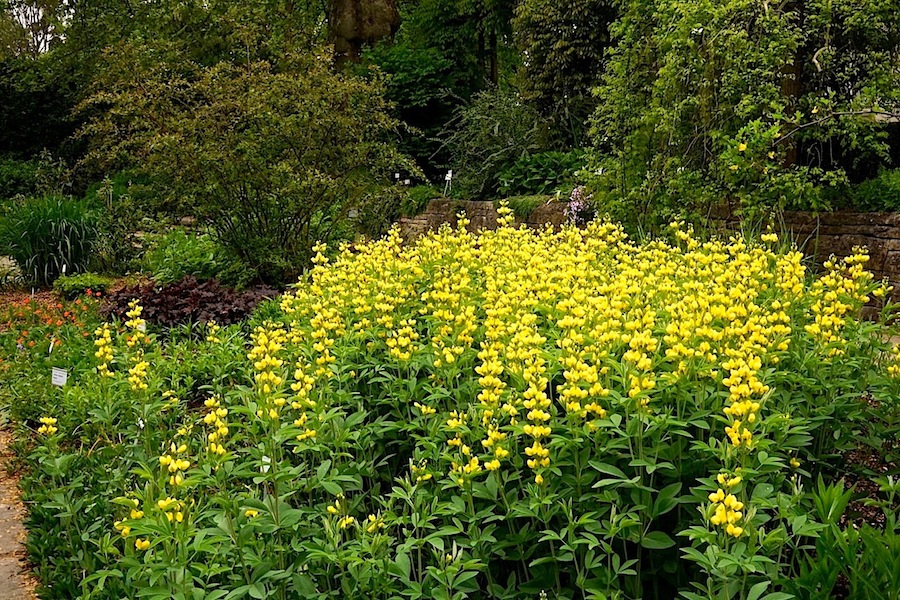
In the photo above, the bright yellow at the top, just below the arbor, is mountain goldenbanner, which is native to the western United States.

Thermopsis montana
Thermopsis montana or mountain goldenbanner
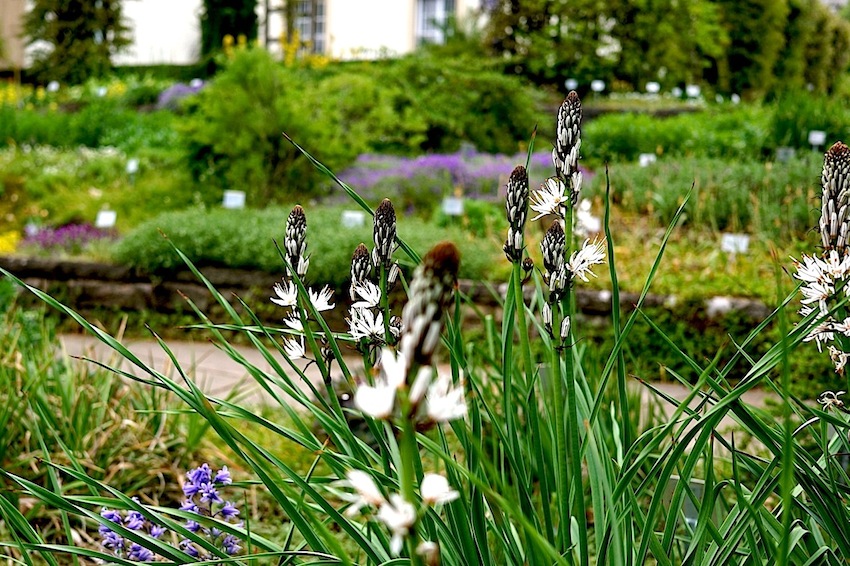
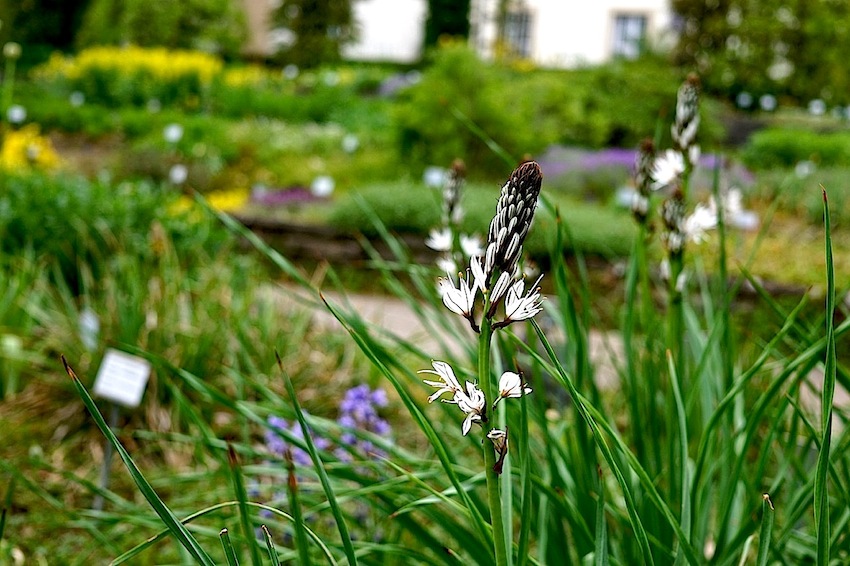
Asphodelus albus
Asphodelus albus

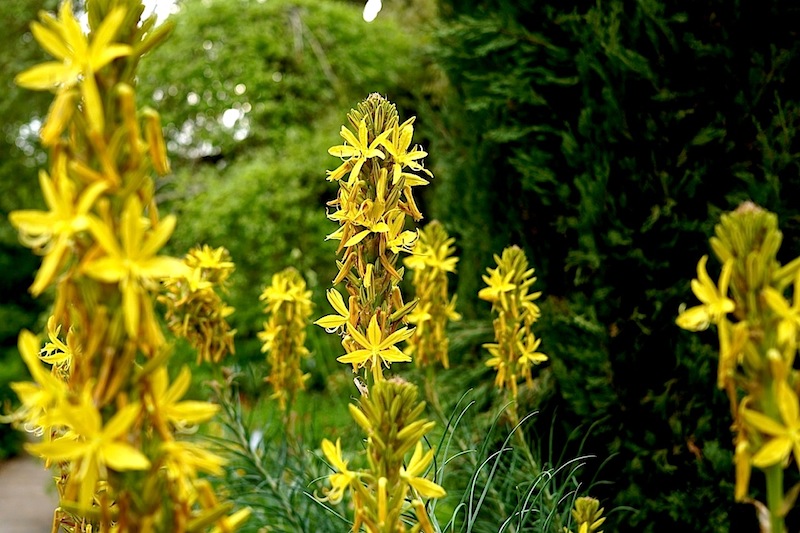
White asphodel  — “that greeny flower” — was also blooming in the garden.

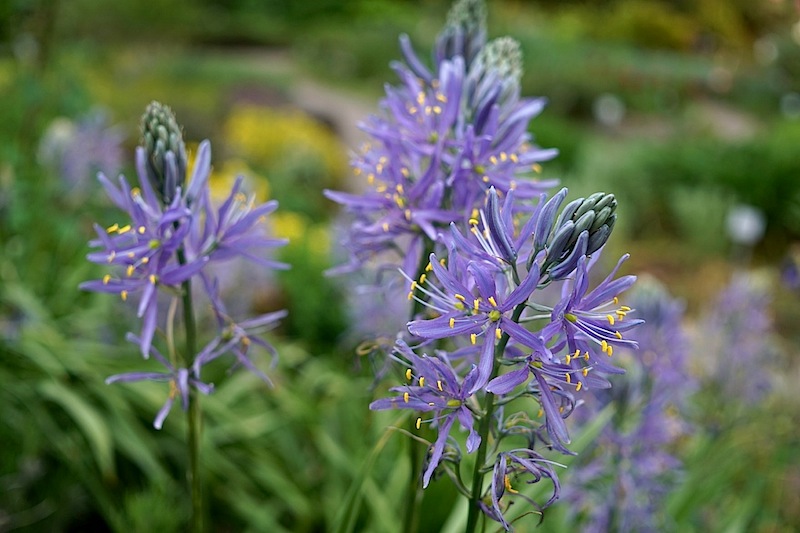
The pretty blue-violet flower above was close by, but I didn’t get a picture of its label.  I think it’s another Asphodelus. It’s a Camassia, a North American native in the asparagus family (see the comments below).

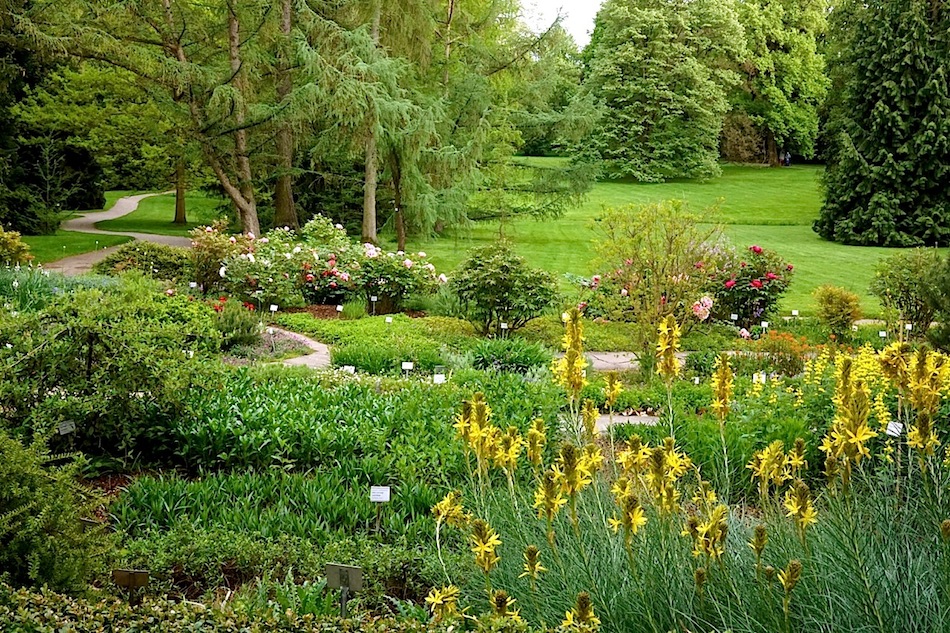
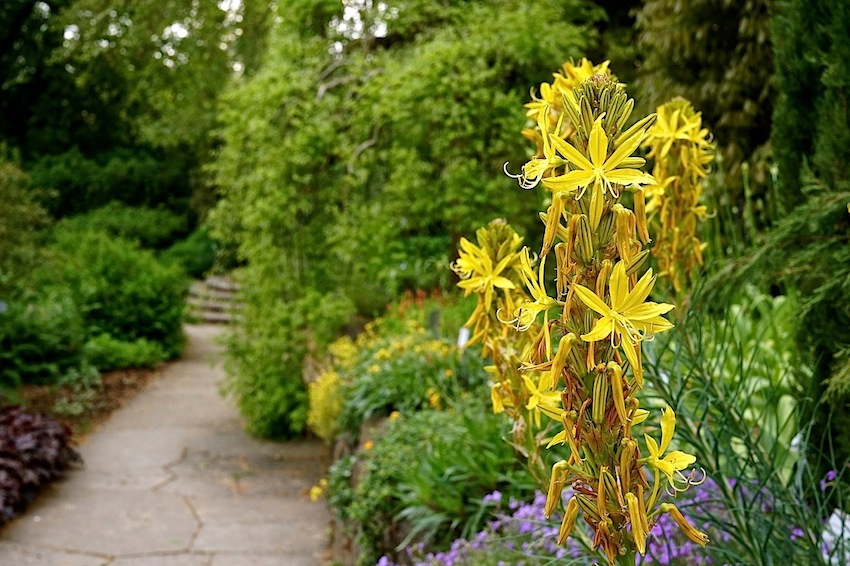
Looking south across the garden from behind the wisteria arbor, you can see the row of tree peonies.  In the lower right-hand corner is a planting of yellow asphodel or king’s spear.

Asphodelus lutea

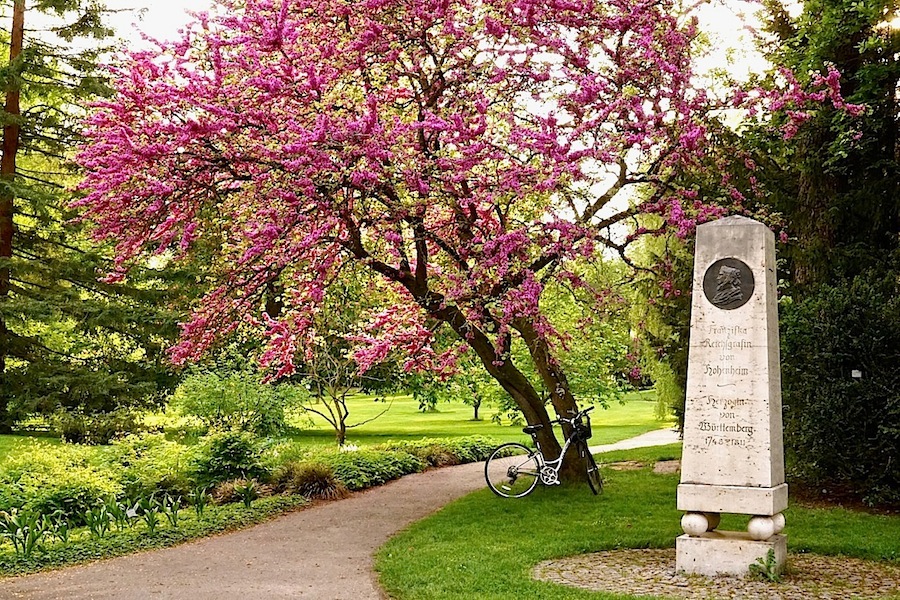
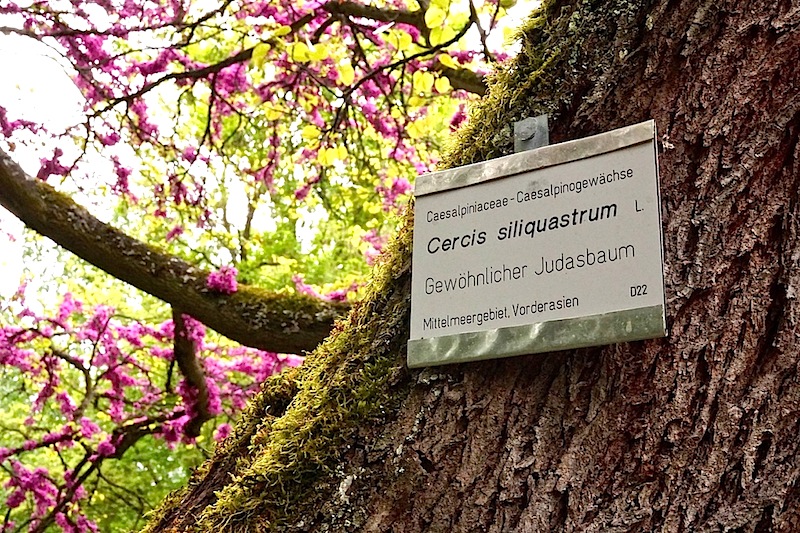
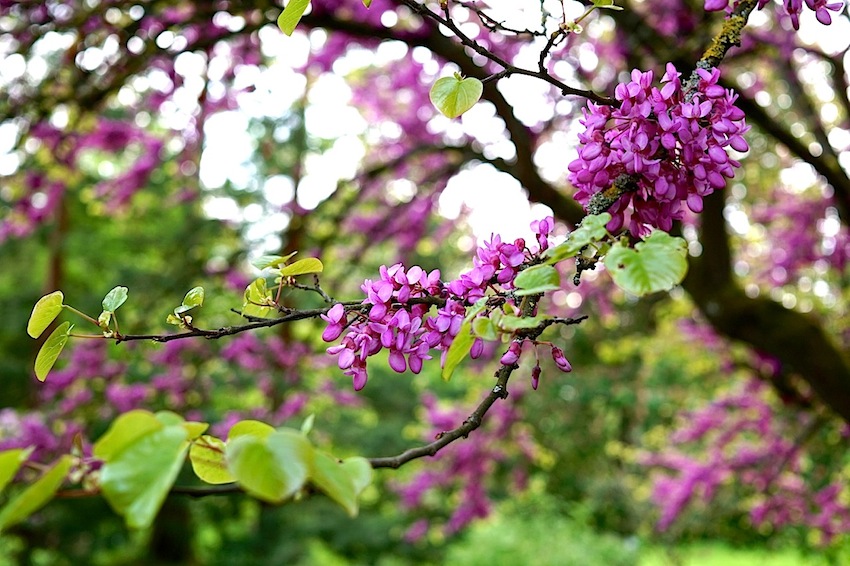
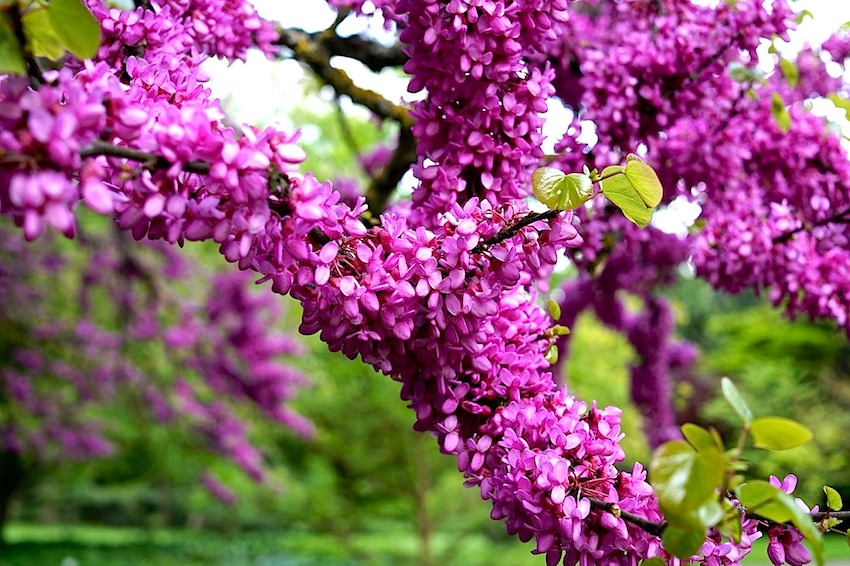
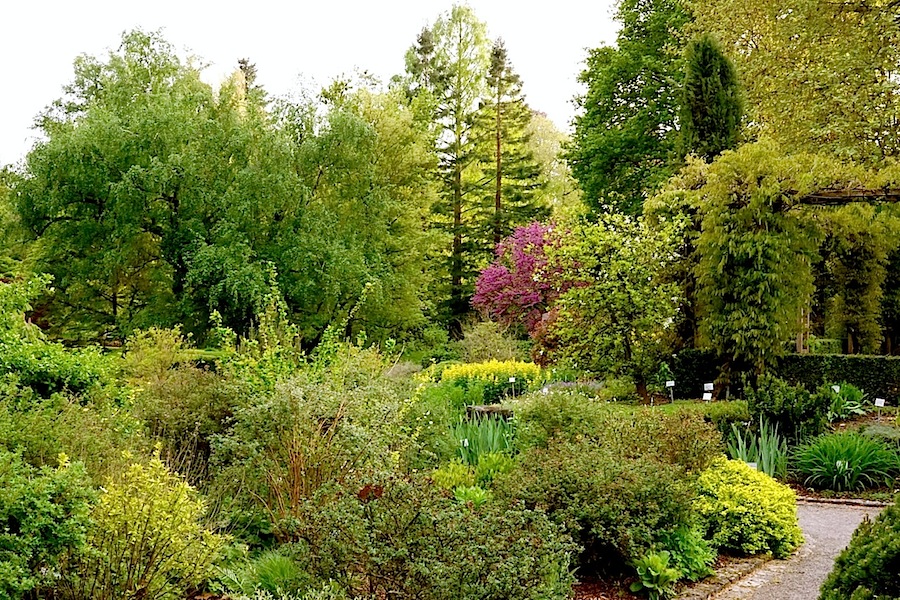
Looking across the garden from the east to the west, a beautiful pink blooming Judas tree draws the eye.

The tree is native to Southern Europe and Western Asia.

The flowers are edible and are said to have a sweetish-acid taste.

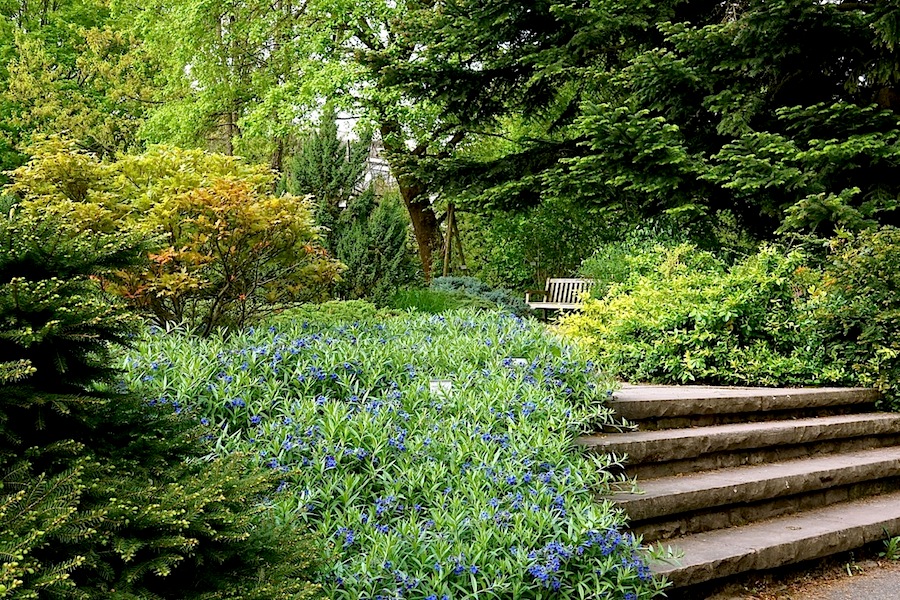
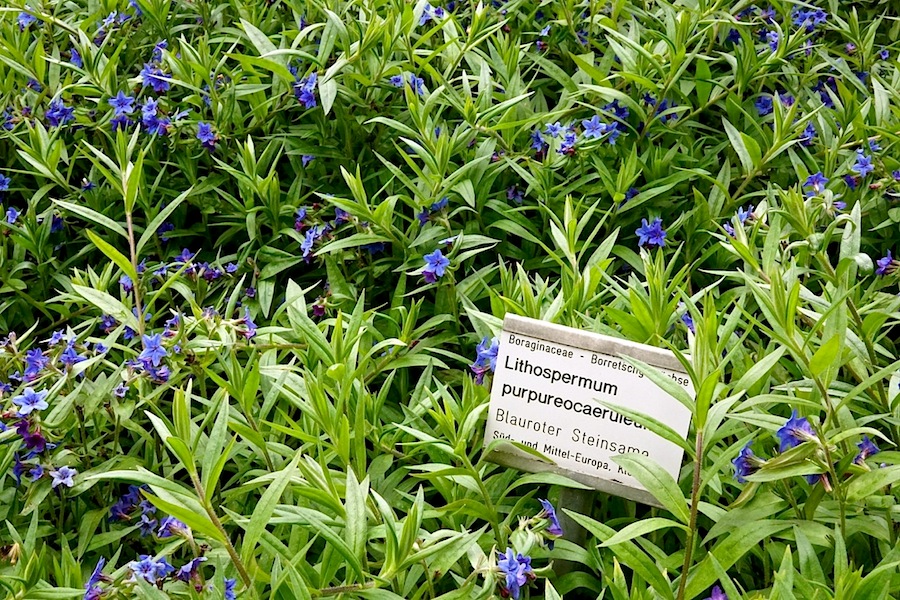
At the other side of the garden a Lithospermum purpurocaeruleum or purple gromwell drapes over the steps. The flowers emerge purple reddish and then mature to deep blue.

A last look from the northeast. At mid-month, the wisteria on the arbor (right side) has only a few blooms.

To see what’s blooming today for other garden bloggers, please visit Carol at May Dreams Gardens.

The Sunday porch: Munich

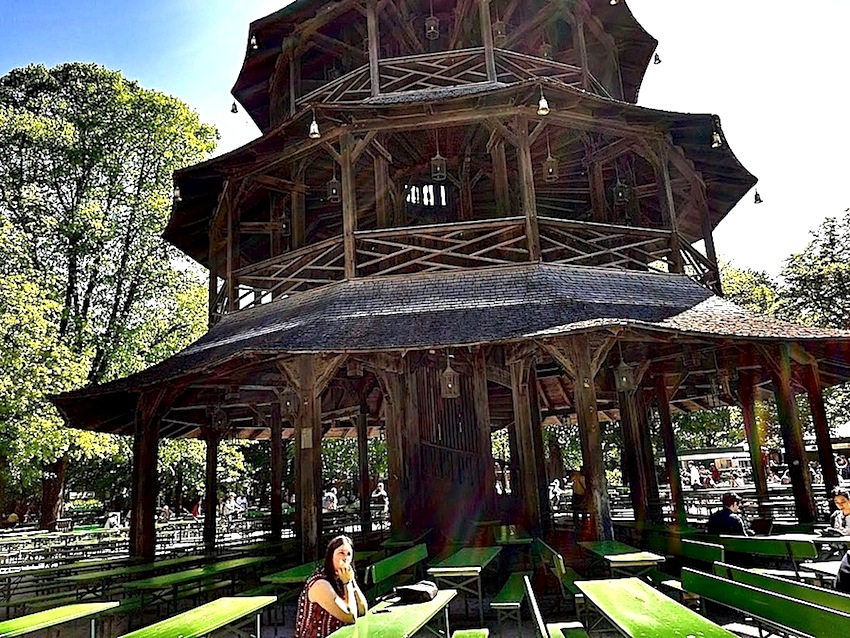
Chinese Tower, Munich, May 2016, enclos*ureChinesischer Turn and beer garden in the Englischer Garten park, Munich, Germany.

Not a porch, of course, but a grand garden pavilion first built in 1790 — the year the park itself was laid out (officially opening in 1792).

Chinese Tower detail, Munich, May 2016, enclos*ure
The all-wooden tower is five storeys and eighty-two feet tall.

The tower was designed by Joseph Frey, a military architect.  He was inspired by the “Great Pagoda” of the Kew Royal Botanic Gardens in London.

The 1790 structure burned down in 1944 after a heavy bombing of Munich.  The current tower, true to the original, was built in 1951.

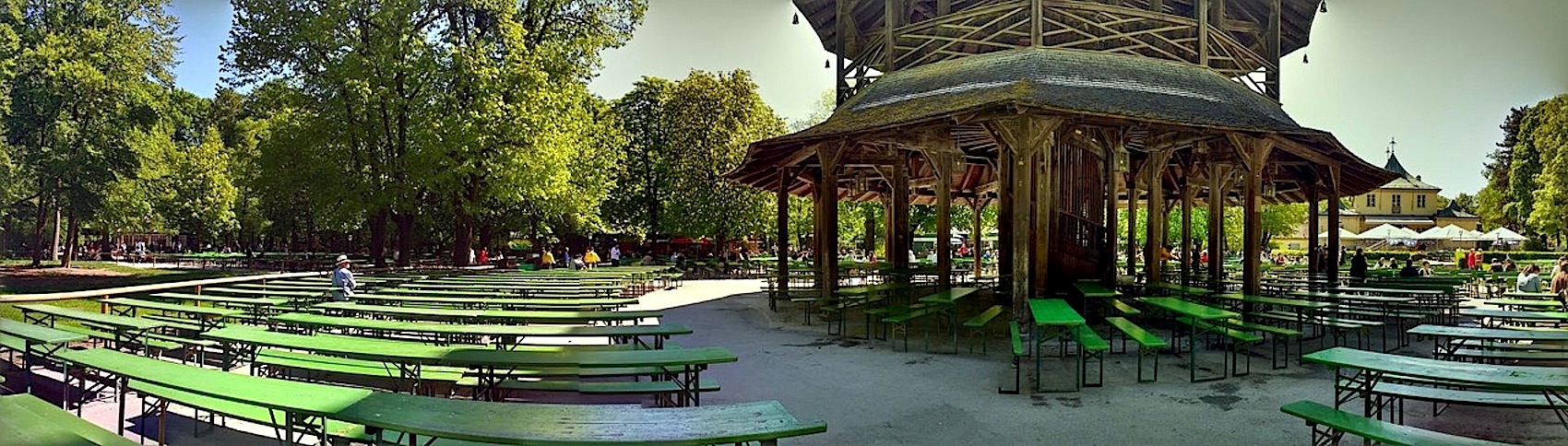
panoramic Chinese Tower, Munich, May 2016, enclos*ure
Click on the image to enlarge it.

The beer garden surrounding the Chinese Tower seats 7,000 people.

On early Sunday mornings in the late 19th century, up to 5,000 servants, soldiers, students, and other working-class people would gather at the tower to dance to a brass band.  These Kocherlball or cooks’ balls would end by 8:00 a.m., so that the attendees could get back to work or go to church.  The dances were outlawed in 1904, but were revived in 1989 as a annual event every third Sunday in July.

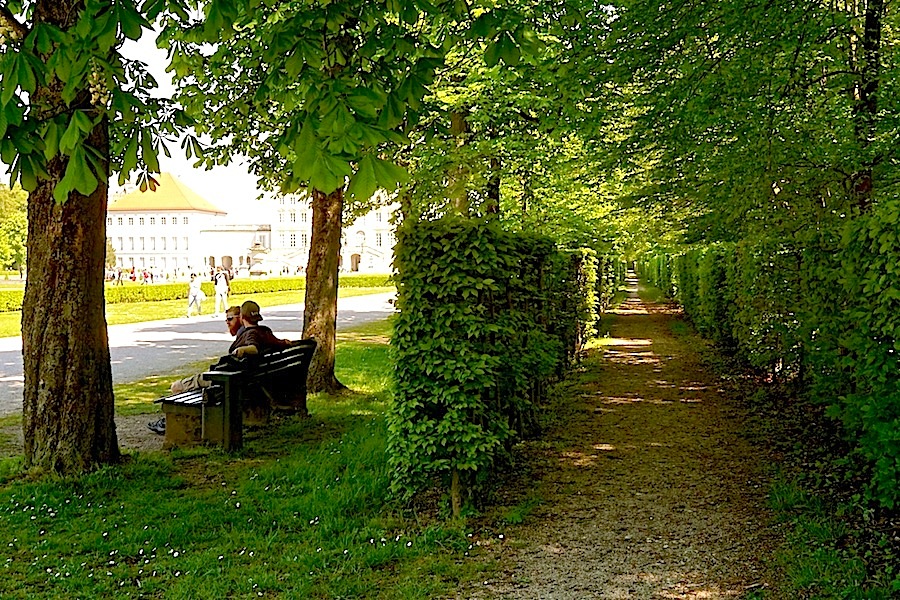
Munich, early May 2016, enclos*ure

As its name implies, the Englischer Garten public park (the oldest in Germany) was laid out in the English landscape style associated with the work of Capability Brown.  Its principal designer was Royal Gardener Friedrich Ludwig von Sckell, who had studied in England.

The park has an area of 910 acres — making it larger than New York City’s Central Park.

I took these photos with my phone while biking through the park last Sunday morning. (There are over 48 miles of paths in the park.)

There’s a brief history of beer gardens in America here.

Wordless Wednesday: axes

Munich5, enclos*ureSchloss Nymphenburg, Munich, May 7, 2016.

In a vase on Monday: grass flowers

wildflowers, May 2, enclos*ureEverything that’s blooming down in the grass of our backyard today.

To see what other gardeners have put in a vase, please visit Cathy at Rambling in the Garden.