
 “Heijlo, 1789,” the Straatweg (main street), Heiloo, Netherlands, ca. 1900, by C.W. Bruinvis, via Regionaal Archief Alkmaar Commons on flickr.
Category: European gardens
The Sunday porch: le bricolage
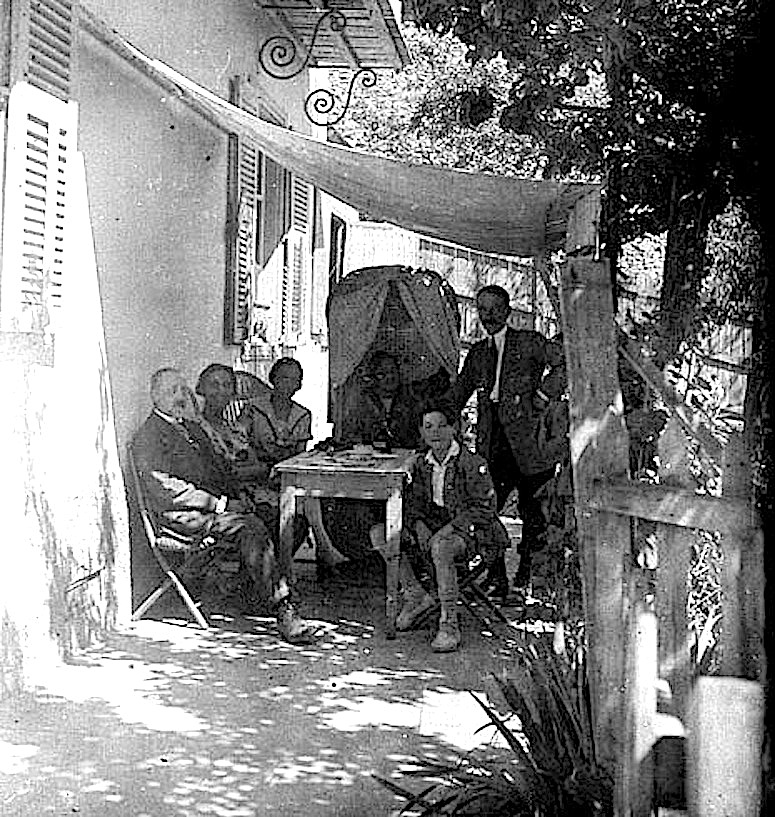 “Famille attablée sur la terrasse, ombragée par une bâche,” (family at a table on a terrace, shaded by a tarp) ca. 1890 – ca. 1910, by Eugène Trutat*, via Bibliothèque de Toulouse (cropped slightly by me).
*I was skeptical about the photographer because Trutat died in 1910, and the women on the left appear to be in the shorter dresses of the 1920s or 30s. However, they could be wearing the bathing suits of around 1900.
August Spielhaus garden
I want to bring you a little late summer update on this garden.
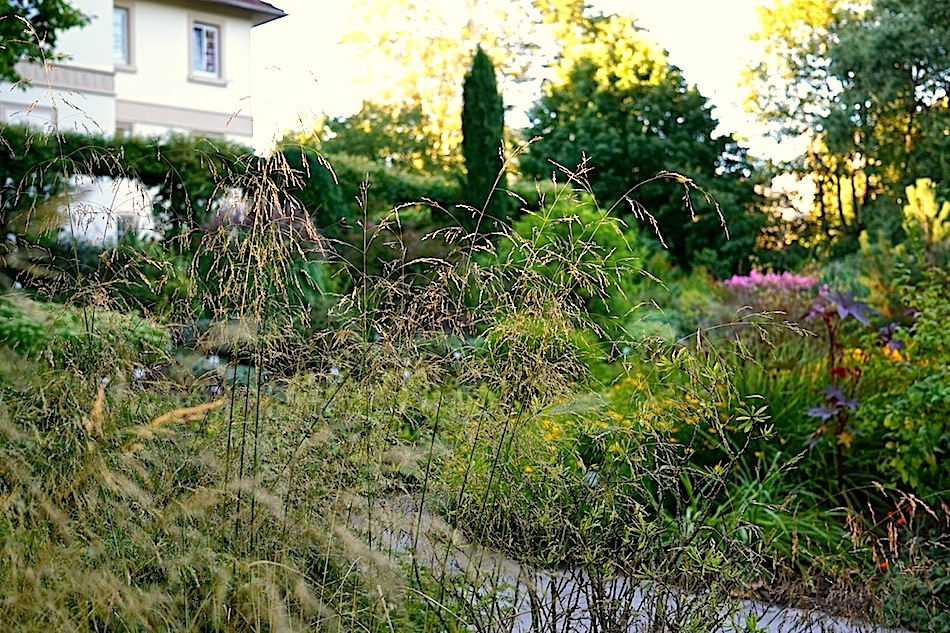
I started out in March meaning to track the flowers of the Spielhaus (playhouse) perennial garden at the University of Hohenheim for this year’s GB Bloom Days. However, travel, gloomy weather, and hurting feet have interfered, and I haven’t posted an update since May.
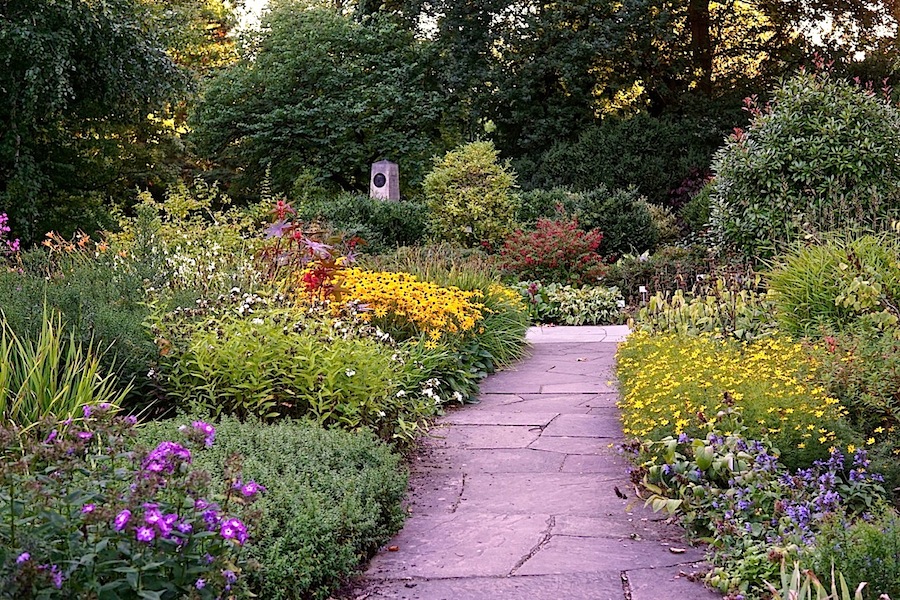
I did pay a visit this week, however, on Tuesday evening, and there was lots of color.
Above, American Rudbeckia hirta or Black-eyed Susans draw the eye, paired with a red cultivar of Ricinus communes, and Coreopsis on the other side of the path.
The obelisk in the background memorializes Duke Carl Eugen von Württemberg and Franziska von Hohenheim. They built Hohenheim Palace (now a University building) and the English landscape-style garden/arboretum around it (now the University’s botanical garden).
Franziska was first the king’s mistress, then his morganatic wife. The main palace building was barely finished when he died. The family then pressured her into giving up Hohenheim for another estate.
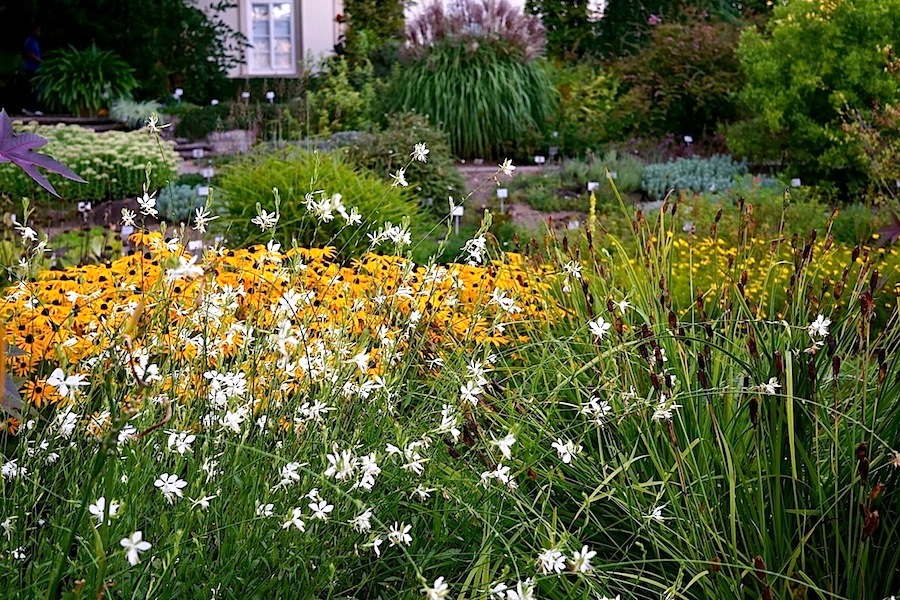
Above: the Rudbeckia and white Oenothera lindheimeri (gaura).
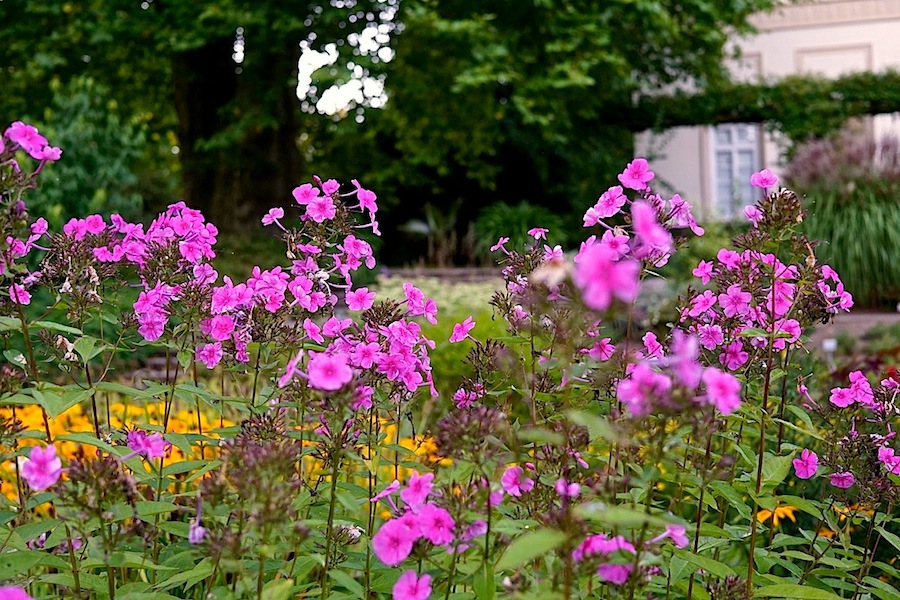
This pink phlox has a beautiful scent, but it has grown up over its label, so I can’t tell you the variety.
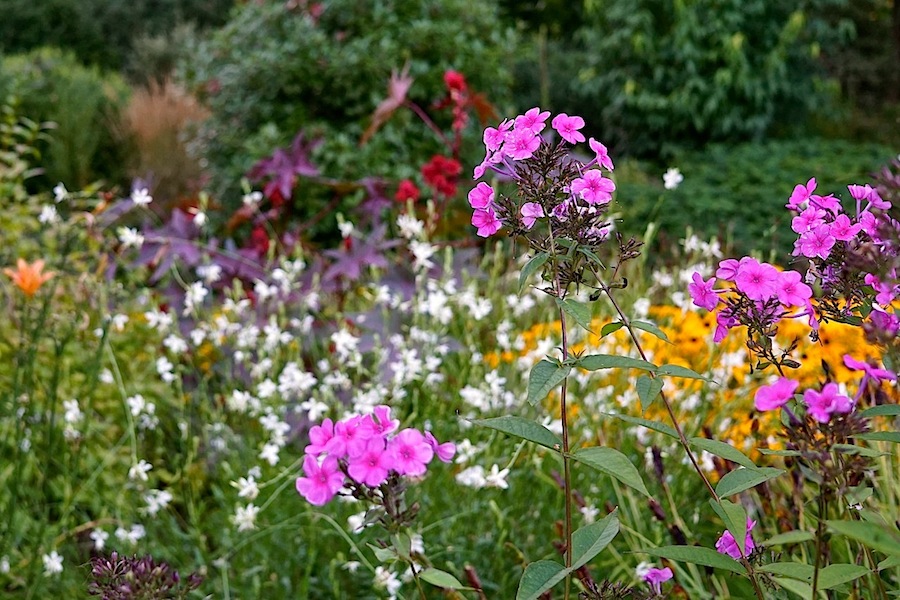
Above: with the red caster bean plant behind it.
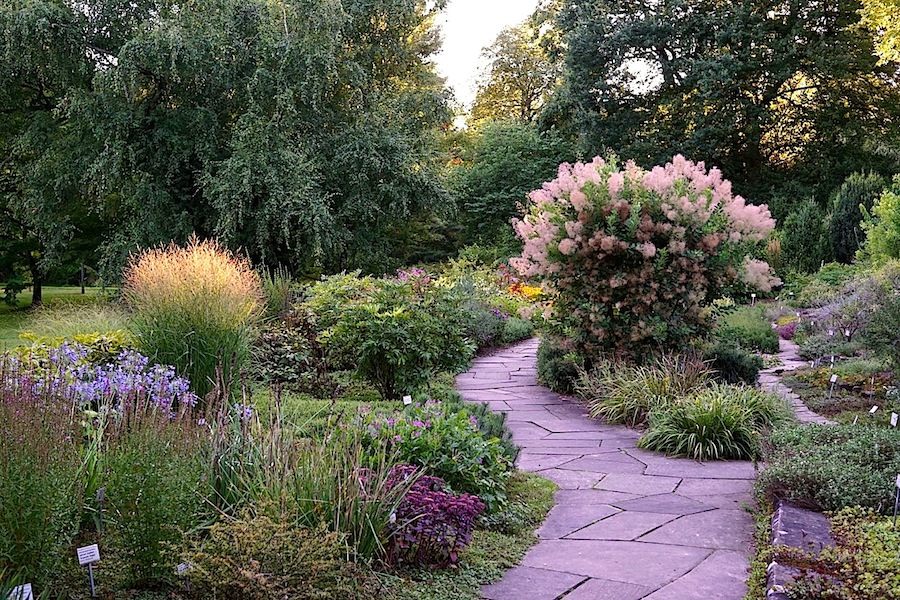
The garden is roughly a rectangle with a bit of slope, set in front of the Spielhaus terrace. Narrow stone paths run through it lengthwise.
I don’t have the name of the species of the Panicum grass on the left above. The smoke bush on the right of the path is Cotinus coggygria ‘Young Lady’.
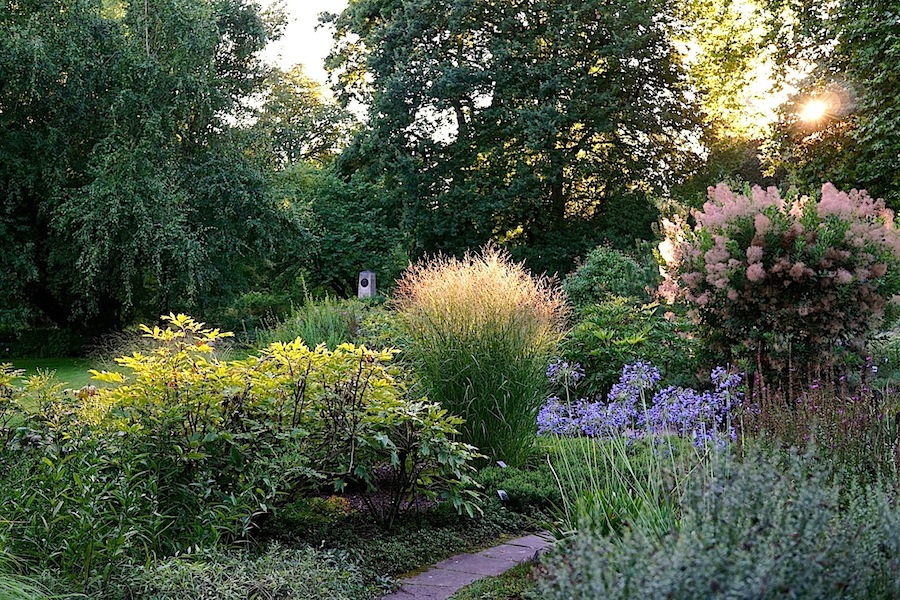
Above: tree peonies on the left, Agapanthus on the right.
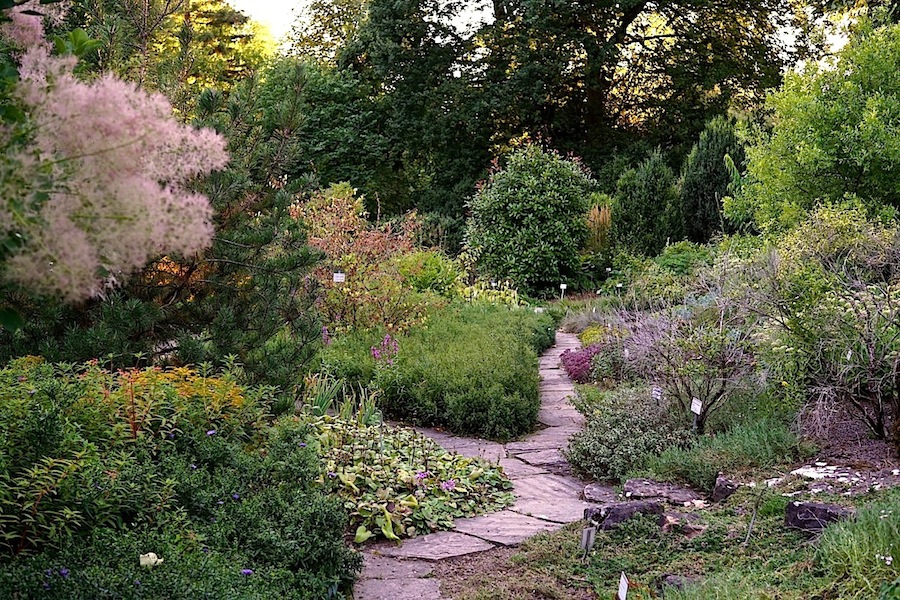
Above: the center area.
I particularly like the garden’s layout. And the display of plants is very popular with the neighborhood. It’s rare that I get it almost to myself.
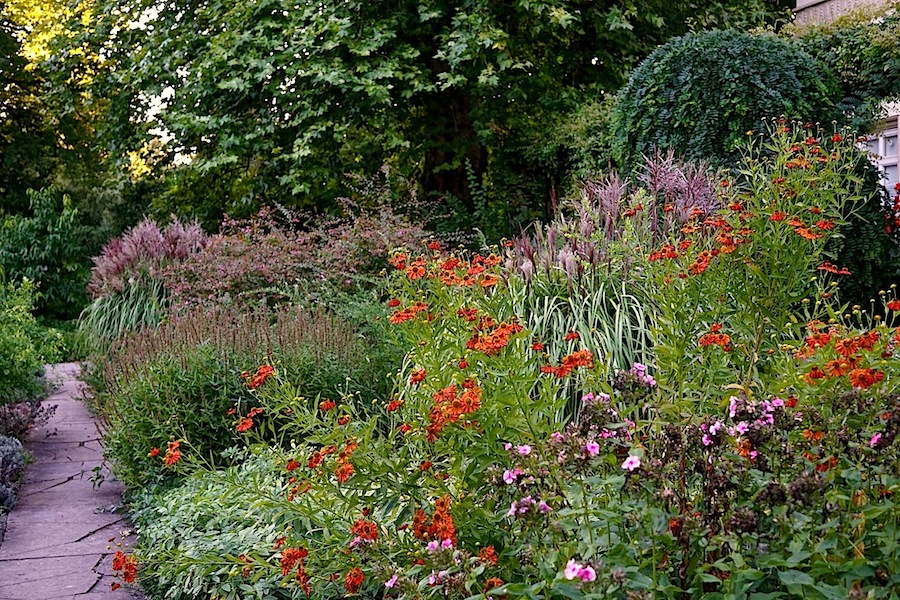
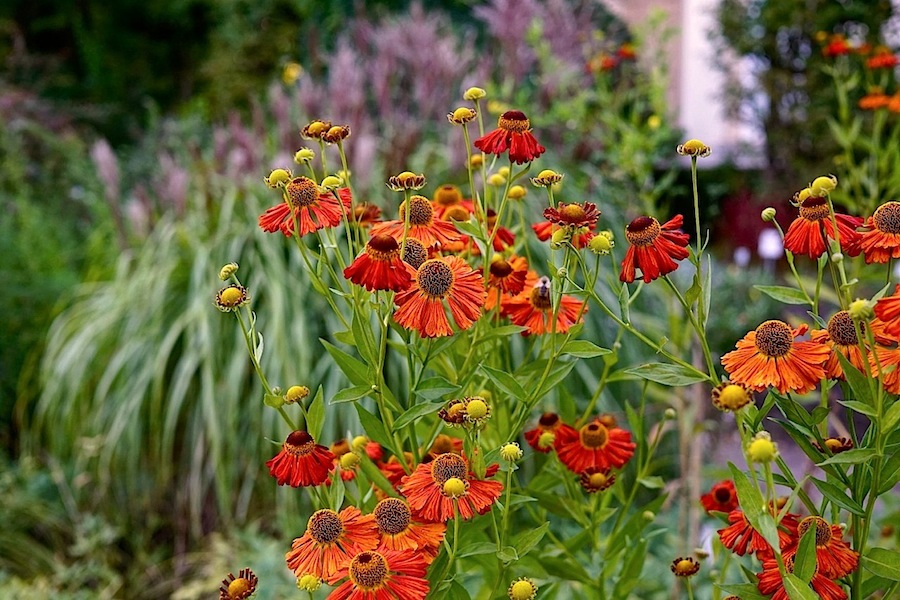
Above and below: heleniums in front of the terrace — unfortunately, the label was hidden.
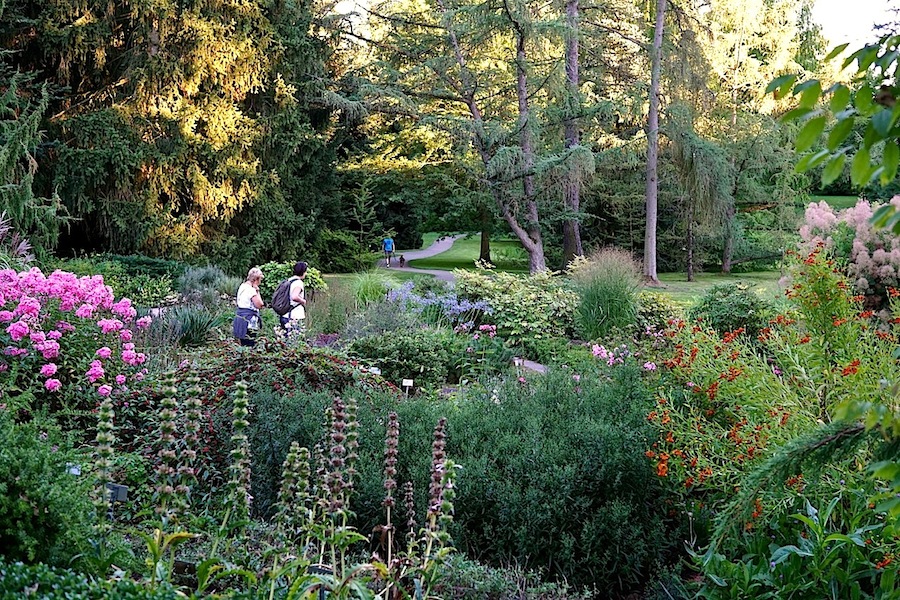
Above and the two photos below: looking across the garden from the Spielhaus terrace — left to right. (That’s another — taller and fuller — pink phlox on the left.)
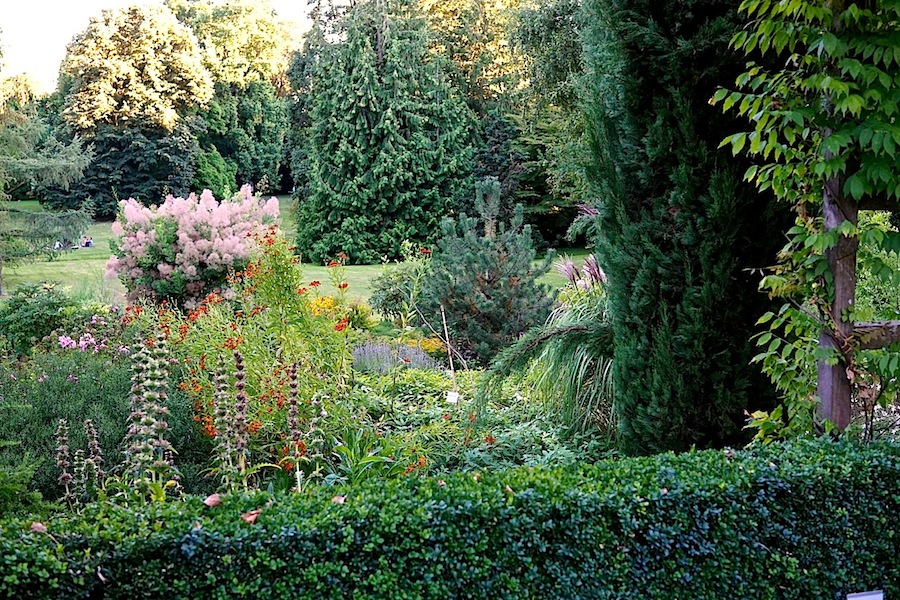
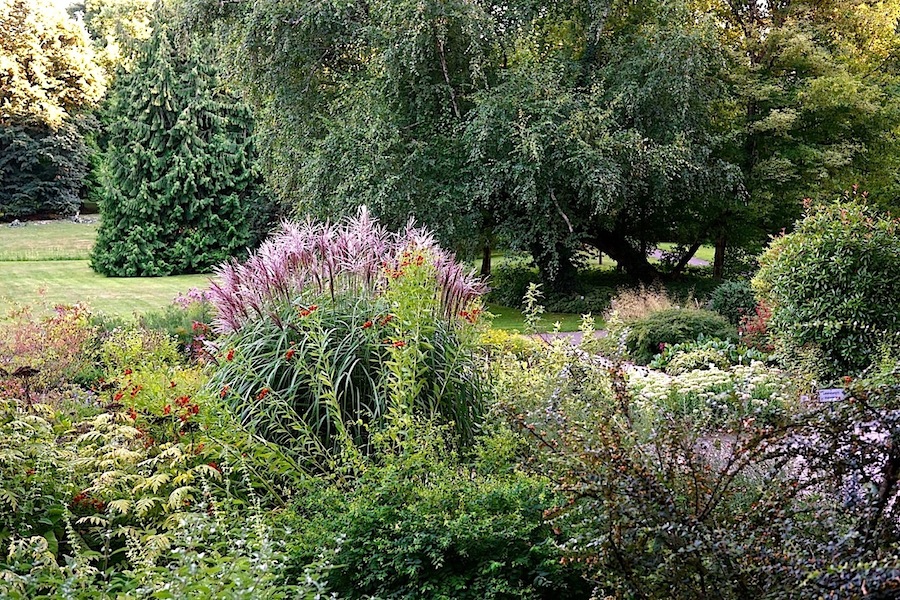
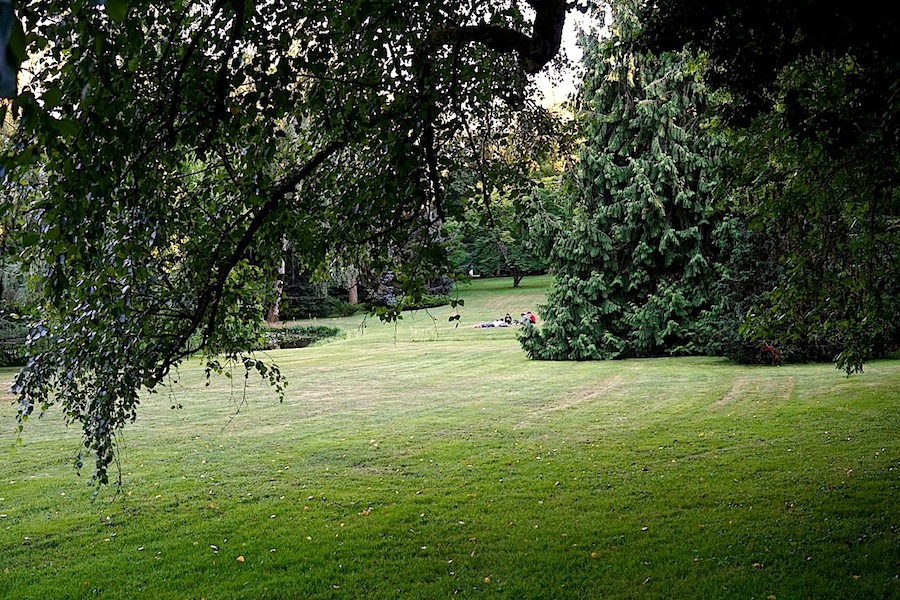
Above: Just beyond the Spielhaus area, the trees, pond (left), and lawn of Carl Eugen’s and Franziska’s landscape garden.
Throughout this summer, the University has opened one room inside the Speilhaus on weekend afternoons. If you click on ‘Continue reading’ below and then on any of the thumbnail images, you can see some snapshots that I took in late July. The room holds a scale model of the palace grounds in Carl Eugen’s time, when there were about 60 folly-type buildings. Today, only the Spielhaus and one other remain.
Wordless Wednesday: terrace
Vaux-le-Vicomte
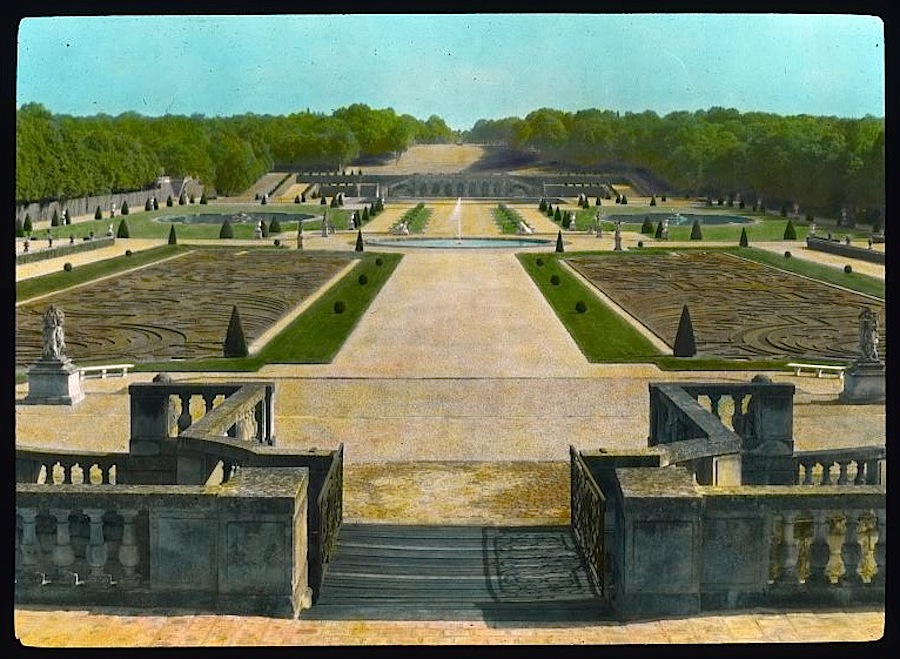
View from the château, Maincy, France, 1925, by Frances Benjamin Johnston, via Library of Congress Prints and Photographs Division.
Vaux-le-Vicomte — the château and garden together — was “the first great work of the French baroque,” according to garden historian Tom Turner.
In his book, The Seven Ages of Paris, Alistair Horne tells the story of the estate’s big reveal to Louis XIV, then only 22 years old and struggling with a nearly bankrupt treasury:
Nicolas Fouquet, a vain, ostentatious and ambitious parvenu, had been Louis’s minister superintendent of finance since 1653. Now aged forty-five, he had just built himself a magnificent mansion at Vaux-le-Vicomte. . . . [O]n 17 August 1661, [he] audaciously invited the King to a lavish gala. . . The massive iron gates gleamed with freshly applied gilt; in the vast gardens laid down by André le Nôtre 200 jets d’eau and fifty fountains spouted on either side of a main alley nearly a kilometer long. For the previous five years, some 18,000 workmen had toiled to produce this wonder of the modern age, eradicating three villages that had happened to be in the way. Certainly it trumped the modest royal hunting-lodge of the King’s father out at Versailles, which Louis was currently doing up.
Inside the imposing mansion the royal party dined off a magnificent gold service which likewise must have made its impression on the King, who had had to sell off his plate to meet military expenditure. . . . [T]he whole episode outraged him. At various points in the evening, Louis came close to losing his temper — whispering to his mother, “Madame, shall we make these people disgorge?” . . . Less than three weeks later, just as he was arriving at a meeting in Nantes, Fouquet was arrested by the legendary D’Artagnan of Three Musketeers fame.
After the arrest, Louis took possession of artwork, furniture, and all the orange trees from Vaux-le-Vicomte. More importantly, he sent its architect, Louis Le Vau, and its painter-decorator, Charles Le Brun — and, of course, Le Nôtre — to Versailles. Fouquet died in prison in 1680.
Seven Ages . . . is a very good history to read if you are planning a trip to the Paris.
I have been taught never to brag but now
I cannot help it: I keep
a beautiful garden, all abundance . . .
I want to take my neighbors into the garden
and show them: Here is consolation.— Paisley Rekdal, from “Happiness“
 enclos*ure