“Children with sailboats at Reflecting Pool, Lincoln Memorial in background, Washington, D.C.,” in the 1920s. Photographer unknown, part of the National Photo Company Collection, Library of Congress Prints and Photographs Division.
Unfortunately, these little boats would be swamped today, as Washington is in the grip of tropical storm Andrea.
Thunder blossoms gorgeously above our heads,
Great, hollow, bell-like flowers,
Rumbling in the wind,
Stretching clappers to strike our ears . . .
Full-lipped flowers
Bitten by the sun
Bleeding rain
Dripping rain like golden honey—
And the sweet earth flying from the thunder.
A garden plot in a communal garden, Town of Locke, Sacramento County, Ca. Photo by Jet Lowe, April 1984, part of a Historic American Buildings Survey (HABS) of the town, via Library of Congress Prints and Photographs Division.
Locke, California, is a small, rural Chinese ghetto on the Sacramento River. It was developed in the early 20th century to serve Chungshan Chinese laborers who worked in the fruit orchards and vegetable fields in California’s Delta region. Today, virtually all Chinese communities in America are urban enclaves. By contrast, Locke has remained an unincorporated village since its founding in 1915. For this reason, it is unique within the United States as the only extant rural Chinese community still occupied by Chinese people.
Today, the population of Locke is 70 to 80 people, about 10 of whom are of Chinese descent.
The dark chocolate brown matches the ironwork on the house.
Also, I had remembered reading long ago, advice by Ken Druse that dark brown was the best color for making less-than-beautiful garden features recede. (He specifically recommended Cabot’s Solid Color Stain in “Spanish Moss.”)
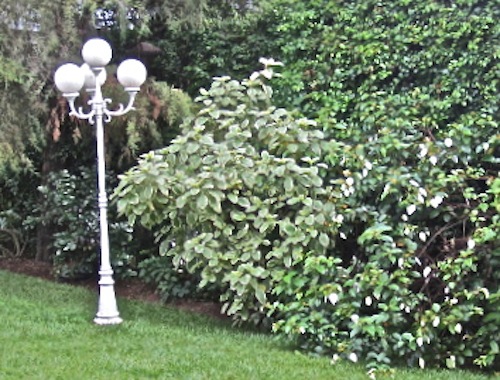
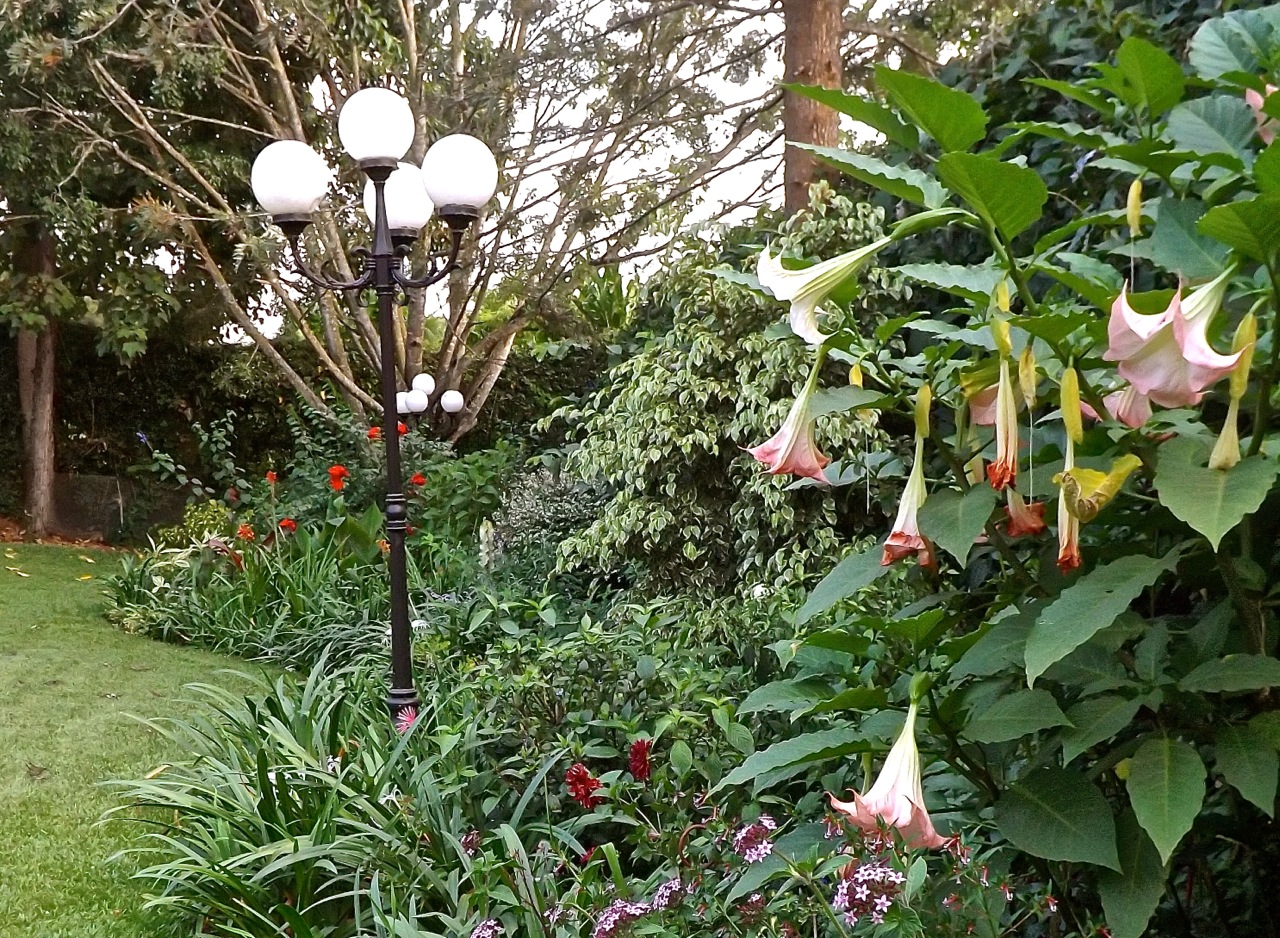
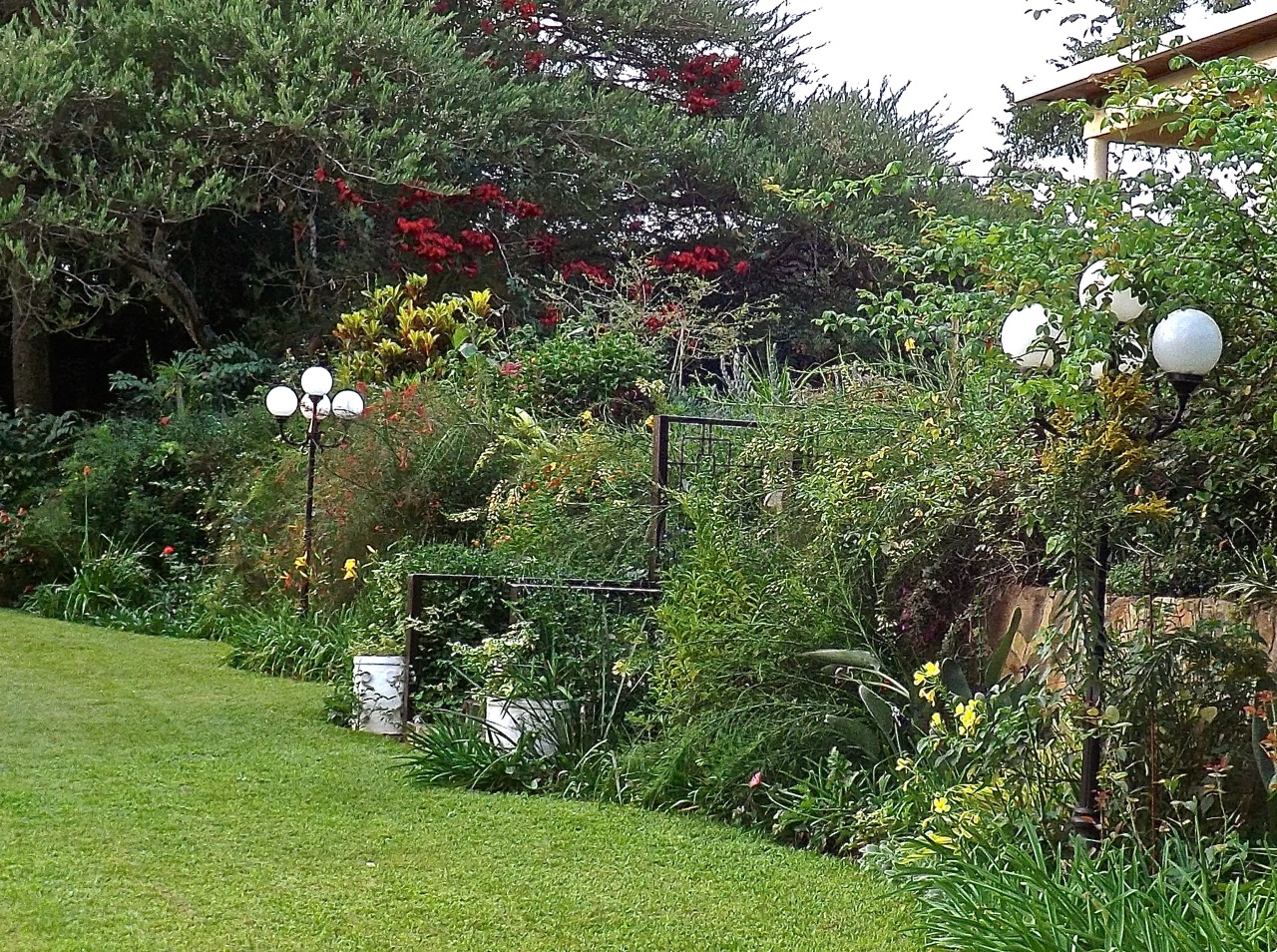
Now, in the evening, we just see floating white balls.
View from an upstairs window of the house. All photos via the Library of Congress Prints and Photographs Division.
This was Grey Gardens in 1914 — long before it was made famous by the 1975 documentary.
The walled garden section of the four-acre estate in East Hampton, N.Y., was designed by Anna Gilman Hill and landscape architect Ruth Bramley Dean.
Anna and her husband, Robert Carmer Hill, had purchased the property in 1913. They sold it to Phelan and Edith Bouvier Beale (whose daughter was Little Edie) in 1927.
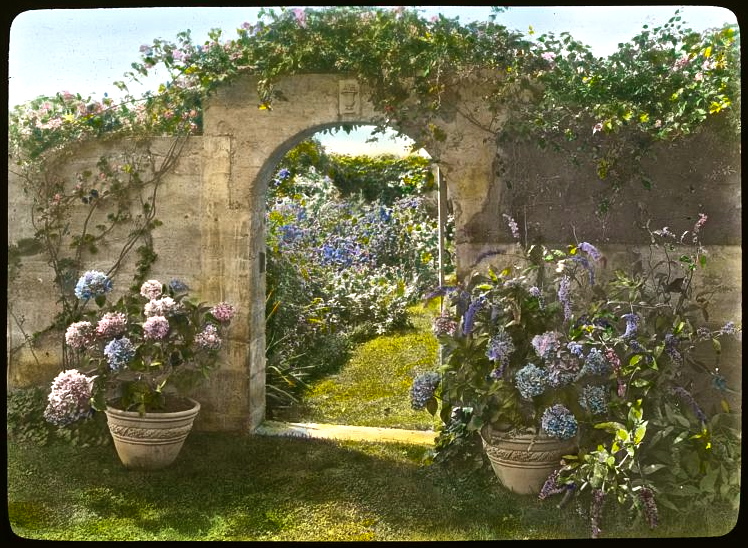
The northeast gate to the walled garden.
Hill imported the concrete walls from Spain. She took the name for the house and garden from its environment.
It was truly a gray [sic] garden. The soft gray of the dunes, cement walls and sea mists gave us our color scheme as well as our name… nepeta, stachys, and pinks… clipped bunches of santolina, lavender and rosemary made gray mounds here and there. Only flowers in pale colors were allowed inside the walls, yet the effect was far from insipid….I close my eyes and sense again the scent of those wild roses, the caress of the hot sun on our backs as we sauntered to and fro from our bath and lazy mornings on the beach.
Beyond the property is the Atlantic Ocean. The walled garden was 70′ x 40′.
A plan of the garden, artist unknown.
The estate (now two acres) has been owned by Ben Bradlee (formerly editor-in-chief of The Washington Post) and Sally Quinn since 1979. They have restored both the house and garden.
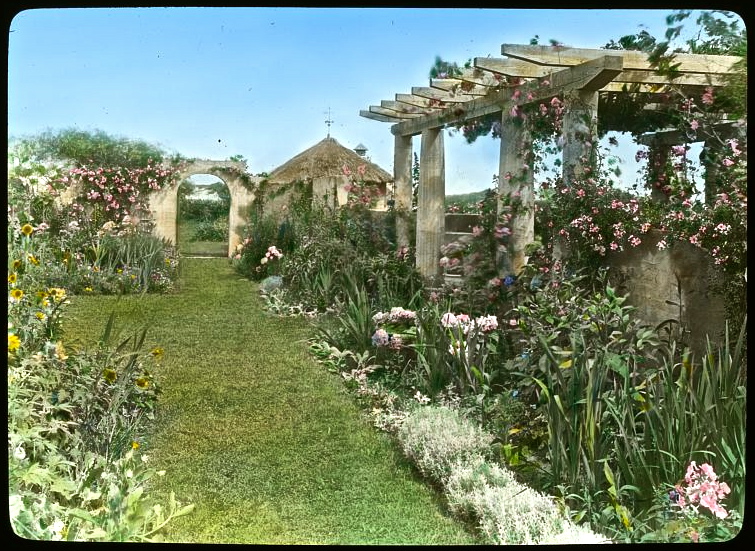
Now the land between the walled garden and the ocean is filled with newer houses and gardens, and there is a very tall hedge just behind the far wall and the pergola.
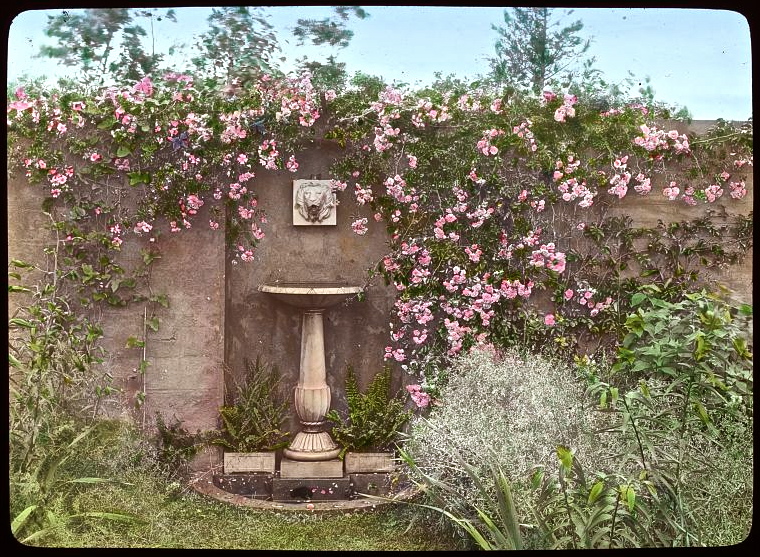
The northeast gate.The original photograph before hand coloring.The bench inside the northeast gate.Looking west to pergola.Birdbath on west wall.Pergola and tool house gate.East gate to the tool house.The garden tool house.Sunroom in the house overlooking the walled garden.
The open doorway in the photo above lined up with the pergola. It seems that, at the time of this photo, there was an opening in the garden wall between the house and pergola. But I can’t tell if the opening was there before or after the time of the other photographs.

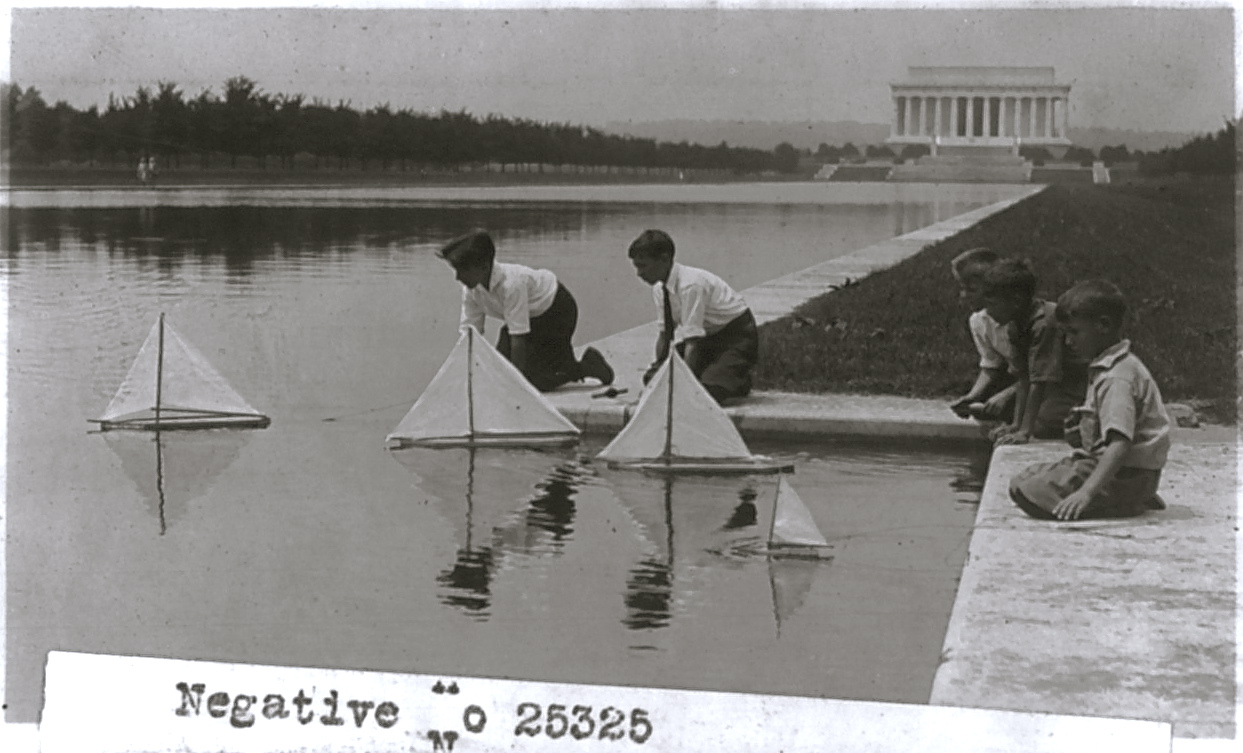 “Children with sailboats at Reflecting Pool, Lincoln Memorial in background, Washington, D.C.,” in the 1920s. Photographer unknown, part of the National Photo Company Collection, Library of Congress Prints and Photographs Division.






 enclos*ure