The Sunday porch: Wiseman, Alaska

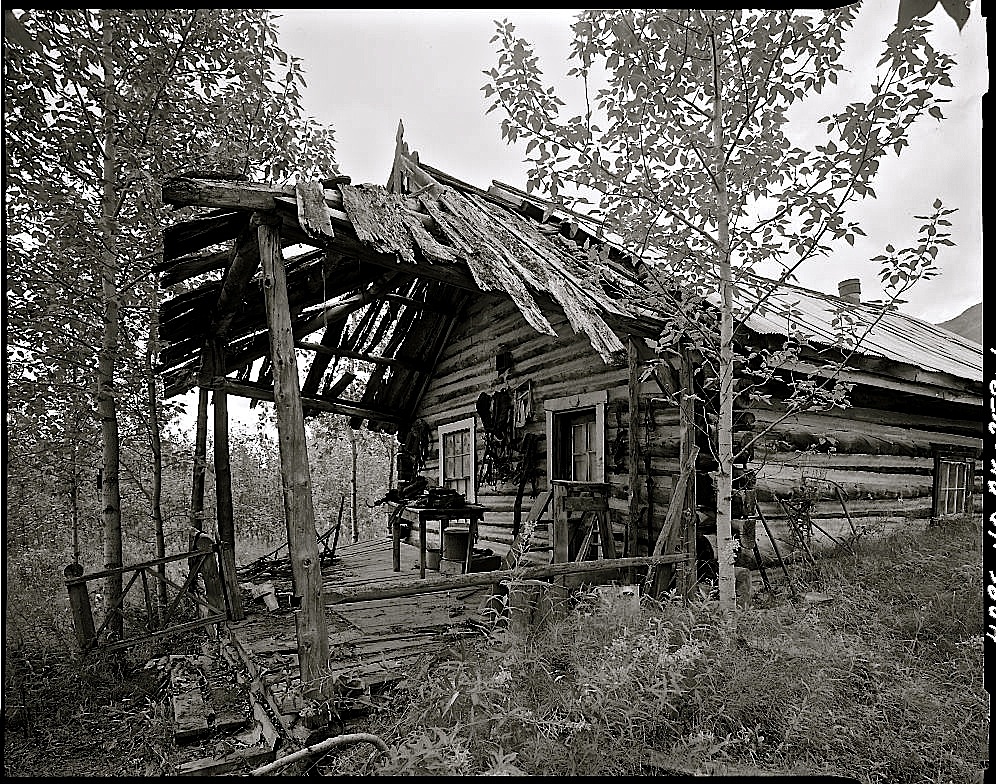
Igloo No. 8 by Jet Lowe, Library of CongressFront porch near the Koyukuk River at Wiseman Creek, Wiseman, Alaska, July 1984. Photo by Jet Lowe for an Historic American Buildings Survey (HABS), via the Library of Congress Prints and Photographs Division.

For over six decades, this little porch sheltered many hours of masculine leisure and conviviality. In 1913, it fronted the Siverly and Bowker Saloon.  The following year, the building was sold to the Pioneers of Alaska and used as one of its local chapters — an ‘Igloo;’ it was Igloo No. 8.   The Pioneers, a fraternal organization, was formed in 1907 “for social purposes to keep alive the memories of the early trailblazers.”

By 1972, the building had been sold again.  At the time of these photos, it was the home of the owner’s son.
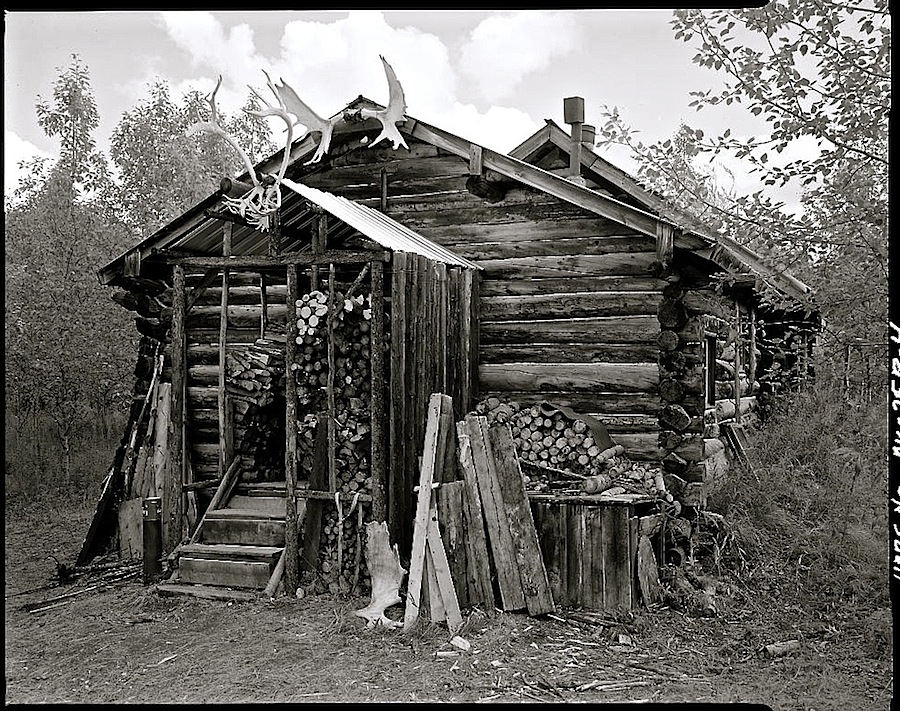
Igloo No. 8, HABS, Library of CongressAbove is the back porch and entrance to the kitchen.
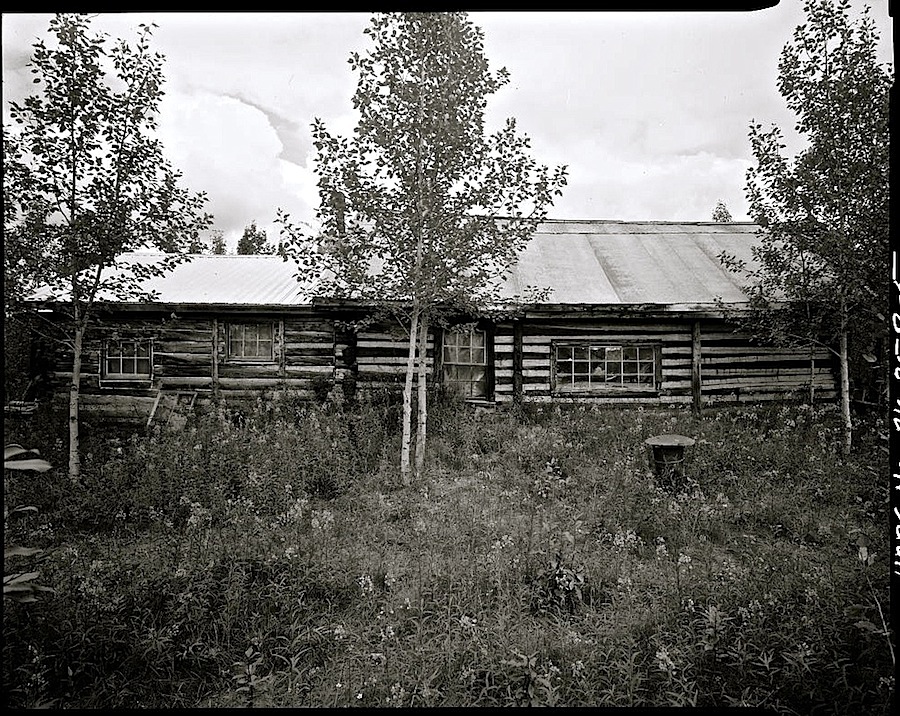
Igloo #8, HABS, Library of CongressAbove is the side view. The flowers and birch trees are so pretty; it’s a pity we don’t have a picture of the view from the front porch. All photos by Jet Lowe.
The Sunday porch: Strawberry Hill

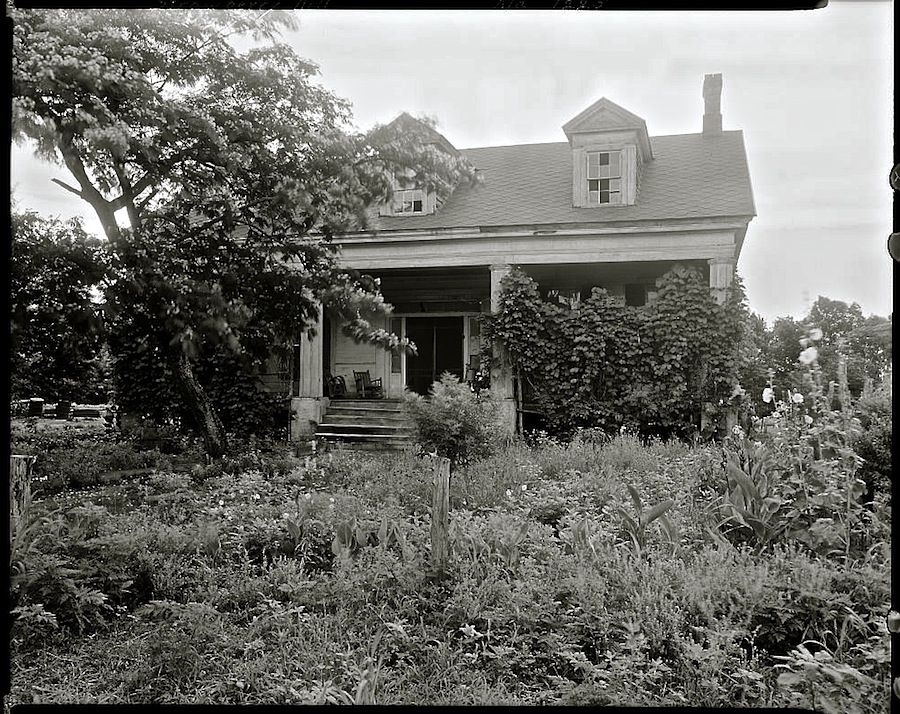
Vintage Photo of Strawberry Hill, Forkland vic., Greene County, Alabama, via Library of Congress Prints and Photographs Division Strawberry Hill, Greene County, Alabama, in 1939.  Photo by Frances Benjamin Johnston, via the Library of Congress Prints and Photographs Division. (Click on the image for a larger view.)

I’ve been looking at and bookmarking a lot of old photographs of beautiful porches lately, so today, I’m starting a Sunday series for these pictures.

The porch, particularly the front porch, connects — with a pause — the private interior of the house with the communal landscape beyond it.   Andrew Jackson Downing wrote:

A porch strengthens or conveys expression of purpose, because, instead of leaving the entrance door bare, as in manufactories and buildings of inferior description, it serves both as a note of preparation, and an effectual shelter and protection to the entrance. . . .

The unclouded splendor and fierce heat of our summer sun, render this general appendage a source of real comfort and enjoyment; and the long veranda round many of our country residences stands instead of the paved terraces of the English mansions as the place for promenade; while during the warmer portions of the season, half of the days or evenings are there passed in the enjoyment of cool breezes, secure under the low roofs supported by the open colonnade, from the solar rays, or the dews of night.

In his pattern books of the 1840s and 50s, Downing popularized the front porch for the American home as a link to nature.

I see it as a box seat for the theater of the garden or of the street.  Although the one above seems to have half drawn its curtains against the buzzing and chirping action of the cottage garden below.

The porch — and 1821 house attached — still exist, although without the vines and flowers.  The surrounding land is now a cattle ranch. In fact, it is currently for sale for about $3.8 million.

Picturing D.C. (year by year)

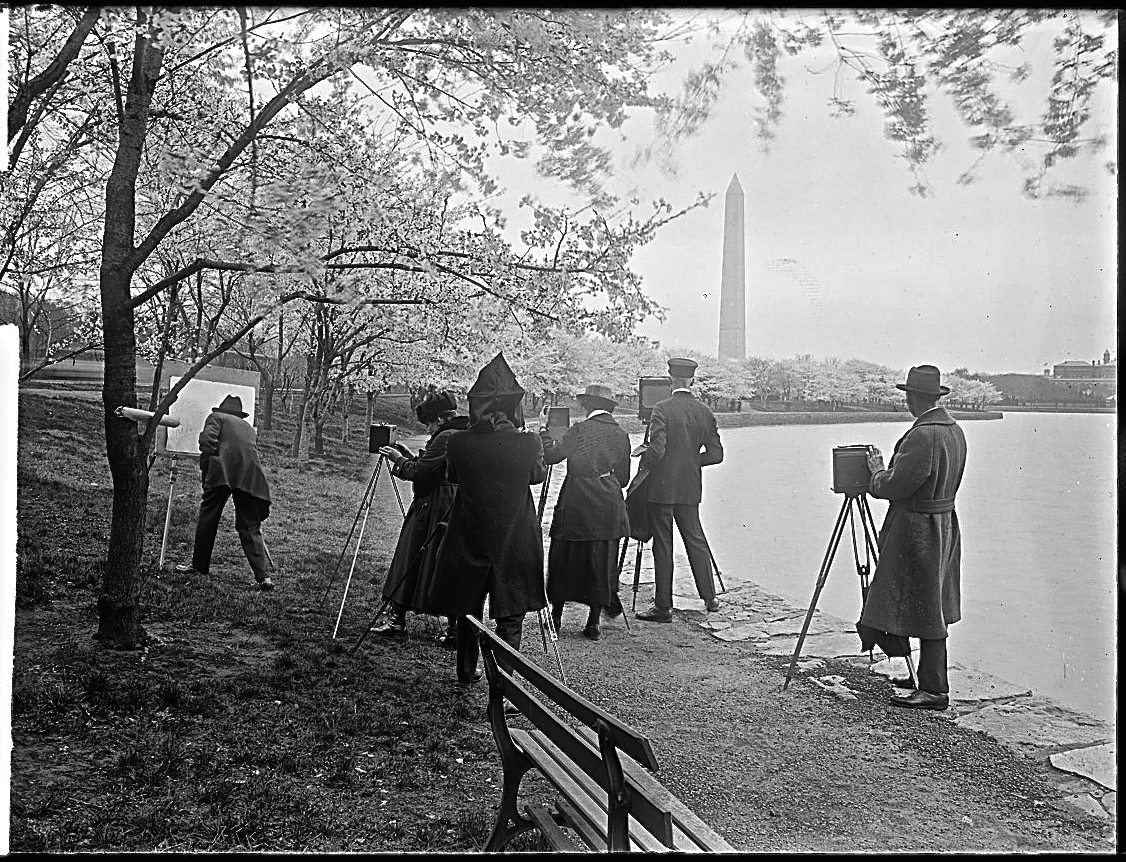
"Photographers shooting cherry blossoms, Washington D.C., April 7, 1922," by National Photo Company, Library of Congress Prints and Photographs Division.
“Photographers shooting cherry blossoms, Washington D.C., April 7, 1922,” by National Photo Company, Library of Congress Prints and Photographs Division and D.C. Past.

I want to share my recent discovery of D.C. Past, a tumblr blog that is “curating the photographic history” of Washington, D.C.

Kate Birmingham and Guillermo Esteves choose 19th and 20th century photos from the online catalogues of the Library of Congress and the National Archives.  However, when shown on D.C. Past, the images are generally much larger and (pretty darn) sharp.

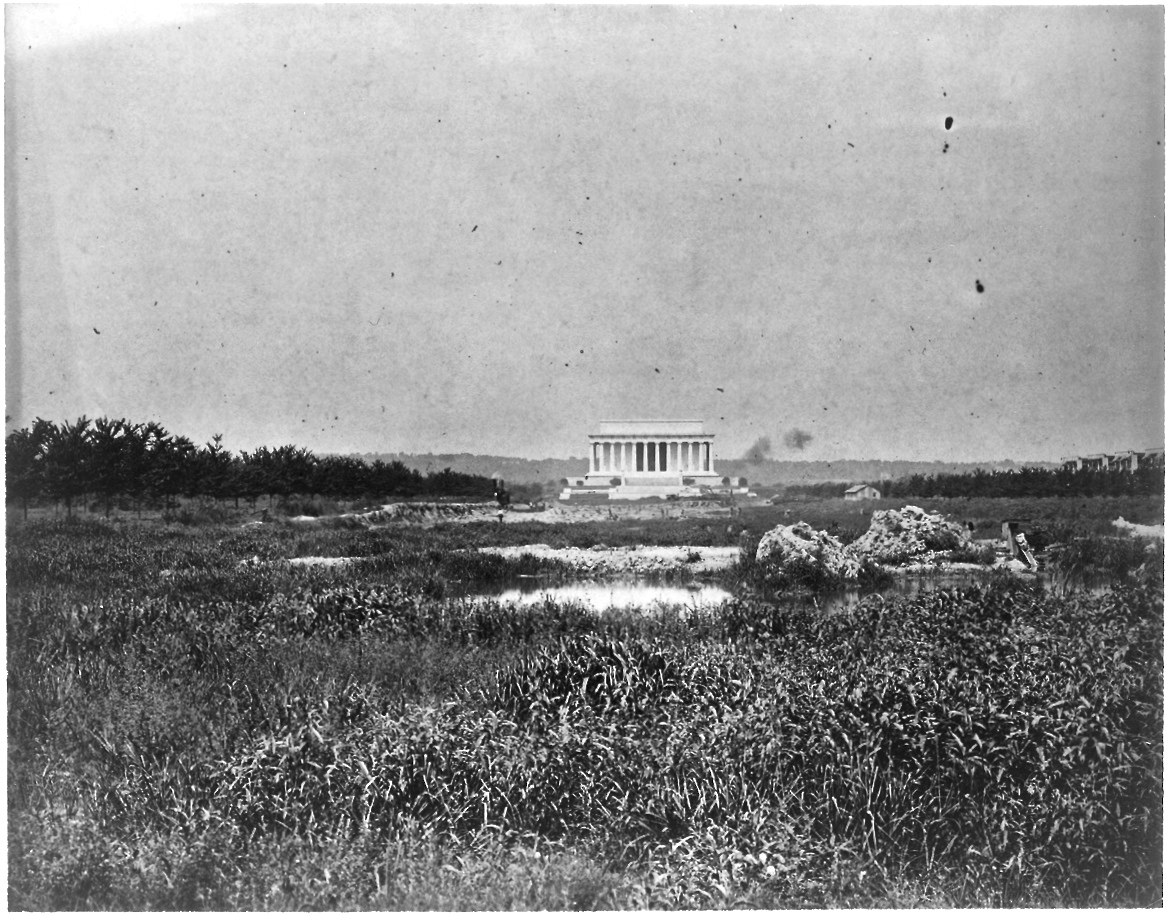
I love this early shot, below, of the Lincoln Memorial — the Reflecting Pool is still only a wetland.

"Lincoln Memorial with Marsh in foreground," 1917, by National Photo Company, Library of Congress Prints and Photographs Division.
“Lincoln Memorial with marsh in foreground,” 1917, by National Photo Company, Library of Congress Prints and Photographs Division and D.C. Past.

Four years later. . .

"Lincoln Memorial from Monument," May 30, 1922, by National Photo Company, Library of Congress Prints and Photographs Division.
“Lincoln Memorial from Monument,” May 30, 1922, by National Photo Company, Library of Congress Prints and Photographs Division and D.C. Past.

You’ll have to go to D.C. Past, here and here, for the “much larger” part.

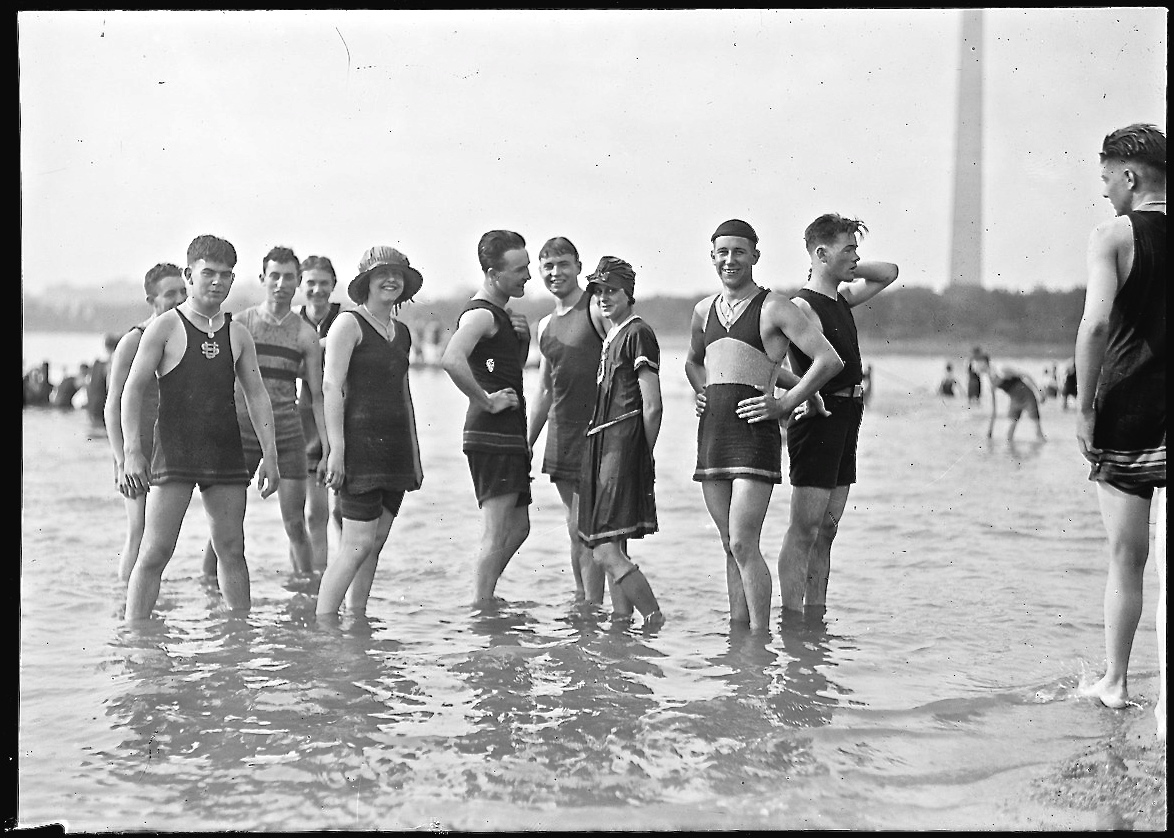
I like these swimmers below too.  They’re in the Tidal Basin.  And yesterday’s post was interesting — look at the (lack of) height of the fence.

"Bathing Beach,"  Washington, D.C., Tidal Basin, ca. 1912-1930, by National Photo Company, Library of Congress Prints and Photographs  Division.
“Bathing Beach,” Washington, D.C., Tidal Basin, ca. 1912-1930, by National Photo Company, Library of Congress Prints and Photographs Division and D.C. Past.

(A link to the photo at the top is here.)

D.C. Past is still rather new; its first picture was posted in March 2013.  But this makes it easy to catch up and get hooked.

There is also a NYC Past here and a Chicago Past here.

Picturing England (square by square)

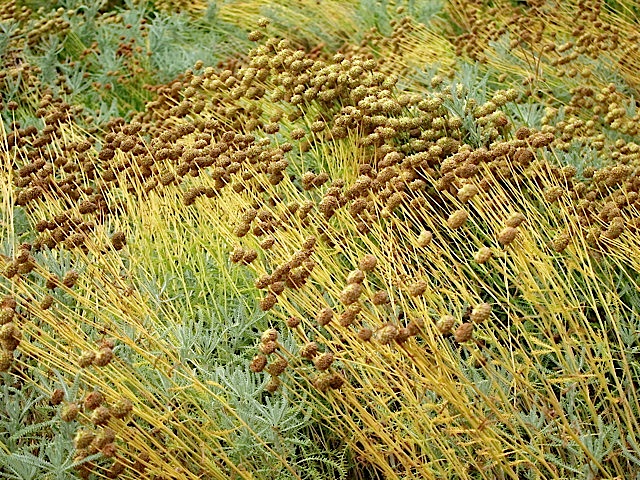
Helichrysum italicum at Yalding Organic Gardens, a 10-acre garden open to the public near Benover, Kent.  Photo by Oast House Archives.
Helichrysum italicum at Yalding Organic Gardens, a 10-acre garden open to the public near Benover, Kent. Photo by Oast House Archives.

If a tour of the great gardens of the British Isles is not in your cards this summer, one vicarious alternative is Geograph®  — an online project that “aims to collect geographically representative photographs and information for every square kilometre of Great Britain and Ireland.”

Since 2005, contributors have submitted over 3.5 million images covering over 81% of the total area.  You can search them by kilometre grid, by place name, by national trails, or by subject of interest (‘gardens’).

You can also join for free and upload your own images.  (Much of rural Ireland needs filling out.)

I spent an hour looking for gardens and country landscapes and found. . .

the classic,

The Italian Garden, Hever Castle, Kent, by Derek Voller.

the trendy,

Olympic Park, Stratford, Newham, by Chris Downer.

the urban,

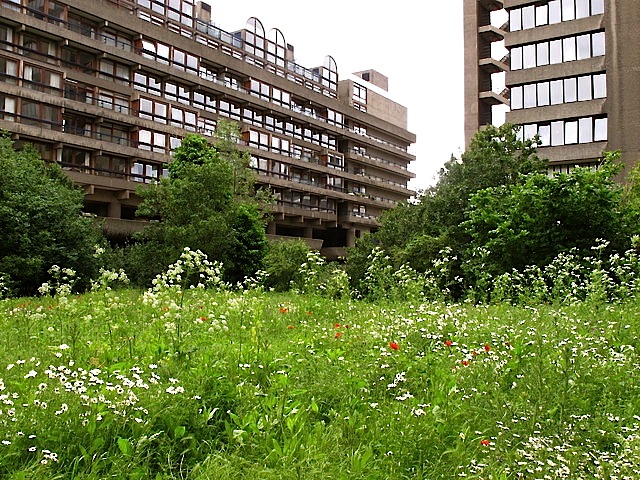
Fann Street Wildlife Garden, a private residents' garden in Barbican Estate, London, by David Hawgood.
Fann Street Wildlife Garden, a private residents’ garden in Barbican Estate, London, by David Hawgood.  The garden includes a meadow, nest boxes, a pond, and old logs for insects.

the open air,

Footpath near Gedney Drove End, Lincolnshire, by Guy Erwood.  The ditch is the Old Sea Bank.
Footpath near Gedney Drove End, Lincolnshire, by Guy Erwood. The ditch is the Old Sea Bank.

the normally off-limits,

Lambeth Palace, the official residence of the Archbishop of Canterbury, London, by Ian Yarham. He wrote:  "The first buildings on the site being constructed around 1200. In the latter half of the 19th century, Archbishop Tait opened the eastern end of the grounds to the local poor, enabling ".. scores of pale children" to play more often out-of-doors. This part of the Palace gardens officially became a public park in 1901 as Archbishop's Park. The Palace Gardens are not generally open to the general public, but on the last Saturday in June they are used for the North Lambeth Fete. This is when I was able to visit the gardens. The Palace Gardens are classically landscaped parkland with large specimen trees set in well-tended lawns and borders, a Chinese garden, a herb garden, a terraced rose garden and a wild garden."
Lambeth Palace, the official residence of the Archbishop of Canterbury, London, by Ian Yarham.

the far-flung,

Garden and gardener at Gravens, Shetland Islands, by Oliver Dixon.  He wrote: "Despite the unpromising climate, there are some very keen gardeners on Shetland, with some fine examples of rock gardens."
Garden and gardener at Gravens, Shetland Islands, by Oliver Dixon. He wrote: “Despite the unpromising climate, there are some very keen gardeners on Shetland, with some fine examples of rock gardens.”

the forgotten,

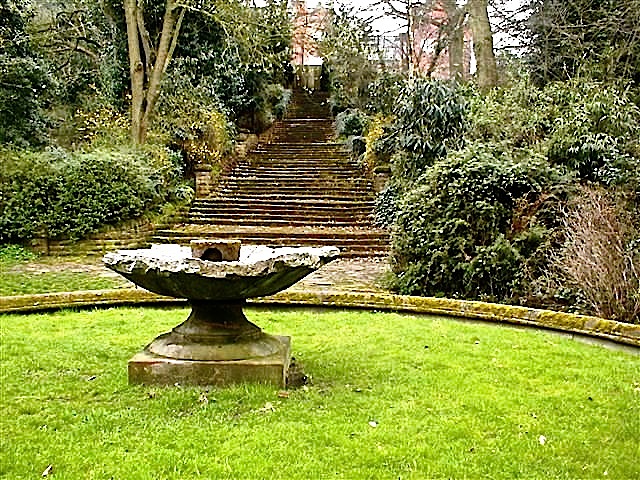
Former garden pond and fountain of the gardens of Bestwood Lodge, Nottinghamshire, by Mick Garratt. Behind are steps that lead nowhere now but once lead to the lodge.
Former garden pond and fountain of the gardens of Bestwood Lodge, Nottinghamshire, by Mick Garratt. The steps now lead nowhere but once went to the Lodge.

the charming,

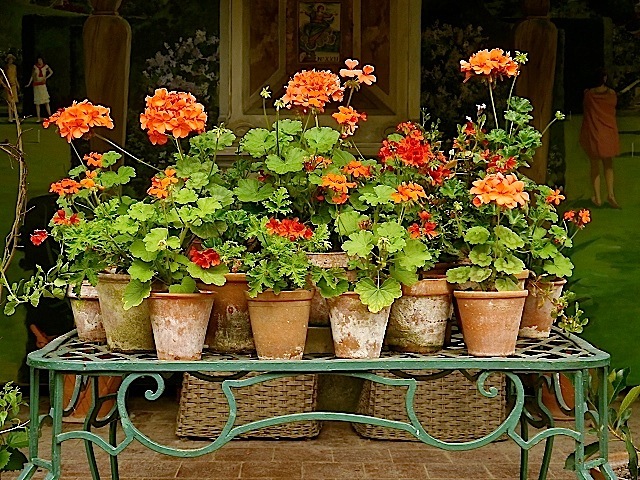
Geraniums at Hidcote Manor Garden, near Hidcote Boyce, Gloucestershire, by David Dixon.

the sweet,

Snowdrop, an Old Sussex Star, at Harlow Carr Gardens, near Beckwithshaw, North Yorkshire, by Rich Tea.  The garden is run by the Royal Horticultural Society.
Snowdrop, an Old Sussex Star, at Harlow Carr Gardens, near Beckwithshaw, North Yorkshire, by Rich Tea. The garden is run by the Royal Horticultural Society.

the atmospheric,

Cox Tor Triangulation Pilar, near Peter Tavy, Dartmoor, Devon, by Nigel Cox.
Cox Tor Triangulation Pillar, near Peter Tavy, Dartmoor, Devon, by Nigel Cox.

the inspiring,

Derek Jarman's garden, Dungeness, Kent, by Malc McDonald.
Derek Jarman’s garden, Dungeness, Kent, by Malc McDonald.

the sad,

Wickham Gardens, near Lincoln, by Richard Croft.  He wrote:  "Sadly, the pavilion has lost its roof and the playground almost completely denuded of all play equipment, condemned by health & safety concerns. I played here for countless hours as a boy in the 1960s and I wonder what the future holds for Wickham Gardens playground."
Wickham Gardens, near Lincoln, by Richard Croft. He wrote: “[T]he pavilion has lost its roof and the playground [is] almost completely denuded of all play equipment, condemned by health & safety concerns. I played here for countless hours as a boy in the 1960s and I wonder what the future holds for Wickham Gardens playground.”
the weird,

Riverhill Himalayan Gardens on the grounds of Riverhill House, near Underriver, Kent, by Richard Croft.  The gardens feature rhododendrons and rare trees and a view point over the Weald of Kent.  And, for some undivulged reason, a person dressed as a yeti, "moving through Chestnut Wood . . . looking rather uncomfortable in 30° heat on the hottest day of the year."
Riverhill Himalayan Gardens on the grounds of Riverhill House, near Underriver, Kent, by Richard Croft. The gardens feature rhododendrons and rare trees and a view point over the Weald of Kent –and a person dressed as a yeti, “moving through Chestnut Wood . . . looking rather uncomfortable in 30°C heat.”

the possible DIY,

The walled garden, Abbotsford, near Tweedbank on the Scottish Borders, by Barbara Carr.  Sir Walter Scott laid out the garden in the 1820s.
The walled garden, Abbotsford, near Tweedbank on the Scottish Borders, by Barbara Carr. Sir Walter Scott laid out the garden in the 1820s.

the thing-I-don’t-want-to-have-to-do-myself,

Westminster seen from the London Eye, by Raymond E. Hawkins.

and, of course, the super-old and historic.

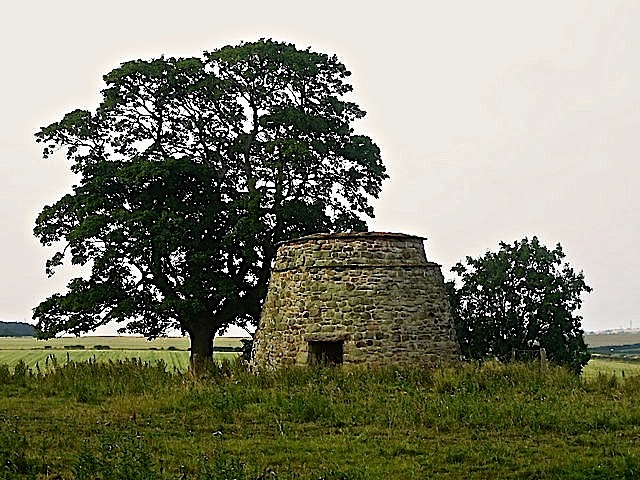
Restored medieval dovecoat, near Buckton, Northumberland, by Graham Robson.

All the above photos are copyrighted to the photographers named in the captions and are licensed for reuse under this Creative Commons (CC) License.

Happy Fourth of July

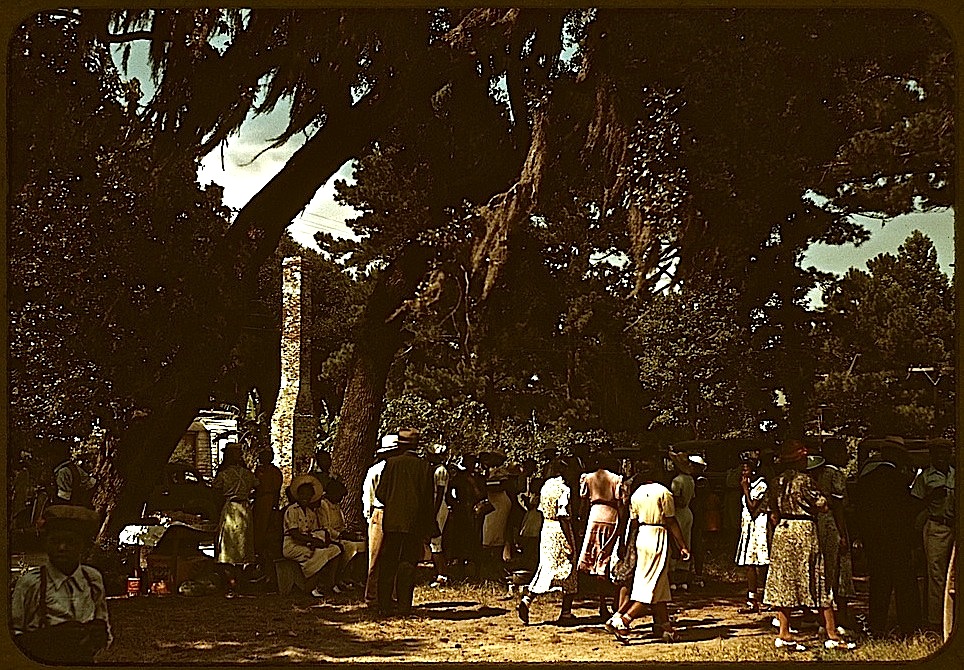
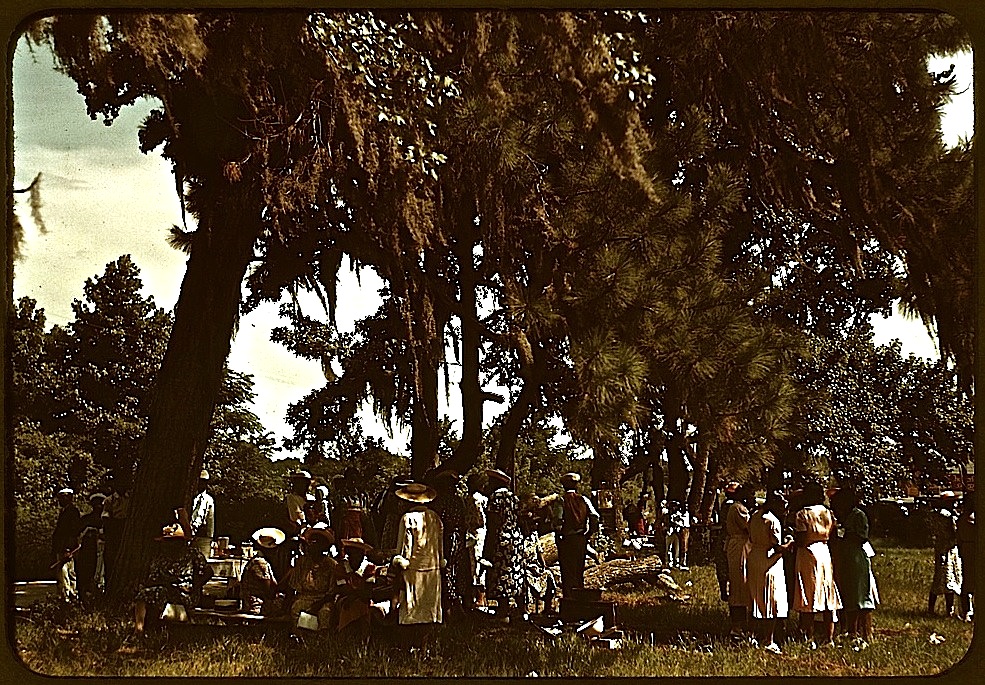
1939 Fourth of July on St. Helena Island, S.C., by Marion Post Wolcott, Library of CongressI found these early color slides of a 1939 community Fourth of July picnic on St. Helena Island, South Carolina, by Marion Post Wolcott.*

1939 Fourth of July on St. Helena Island, S.C., by Marion Post Wolcott, Library of CongressThey’re rather shadowy, but still lovely — like old oil paintings.

1939 Fourth of July on St. Helena Island, S.C., by Marion Post Wolcott, Library of CongressTo scroll through larger pictures, click on ‘Continue reading’ below and then on any thumbnail in the gallery. I lightened the images here a little, but those in the gallery are the original versions.

1939 Fourth of July on St. Helena Island, S.C., by Marion Post Wolcott, Library of CongressSt. Helena Island is one of the Sea Islands and a center of African-American Gullah culture and language.

1939 Fourth of July on St. Helena Island, S.C., by Marion Post Wolcott, Library of CongressHere in Rwanda, the American Embassy held its Independence Day reception last night. This is because the 4th is Rwandan Liberation Day — when Kigali was liberated in 1994, and the genocide was effectively ended. July 1 is Rwanda’s Independence Day, celebrating the end of Belgian colonialism in 1962.

1939 Fourth of July on St. Helena Island, S.C., by Marion Post Wolcott, Library of Congress


*via Library of Congress Prints and Photographs Division

Continue reading “Happy Fourth of July”