The Sunday porch: dogtrot in Texas

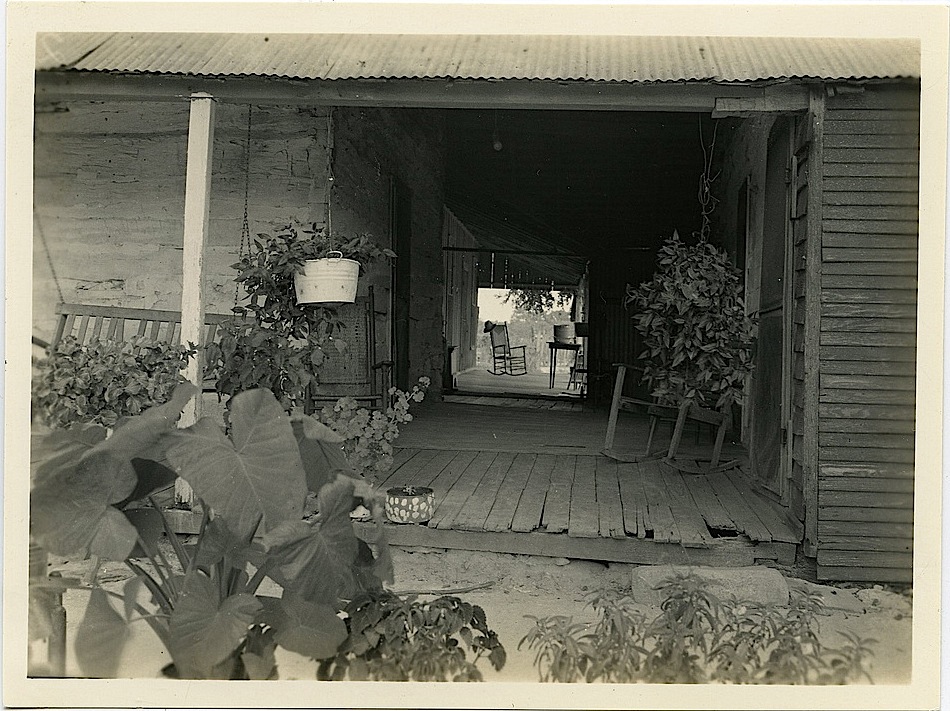
The Sunday porch/enclos*ure: dogtrot in Texas, 1935, probably by Fanny Ratchford, via Texas State Archives Commons on flickr“Unidentified Dogtrot* House” in Texas (exact location unknown), 1935, probably** taken by Fanny Ratchford, via Texas State Archives Commons on flickr.
Fannie Elizabeth Ratchford was a librarian who worked in the rare books collection of the University of Texas at Austin from 1919 to 1957.  During the 1930s and 40s, she also began to put together a photographic and data survey of 19th c.  Texas architecture.

Unfortunately, she ran out of time and funding before the planned book could be assembled and published.  Her images, correspondence, questionnaires, and lists were donated to the Texas State Archives.  Only the photos are available online, but they are wonderful.  I’ll post some more in the coming weeks.

They sang Green, Green Grass of Home.
They sang Ne Me Quitte Pas beneath mesquite.

Ange Mlinko, from “Escape Architecture


*More about dogtrot houses in Texas here.

**According to an email from the Archives:  “Although the majority of the images within our Fannie Ratchford photograph collection were taken by Ratchford, she also acquired photographs from the Historic American Building Survey [HABS] as well as other photographers.”

The winter garden: Mark Twain House

Conservatory, Mark Twain House, HABS, Library of CongressThe conservatory of the Mark Twain House, viewed from the library, Hartford, Connecticut, photographer not noted.*

Samuel Clemens (aka Twain) and his wife built the house in 1874 in a prestigious neighborhood, which included the homes of Harriet Beecher Stowe, garden writer Charles Dudley Warner, and suffragist Isabella Beecher Hooker.

“The Clemenses were known for their ostentatious lifestyle and entertaining,” according to the HABS. “[T]he house was fitted with the most advanced technological equipment of the day, including a telephone, speaking tubes and bells, burglar alarm, gas lighting, central heating, and extensive plumbing.”

The floor of the conservatory is pea gravel.

Another winter garden is here.

Climate is what we expect, weather is what we get.

— Mark Twain


*The photo is part of a 1983 Historic American Buildings Survey (HABS), via Library of Congress Prints and Photographs Division.  You can see and read more of this survey here.

The Sunday porch: Sherrill Inn

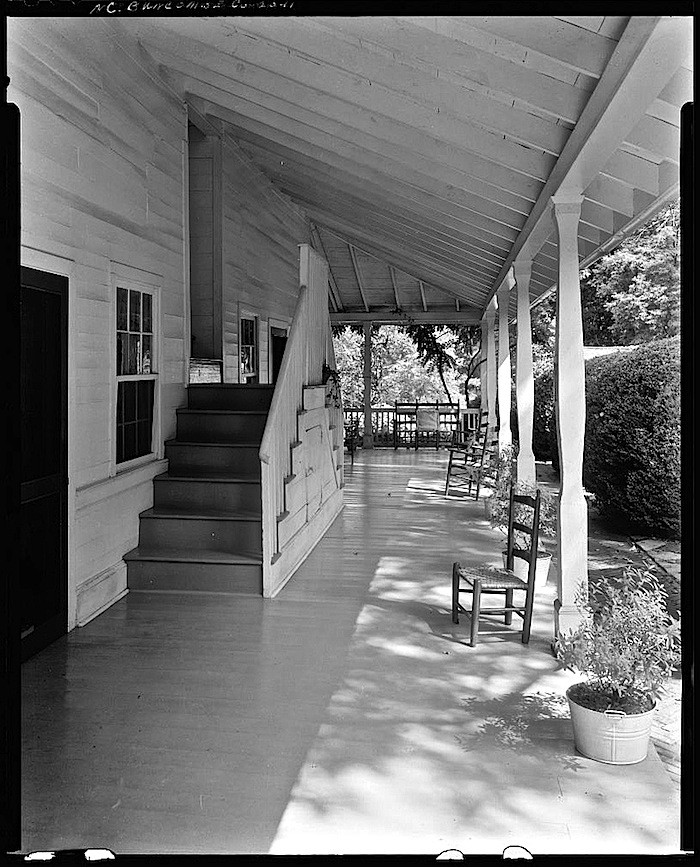
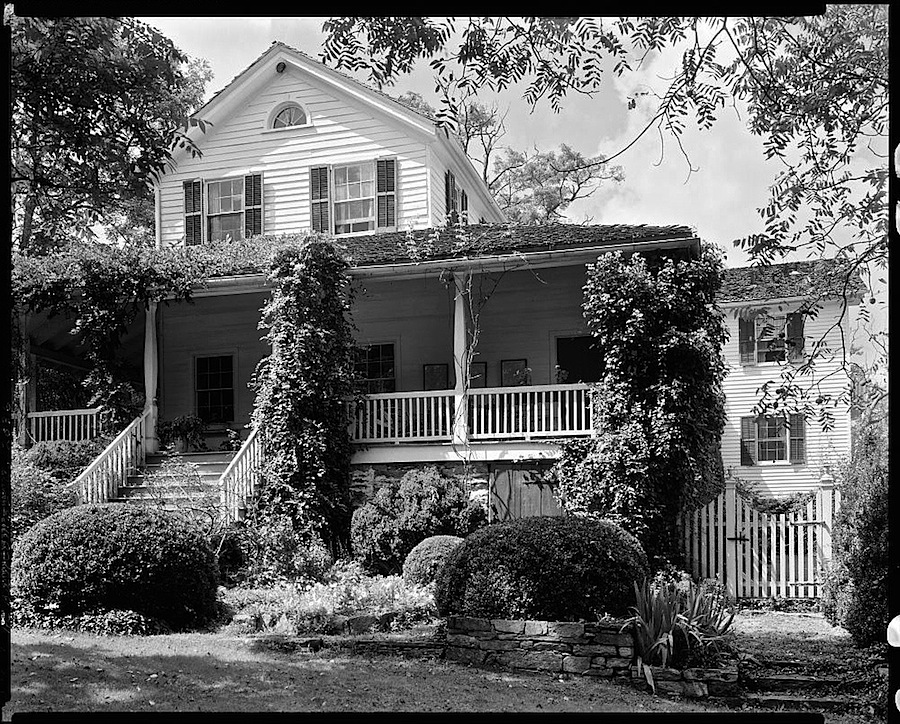
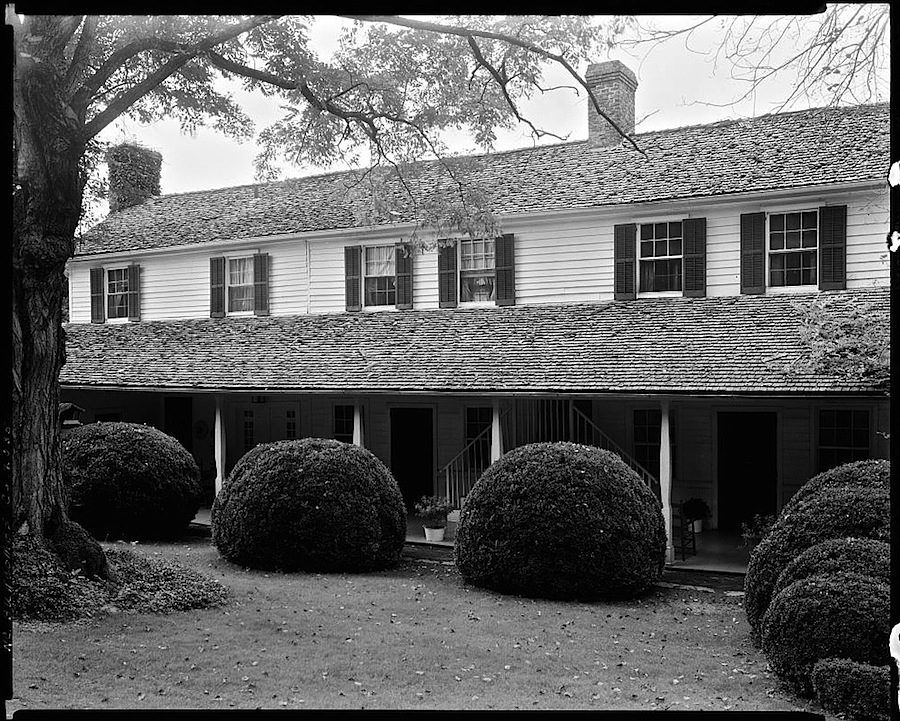
1 Sherrill Inn, North Carolina, 1938, via Library of CongressSherrill Inn, Hickory Nut Gap, Buncombe County, North Carolina, in 1938, by Frances Benjamin Johnston, via Library of Congress Prints and Photographs Division (all photos here).

I know, and even better. . .

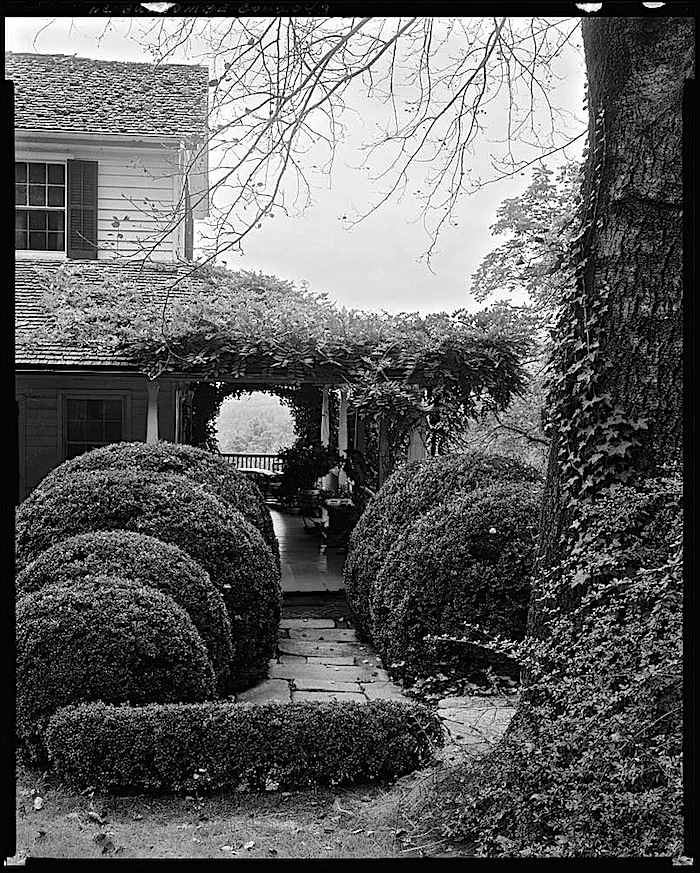
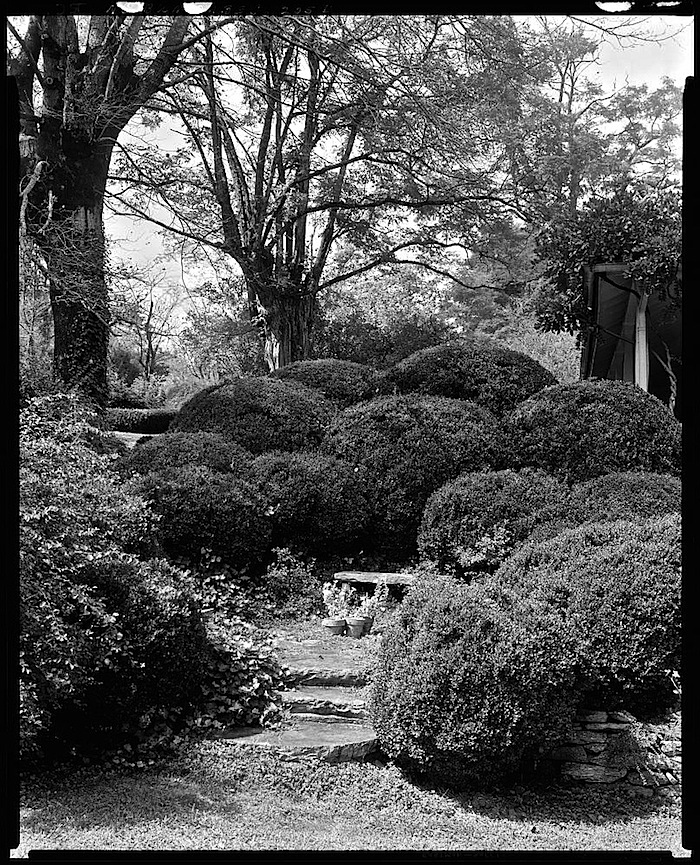
1a Sherrill Inn, North Carolina, 1938, via Library of CongressThis is what’s behind the boxwoods. (There’s another photo of this section of the porch here.)

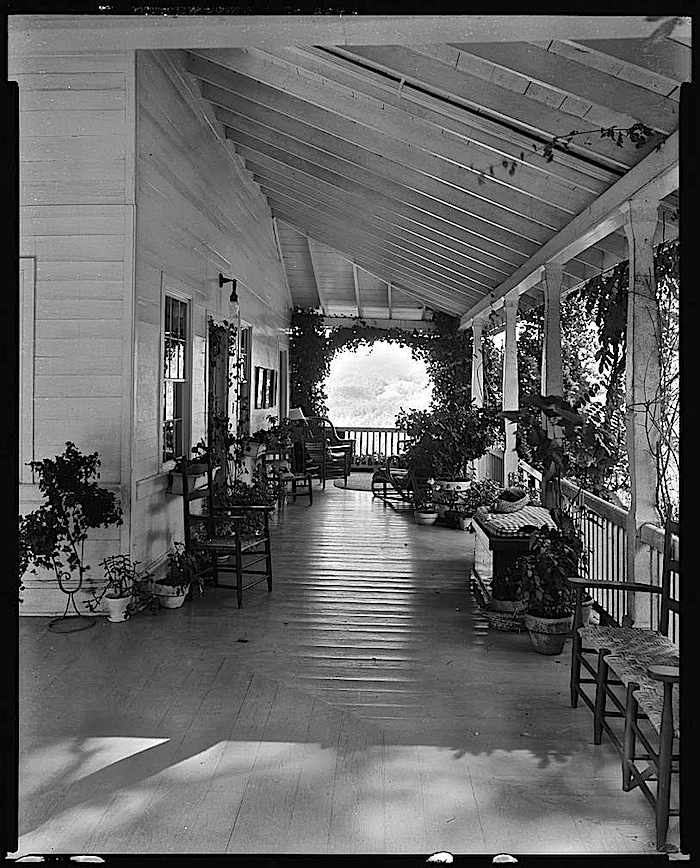
In the nomination form for inclusion in the National Register of Historic Places, the porch columns were described thusly:

The porch is supported by gracefully tapered posts each rising without interruption from rectangular bases to approximately balustrade level, where it is quickly cinched in on all four sides; above, the post gently flares out to original width near eye level and then back in, until near the top the taper reaches its conclusion to flare quickly into a cap for the porch roof supporting plate to rest upon.

2bb Sherrill Inn, North Carolina, 1938, via Library of Congress

At the corner of the L-shaped porch,

2 Sherrill Inn, North Carolina, 1938, via Library of Congress

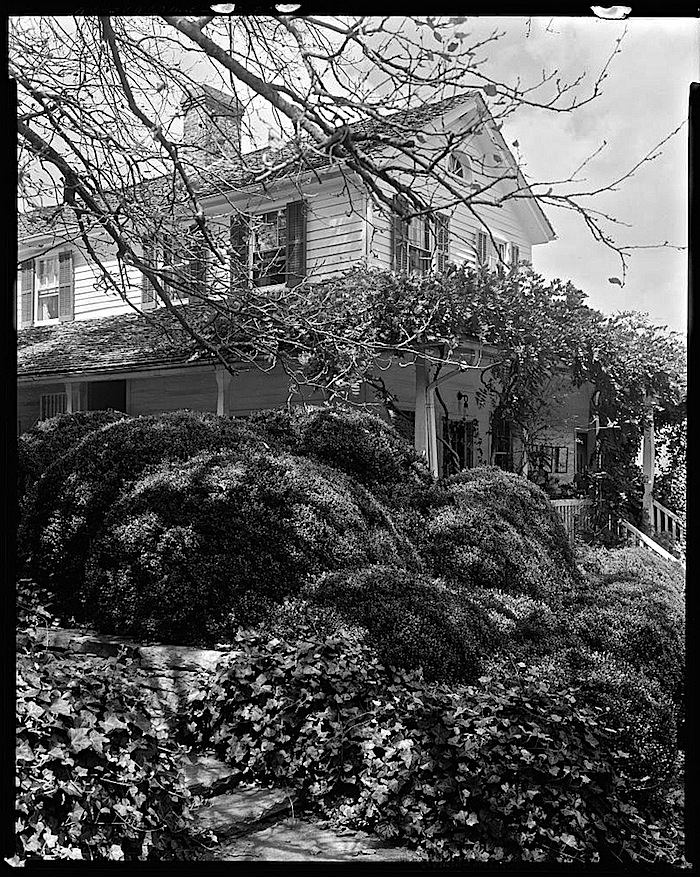
. . .the boxwoods cover the slope like giant boulders.

2a Sherrill Inn, North Carolina, 1938, via Library of Congress

And below is the porch after the turn,2b Sherrill Inn, North Carolina, 1938, via Library of Congress

2ba Sherrill Inn, North Carolina, 1938, via Library of Congress

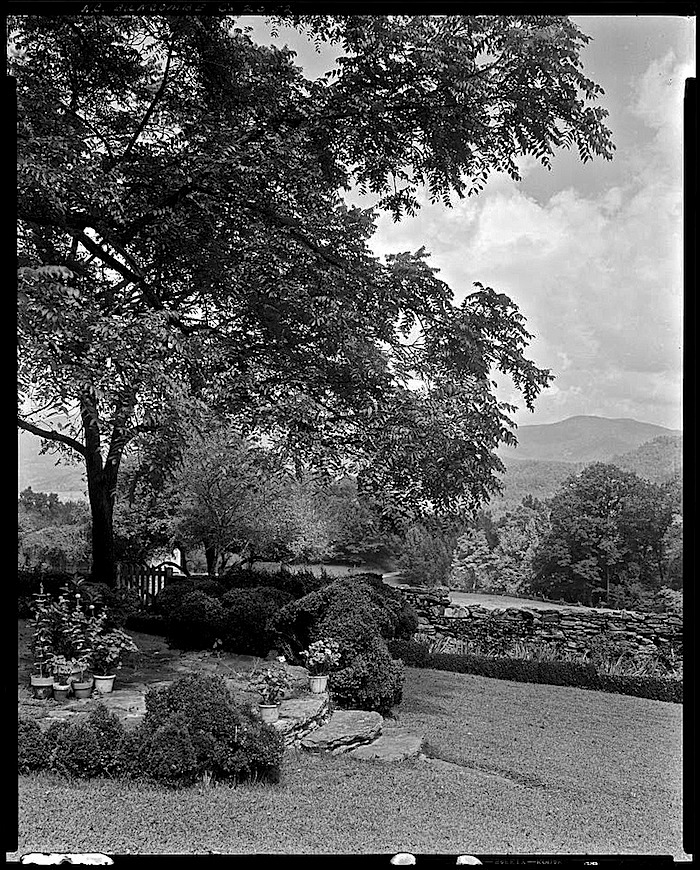
and a view of the mountains.5a Sherrill Inn, North Carolina, 1938, via Library of Congress

A bit of heaven.

Best of all, it seems that most of the old boxwoods are still in place.  The property is being run as an organic farm by descendants of the McClures, the couple who owned the Inn when Johnston took these photos.

Pictures of a beautifully styled wedding held at the Inn in recent years show it to have been in loving hands over the decades.

The house began as two log structures, possibly built by 1806 or maybe even earlier.  Between 1839 and 1850, Bedford Sherrill connected and enlarged those buildings to make an inn for travelers on the “Hickory Nut Turnpike,” an early stage route to western North Carolina.

There are many more details about the history and design of the house and grounds here.

Vintage landscape: Lafayette Square

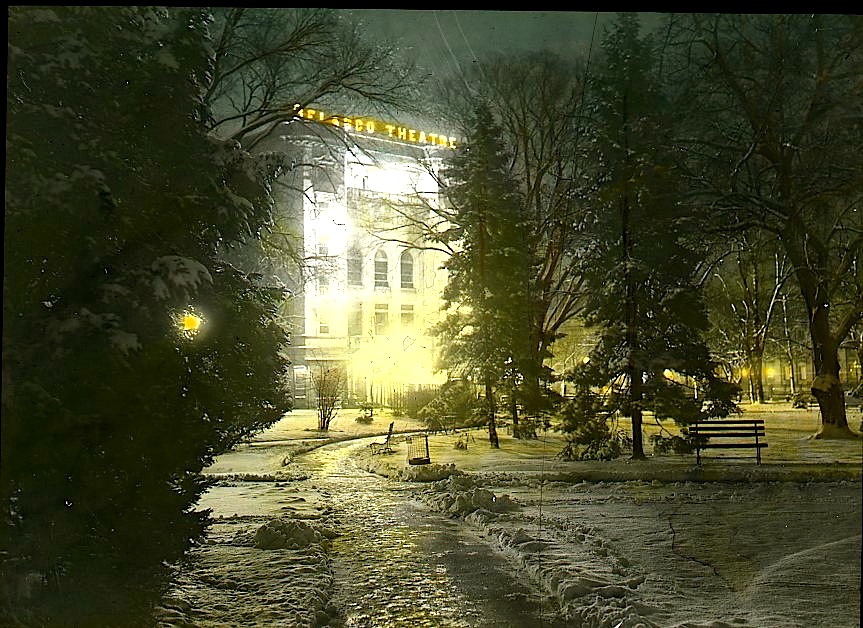
Lafayette Square, Washington, DC, via DCPL Commons on flickr “The Belasco Theatre as seen from Lafayette Square, ca 1910,”  via the D.C. Public Library Commons on flickr.  The photographer is not noted.

The Washington, D.C., theater was called the Lafayette Square Opera House when it was built in 1895.  It was renamed the Belasco in 1905.  In 1962, it was demolished to make way for the U.S. Court of Claims building.

Come see the north wind’s masonry.
Out of an unseen quarry evermore
Furnished with tile. . .
To mimic in slow structures, stone by stone,
Built in an age, the mad wind’s night-work,
The frolic architecture of the snow.

— Ralph Waldo Emerson, from “The Snow-Storm


Snapshots: Prague

We spent the week before and just after Christmas in Prague and Istanbul this year. In recent years, we’ve found that we like traveling during the cold-weather months, when the streets, museums, and restaurants are so much less crowded.

I loved the low, slightly hazy light in both cities (OK, I live near the equator the rest of the time).  And although the temperatures were between about 27°F and 40°F  (-3°C to 4°C), there was practically no wind and no rain or snow.  Maybe we were very lucky, but honestly, I’ve been colder in Amsterdam in July.

Below are some snapshots and a few travel tips for Prague.  Do not adjust your set:  with some pictures I got a bit carried away with the ‘Effects’ buttons on iPhoto.

This slideshow requires JavaScript.

(If you want to scroll through larger versions of the images, click on ‘Continue reading’ below and then on any of the thumbnails in the gallery.)

At the airport, just before you exit for the bus area, you will find a booth selling public transportation tickets.  We bought 3-day passes for about $15 each. They allowed us unlimited use of the metro (subway), bus, and tram lines.

If you like, you can take the 119 bus from the airport to the end of its line at Dejvicka (about 30 minutes) and then transfer to the green metro A  line.  (You could also buy tickets on a private bus line that will take you to any hotel in the Old City area.)

We stayed at the Courtyard Marriot (collecting points), which was not very atmospheric, but comfortable and the staff were friendly.  The hotel is in the neighborhood of Zizkov and is very convenient to the green metro line and tram lines to the Old City.

It is also near the huge and interesting Olšany Cemetery (1680 to today) — which you will find if you accidently walk in the opposite direction of the Old City, which we did first thing for about a half mile.

For some reason, we never chose the right direction in Prague, and we were lost just about every minute in the Old City and the Mala Strana.  This was not very important as those parts of the city are relatively small.  Eventually, we would stumble over the right tram line (and then take it going the wrong way).

(If the Prague tourism office is reading: “you are here” maps placed on the streets about every 5 or 6 blocks would be great.)

English is widely spoken in the parts of Prague where a visitor is likely to be, and there are signs in English everywhere.

We just wanted to wander around for two days enjoying the old architecture and the Christmas markets,* so the only museum we visited was the Prague City Museum.  My husband wanted to see the 19th century model of the city, which was remarkable — especially because they show a short 3D  movie where the camera “flies” over the town.  It’s a rather sleepy attraction, but I loved it.

The Czech food we ate was, well, filling.  Our meals consisted of a big piece of pork or duck, braised cabbage (very good), and potato and bread dumplings. Bread dumplings are really just steamed white bread.  The potato dumplings were something like gnocchi.  I can’t recommend any particular restaurants.

There were classical music concerts in churches all over the Old City.  We went two nights in a row to the 12th century St. Martin in the Wall Church to listen to, first, organ and violin and a soprano and, then, a string quartet.  The 5:00 p.m., one-hour performances were of a very high quality for about $25/ticket. Brochures** about these concerts are available all over town and at hotels.

There is a little more on the sidewalks of Prague here.

Next:  Istanbul.


* I bought small, 1″ to 2″ traditional Czech glass ornaments for about $2.50 to $3 each; they all made it home intact.

** The venue was advertised as “heated.”  I would say the translator did not fully understand the word.  We kept our coats on but were happy nonetheless.

Continue reading “Snapshots: Prague”