Vintage landscape: the sunken garden

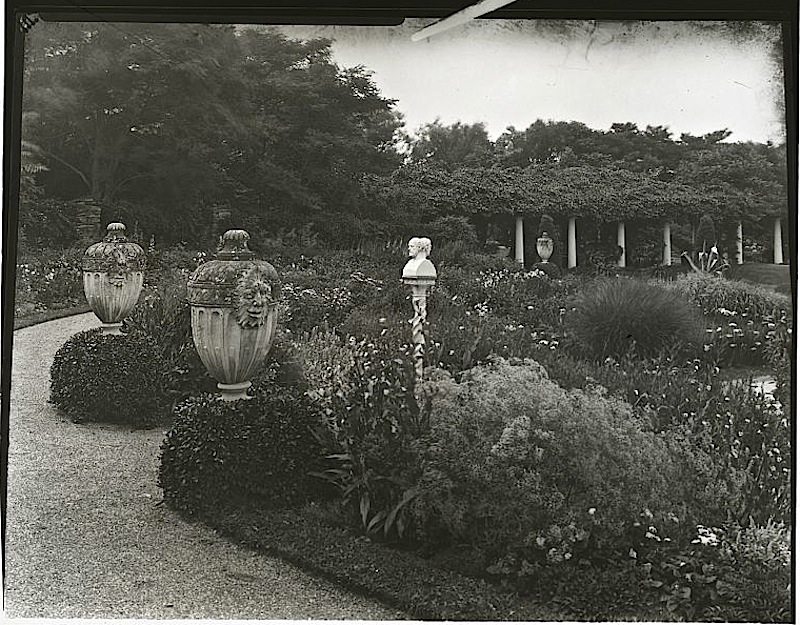
Vintage landscape/enclos*ure: sunken garden, Hammersmith Farm, 1917, by F.B. Johnston, via Library of Congress. . . at Hammersmith Farm, Newport, Rhode Island, 1917, by Frances Benjamin Johnston, via Library of Congress Prints and Photographs Division.

Vintage landscape/enclos*ure: sunken garden, Hammersmith Farm, 1917, by F.B. Johnston, via Library of CongressThe pergola overlooking the sunken garden. The hand-colored lantern slide is also by Johnston from 1917.

The house, originally on 75 acres, was built for the great-grandfather of Jackie Kennedy’s stepfather.  She lived there during her childhood, and her wedding reception was held there.

The garden at the time of the photo had been designed about 7 years before by James Frederick Dawson and Henry Hill Blossom of Olmsted Brothers. Today, the house still stands, but the garden is not the same, according to the Library’s online catalogue.

The Sunday porch: iron lace

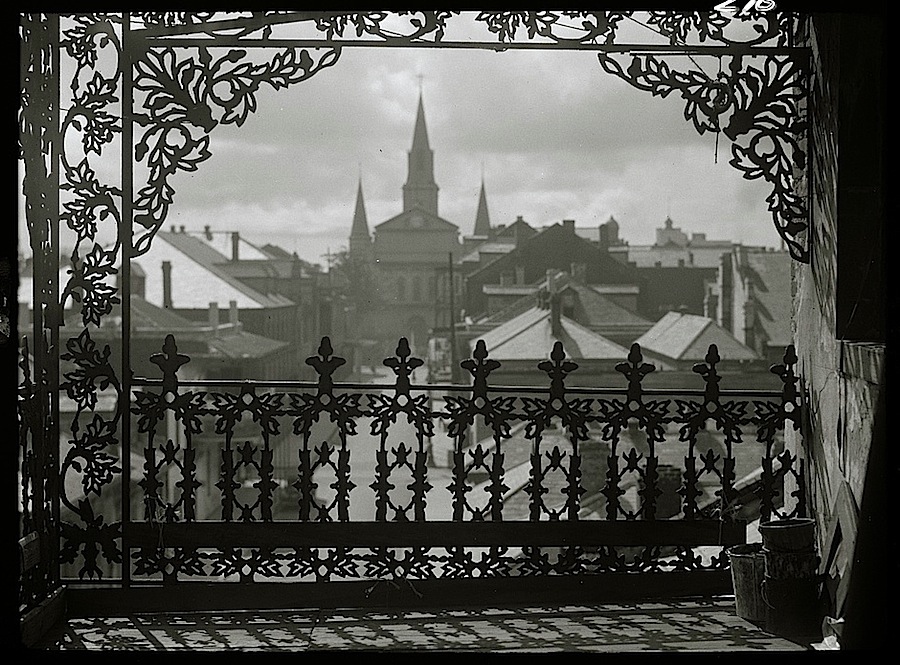
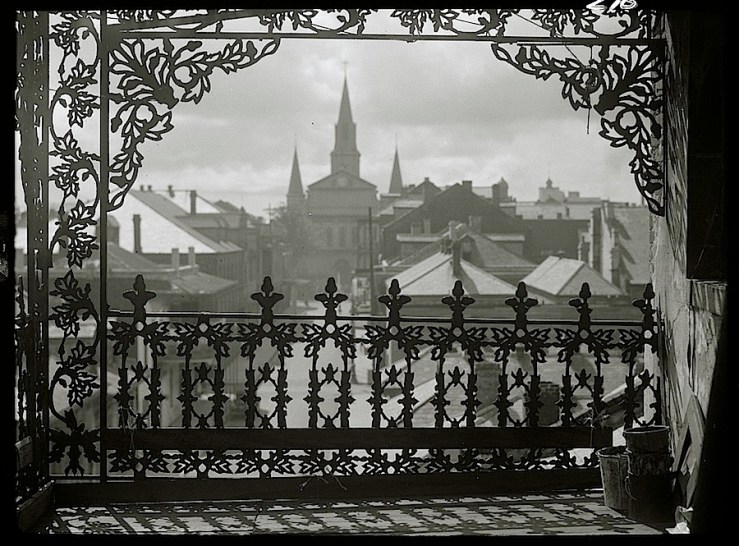
The Sunday porch/enclos*ure: iron lace in New Orleans“A vista through iron lace, New Orleans,” ca. 1920-26, by Arnold Genthe, via Library of Congress Prints and Photographs Division.

This is a covered third floor balcony, and it has a wonderful view of the back of St. Louis Cathedral in the French Quarter.

The 1836 house still stands* — wrought iron intact — at 716 Orleans Street. It is now light pink with dark green shutters and is known as the Le Pretre Mansion, for one of its first owners.

It was on the market as recently as this past April — for $2.65 million.  Here’s a 1937 photo of the entire house.

An exotic horror/ghost story goes with the mansion:

In the 19th century, a Turk, supposedly the brother of a sultan, arrived in New Orleans and rented the house. He was conspicuously wealthy, with an entourage of servants and beautiful young girls — all thought to have been stolen from the sultan.

Rumors quickly spread about the situation, even as the home became the scene of lavish high-society parties. One night screams came from inside; the next morning, neighbors entered to find the tenant and the young beauties lying dead in a pool of blood. The mystery remains unsolved. Local ghost experts say you can sometimes hear exotic music and piercing shrieks.

— “Walking Tour in New Orleans,” Frommer’s(.com)
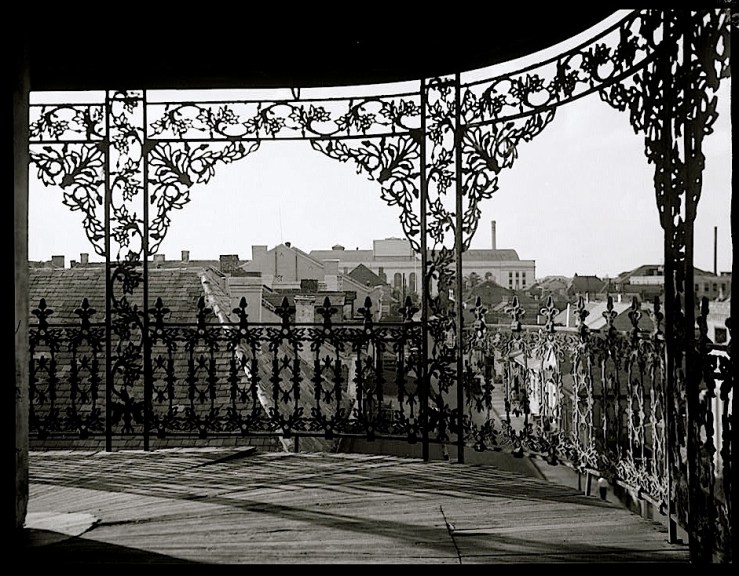
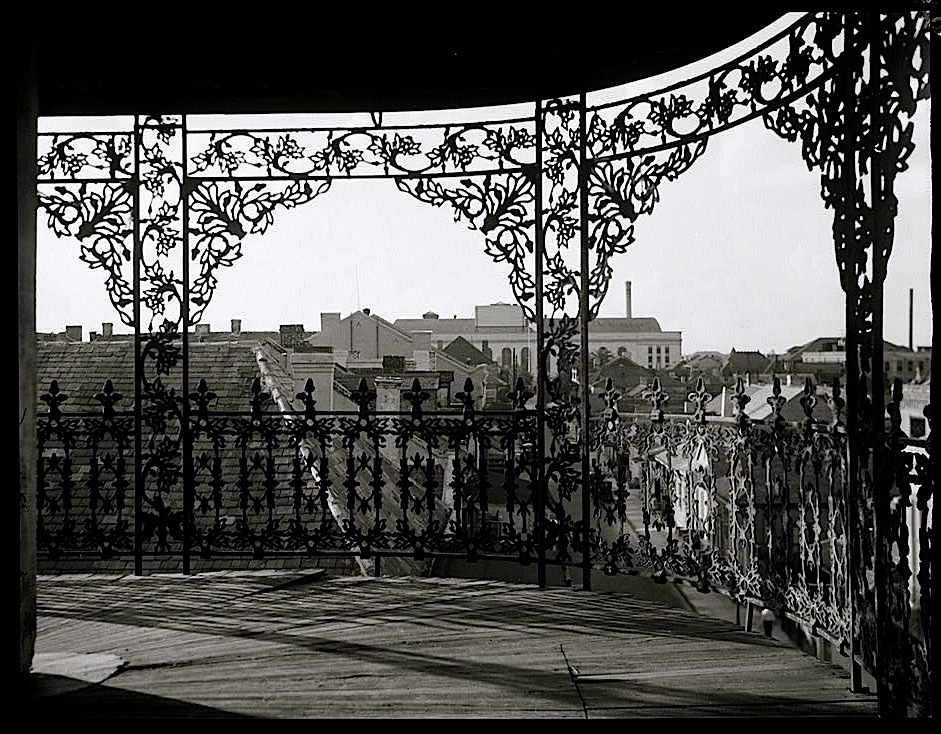
The Sunday porch/enclos*ure: iron lace in New OrleansThe view above, from the same balcony, looking northeast on Orleans Street, was photographed in 1936, by Richard Koch for a Historic American Buildings Survey, via Library of Congress Prints and Photographs Division.
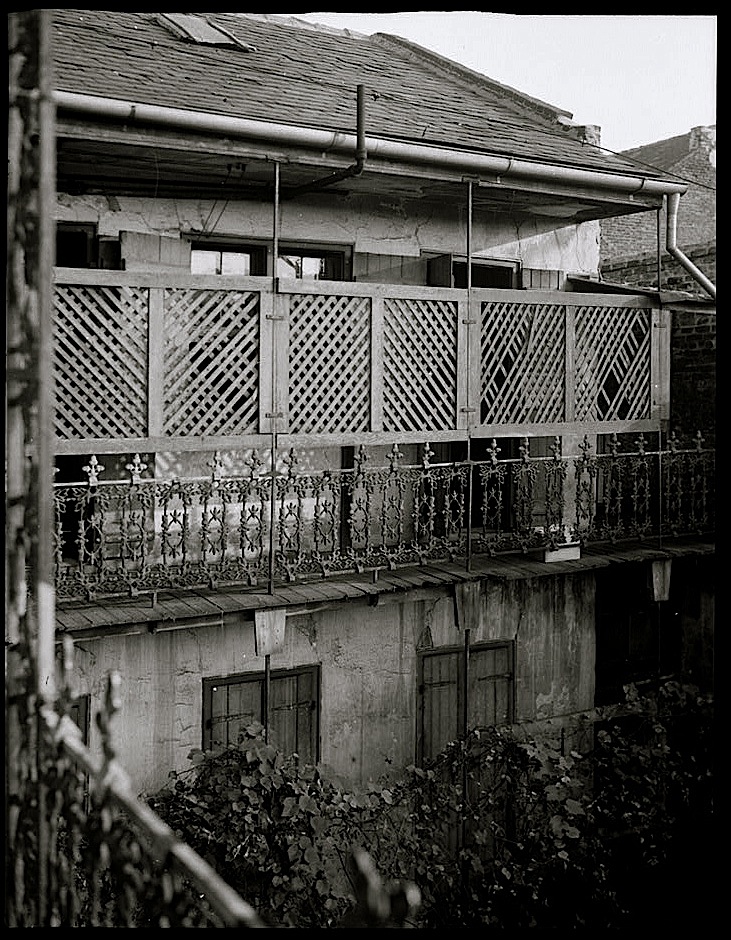
The Sunday porch/enclos*ure: iron lace in New OrleansThis privacy panel along the second floor balcony of the service wing, overlooking the courtyard, is interesting too. Photo also by Richard Koch for HABS.

Vintage landscape: land of flowers

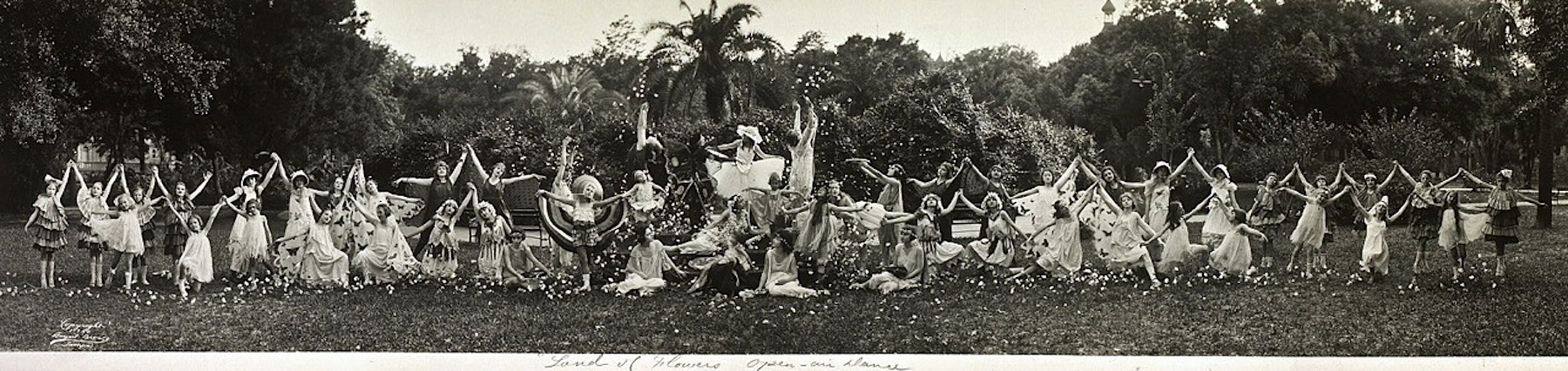
The Land of Flowers, by Burgert Brothers, ca. 1920, via Library of Congress“Land of Flowers,” open-air dance, c. 1920, by Burgert Brothers, via Library of Congress Prints and Photographs Division.

Impressive.

All the images below are details from the same picture.

This slideshow requires JavaScript.

The Burgert Brothers — Al and Jean — owned the leading photography studio in Tampa, Fla., from 1918 until the early 1960s.

I couldn’t find anything more about this particular photograph, but I did find a similar image taken by the Burgerts.

The other picture, taken in 1923, shows the dance students of Mme. Lee Scovell as they performed a scene from the ballet “Land of Flowers” at the Temple Terrace Country Club.  The photo above could be from the same performance, or it could be of an earlier class of Mme. Scovell’s.

We, the Fairies, blithe and antic,
Of dimensions not gigantic,
Though the moonshine mostly keep us,
Oft in orchards frisk and peep us.

— Leigh Hunt, from “Song of Fairies Robbing an Orchard

Vintage landscape: the homesteaders’ garden

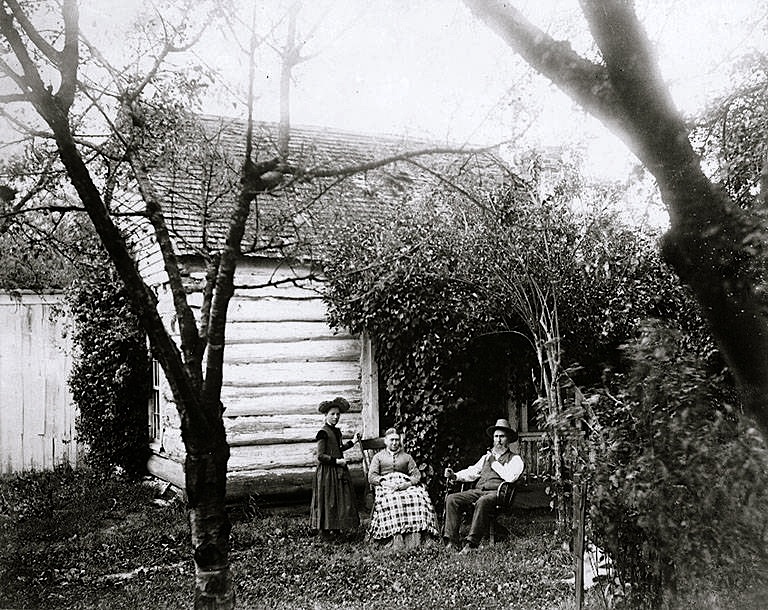
Vintage landscape/enclos*ure: family in garden via UW CommonsHomesteaders seated outside in garden surrounding house, probably [in] Washington State,” ca. 1905, by Albert Henry Barnes, via University of Washington Commons on flickr.

This photo was taken by the same photographer as Monday’s picture of repeating haycocks in an apple orchard.

There may be a little porch underneath the vines*, but it’s hard to tell. There is one fairly large window at the end of the house.   In order for settlers to acquire a homestead, “[t]he law stipulated that a domicile suitable for permanent residence of at least 10 by 12 feet with a minimum of one window must occupy the property,” according to the Center for the Study of the Pacific Northwest.


*It looks like English ivy, which is now terribly invasive in the state of Washington.

The Sunday porch: Georgia

While he was a professor of sociology at Atlanta University, W. E. B. Du Bois compiled 363 photographs of African American life in Georgia into several albums — which he displayed at the 1900 Paris Exposition Universelle.

The pictures* here, taken in 1899 or 1900, were part of his collection. Click on any thumbnail in the gallery to scroll through larger photos.

Du Bois’s exhibited albums particularly featured middle-class African Americans and their homes and institutions, and dozens of fine individual portraits were included.

“The photographs of affluent young African American men and women challenged the scientific ‘evidence’ and popular racist caricatures of the day that ridiculed and sought to diminish African American social and economic success,” according to the Library of Congress’s online catalogue.

In 2003, the Library of Congress published a book of 150 of the images, entitled A Small Nation of People.  You can listen to a good NPR interview with its co-author, historian Deborah Willis, here.  In it, she mentions porches being photographed for the exhibit, as places “central to family gatherings.”


*All via Library of Congress Prints and Photographs Division.