Life in gardens: sod roof oven

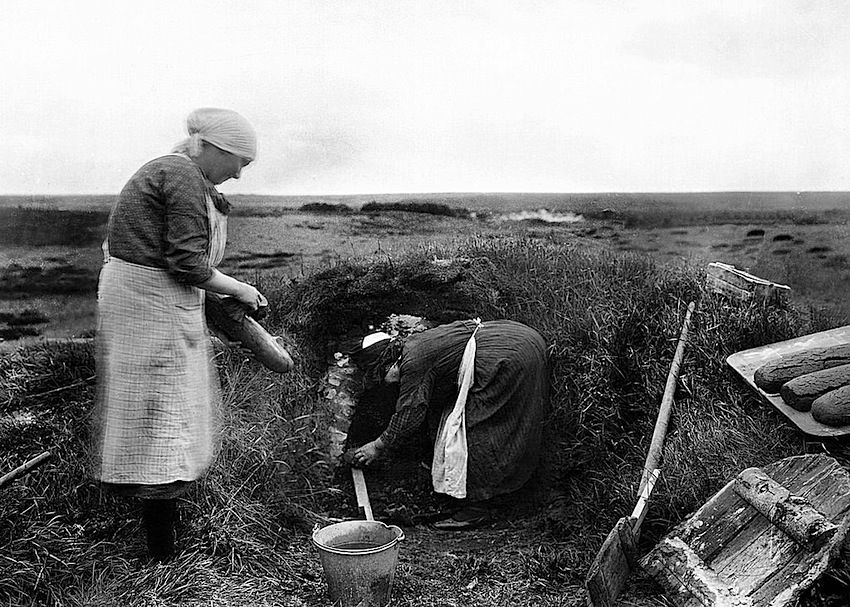
Breadbaking, West Jutland, 1929, National Museum of DenmarkBaking bread on a small farm on the moor in Koelvraa, West Jutland, Denmark, 1929, by Kai Uldall via National Museum of Denmark Commons on flickr (all photos here).

Click on the images to enlarge them. I would love to visit this landscape.

Breadbaking, West Jutland, 1929, National Museum of DenmarkTaking the bread out of the sod-covered oven.

Breadbaking, West Jutland, 1929, National Museum of Denmark, slightly croppedBread cooling in a bed (photo cropped slightly by me).

Was that where the three women worked baking bread? —
Where they began at morning, by their fire under the wet boughs.
And laid the loaves in the sun?

— H. L. Davis, from “Baking Bread

The Sunday porch: wisteria par excellence

In honor of the wisteria now beginning to bloom in many regions, here is a Sunday porch redux from 2013:

On abandon, uncalled for but called forth. . . .*

full cropped

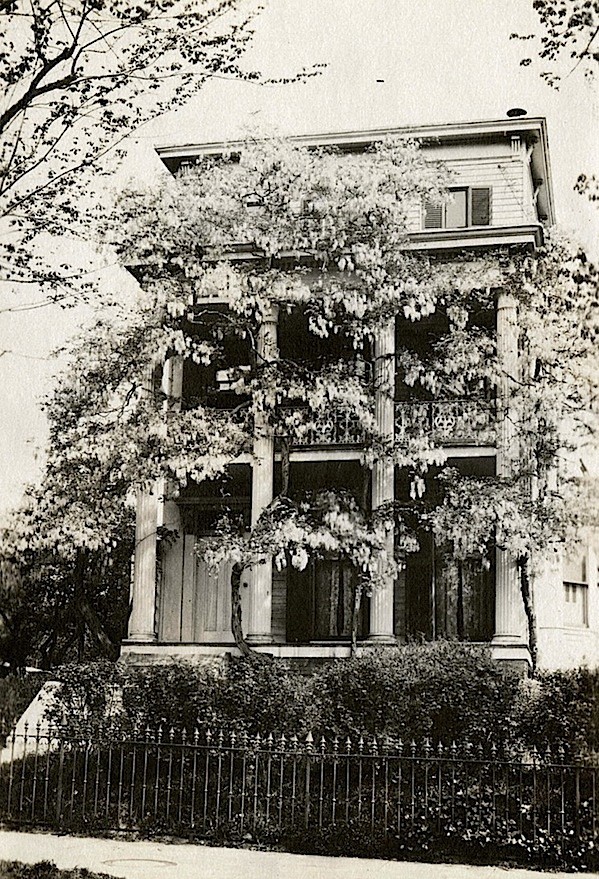
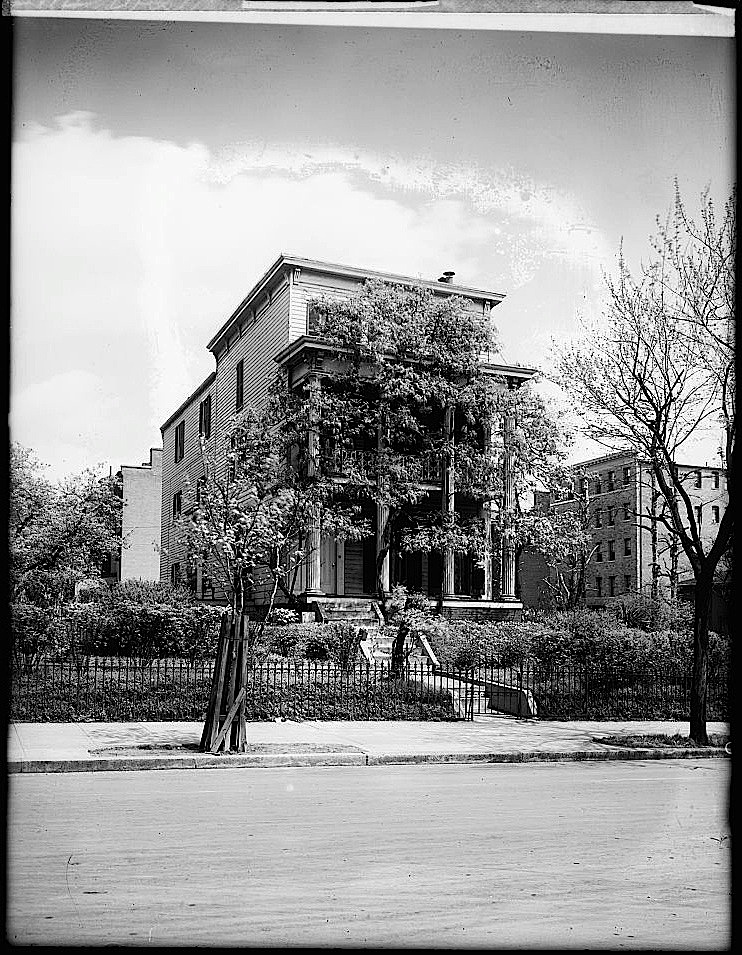
I think this is the loveliest wisteria I have ever seen.  It grew on the porch columns of “Wisteria House,” at Massachusetts Avenue and Eleventh Street, N.W., in Washington, D.C. The photo was taken in 1919, by Martin A. Gruber.**

The house was torn down in 1924 to make room for the Wisteria Mansion apartment building.

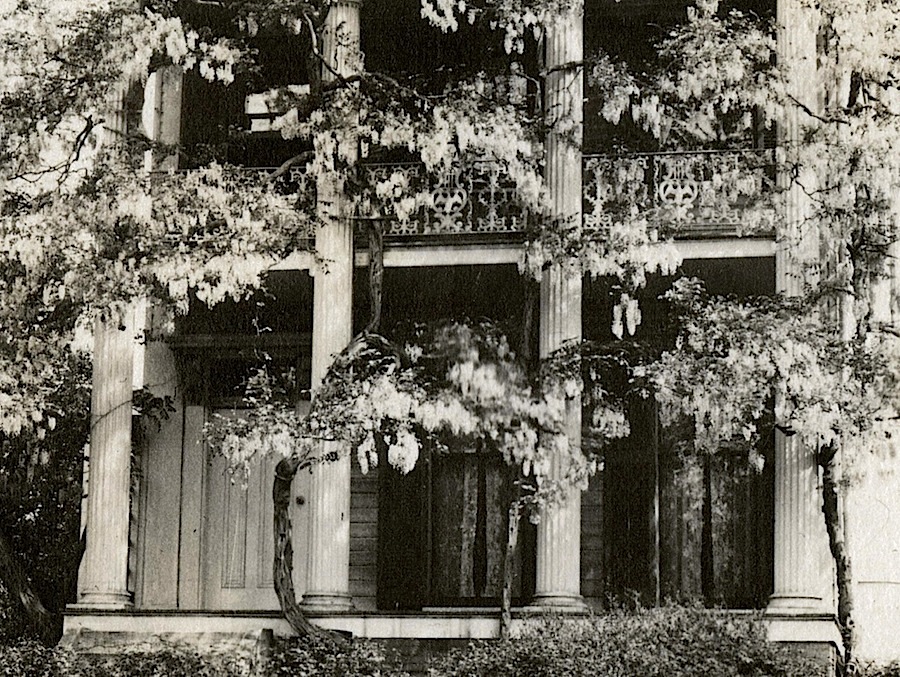
Wisteria House detail, 1919, via Smithsonian Institution Commons

A naval officer brought the vine from China and gave it to the owner of the house, probably during the 1860s, according to the blog Greater Greater Washington.

Wisteria House, Harris & Ewing photo

The Harris & Ewing** photo above, taken between 1910 and 1920, shows the trunks of the (one?) plant emerging through openings at the base of the porch.  The house was built in 1863, and the two-story portico was added in 1869 — so it looks like the wisteria was planted between those years and protected during the construction.

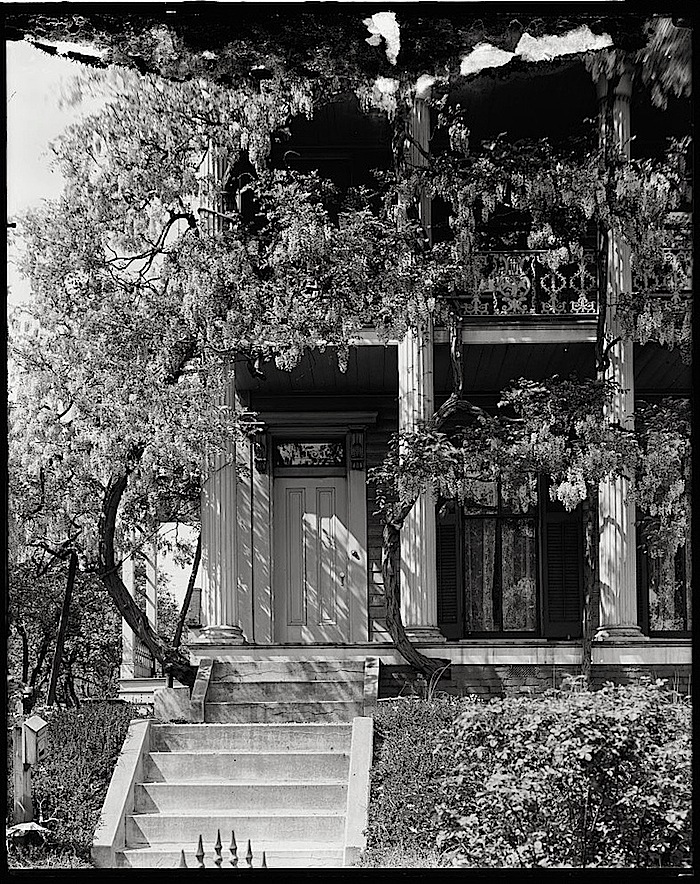
Wisteria House, LOC photo

The National Photo Company image above shows the house about 1920.

*Lucie Brock-Broido, from “Extreme Wisteria

**Top and second (a detail of the first) photos via the Smithsonian Institution Archives Commons on flickr.  Third and fourth photos via Library of Congress Prints and Photographs Division.

Life in gardens: last look

As April’s cherry blossoms fade away, here is one more vintage scene.

This slideshow requires JavaScript.

“Street life in Yokohama park with blossoming cherry trees,” from the photo collection of  journalist Holger Rosenberg, who traveled to Japan in 1903, via National Museum of Denmark Commons on flickr.

In Japan this week, the flowers are at their peak only in the most northern regions.

Click on ‘Continue reading’ below to scroll through larger versions of the images.

the clouds of
a thousand skies from
cherry buds

Saigyo Hoshi

Continue reading “Life in gardens: last look”

Home sweet France

This slideshow requires JavaScript.

Of course France isn’t our home, but after years of passing through — on our way to and from Francophone African countries — visiting beautiful Strasbourg this weekend felt like a petit homecoming in general awareness.

Suddenly, I could speak to people in their own language* (albeit, simply and ungrammatically), understand signs, and go to Monoprix and read all the product labels. The skies opened. . . .

I love living in Germany, but, thus far, the German language is a stone wall to me. Thankfully, the school system here is so good that you can always find someone who speaks at least fair English. I do try to maintain an appropriately ashamed look every time I say, “I sorry, I don’t speak German.”

Anyway, Strasbourg was great, and I saw my first blooming wisteria this year there.

I can recommend Hôtel Gutenberg,  flammkuchen (aka tarte flambée) with a glass of pinot gris for lunch, and the boat tour of the River Ill, which circles the city center. And the spectacular cathedral is celebrating its 1,000th birthday this year.

What’s the French for “fiddle-de-dee”? . . .
The “Fiddle” we know, but what’s from “Dee”?
Le chat assis in an English tree?

John Hollander, from “For ‘Fiddle-de-de’


*in French, of course, but the native language of  Strasbourg is actually Alsatian, a dialect of German that is spoken by 43% of the region’s population, according to Wikipedia.

Vintage landscape: courtyard pattern

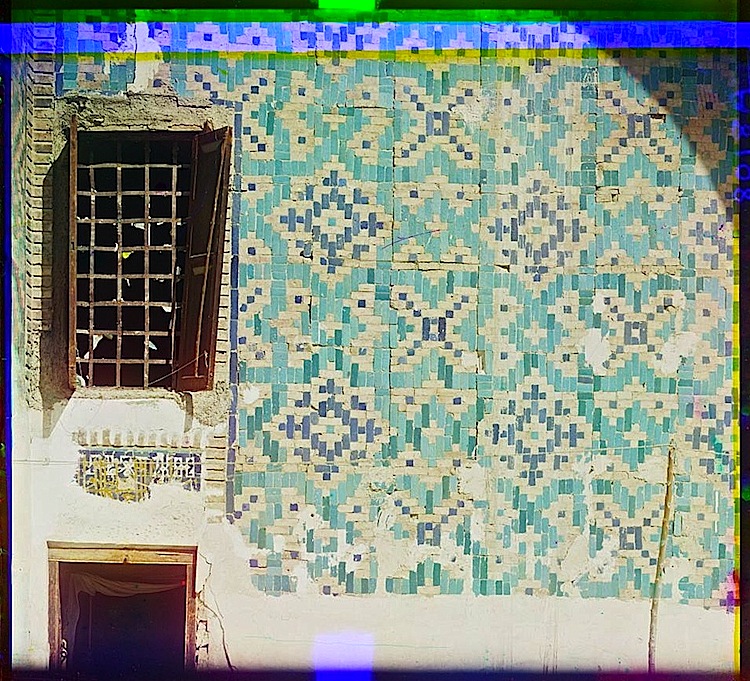
I’ve making patchwork pillows in shades of blue this week.  The mosaic arrangement on this courtyard wall would be a good one to copy in fabric.

Tillia-Kari courtyard“Vnutri dvora Tilli︠a︡-Kari. Detalʹ na pravoĭ storoni︠e︡. Samarkand (Inside Tillia-Kari courtyard. Detail on right side.), between 1905 and 1915, by Sergeĭ Mikhaĭlovich Prokudin-Gorskiĭ, via Library of Congress Prints and Photographs Division (also the photo below).

In the center of Samarkand is the Registan complex, consisting of three madrasah (religious schools). The third of these, the Tillia Kari Madrasah, was built in 1646–60 on the site of a former caravansarai. Its basic plan is formed by a rectangular courtyard, bounded by arcades that contain rooms for scholars. Although much damaged, the facades show profuse ceramic decoration in geometric and botanical motifs, as well as panels with Perso-Arabic inscriptions above the door of each cell. Seen here is a detail of a cell facade inside the courtyard, with the walls covered in a geometric pattern of small glazed tiles and a fragment of an inscription panel above the door.

— from the image’s page on World Digital Library, a project of the Library of Congress.

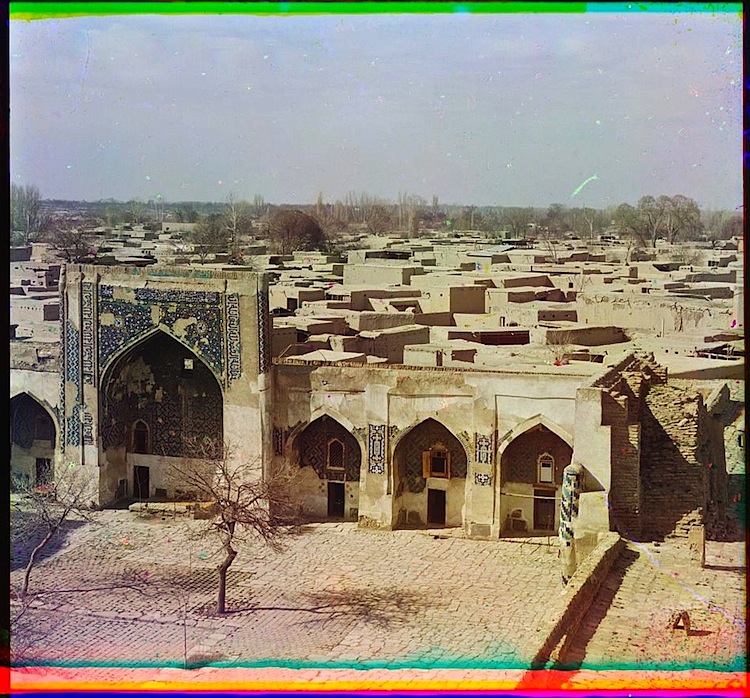
view of Tillia-Kari courtyard“Vid s Tilli︠a︡-Kari na Samarkand (View of Samarkand from Tillia-Kari).”

Sergeĭ Prokudin-Gorskii made early color photographic surveys of the Russian Empire in the decade before World War I and the Russian revolution. He left Russia in 1918, eventually settling in Paris. The Library of Congress purchased his collection of 2,607 images from his sons in 1948. There are more vintage photos of Tillia Kari here.

Not Delft or delphinium, not Wedgewood. . .

But way on down in the moonless
octave below midnight, honey,
way down where you can’t tell cerulean
from teal.

Lynn Powell, from “Kind of Blue