The Sunday porch: Paradise Valley

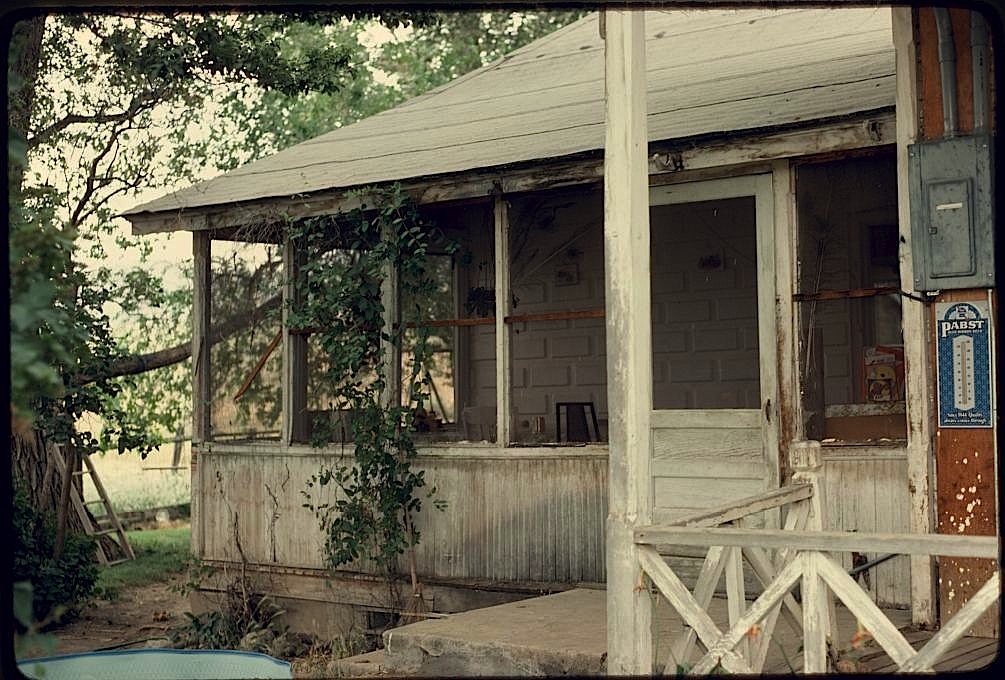
Ranch house porch, 1978, Suzi Jones, Library of CongressRanch House with Porch, Paradise Valley, Humboldt County, Nevada, July 1978, (35mm slide) by Suzi Jones, via American Folklife Center of the Library of Congress (all photos here).

The house — of adobe construction — served as the officer’s quarters of Fort Scott in the late 1860s.  In 1978, it was the main residence of Fort Scott Ranch.
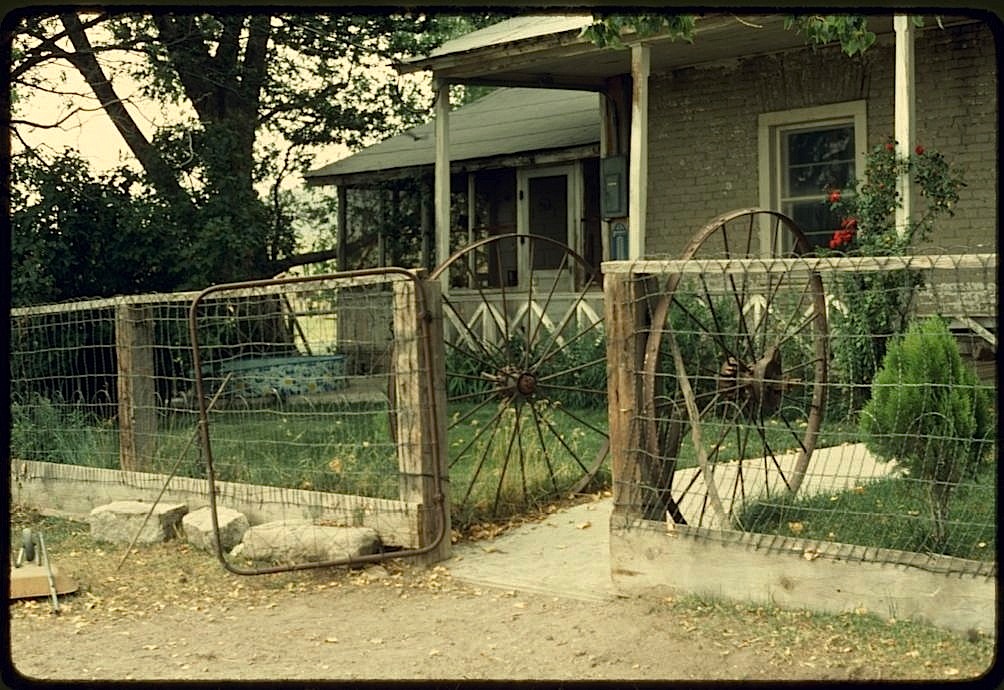
Fort Scott Ranch gate, 1978, Library of Congress

There is another view here, by Howard W. Marshall.

The photos here are three of over two thousand taken or collected for the Folklife Center’s 1972-1982 ethnographic field project on the Paradise Valley area. The work became the collection*  “Bucharoos in Paradise: Ranching Culture in Northern Nevada, 1945-1982.”

Fort Scott Ranch, Paradise Valley, NV, Library of Congress
Fort Scott Ranch, by Howard W. Marshall.

There’s another photo of the ranch house and its outbuildings here.

Poll results

For the last two Sundays, I ran a little poll asking how readers look at enclos*ure — 1) on a desktop computer or Mac; 2) on an e-reader; or 3) on a smartphone? Of those who responded, 82% use a desktop and the others use an e-reader.


*It also contains sound recordings and motion picture film.

Life in gardens: May Day

May_pole_dance_at_Miami_University_May_Day_celebration_1914_(3190756371)
I’m a little worried that fire is going to become involved here.

The photo, “May pole dance at Miami University May Day celebration 1914 ,” is by Frank Snyder, via Frank Snyder Photograph Collection, Miami University Libraries (Oxford, Ohio) Commons on flickr.

The Maypole Dance was a common rite of spring at colleges from the late nineteenth century through the 1950s. Historian David Glassberg argues that the celebration was created (or resurrected) by turn-of-the-century progressives who bemoaned America’s lack of wholesome traditions. They believed that Puritanism had severed this country’s ties to the culture of Elizabethan England—a belief supported by a reading of Hawthorne’s short story, “The May-Pole of Merrymount.”

— Tynes Cowan, from BSC Folklore (Birmingham-Southern College)

Here in the Swabian part of Germany, many towns and villages will be celebrating the first of May like this.

On a terrace

Also from France, by Eugène Trutat . . .
Portrait of a family on a terrace, 1901, Library of Toulouse:flickrPortrait de famille sur une terrasse,” 1901, via Bibliothèque de Toulouse Commons on flickr.

Vintage landscape: flowers amicorum

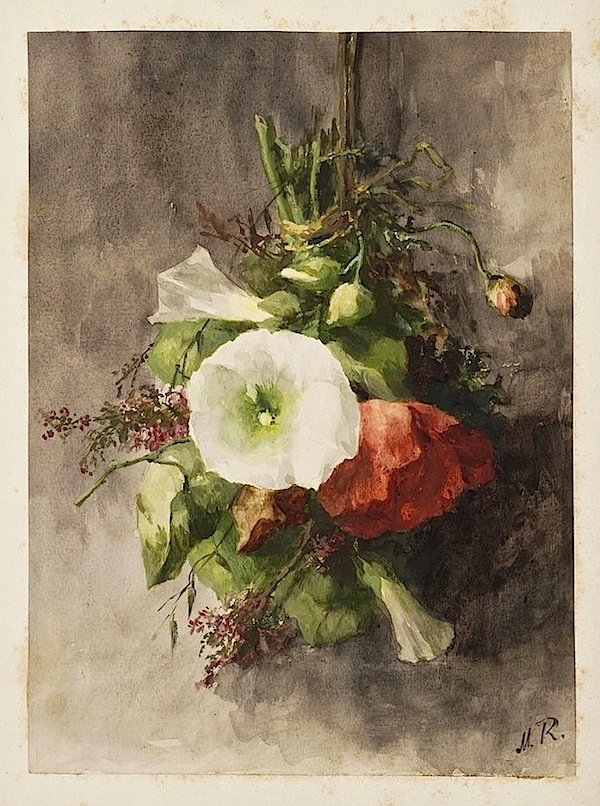
May bouquet, 1880s, Alkmaar Archives on flickrA watercolor by Margaretha Roosenboom from an album amicorum created for the writer Anna Louisa Geertruida Bosboom-Toussaint on the occasion of her 70th birthday in 1882, via Archief Alkmaar Commons on flickr.

The album (684 loose sheets in an ornamental wooden box) contained drawings, watercolors, photographs, text, and music by friends and admirers.

The contributors represented a cross section of the cultural elite in 19th century Netherlands and Belgium, including many artists who were part of the Hague School.

After Bosboom-Toussaint’s death, the album was eventually given to her hometown of Alkmaar and is now in the collection of the Regional Archief Alkmaar.

To see some flower arrangements created and shared today, please visit Cathy at the blog Rambling in the Garden. She hosts “In a Vase on Monday.”

The Sunday porch: Silver Lake

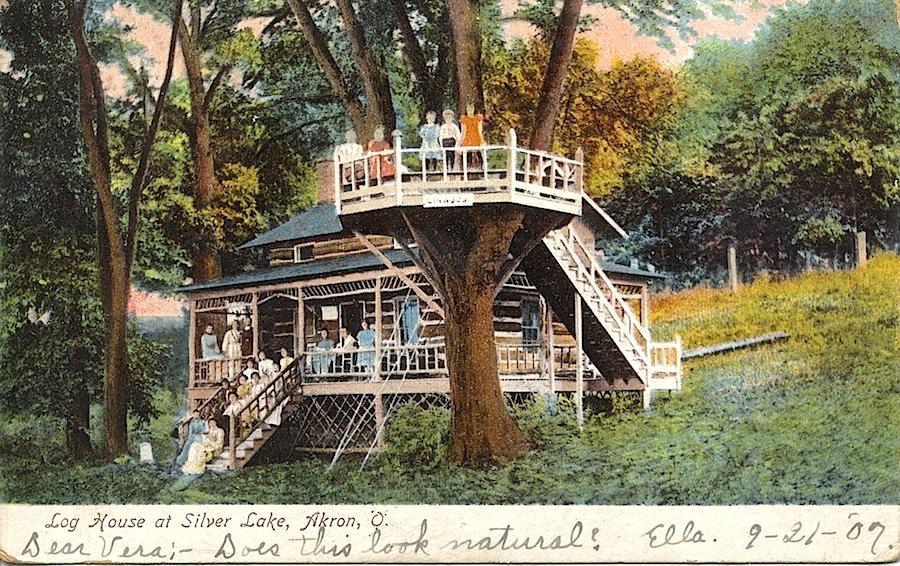
Log House, Akron, Ohio, via Miami University, flickr“Log house at Silver Lake, Akron, Ohio,” between 1905 and 1909, by Illustrated Post Card Co., via Walter Havighurst Special Collections, Miami University Libraries Commons on flickr.

.  .  . I care less and less
about the shapes of shapes because forms
change and nothing is more durable than feeling.

Terrance Hayes, from “What it Look Like