Life in gardens: family and friends

Västra Götaland, Lysekil, Lysekil, Bohuslän, Övrigt-Sällskapsliv

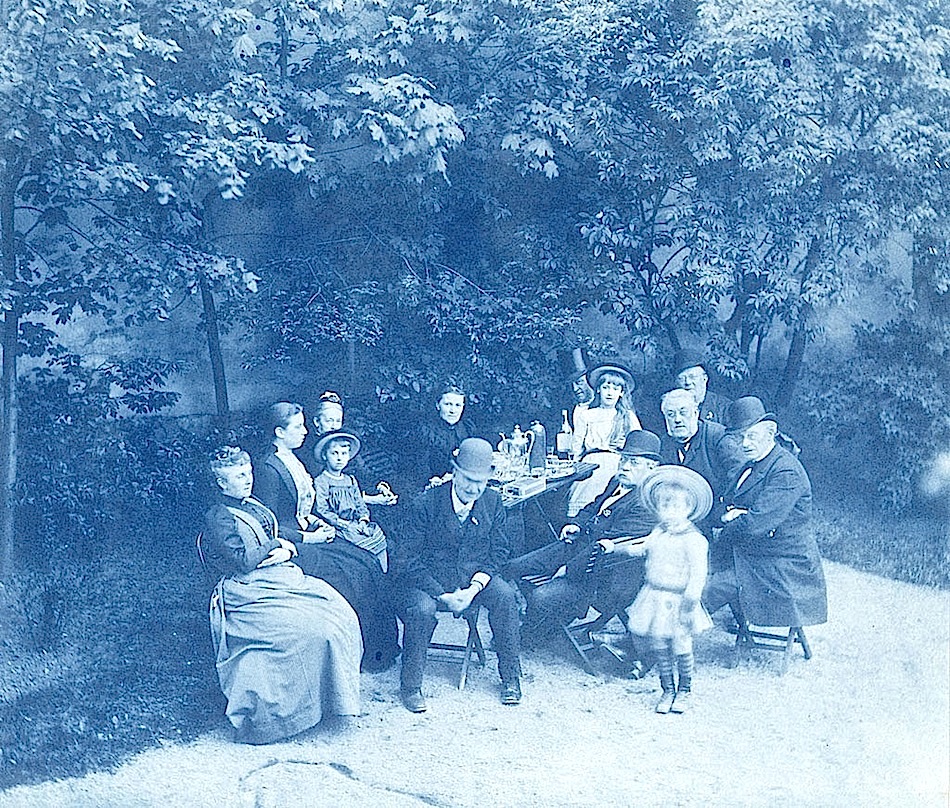
Människor som sitter i en trädgård” (people sitting in a garden), Lysekil, Sweden, ca. 1890, a cyanotype by Carl Curman, via Swedish National Heritage Board Commons on flickr.

Carl Curman was a physician, specializing in the science of health baths (balneology).  He also became a prominent amateur photographer, leaving behind a collection of about 700 photos.  He lived with his wife, Calla (possibly the first person on the left above), and their children in Stockholm and, during the summers, in the seaside town of Lyskil.

The group above may be in an outdoor cafe of the park in Lyskil, rather than in a private garden. The spot looks very much like the one in this photo by Curman.

Vintage landscape: Istanbul

Taksim, Istanbul, 1930s, via SALTOnlineThe Republic Monument at Taksim Square, Istanbul, ca. 1930s, via Ali Saim Ülgen Archive, SALTOnline Commons on flickr.

Vintage landscape: Columbia, S.C.

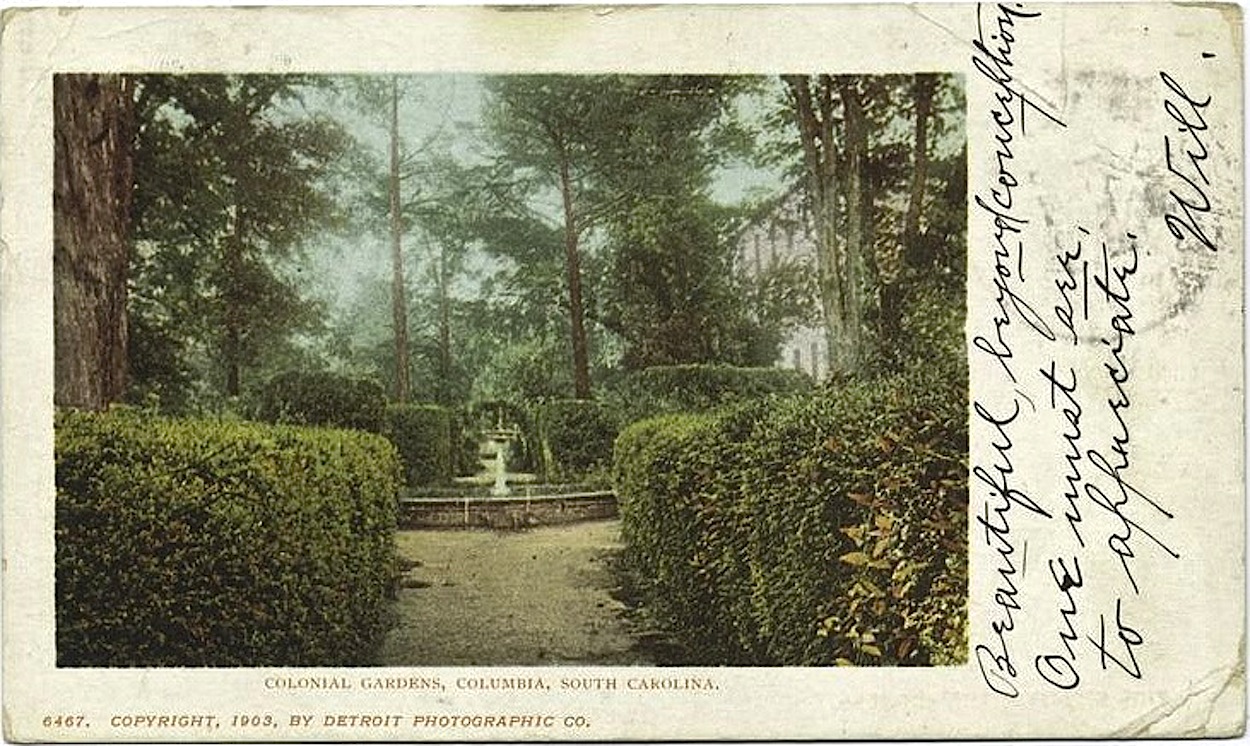
Colonial Gardens full ,nypl.digitalcollections.510d47d9-a7ba-a3d9-e040-e00a18064a99.001.w-3Colonial gardens, Columbia, South Carolina, ca. 1900, by Detroit Publishing Co., via The New York Public Library. (Click the image to enlarge it — or here.)

The handwritten message says:  “Beautiful beyond conception. One must err to appreciate.” Freudian slip?

The Sunday porch: the Jones

crj00 006Calvert Richard Jones (on the right), with six women, a man, boy, girl and dog, standing and sitting in a colonnaded porch way,” probably Swansea, Wales, ca. 1860, via National Library of Wales Commons on flickr.

Jones was a member of Swansea’s wealthly, landowning elite.  He studied mathematics at Oxford and was ordained as an Anglican priest, but spent much of his time traveling and painting. Like many men and women of his class in the Swansea area from the 1840s to the early 1860s, he was a photography enthusiast. In 1841, he took a daguerreotype that is now the earliest accurately dated photograph in Wales.

The photo may include Mrs. Jones (Portia Smith) and one or more of their three daughters.

Grimsby, Ontario

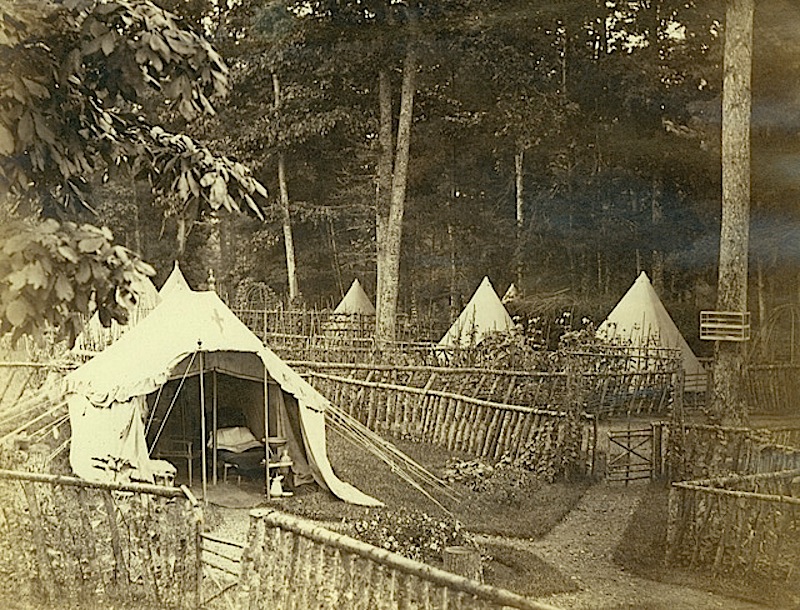
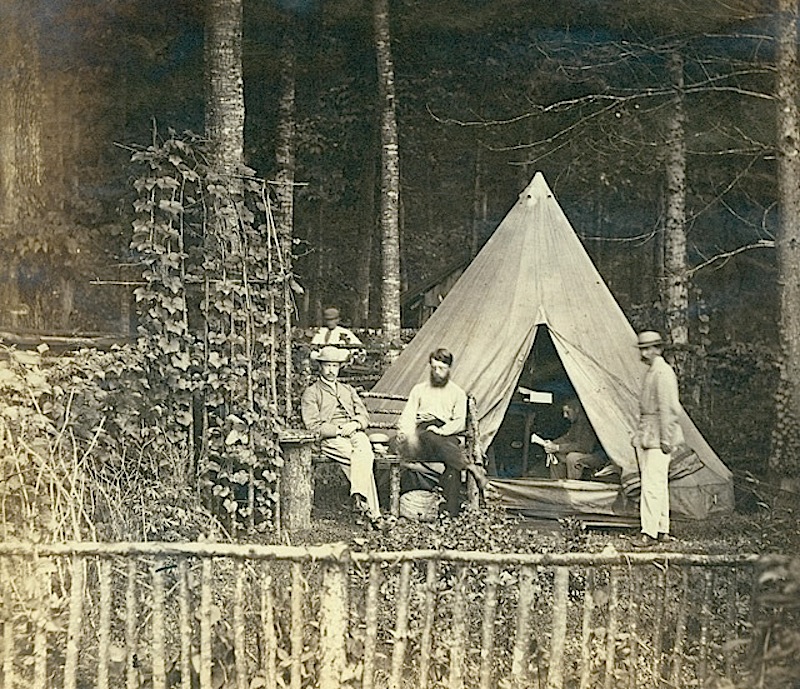
Maj. Buller's tent, Grimsby camp, Hamilton Public LibraryMajor E. M. Bullers’s tent in the Prince Consort’s Own Rifle Brigade encampment at Grimsby, Ontario, between 1862 and 1864. Photo taken by a member of the Ridley* family and used here courtesy of Local History & Archives, Hamilton Public Library (both photos).

Prince Consort’s Own” was a previous name of the British Army infantry regiment that is currently called “The Rifles.”  Their history during the Napoleonic Wars was popularized in Bernard Cornwell’s “Sharpe” novels.

A battalion of the Brigade was sent to the Grimsby/Hamilton† area during a British military buildup in Canada in response to the Trent Affair of 1861.  They arrived there in February 1862, just after the crisis had been resolved diplomatically — evidently clearing time for landscaping.

Grimsby camp, Hamilton Public LibraryAbove is another photo of the encampment, showing the tent of its Lieutenant, Lord Edward Cavendish.

The Library’s notes say that Hamilton had landed the most socially desirable regiment in Canada — after the Grenadier Guards, a prize won by Montreal.


*The photos are from the Mills Family Album.

†Grimsby is about 18 miles from Hamilton.