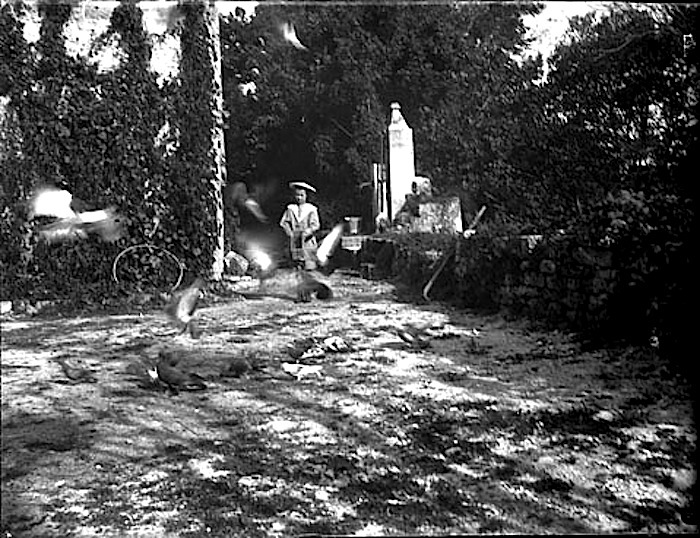
Life in gardens: Bélesta, France

Bebe et les pigeons, Belesta, 1897, flickr Commons

“Bébé et les pigeons, Bélesta,” 1897, by Eugène Trutat, via Bibliothèque de Toulouse Commons on flickr.

Trutat (1840-1910) was a naturalist, geologist, mountaineer of the Pyrenees, and the curator of the Museum of Toulouse.

He was also an early photographer — beginning in 1859 — and was particularly interested in using the medium for science. He eventually took almost 15,000 images and authored a number of books, including Photography Applied to Archaeology and Photography Applied to Natural History.

Trutat took many beautiful pictures of his family and friends, including the one here, of his sons, Paul and Henri. He took several photos of Bébé, a little girl, in October 1897.

There’s more in words than I can teach:
Yet listen, Child! — I would not preach;
But only give some plain directions
To guide your speech and your affections.
Say not you love a roasted fowl
But you may love a screaming owl,
And, if you can, the unwieldy toad
That crawls from his secure abode
Within the mossy garden wall
When evening dews begin to fall,
Oh! mark the beauty of his eye:
What wonders in that circle lie!
So clear, so bright, our fathers said
He wears a jewel in his head!
And when, upon some showery day,
Into a path or public way
A frog leaps out from bordering grass,
Startling the timid as they pass,
Do you observe him, and endeavour
To take the intruder into favour:
Learning from him to find a reason
For a light heart in a dull season.
And you may love him in the pool,
That is for him a happy school,
In which he swims as taught by nature,
Fit pattern for a human creature,
Glancing amid the water bright,
And sending upward sparkling light.

— Dorothy Wordsworth, from “Loving and Liking: Irregular Verses Addressed to a Child

The Sunday porch: Bound Brook, N.J.

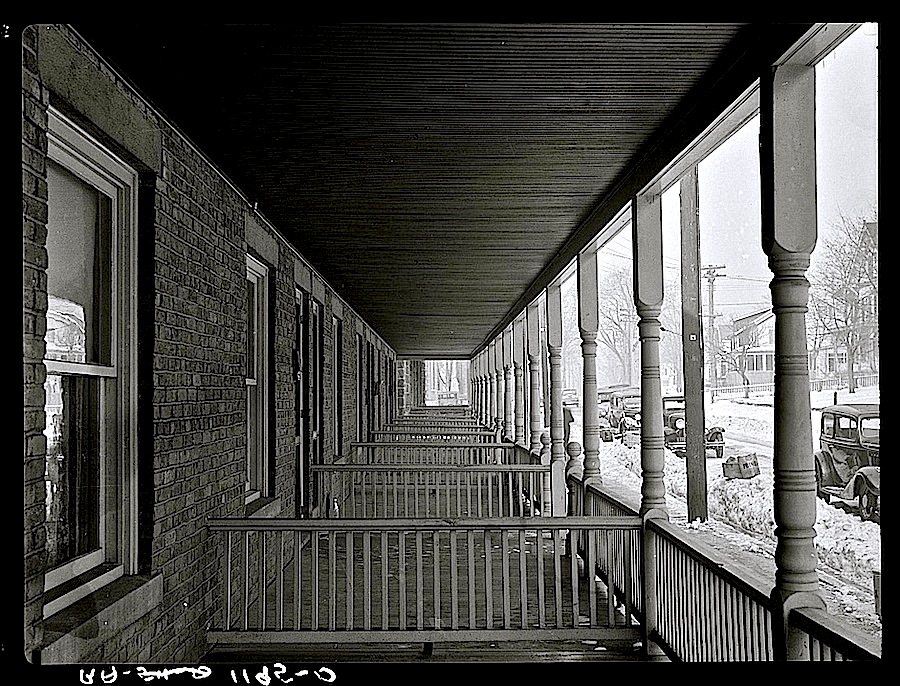
Bound Brook, N.J., Feb. 1936, porches, via Library of Congress“Back [?] porches of a series of identical houses. Bound Brook, New Jersey,” February 1936, by Carl Mydans, via Library of Congress Prints and Photographs Division.

The winter of 1935/1936 was one of the coldest of that decade in North America.  And the following summer brought the infamous 1936 heat wave.

Carl Mydans was working for the U.S. Resettlement Administration when he took this picture.  Shortly afterwards, he was hired by Life and is probably best remembered today for his war photography for the magazine.

February, month of despair,
with a skewered heart in the centre.

Margaret Atwood, from “February

The Sunday porch: view finder

094498pvAbove: View from the porch of the Flanders Callaway House, Warren County, Missouri, 1938, by Charles or Alexander Piaget, working with Charles van Ravenswaay (later incorporated into a 1985 HABS).*

All photos here via Library of Congress Prints and Photographs Division.

This slideshow requires JavaScript.

Above: “View from White House porch [looking north to Lafayette Park],” Washington, D.C., 1920, from National Photo Company Collection. President and Mrs. Wilson introduced sheep to the White House lawn. The wool went to the Red Cross.

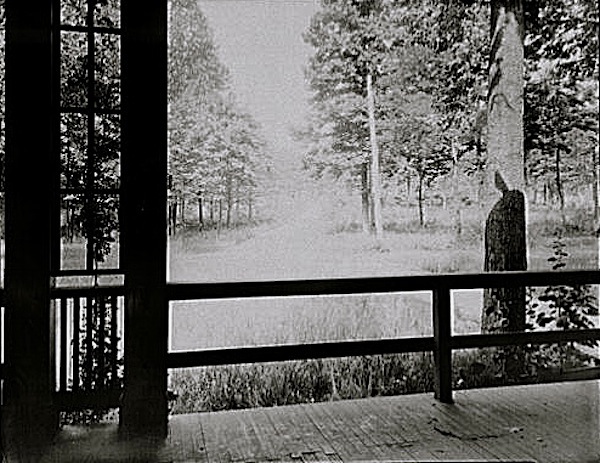
The Sunday porch: views, via Library of CongressAbove: View from porch at Shady Rest Sanatorium, White Heath, Illinois, ca. 1920 – 1950, by Theodor Horydczak.

This slideshow requires JavaScript.

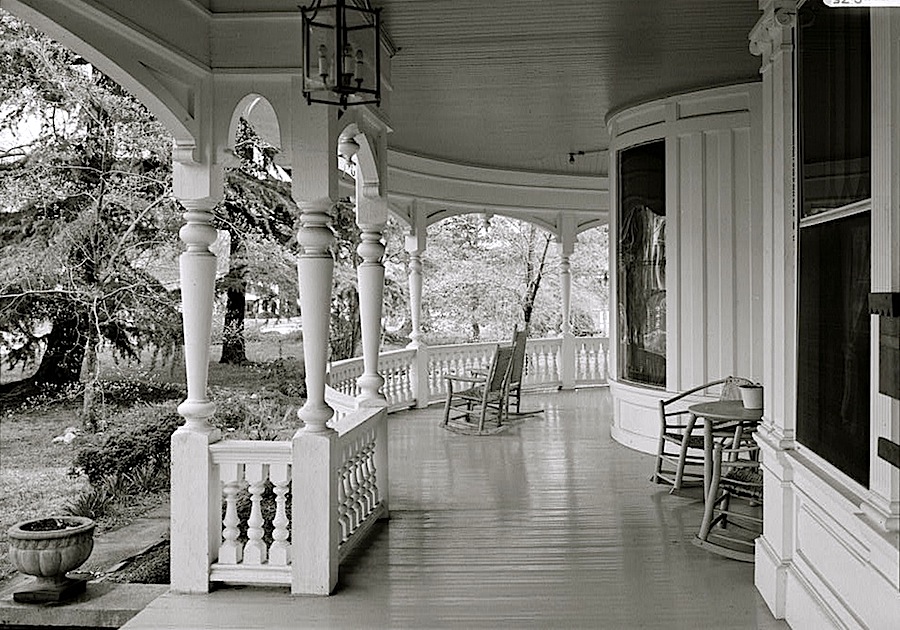
Above: Looking north from the porch of the Kolb-Pou-Newton House [or Boxwood], Madison, Georgia, June 1936, by L. D. Andrew for HABS.

This slideshow requires JavaScript.

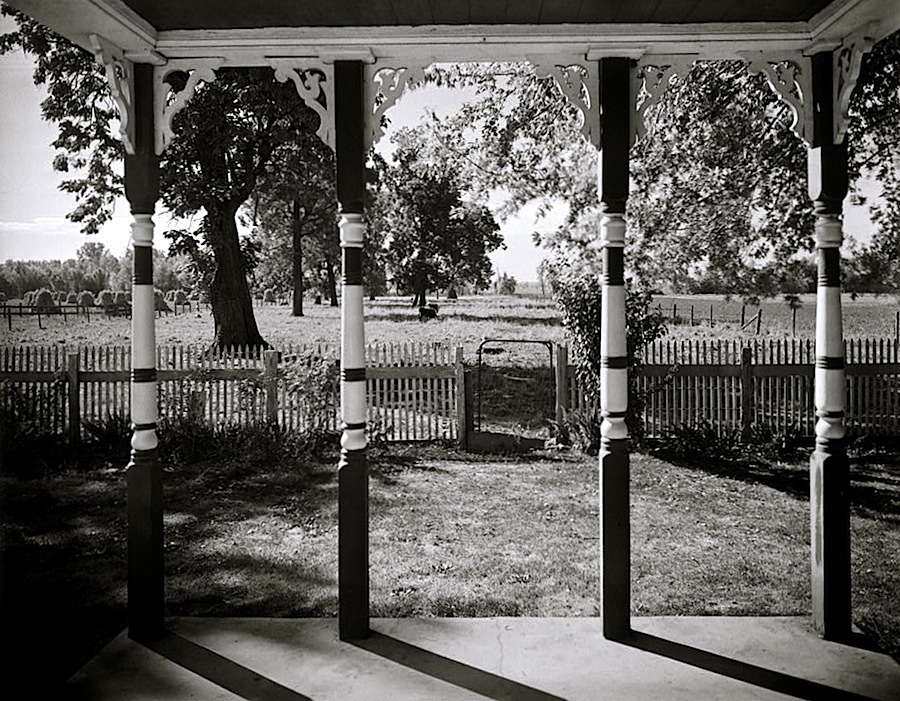
Above: View of garden from the porch – Oakland Plantation, Natchitoches Parish, Louisiana, ca. 1988, by HABS.

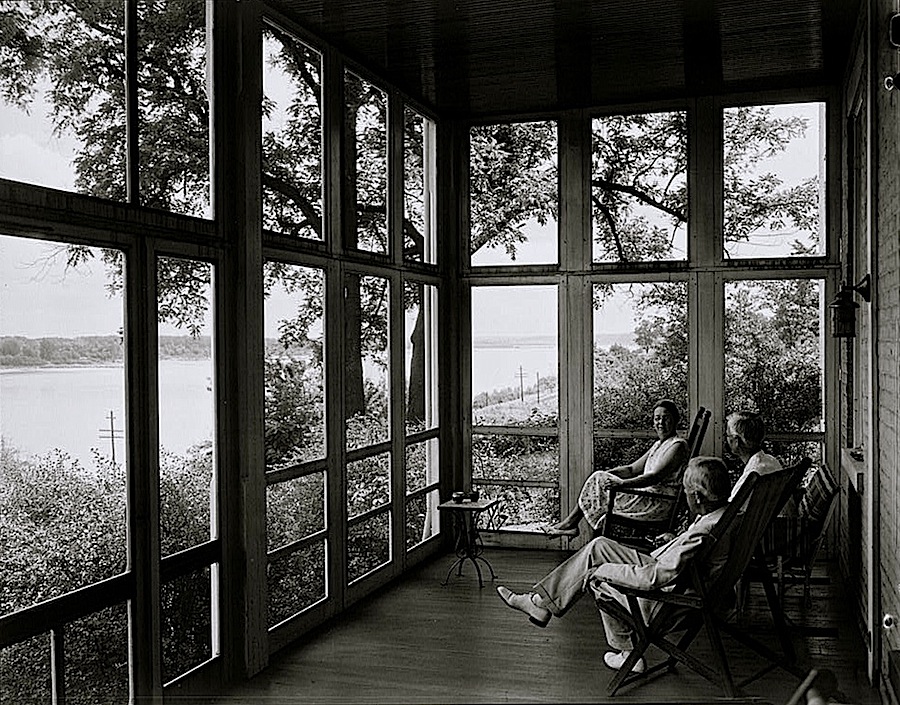
095350pvAbove: Mr. and Mrs. J. H. Dickbrader and Mr. Arcularius on the porch of the Dickbrader House, Franklin County, Missouri, by  HABS.

150293pvAbove: John Calvin Owings House, Laurens, South Carolina, by HABS.

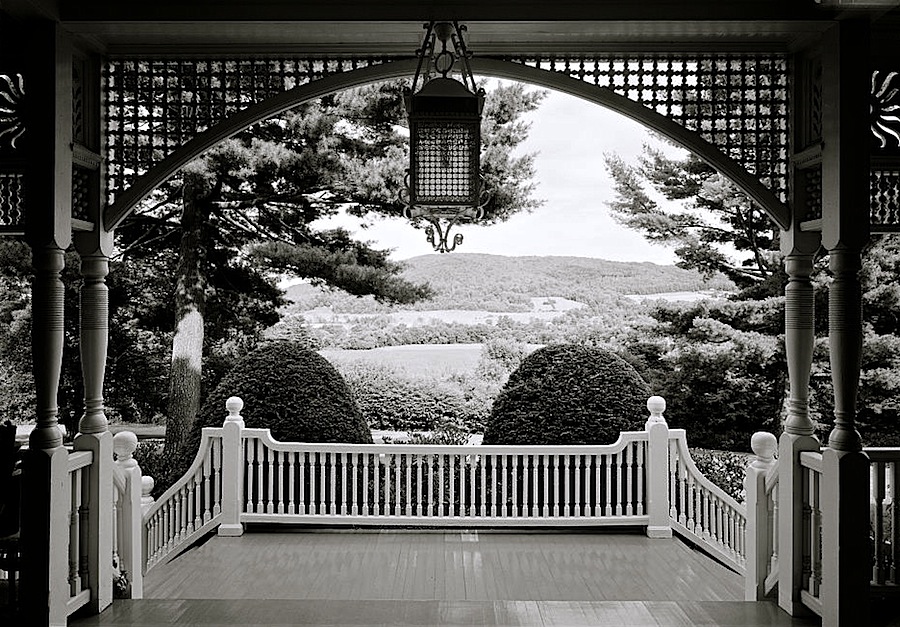
The Sunday porch: views, via Library of CongressAbove: View from the veranda of the Billings Farm and Museum to Blake Hill, Marsh-Billings-Rockefeller National Historical Park, Woodstock, Vermont, 2001, by David W. Haas for HABS.

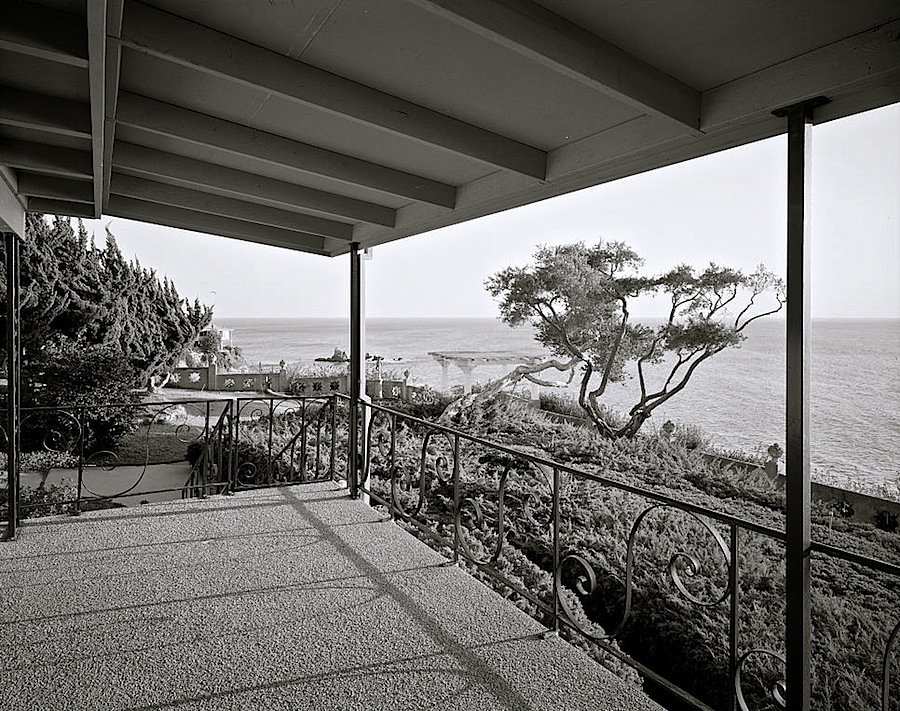
014310pvAbove: Porch of Smithcliffs House, North Coast Highway, Laguna Beach, California, by HABS.

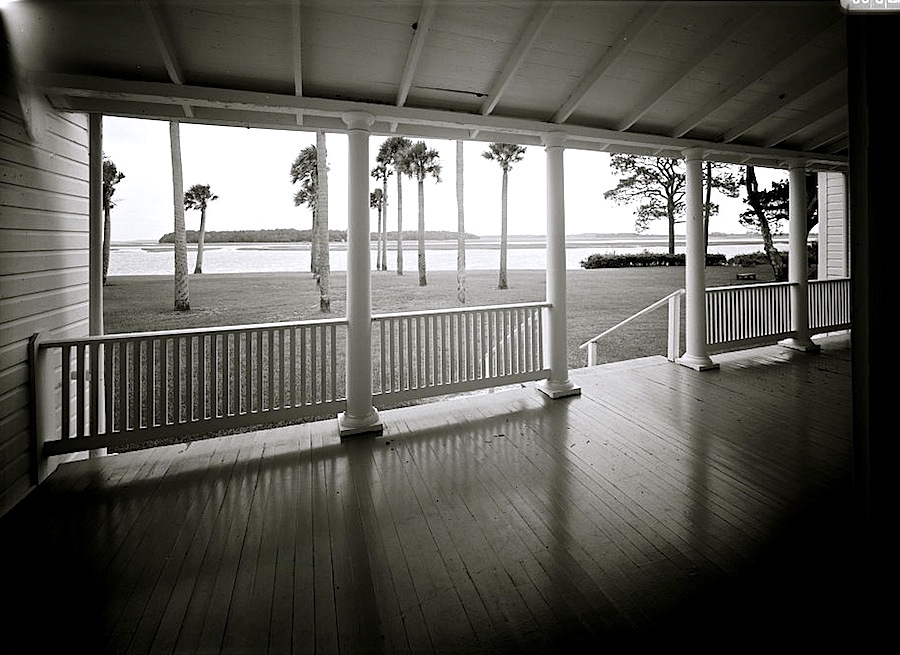
207863pvAbove: “View from north porch, looking northeast toward Fort George River – Kingsley Plantation House,” Jacksonville, Florida, 1005, by Jack Boucher for HABS.

This slideshow requires JavaScript.

Above: “View from north porch looking south into Back Hall, with Reception Hall south door open [and closed] – Homewood (cropped slightly by me),” Baltimore, Maryland, 2005, by James W. Rosenthal for HABS.


*Historic American Building Survey


The winter garden: the White House

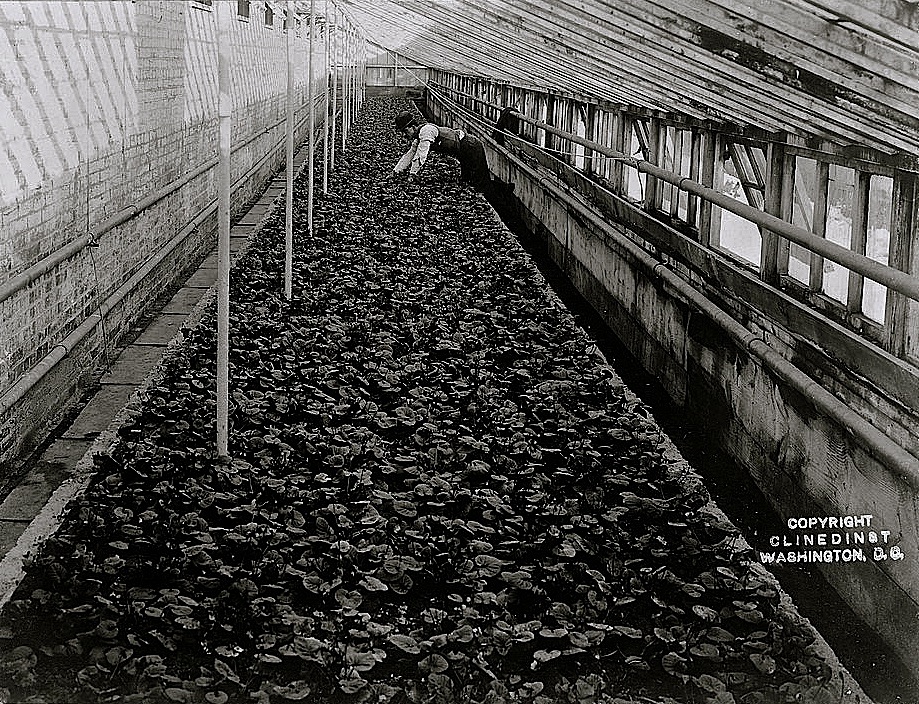
Violet house section of the White House conservatory, early 1900s, by Barnett McFee Clinedinst
The violet house section of the White House conservatory, early 1900s, by Barnett McFee Clinedinst

Wouldn’t it be nice to have a whole greenhouse devoted to growing violets for the house during the cold weather months?

Or orchids and palms?

This slideshow requires JavaScript.

Frances Benjamin Johnston took the above photographs (except one) in 1889 and 1890.

Or azaleas?

This slideshow requires JavaScript.

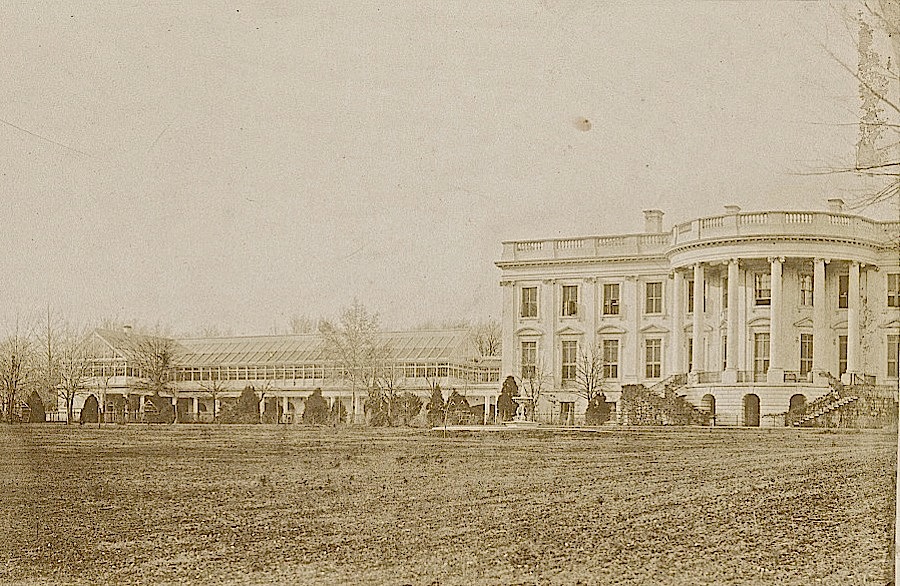
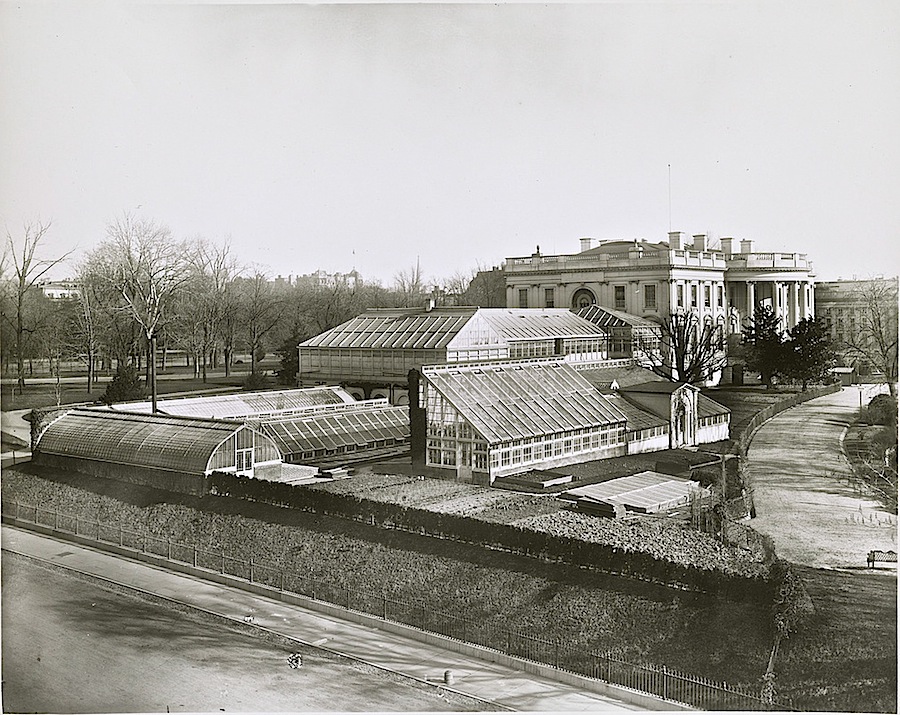
A large conservatory complex occupied the west side of the White House from 1857. . .

The White House and conservatory in 1857 by Lewis Emory Walker.

until 1902, when the West Wing was built.

The greenhouses in 1889 by Frances Benjamin Johnston.

All photos above via Library of Congress Prints and Photographs Division.

Four more winter gardens are here.

The perfect loveliness that God has made,—
Wild violets shy and Heaven-mounting dreams.

Alice Moore Dunbar-Nelson, from “Sonnet

The Sunday porch: Wellington

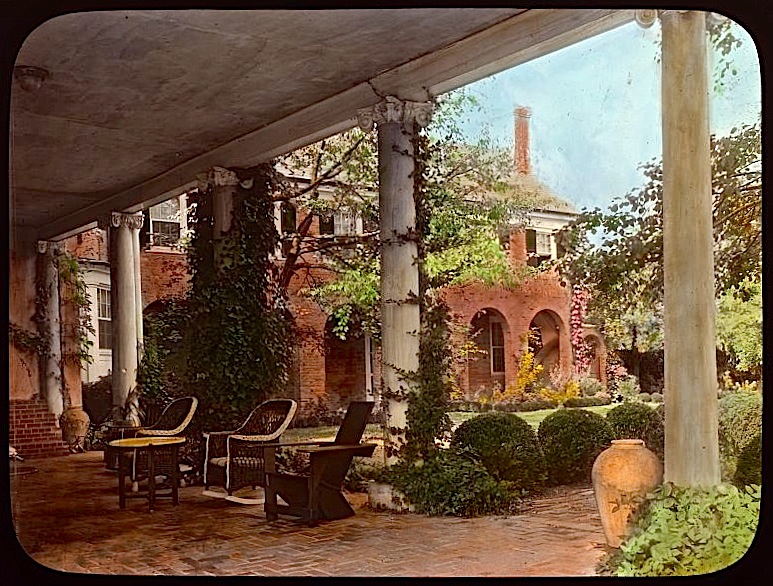
The Sunday porch/enclos*ure: Wellington, now River Farm, about 1931, Alexandria, VA, via Library of Congress.“Wellington,” near Alexandria, Virginia, 1931, hand-colored glass lantern slide by Frances Benjamin Johnston, via Library of Congress Prints and Photographs Division.

The white columned, ground-level porch wrapped around two and a half sides of one wing of the house.  I like the black and white wicker rockers and those terracotta jars.

Today, the house (built in 1757) and its surrounding 25 acres are the headquarters of the American Horticultural Society (AHS) and are called River Farm.

George Washington originally gave the property that name after he purchased it in 1760.  It was then 1,800 acres in size and became one of his five farms around Mount Vernon.

During the 1800s, the property, re-named Wellington, passed through several owners’ hands, becoming progressively smaller in size.  It was only 280 acres in 1919, when it was purchased by local businessman Malcolm Matheson, who restored the house and gardens.

In 1971, when Matheson wanted to retire to Florida, the house and (then) 27 acres were bought by the AHS.  The funds for the purchase had been donated by board member Enid A. Haupt — partly to help the AHS, but also to keep the last of George Washington’s old farm out of the hands of the Soviet Embassy, which had wanted to buy it as a summer dacha for its employees.

Today, River Farm is open to the public  weekdays, from 9:00 a.m. to 5:00 p.m. From April through September, it is also open on Saturdays, from 9 am to 1 pm. Admission is free.

And, of course, it can be rented for weddings and events.

A gardyn saw I, ful of blosmy bowes
Upon a ryver, in a grene mede,
There as swetnesse everemore inow is,
With floures whyte, blewe, yelwe, and rede

— Geoffrey Chaucer, from “The Parlement of Foulys