The Sunday porch: April 1865

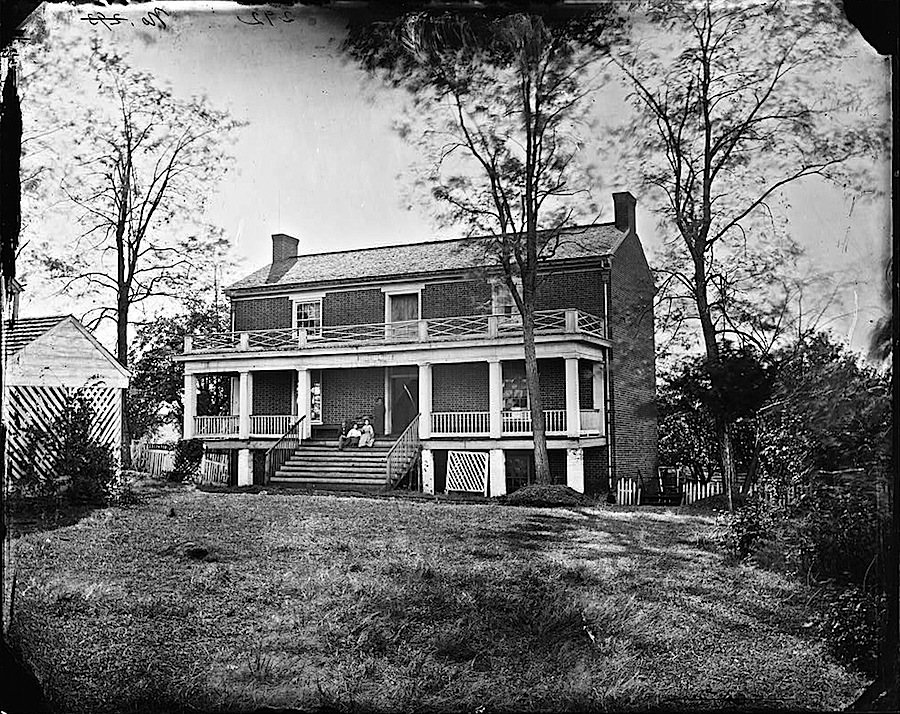
The Sunday porch/enclos*ure: McLean house, Appomattox, VA, April 1865, via Library of CongressThe McLean house, Appomattox Court House (previously Clover Hill), Virginia, April 1865, by Timothy H. O’Sullivan, via Library of Congress Prints and Photographs Division (all photos here).

On Palm Sunday, April 9, 1865, General Robert E. Lee crossed the porch of this house and entered the parlor to surrender his army to Lieutenant General Ulysses S. Grant — effectively ending the American Civil War.
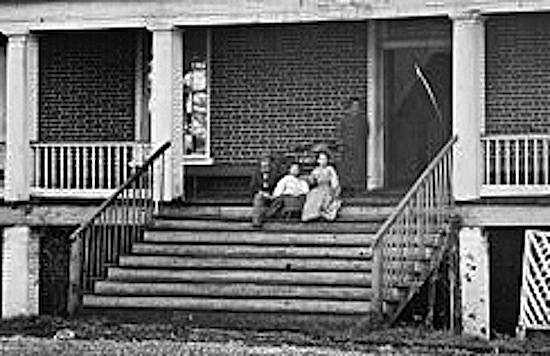
Detail of photo above.

The house — built in 1848 and previously a tavern — was owned by Wilmer McLean, a retired major in the Virginia militia and a wholesale grocer.

Back in 1861, the first major battle of the war had been fought on McLean’s farm in Bull Run, Virginia. (A cannonball had landed in the kitchen fireplace, and afterwards the house was taken over as a Confederate hospital.)

The Sunday porch/enclos*ure: McLean house, Appomattox, VA, April 1865, via Library of Congress

Hoping to avoid the rest of the war,* the McLeans moved to the small southern Virginia village of Clover Hill in 1863. However, during Easter Week of 1865, the family not only hosted the surrender signing, but also the Surrender Commissioners’ meeting the next day.  Union Major General John Gibbon and his officers then quartered in the house for a few days.

“The [Civil] War began in my front yard and ended in my parlor,” McLean is reported to have said later.

One can well imagine that he sometimes sat on this porch, reflecting and shaking his head.

Detail of photo above.
Detail of photo above — possibly the McLean family.  Mrs. McLean had two daughters from an earlier marriage and at least three children with Wilmer.

As soon as the surrender was signed, officers of the Army of the Potomac began buying the family’s furniture (whether they wanted to sell or not). Major General Philip Sheridan paid $20 for the little table on which Grant signed the document of surrender terms. George Armstrong Custer took it away on his horse, and Sheridan later gave it to Mrs. Custer, who bequeathed it to the Smithsonian Institution.

That fall, McLean, nearly bankrupt, moved away from the “Surrender House,” as it was now popularly called. He was found in default of his loans, and the house was sold by the bank.

In 1891, it was sold again to Captain Myron Dunlap, who, with other investors, formed several schemes to profit from the fame of the house.  By 1893, it was dismantled to become a tourist attraction in Washington, D.C. However, the money ran out before it could be shipped. For 50 years, the pieces were just left on the ground, exposed to the elements, vandals, and thieves.

In 1949, the house was reconstructed on its original site and opened to the public by the National Park Service. There are recent photos of the house and yard here and here.

The Sunday porch/enclos*ure: McLean house, Appomattox, VA, April 1865, via Library of Congress


*McLean was 47 when the war began and was considered too old to fight. A slave owner, he made a lot of money running sugar through the Union blockade. Unfortunately, it was Confederate money, which was worthless by 1865.  After moving away from Appomattox, the family returned to Bull Run and then later settled in Alexandria, Va. McLean worked for the Internal Revenue Service from 1873 to 1876 and died in 1882.
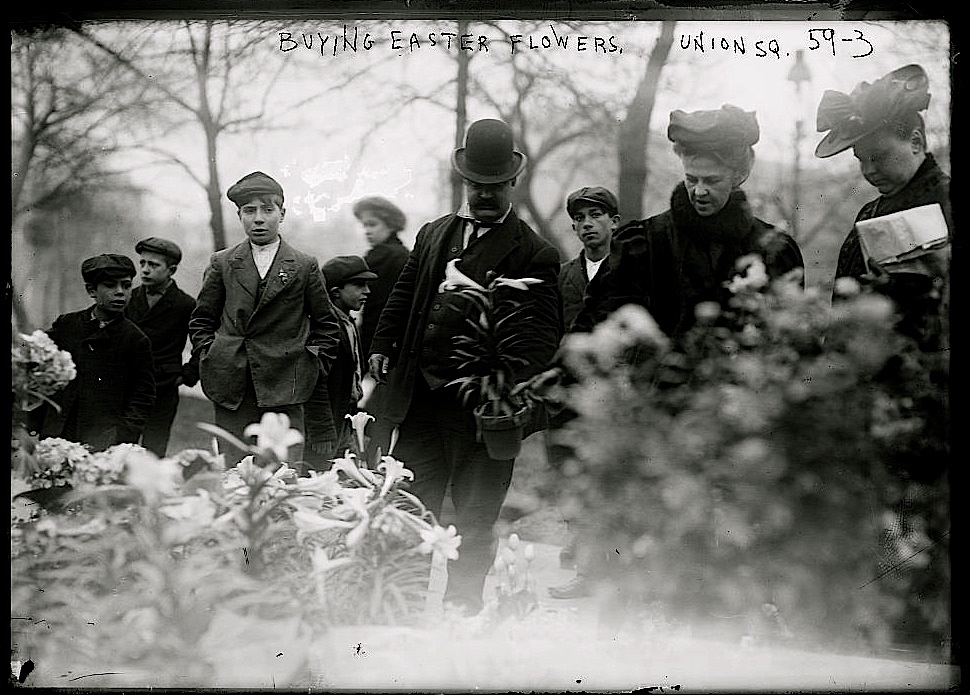
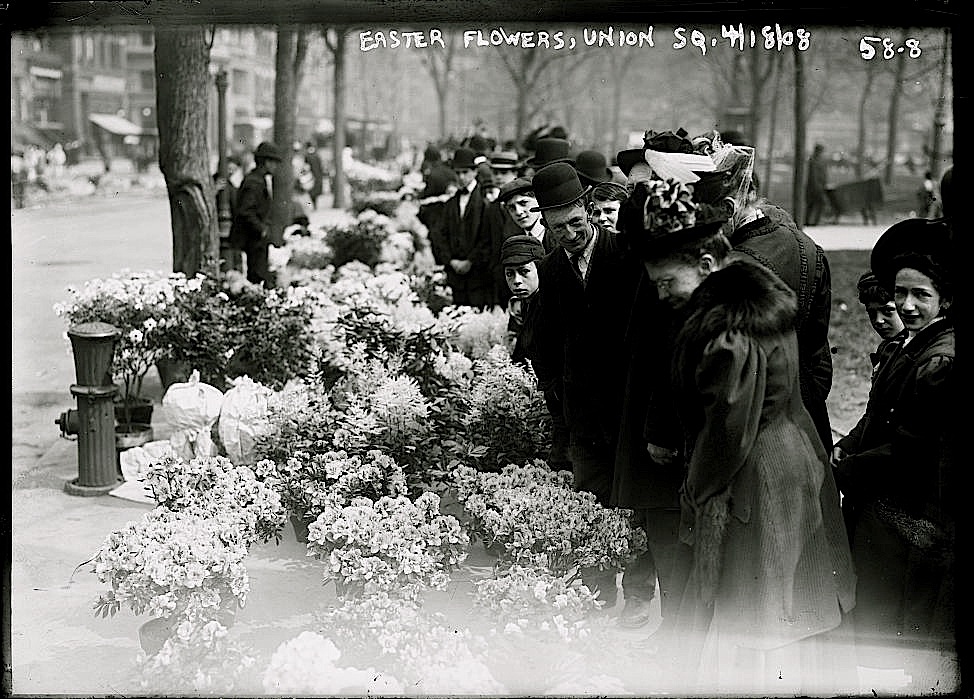
The flower sellers, Union Square

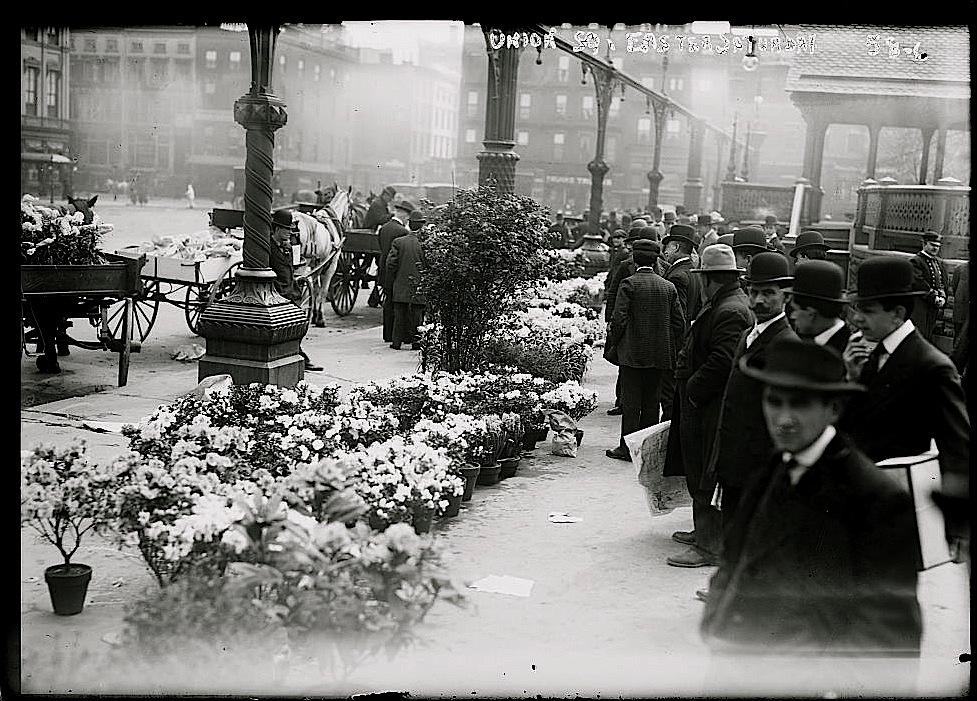
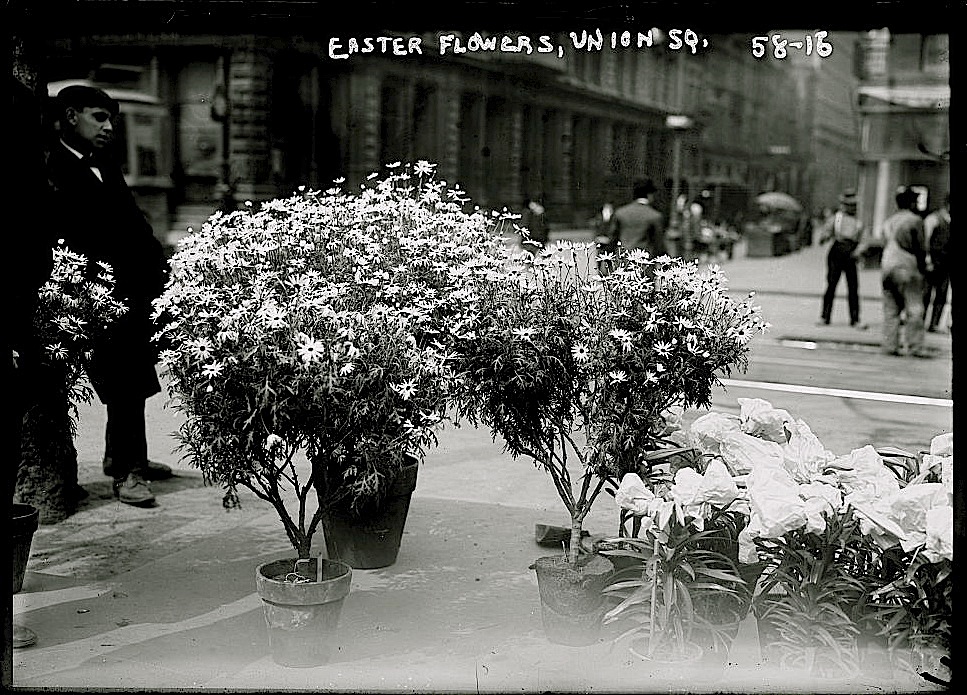
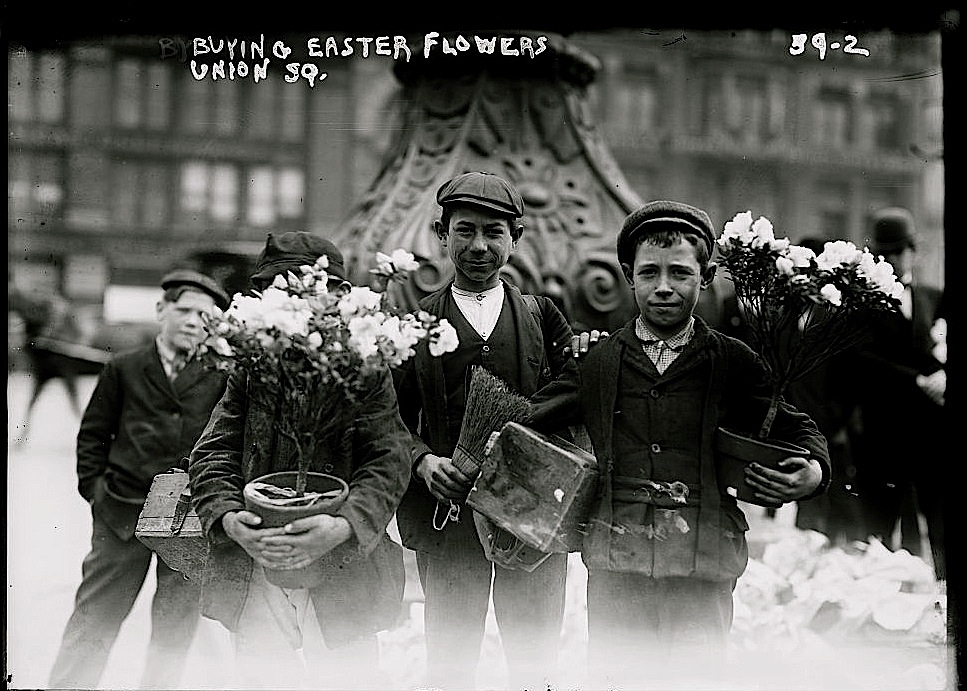
Vintage landscape/enclos*ure: buying Easter flowers, NYCity, 1908, via Library of CongressBuying Easter flowers, Union Square, New York City, April 18, 1908 (the Saturday before Easter) by Bains News Service, via Library of Congress Prints and Photographs Division.

Vintage landscape/enclos*ure: buying Easter flowers, NYCity, 1908, via Library of Congress

Vintage landscape/enclos*ure: buying Easter flowers, NYCity, 1908, via Library of CongressThings look pretty calm in these pictures, but only a week and a half before, on March 28, the park was the scene of a demonstration by the unemployed and then a bombing, which killed the bomber and a bystander.

Vintage landscape/enclos*ure: buying Easter flowers, NYCity, 1908, via Library of CongressSince 1976, Union Square has been the site of a thriving greenmarket (every Monday, Wednesday, Friday, and Saturday), which includes flower sellers.

Vintage landscape/enclos*ure: buying Easter flowers, NYCity, 1908, via Library of Congress

You can scroll through larger versions of these images (and several more) by clicking on ‘Continue reading’ below and then on any thumbnail in the gallery.

Continue reading “The flower sellers, Union Square”

The Sunday porch: somewhere in Texas

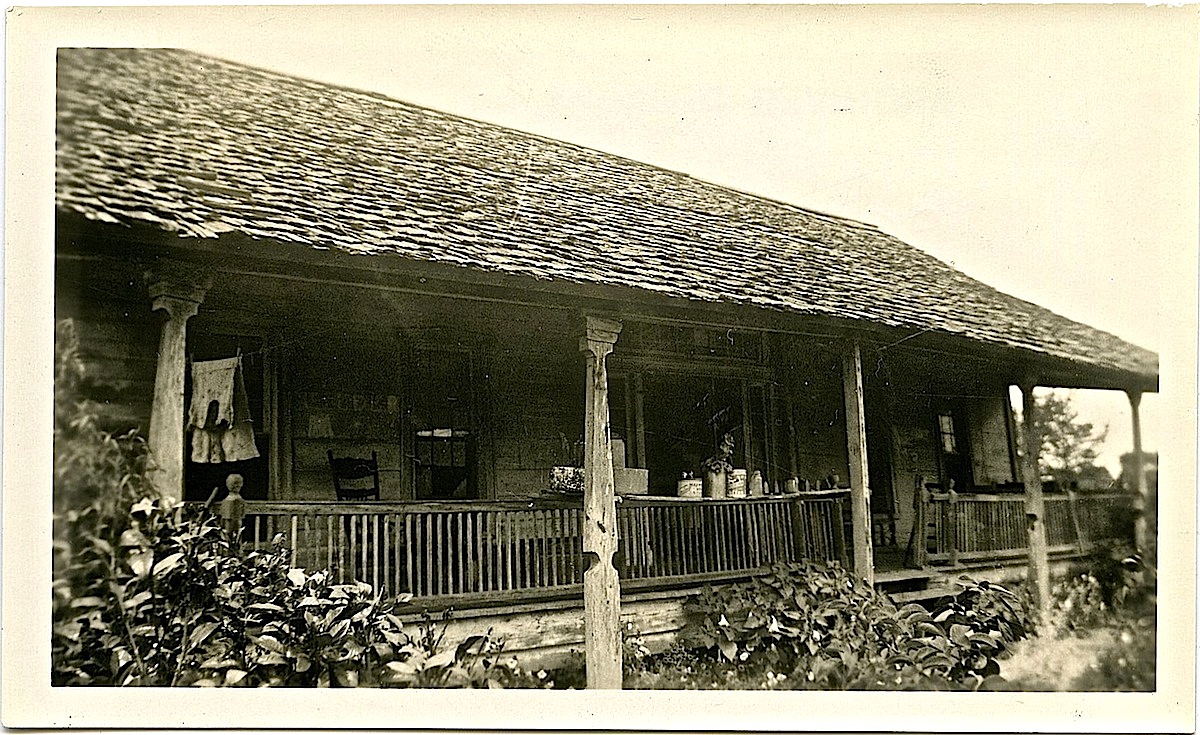
The Sunday porch/enclos*ure: unidentified Texas porch, by Fanny Ratchford, 1936, via Texas State Archives Commons.“Unidentified house,” probably by Fanny Ratchford, 1936, via Texas State Archives Commons on flickr. (You can click on the photo to enlarge it.)

It’s interesting to me that the roof of the house extends beyond the edge of the porch. The pretty columns are not attached to the railings, but come down to the ground a few feet beyond them.

There seems to be a word — maybe a name — on the wall above the chair on the left side, but I can’t read it.

ADDENDUM: The way the columns are set makes this a rain porch.

This slideshow requires JavaScript.

Among a little wind grit, in a grid on a grid, somewhere
like the crossroads of outer space and Earth, Texas,
a handful of ragged elms withstand a long sway
of heat and wind. These old guards of a home haunt
the field but wither even as ghosts must. Honor them
with a walk among homesick bricks, and prophesy good.

John Poch, from “The Llano Estacado

Vintage landscape: spring rain

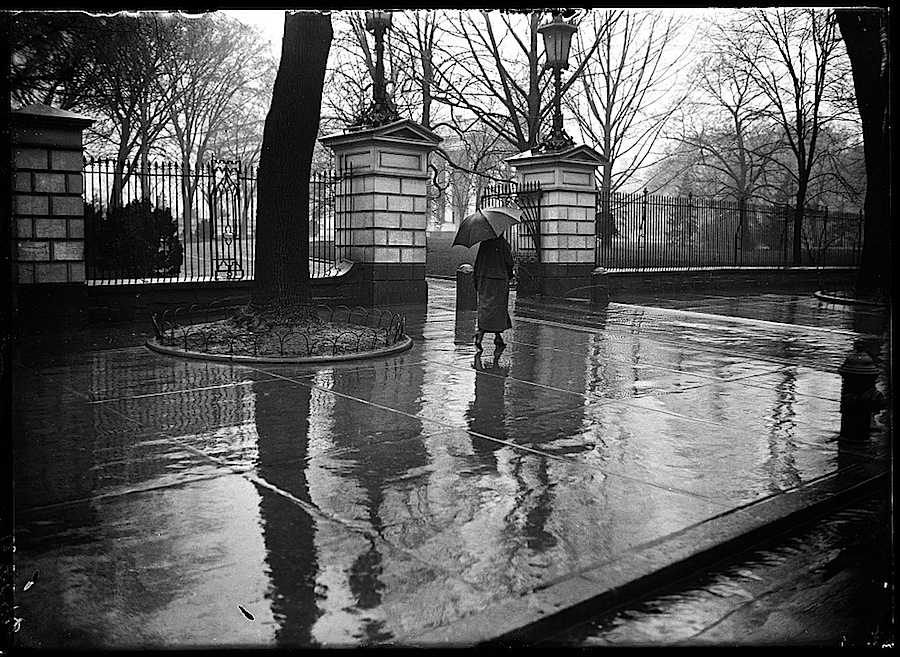
Showers, White House, early 1920s, via Library of Congress“Sidewalk in front of White House, Washington, D.C.,” early 1920s, by Harris & Ewing, via Library of Congress Prints and Photographs Division.

Whan that Aprill with his shoures sote
The droghte of Marche hath perced to the rote,
And bathed every veyne in swich licour,
Of which vertu engendred is the flour. . .

— Geoffrey Chaucer, from “The General Prologue” of The Canterbury Tales

Translation: April showers bring May flowers.

Today is Whan that Aprille Day — a day to enjoy “alle langages that are yclept ‘old,’ or ‘middel,’ or ‘auncient,’ or ‘archaic,’ or, alas, even ‘dead.’” This is the idea of @LeVostreGC (or Chaucer Doth Tweet), who blogs at Geoffrey Chaucer Hath a Blog.

The Sunday porch: Gothic Revival anyone?

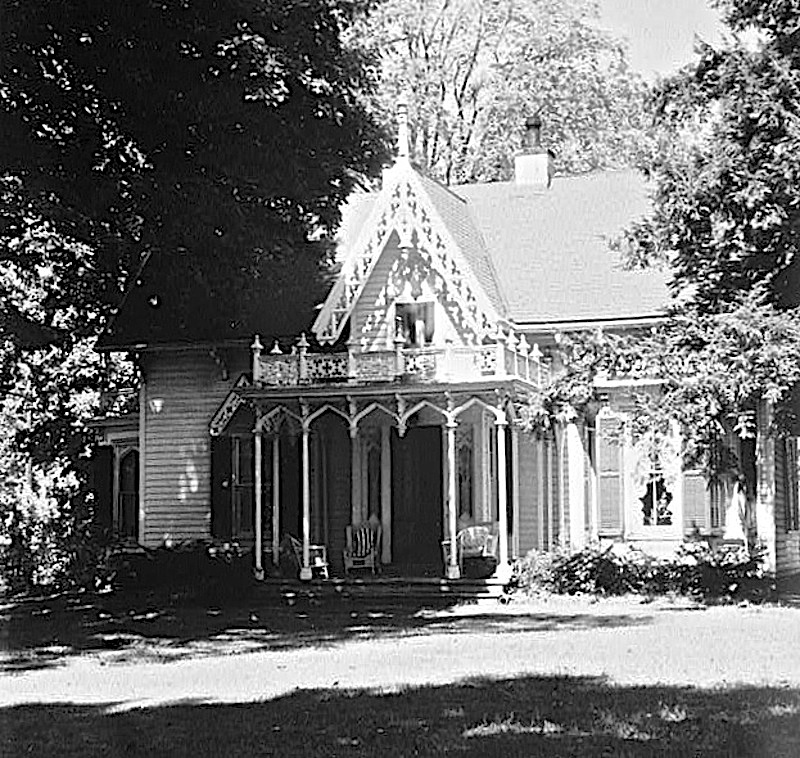
Peter Neff Cottage in Ohio, via Library of CongressEntrance porch of the Peter Neff Cottage, Kenyon College, Gambier, Ohio. Photo taken 1951 by Perry E. Borchers for an Historic American Buildings Survey (HABS), via Library of Congress Prints and Photographs Division.

Gothic Revival hse. in Ohio, via Library of CongressAnother 1951 photo of the porch, also by Perry E. Borchers for the HABS (cropped by me).

The HABS report for this house said it “may be the finest example of Gothic Revival cottage style and wood detail in Ohio.”  It was built about 1860 for Peter Neff, a co-inventor of the tintype and an alumnus and benefactor of Kenyon College.

All was not happy in this charming abode, however. Neff quarreled with nearby Kenyon over the bells of the campus’s Church of the Holy Spirit, “which he claimed had driven him to the brink of nervous collapse,” according to the Historic Campus Architecture Project.

“Place yourself and family in my location, about seven hundred feet distant,” he wrote in a 19-page open letter. “How would you like this ding dong every fifteen minutes? . . . [It is] machinery wearing out flesh and blood to those who have any nerves. It is too much bell-ringing . . . it is a sickening nuisance.”

Neff finally moved away from the campus and its bells in 1888.

The house is now named Clifford* Place and is the residence of the Dean of Students.


*The name of one of Neff’s daughters.