The Sunday porch: French Legation

This slideshow requires JavaScript.

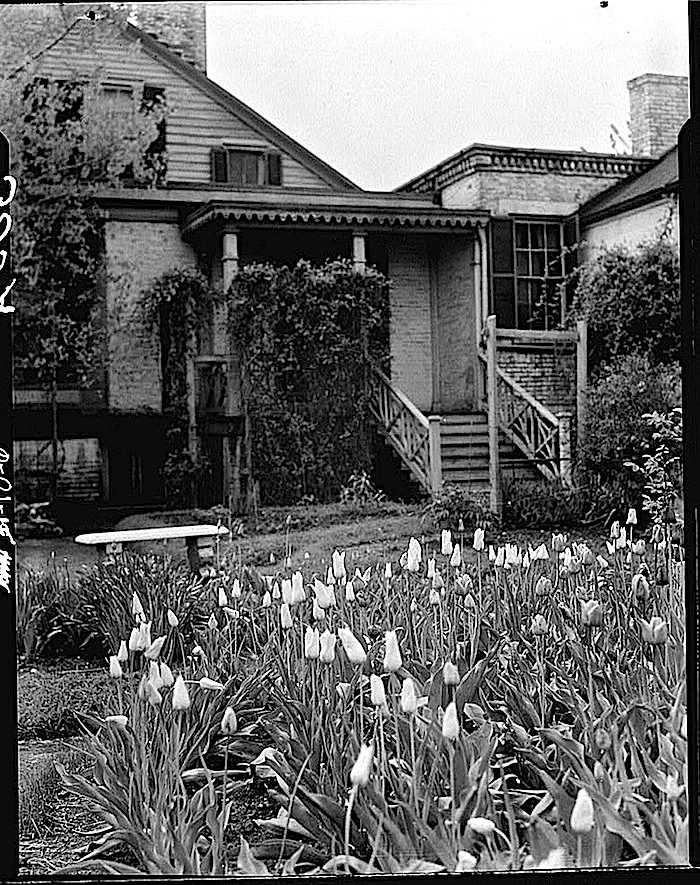
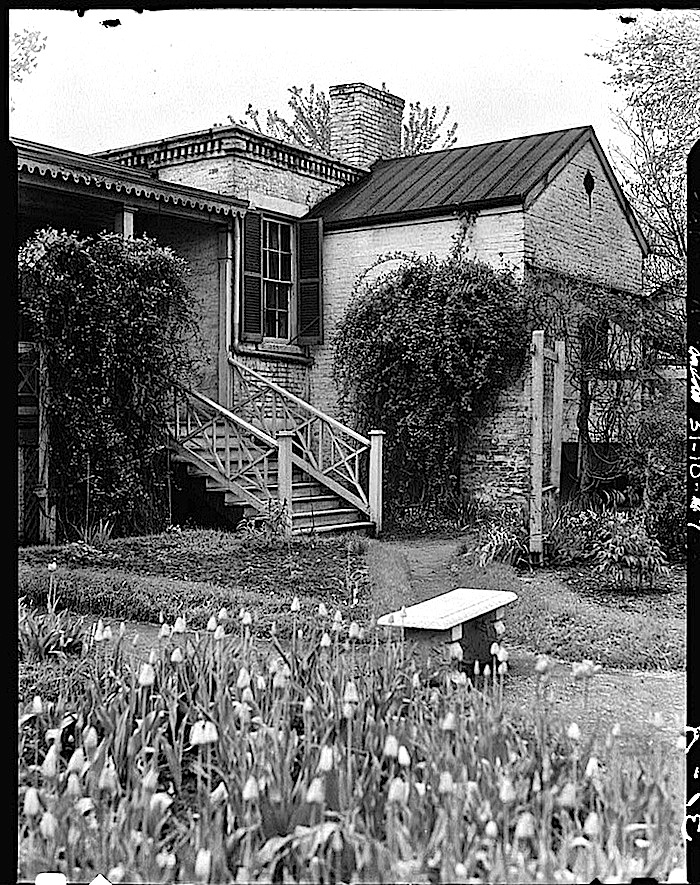
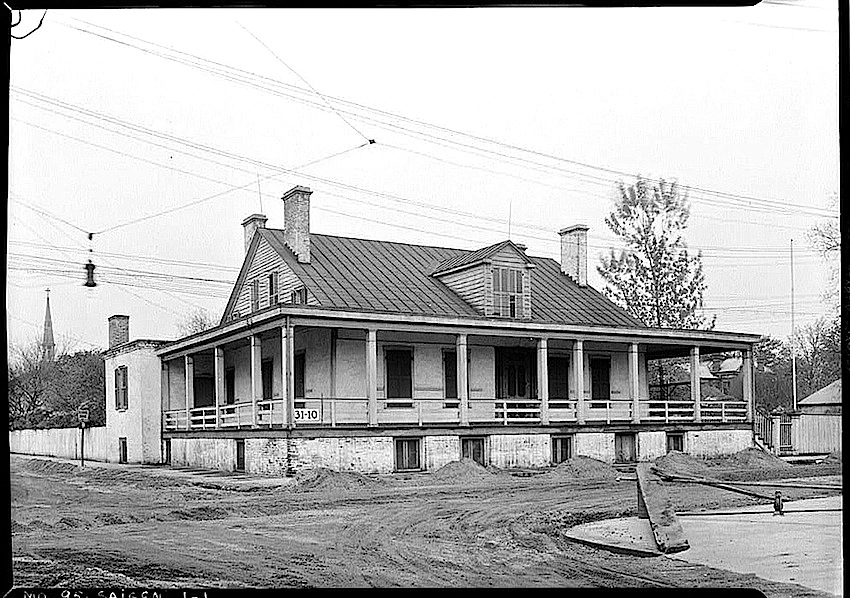
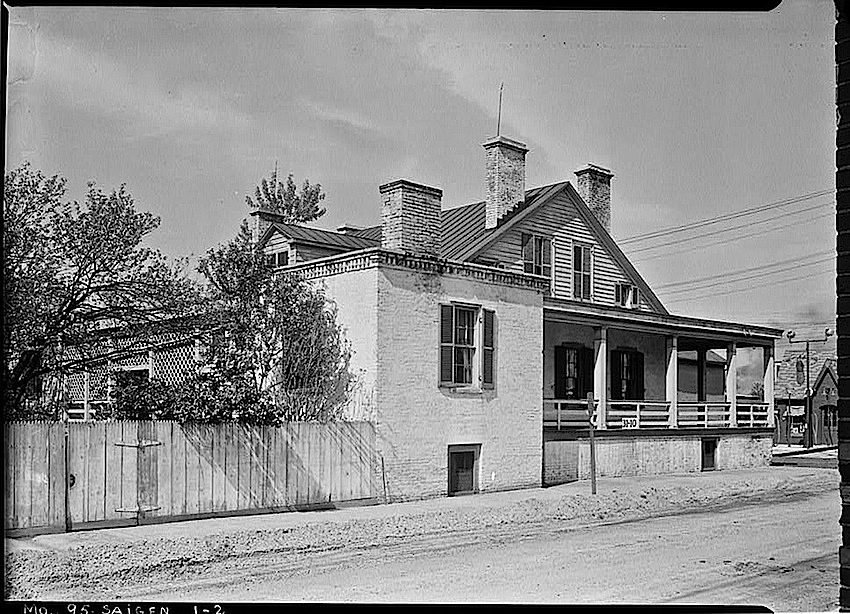
The front porch of the French Legation to the Republic of Texas, Austin, Texas, 1934, by Louis C. Page, Jr., via Historic American Building Survey (HABS), Library of Congress Prints and Photographs Division.

This house — now the French Legation Museum — is the oldest extant building in Austin.  It was constructed between 1839 and 1841 for Monsieur Jean Pierre Isidore Alphonse Dubois, a secretary at the French Legation in Washington, D.C., who was sent to Texas to investigate the benefits of establishing relations with the new Republic of Texas.

On Dubois’s advice, Texas was soon recognized as a sovereign nation by France and he himself was appointed as the King’s chargé d’affaires.  Unfortunately — and probably before he could ever occupy his house — he became involved in a number of political, financial, and personal controversies, culminating in the so-called “Pig War.” When the Republic’s capital moved to Houston in 1841, Dubois left for New Orleans, only occasionally returning to Texas.

The style of the house is a blend of vernacular Greek revival and Mississippi Valley French. It may have been designed by carpenter Thomas William Ward, who had previously worked in Louisiana.

At the time of the 1934 photos above, the house was owned and occupied by Miss Lillie Robertson, whose father had purchased it in 1848.  After Lillie’s death, the property was sold to the State of Texas in 1945.  It was then put into the custody of the Daughters of the Republic of Texas.  They restored it and opened it to the public in 1956.

This slideshow requires JavaScript.

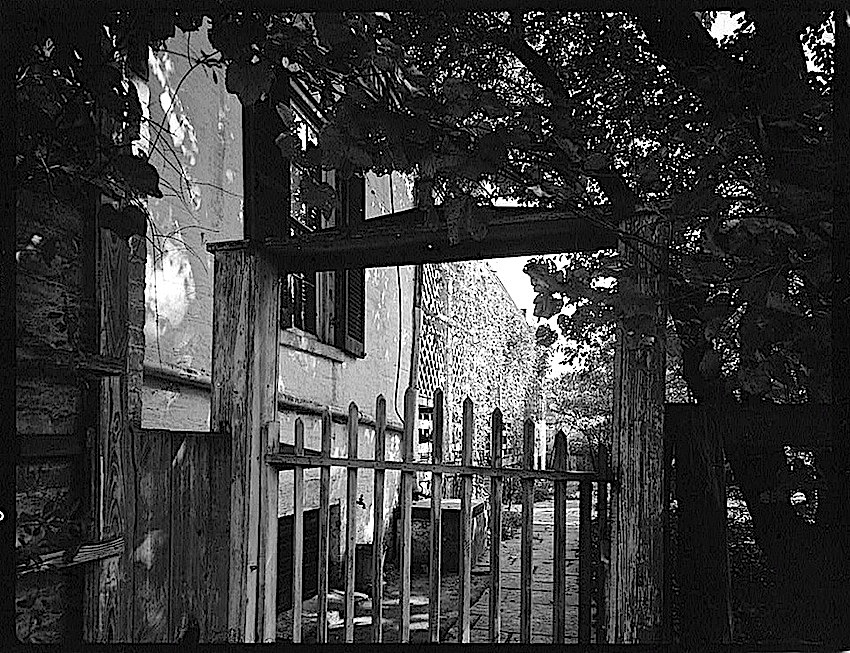
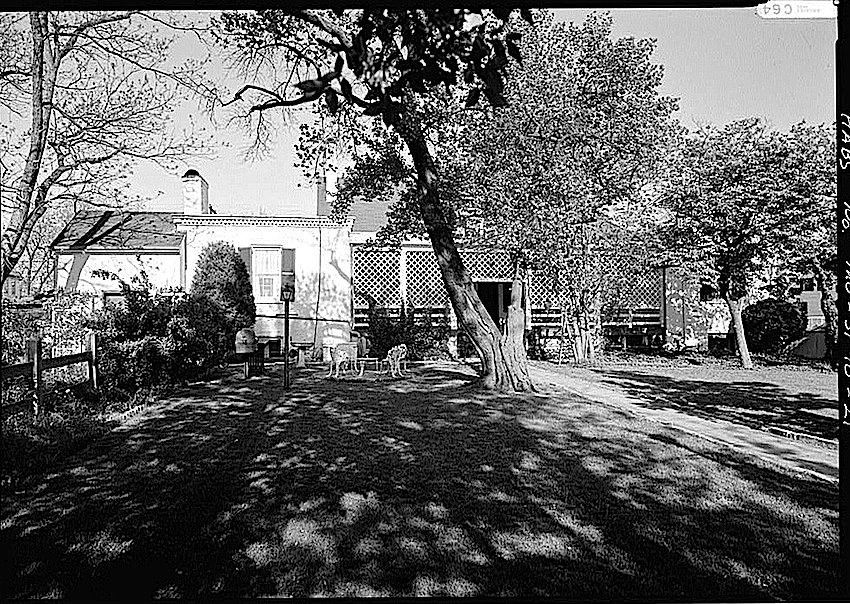
The same views in 1961, by Jack E. Boucher, also via HABS, Library of Congress.

By 1961, the Legation house was surrounded by a formal arrangement of boxwood hedges — perhaps having taken a lesson from  M. Dubois, the son of a tax collector,  who styled himself Count de Saligny after he arrived in Texas.

Today, the museum looks much the same.  Its surrounding park is 2 1/2 acres and is open to the public. Its wide gravel paths are sometimes used for games of pétanque. From the front porch, visitors can see the Texas Capitol Building and downtown Austin.
Castle garden in Meersburg

This slideshow requires JavaScript.

Castle garden, Meersburg, March 29, 2015.

I’m sorry that I had no porch for you on Sunday; we spent a long weekend in the town of Meersburg on Lake Constance, about an hour and a half south of Stuttgart.

Aside from its lakefront location (and a beautiful view of the Swiss Alps across the water), the town’s principal feature is the medieval Alte (old) Burg — Germany’s oldest inhabited castle.*

Its sweet little garden, tucked along a high wall, seems to reflect the presence of the castle’s most distinguished resident, the romantic poet Annette von Droste-Hülshoff. She frequently stayed there in the 1840s, when her brother-in-law owned it.

Her pretty rooms with their floral wallpapers have been carefully preserved — she died there in 1848.

You can see the position of the garden along the castle walls in this Wikipedia photo.


*Sections date as early as the 7th century.

The Sunday porch: Ste. Genevieve, Mo.

The Sunday porch:enclos*ure- 1934 J. B. Valle Hse, Mo., HABS, Library of CongressThe Jean Baptiste Valle House from the southeast, Sainte Genevieve,  Missouri, April 10, 1934, by Alexander Piaget, via Library of Congress Prints and Photographs Division.

The town of Ste. Genevieve is the oldest permanent European settlement in Missouri — established about 1735 by French Canadian colonists. Today, its National Historic Landmark District has a number of surviving late 18th century and early 19th century homes.

The Jean Baptiste Valle house was built between 1785 and 1796 by Valle and his wife, Jeanne Barbeau.

The Sunday porch:enclos*ure- 1934 J. B. Valle Hse, Mo., S.W. view, HABS, Library of CongressA view of the southwest corner (same photographer and date as above).

The house has an “interrupted French colonial gallery” porch on all sides.

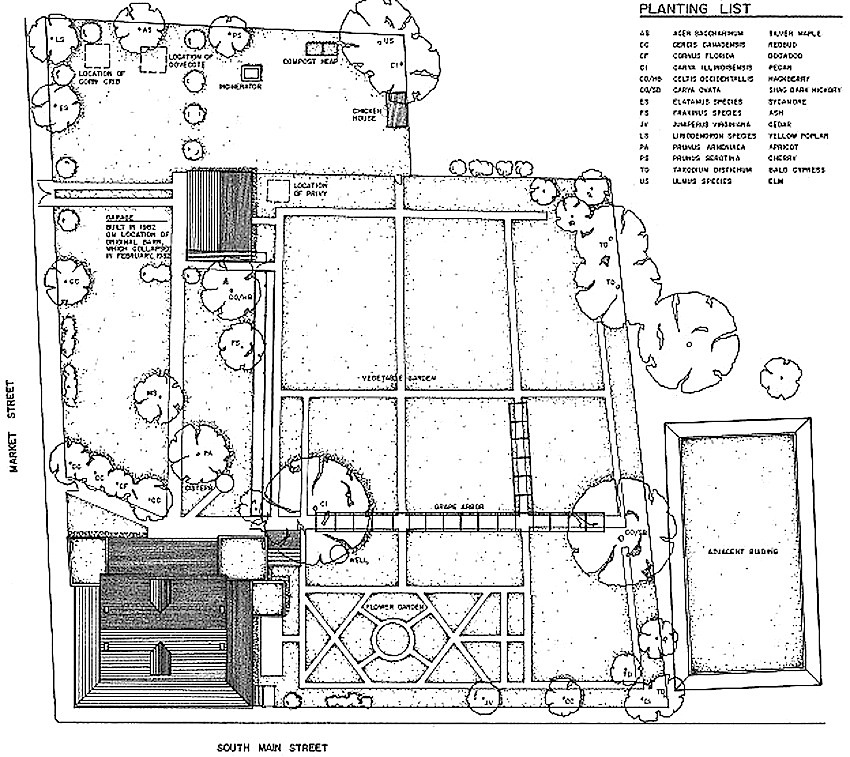
The Sunday porch:enclos*ure- cropped 1985 plan of J. B. Valle Hse, Mo., HABS, Library of CongressA plan of the property drawn in 1985 for HABS. The site is about 200′ x 250′.

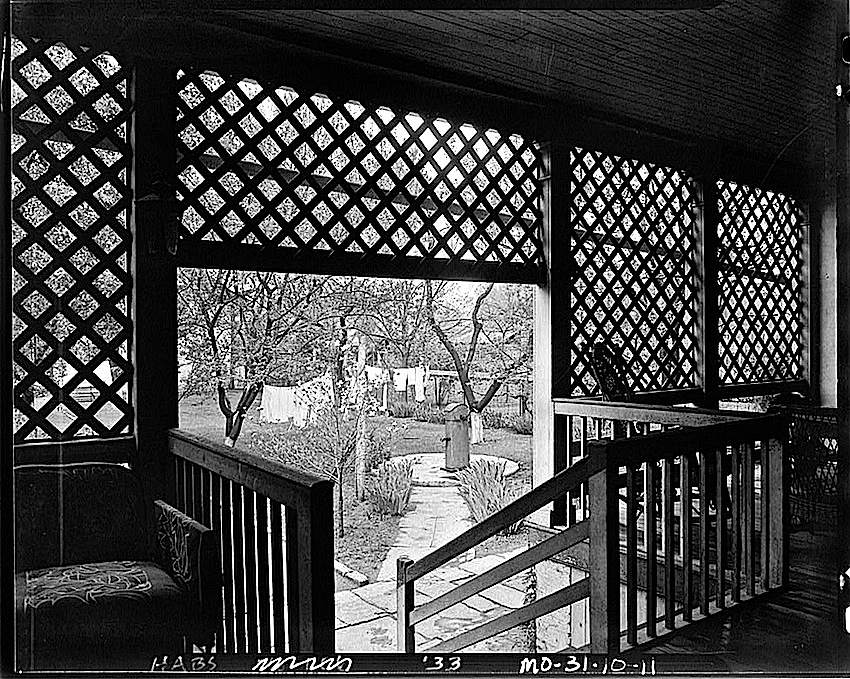
The Sunday porch:enclos*ure- 1934 J. B. Valle Hse, Mo., N.W. view, HABS, Library of CongressA view of the garden from the interior of the west-side porch (seen on the left side of the second photo above), 1933, photographer not noted.

This section of porch connected a back bedroom and the kitchen.

These pictures from the 1930s were part of photographic surveys of early Missouri sites made by Alexander and Paul Piaget and Charles von Ravenswaay. In 1984, their work was donated to the Historic American Buildings Survey (HABS) collection of the Library of Congress (all photos here via the LoC).

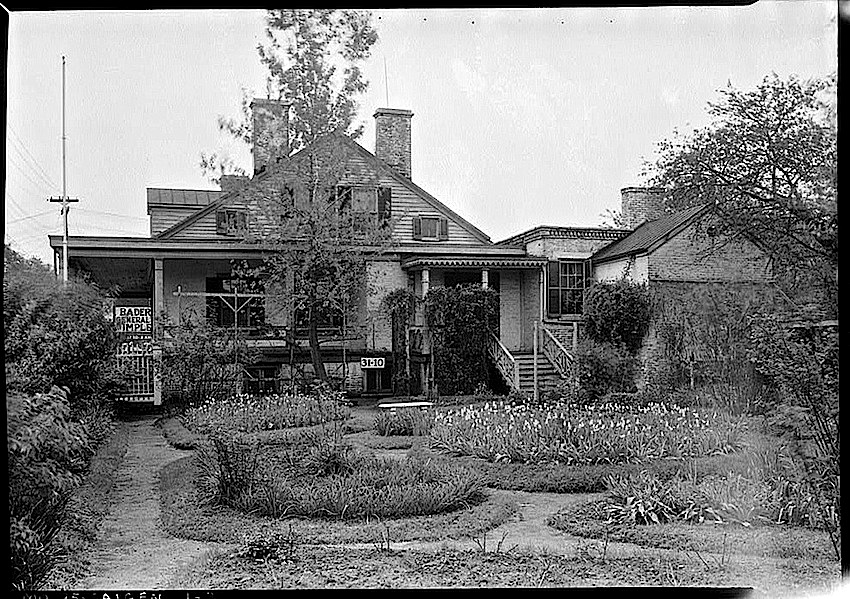
1934-The Sunday porch:enclos*ure-  J. B. Valle Hse, Mo., HABS, Library of CongressA view of the flower garden on the north side of the house, April 10, 1934, by Piaget.

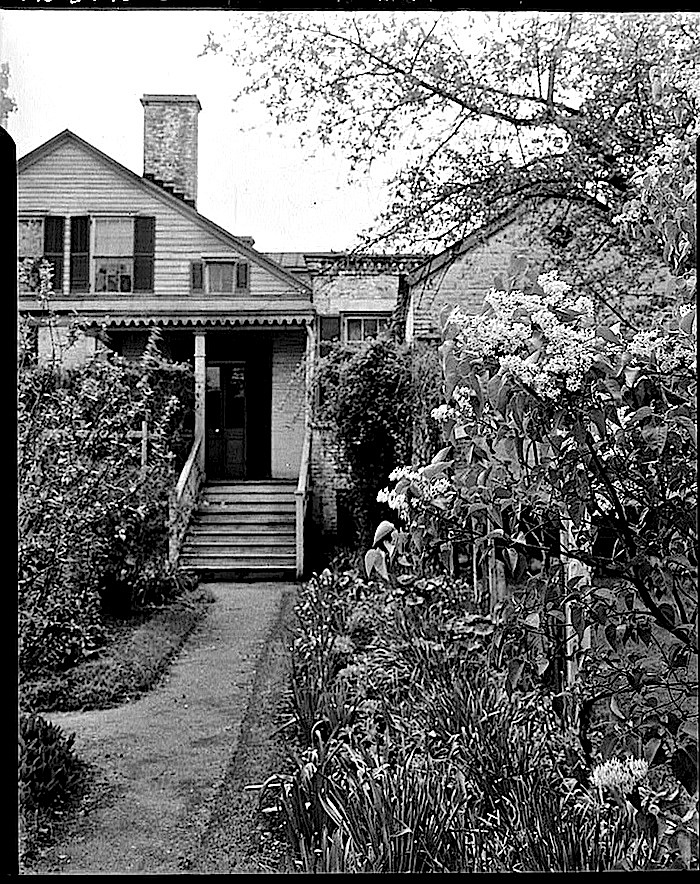
Spring 1934-The Sunday porch:enclos*ure-  J. B. Valle Hse, Mo., HABS, Library of CongressLilac along a pathway.

The photo above and the two below are not dated, but also seem to have been taken in April 1934. The steps went into the kitchen pantry.

probably April 1934-The Sunday porch:enclos*ure-  J. B. Valle Hse, Mo., HABS, Library of CongressThe garden was laid out in 1867.

probably 1934-The Sunday porch:enclos*ure-  J. B. Valle Hse, Mo., HABS, Library of Congress

1985-The Sunday porch:enclos*ure-  J. B. Valle Hse, Mo., HABS, Library of CongressAn undated view of the garden entrance “at side.”

West side, 1985-The Sunday porch:enclos*ure-  J. B. Valle Hse, Mo., HABS, Library of CongressThe west garden and porch in 1986, by Jack Boucher for HABS. Additional images and information were added to this property’s survey in 1985 and 86.

Today, the house is not open to the public. However, in 2013, it was sold to the National Society of the Colonial Dames to ensure its preservation.

The Sunday porch: Gympie

The Sunday porch/enclos*ure: Gympie porch, ca. 1871, State Library of Queensland“Reading the paper in a Gympie[, Queensland,] garden,” ca. 1871, by Edward H. Forster, via State Library of Queensland Commons on flickr.

Edward Forster was a professional photographer who worked in and around Gympie, a gold-mining town in eastern Australia, during the 1870s.  Many of his photos feature local families in front of their cottages.

‘Gympie’ is an aboriginal term for Dendrocnide moroides, a stinging shrub in the area.

Vintage landscape: Petit Trianon

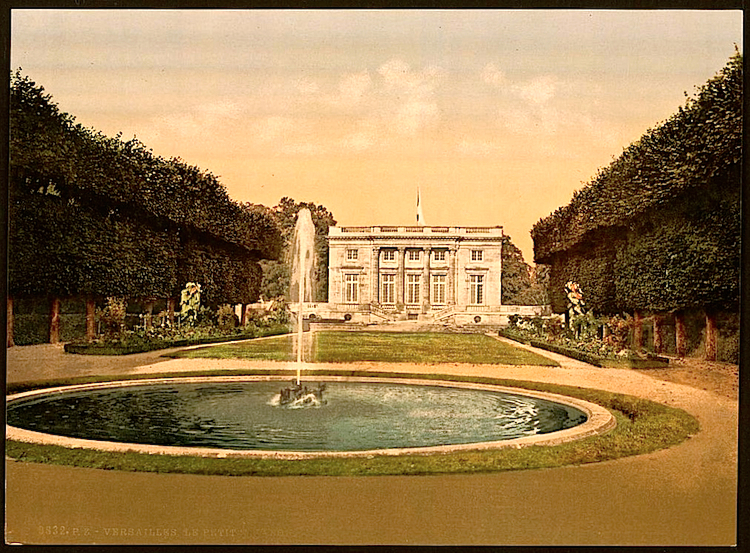
Petit Trianon, Versailles, FrancePetit Trianon, Versailles, France, between ca. 1890 and ca. 1900, a photochrom by Detroit Publishing Co., via Library of Congress Prints and Photographs Division.