Colonnade, Central Park, Louisville, Kentucky, between 1900 and 1910, Detroit Publishing Co., via Library of Congress Prints and Photographs Division.
The park’s 17 acres were owned by the Dupont family in the 1870s, yet open for public use as “Dupont Square.” In 1883, the space — temporarily “roofed in” — was used to demonstrate Thomas Edison’s light bulb.
In 1904, the Duponts sold the land to the city, and Frederick Law Olmsted, who was already working in Louisville, designed a large open-air shelter and colonnade for the park’s high point. The colonnade still exists and is undergoing restoration.
The three women were folk musicians. Alone or in duets, they sang songs like “Swedes Blessing,” “There was a Wealthy Merchant,” “Way Out West in Texas,” “Barbara Allen,” and “The Gypsy’s Warning.” Unfortunately, I can’t find an online recording of them. They look delightful in these pictures, however, particularly in those flowered dresses.
Mrs. Minnie Smith, Mrs. Elizabeth Fulks, Mrs. Albertina Kimball, at Mrs. Fulks’s home.
These are four snapshots from four hundred made during the sound recording expeditions of the Lomax family. From 1934 to around 1950, John Avery Lomax, Ruby Terrill Lomax, and Alan Lomax traveled the southern United States and the Bahamas collecting folk music and folklore for the Library of Congress.
Mrs. Fulks on her porch.Mrs. Fulks in her garden.
There’s a previous “Sunday porch” from the Lomax Collection here.
Our world, so worn and weary,
Needs music, pure and strong,
To hush the jangle and discords
Of sorrow, pain, and wrong.
*These photos were labeled with the location as Prairie Lea or Prairie Lea R.F.D., but also as Stanton, Texas. Prairie Lea and Stanton are in different parts of Texas, and I have been unable to find out which town is correct. The labels on the sound recordings the women made say “Prairie Lea” — which certainly sounds like a place in a folk song.
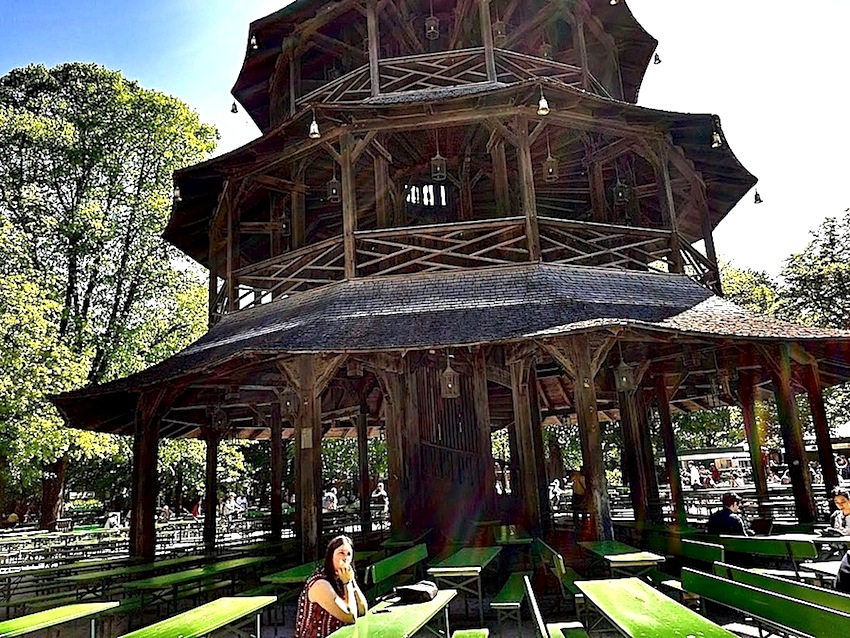
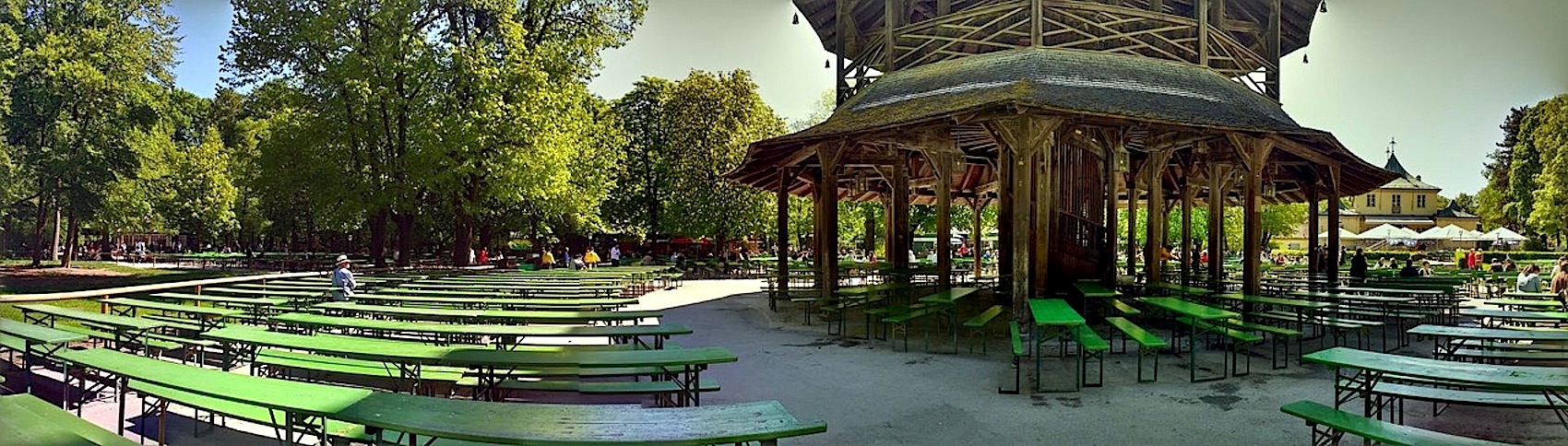
On early Sunday mornings in the late 19th century, up to 5,000 servants, soldiers, students, and other working-class people would gather at the tower to dance to a brass band. These Kocherlball or cooks’ balls would end by 8:00 a.m., so that the attendees could get back to work or go to church. The dances were outlawed in 1904, but were revived in 1989 as a annual event every third Sunday in July.
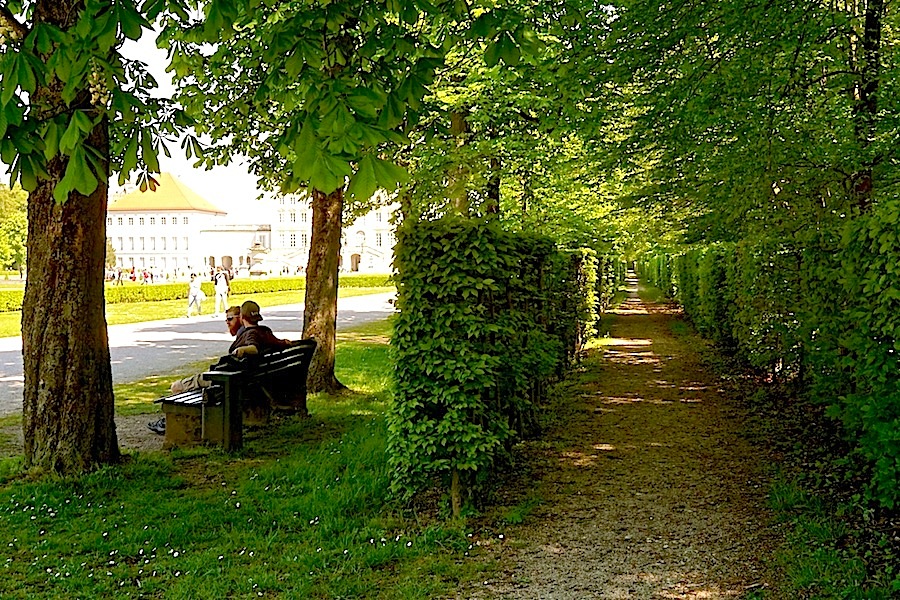
As its name implies, the Englischer Garten public park (the oldest in Germany) was laid out in the English landscape style associated with the work of Capability Brown. Its principal designer was Royal Gardener Friedrich Ludwig von Sckell, who had studied in England.
The park has an area of 910 acres — making it larger than New York City’s Central Park.
I took these photos with my phone while biking through the park last Sunday morning. (There are over 48 miles of paths in the park.)
There’s a brief history of beer gardens in America here.
John Cottel‘s Home, Usborne Township, Ontario, ca. 1910, via Huron County Museum & Historic Gaol Commons on flickr.
John Cottel, presumably to the right of the door, was born in England in 1836. His wife was Margaret Turnbull, and they had four daughters, three of whom may be in the photo. There is a much wider view of the house and farm here.

 Colonnade, Central Park, Louisville, Kentucky, between 1900 and 1910, Detroit Publishing Co., via Library of Congress Prints and Photographs Division.






 enclos*ure