Help save a masterpiece

The Dumbarton Oaks Park Conservancy is in the midst of a campaign to win $75,000 from the “Partners in Preservation” $1 million giveaway in the Washington, D.C., metro area.  The giveaway is sponsored by the National Trust for Historic Preservation and American Express.

You can vote for the DO Park HERE* every day through midnight on May 10.

(And voting enters you in a contest to win a three-night stay at a Marriott hotel.)

Dumbarton Oaks Park (not to be confused with the adjacent Dumbarton Oaks Gardens) is one of the masterworks of landscape architect Beatrix Farrand.

In 1928, she composed the park as a series of paths and meadows along a small tributary of Rock Creek and had them planted out with drifts of native and exotic wildflowers, bulbs, and woodland shrubs.  Eighteen waterfall dams, two arbors, and several benches and footbridges were built in the rustic Arts and Crafts style.
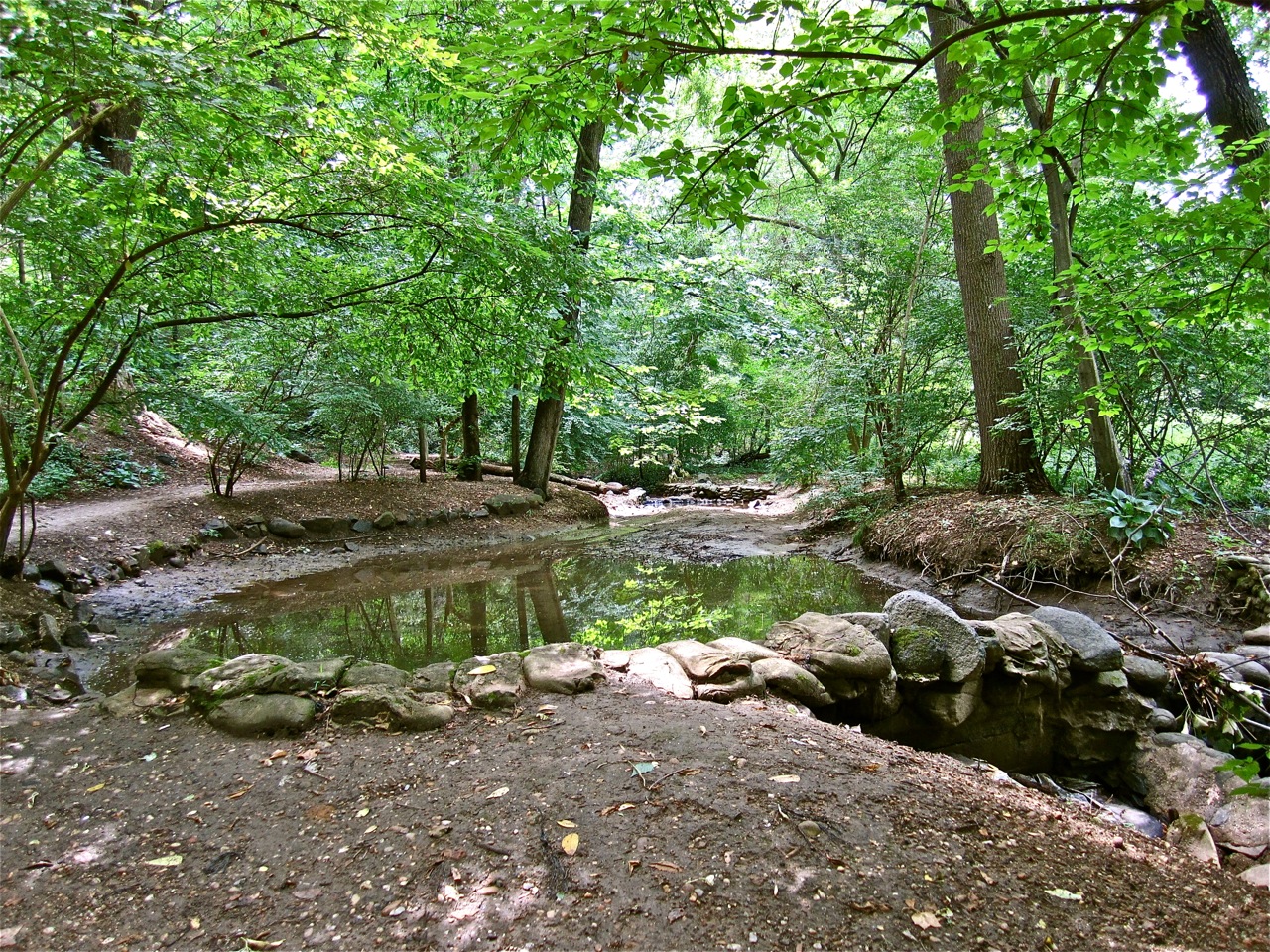
Even with the damage, the artistry of Farrand's arrangement of dams and bridges shine through.
Even with many years’ damage, the artistry of Farrand’s stonework shines through.

Sadly, the 27-acre park has suffered greatly from lack of sufficient resources since 1940, when it was turned over to the National Park Service.  However, in 2010, the Conservancy was formed to restore the park to its former glory by raising money and fielding teams of volunteer “weed warriors.”

Beatrix Farrand was America’s first female professional landscape architect and one of eleven founding members of the American Society of Landscape Architects.

Participants at a recent conference on her work lauded her as a “scientific-minded experimenter, an early proponent of native plants, a leader in ‘pre-ecological design,’ an expert in stormwater management, and a flexible and innovative designer who mastered numerous styles,”reported The Dirt, the blog of the American Society of Landscape Architects.

Please vote and spread the word! The $75,000 will repair the park’s stonework at the east falls dam and viewing platform.


*The first time you go to the site, don’t click ‘vote’ right away. Go to ‘log in’ and register. Then, you’ll receive an e-mail asking you to confirm your address. Then you can log in and vote. It takes a couple of minutes, but you’ll be able to vote in seconds for the next five days.  (You must be a legal resident of the U.S. to be eligible to win the free stay in  a Marriot hotel.)

Ribbon trees in Chicago

I’ve been back since last weekend from a three-week trip to Washington, Chicago, and New York City. It’s taken me seven days to shake off the droopiness of jet lag.

Ribbon tree in Chicago/enclos*ure

Our two days in Chicago were windy (of course) and occasionally damp, and very few trees had even begun to leaf out.

But I was taken by this arboreal display of blue outside the Fourth Presbyterian Church on Michigan Avenue.

blue ribbons tree in Chicago/enclos*ure

The ribbons were tied in the trees and along the fence in memory of the 28,828 children of Illinois who were abused last year.

Ribbon trees in Chicago/enclos*ure

April is Child Abuse Prevention Awareness Month.  You can get more information here.

The ribbons will removed this Tuesday.

Ribbons in trees in Chicago/enclos*ure

The church has a nice Gothic courtyard too — although it was still quite bare in early April.

Church garden in Chicago/enclos*ure

this is the garden: colours come and go,
frail azures fluttering from night’s outer wing. . .

— e.e. cummings, “This is the Garden

Arbor Day

Yesterday, the last Friday in April, was National Arbor Day in the U.S.

The Washington Post had an interesting article about how tree canopy density is an indicator of wealth among D.C. neighborhoods. The reasons for the disparities are complex.

Vintage landscape: Montross Hotel

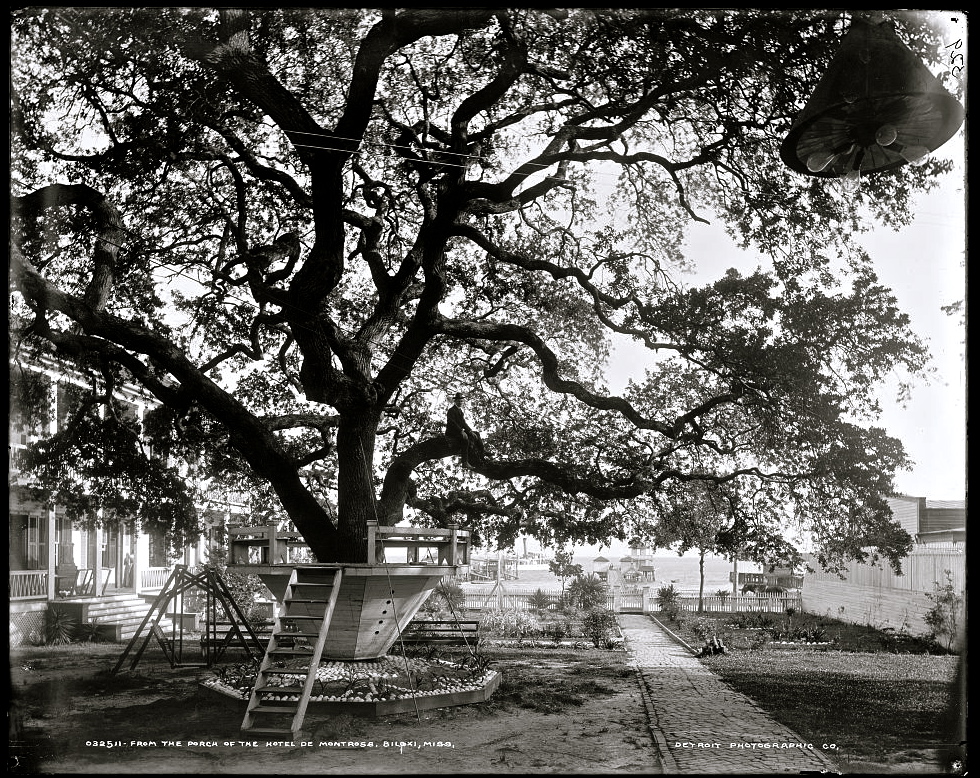
This hotel garden had an interesting combination treehouse-garden seat called a shoo fly. The 10′ to 12′ elevated platforms were popular along the Gulf Coast as places to catch the breezes and maybe avoid deer flies.

Montross Hotel, Library of Congress

The photo was taken from “the porch of the Hotel De Montrose [sic], Beloxi, Mississippi,” ca. 1895 – 1910, by the Detroit Publishing Co.* The Hotel de Montross (or Montross Hotel, later the Riviera Hotel) looked out on the waters of the Mississippi Sound.

“Anecdotal history of the early 20th century relates that the Hotel de Montross or Montross Hotel was the oldest hotel extant at Biloxi,” according to Ray Bellande of the Biloxi Historical Society. “It was operational before the first railroad was established between Mobile and New Orleans in 1870. Here on the central Beach of Biloxi and Lameuse Street, . . . the Montross Hotel was the focus of social life and fashion. Its pier was the disembarkation place for the society people arriving at Biloxi to enjoy its fine food, hospitality, and the gaiety of life, joie de vivre, that was offered to all visitors. The Montross Hotel flourished as a fine hostelry and boarding establishment until the late 1920s, when it became overshadowed by Biloxi’s modern beach front hotels. . . .”

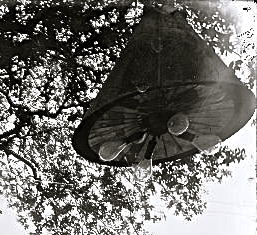
I also like the light fixture.

A Hard Rock Hotel and Casino is located in approximately the same place today.

Beloxi has been a summer vacation resort since the first half of the 1800s.


*via Library of Congress Prints and Photographs Division.

Wordless Wednesday: Oxford garden

This slideshow requires JavaScript.

Chaplain’s Quadrangle garden of Magdalen College, Oxford, September 2012.

Continue reading “Wordless Wednesday: Oxford garden”

Nice things and Nyungwe Forest Lodge

I urge you to please notice when you are happy, and exclaim or murmur or think at some point, “If this isn’t nice, I don’t know what is.”

— Kurt Vonnegut

Our oldest daughter has been visiting us — which is very nice — so this weekend, we took her to see the Nyungwe Forest in the south of Rwanda and to stay at the beautiful Nyungwe Forest Lodge.

Nyungwe Forest Lodge, enclos*ure
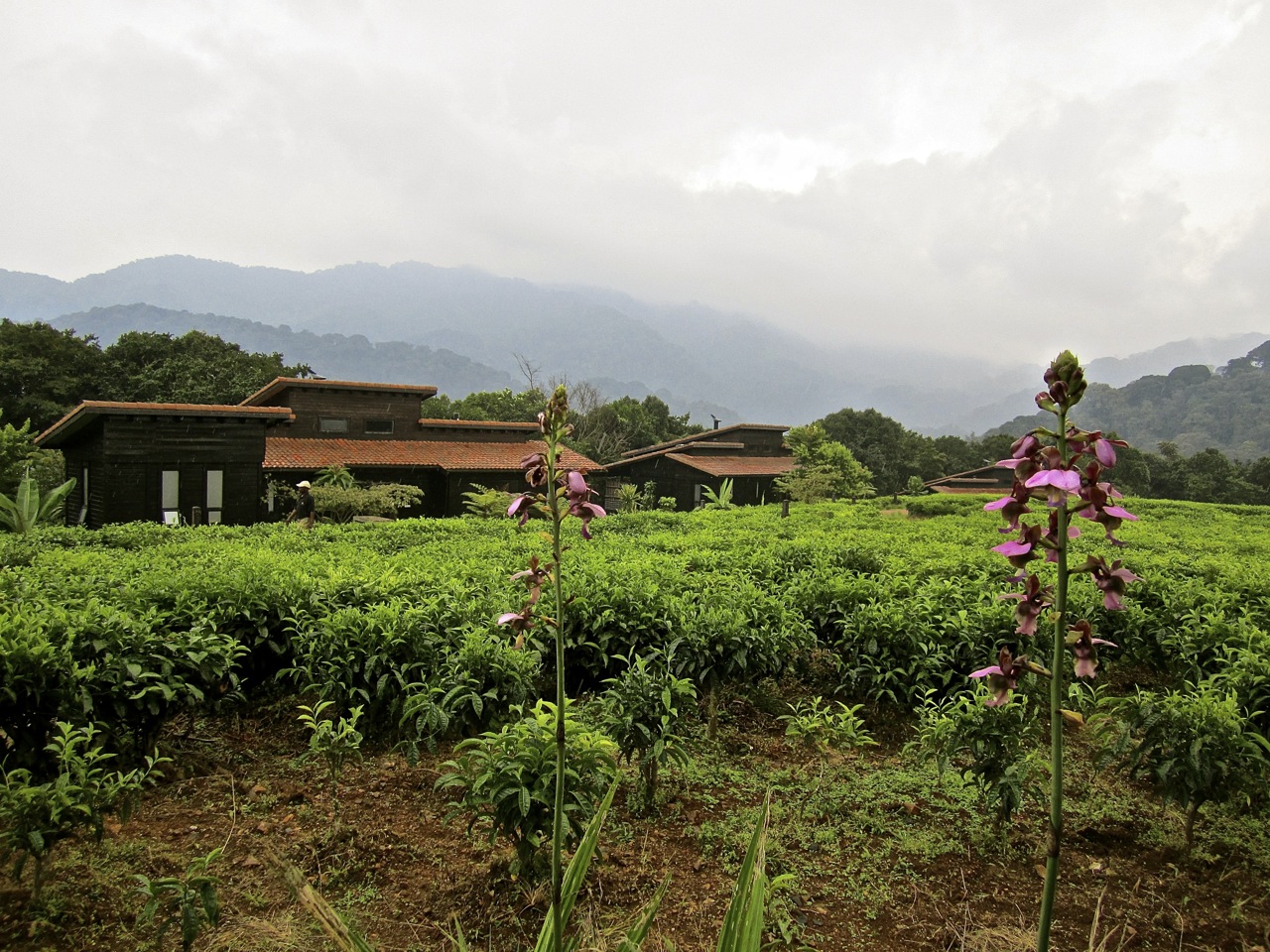
Orchids and tea bushes in front of the cabins at Nyungwe Forest Lodge.

The Lodge is located on the western edge of the Nyungwe National Park in a tea plantation picked by a local cooperative. The cabins front to the tea fields and their back windows look out on the forest.

Nyungwe Forest Lodge, enclos*ure
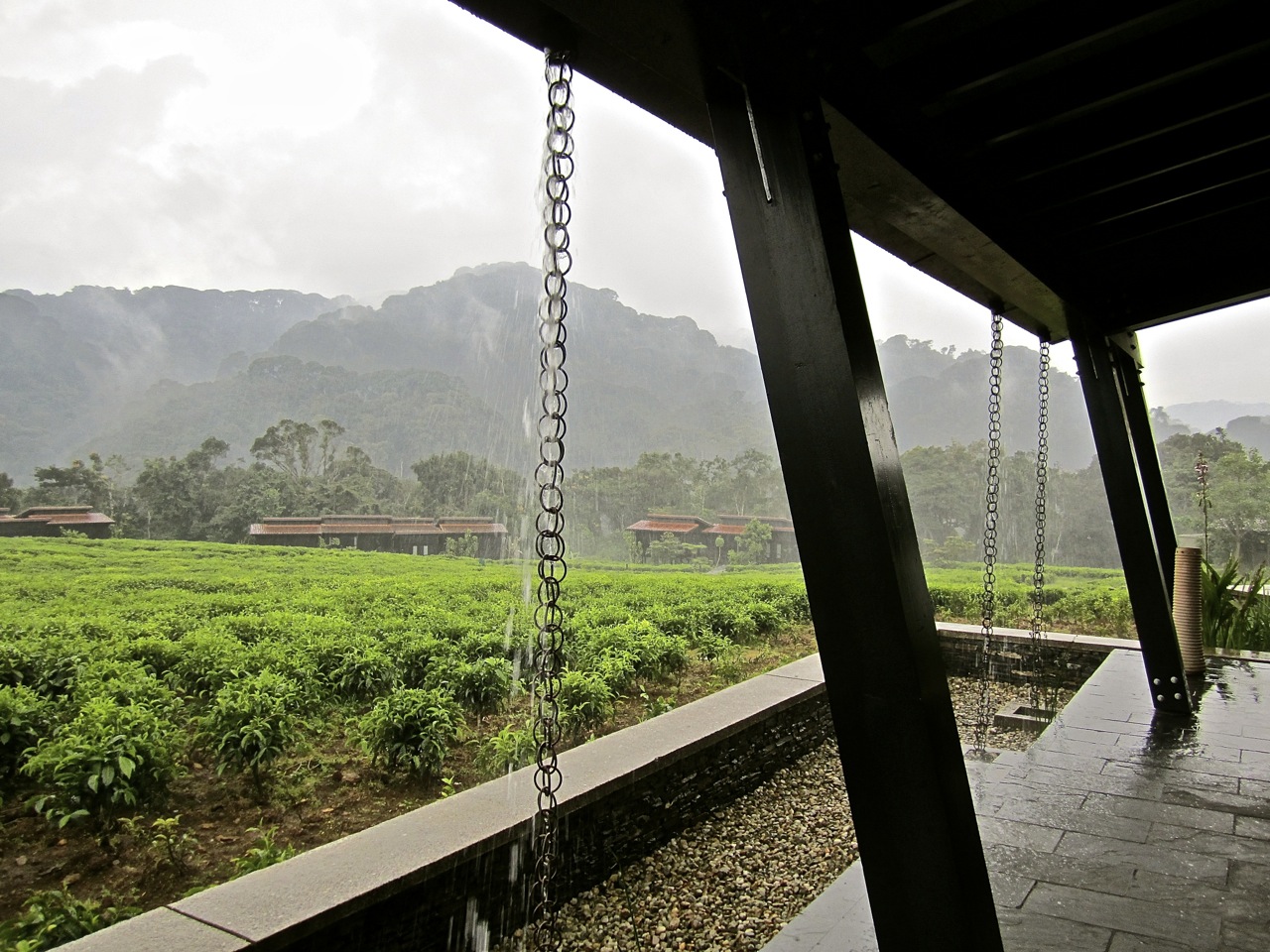
Rainchains in action on the main dining and lounge building at the Lodge.

The area is currently having clear blue mornings and rainy afternoons. On Saturday, our one full day there, we hiked the canopy walk before lunch (more on that later this week). Then we actually talked about going on another hike that afternoon.

rainchains, closeup

However, with the first raindrops, we gave in to the luxury of just parking ourselves in front of the many picture windows looking out on the gorgeous view and napping and reading until the 5:00 p.m. tea, cookies, and cocktails in front of a fire.

Lodge, interior, windows

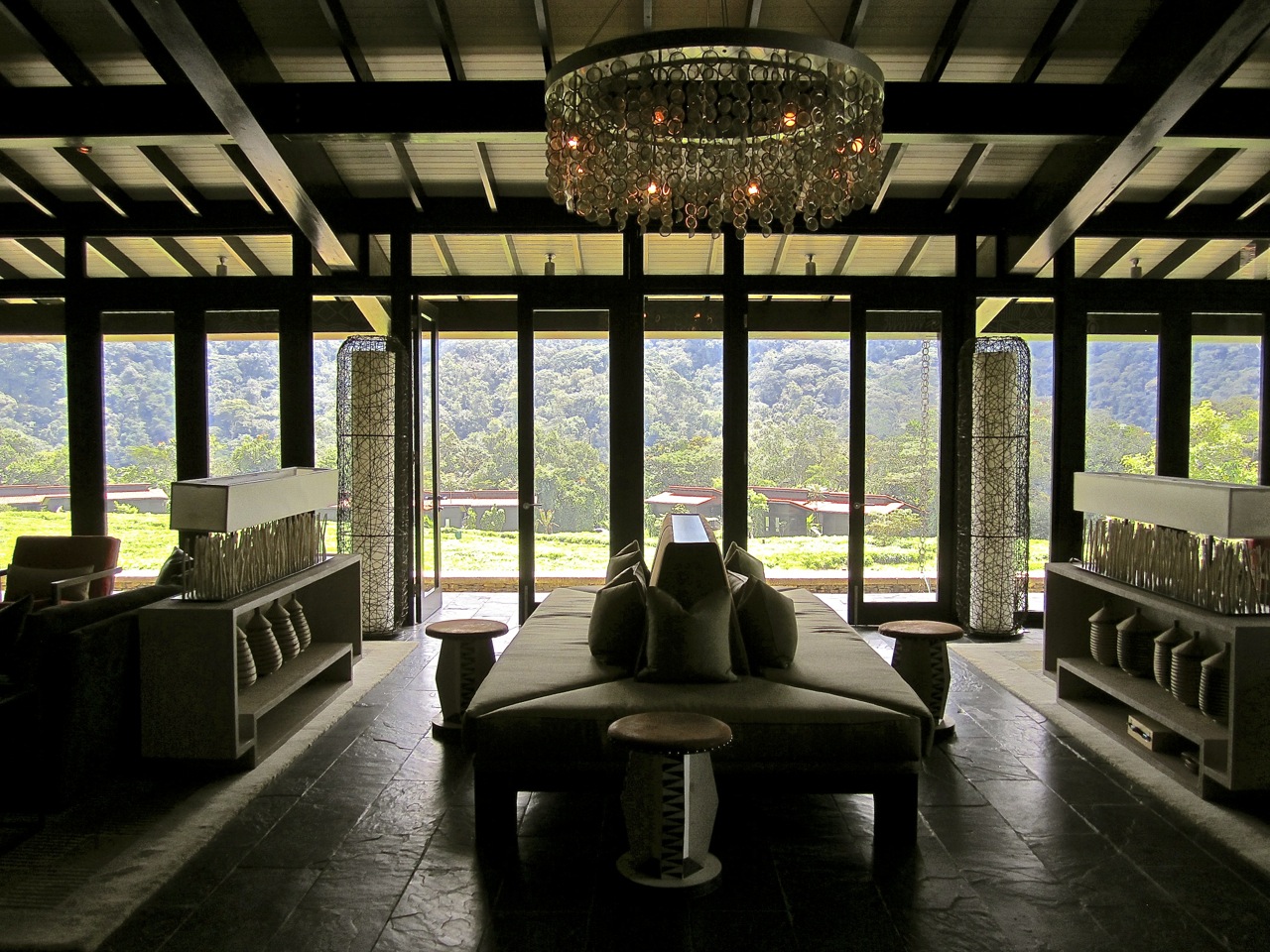
Lounge at Nyungwe Forest Lodge, enclos*ure
The lounge at the Lodge. Photo by Mary Koran.

Lounge at Nyungwe Forest Lodge, enclos*ure

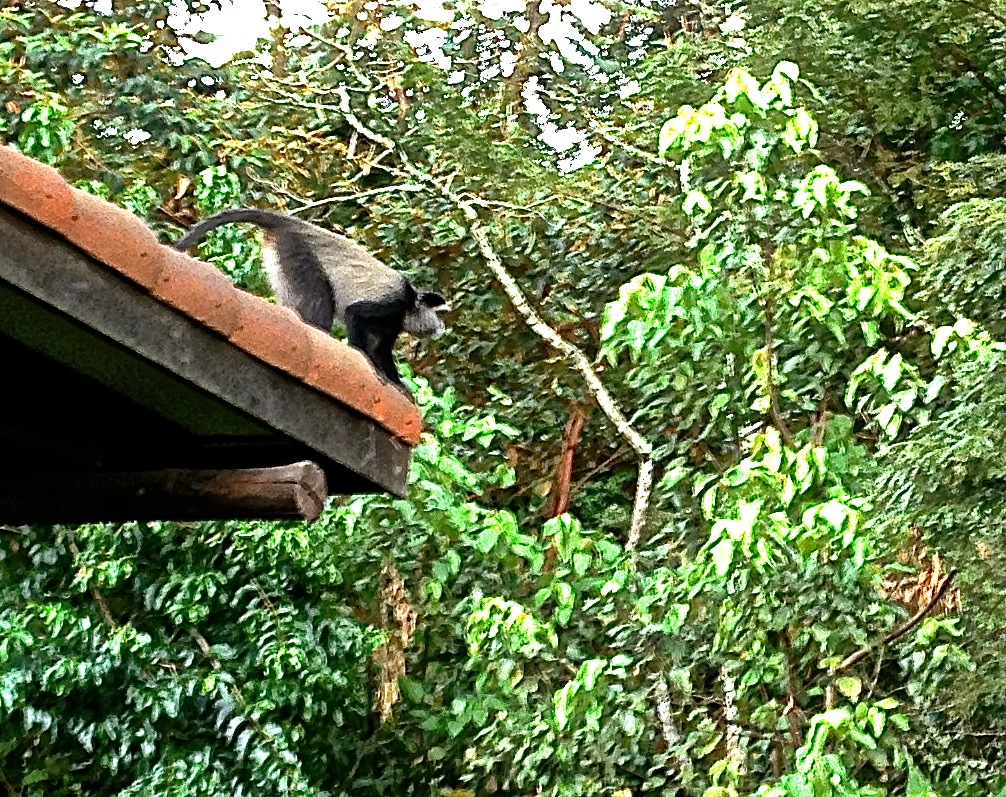
Just before tea time, we were rewarded for our indolence by finding about a dozen blue monkeys in the trees right outside our cabin’s back patios.

Blue monkey at Nyungwe Forest Lodge, enclos*ure
A blue monkey (Cercopithecus mitts) about to jump from cabin roof to the trees. Photo by Mary Koran.

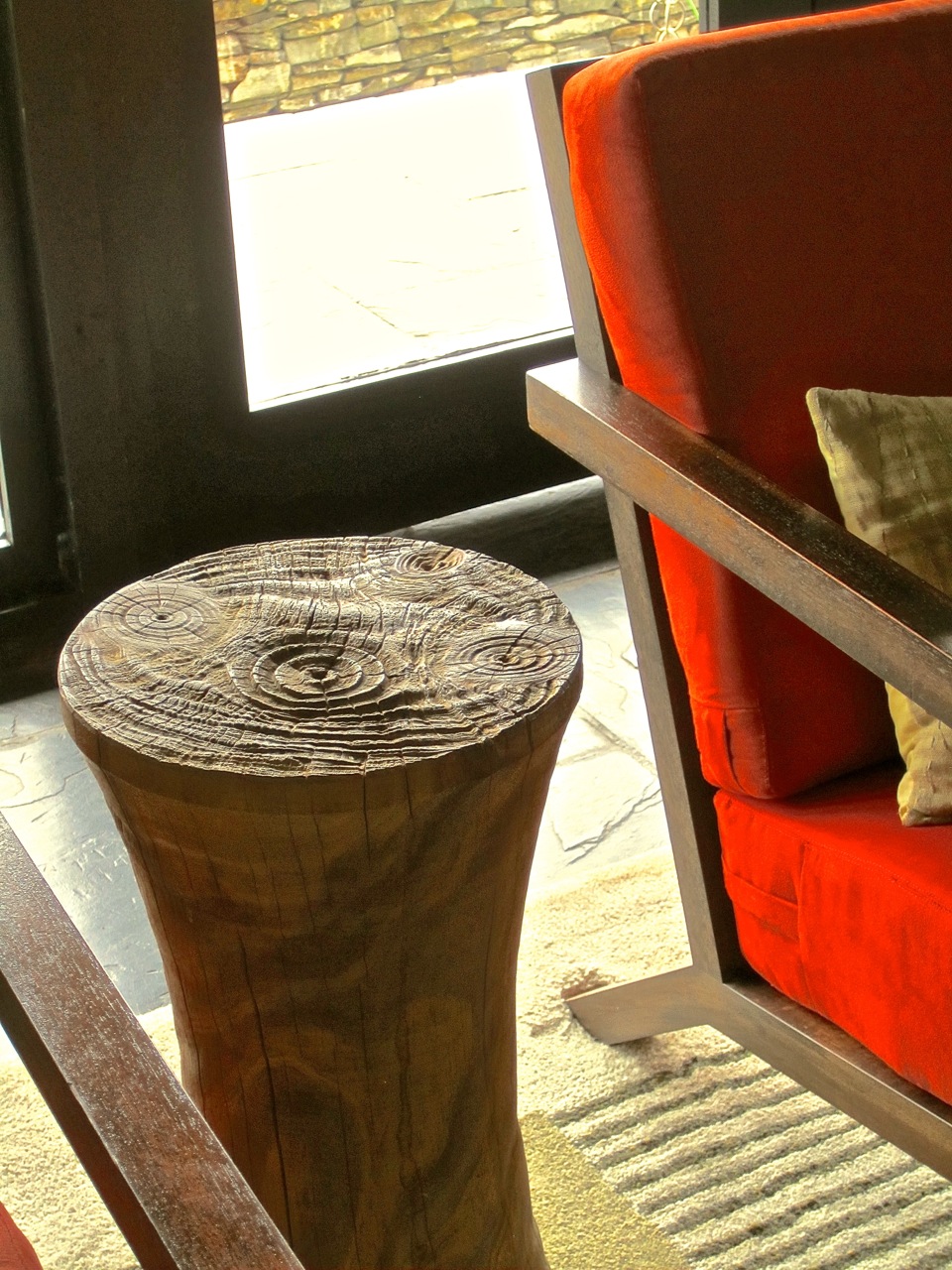
I wanted to show you these side tables in the main lounge, which I loved.

side table

Unfortunately, I forgot to ask if they were locally made or imported — next time.

sidetable 2

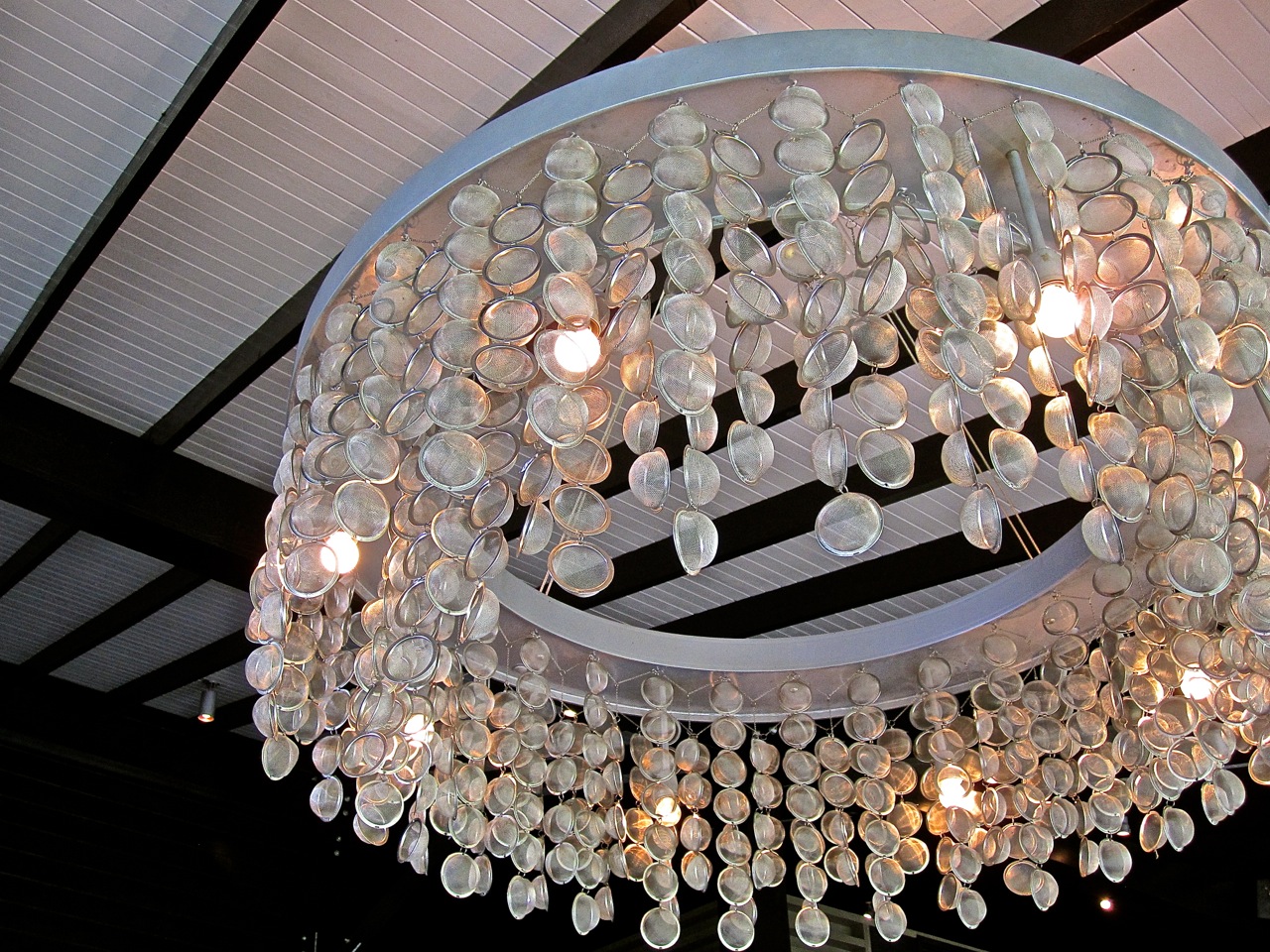
The big chandelier was appropriately made of tea strainers.

chandelier, full

Chandelier, detail

chandelier 2, detail

Camellia sinensis leaves have little or no smell (only if you crush them hard) until they are processed as tea. But the hotel smelled very lightly of green tea fragrance from the soap and hand lotion in the bathrooms and gift shop. So, sitting on the terrace or in the main lounge looking out, I could smell what I thought the fields should smell like (but really don’t). I thought this was an interesting little manipulation of experience in a landscape.

My daughter brought me a Kindle Fire e-reader, another really nice thing, which allowed me to spend the afternoon switching from Vogue, to the third book of the Game of Thrones series, to Hilary Mantel’s Bring Up the Bodies.

I’ve written about Nyungwe Forest Lodge previously here.