October Bloom Day: home again

We returned from three weeks of travel on Saturday night.  Not a minute too soon, as a steady trickle of water was flowing from below the master bathroom sink and probably had been for a couple of days.  The bedroom floor and two carpets were soaked — welcome home!  Thankfully, the furniture and the rooms below were fine.

Until that moment, however, it had been a great trip — especially since I was able to visit Loi of Tone on Tone and his beautiful shop of Swedish antiques in Bethesda, Maryland.  And in Madison, Wisconsin, Linda from Each Little World and her husband, Mark,  not only took us on a tour of their lovely garden, but gave us lunch.  We had very interesting conversation about art collecting and Wisconsin politics.

I was also able to go and pull invasive weeds at Dumbarton Oaks Park in Washington, D.C., and meet the great Ann Aldrich and some of the other weed warriors of the DOP Conservancy, which is supporting the National Park Service in restoring this Beatrix Farrand’s masterpiece.

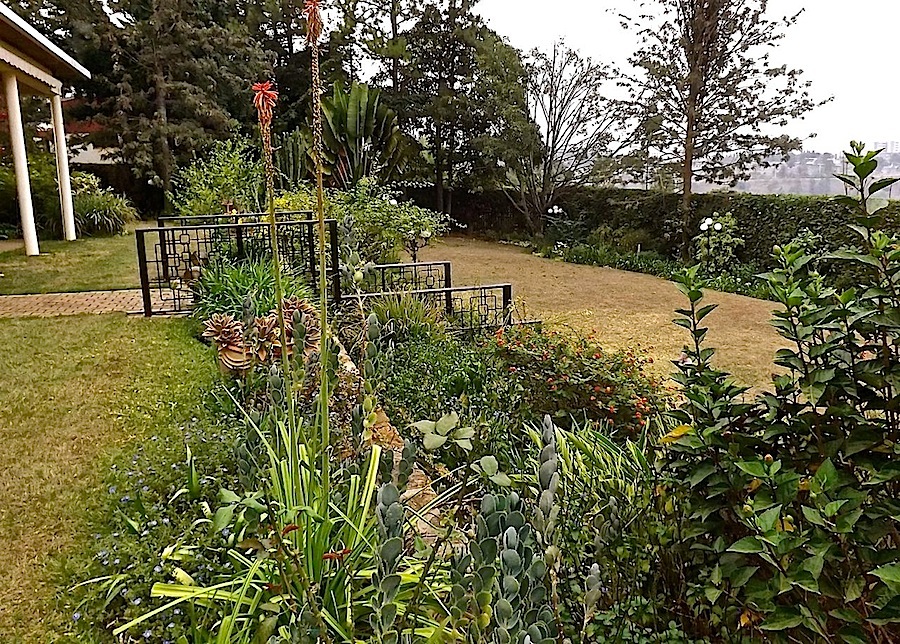
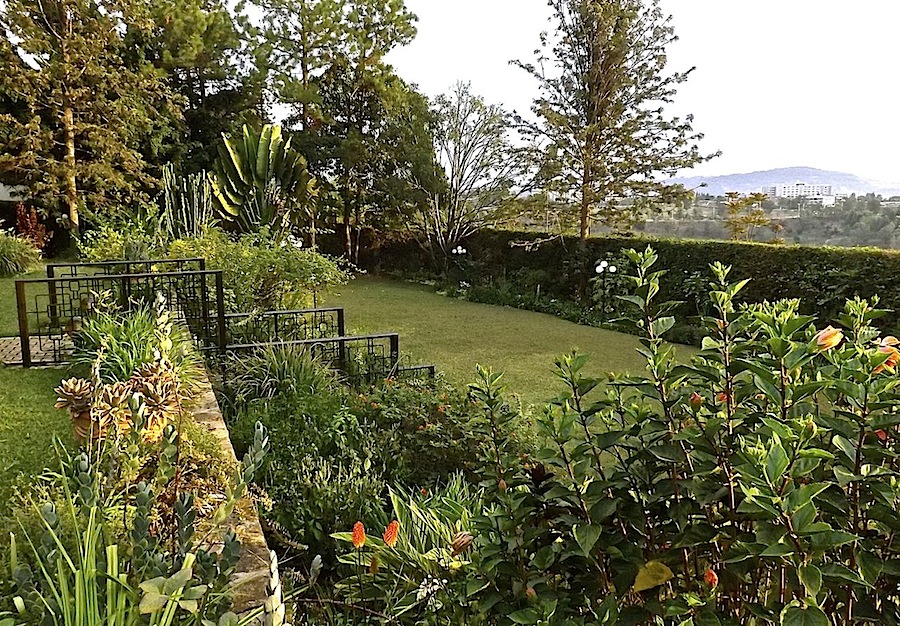
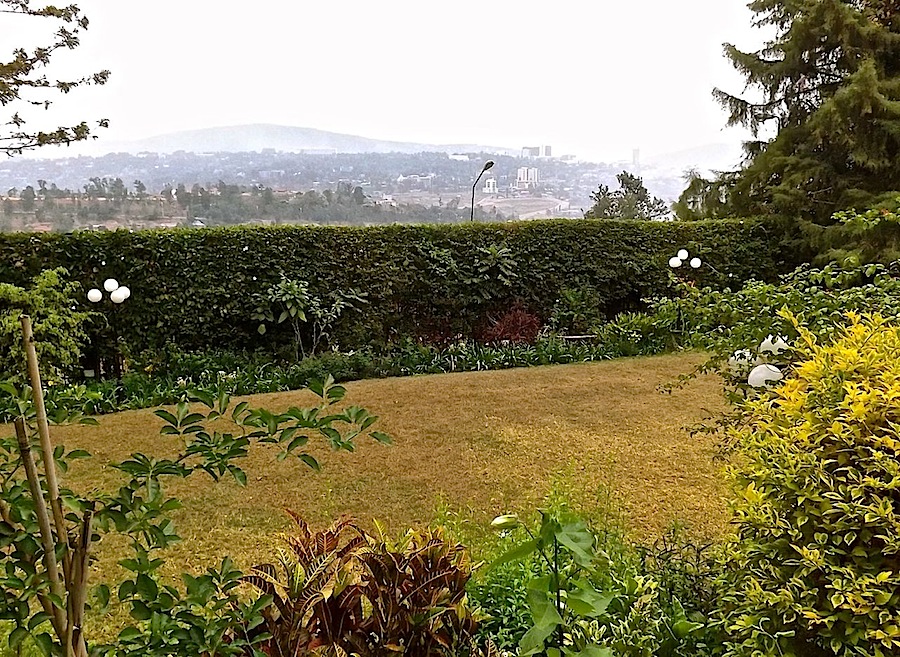
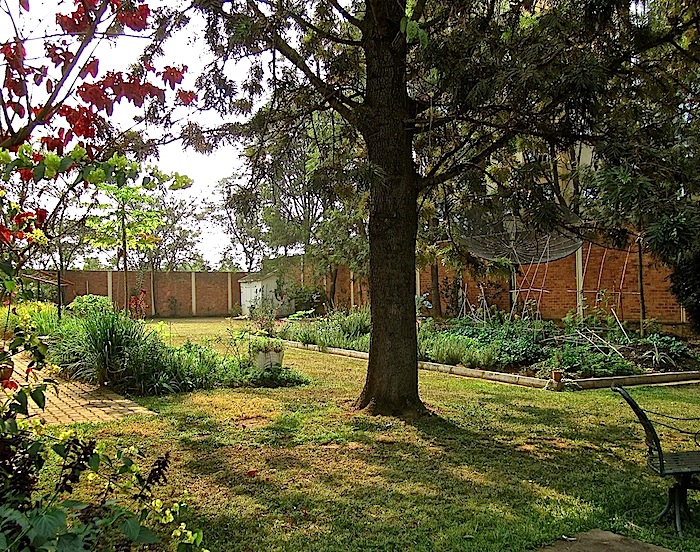
Back at home, about five weeks into the rainy season, our grass is green again and there are a lot of flowers.   Being away, however, has opened my eyes to a number of problems that daily familiarity was hiding, so now back to work. . . .

To see what’s blooming in other garden bloggers’ gardens this October 15, visit Carol at May Dreams Gardens.

After some rain

All night the sound had
come back again,
and again falls
this quiet, persistent rain. . . .

— Robert Creeley, from “The Rain

Our garden on August 31, at the end of the dry season:Our garden in the dry season/enclos*ure

And on September 11, after several days of rain:Our September garden in Rwanda/enclos*ure

Much better. After the first rain or two, everything seemed almost sparkly.

Below (click on any of the thumbnails in the gallery) is a little tour of the borders along the upper and lower lawns, taken on September 11 — just before sunset — and yesterday afternoon.

I think this will be my slightly early Garden Bloggers’ Bloom Day and Foliage Follow-Up submission for September. Please go to May Dreams Gardens (Bloom Day on September 15) and Digging (Foliage Follow-Up on September 16) to see what’s happening in other Garden Bloggers’ gardens.

Tan is the color of the season

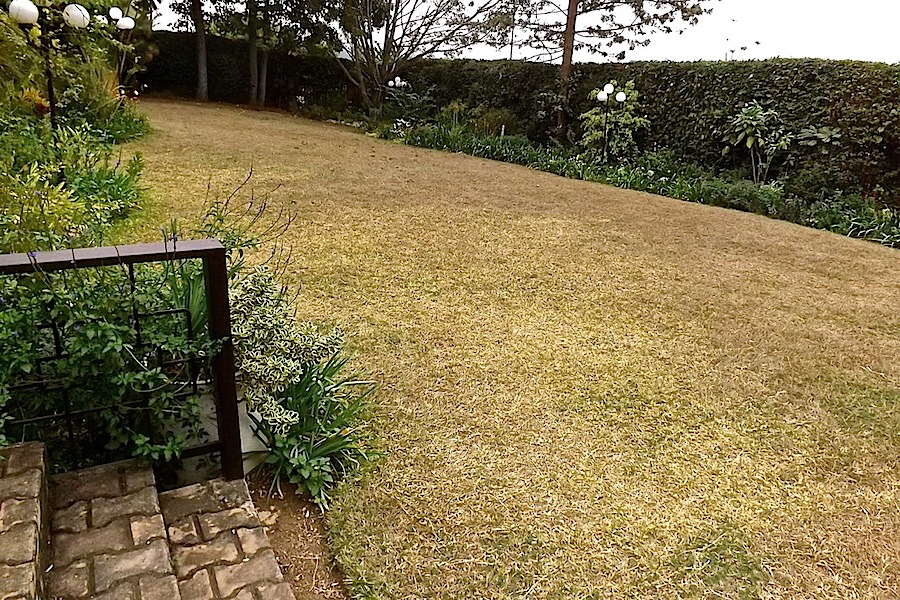
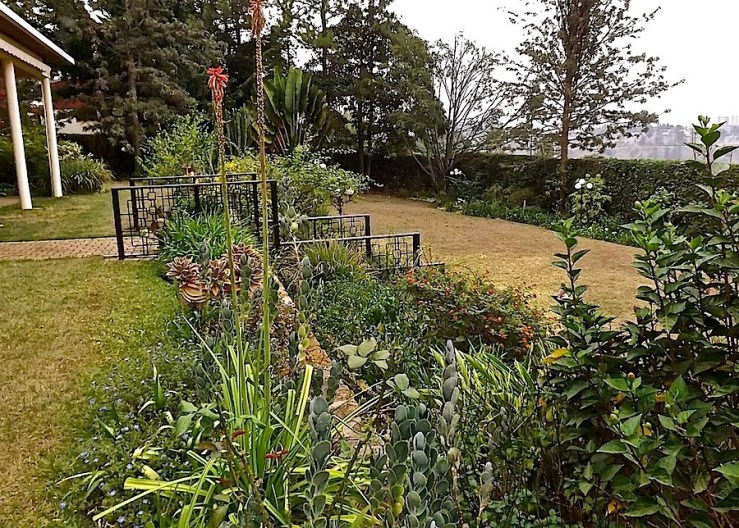
Not much is happening in our garden these days — except that the lawn becomes more and more tan-colored as the long dry season continues.

This year, we stopped watering it about the end of June. It seemed wrong to maintain green grass while the hills in our view were brown, and some city neighborhoods were having their water cut off during the daytime.
Our garden in the dry season/enclos*ure

Above is a view of the upper and lower lawns.

I took these pictures this morning.  The sky was actually full of grey, rather menacing clouds (and dusty haze), and there was some wind.   This is not unusual for August, but we haven’t had any rain since May, except very briefly about three weeks ago and almost all night two weeks ago. That last one was nice, and the grass seemed to get a little greener within 12 hours, but it didn’t last.   The long rainy season normally begins in early September.

We do still water the flower borders, although not very generously.  Kniphofia, daylilies, gerbera daisies, lantana, Missouri primrose, and small shrub roses are blooming steadily.  But, of course, most plants are in a “holding pattern” and not really increasing in size.  I want to make some changes and additions to the borders, but I’ll wait until we have a rain or two.  Then, we need to work quickly before the soil becomes too soggy.

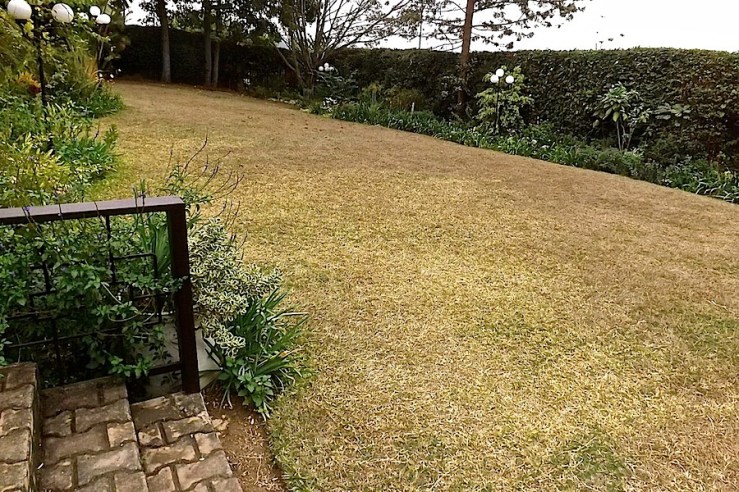
Below is the lower lawn, looking south at the steps at the center of the lawn. Actually, the tan is kind of pretty.
Our garden in the dry season/enclos*ure

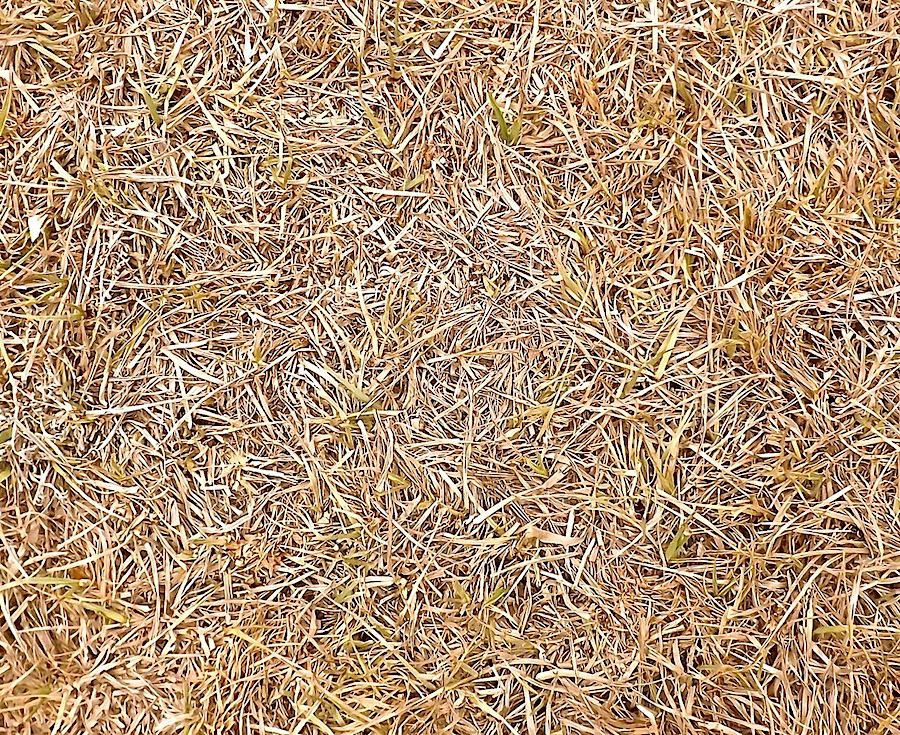
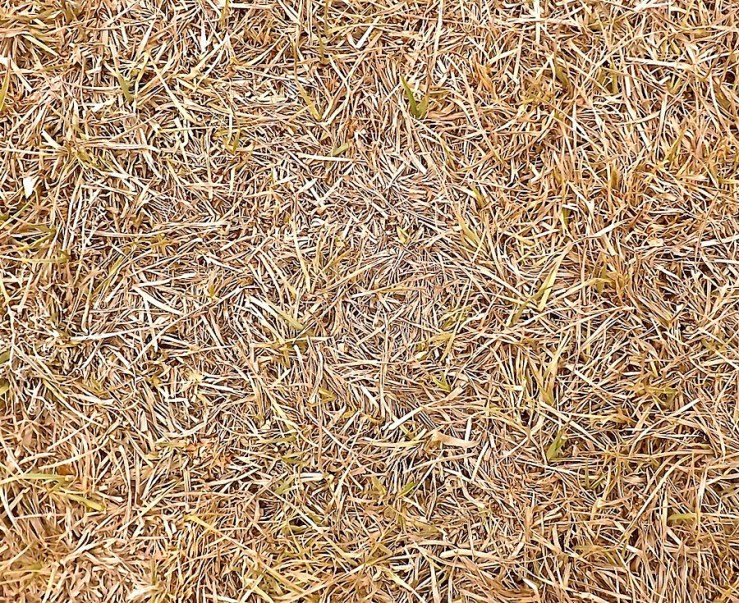
Below, a closeup.  I know it will come back, but it’s hard not to get out the sprinkler.Our garden in the dry season/enclos*ure
Below,  from the upper lawn, looking back across the lawn to the northwest — with a hazy view of central Kigali.
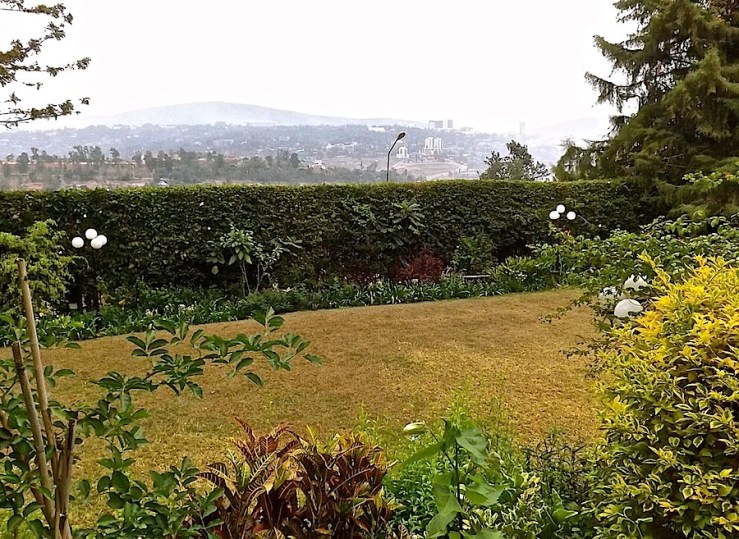
Our garden in the dry season/enclos*ure

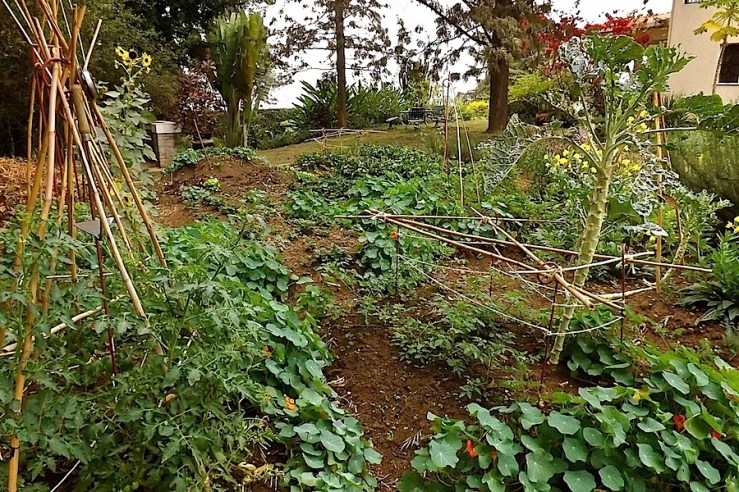
I’ve been working more on the vegetable garden lately.  This summer winter, we’ve divided it into many small* raised beds instead of a few really large ones.  It’s easier to manage now, and the kale, strawberries, basil, dill, arugula, lettuce, and rosemary are doing well — in the photo below.
Our garden in the dry season/enclos*ure

That’s one of our two compost piles in the back.  You can just see a bamboo pole sticking out of it.  I pull the pole out occasionally and feel it.  If it’s warm and damp, the pile should be cooking nicely.

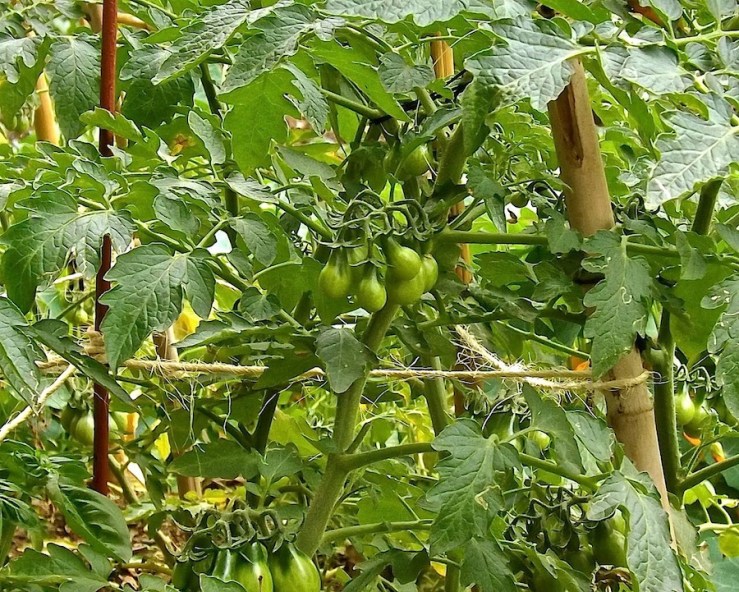
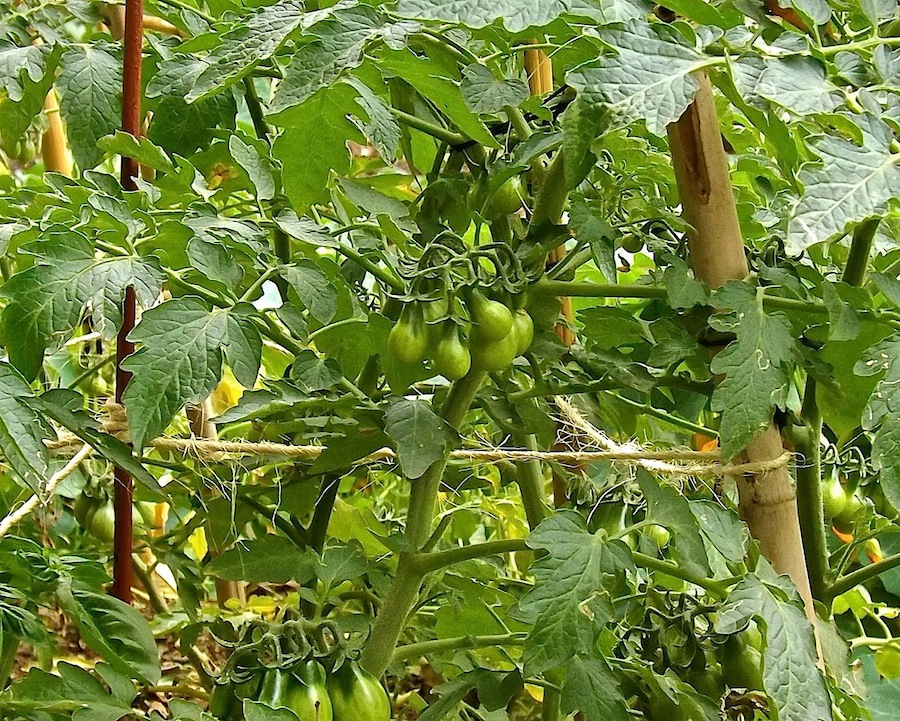
Below are my still-green cherry tomatoes; I planted both red and yellow.  The plants look good now, but when the rains start, they may suffer from too little sun and too much water. The dry season (with watering) is a good time for tomatoes and basil, but I should have started them sooner.Our garden in the dry season/enclos*ure
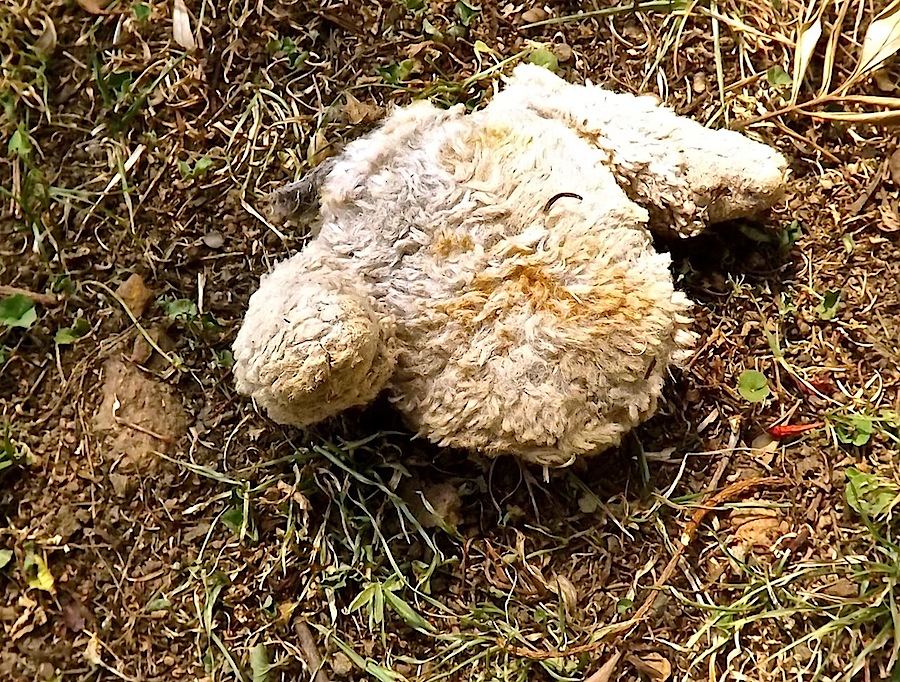
Finally, below, this is a little sad.  It’s an child’s stuffed toy — no head, no legs — that the hawks in the tree above pushed out of their nest.
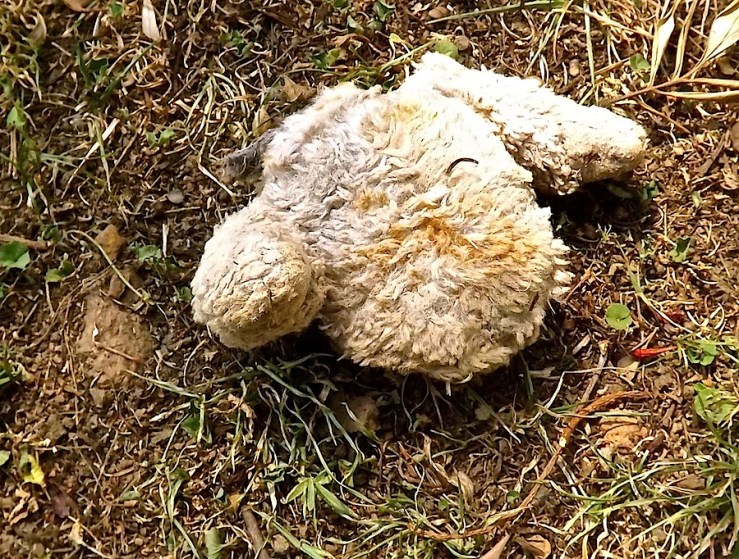
Toy dropped by hawk/enclos*ure

The nest is at least 3′ across and seems to be made of as much waste paper and cloth as of sticks and twigs.  A few weeks ago, I found someone’s bank statement under the tree, complete with name, account number, and balance.  It’s now shredded and in the compost pile; I gave this little fellow a burial there too.

When we get our first big rain and wind storm, I expect to be picking up all sorts of things.


*3′ or 4′ x 5′ (more or less)

Garden Bloggers’ Bloom Day for August

Now is the winter of our discontent
Made glorious summer . . .

by our water hoses.

We are just below the equator here in Rwanda, so technically it is near the end of winter — and of the long dry season, which began in May and normally ends in September.

But last night there was a light rain for about seven hours, so today I don’t need to water anything in the garden, not even the new plants.

The cutting garden (left) and the vegetable garden (right).

We’ve really cut back on watering this year, anyway — none for the grass and a lot less for the planting beds. The grass is going brown, but we still have a lot of flowers, particularly my stalwarts, yellow daylilies and pink gerbera daisies.

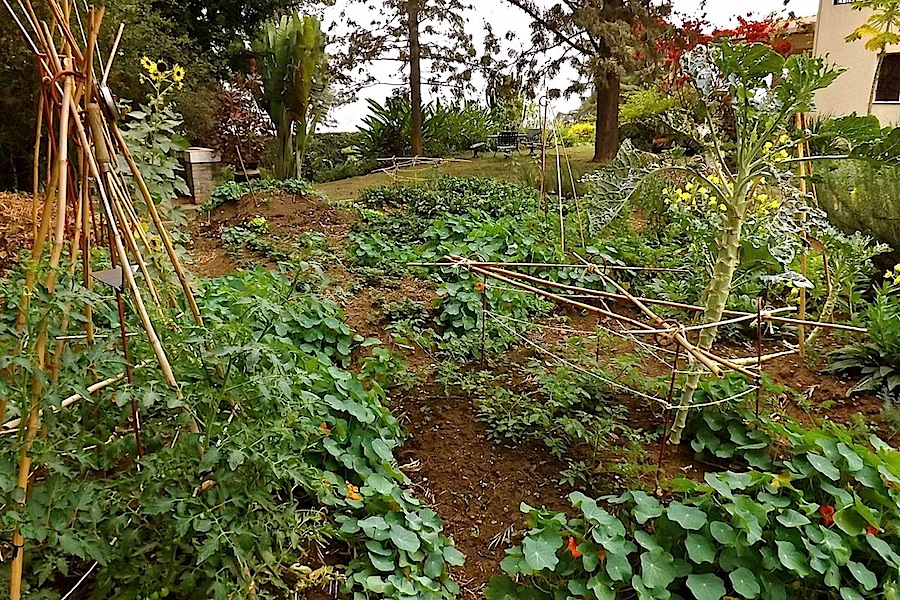
The vegetable garden with kale, sunflowers, Missouri primroses, nasturtiums.

My biggest project in the last month has been to tackle our mess of a vegetable garden, which has consisted of several not very productive, but very wide and long raised beds.  Their dimensions just weren’t manageable, so we’ve dug new paths and now all the beds are about 4′ x 5′.

Orange nasturtium in our vegetable garden.
Orange nasturtium bloom in our vegetable garden.

Growing among the argula, lettuce, kale, strawberry, and tomato plants are also celosias, nasturtiums, Missouri primroses, and sunflowers.

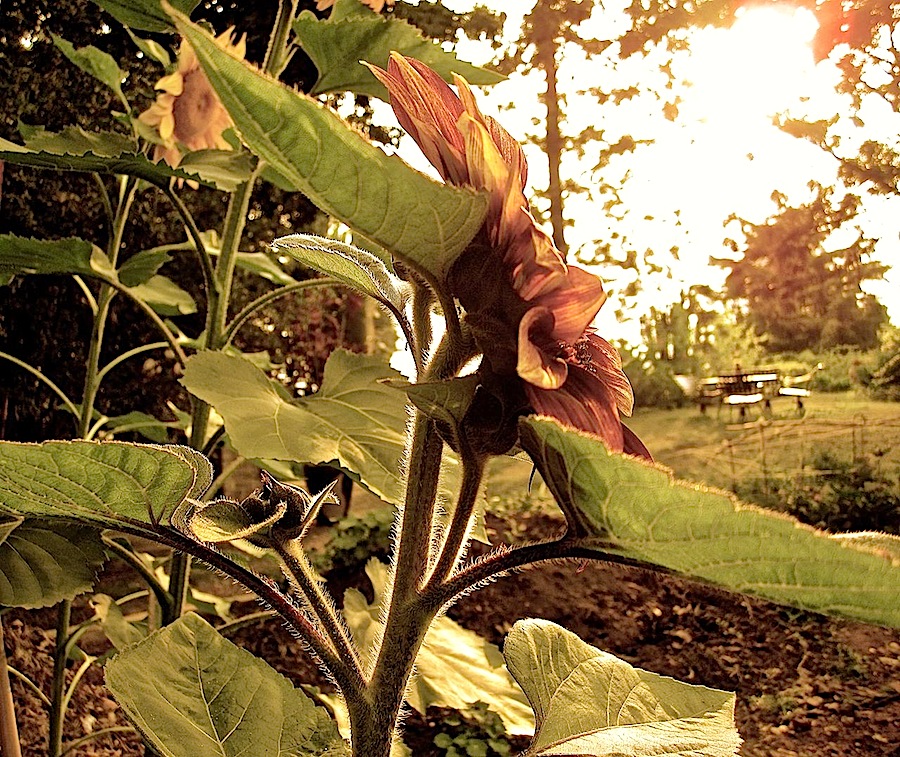
Sunflower (one of the shorter varieties) in our vegetable garden.
The garden with celosia, feverfew, supports for tomatoes and beans, with lettuce gone to seed in the back.
Our still rather disorderly garden with celosia, feverfew, supports for tomatoes, with a row of lettuce going to seed along the back.

Recently, I tried to grow American hardy hibiscus from seed (in the vegetable garden, where the soil is best), and, despite the fact that I have always read that this is a very easy thing to do, only about ten seedlings appeared from two packets of seeds, and for weeks they have remained at 2″ tall.

Nothing at all came up from a packet of black-eyed Susan seeds; only one plant from a packet of Verbena bonariensis.  However, alpine strawberry seeds have produced about 15 plants.

Lettuce flowers.
Lettuce flowers.

I have also done well with re-seeding lettuce, dill, basil, garlic chives, and coriander and with rooted rosemary cuttings. I have high hopes for my cherry tomato plants, many of which have clusters of tiny fruit.

Feverfew in the vegetable garden.
Celosia in the vegetable garden. The fading blooms are full of seeds.

In the long flower border along the lower lawn, I have one bloom from several purple coneflower plants that I have grown from seed.

The first coneflower bloom.
The first coneflower bloom from plants I grew from seed.

Garden Bloggers’ Bloom Day is the 15th day of every month.  Check out May Dreams Gardens to see what’s blooming in other garden bloggers’ gardens today.