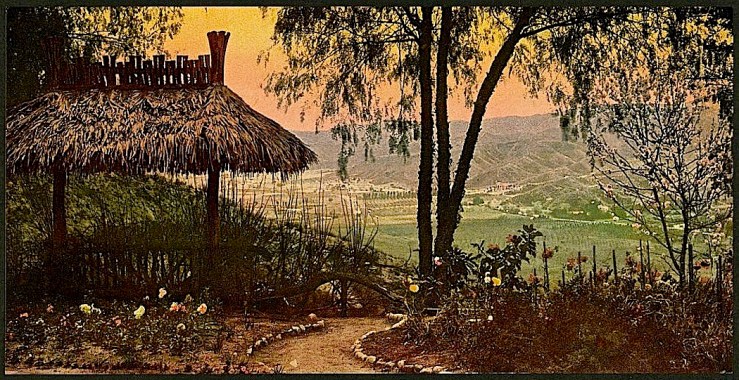
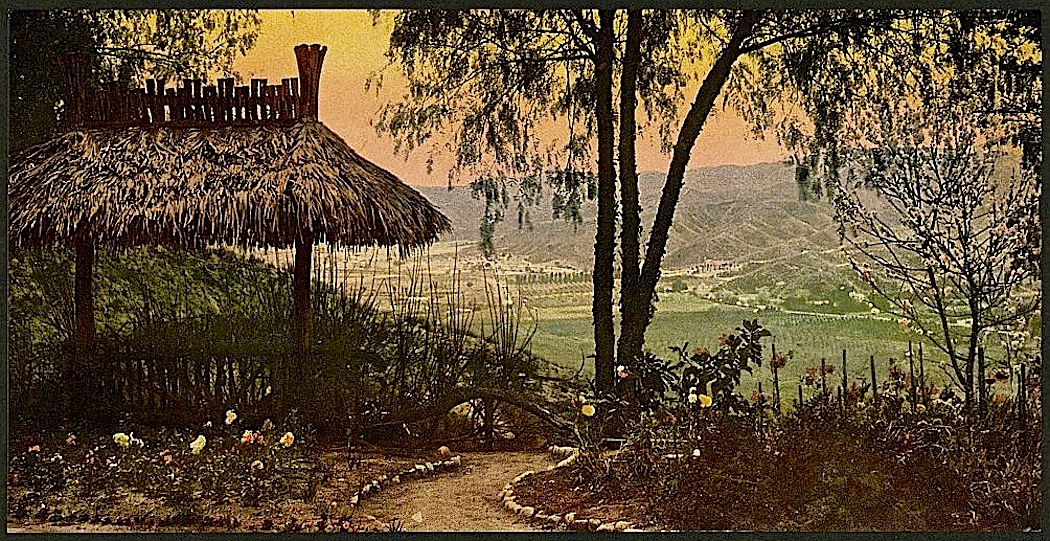
 Roadside view from Smiley Heights, Redlands, California, between 1898 and 1905, a photochrom by Detroit Photographic Co., via Library of Congress Prints and Photographs Division.
(Click on the image to enlarge it.)
Alfred and Albert Smiley — twin brothers — were wealthy New York hotel owners who came to California in their sixties:
In 1889, while in California, the brothers became so impressed with the beautiful scenery and surroundings of Redlands that they purchased for a winter home 200 acres of the heights south of the town, through which tract they caused to be constructed a beautiful series of roads, both for driving and walking, and on the summit and along the northern declivities started a thousand or more species of rare plants and flowers of such varieties as flourish in this semi-tropical climate. Each of the brothers erected a beautiful and substantial residence on the crest of the hill. This property called the Canon Crest Park, commonly known as Smiley Heights, was thrown open to the public and the park has become famous throughout the land, being visited by thousands of Eastern tourists annually.
History of San Bernardino and Riverside Counties (1922) by John Brown, Jr., and James Boyd
The Smiley estate is now “covered by McMansions,” according to this article about Redlands in The Atlantic.
Below the garden the hills fold away.
Deep in the valley, a mist fine as spray,
Ready to shatter into spinning light,
Conceals the city at the edge of night.
— Yvor Winters, from “On a View of Pasadena from the Hills“

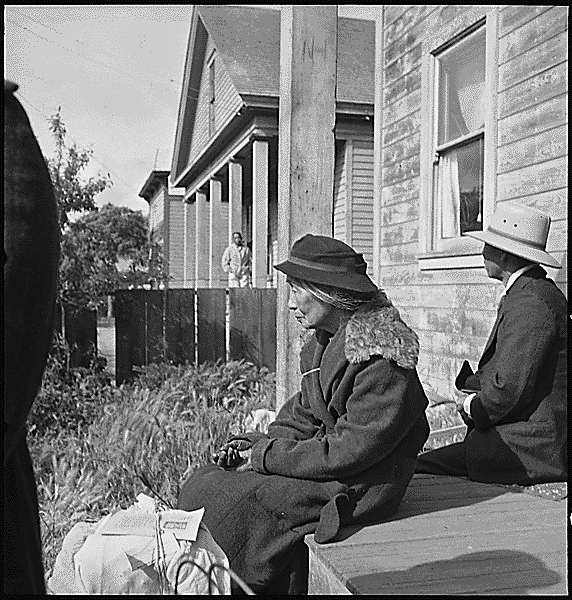 “Grandmother of farm family awaits evacuation bus. Evacuees of Japanese ancestry will be housed in War Relocation Authority centers for the duration,” May 9, 1942, by Dorothea Lange for the U.S. War Relocation Authority, via U.S. National Archives on flickr.
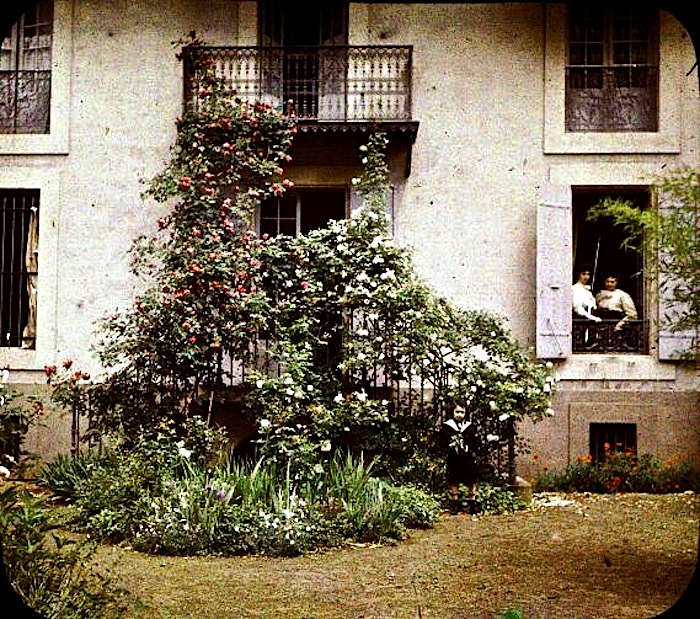
 enclos*ure