Chatham Manor

I’m still traveling, so most of my next posts will be of vintage photos that have caught my interest in the last month. They are from the Carnegie Survey of the Architecture of the South (at the Library of Congress).

Thanks to all who have commented on posts lately. I’m sorry that I can’t answer everyone individually right now.

In 1927, photographer Frances Benjamin Johnston was commissioned by Helen Devore to photograph her estate, Chatham Manor, which she had restored.

Documenting the house and its gardens led Johnston to undertake the Carnegie Survey of the South during the late 1920s and all of the 1930s.
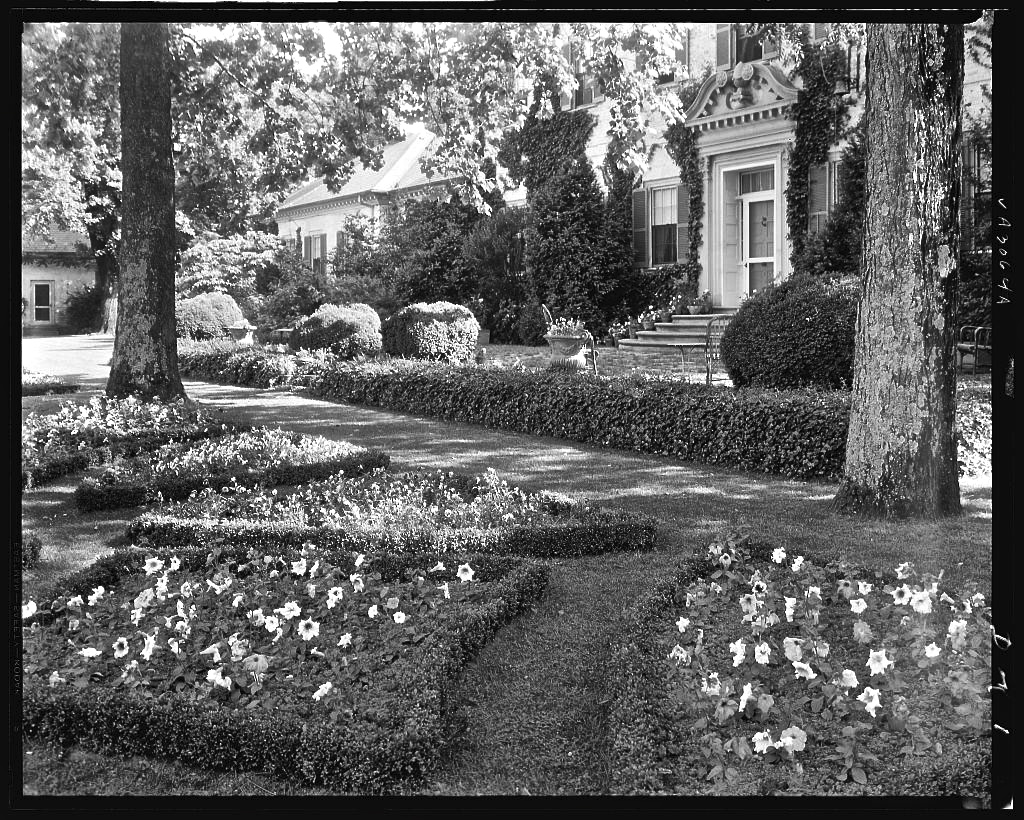
Chatham was built between 1768 and 1771 and overlooks the Rappahanock River near Fredericksburg, Virginia. It has the distinction of having hosted both George Washington and Abraham Lincoln for overnight stays.

After a nearby civil war battle in 1862, it was used as a hospital, and Walt Whitman and Clara Barton nursed wounded soldiers there.

December 1862 photo via Wikipedia.org and The National Archives.

It is now owned by the National Park Service and is open to the public.


Click on any thumbnail below to scroll through 23 enlarged photos of Chatham. Excepted where otherwise captioned, all are by Frances Benjamin Johnston via the Carnegie Survey of the South collection of the Library of Congress Prints and Photographs Division.

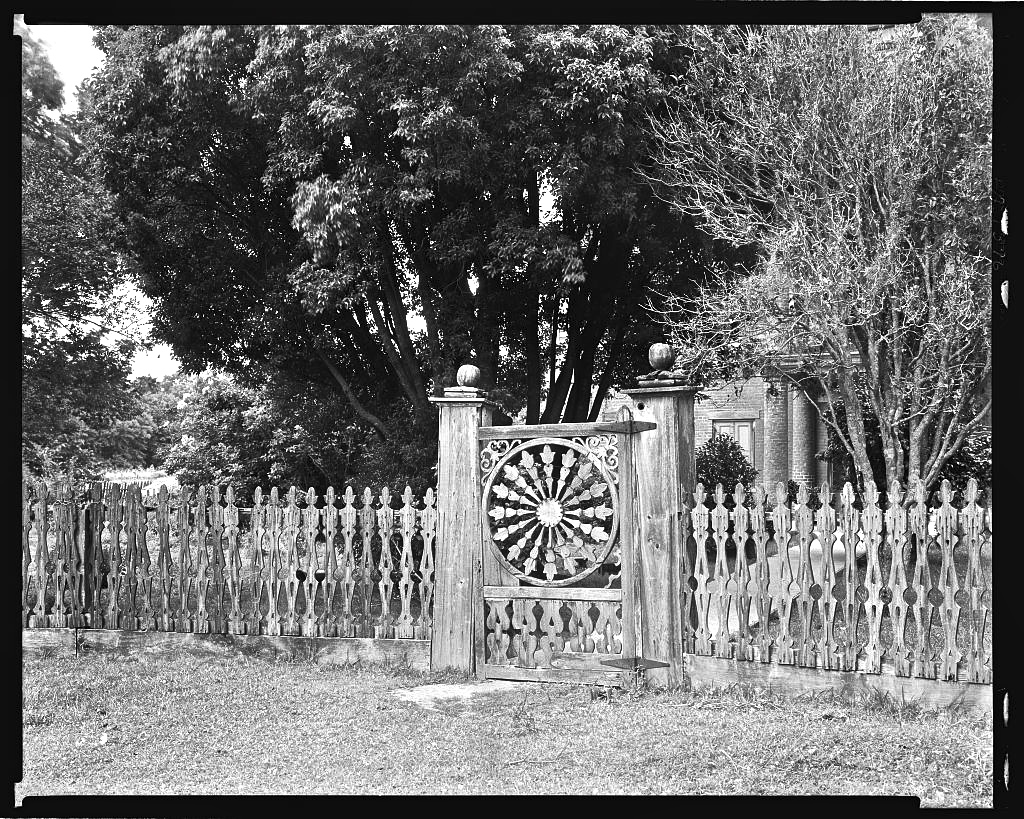
The gate

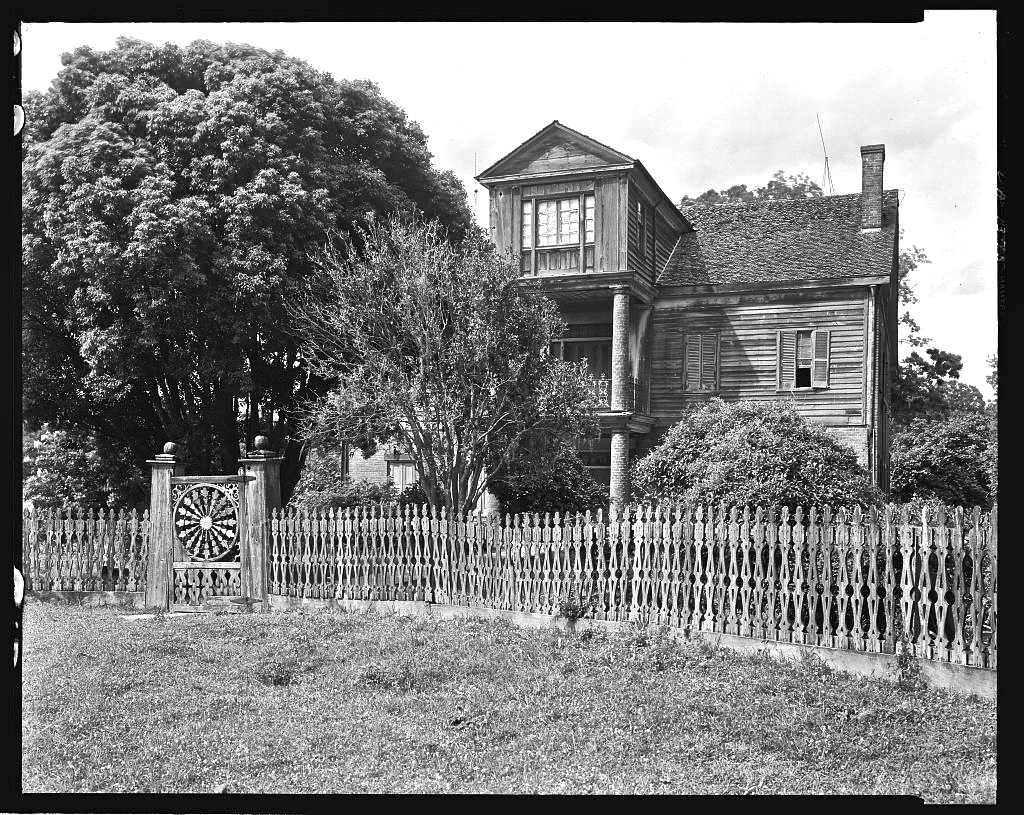
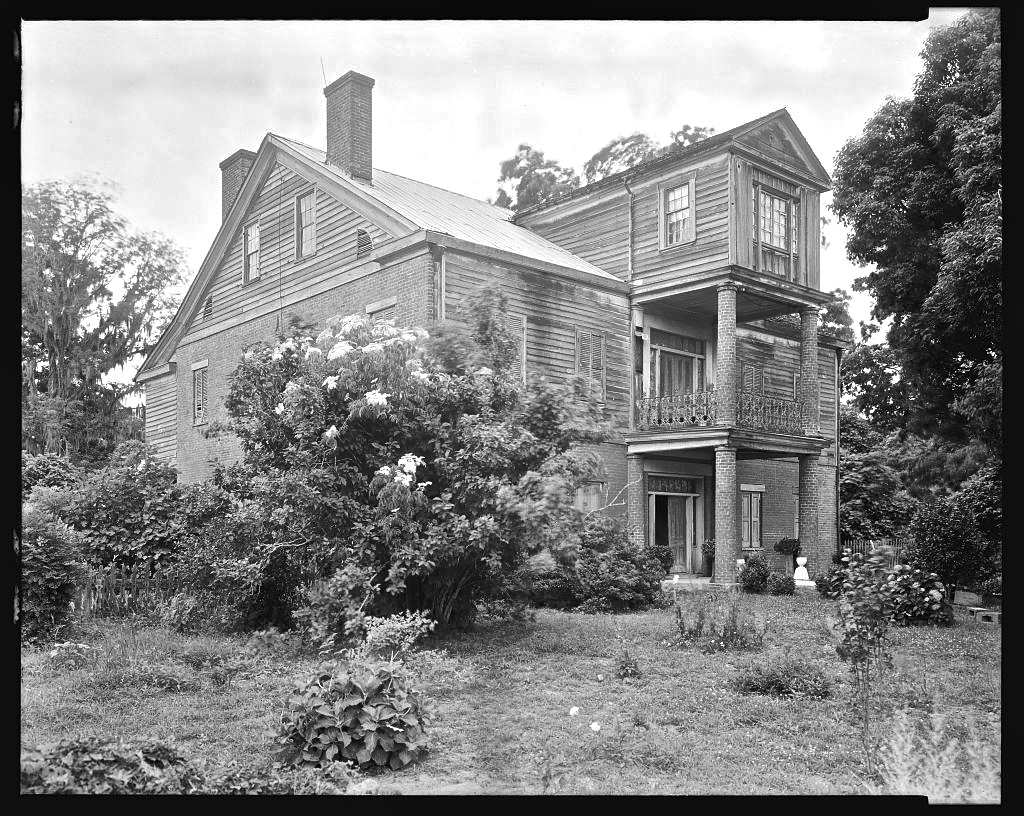
I love this gate and fence, which in 1938 enclosed the Arlington Plantation House (also called Splane) in the town of Washington, St. Landry Parish, Louisiana. The house is still standing and was entered into the National Register of Historic Places in 1982.

It was built in 1829. I have seen the style called Greek Revival, but also Mid 19th Century Revival: Exotic Revival. I have not been able to find a more recent photo of the house or garden.

In 1853, the residents of Splane would have witnessed (and might have succumbed to) a yellow fever epidemic that killed one-third of the population of Washington.

These photos were taken in 1938 by Frances Benjamin Johnston as part of the Carnegie Survey of the South (Library of Congress Prints and Photographs Division).
Garden Bloggers’ Foliage Follow Up for March

I’m traveling today, so for GBFF, I want to share some photos that I’ve taken in the last few months of our two Ravenalas madagascariensis or traveler’s palms.

The traveler’s palm is not a true palm, but the sole member of its genus, which is part of the family Strelitziaceae, known for its birds-of-paradise.

Its name derives from a tendency of its fans to grow in an east-west line (ours don’t) and because its leaf folds, flower bracts, and hollow leaf bases can contain almost a quart of water (almost a liter).

When we lived in Madagascar, we were told that if you drank from the traveler’s palm, you would always return to that country.

The plant likes sun, but can tolerate part shade. It thrives in good moist soil in (U.S.) zones 10 and 11. Its average height is about 23′ (7 m.).

For more information, click here.

Thanks to Pam at Digging for hosting Garden Bloggers’ Foliage Follow-Up today. Click the link to see what’s growing in other G.B.’s gardens this month.

Garden Bloggers’ Bloom Day for March

I’m traveling today, so I must confess that I took these photos before I left. However, this plant has bloomed non stop for the last six months, so I’m sure it is blooming today too.

Since we arrived in Rwanda in September, I have been telling people that this is a poinsettia, a shrub that can also get really large in frost-free climates. But after identifying our orange and white Mussaenda frondosa last month, I realized that it is a Mussaenda erythrophylla.

M. erythrophylla is native to tropical West Africa and is also known as Ashanti blood, red flag blood, or tropical dogwood. It can reach heights of 30 ft. (about 9 m.). Below, it’s growing up into our acacia tree.

The bracts of this plant glow so red that I’ve had a hard time getting good pictures of it. It will bloom all year long.

The plant cannot well tolerate temperatures below 40°F.  It prefers full sun, but will bloom in part shade.  It needs moderate amounts of water.

Thanks to Carol at May Dreams Garden for hosting Garden Bloggers’ Bloom Day. Click the link to see what’s blooming in other GB’s gardens today.

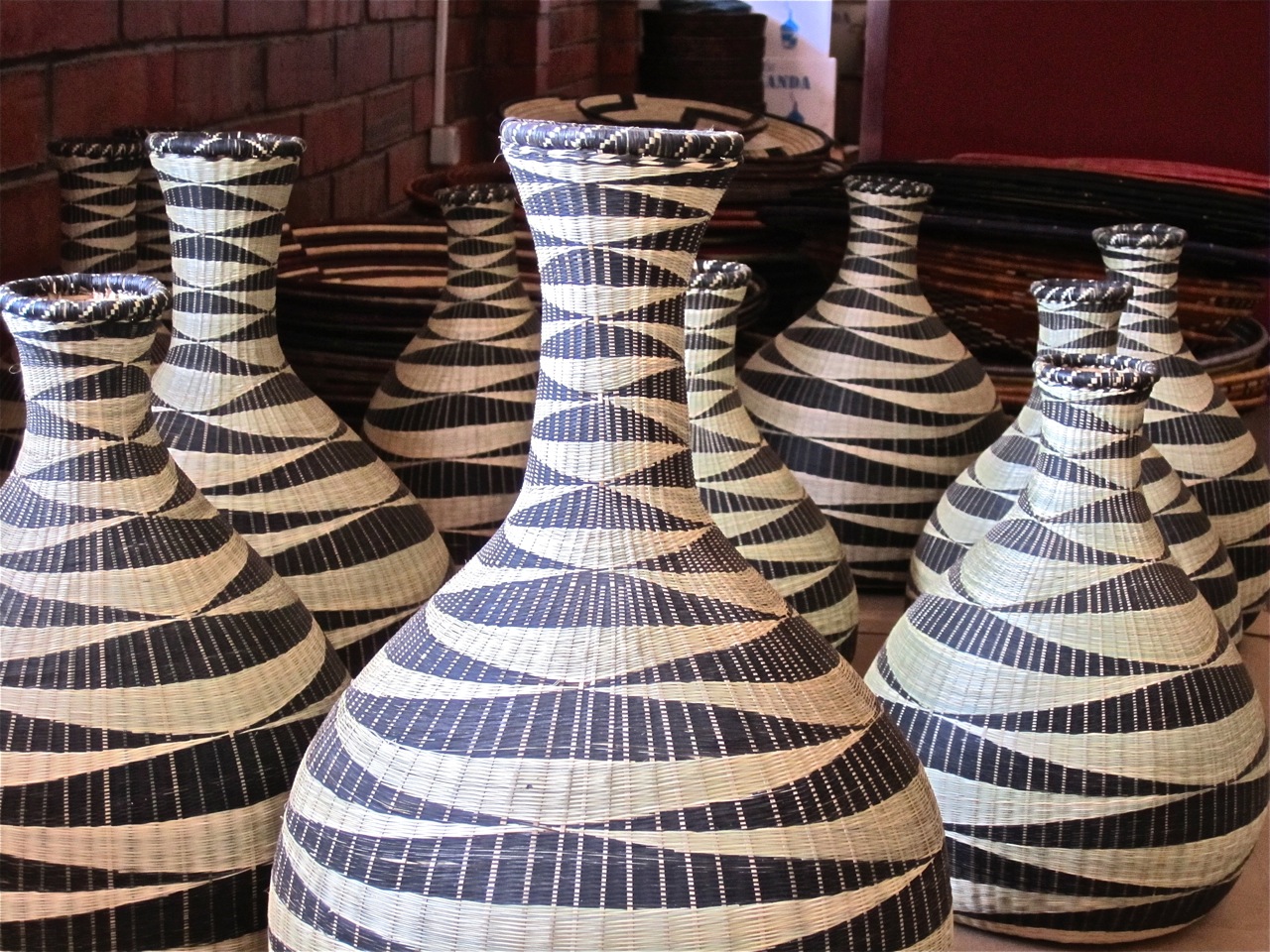
(Almost) Wordless Wednesday: baskets

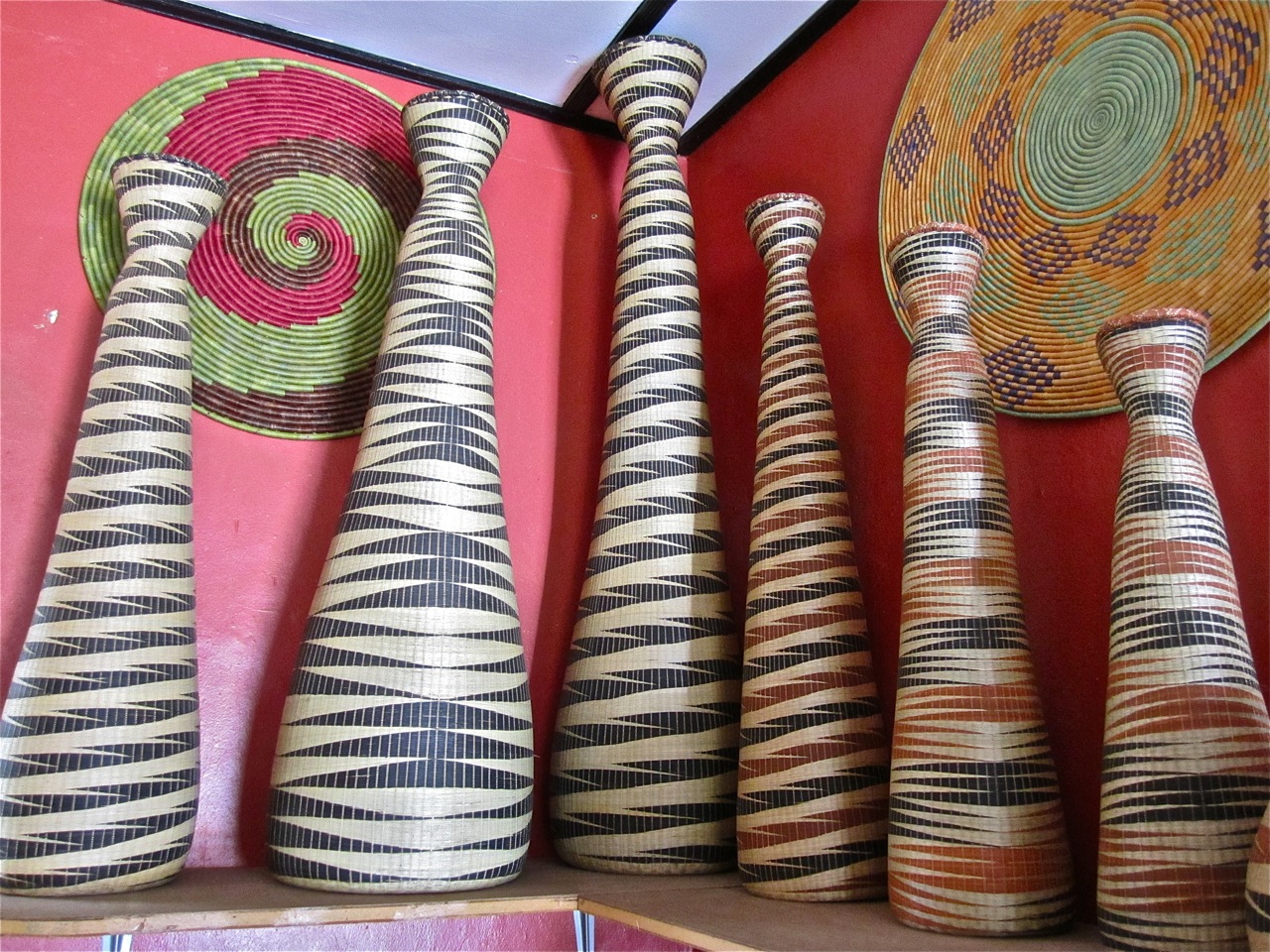
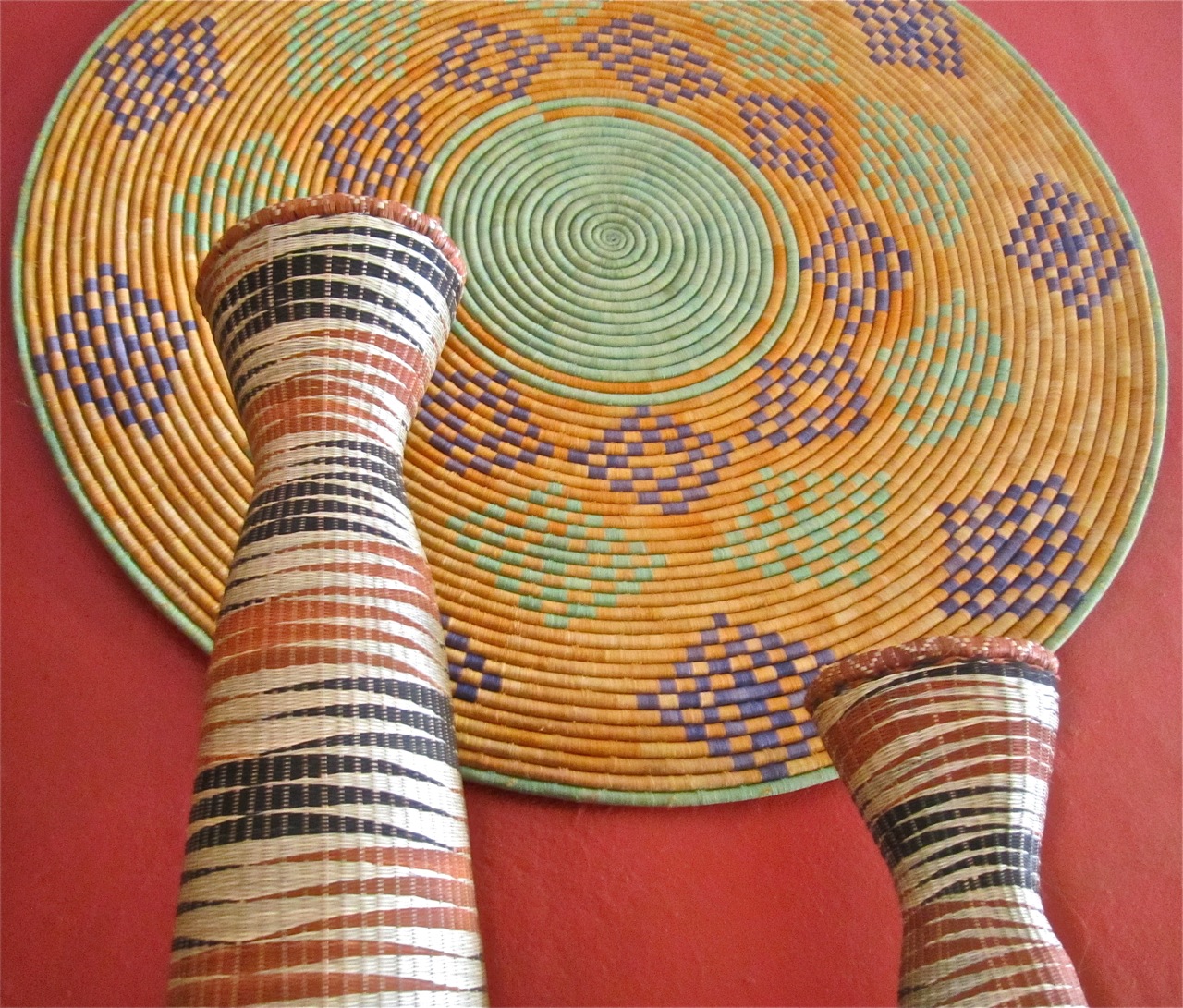
Baskets at Gahaya Links, Kigali, Rwanda.

Gahaya Links’s website is here.

Akebo kajya iwa mugarura.
A basket should be given to the grateful.
— Rwandan proverb