Life in gardens: natural light

Marilyn and Elizabeth, Museum of Photographic Arts

Elizabeth and Marilyn Watson, probably in the Berkeley, California, area, 1921, by Dorothea Lange, via Museum of Photographic Arts Commons on flickr (all photos here).

Marilyn and Elizabeth 2, Museum of Photographic ArtsAbove, Marilyn Watson; in both photos, the sisters seem to be under a grape arbor. Below, they are with their mother, May V. Landis Watson, still outdoors, I believe.

Watson family, D. Lange, Museum of Photographic Arts

In 1921, Lange was 26 years old and running her own portrait studio in Berkeley. She had many well-to-do clients, as the Watsons appear to be. Ten years later, she would begin the work that made her famous: capturing the faces of the Great Depression and of the WWII internment of Japanese-Americans.

There’s a little clip from a PBS documentary on Lange here. It shows a number of her early photographs.

Life in gardens: wildflowers

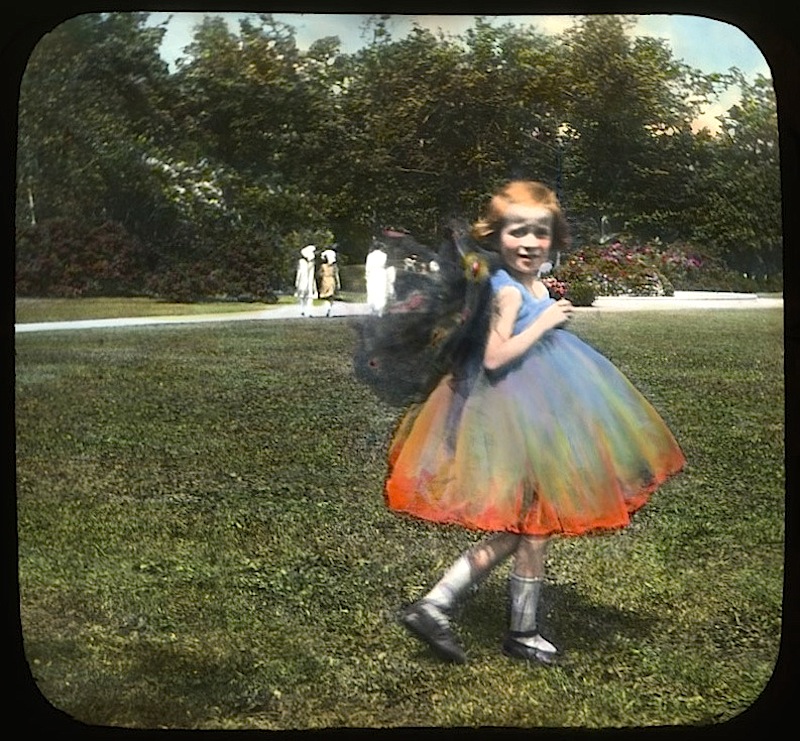
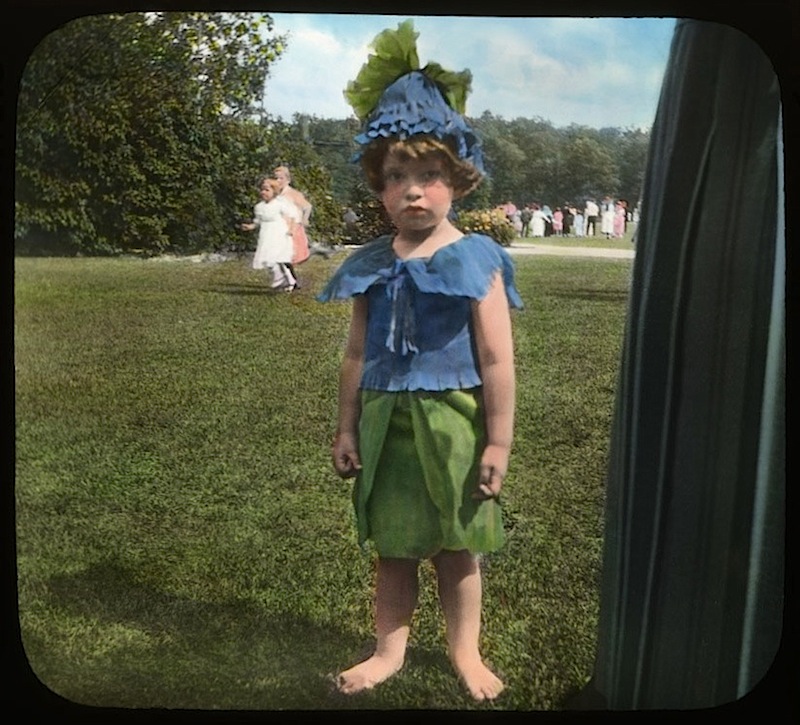
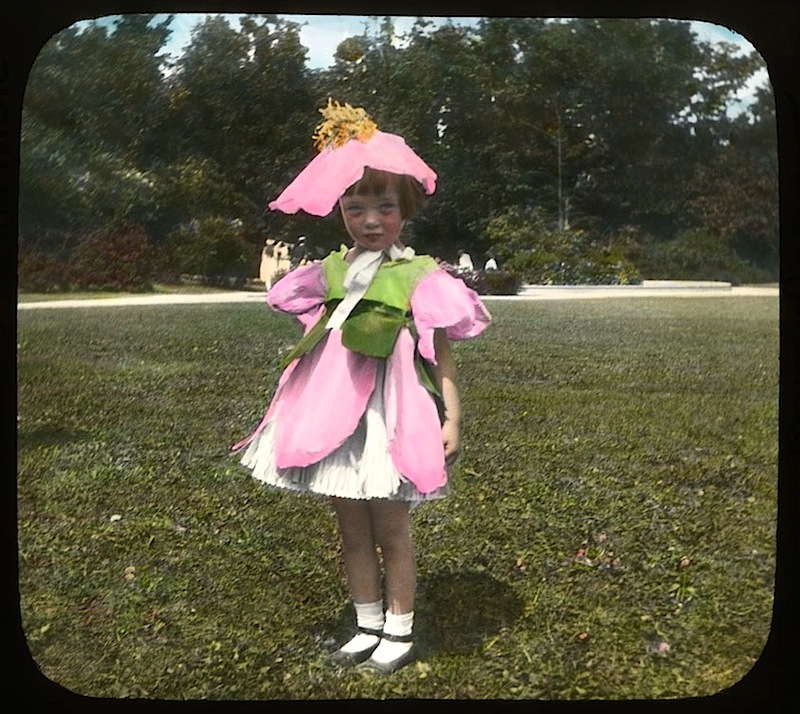
5 Child:ren in wildflower costumes, Chicago, ca. 1920, The Field Museum LibraryChildren costumed as flowers or insects for an event of the Wild Flower Preservation Society, Illinois Chapter, probably in a Chicago park, ca. 1920, hand-colored glass lantern slides by an unknown photographer, via The Field Museum Library Commons on flickr (all images here).

6 Child:ren in wildflower costumes, Chicago, ca. 1920, The Field Museum Library

The Wild Flower Preservation Society of America was founded in 1902 with money given to the New York Botanical Garden by Olivia E. and Caroline Phelps Stokes.  The funds were to be used for the protection of native plants.

1 Child:ren in wildflower costumes, Chicago, ca. 1920, The Field Museum Library

The Society dissolved in 1933, but much of its work was taken up by the Garden Club of America and by another Wild Flower Preservation Society, founded in 1925 in Washington, D.C. (which seems no longer to exist).

2 Child:ren in wildflower costumes, Chicago, ca. 1920, The Field Museum Library

3 Child:ren in wildflower costumes, Chicago, ca. 1920, The Field Museum Library

4 Child:ren in wildflower costumes, Chicago, ca. 1920, The Field Museum Library

7 Child:ren in wildflower costumes, Chicago, ca. 1920, The Field Museum Library

12 Child:ren in wildflower costumes, Chicago, ca. 1920, The Field Museum LibraryAbove and below: Mayapples.9 Child:ren in wildflower costumes, Chicago, ca. 1920, The Field Museum Library

10 Child:ren in wildflower costumes, Chicago, ca. 1920, The Field Museum LibraryAbove: a bee.

13 Child:ren in wildflower costumes, Chicago, ca. 1920, The Field Museum Library
Click here to see several more of the slides.

Life in gardens: Washington, D.C.

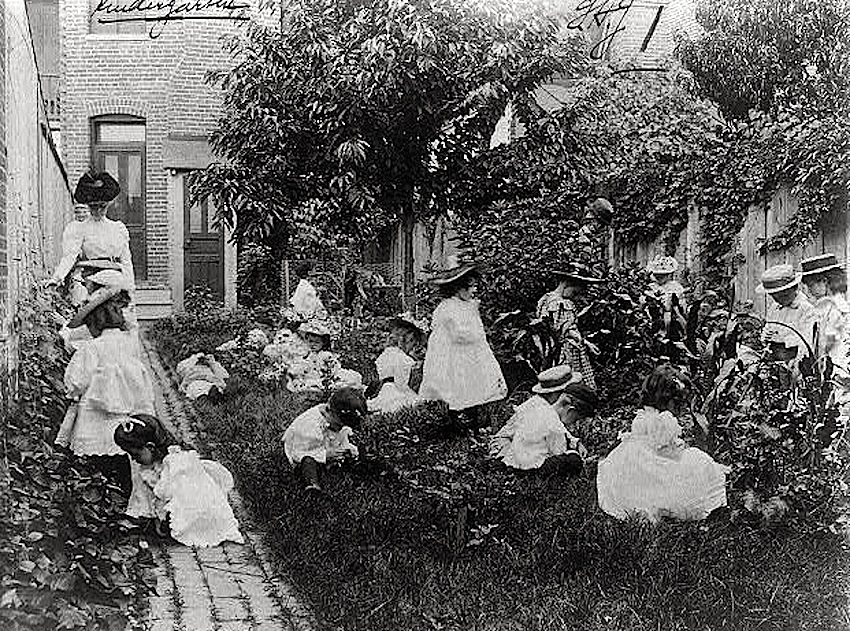
Kindergarten in a vegetable garden, FB Johnston, Library of Congress“Kindergarten in a vegetable garden,” Washington, D.C., ca. 1899, by Frances Benjamin Johnston, via Library of Congress Prints and Photographs Division.

Before she became immersed in the work of photographing old houses and gardens, Johnston was a photojournalist and a portraitist. In 1899, she became interested in progressive education and made a photo survey of students at public schools in Washington, D.C.

Vintage landscape: Louisville, Kentucky

Colonade, Louisville, Ky, park, Library of CongressColonnade, Central Park, Louisville, Kentucky, between 1900 and 1910, Detroit Publishing Co., via Library of Congress Prints and Photographs Division.

The park’s 17 acres were owned by the Dupont family in the 1870s, yet open for public use as “Dupont Square.”  In 1883, the space — temporarily “roofed in” — was used to demonstrate Thomas Edison’s light bulb.

In 1904, the Duponts sold the land to the city, and Frederick Law Olmsted, who was already working in Louisville, designed a large open-air shelter and colonnade for the park’s high point.  The colonnade still exists and is undergoing restoration.

Life in gardens: boy and book

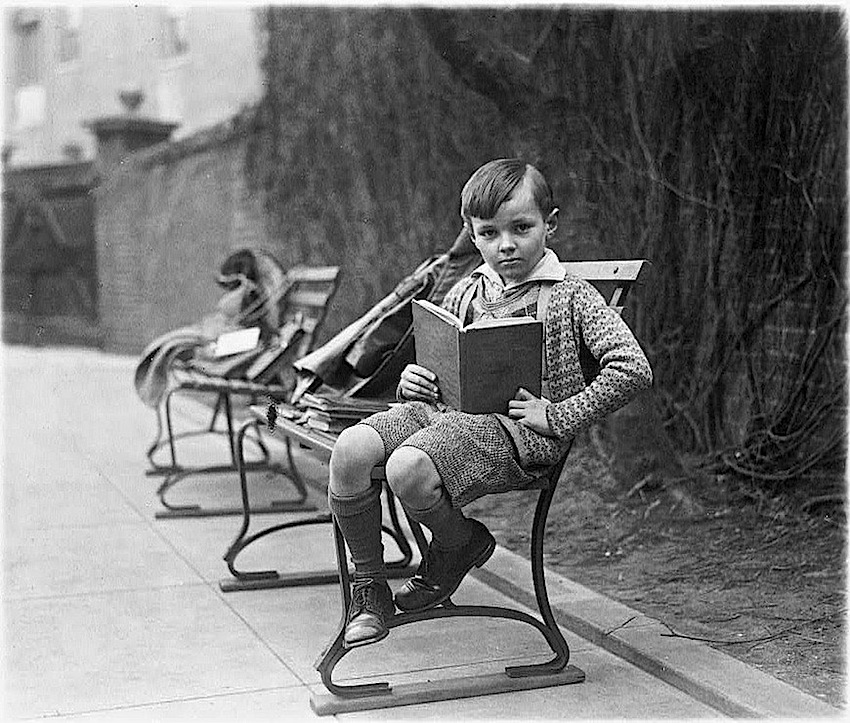
Boy reading a book, 1920, Library of Congress“Unidentified boy, seated on park bench, probably in Washington, D.C., holding book,” ca. 1920, by National Photo Company, via Library of Congress Prints and Photographs Division.

I wonder if this isn’t a courtyard or garden corner of a college or university, rather than a park. Behind the boy are two adult coats, as well as books and files and at least one briefcase. Maybe he’s the son of a professor?

I love his wonderful sweaters and tweed shorts.