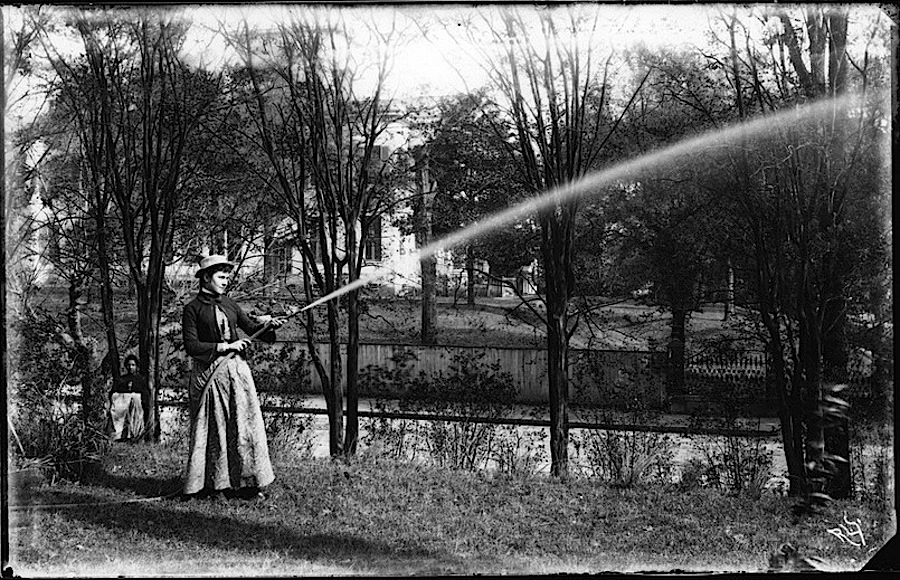
Natchez, Mississippi

Myrtle Bank terrace, Natchez, Mississippi, ca. 1900, from the Stewart Photograph Collection,* via Mississippi Department of Archives and History Commons on flickr (both photos).

The two houses shown here are about two blocks from each other, both on N. Pearl Street.
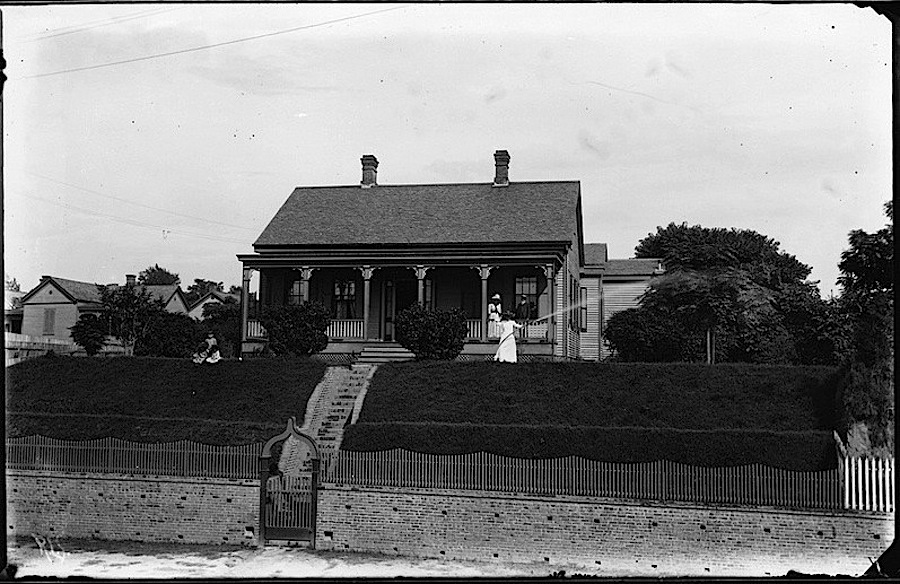
Major Benbrook residence, corner with B Street, ca. 1895, also from the Stewart Collection.

The neighborhood evidently had good water pressure. Both houses still stand.

In ancient Greece, the first hoses (for fire fighting) were made from ox intestines. In the late 17th century, Jan van der Heiden and his son sewed leather into long tubes for Amsterdam’s fire department. Then, in 1821 Boston, James Boyd invented a rubber-lined, cotton-webbed hose. By the 1870s, the first rubber and cotton fiber hoses for gardeners appeared on the market.

In 1895, a garden hose was the subject of what is believed to be the first comedy film, L’Arroseur Arroséby Louis Lumière. You can see it here.


*By brothers Robert Livingston Stewart and William Percy Stewart of Natchez, Mississippi, from ca. 1890 to ca. 1905.
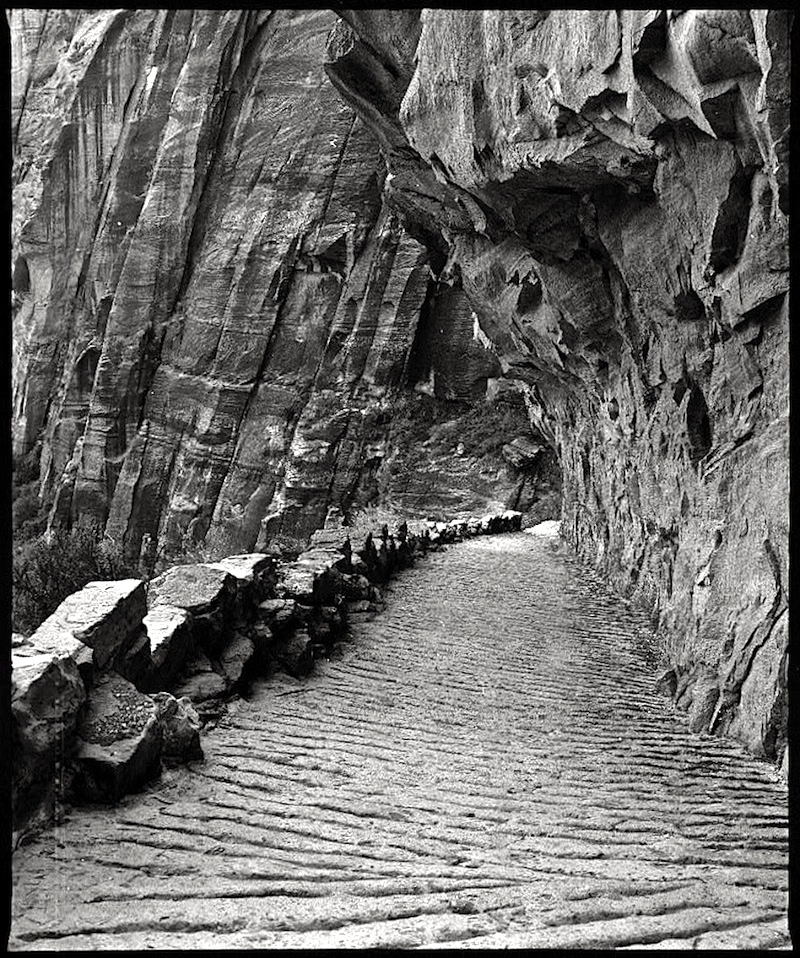
Zion path

It’s National Trails Day.
Trail, Zion Natl Park, Utah, 1980s, Library of CongressDetail of the West Rim Trail, looking southwest, Zion National Park, Washington County, Utah, 1984, by Clayton B. Fraser, via Historic American Engineering Record, Library of Congress Prints and Photographs Division.

The trail opened in 1926 and was paved in 1929 with oil mixed with sand and rock.  It was later repaved in concrete, most recently in 2007.

“Built of native stone and associated with the “National Park Service-Rustic” architectural style, the West Rim Trail possesses architectural integrity,” says the Record.  “Rock used in the masonry switchback walls was quarried locally and shaped as little as possible to provide a rough appearance, yet stable construction.”  You can read more here.

Nara, Japan


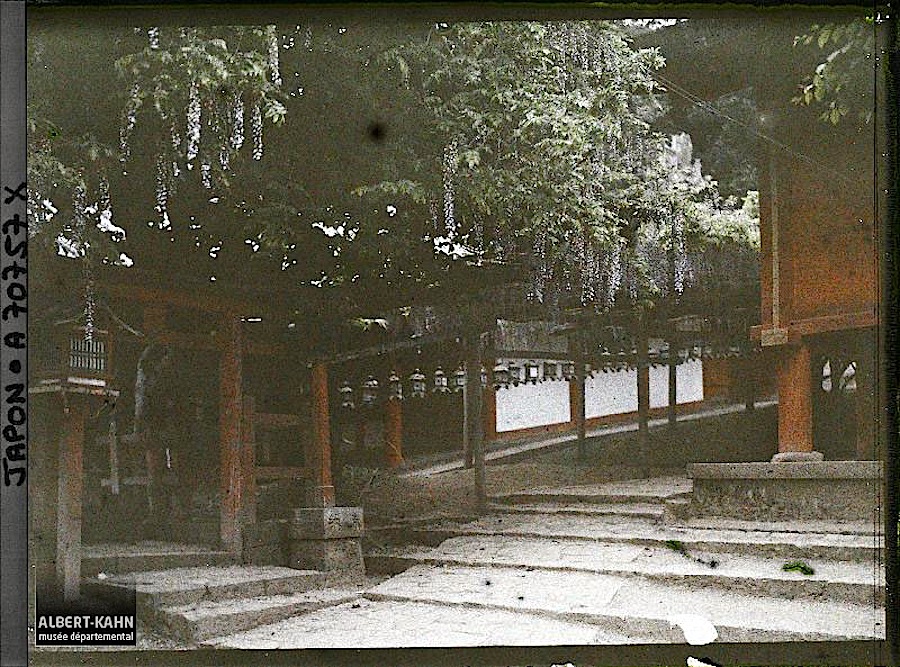
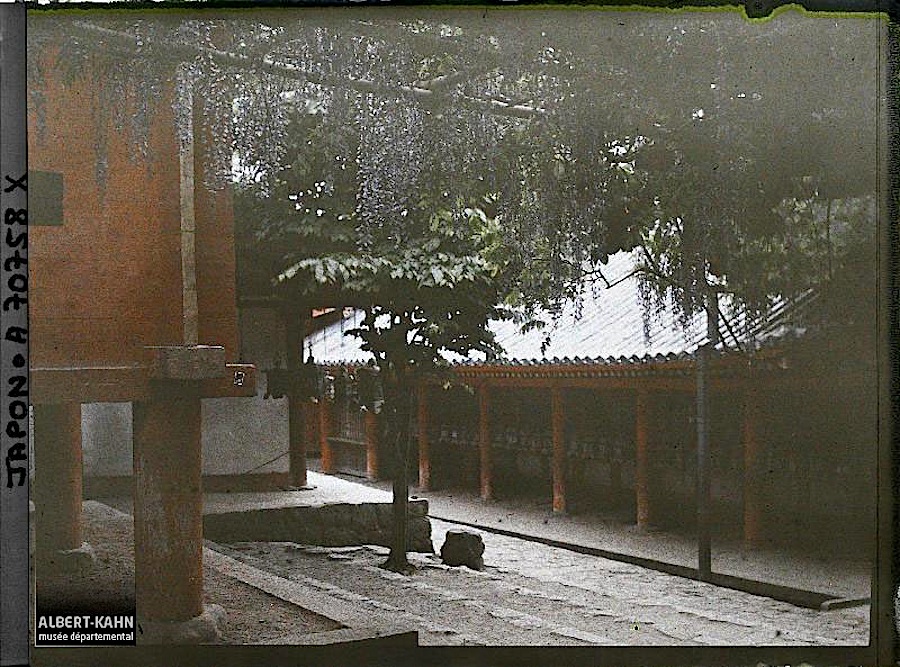
Kasuga-jinja (or Kasuga-taisha) Sanctuary and wisteria, Nara, Japan, Spring 1926, by Roger Dumas, via Archives of the Planet Collection – Albert Kahn Museum /Département des Hauts-de-Seine (all three photos here).

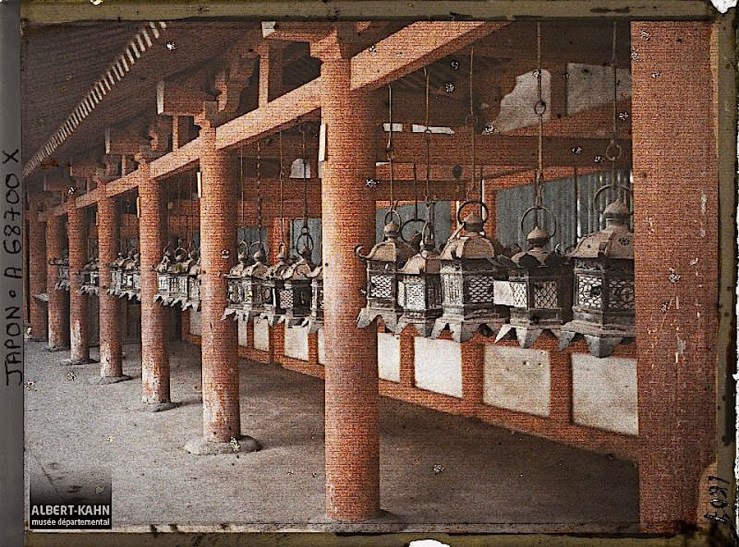
The Shinto shrine (first built in 768 A.D.) is famous for its thousands of bronze and stone lanterns. It is located on the edge of Nara Park, home to freely roaming deer said to be messengers of the gods.

Temple of lanterns, Japan, A68700X, Musee Albert-Kahn, Archives de la Planete

The autochromes above are three of about seventy-two thousand that were commissioned and then archived by Albert Kahn, a wealthy French banker and pacifist, between 1909 and 1931. Kahn sent thirteen photographers and filmmakers to fifty countries “to fix, once and for all, aspects, practices, and modes of human activity whose fatal disappearance is no longer ‘a matter of time.'”* The resulting collection is called Archives de la Planète and now resides in its own museum at Kahn’s old suburban estate at Boulogne-Billancourt, just west of Paris. Since June 2016, the archive has also been available for viewing online here.


*words of Albert Kahn, 1912. Also, the above photos (A 70 757 X, A 70 758 X, A 68 700 X) are © Collection Archives de la Planète – Musée Albert-Kahn and used under its terms, here.

Norway


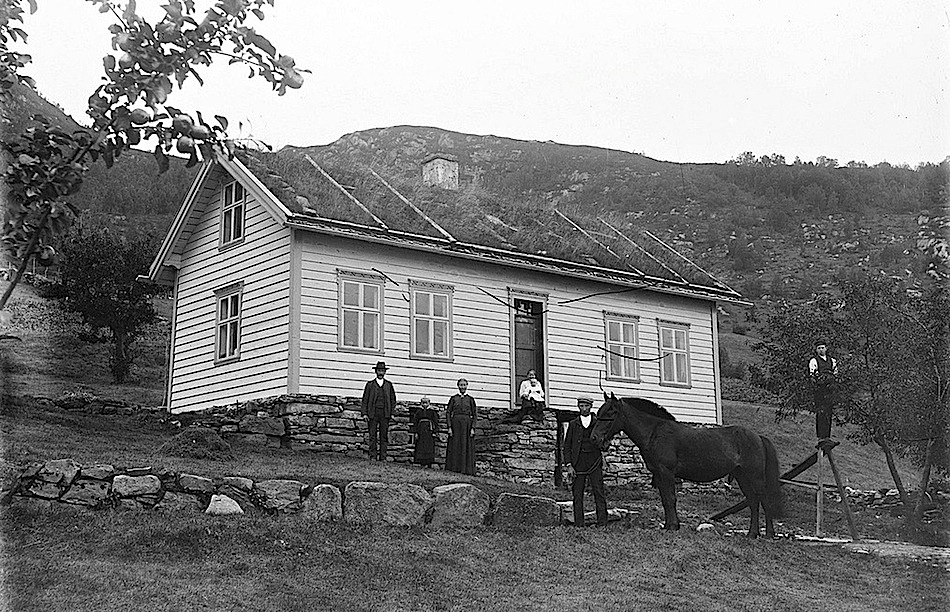
Farmhouse with sod roof, western Norway, ca. 1890-1910, via Fylkesarkivet i Sogn go Fjordane Commons on flickr.

The stone foundation, steps, and terracing are beautiful. Also note the ladder-type device that the man on the right is using to pick fruit. Click on the image for a larger view.

The Sunday porch: Williamsboro, N.C.

 “Blooming Hope” (also called “Cedar Walk”), Williamsboro, North Carolina, 1938, by Frances Benjamin Johnston, via Library of Congress Prints and Photographs Division.

I like the way the vines are a little blurry from a sudden gust of wind.

The home may have been built as early as the 1750s by a Hutchins (or possibly Robert) Burton, who called it “Blooming Hope.” He may have operated a boarding school there. It also seems to have served as an academy for young ladies later in the early 1800s, run by the Rev. Henry Patillo. At some point in its first 100 years, there was a suicide in the house (either Burton or Patillo’s son), and it acquired a reputation as haunted. It was torn down in 1967.