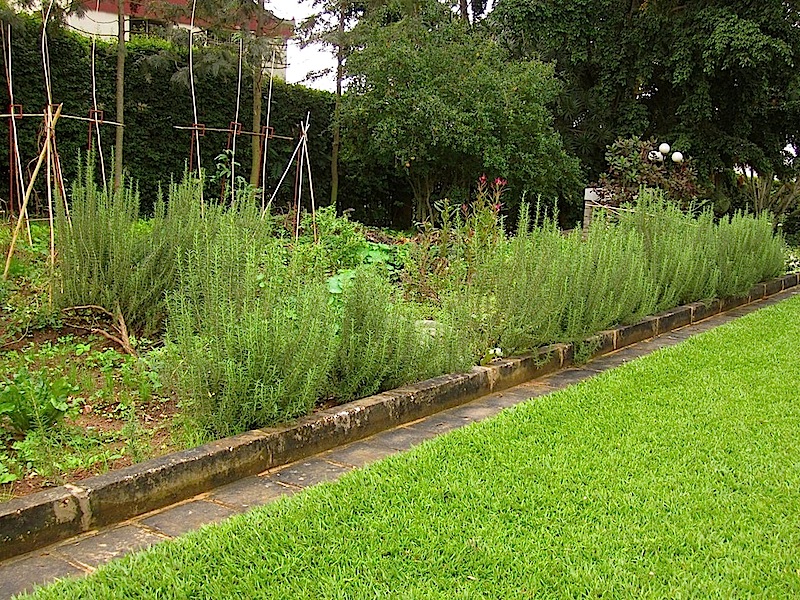
I’m a bit late, but I did want to show off my 25 rosemary plants (on the left, below), which grew from cuttings that I took from a single big old plant that was in the garden when we arrived here.
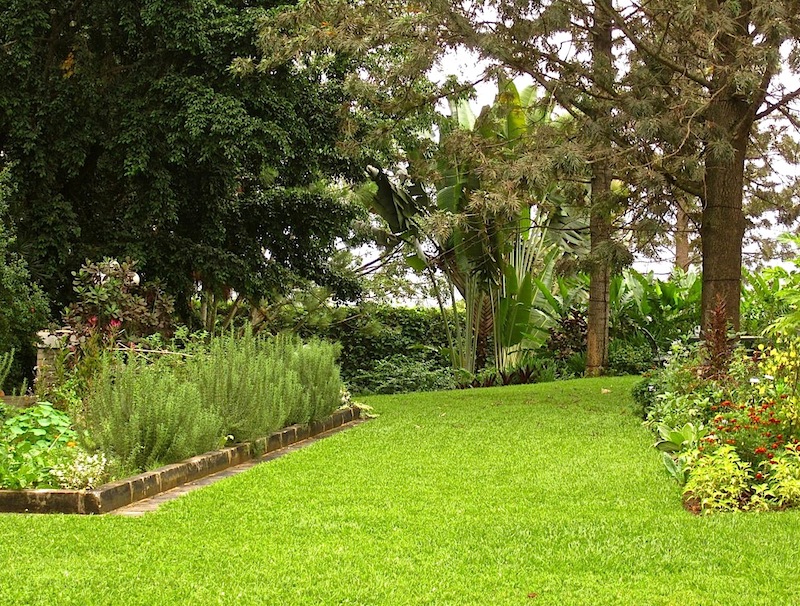 (Especially since the gardener expressed grave doubts at the time that they would root and grow.)
The photo above shows the passage between the vegetable garden on the left and the cutting garden on the right, walking toward the south end of the upper lawn.
By the way, that huge, dark green tree in the upper left corner is what your potted weeping fig would look like over time — in the ground, in a constantly warm climate.
I started the cuttings about 18 months ago.* Now the plants are 2′ to 3′ tall,
 except at the very end, on the left above. Those plants — which will finish out the row — are about 6 months old.
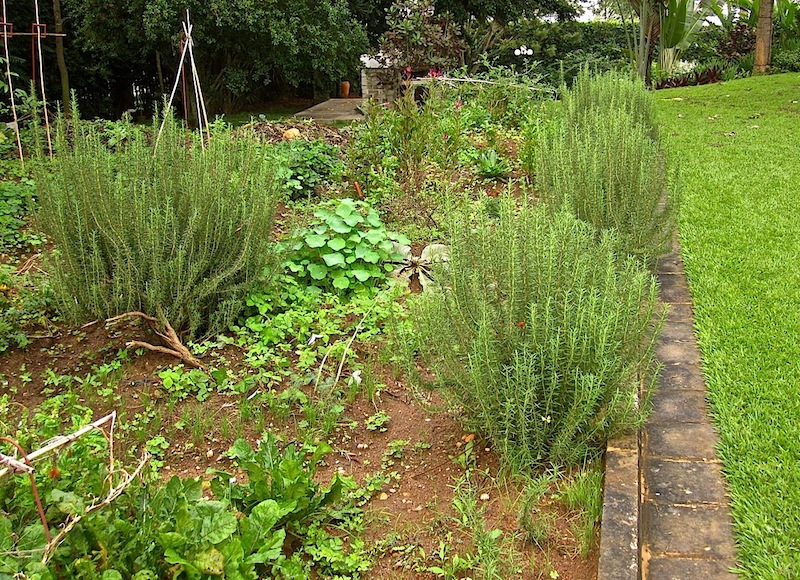 Above, on the left, is the mother plant. Just to the right of it is a little patch of alpine strawberries, which I grew from a packet of seeds.
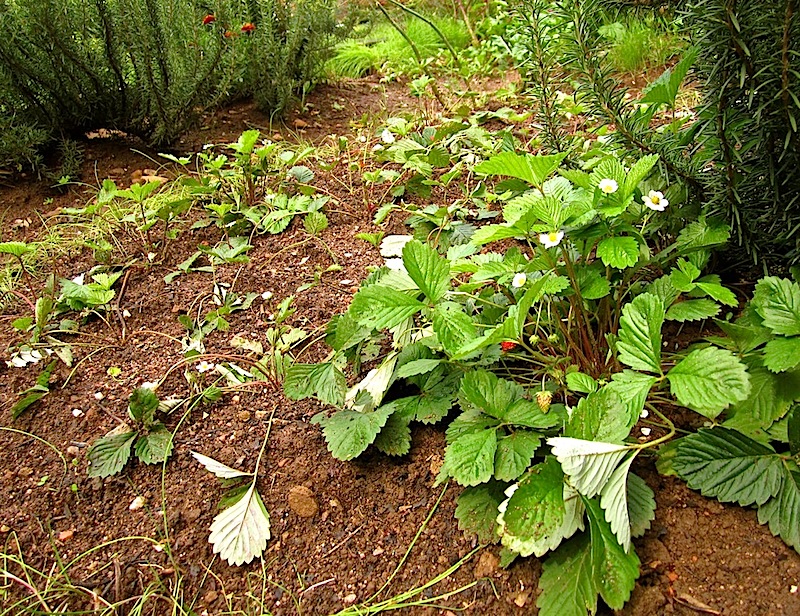 I divided them recently, so they look a bit skimpy. The tiny fruit does have a more pronounced and almost perfume-y taste, compared with larger strawberries.
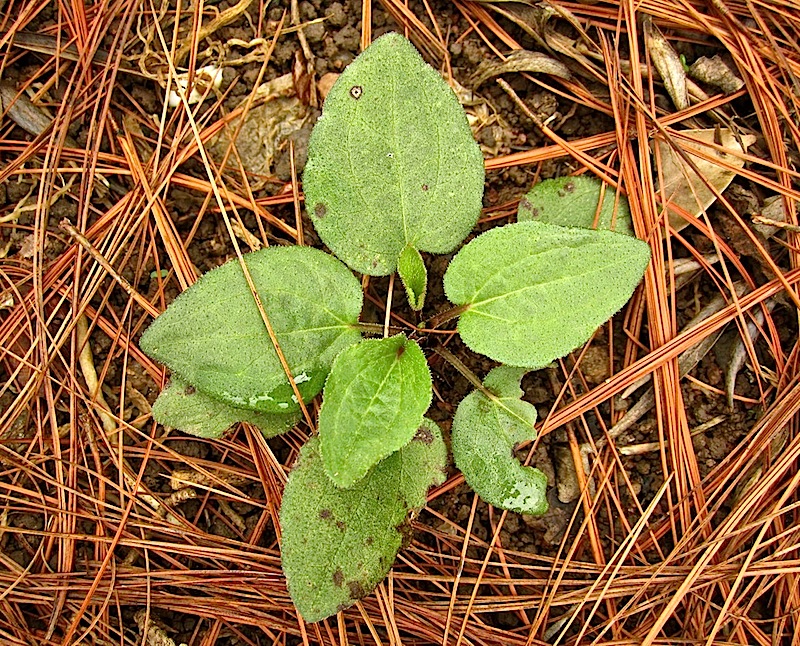 As I am giving you a couple of my success stories, I should also show you the flip side — above.
This is the one Rudbeckia hirta or black-eyed Susan to germinate out of an entire packet of seeds — a plant that has a reputation for generous self-seeding. I have big hopes for it, though. It’s a pretty showy native American plant.
Thanks to Pam at Digging, who hosts Garden Bloggers’ Foliage Follow Up on the 16th of every month. Click here and see what’s happening in other gardens.
*I cut pieces that were a little or not quite woody, stripped the ends of leaves, and stuck them in a slightly sunken, slightly shaded place. Then, I kept the ground there damp for a few months. After I transplanted them, I was also careful to water the new plants almost daily for a few weeks.






 enclos*ure