“Flower bed (blomsterrabatt) with gladiolus at Trädgårdsföreningen, The Garden Society of Gothenburg, founded in 1842,” Göteborg (Gothenburg), Sweden, 1944, a color slide by Fredrik Bruno, via Swedish National Heritage Board Commons on flickr.
The glads offer no solution:
being—falling—
you mustn’t count the days—
fulfillment
livid, tattered, or beautiful.
Horseshoe gate on the Pedroli Ranch, Paradise Valley, Nevada, July 1978, (35mm slide) by Richard E. Ahlborn, via American Folklife Center of the Library of Congress (both photos).
The ranch house gate was made by Pete Pedroli about 1950. It has a counterweight for self closing. . .
Photo by Suzi Jones
. . . and a latch made from a bridle bit.
There’s another photo of the house and gate here, by Carl Fleishhauer.
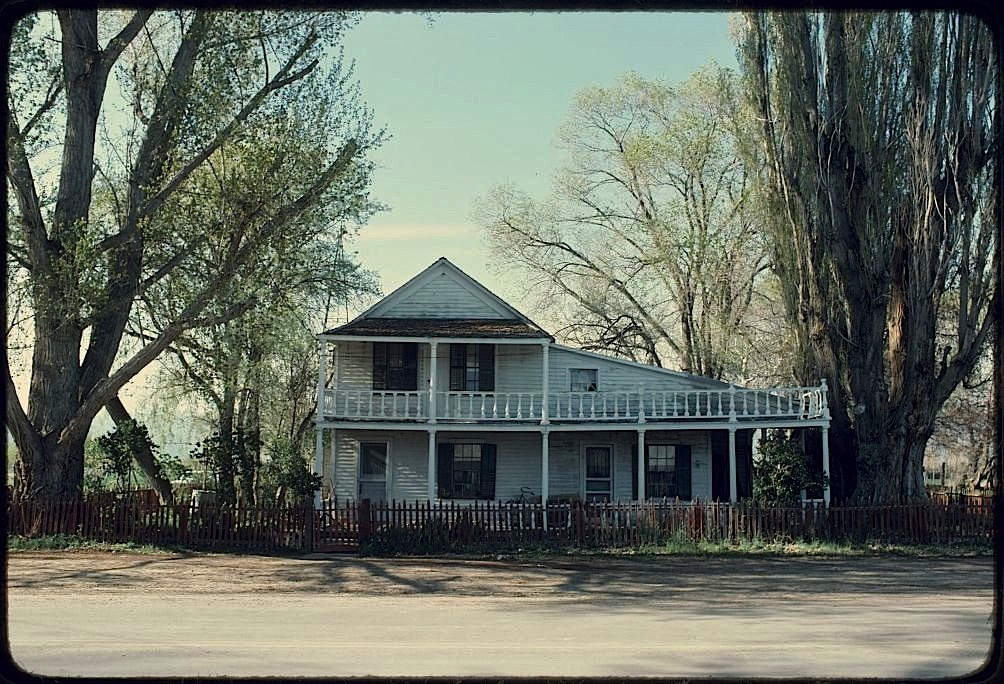
Buckingham Residence, Paradise Valley, Nevada, July 1978, (35mm slide) by Suzi Jones, via American Folklife Center of the Library of Congress (all photos here).
The house, the oldest in the town, was originally built as a hotel for a mining settlement. It was later disassembled and rebuilt in Paradise Valley.
May 1978 slide by Carl Fleishhauer.
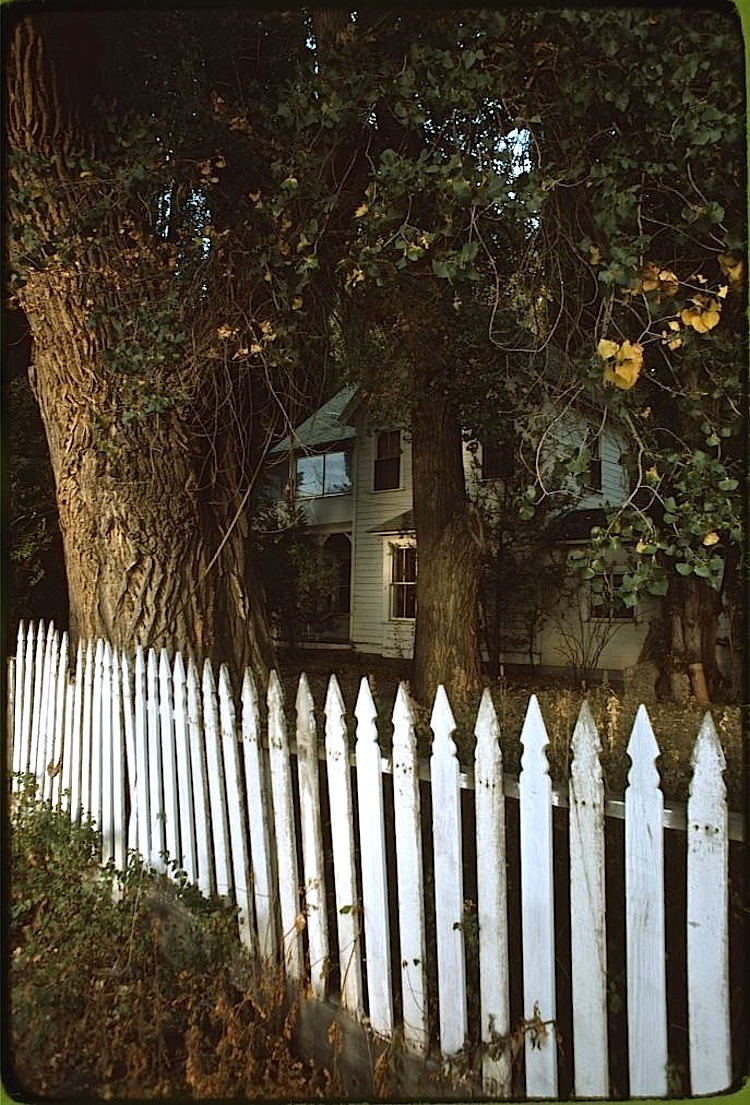
White Fence
Also from the Folklife Center’s Paradise Valley* collection. . .
The Stock-Stewart house, October 1979, by Carl Fleischhauer.
This residence on the Ninety-Six Ranch was built around 1900, added onto a bunkhouse/dining hall from the 1880s (shown below).
Ox yoke and wagon wheel entrance to Stock-Stewart house, July 1978, by Howard W. Marshall.
The ranch has been in the same family’s ownership since 1864. The ox yoke above the gate may have had particular significance for them, as their ancestor — a German immigrant named William Stock — first saw the land while hauling freight from California.
*From 1978 to 1982, the Center conducted an ethnographic field project in this distinctive ranching and mining community. The study became the collection “Buckaroos in Paradise: Ranching Culture in Northern Nevada, 1945-1982.”

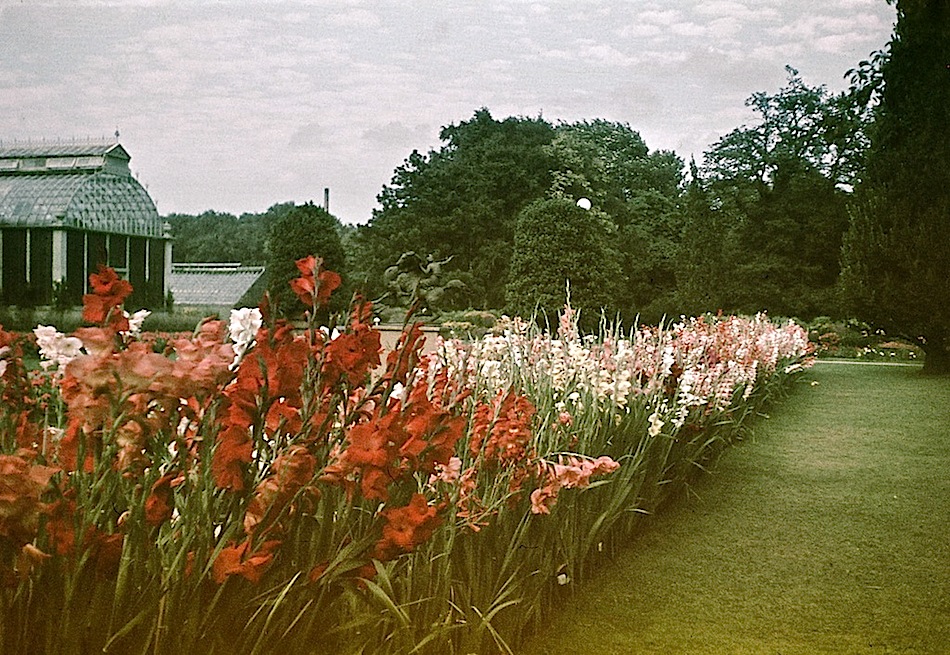 “Flower bed (blomsterrabatt) with gladiolus at Trädgårdsföreningen, The Garden Society of Gothenburg, founded in 1842,” Göteborg (Gothenburg), Sweden, 1944, a color slide by Fredrik Bruno, via Swedish National Heritage Board Commons on flickr.




 enclos*ure