Fairbanks, Alaska

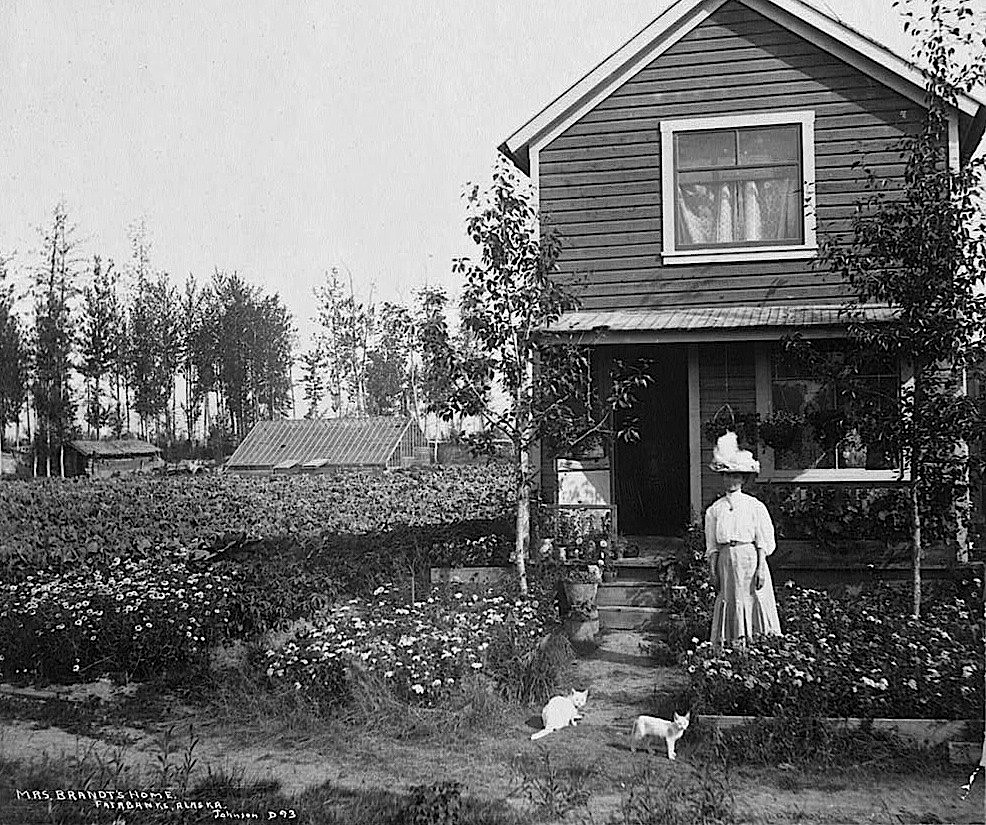
“Mrs. Brandt’s home, Fairbanks, Alaska,” 1916, via Library of Congress Prints and Photographs Division.

Fairbanks was founded in 1901 as a trading post supplying gold miners in the area.  It became an incorporated city in 1903. “By 1905, [it] had electricity and sewer service, a powerplant, a three-story skyscraper, saloons, stores, police and fire protection, and a thriving “Red Light” district,” according to fairbanks-alaska.com.

This may be the home of Margaret Brandt, a widow who was a city telephone operator from 1905 to 1938.

The photograph is one of over sixteen thousand created or collected by Frank G. Carpenter and his daughter, Frances, to illustrate his geography textbooks and popular travel books.

Click on the image for a larger view.
Gothic manse

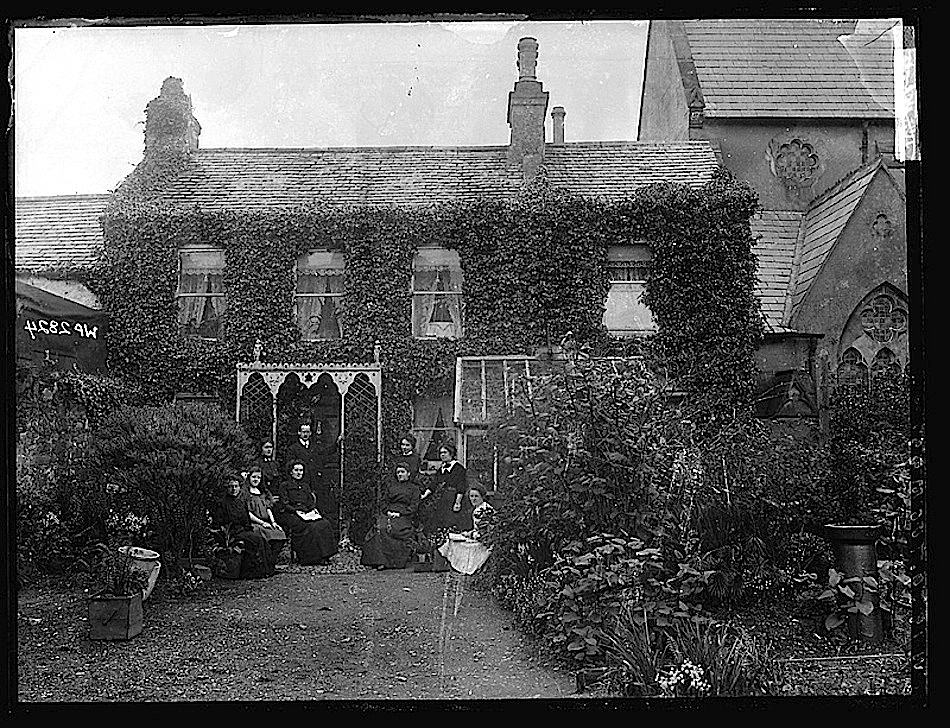
“Family group seated outside a large house – possibly a manse,” ca. 1905, by H. Allison & Co. Photographers, via Public Record Office of Northern Ireland Commons on flickr.

Click on the image for a larger view.
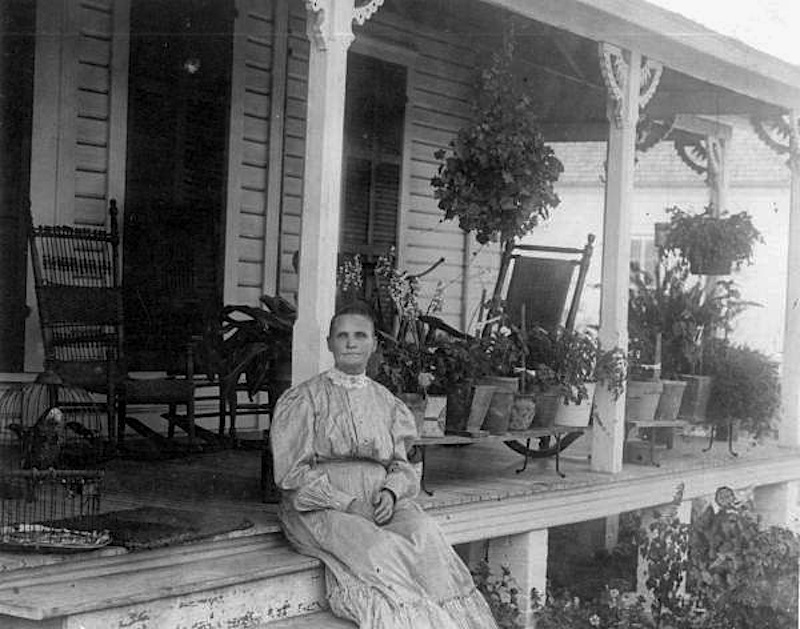
The Sunday porch: Mulberry, Florida

“Mrs. Cook and Polly parrot on the porch of the family home, Mulberry, Florida,” ca. 1900, via Florida Memory (State Library and Archives of Florida).

A note on the Florida Memory website says that Polly could mimic all the women and children in the neighborhood.

The Sunday porch: Zion Rd.

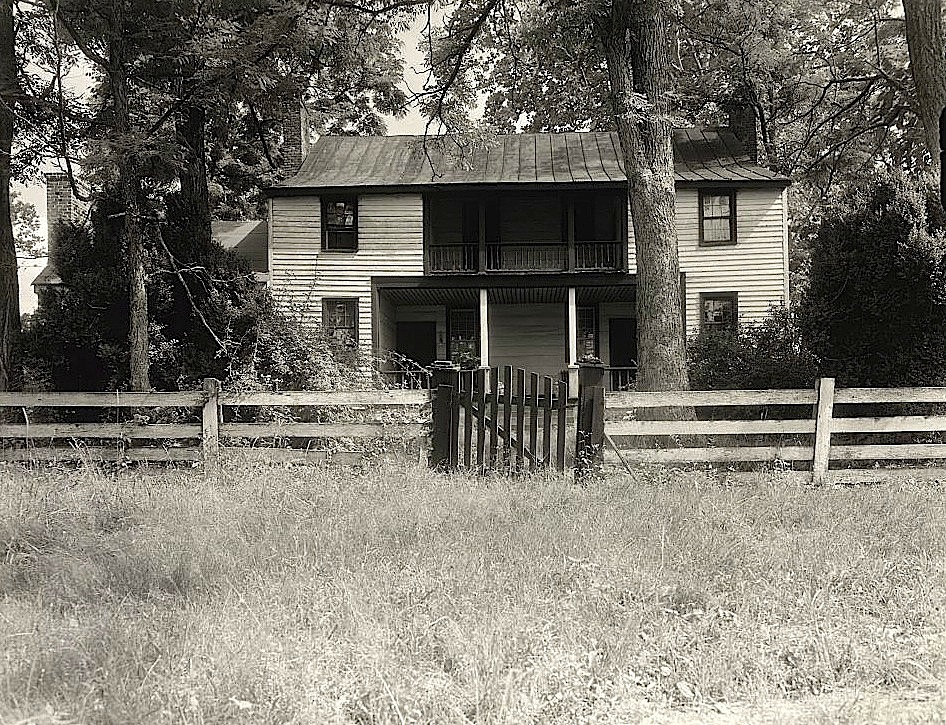
“Lafayette Hill,” Zion Road, Albemarle County, Virginia, 1933, by Frances Benjamin Johnston, via Library of Congress Prints and Photographs Division.

Unfortunately, I was not able to find out anything about this interesting-looking house.

The Sunday porch: Richmond, Va.

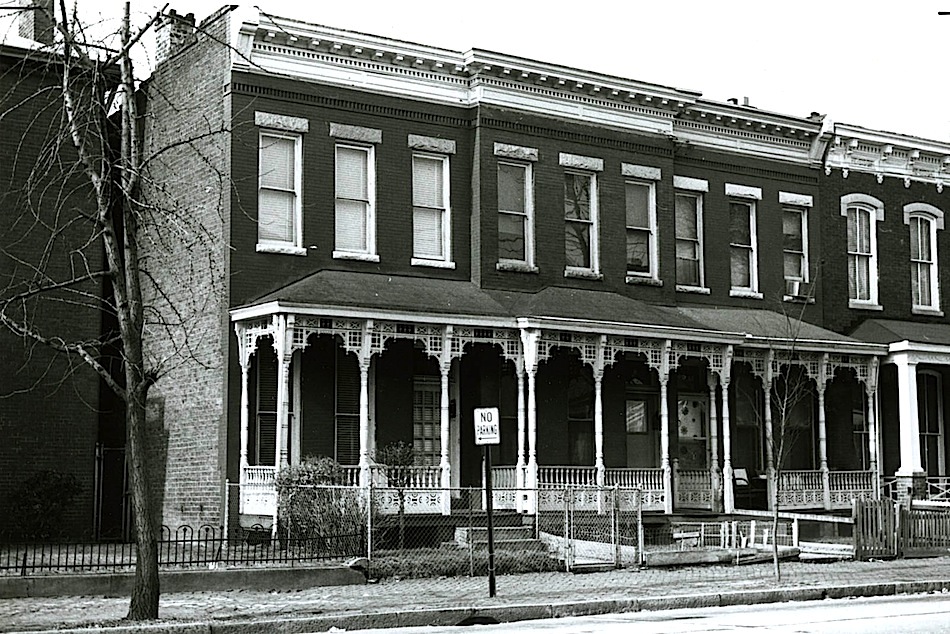
West Clay Street rowhouses, Richmond, Virginia, ca. 1978, by John G. Zehmer, via VCU (Virginia Commonwealth University) Libraries Commons on flickr.

These three late Italianate houses with Eastlake-style ornamental woodwork were built between 1885 and 1890 on the former formal garden of the 1832 Addolph Dill house* —  a corner of which can just be seen on the left side of the picture.

Clay Street is part of the Jackson Ward Historic District. These houses still stand and still have the same beautiful woodwork.  The very little street tree shown above on the right now shades more than all the space shown in the photo.


*Until 2016, it was the Richmond Black History Museum.