The Sunday porch: Oxford, Ohio

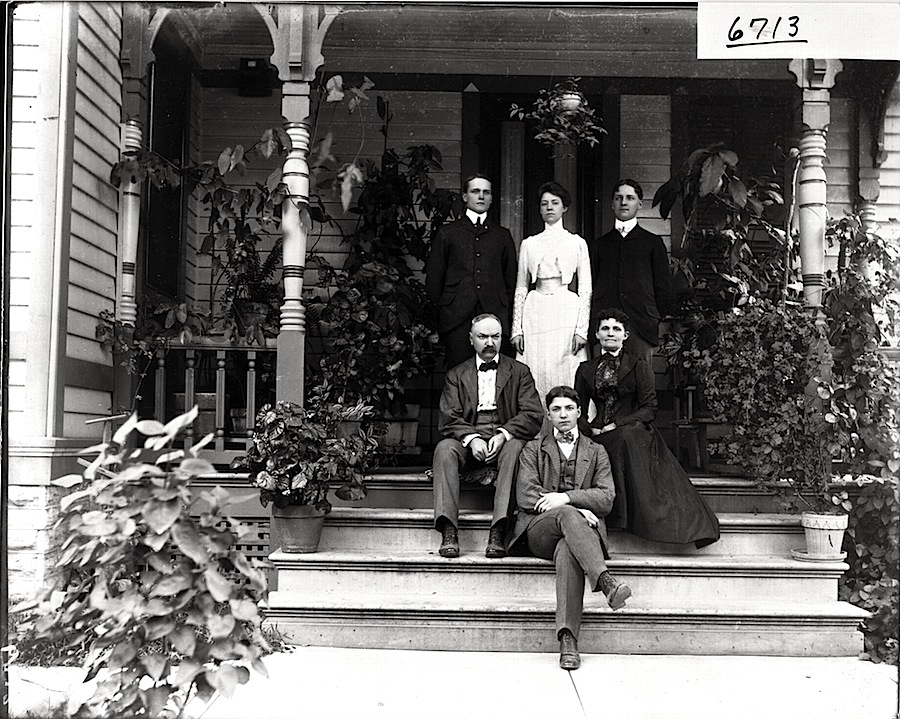
The Flower family, probably in Ohio, ca. 1905, via Miami University Libraries Commons on flickr“Flower family on porch, ca. 1905,” by Frank R. Snyder, via Miami University Libraries Commons on flickr.

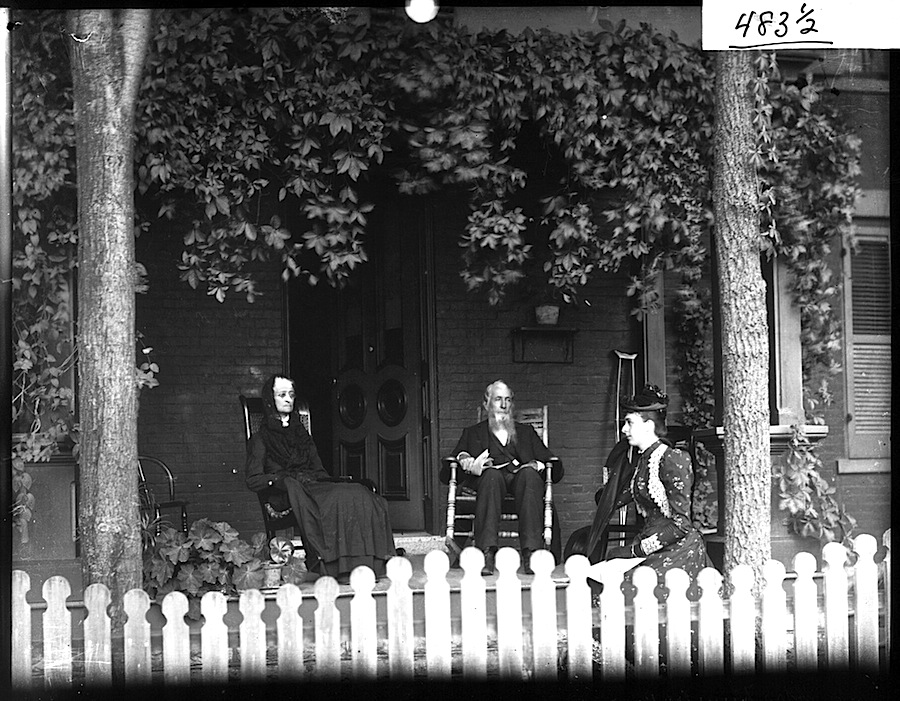
Impressive porch foliage . . . and in the photo below, by the same photographer.

Mrs. C.E. Kumler family on front porch, by Frank Snyder, via Miami University Libraries Commons on flickr“Mrs. C. E. Kumler family on front porch, not dated,” also by Frank R. Snyder, via Miami University Libraries Commons on flickr.

Snyder was a successful photographer working in Oxford, Ohio, in the early 20th century.  After his death in 1958, his family donated his archive of 4,000 negatives to Miami University.

Garden Bloggers’ Foliage Follow Up is the 16th of every month. Check out more beautiful leaves at Digging.

The Sunday porch: view finder

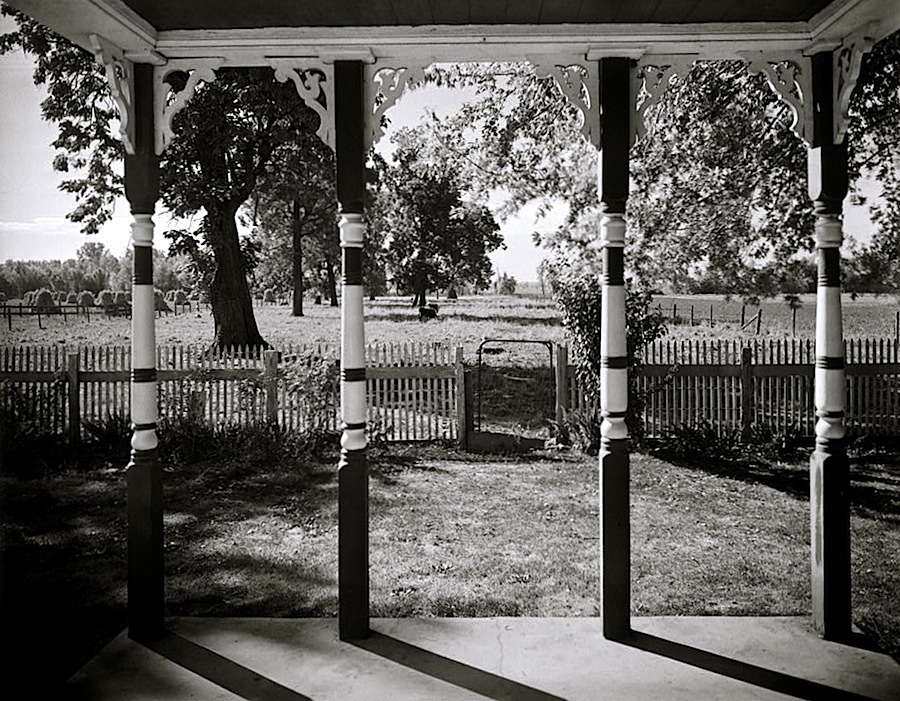
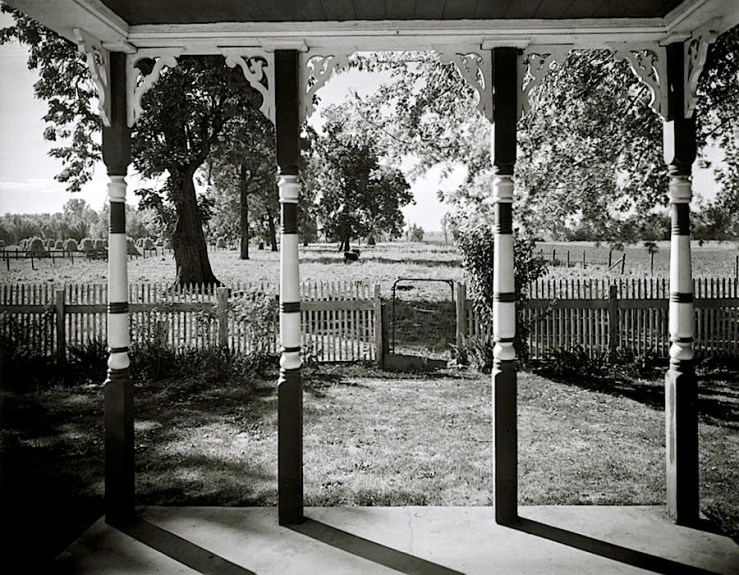
094498pvAbove: View from the porch of the Flanders Callaway House, Warren County, Missouri, 1938, by Charles or Alexander Piaget, working with Charles van Ravenswaay (later incorporated into a 1985 HABS).*

All photos here via Library of Congress Prints and Photographs Division.

This slideshow requires JavaScript.

Above: “View from White House porch [looking north to Lafayette Park],” Washington, D.C., 1920, from National Photo Company Collection. President and Mrs. Wilson introduced sheep to the White House lawn. The wool went to the Red Cross.
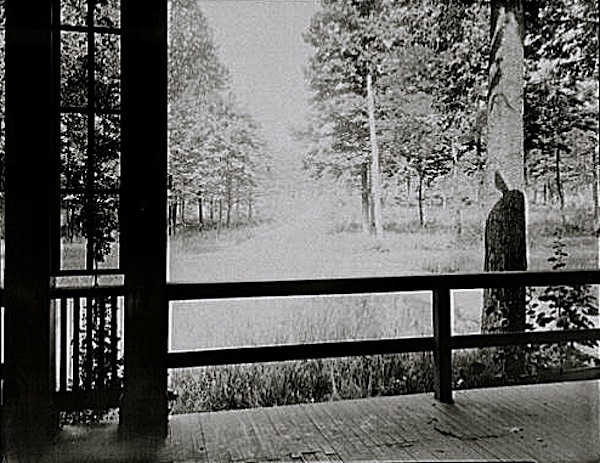
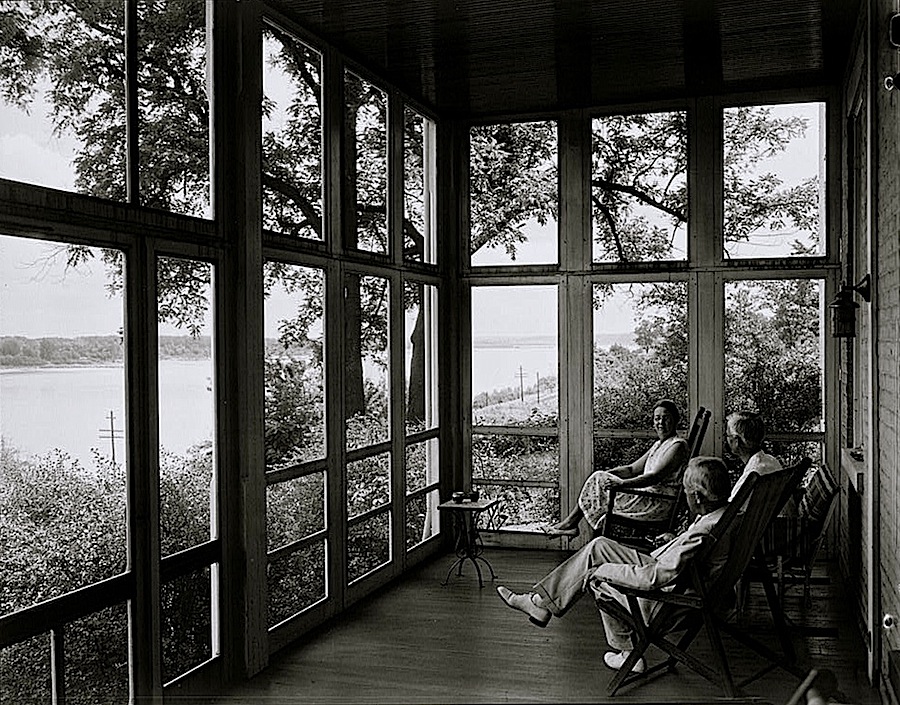
The Sunday porch: views, via Library of CongressAbove: View from porch at Shady Rest Sanatorium, White Heath, Illinois, ca. 1920 – 1950, by Theodor Horydczak.

This slideshow requires JavaScript.

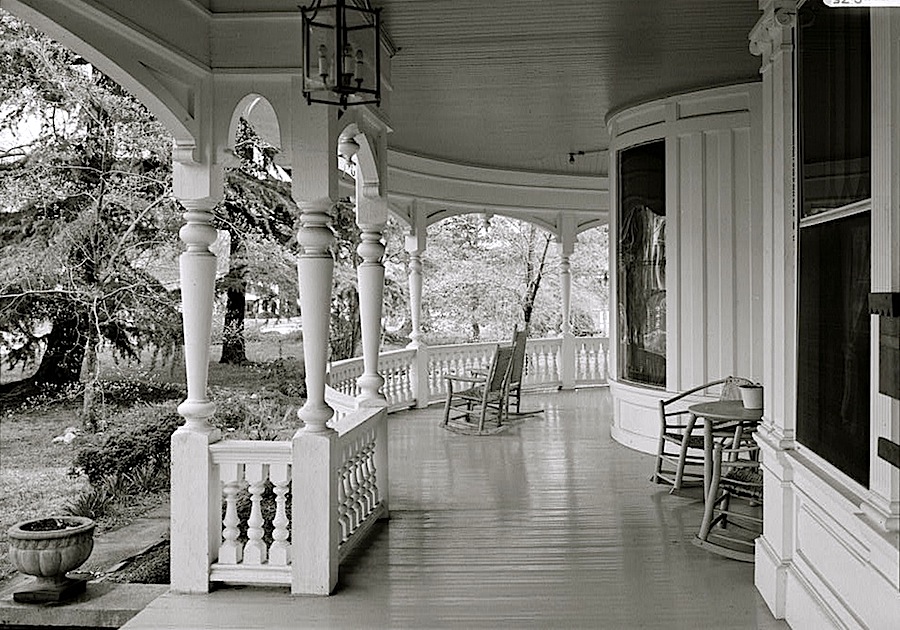
Above: Looking north from the porch of the Kolb-Pou-Newton House [or Boxwood], Madison, Georgia, June 1936, by L. D. Andrew for HABS.

This slideshow requires JavaScript.

Above: View of garden from the porch – Oakland Plantation, Natchitoches Parish, Louisiana, ca. 1988, by HABS.
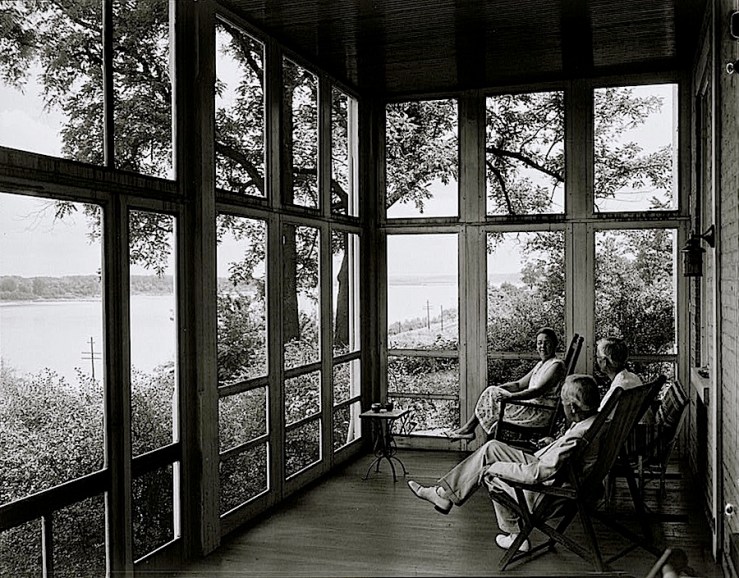
095350pvAbove: Mr. and Mrs. J. H. Dickbrader and Mr. Arcularius on the porch of the Dickbrader House, Franklin County, Missouri, by  HABS.
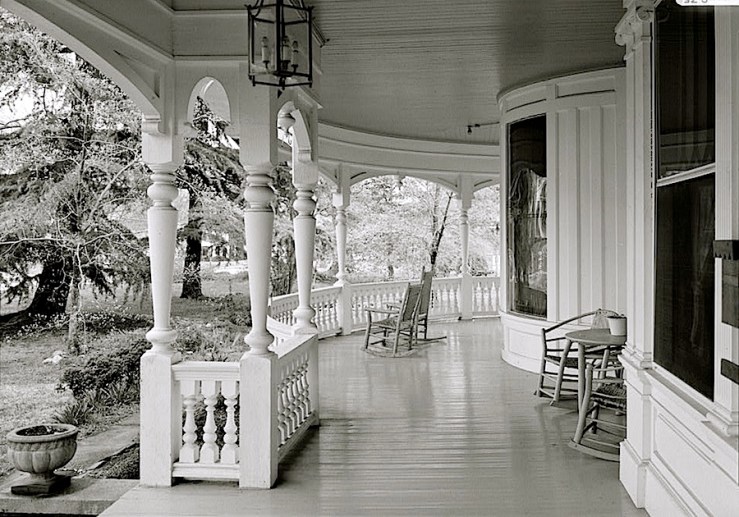
150293pvAbove: John Calvin Owings House, Laurens, South Carolina, by HABS.
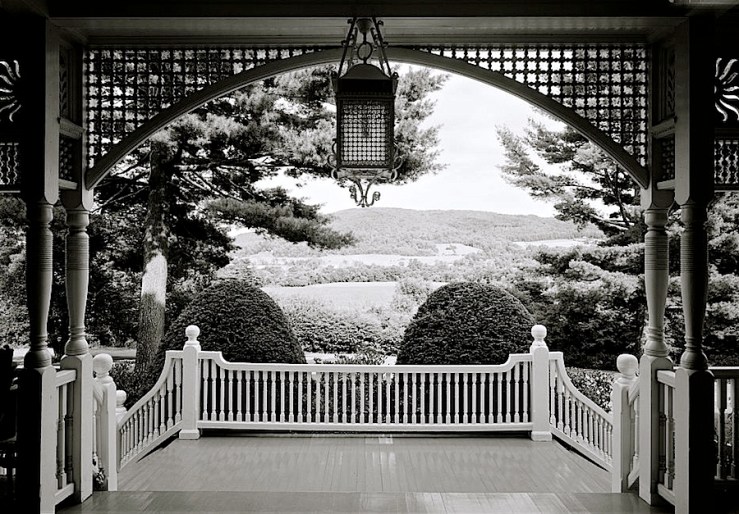
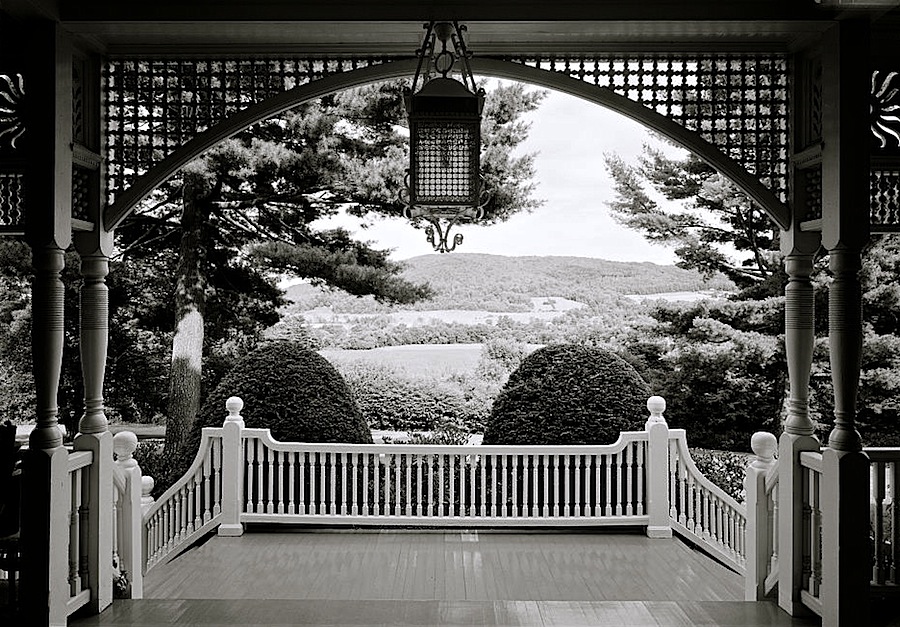
The Sunday porch: views, via Library of CongressAbove: View from the veranda of the Billings Farm and Museum to Blake Hill, Marsh-Billings-Rockefeller National Historical Park, Woodstock, Vermont, 2001, by David W. Haas for HABS.
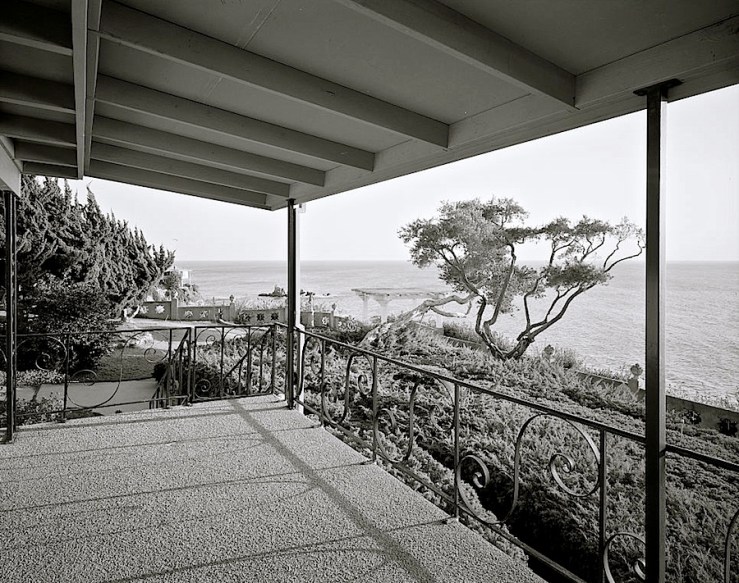
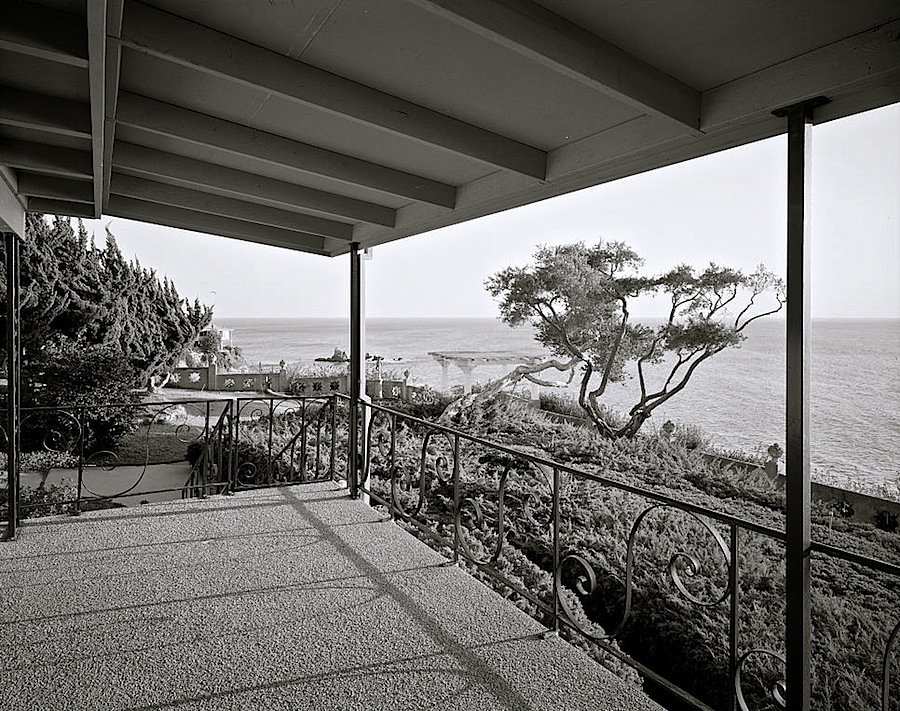
014310pvAbove: Porch of Smithcliffs House, North Coast Highway, Laguna Beach, California, by HABS.
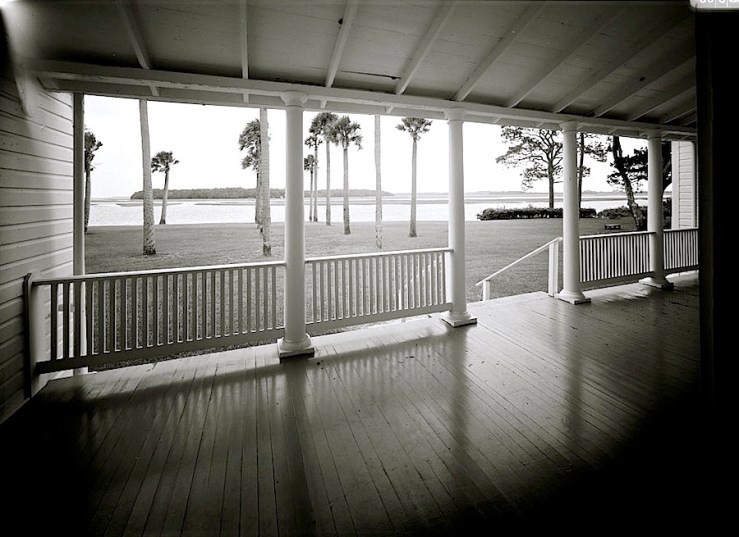
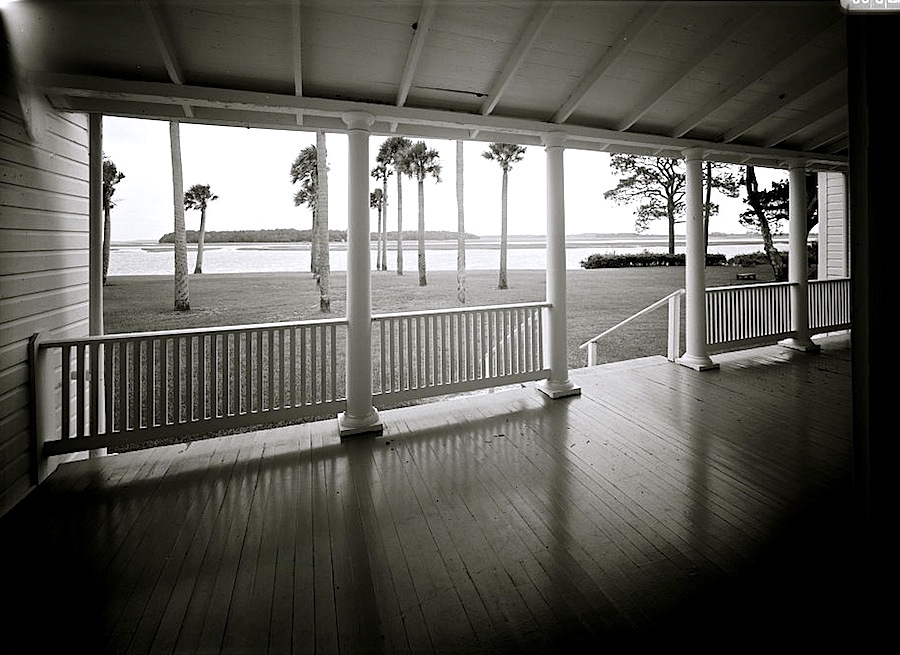
207863pvAbove: “View from north porch, looking northeast toward Fort George River – Kingsley Plantation House,” Jacksonville, Florida, 1005, by Jack Boucher for HABS.

This slideshow requires JavaScript.

Above: “View from north porch looking south into Back Hall, with Reception Hall south door open [and closed] – Homewood (cropped slightly by me),” Baltimore, Maryland, 2005, by James W. Rosenthal for HABS.


*Historic American Building Survey

 

The Sunday porch: Wellington

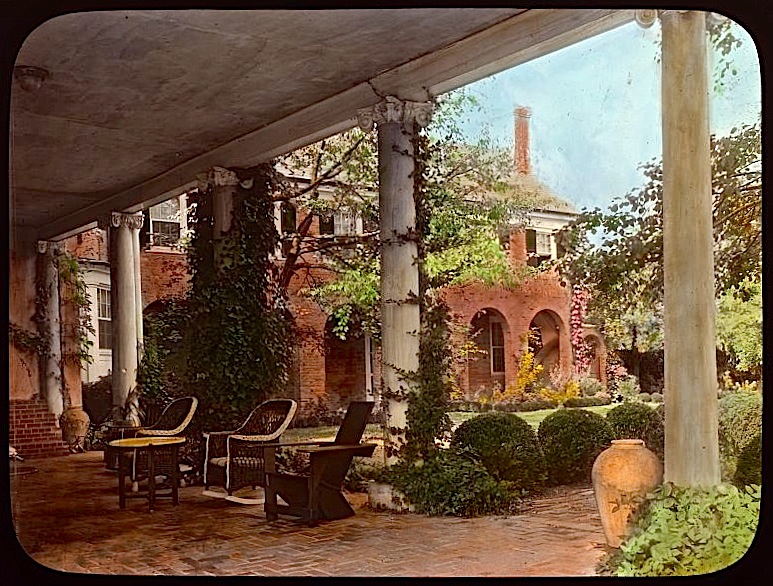
The Sunday porch/enclos*ure: Wellington, now River Farm, about 1931, Alexandria, VA, via Library of Congress.“Wellington,” near Alexandria, Virginia, 1931, hand-colored glass lantern slide by Frances Benjamin Johnston, via Library of Congress Prints and Photographs Division.

The white columned, ground-level porch wrapped around two and a half sides of one wing of the house.  I like the black and white wicker rockers and those terracotta jars.

Today, the house (built in 1757) and its surrounding 25 acres are the headquarters of the American Horticultural Society (AHS) and are called River Farm.

George Washington originally gave the property that name after he purchased it in 1760.  It was then 1,800 acres in size and became one of his five farms around Mount Vernon.

During the 1800s, the property, re-named Wellington, passed through several owners’ hands, becoming progressively smaller in size.  It was only 280 acres in 1919, when it was purchased by local businessman Malcolm Matheson, who restored the house and gardens.

In 1971, when Matheson wanted to retire to Florida, the house and (then) 27 acres were bought by the AHS.  The funds for the purchase had been donated by board member Enid A. Haupt — partly to help the AHS, but also to keep the last of George Washington’s old farm out of the hands of the Soviet Embassy, which had wanted to buy it as a summer dacha for its employees.

Today, River Farm is open to the public  weekdays, from 9:00 a.m. to 5:00 p.m. From April through September, it is also open on Saturdays, from 9 am to 1 pm. Admission is free.

And, of course, it can be rented for weddings and events.

A gardyn saw I, ful of blosmy bowes
Upon a ryver, in a grene mede,
There as swetnesse everemore inow is,
With floures whyte, blewe, yelwe, and rede

— Geoffrey Chaucer, from “The Parlement of Foulys

The Sunday porch: the begonia

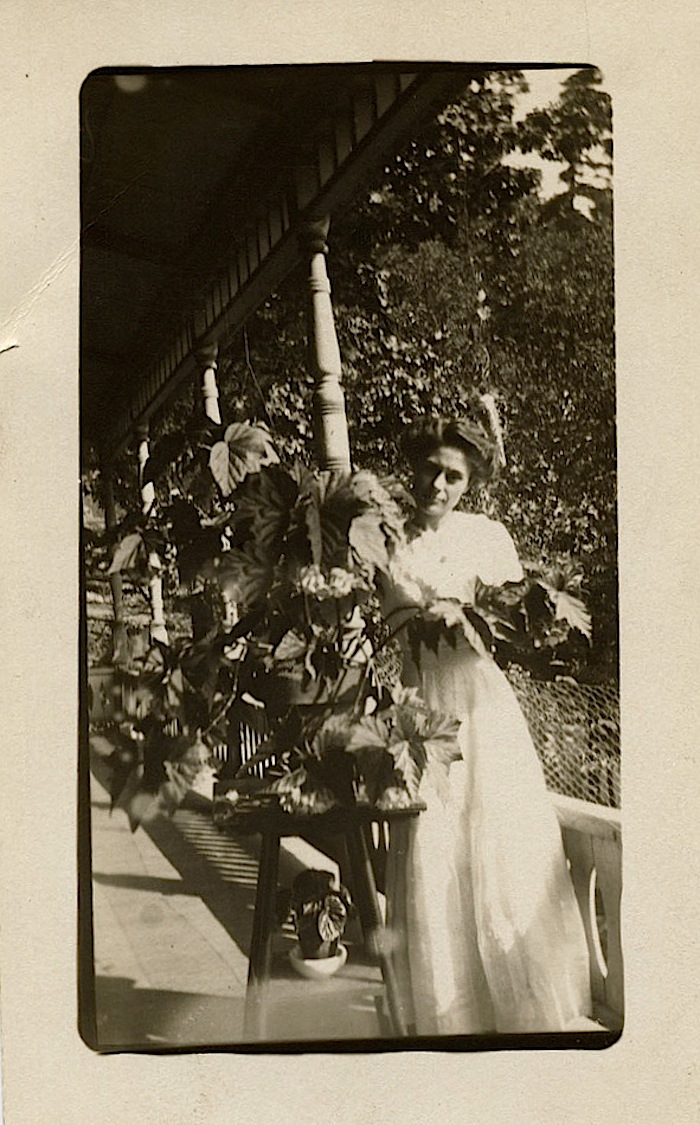
The Sunday porch/enclos*ure: woman with begonia, via Texas State Archives on flickr“Woman standing beside potted begonias on porch, message from Rosa to Alice on back.” Via the Samuel Bell Maxey Collection of the Texas State Archives Commons on flickr.

Beautiful plant. Conditions must have been ideal on the porch.  Or  was it recently evicted from the living room for taking up too much space?

Unfortunately, Rosa’s message to Alice is not revealed. A thank you note for the original cuttings?  Or just a little gardening conversation/showing off?

I’m also curious about whether the chicken wire all along the front railings was supporting vining plants or keeping animals (or even chickens) back.

The Archives’ photostream gives no information on the photographer, location, or date for this image.  The Samuel Bell Maxey Collection includes the late 19th and early 20th century photographs of the Maxey family of Paris, (northeastern) Texas.

The Sunday porch: dogtrot in Texas

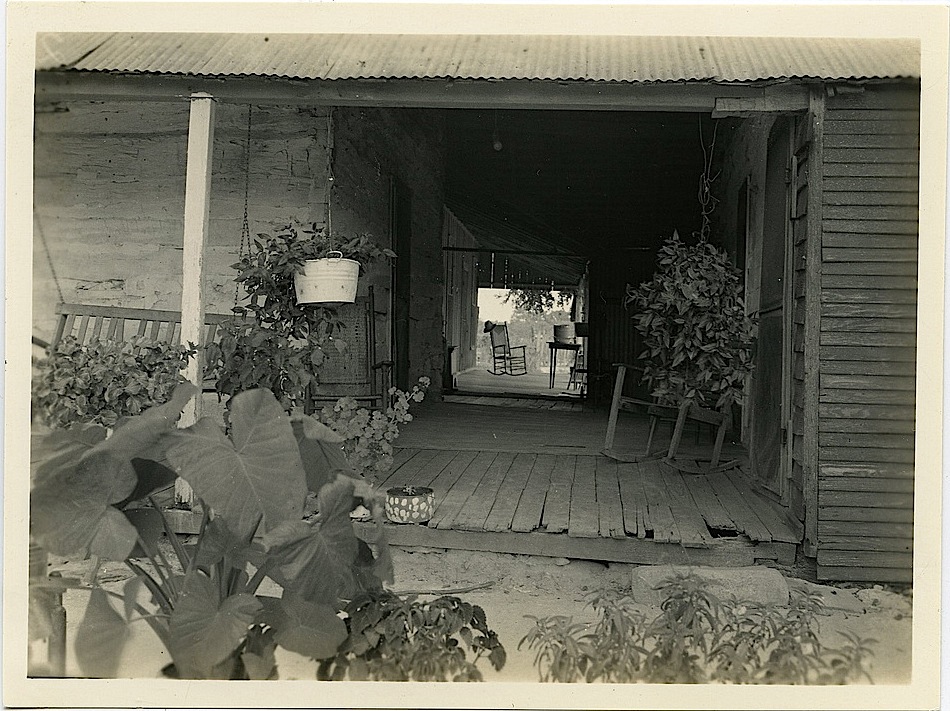
The Sunday porch/enclos*ure: dogtrot in Texas, 1935, probably by Fanny Ratchford, via Texas State Archives Commons on flickr“Unidentified Dogtrot* House” in Texas (exact location unknown), 1935, probably** taken by Fanny Ratchford, via Texas State Archives Commons on flickr.

Fannie Elizabeth Ratchford was a librarian who worked in the rare books collection of the University of Texas at Austin from 1919 to 1957.  During the 1930s and 40s, she also began to put together a photographic and data survey of 19th c.  Texas architecture.

Unfortunately, she ran out of time and funding before the planned book could be assembled and published.  Her images, correspondence, questionnaires, and lists were donated to the Texas State Archives.  Only the photos are available online, but they are wonderful.  I’ll post some more in the coming weeks.

They sang Green, Green Grass of Home.
They sang Ne Me Quitte Pas beneath mesquite.

Ange Mlinko, from “Escape Architecture


*More about dogtrot houses in Texas here.

**According to an email from the Archives:  “Although the majority of the images within our Fannie Ratchford photograph collection were taken by Ratchford, she also acquired photographs from the Historic American Building Survey [HABS] as well as other photographers.”