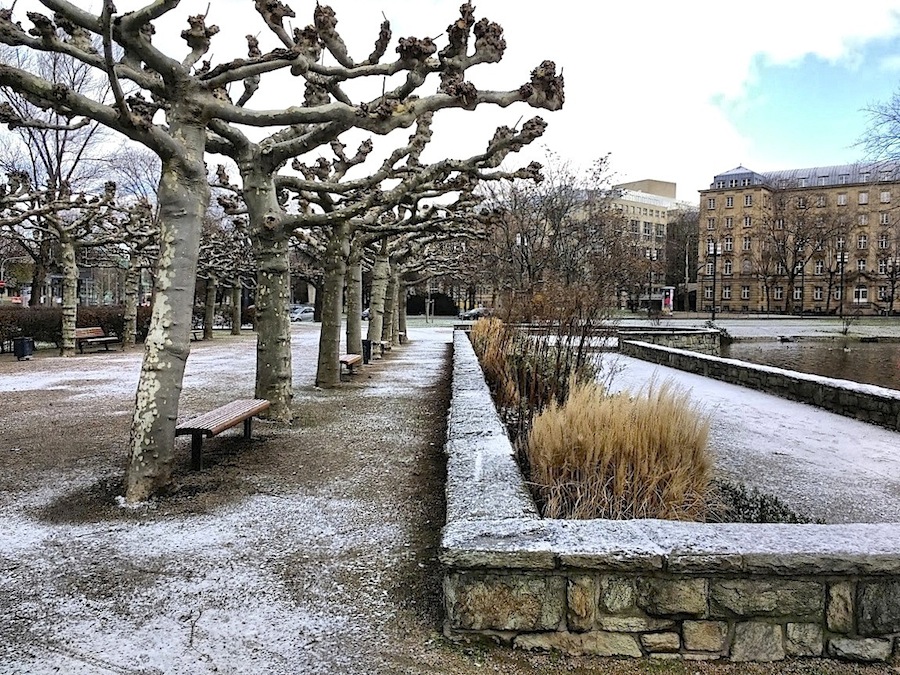
 Ludwig Erhard Park, Frankfurt am Main, Germany, January 17, 2016.
Tag: pollarded trees
Marais garden, Paris
The “hidden garden” of the Musée des Archives Nationale in early September.
A quiet place to retreat to while exploring the popular Marais section of Paris.
I particularly liked the row of wire grid columns just inside the entrance from Rue des Quatre-Fils. They enclosed upright pyracantha bushes and were underplanted with fountain grass.
And in Lyon
During three days in Lyon, France, last month, we also found some wonderful pollarded London plane trees in the old city areas of Vieux Lyon and Presqu’île.

Along the Saone River in Presqu’ile.


On the other side of the Saone in the Presqu’ile area.

In Vieux Lyon, near the Saone River.

Also in Vieux Lyon, along the Saone River.


A square in Vieux Lyon.
Click on any thumbnail in the gallery to scroll through larger images.
Pollarded trees in Brussels
An advantage of visiting Brussels in the final days of winter is being able to see the bare knobby limbs and whippy branches of the city’s many pollarded trees. They “can look weird,” wrote Landscape Designer Clive West in The Guardian at this link. But, like him, I am fascinated by the particular aesthetic of their gnarly forms — ancient and modern at the same time.


It was near dusk, and I took these photos with my husband’s Blackberry.

This was the Nouveau Marche aux Grains just off Rue Antoine Dansaert.


but it was within walking distance of the Grand Place.

I don’t remember the street of this little square,


I loved these bright yellow tables.

In a square at Avenue de Stalingrad and Jagersstraat.
Click on any thumbnail in the gallery to scroll through larger images.
Where happiness dwells. . .
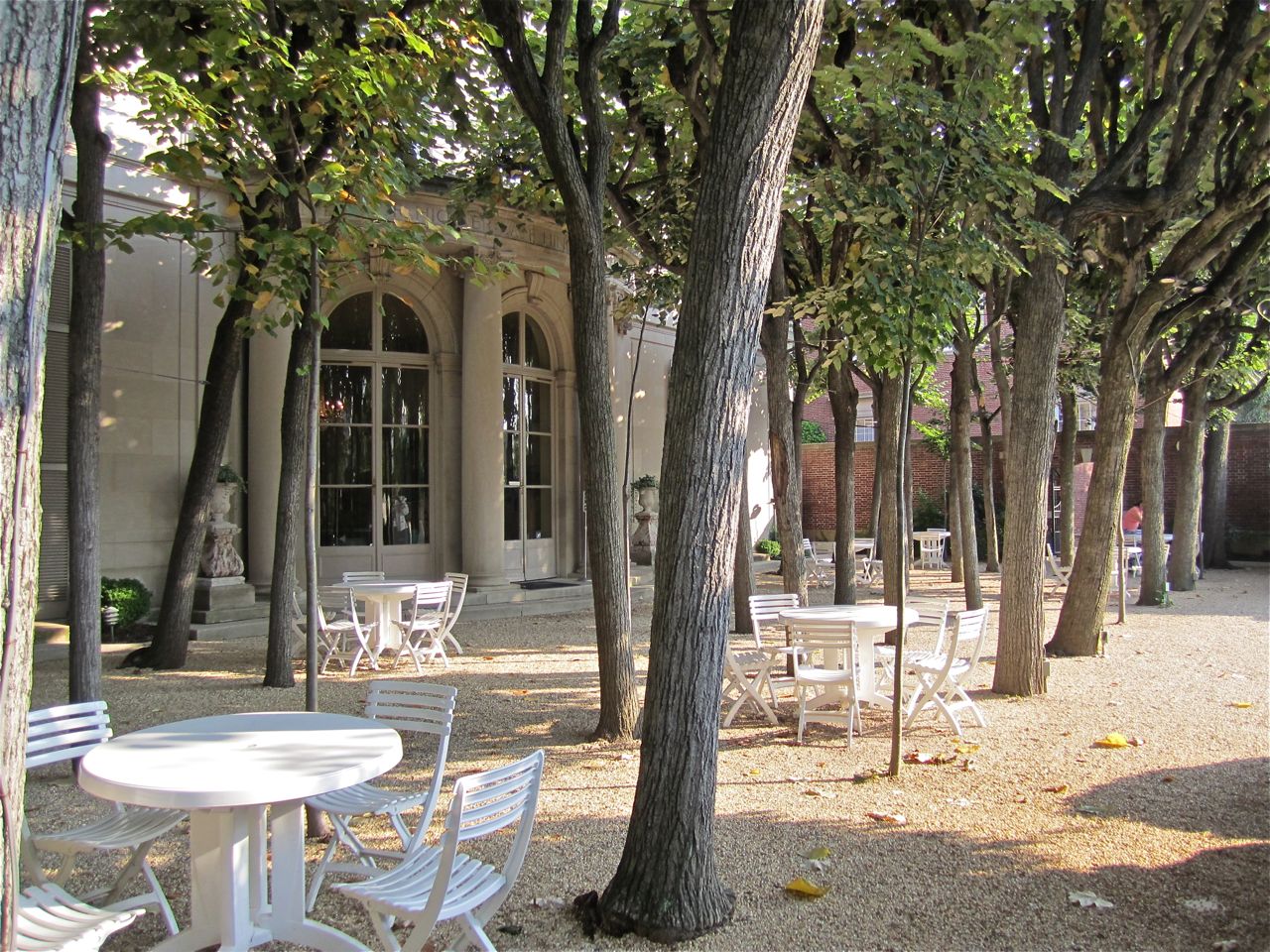
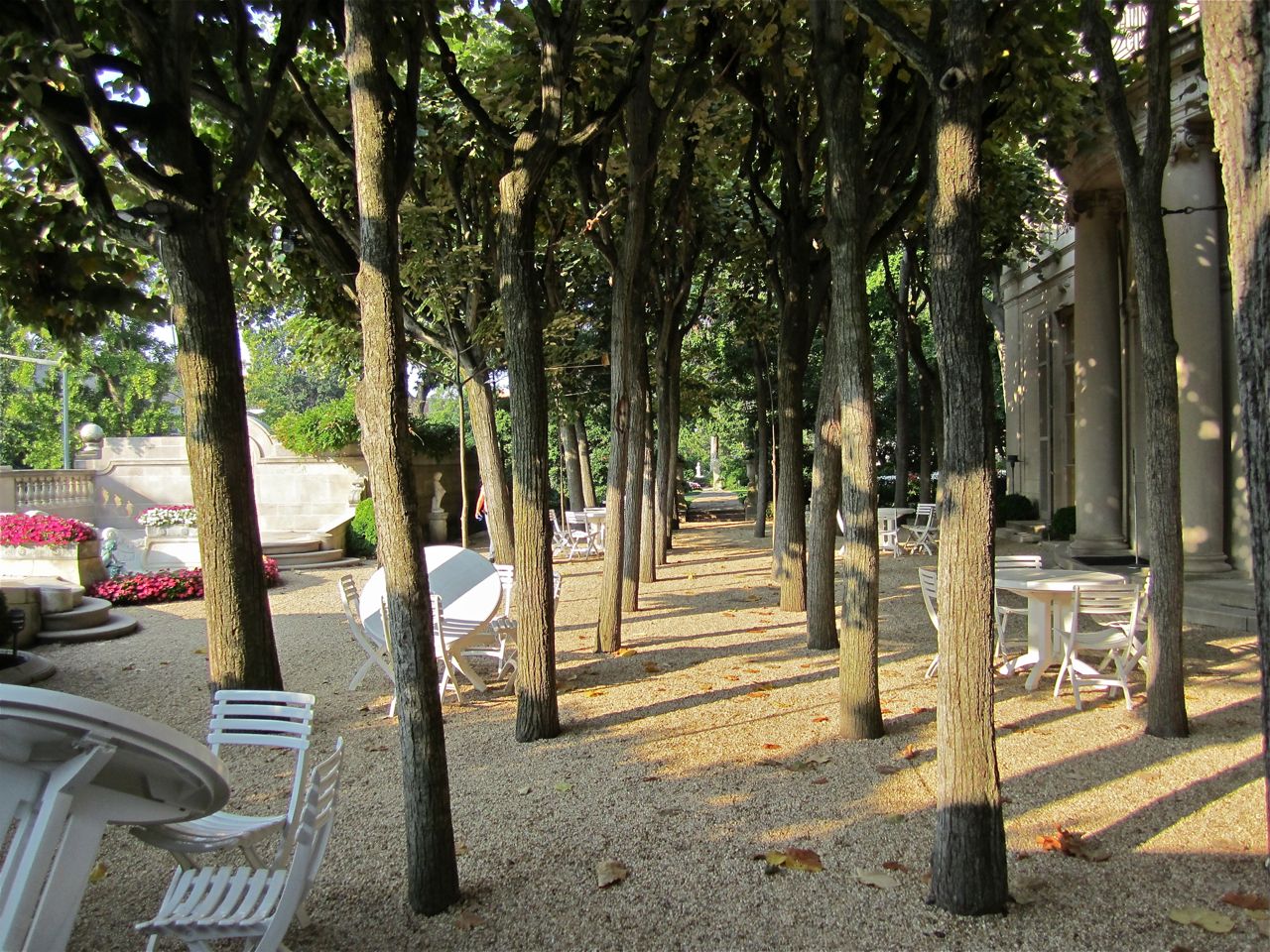
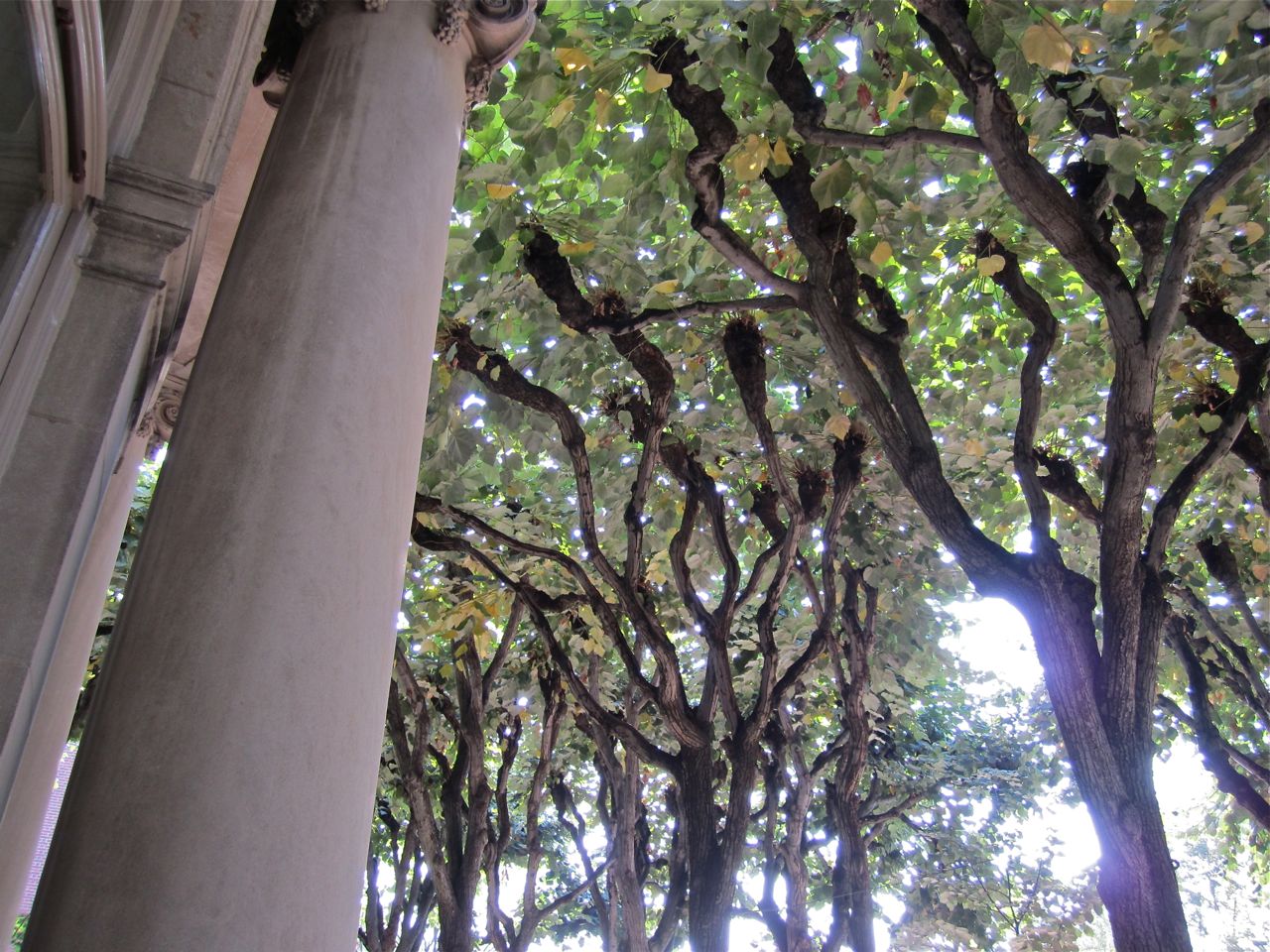
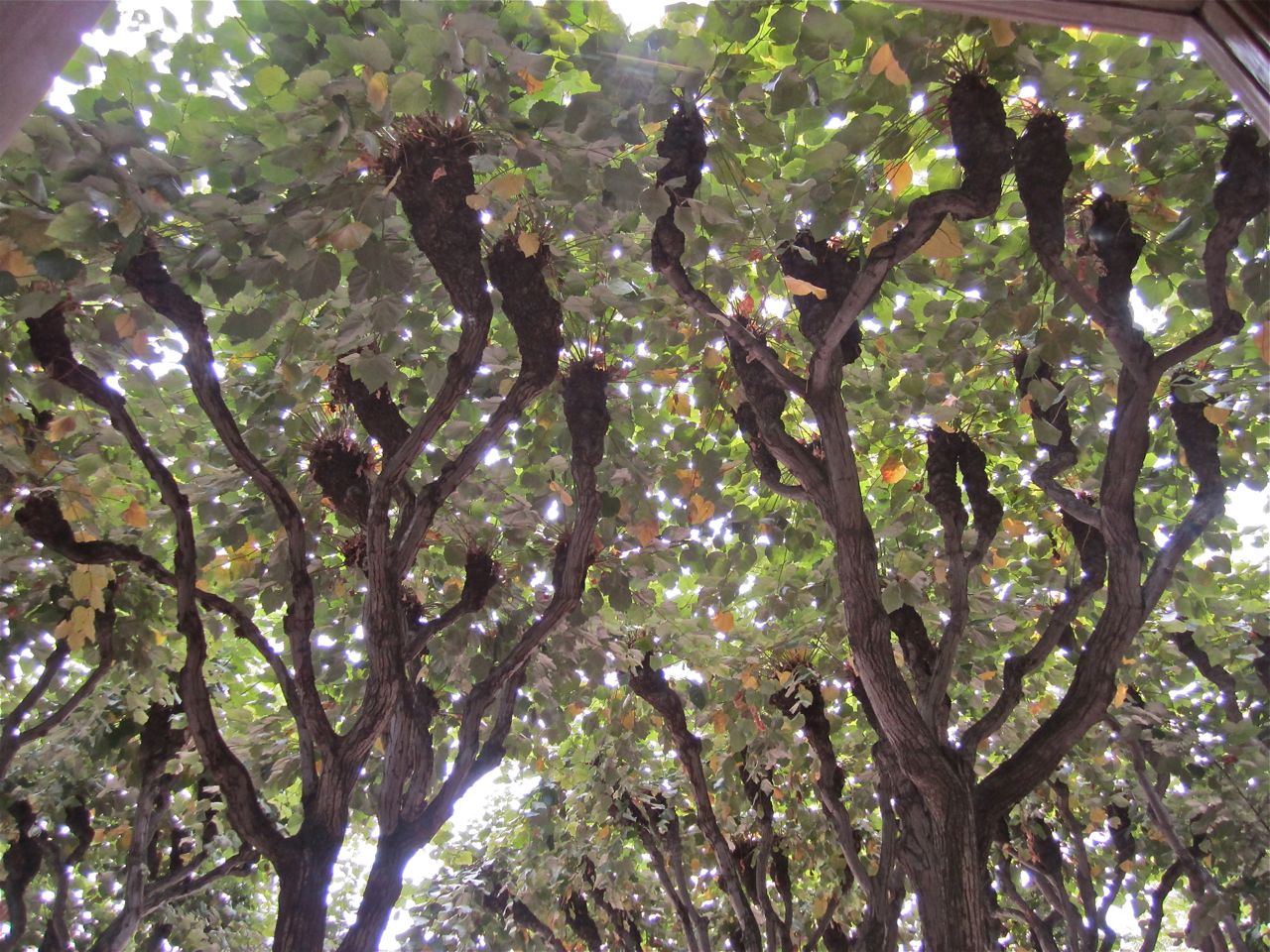
I love to see rows of pollarded trees in French squares and courtyards. The quality of light and shade they produce, the formal rhythm of their trunks, and the sculptural qualities of their branches and old “knuckles” have a timeless beauty for me.
Pollarded trees aren’t common in the United States, so I was surprised and delighted when I walked into the lovely, serene courtyard of Meridian House on Friday morning.
Meridian House in Northwest D.C. (just a stone’s throw from Meridian Hill Park on 16th Street) is home to the Meridian International Center. Since 1960, the Center’s mission has been to advance American public and cultural diplomacy efforts. It manages international visitor exchanges, holds cultural exhibitions, and hosts conferences and seminars.
I was able to see it — and the garden — last week, when I attended a seminar on Rwanda.
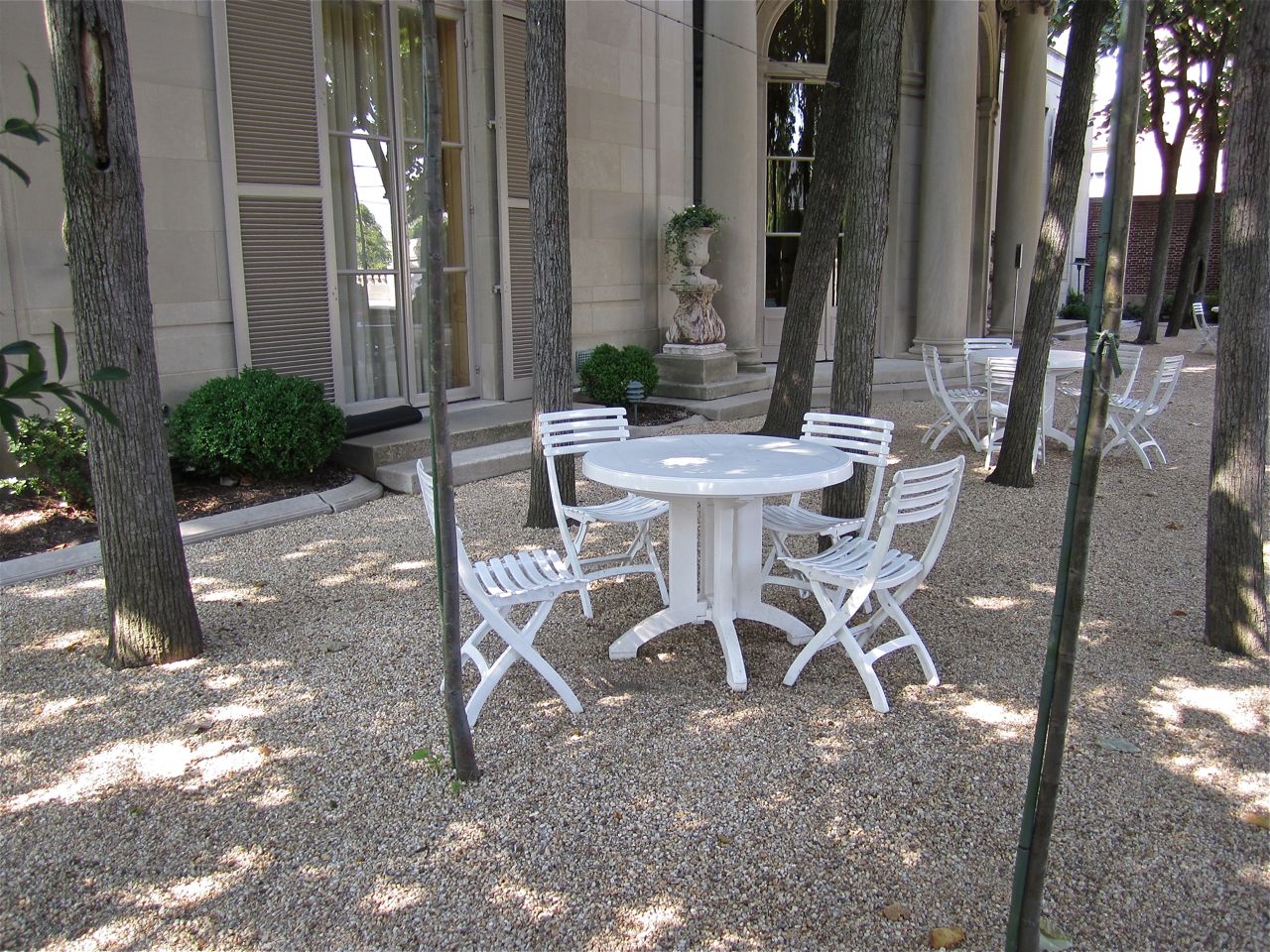
The house, built in 1920 as the home of diplomat Irwin Boyle Laughlin, was designed by architect John Russell Pope, who also designed the Jefferson Memorial, the National Gallery, and the National Archives. The style of the house, both inside and out, is neoclassical and French.
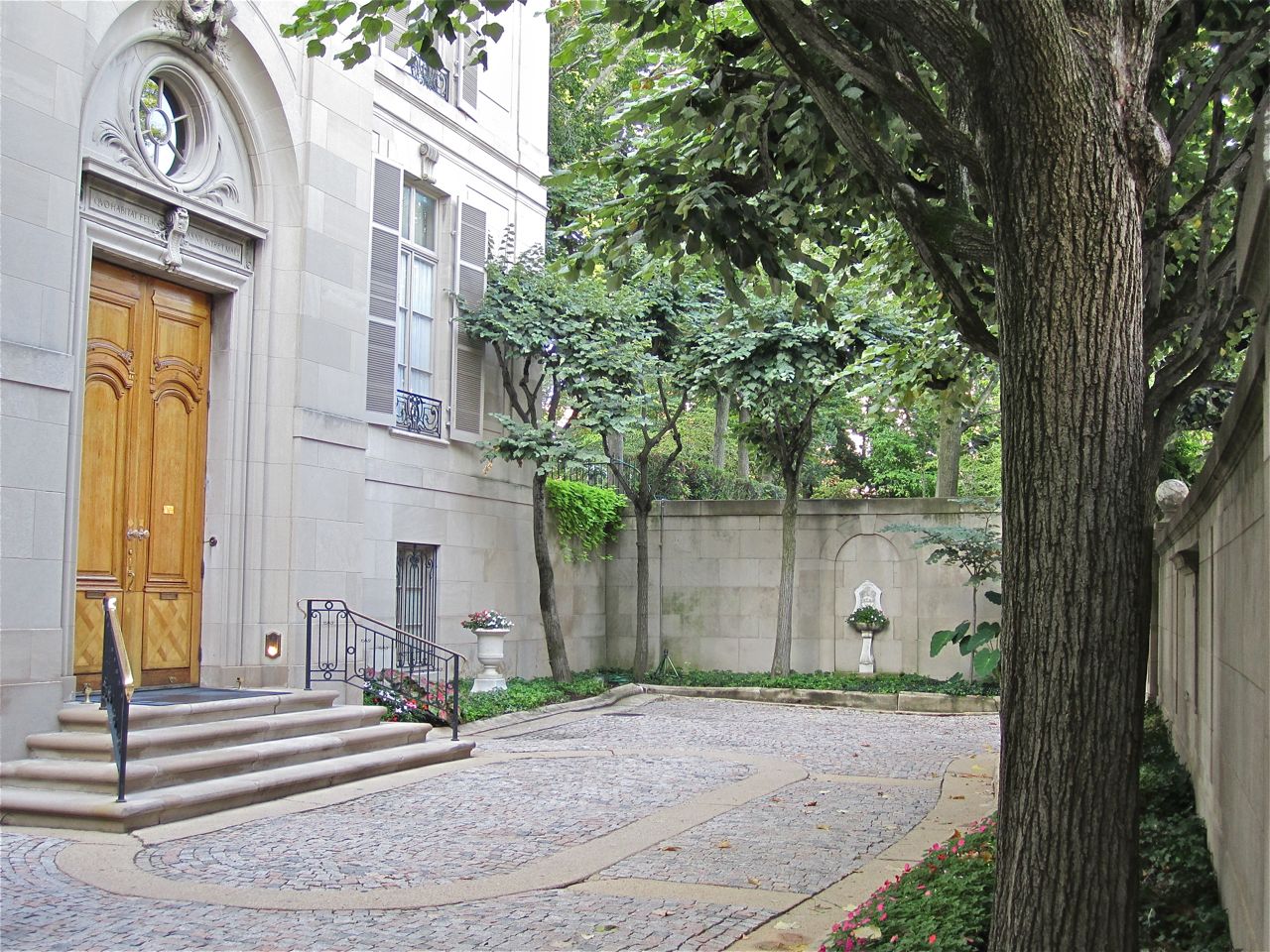
The rectangular courtyard just outside the house’s reception rooms is paved in pea gravel and canopied by 40 pollarded linden trees, which were imported from Europe when the house was built (more links on pollarding are here and here and here).
The side garden has a large lawn and planting beds bordered in pink and white impatiens. The design of both areas is largely original to the house.
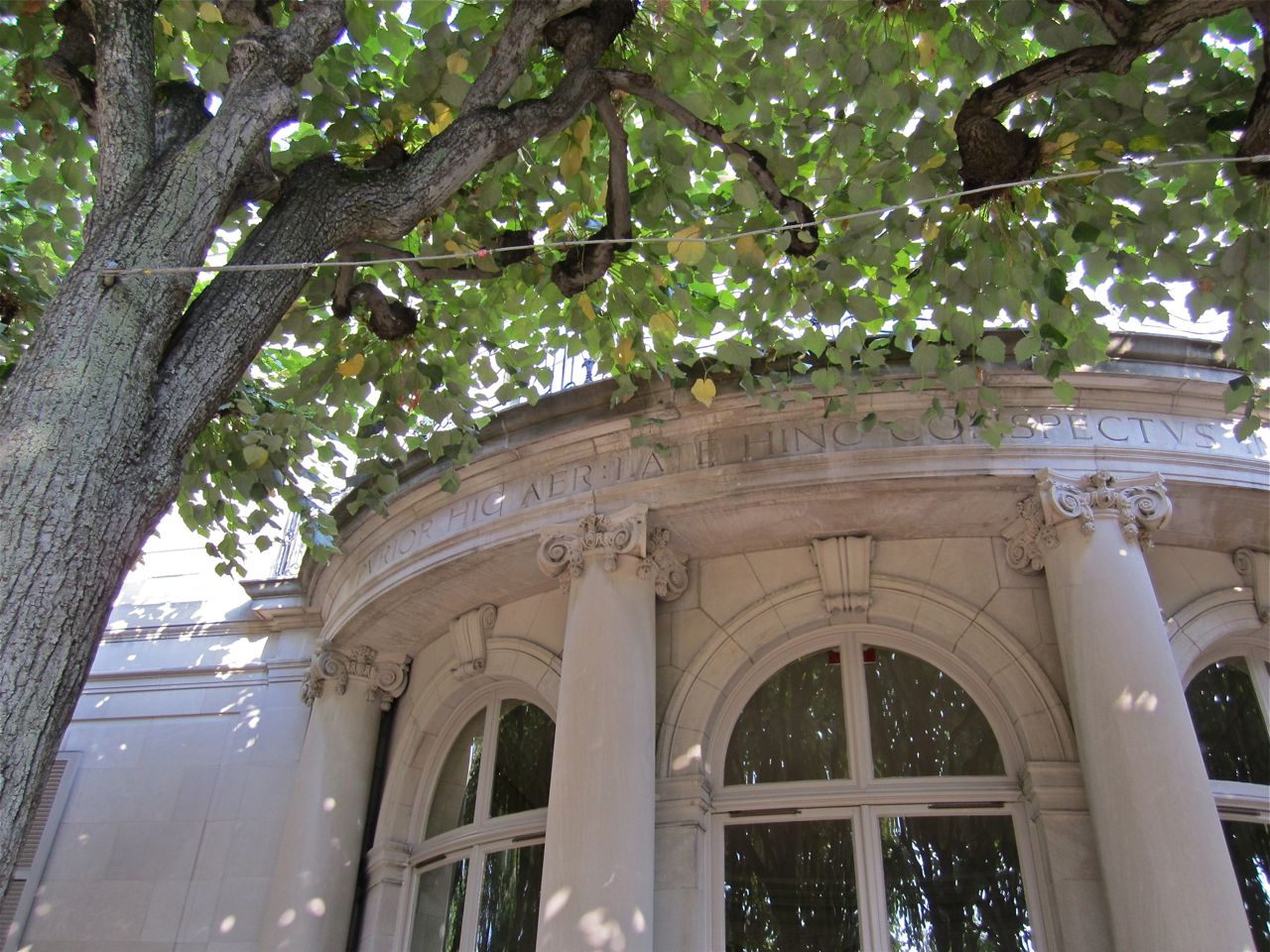
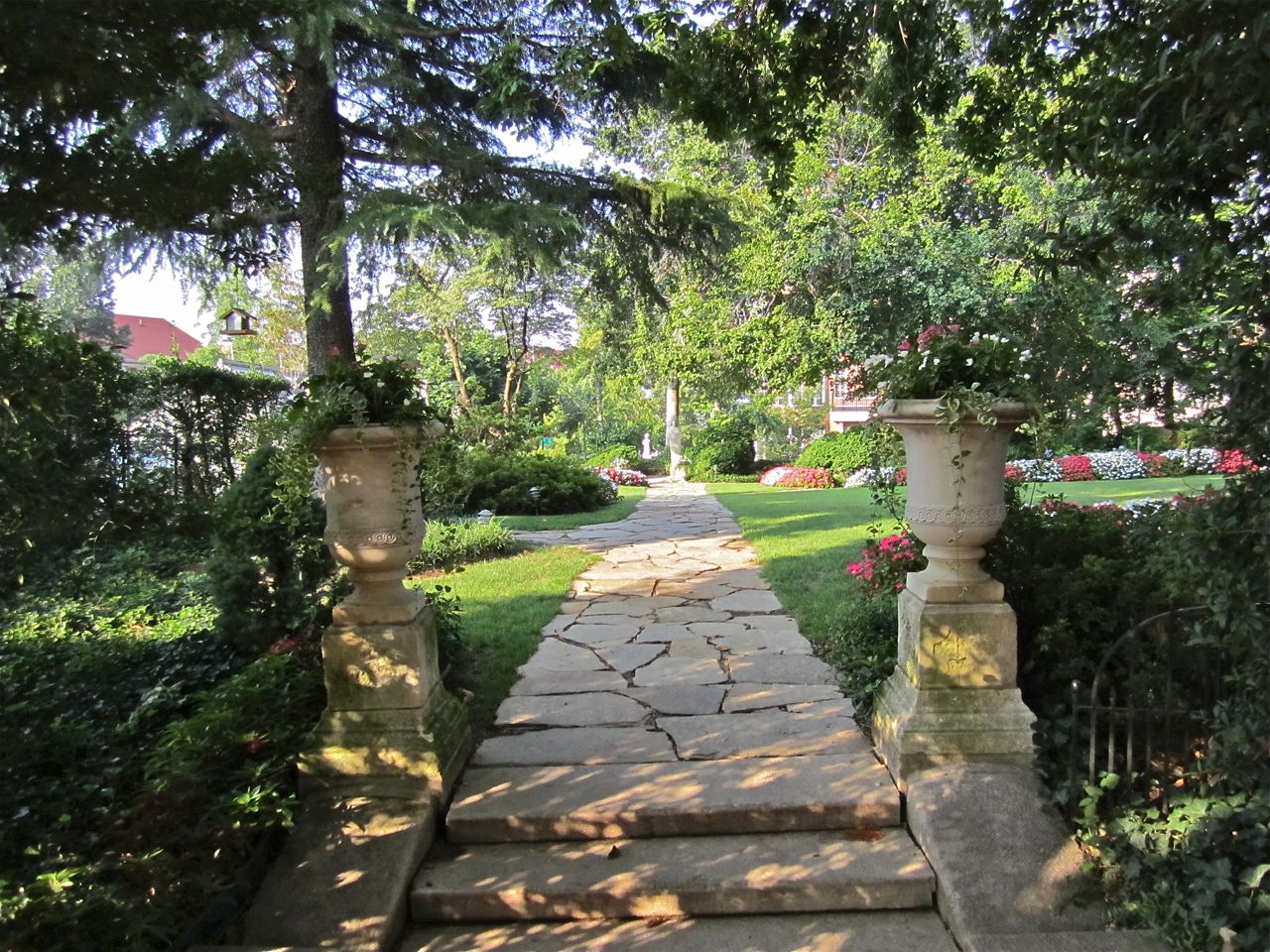
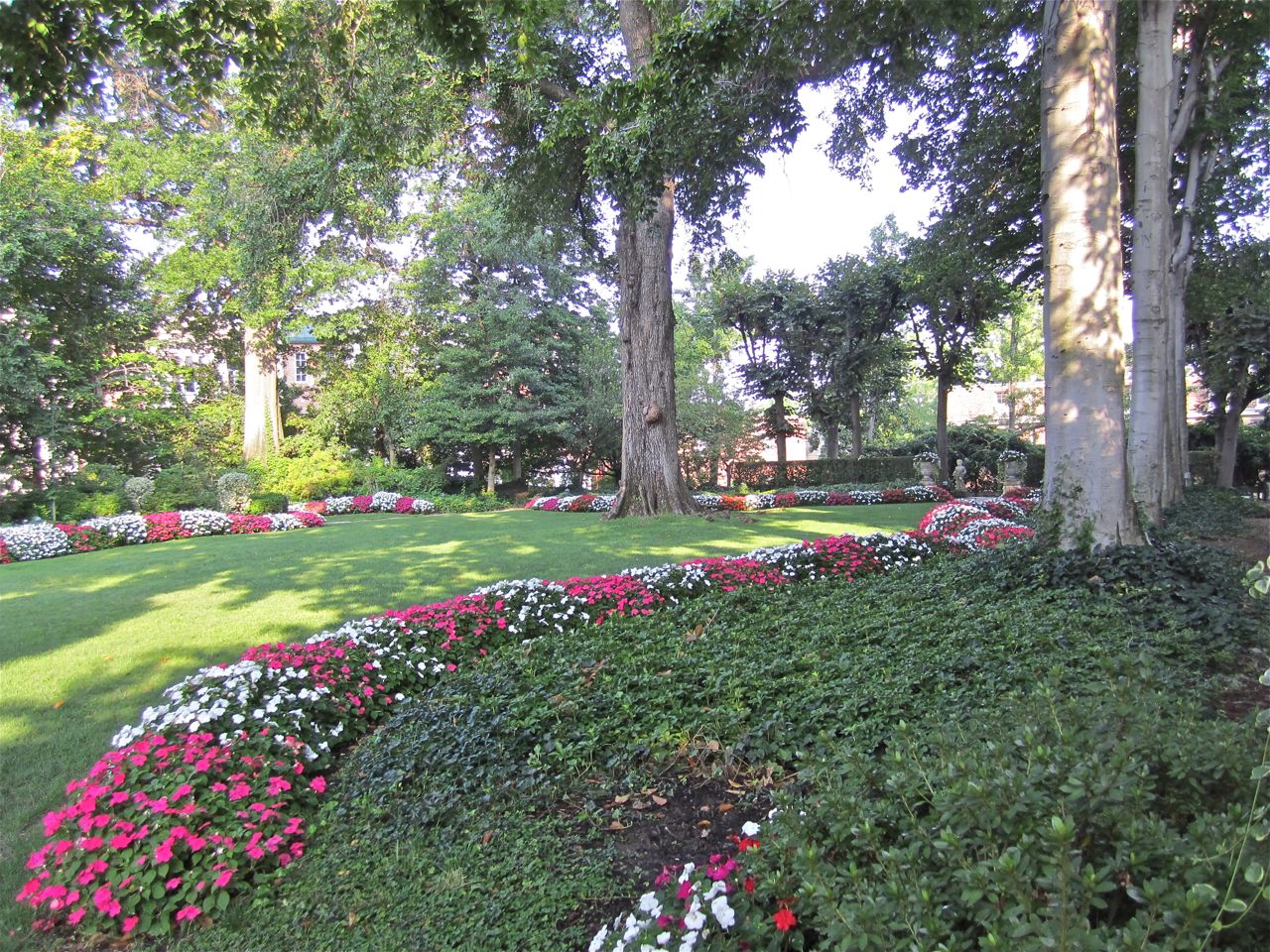

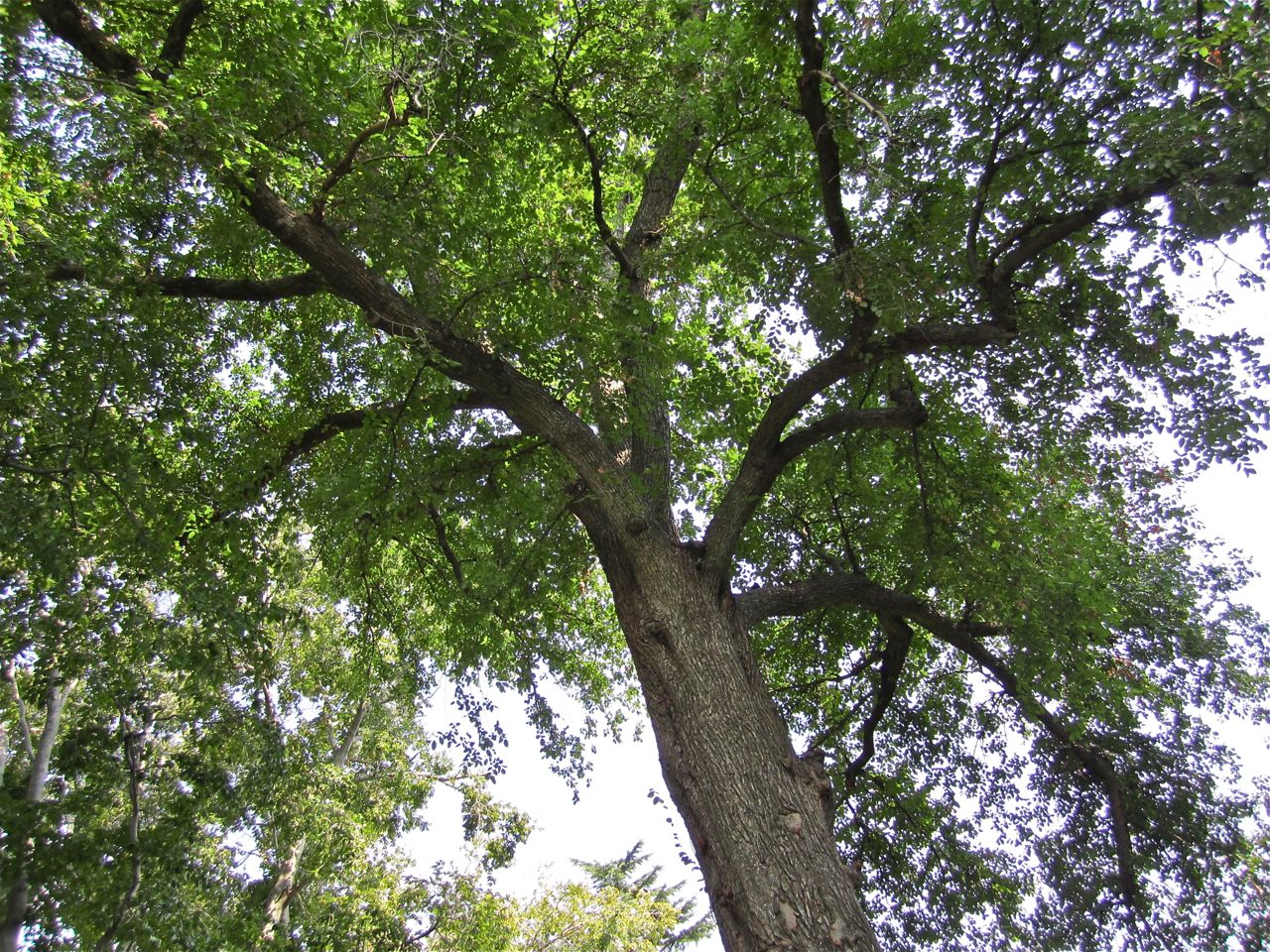
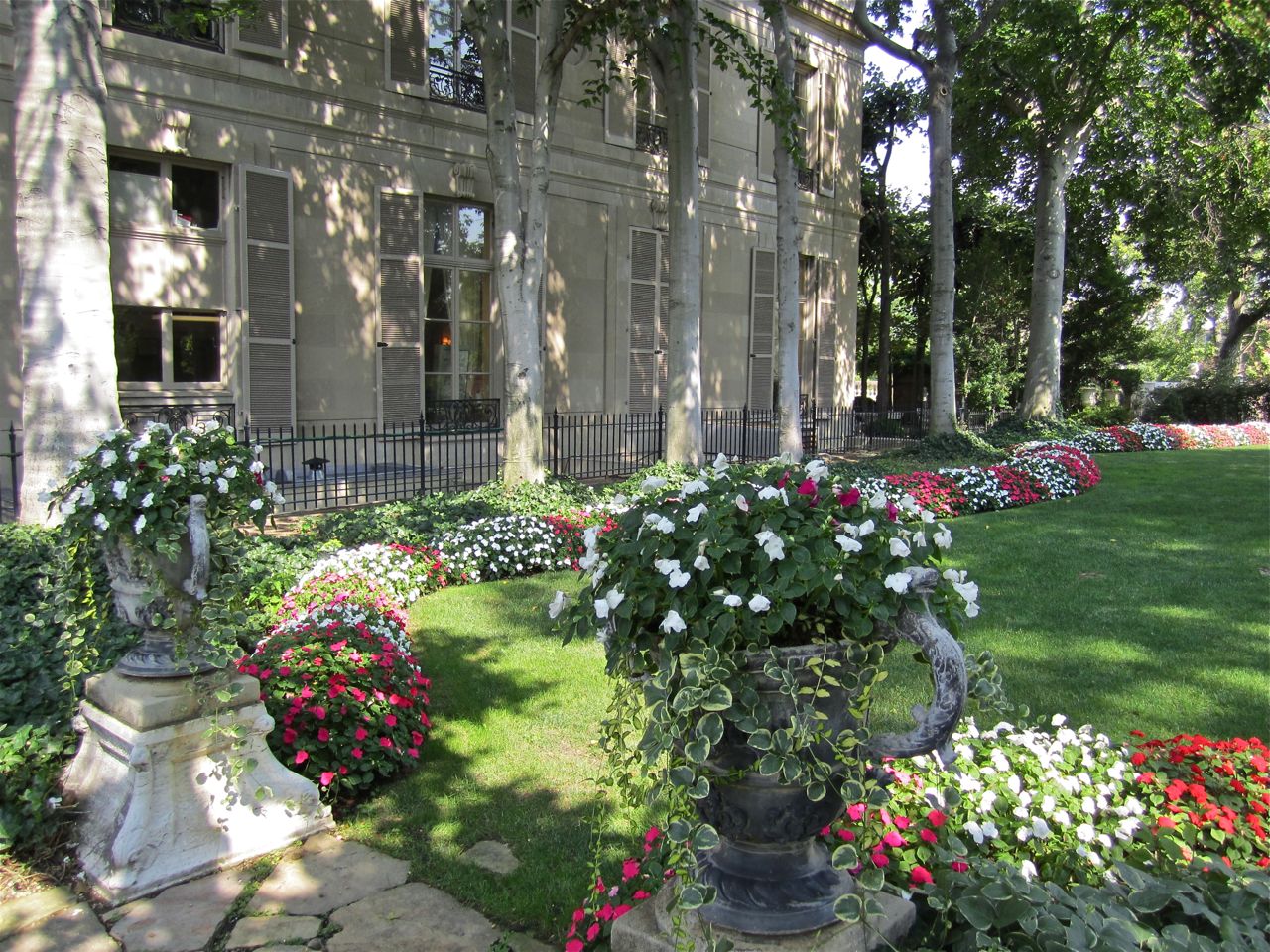
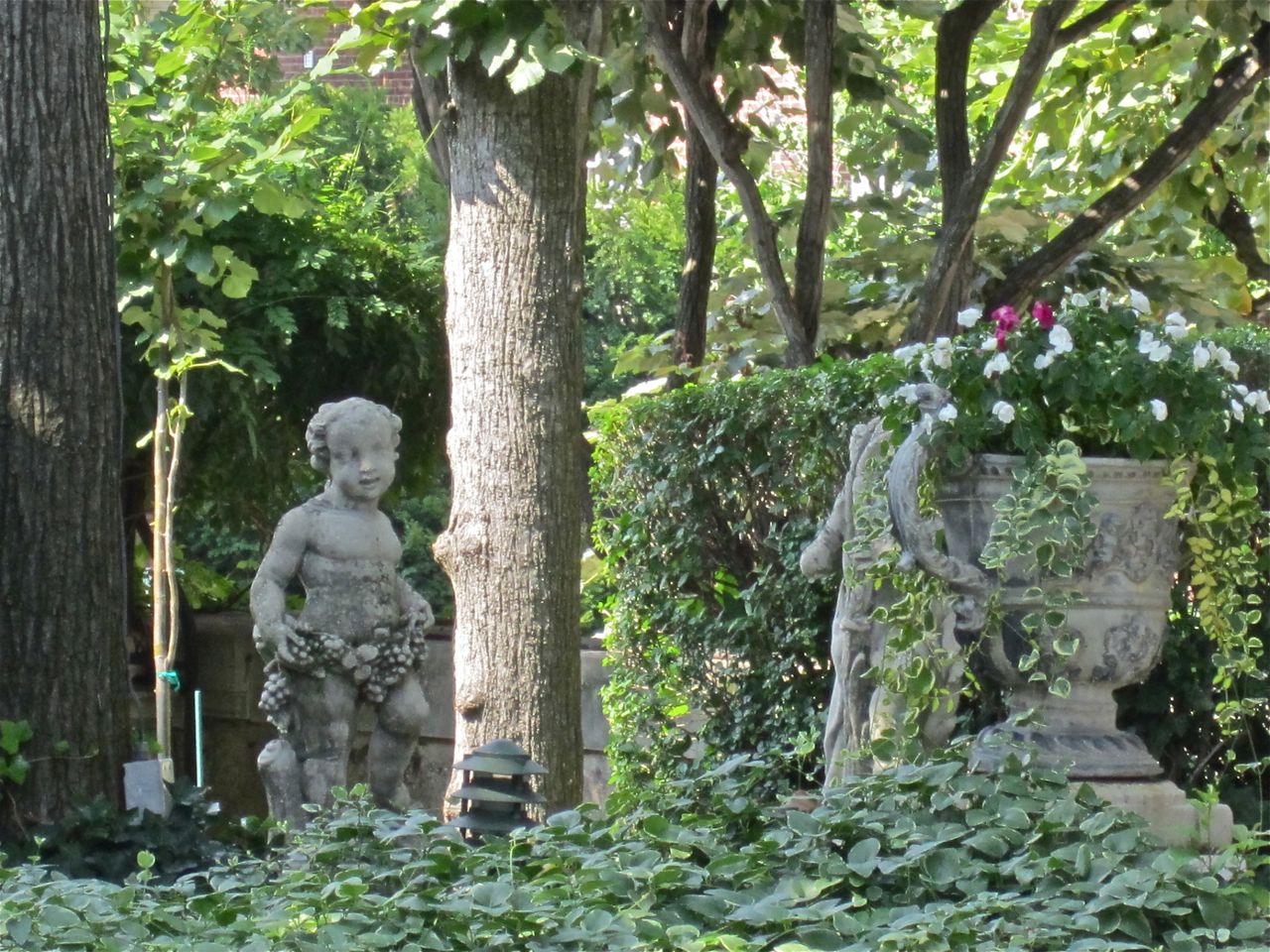
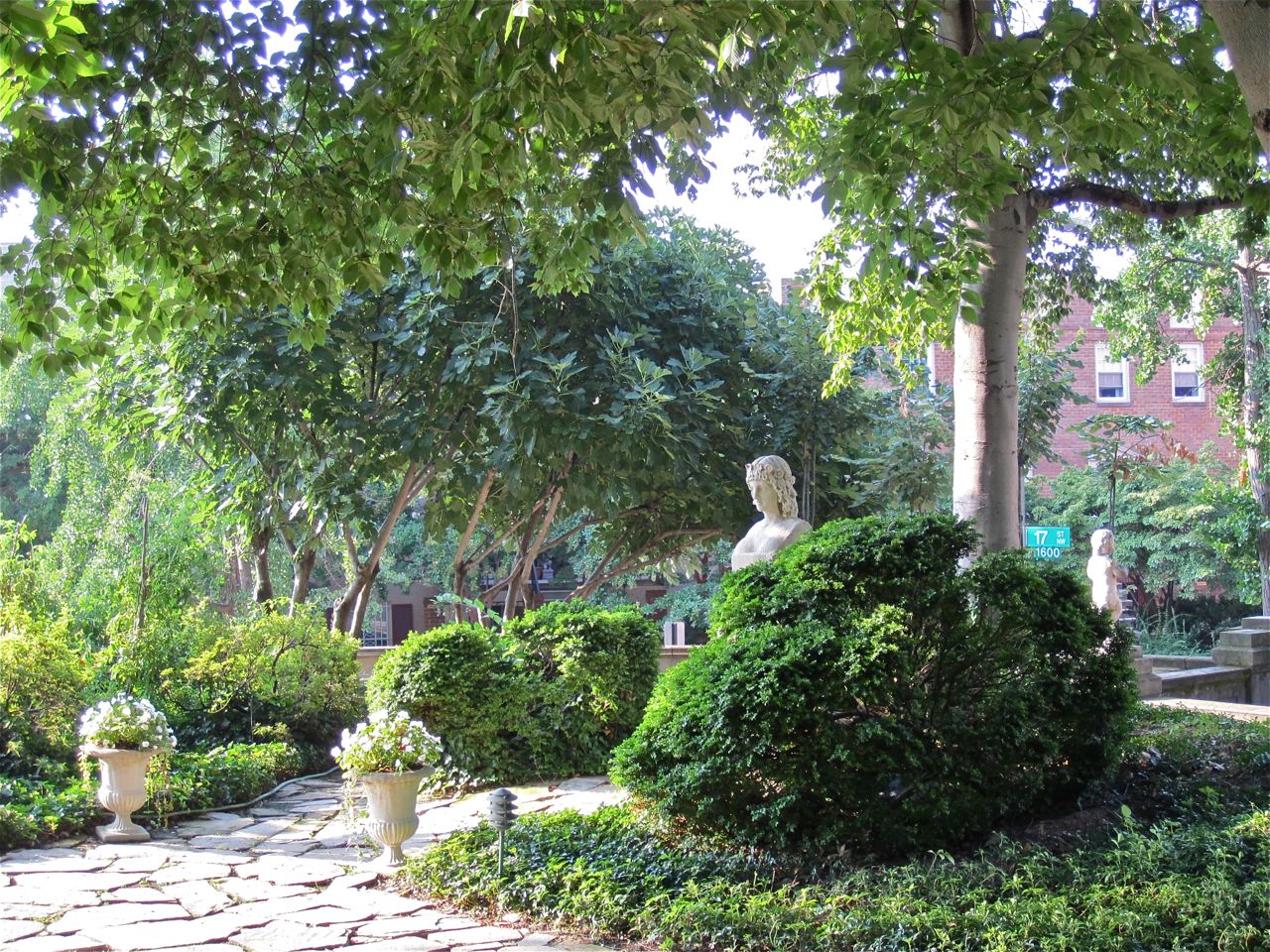
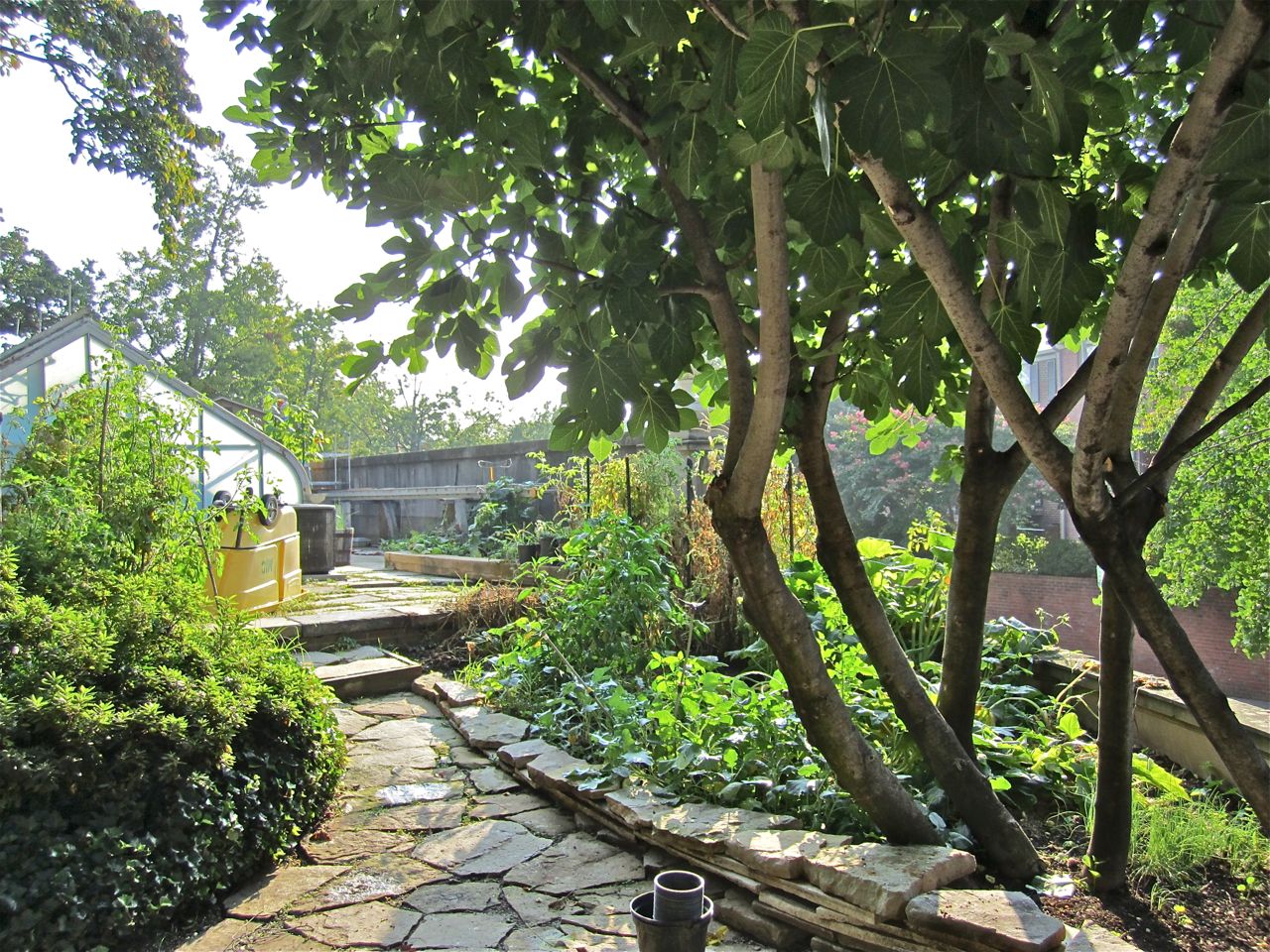
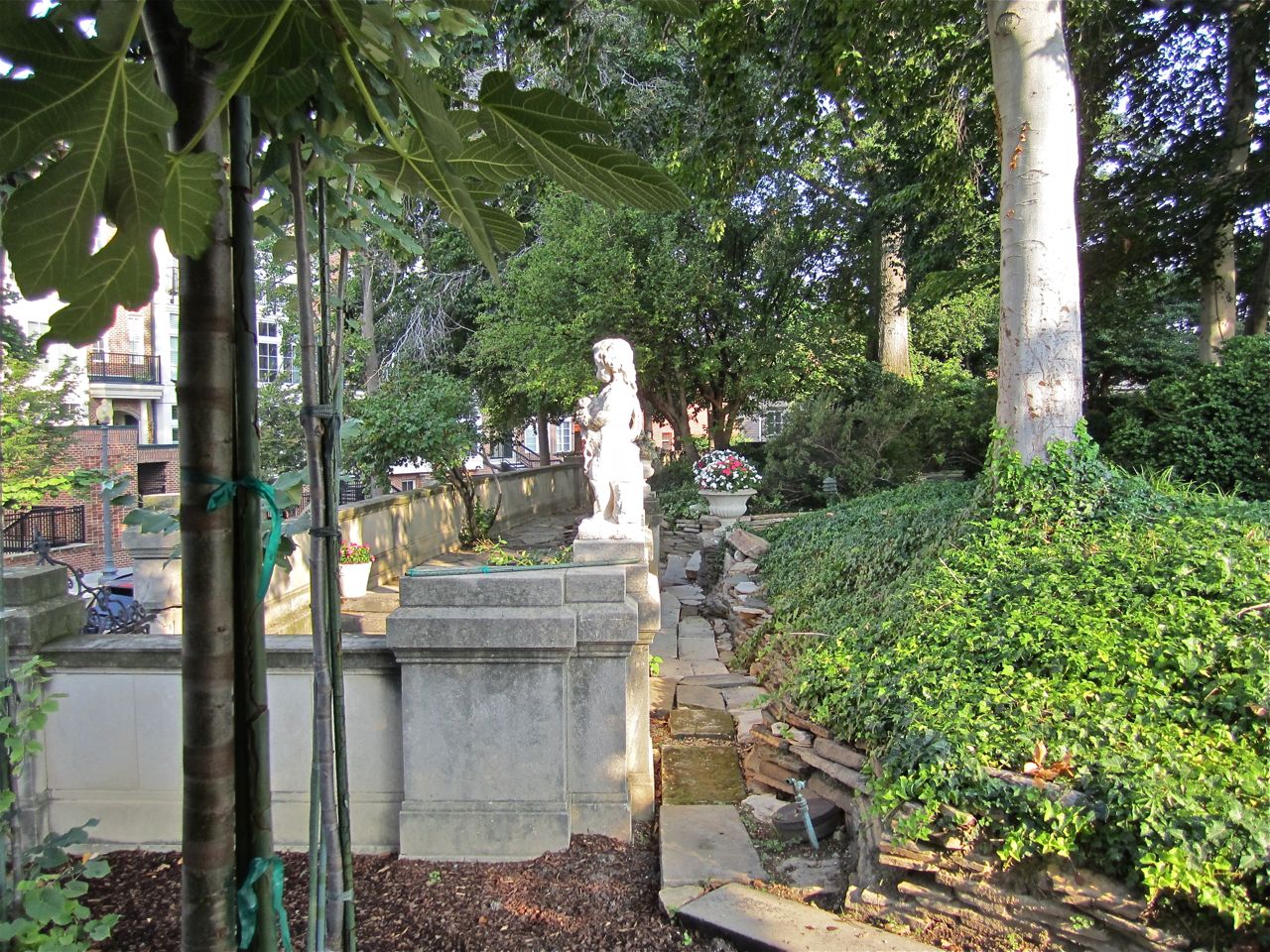
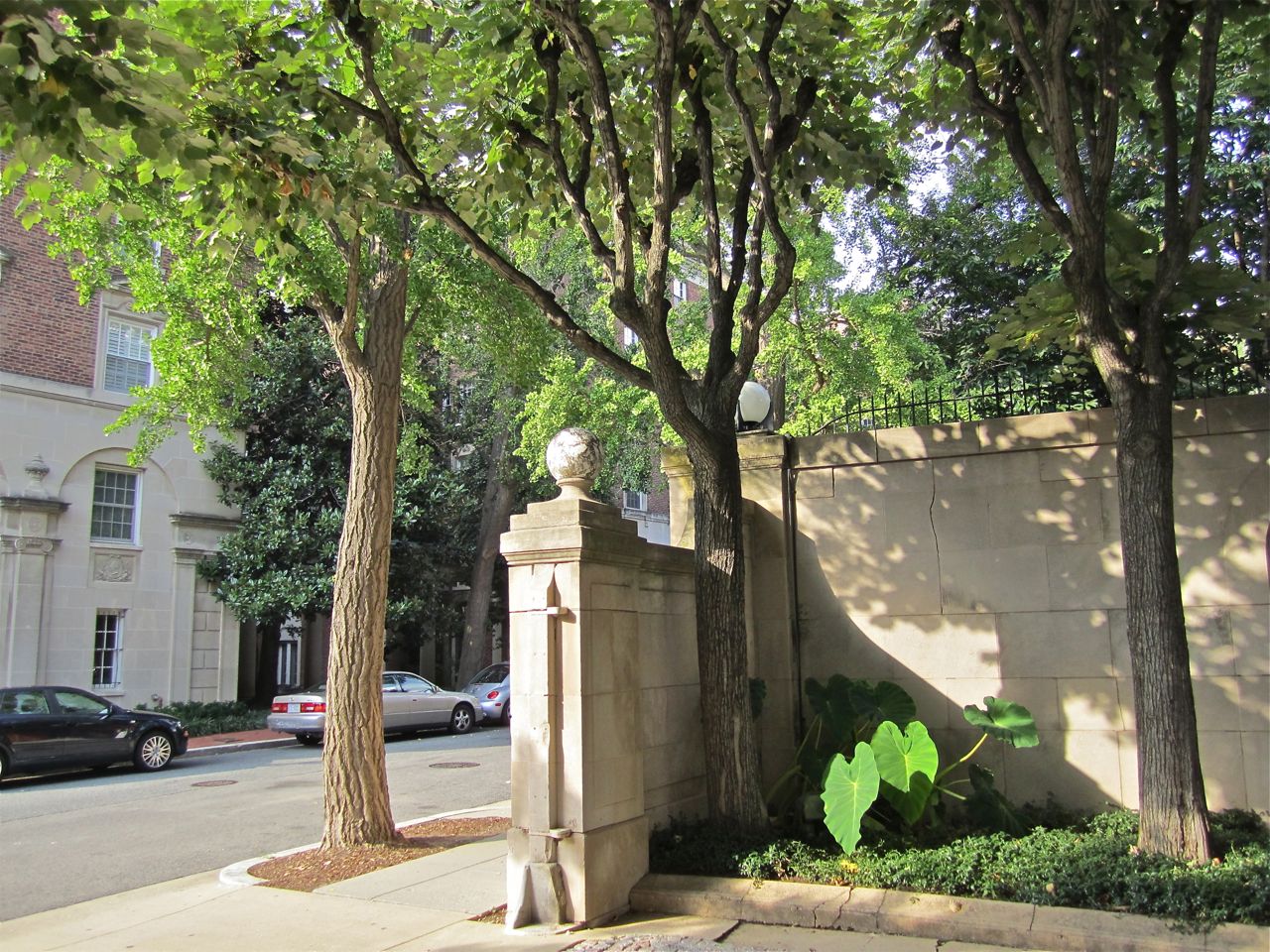
Not surprisingly, Meridian House is one of the outstanding wedding venues of Washington, D.C.
To see more photos of the courtyard and garden, click on “Continue reading” below and click on the thumbnails in the gallery to enlarge them.
 enclos*ure