Vintage landscape: bush-houses in Australia

Toowoomba
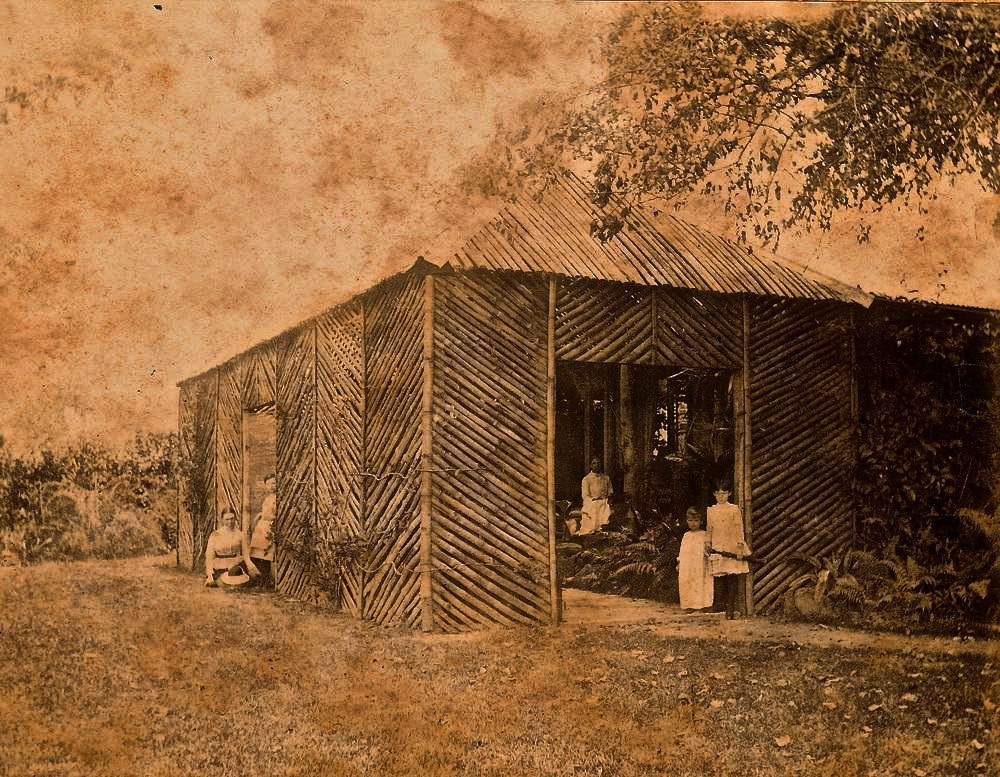
Bush- or shade-house at Toowoomba residence, Roslyn, ca. 1900.

I recently came across these photos of an Australian vernacular garden structure:  the bush-house.
Mackay
Fernery at ‘The Hollow,’ Mackay, ca. 1877, by Edmund Rawson.

Bush-houses (also called shade-houses or ferneries) were built to protect tropical plants from the sun.  By the late 1800s, many Australian gardeners were as enthusiastic about amassing and displaying these plants as Victorian hothouse collectors in Great Britain and North America.
Florence Reid
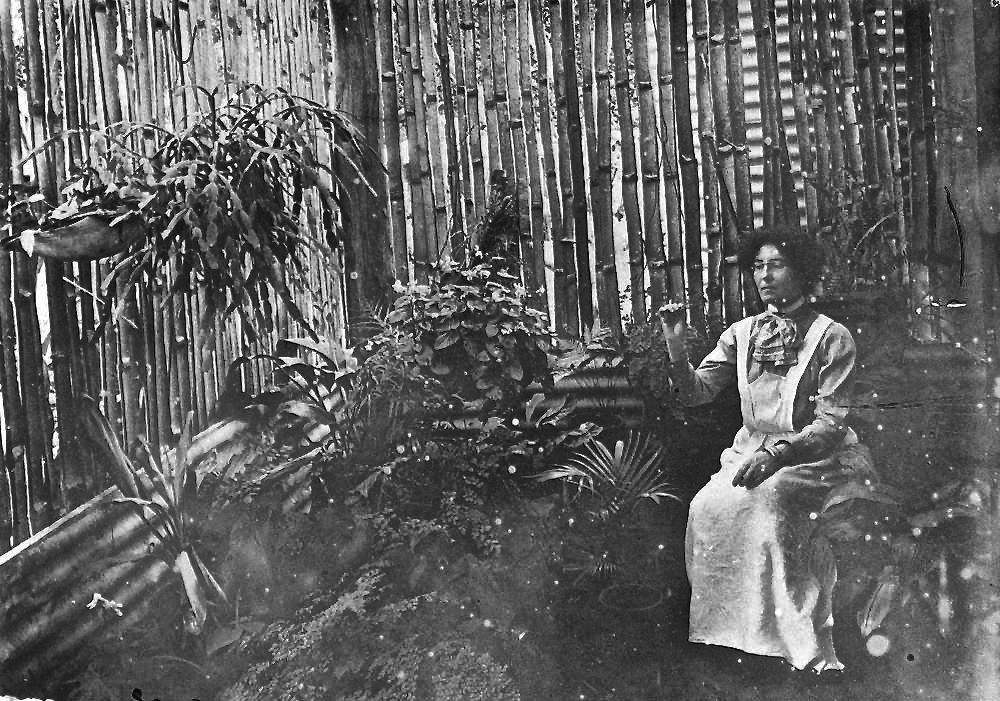
Florence Reid in a bamboo bush-house at Bainagowan Station, ca. 1900.

The bush-house was modeled on the English glassed-in greenhouse or conservatory, but built with less costly, local materials.
Aloe Villa
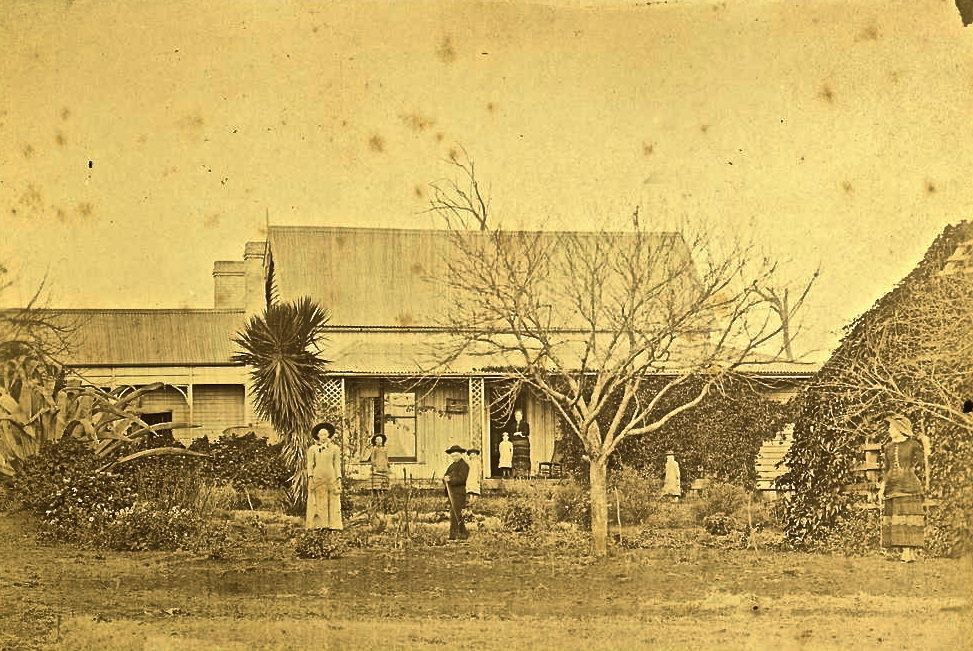
Gardening at the front of Aloe Villa, Toowoomba, ca. 1900. There is a bush-house on the right (and a massive agave on the left).

In a 2003 article for Queensland Review, “Tropicalia: Gardens with Tropical Attitude,” Jeannie Sim wrote that, by the end of the 19th century, a number of international exhibitions in Australia were showing off “high-quality examples of tropicalian gardening” in bush-houses.
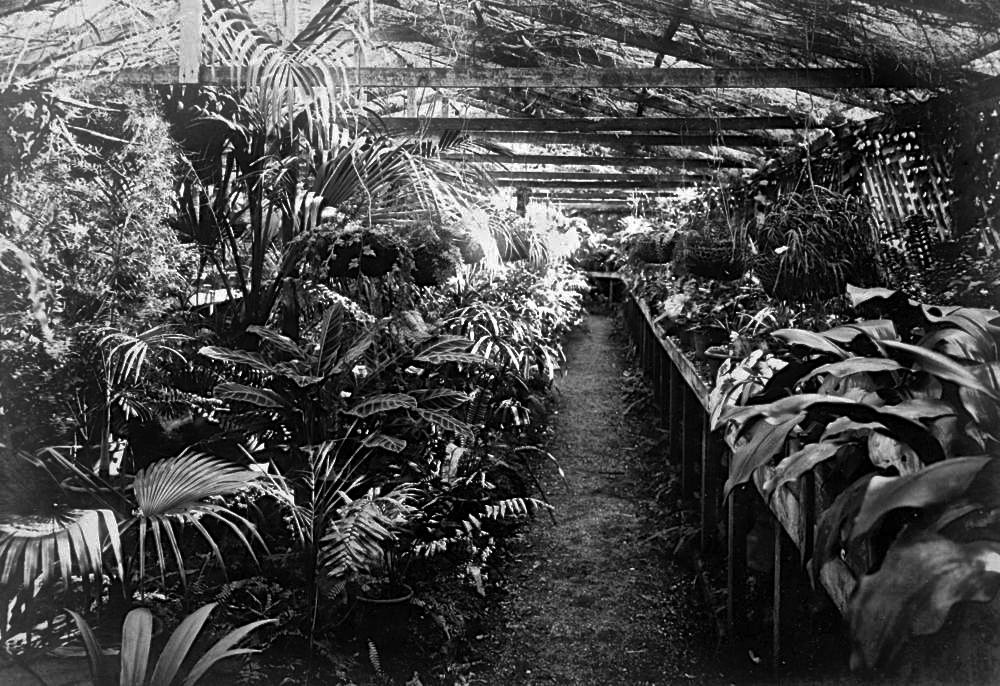
Bowen Park
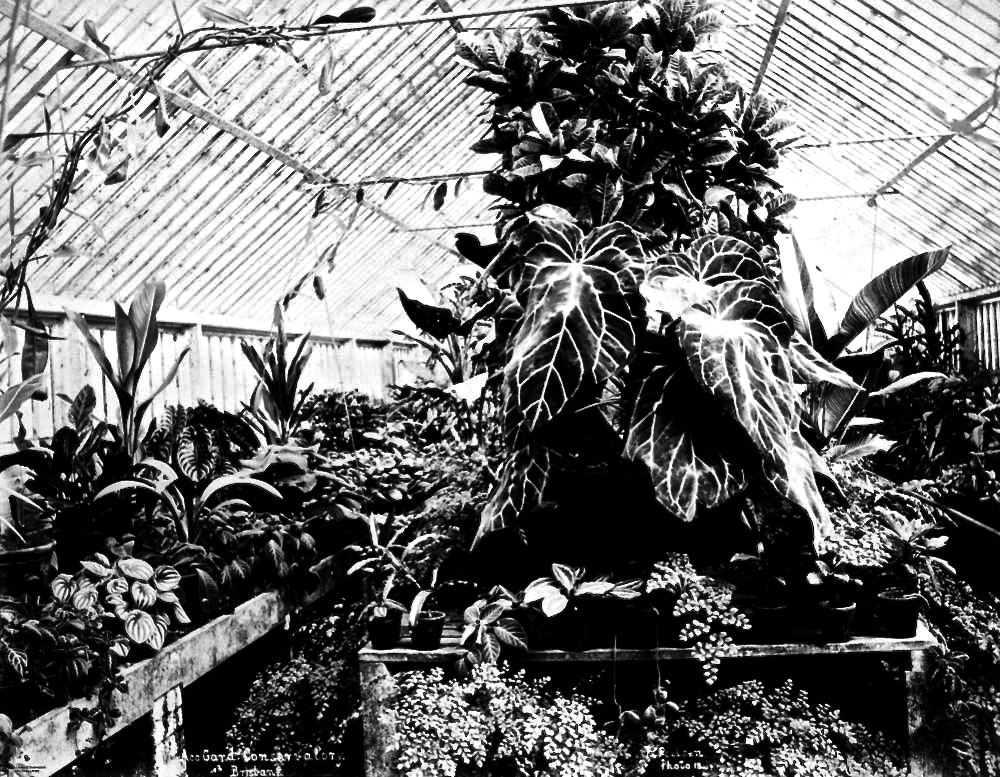
Fern-filled conservatory at Bowen Park, Brisbane, ca. 1890, by P.C. Poulsen.
Merthyr Hse, Brisbane
Shade-house in the garden at Merthyr House, Brisbane, ca. 1908.

“The most extraordinary of these kinds of structures,” she wrote,  “[was] arguably the one built in 1897 for the Queensland Colonial and Indian Exhibition in Brisbane. . . . Covering the walls and pillars of the bush-house were more than 3000 staghorn, bird’s nest and elkhorn ferns collected from the Blackall Range . . . . The exhibition guide [noted that] . . . Queenslanders ‘could gain a more vivid idea than ever before of the unequalled luxuriance of their scrubs.’  These horticultural displays marked both local pride and individuality, and promoted the use of native plants and bush-houses in gardens.”
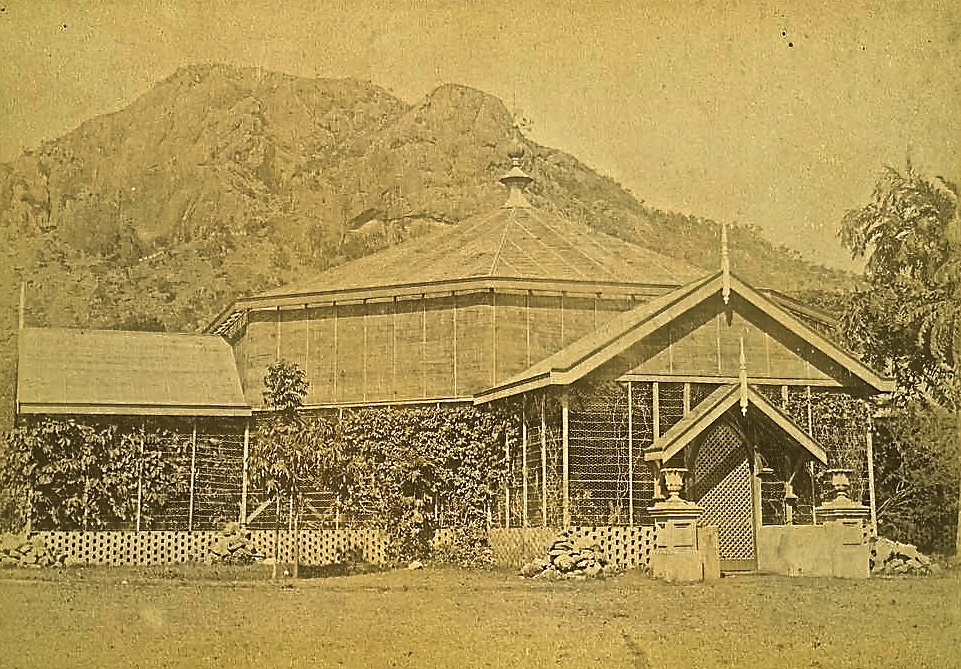
Townsville Botanical Gardens
Bush-house at the Townsville Botanical Gardens, ca. 1900.

According to Sim, many of the plants cared for and protected in the bush-houses were also displayed in popular verandah gardening.  “The verandah was the public showcase for the gardener’s bush-house skills.”
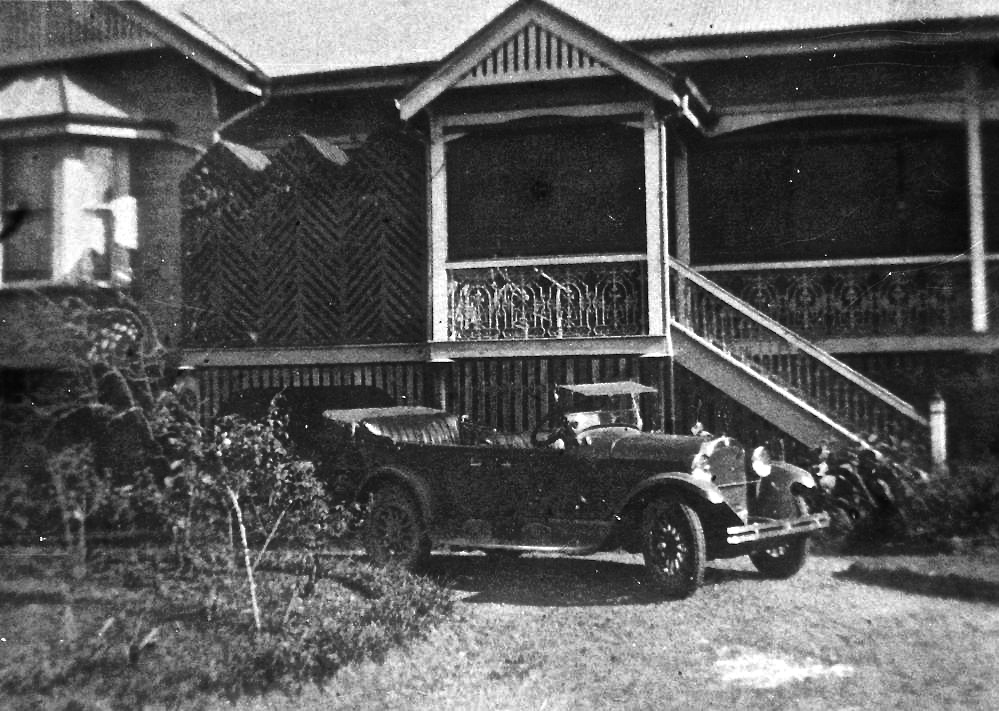
Milton
Milton residence, Holly Dean on River Road, Milton, ca. 1900. While it’s hard to see any plants, there is an interesting lath structure on the left side of the porch.

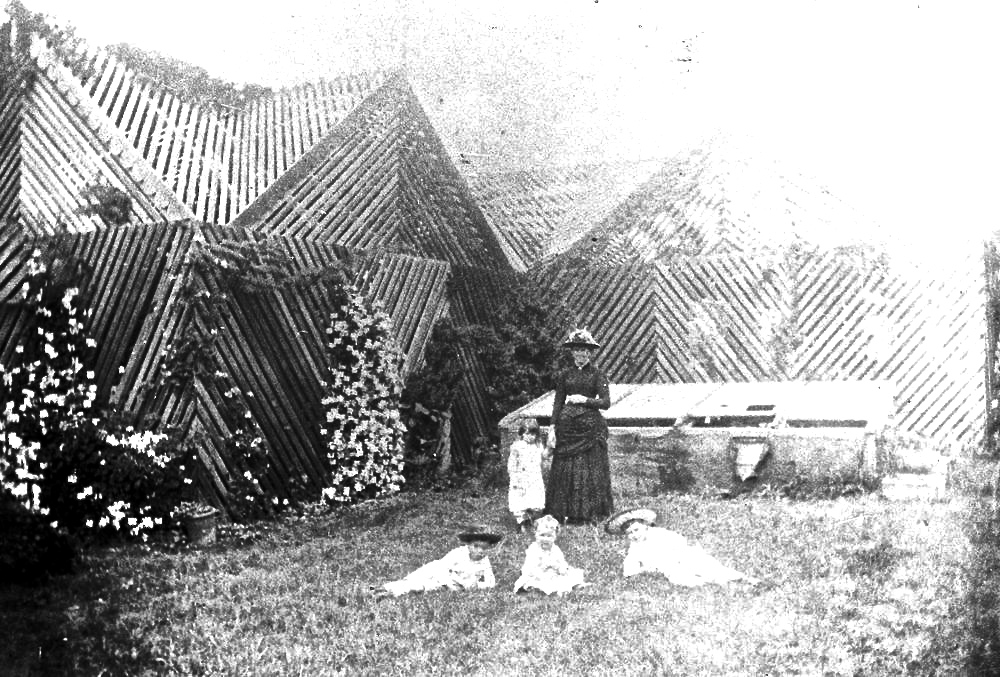
Judging from these photos, bush-houses seem to have been frequently constructed of panels of wood or bamboo lath set at decorative angles.
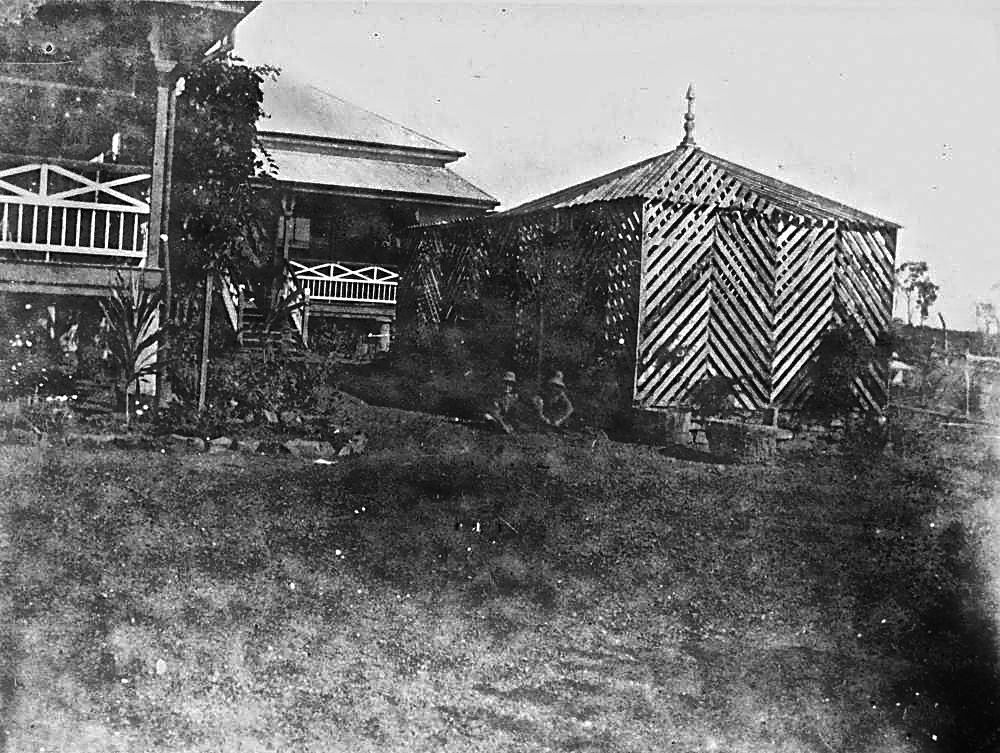
Greenmount Station
Bush-house at Greenmount Station, ca. 1927.

It also appears that many bush- or shade-houses were used as cool(er) places to entertain and relax.
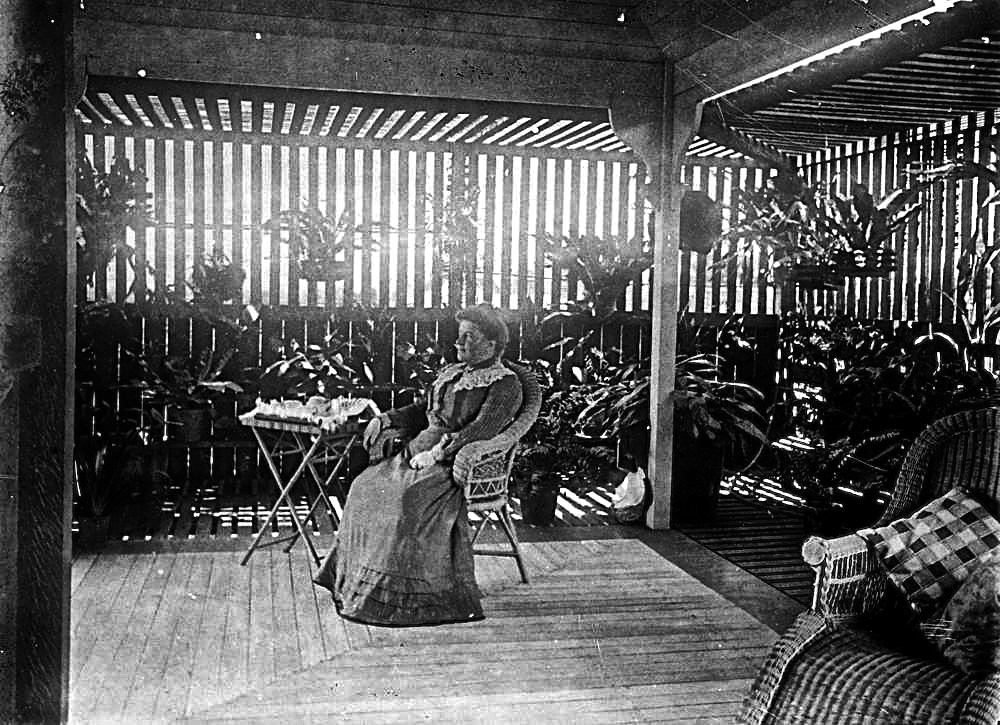
Clayfield residence
Fernery in the Clayfield residence, Elderslie, in the Brisbane suburb of Clayfield, ca. 1900.

All of these photos are via the Commons Flickr photostream of the State Library of Queensland, Australia.
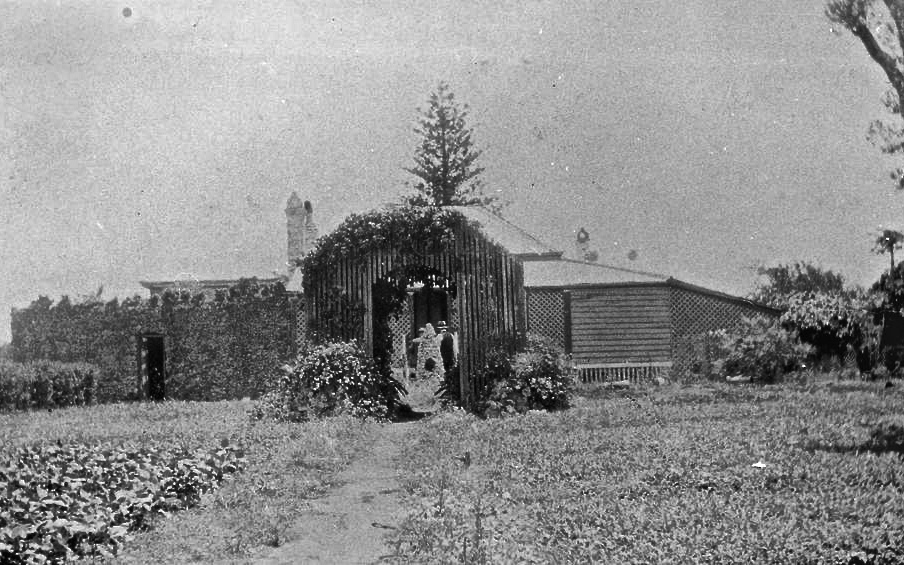
St. Helena
Garden of the old prison superintendent house, St. Helena, 1928. There is a small lath summer house in the center of the path and trellis around the perimeter of the home behind it — perhaps enclosing a verandah around interior rooms?

To scroll through larger versions of the pictures, click on ‘Continue reading’ below and then on any of the thumbnails in the gallery.

Continue reading “Vintage landscape: bush-houses in Australia”

Lady Bird Johnson

Today, December 22, is the centenary of the birth of environmental advocate, businesswoman, and former First Lady Lady Bird Johnson (Claudia Alta Taylor).

Texas bluebonnet (Lupinus texensis).  Public domain hoto by Dr. Thomas G. Barnes, U.S. Fish and Wildlife Service.
Texas bluebonnet (Lupinus texensis)

While her husband was president, she created a First Lady’s Committee for a More Beautiful Capital and then expanded its efforts with successful support for the Highway Beautification Act of 1965.

In 1982, Johnson and actress Helen Hayes created an organization to protect the native plants and natural landscapes of North America.  It became the Lady Bird Johnson Wildflower Center in Austin, Texas.

Some of her words:

“Though the word ‘beautification’ makes the concept sound merely cosmetic, it involves much more: clean water, clean air, clean roadsides, safe waste disposal and preservation of valued old landmarks as well as great parks and wilderness areas. To me…beautification means our total concern for the physical and human quality we pass on to our children and the future.”

“The environment is where we all meet; where all have a mutual interest; it is the one thing all of us share. It is not only a mirror of ourselves, but a focusing lens on what we can become.”

You can listen to an interview about Lady Bird Johnson, An Oral History on “The Diane Rehm Show” at the link on the sidebar under “Today’s Quote.”  Adrian Higgins of The Washington Post wrote a tribute to her in October, here.

Public domain photo above by Dr. Thomas G. Barnes, U.S. Fish and Wildlife Service.

Our garden: flower color

I have flower colors on the brain right now.

I’m going to try some (mostly) single-color planting combinations in some sections of the long borders — and dramatic contrasts in others.

This slideshow requires JavaScript.

We have blooms all year round here and lots of space. The main borders are along the lower lawn, so I don’t think  that the colorful arrangements will compete too much with our terrace views of the city and hills.

I’ll probably make a good, old mess at first, but I have a year to experiment and a year to make corrections.

The photos above are some reference pictures I took of all the flowers we have right now (a few things aren’t blooming). I’ve been going around and tagging the colors of the roses and daylilies as they bloom.

I have a number of flowering shrubs in the borders that are too big to move, so I will start my color selections with them.

Vintage landscape: beautiful weeds

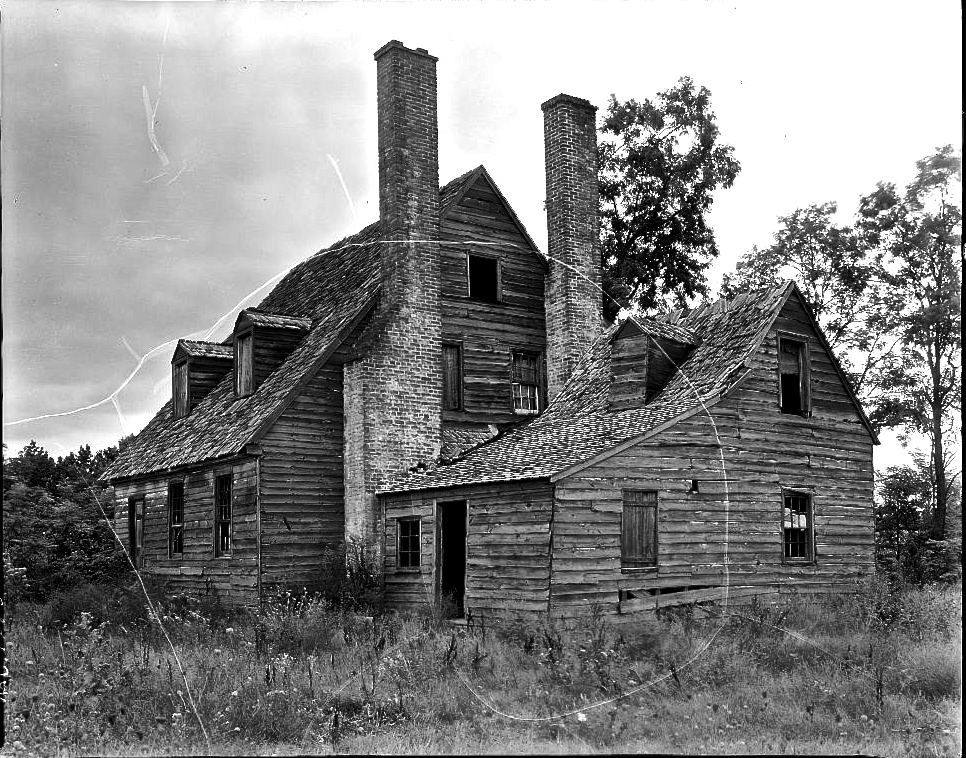
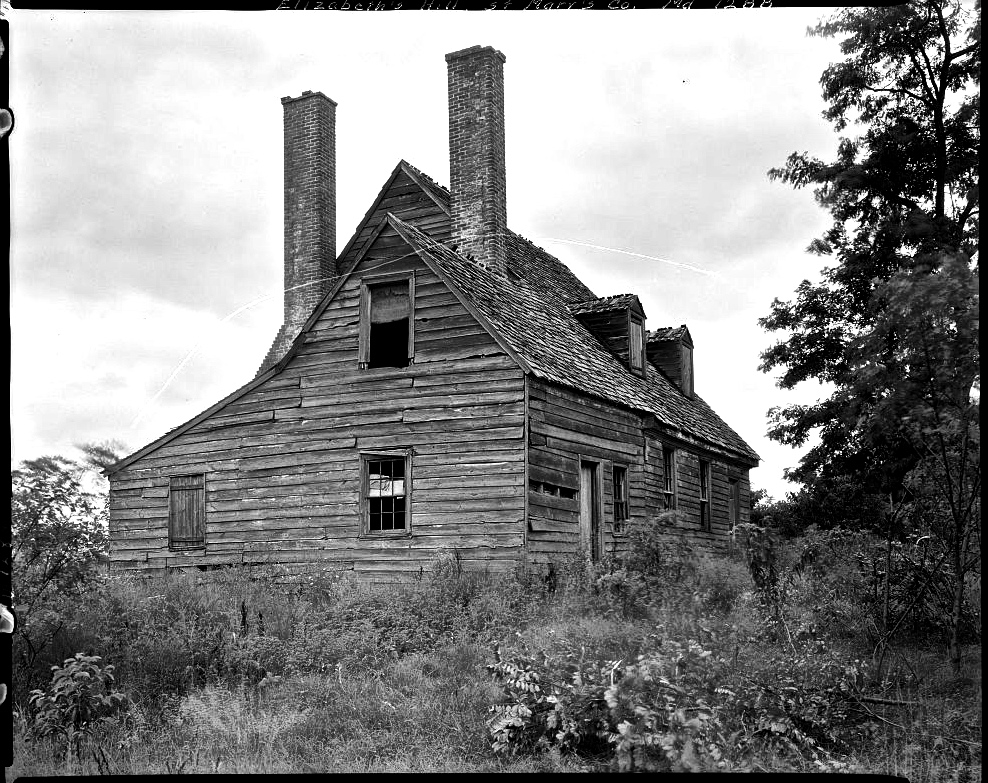
“Elizabeth’s Hill, Great Mills vic., St. Mary’s County, Maryland,”  1936-37, Frances Benjamin Johnston, via Library of Congress Prints and Photographs Division.

What would the world be, once bereft
Of wet and of wildness? Let them be left,
O Let them be left, wildness and wet:
Long live the weeds and the wilderness yet.
–  Gerard Manley Hopkins, from “Inversnaid”

A porch in 1941 Mobile and Sunday miscellany

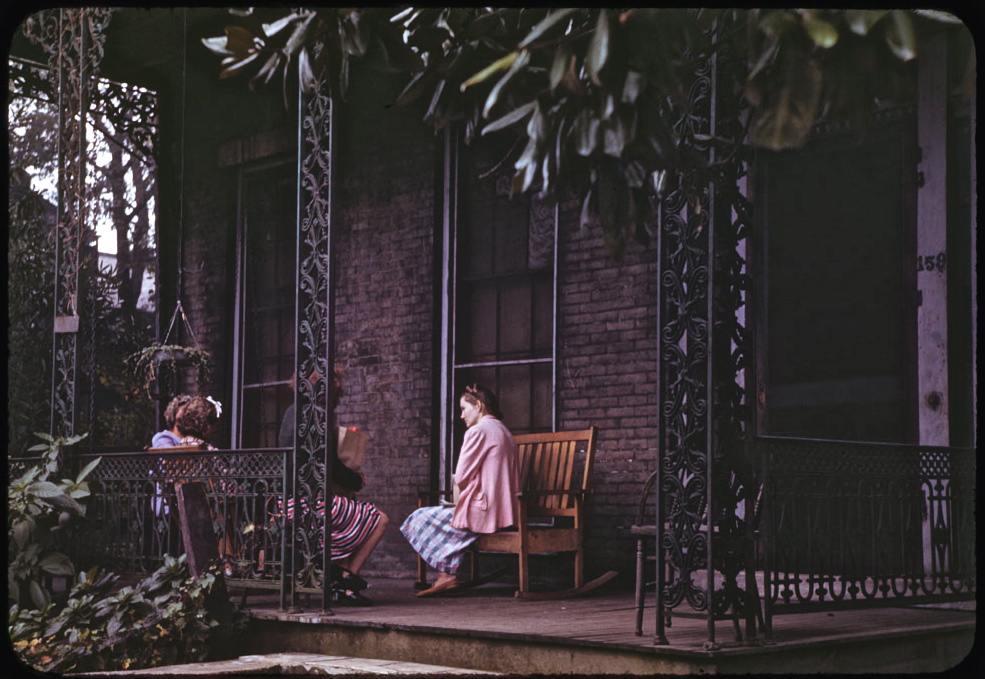
I love this quiet photo: “Porch of old house at Monroe St., Mobile[, Alabama],” taken November 4, 1941, by Charles W. Cushman.

Used with the permission of  the Charles W. Cushman Photograph Collection of the Indiana University Archives.  Please do not “pin” or re-blog without contacting them here.

Miscellany

This post on Gardenista is about houses painted black, but I like the way all of them are incorporated into their natural landscapes.  

And GardenHistoryGirl has an interesting post on what we mean when we talk about ‘natural’ and  “beautiful nature.”

From her post, I learned that you can read the entire book The Wild Garden by William Robinson online  here at Google Books.

Please take a look at View from Federal Twist’s fall photos of the Federal Twist garden — just gorgeous.

Jean’s Garden explains here why your favorite plant may have had one name last year and has another today.

Kigali has gone into billboards in a big way in the last few years.  I wonder if it may eventually be building these too (see here too).

Zoe Tilley Poster of Pearled Earth is now selling her beautiful illustrations at her new Etsy shop here.

Francophiles can catch up on gardening news from France at Our Grumpy Gardener, a blog of French News Online.  If you’ve already starting to think about Christmas, the blog Réparons & Re-Parons Noël has good ideas for handmade decorations.

If you would like to see more of the photographs of Charles W. Cushman, click here for a series of images of New York City in the early 1940s.