The Sunday porch: Petworth rowhouses

. . . . . Houses in rows
Patient as cows.

— Robert Pinsky, from “City Elegies — III. House Hour

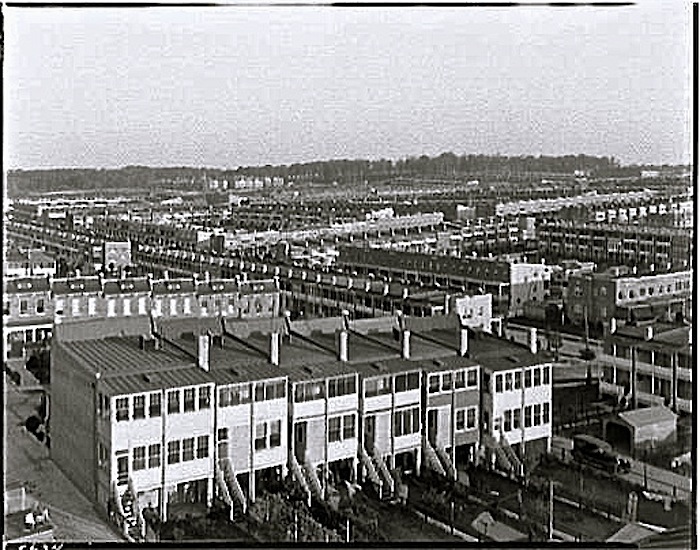
Petworth rowhousesRows of houses in the Petworth neighborhood, Washington, D.C., ca. 1920-1950, by Theodor Horydczak, via Library of Congress Prints and Photographs Division.

Petworth was farm and forest until the 1880s when the land was purchased for development.  In the 1920s and 30s, thousands of rowhouses were built, many of them in a style popularized by developer Harry Wardman (from 1907) — with its distinctive elevated front porch and tiny front yard.
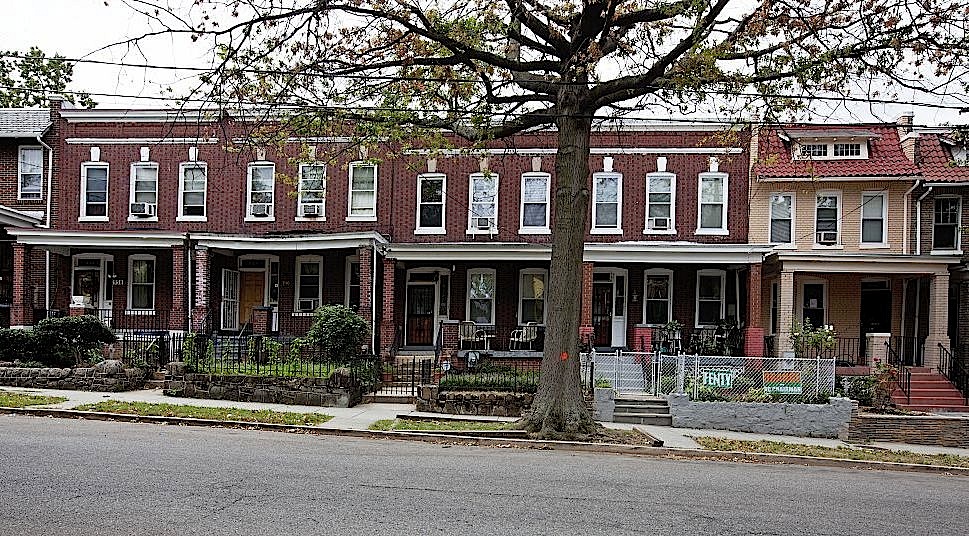
Wardman-style rowhousesAbove:  Petworth rowhouses on Shepherd St., 2010, by Carol Highsmith, via Library of Congress.

“The porches [were] a big part of growing up in Petworth.  On my block there had to be 15 or 20 kids, and you’d come home from school, get on the porch, and look down the block, and you could see this long row of porches, and you’d see everybody coming out of their house. The porches made you get to know your neighbors, they made it a neighborhood.”

— A Petworth resident in the 1940s, quoted in the Washington City Paper

Wardman built his front porch rowhouses in large parts of northwest Washington, and several other developers copied them all over D.C.

Petworth was named a “Best Old House Neighborhood of 2013” by the magazine This Old House.
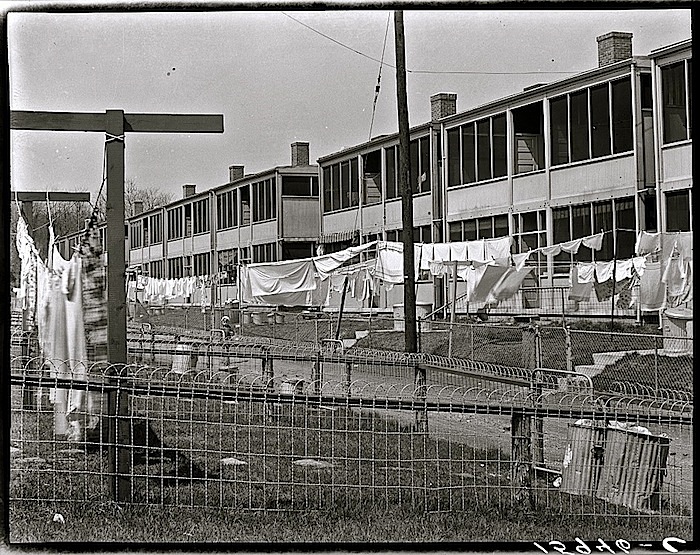
back yards and laundryAbove: backyards of rowhouses, neighborhood not noted, Washington, D.C., July 1939, by David Myers, via Library of Congress.

At the backs of Wardman-style rowhouses were screened sleeping porches (top) and kitchen porches (bottom).

Petworth resident Annette L. Olson decided to install a green roof on the top of her rowhouse front porch.  She wrote about the process for the “Where We Live” column of The Washington Post here.
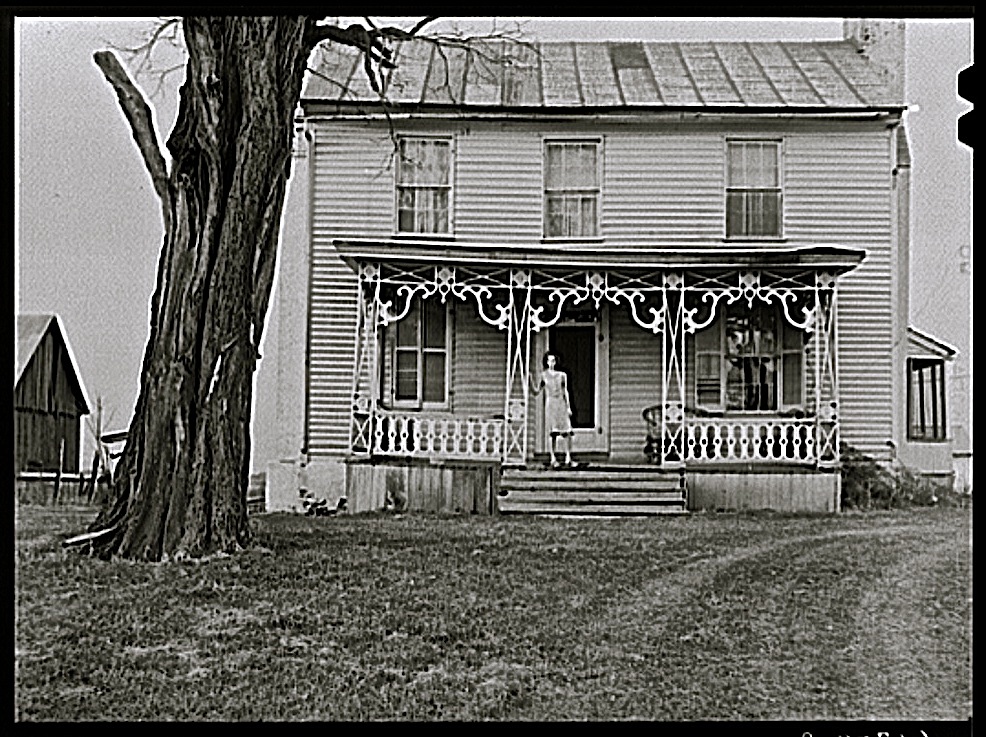
The Sunday porch: Nicholas County, Kentucky

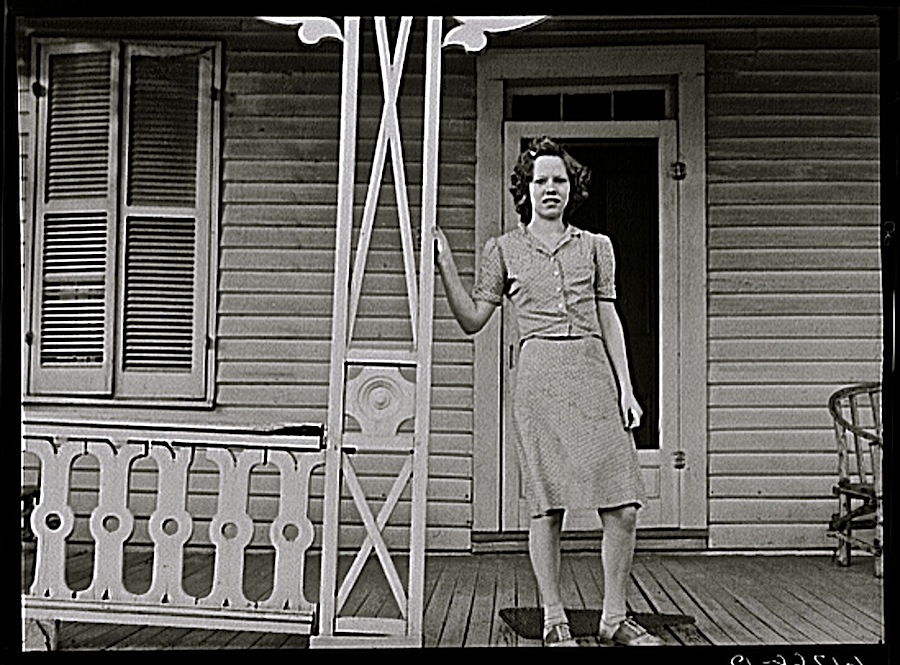
The Sunday porch/enclos*ure: 1940 Kentucky farmhouse, by John Vachon, Library of Congress

Just one more porch photographed by John Vachon — this one in Nicholas County, Kentucky, in November 1940.*

What frills attached to such a simple farmhouse and yard.

The Sunday porch/enclos*ure: 1940 Kentucky farmhouse, by John Vachon, Library of Congress

Her dress goes with the house and her curls with the porch.


*via Library of Congress Prints and Photographs Division.

The Sunday porch: Houston, Texas

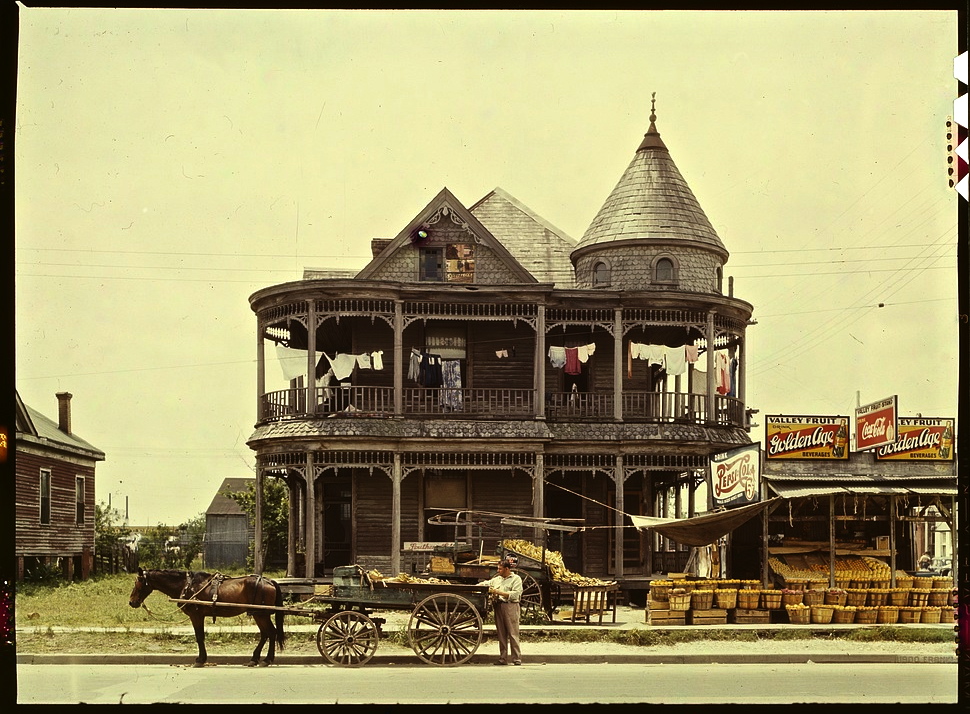
Old house in 1940s Houston, by John Vachon, Library of Congress

Another photo by John Vachon — an old house with a double porch in Houston, Texas, May 1943.*  I love the tower room.

You really need to click on the photo and enlarge it to enjoy all the details of this one.

Sharp-eyed commenters on the Library of Congress’s Flickr Commons project noticed that the address on the curb is 1900 Franklin Street. The location is currently a parking lot next to the US Route 59 overpass, close to Minute Maid Park.


*via Farm Security Administration/Office of War Information Color Photographs Collection, Library of Congress.

Vintage landscape: canal towpath

C&O Canal towpath, ca. 1900, Library of Congress
Towpath along the C & O Canal near Washington, D.C., about 1900.  The canal was still in operation at this time, principally transporting coal.

Photo by Detroit Publishing Co. via Library of Congress Prints and Photographs Division.

The Sunday porch: Omaha, Nebraska

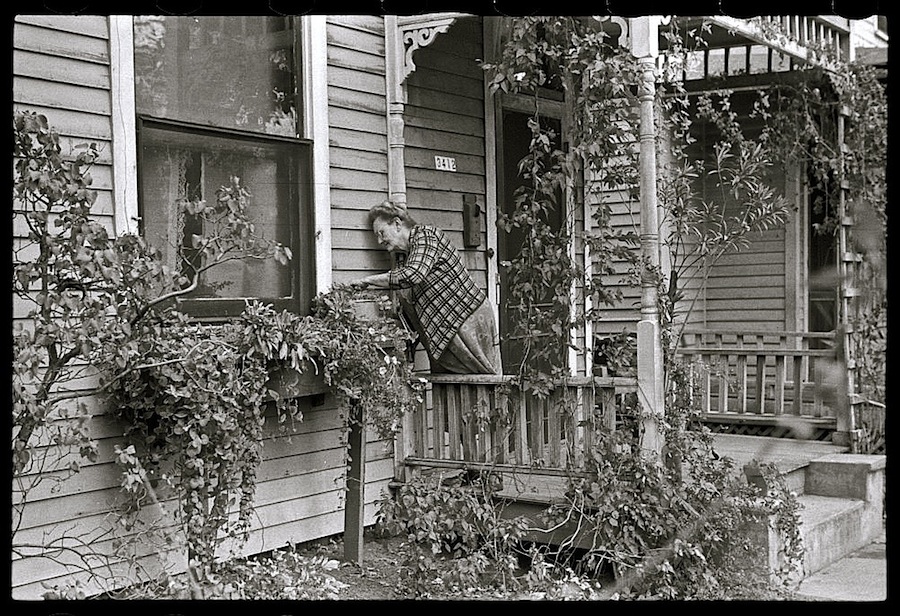
The Sunday porch/enclos*ure: Omaha, Nebraska, 1938, by John Vachon, Library of Congress“Lady tending her flower box, Omaha, Nebraska,” (probably October) 1938, by John Vachon, via Library of Congress Prints and Photographs Division.

(Click on the image to get a better look.)

The photographer, John Vachon, was on his first solo assignment for the Farm Security Administration in October and November 1938.  In addition to taking pictures of rural agricultural projects  in Nebraska, he was tasked with recording scenes of  life in Omaha for a book by Atlantic magazine writer George Leighton.

There is an interesting discussion of his Omaha work here.  His pictures in the city captured “portraits of Depression victims and scenes of comfortable everyday life,” like the one above.

Vachon later worked for Look magazine for 25 years, and he won a Guggenheim fellowship in 1973, two years before his death at age 60.