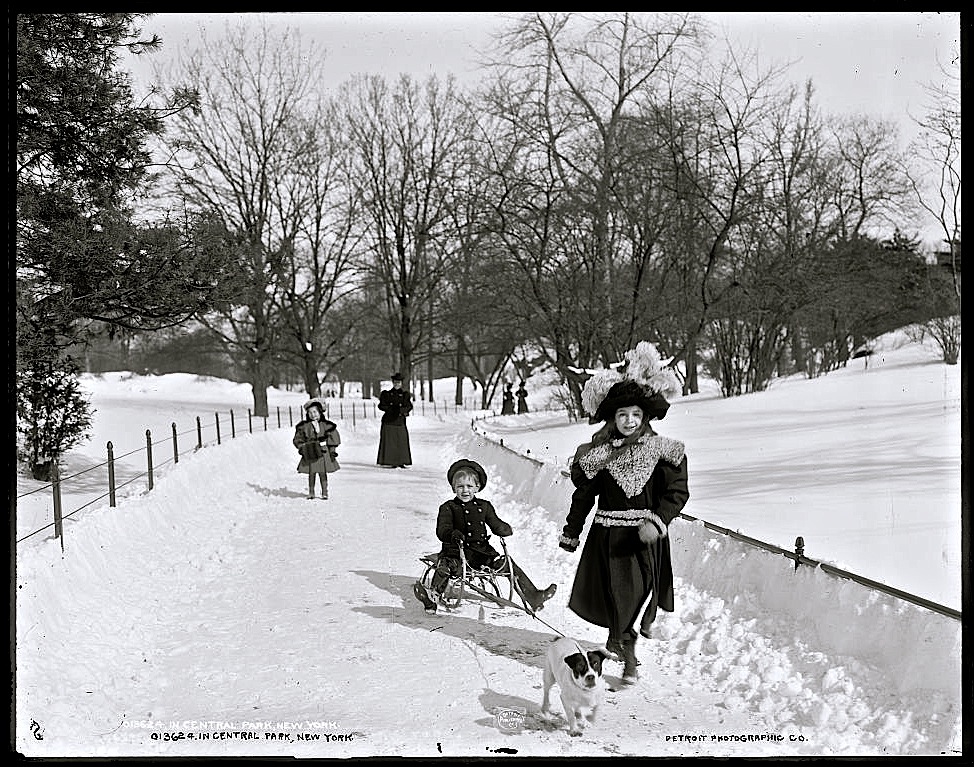
 “In Central Park, New York,” ca. 1900, by Byron, Detroit Publishing Co., via Library of Congress Prints and Photographs Division.
Eight to fourteen inches of snow is also predicted for New York City today.
“In Central Park, New York,” ca. 1900, by Byron, Detroit Publishing Co., via Library of Congress Prints and Photographs Division.
Eight to fourteen inches of snow is also predicted for New York City today.
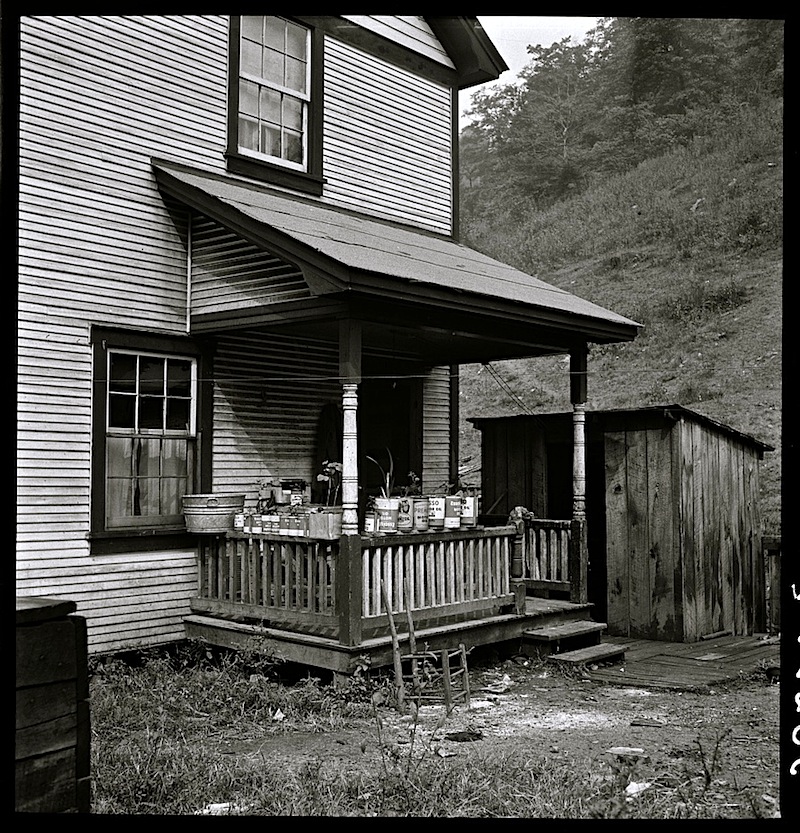 “Plants and flowers in oil cans on back porch of [coal] miner’s house. Capels, West Virginia,” September 1938, by Marion Post Wolcott, via Library of Congress Prints and Photographs Division.*
Capels is an unincorporated community located in McDowell County, the southernmost county in West Virginia.
The homes shown here were “coal camp” houses, owned by Central Pocahontas Coal Co.
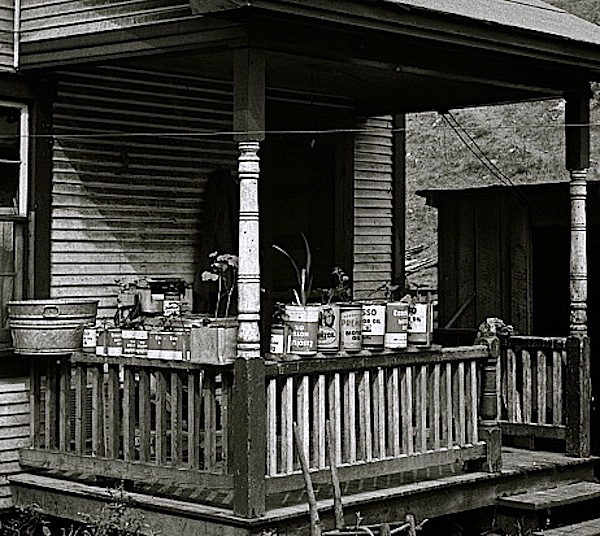 Above, detail from previous photo: perhaps the beginning of a winter garden on a windowsill.
Wolcott took a large series of photos of coal miners and their families in West Virginia. I think the house on the right below may be the same as the one above.
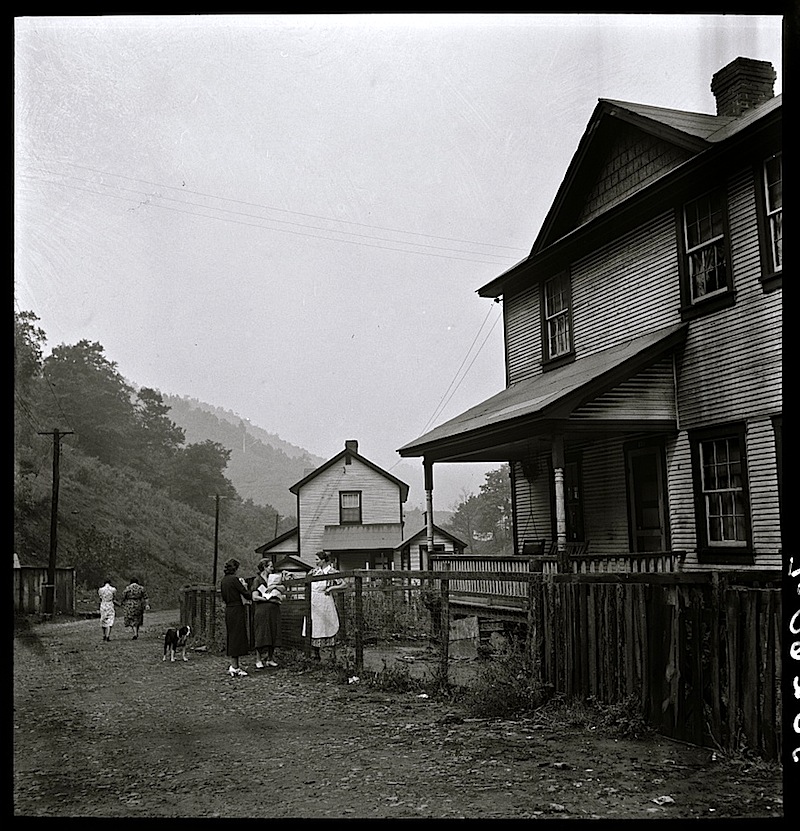 “Wives of coal miners talking over the fence.”
“The women in this photo [above] are dressed up, perhaps for their walk to the company store and back,” according to an online photo exhibit about West Virginia coal miners. “Miners’ wives often led difficult lives and relied on each other for support.”
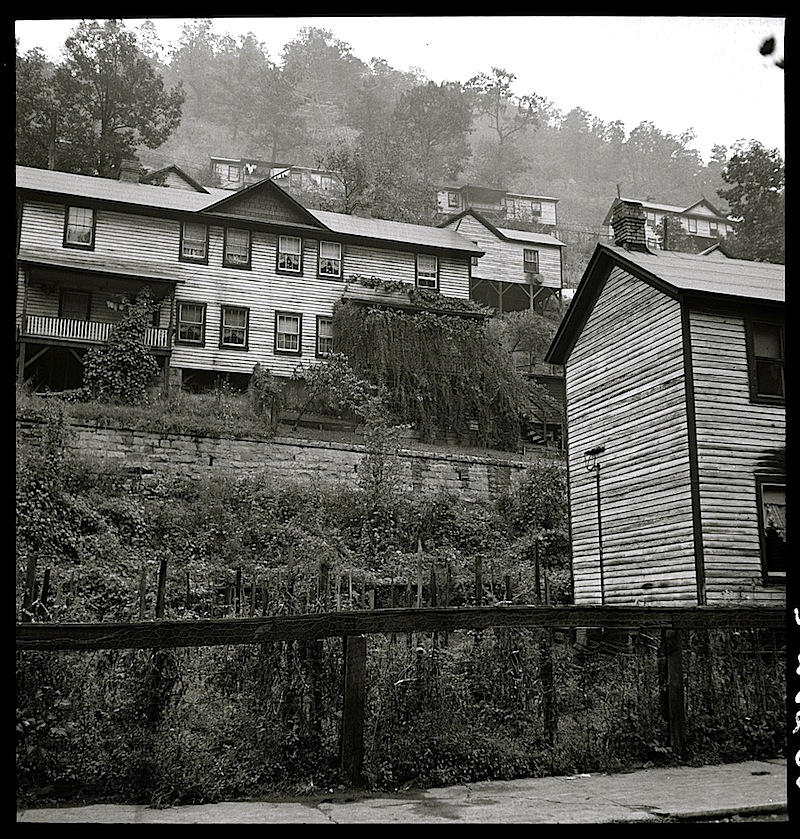 “Better homes in coal mining town.”
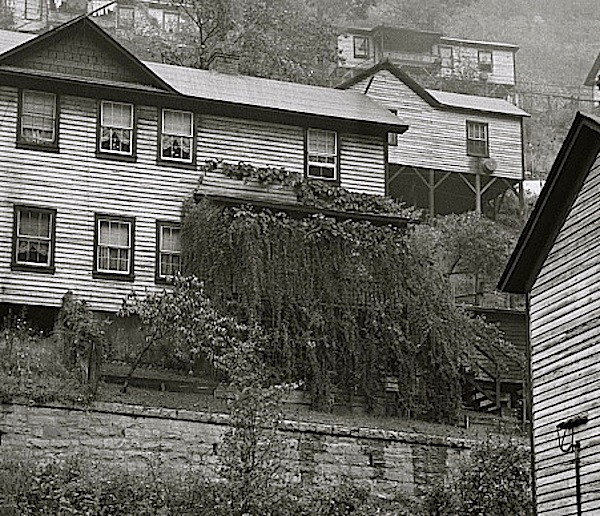 Above, detail from previous photo: impressive vines on this porch. Note the house beyond and how it is built out from the hillside.
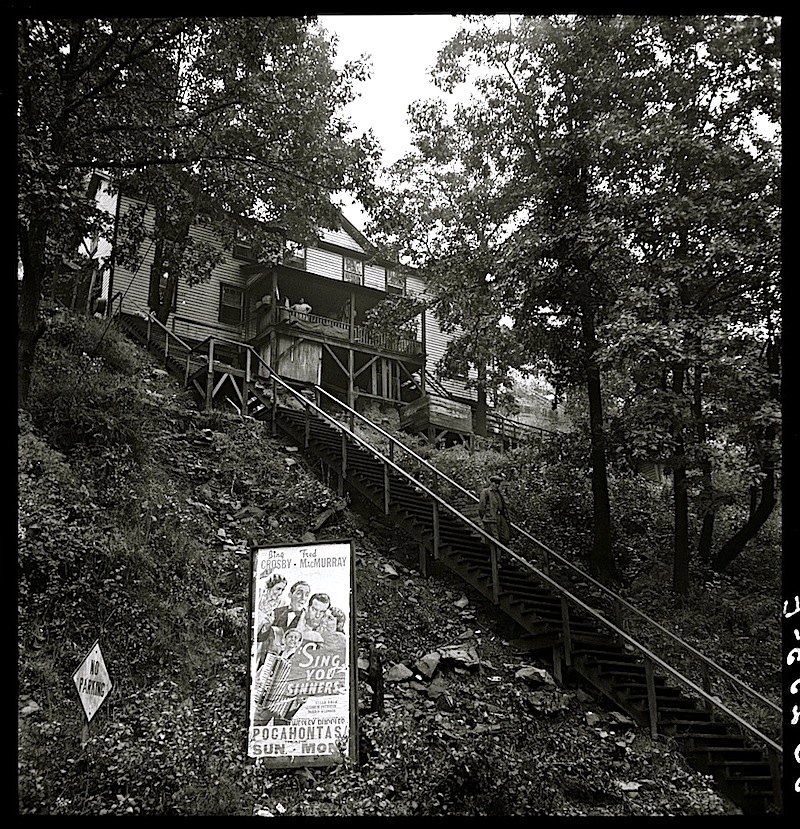 “Home of Negro families.” I count about 70 steps.
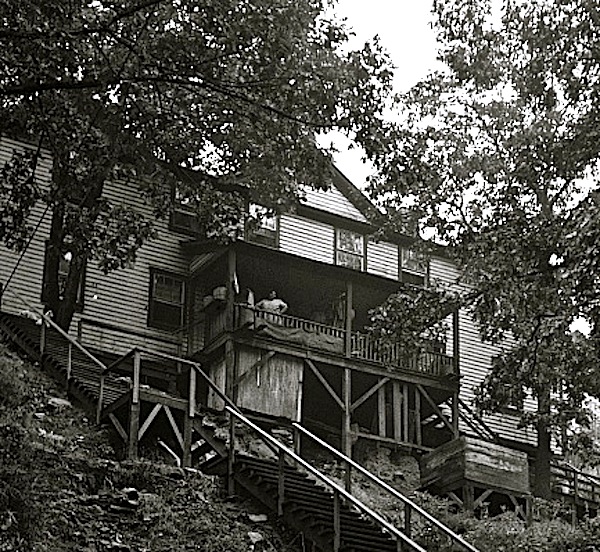 Above, detail from previous photo: African-Americans moved to the county to work in the mines, as the coal industry grew at the turn of the 20th. century.**
Immigrants also came from Greece, Italy, Poland, Russia, and Hungary.
McDowell County once set records for coal production in the state and country, but since the decline of the industry in the 1980s, it has lost thousands of jobs and has the highest poverty rate in the state. The mine in Capels (by then owned by Semet-Solvay) closed in the 1980s.
Photos of Capels in 2005 are here. There are photos of McDowell County in 2012 here (and more vintage pictures here).
A number of Wolcott’s West Virginia photographs can be found in the book New Deal Photographs of West Virginia, 1934-1943.
*All photos here were taken in Capels, September 1938, by Marion Post Wolcott, via Library of Congress Prints and Photographs Division. The captions in quotation marks are from the Library’s online catalogue and were probably written by Wolcott.
** “McDowell, which had no slave population and no free blacks after emancipation, became the state’s center of African-American population in the industrial era,” according to The West Virginia Encyclopedia. “McDowell County blacks established a power base within the state and local Republican Party. . . . A fourth of the population was black in 1950.”
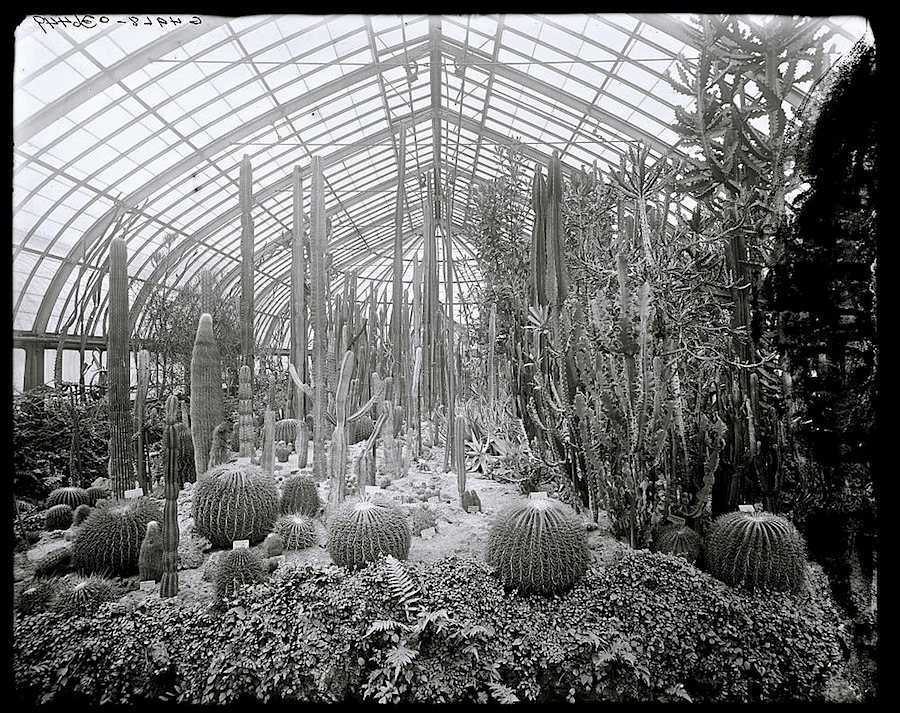 “Cacti, Phipps (Schenley Park) Conservatory, Schenley Park, Pittsburgh, Pa.,” ca 1900-1910, by Detroit Publishing Co., via Library of Congress Prints and Photographs Division.
The Cacti House was added to the Phipps Conservatory in 1902. (The conservatory had been founded in 1893.)
Today the space is called the Desert Room.
There are two more winter gardens here and here.
Thousands of these gray-green
cacti cross the valley:
nature repeating itself. . .— Brenda Hillman, from “Saguaro“
 The conservatory of the Mark Twain House, viewed from the library, Hartford, Connecticut, photographer not noted.*
Samuel Clemens (aka Twain) and his wife built the house in 1874 in a prestigious neighborhood, which included the homes of Harriet Beecher Stowe, garden writer Charles Dudley Warner, and suffragist Isabella Beecher Hooker.
“The Clemenses were known for their ostentatious lifestyle and entertaining,” according to the HABS. “[T]he house was fitted with the most advanced technological equipment of the day, including a telephone, speaking tubes and bells, burglar alarm, gas lighting, central heating, and extensive plumbing.”
The floor of the conservatory is pea gravel.
Another winter garden is here.
Climate is what we expect, weather is what we get.
— Mark Twain
*The photo is part of a 1983 Historic American Buildings Survey (HABS), via Library of Congress Prints and Photographs Division. You can see and read more of this survey here.
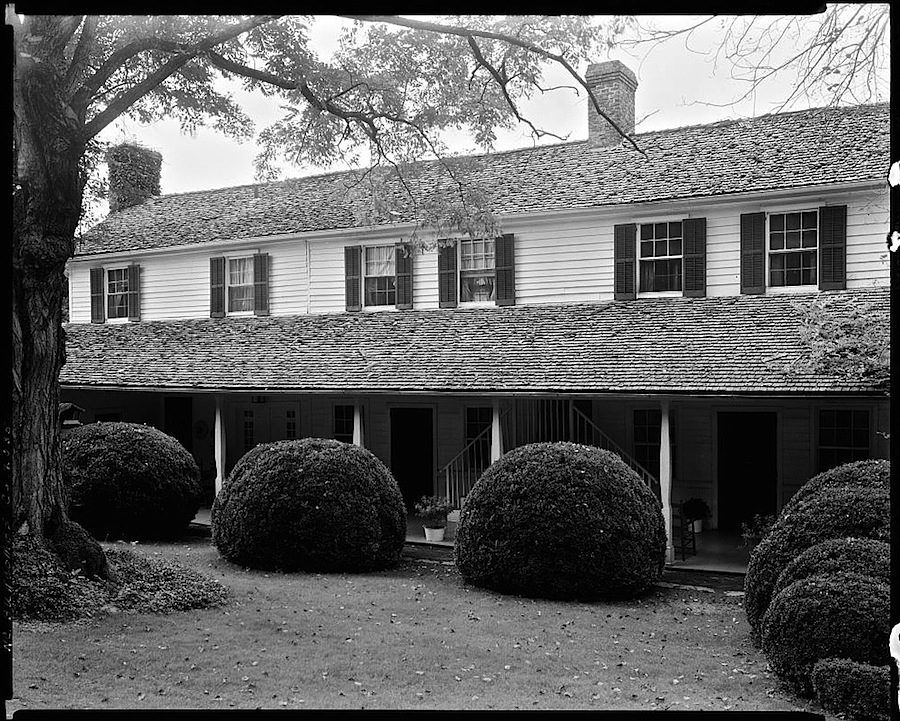 Sherrill Inn, Hickory Nut Gap, Buncombe County, North Carolina, in 1938, by Frances Benjamin Johnston, via Library of Congress Prints and Photographs Division (all photos here).
I know, and even better. . .
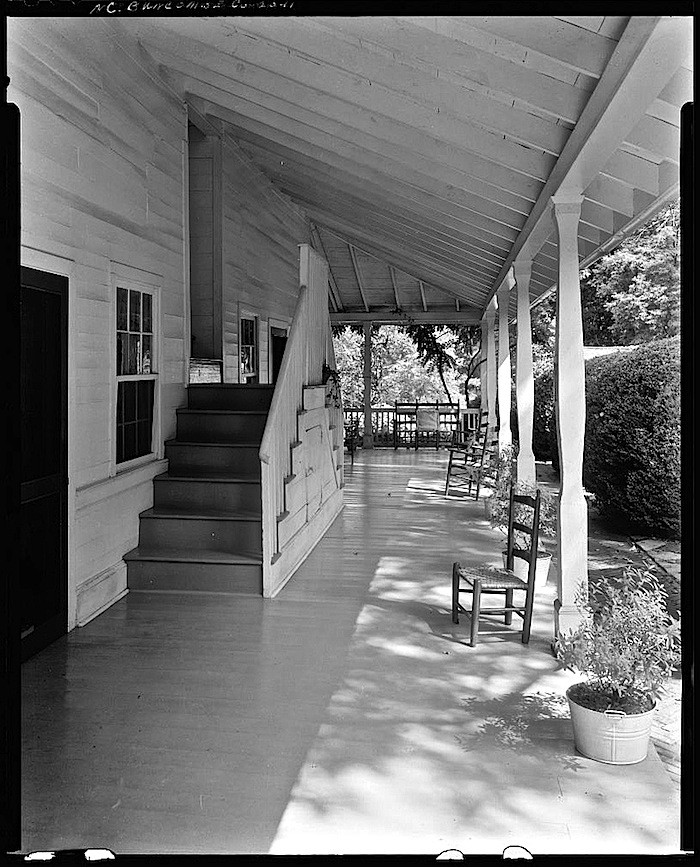 This is what’s behind the boxwoods. (There’s another photo of this section of the porch here.)
In the nomination form for inclusion in the National Register of Historic Places, the porch columns were described thusly:
The porch is supported by gracefully tapered posts each rising without interruption from rectangular bases to approximately balustrade level, where it is quickly cinched in on all four sides; above, the post gently flares out to original width near eye level and then back in, until near the top the taper reaches its conclusion to flare quickly into a cap for the porch roof supporting plate to rest upon.
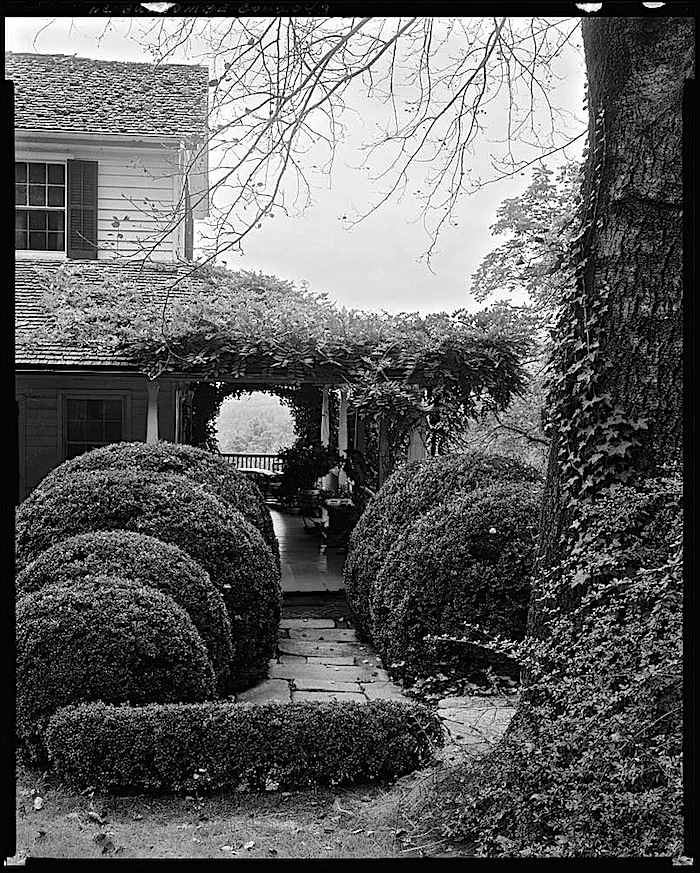
At the corner of the L-shaped porch,
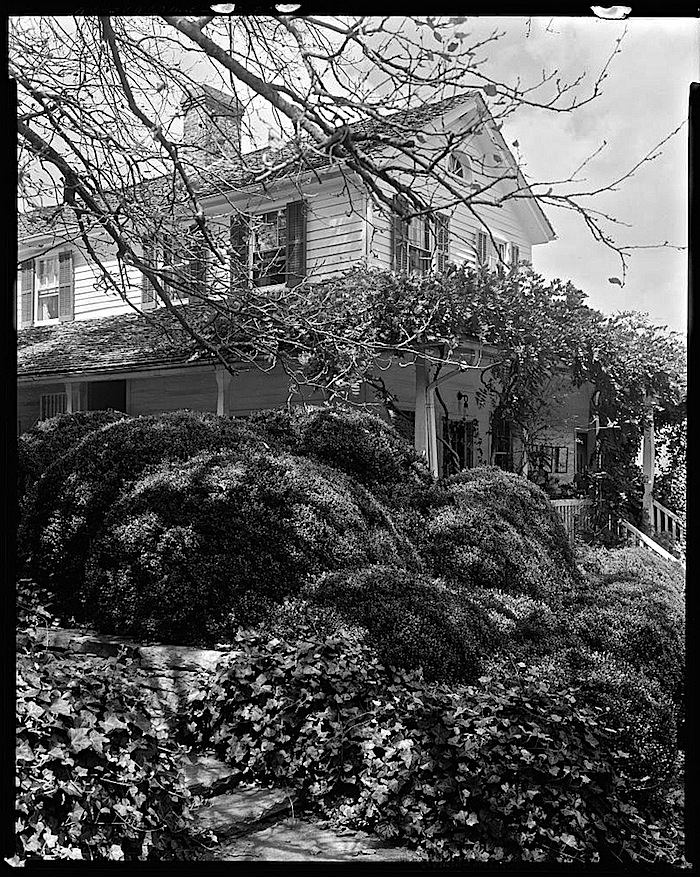
. . .the boxwoods cover the slope like giant boulders.
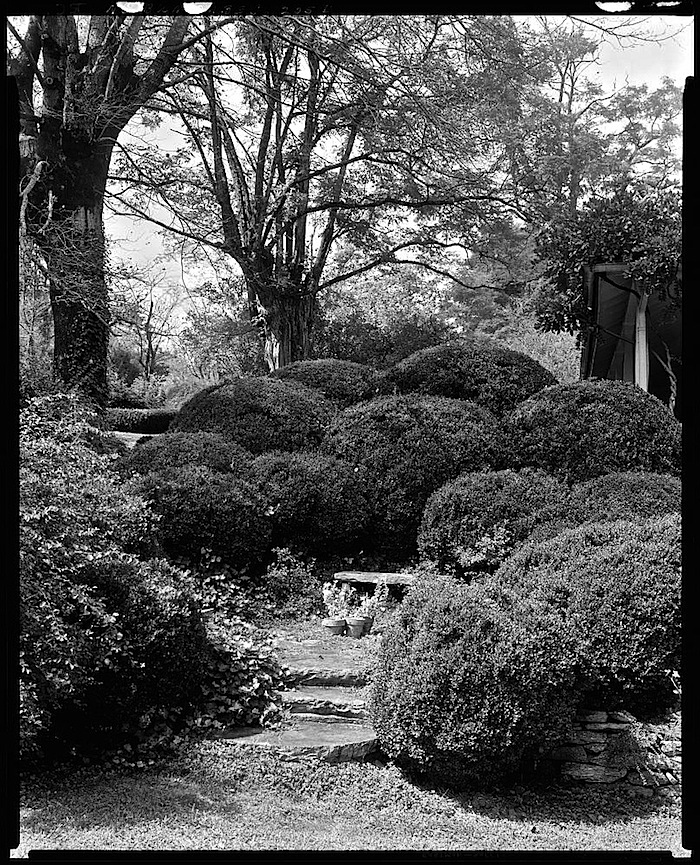
And below is the porch after the turn,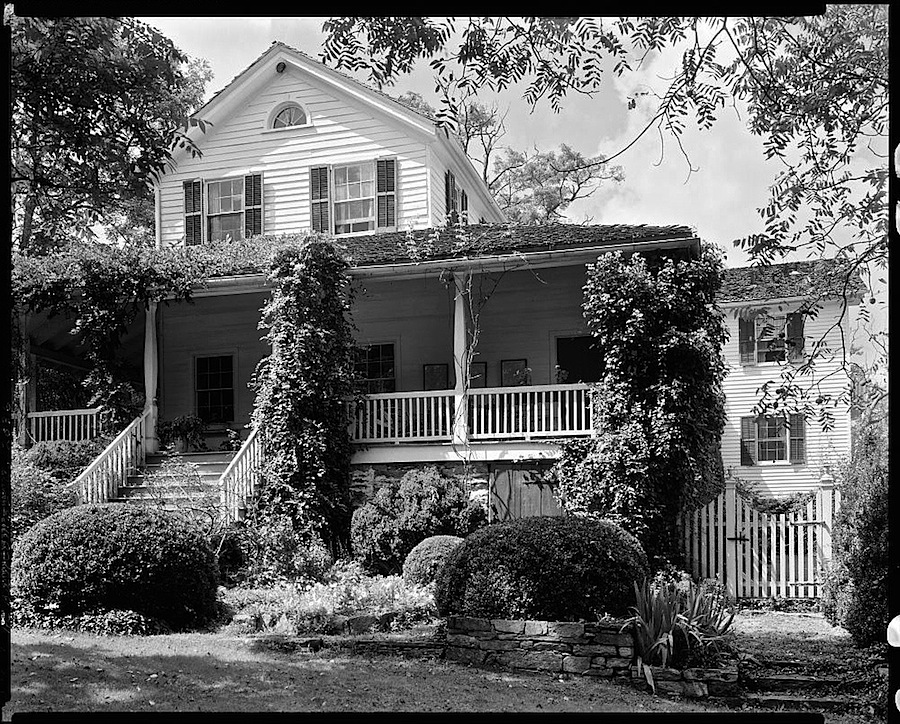
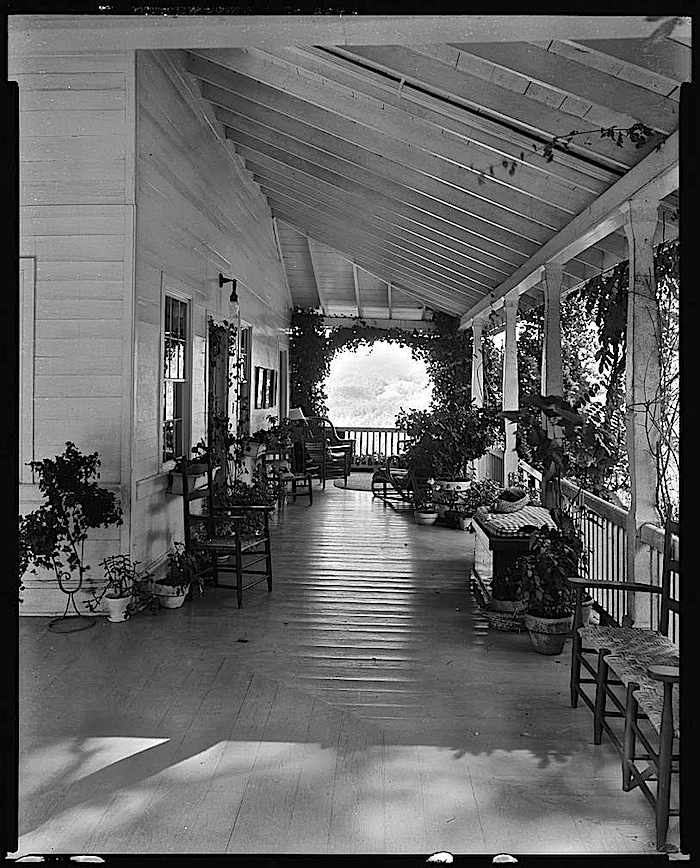
and a view of the mountains.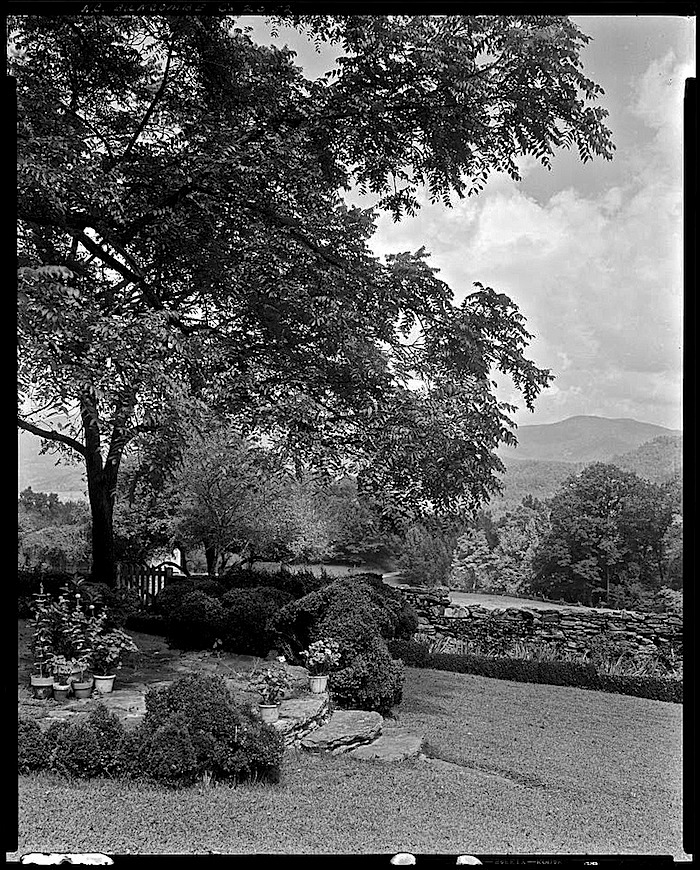
A bit of heaven.
Best of all, it seems that most of the old boxwoods are still in place. The property is being run as an organic farm by descendants of the McClures, the couple who owned the Inn when Johnston took these photos.
Pictures of a beautifully styled wedding held at the Inn in recent years show it to have been in loving hands over the decades.
The house began as two log structures, possibly built by 1806 or maybe even earlier. Between 1839 and 1850, Bedford Sherrill connected and enlarged those buildings to make an inn for travelers on the “Hickory Nut Turnpike,” an early stage route to western North Carolina.
There are many more details about the history and design of the house and grounds here.
 enclos*ure