The Sunday porch: Oak Hill, Alabama

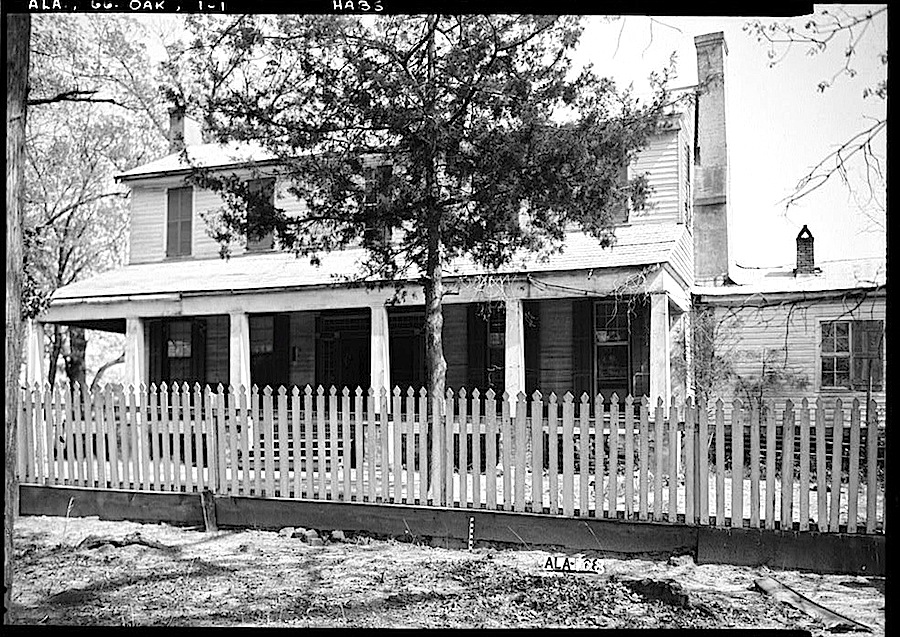
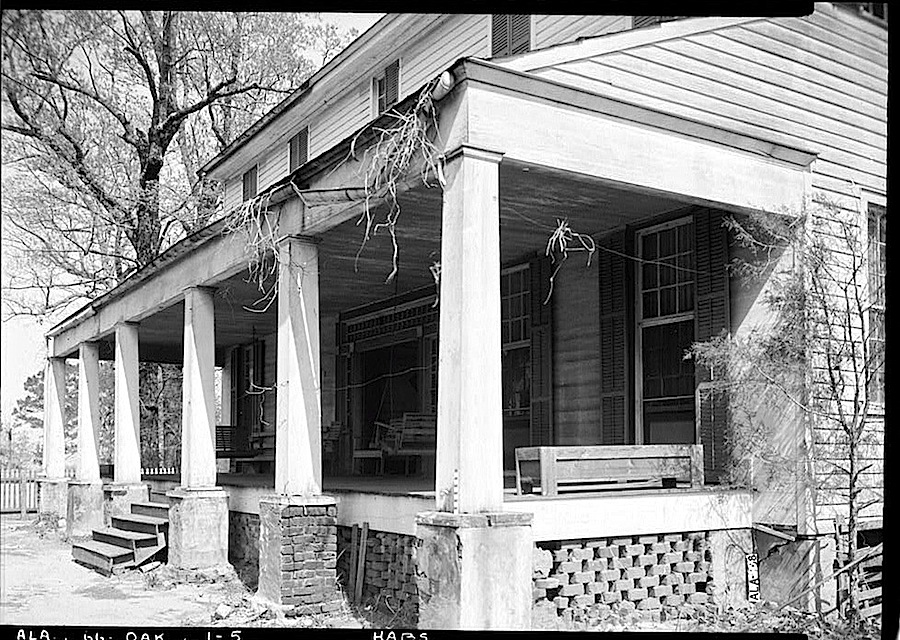
Old Ramsey Hse., 1937, A. Bush, HABS, Library of CongressThe Ramsey-Jones-Bonner House, Oak Hill, Alabama, March 24, 1937, by Alex Bush for an Historic American Buildings Survey (HABS), via Library of Congress Prints and Photographs Division (all photos here).

A nice front porch, but not especially interesting — except that it is a Carolina (or rain) porch.
Old Ramsey Hse., 1937, A. Bush, HABS, Library of Congress

Its columns rest on masonry bases set “directly on the ground . . . in front of the foundation of the porch floor. This is a distinctive regional characteristic,” according to the registration form (1998) for the National Register of Historic Places for the Oak Hill Historic District.

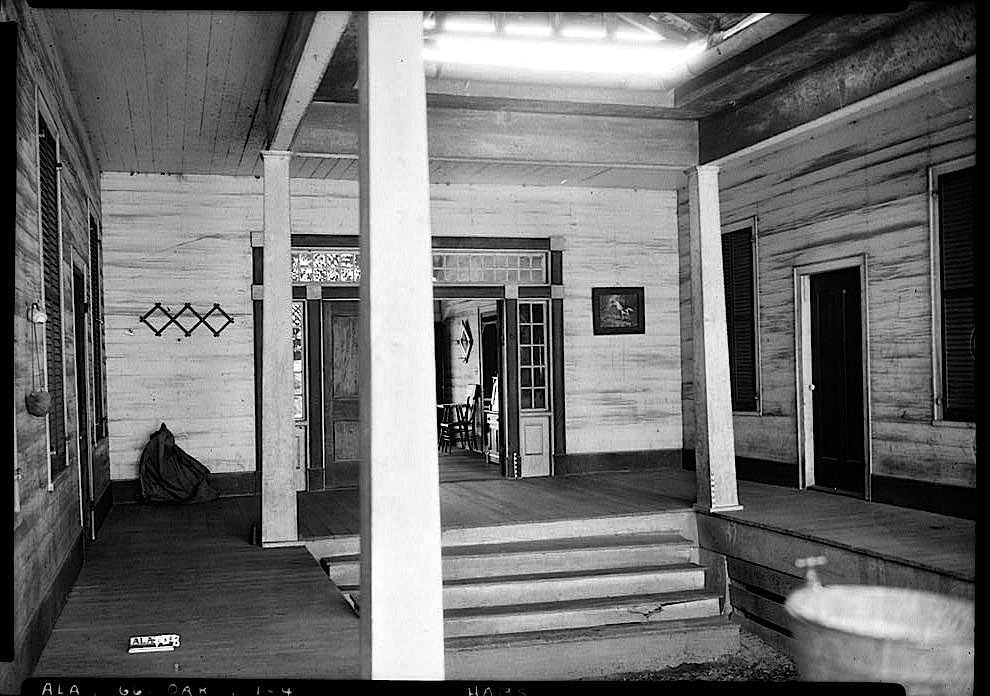
The back porch, however, is more unusual.
This slideshow requires JavaScript.

Old Ramsey Hse., 1937, A. Bush, HABS, Library of Congress

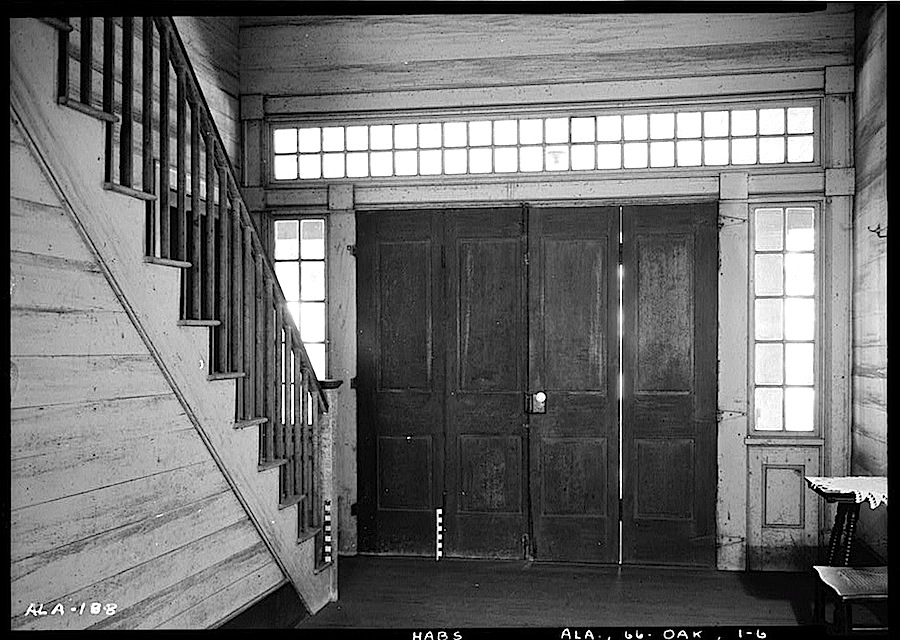
“[The] rear wings have integral recessed porches facing inward and creating an atrium-like space which has been roofed [with] corrugated metal. . . . [The] . . . first floor   [is] essentially an enclosed dogtrot. . . .”
Old Ramsey Hse., 1937, A. Bush, HABS, Library of Congress

The house was built in 1836 by Abiezer Clarke Ramsey, a school teacher and Methodist circuit rider.  In 1937, he married Elizabeth Amanda Wardlaw, a widow with four children.  She and Abiezer had seven more before her death in 1854.

The house still stands in the Oak Hill Historic District.
Continue reading “The Sunday porch: Oak Hill, Alabama”
Vintage landscape: Lob’s Wood

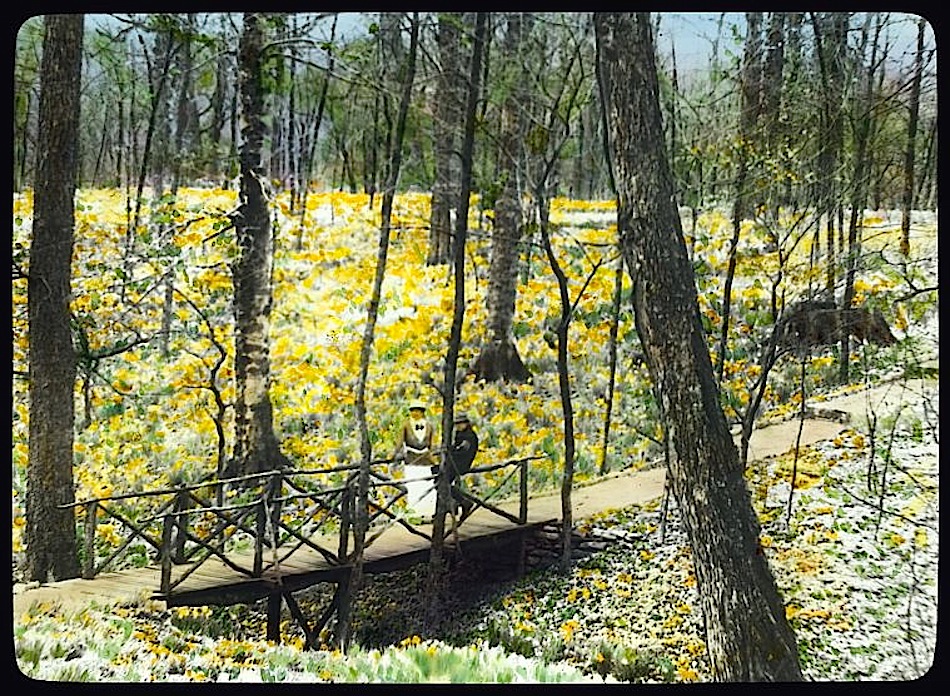
Lob's Wood, Ohio, ca. 1920, via Library of Congress“‘Lob’s Wood,’ . . . Perintown (Milford), Ohio. Woodland daffodils,” ca. 1920, a hand-colored lantern slide by Frances Benjamin Johnston, via Library of Congress Prints and Photographs Division.

The 97-acre property pictured above was purchased in 1898 by Carl H. Krippendorf, a Cincinnati businessman who had spent childhood summers in the surrounding area.  He wanted to save the woodland from being turned into a tobacco field.

Krippendorf soon built a house there for his new wife, Mary Greene, and began planting daffodils and other bulbs. They originally called the land Karlsruhe, meaning “Karl’s place of peace” in German. After World War I, the name was changed to Lob’s Wood.  

In 1919, during “Daffodil Days at the Krippendorf Farm at Perintown,” $2,700* was raised for war-devastated France. In one afternoon, they sold 15,000 cut daffodils.

Carl became a friend and correspondent of the garden writer Elizabeth Lawrence.  She wrote about his garden in The Little Bulbs and Lob’s Wood.

 The Krippendorfs lived on the property (eventually 175 acres) for 64 years.  Today the house and woods are part of the Cincinnati Nature Center.

What explains poetry is that life is hard
But better than the alternatives,
The no and the nothing. Look at this light
And color, a splash of brilliant yellow

Punctuating an emerald text. . .

Alicia Ostriker, from “Daffodils

*about $34,000 today.

The Sunday porch: Belvidere, Illinois

2 Palmer Hse., 1937, HABS, Library of CongressThe Palmer House, Belvidere, Illinois, 1937, by Joseph Hill for an Historic American Buildings Survey (HABS), via Library of Congress Prints and Photographs Division.

1 Palmer Hse., 1937, HABS, Library of Congress

The HABS described the stone portion of the home — built in 1851 — as “severe Greek Revival” and then noted that the front porch was “ornamented with jig-saw wood pat[t]erns which distinguish the building.”

The house is still standing, although the porch has been rebuilt (at half size) as an enclosed porch.

You can see more Sunday porches here.

Life in gardens: Mr. Hesse

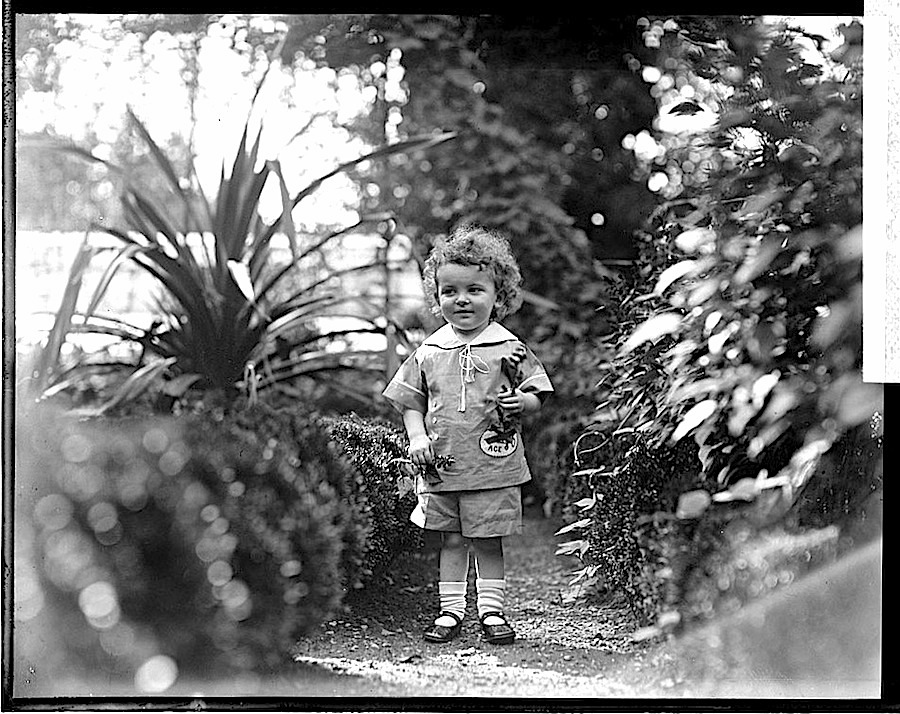
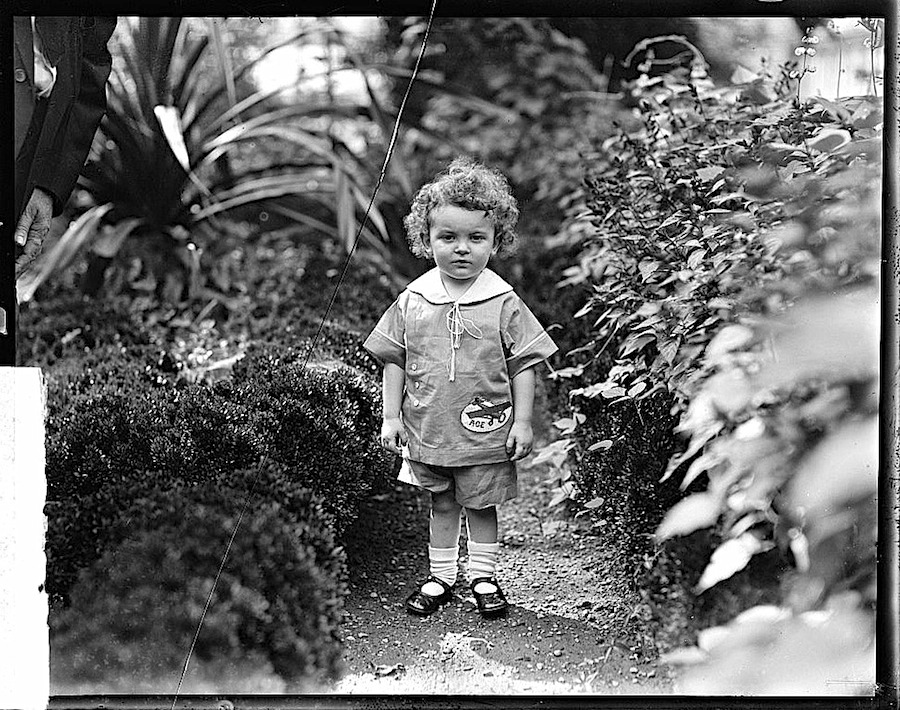
2 Mr. Hesse, Wash, D.C. 1928 or 29, Library of Congress“Mr. Hesse, Bot.[anic] Gardens,” Washington, D.C., 1928 or 29, by National Photo Company, via Library of Congress Prints and Photographs Division.

Years later, did he go back and say, “I remember it as so much bigger. . . “?

1 Mr. Hesse, Wash, D.C. 1928 or 29, Library of Congress

The little boy was almost certainly the son of George Wesley Hess, who was Superintendent and then Director of the U.S. Botanic Garden from 1913 to 1934. There are more photos of the family and the Garden here.

I bless thee, Lord, because I GROW
Among thy trees, which in a ROW
To thee both fruit and order OW.

— George Herbert, from “Paradise”

The winter garden: Greene County

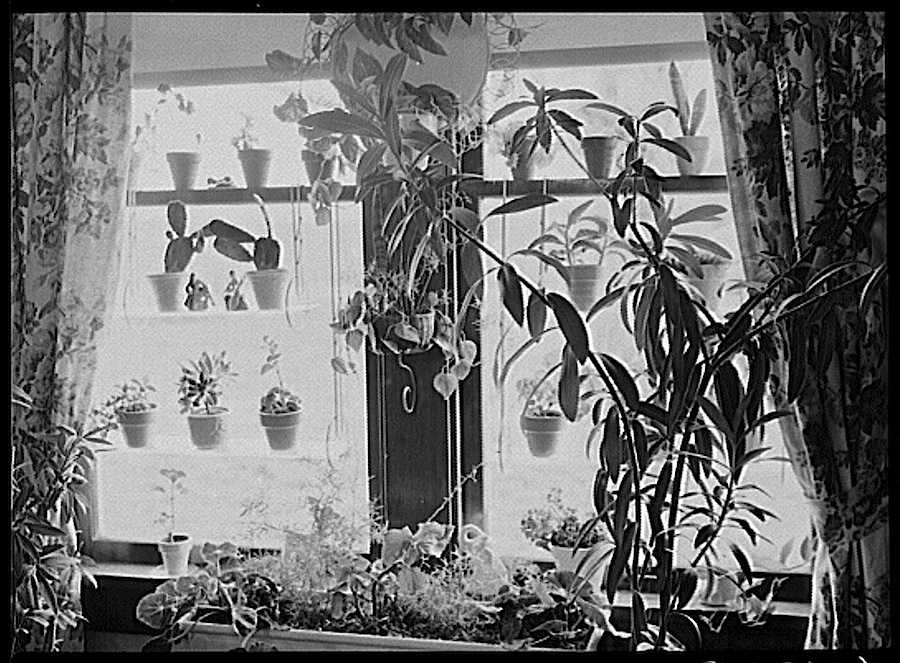
Farmhouse window, John Vachon, Library of Congress“Plants in window of farm home. Greene County, Iowa,” 1940, by John Vachon, via Library of Congress Photographs Division.

The pleasure of working outside is only matched by the pleasure of dreaming inside.

Tyler Whittle