Redistribution of produce

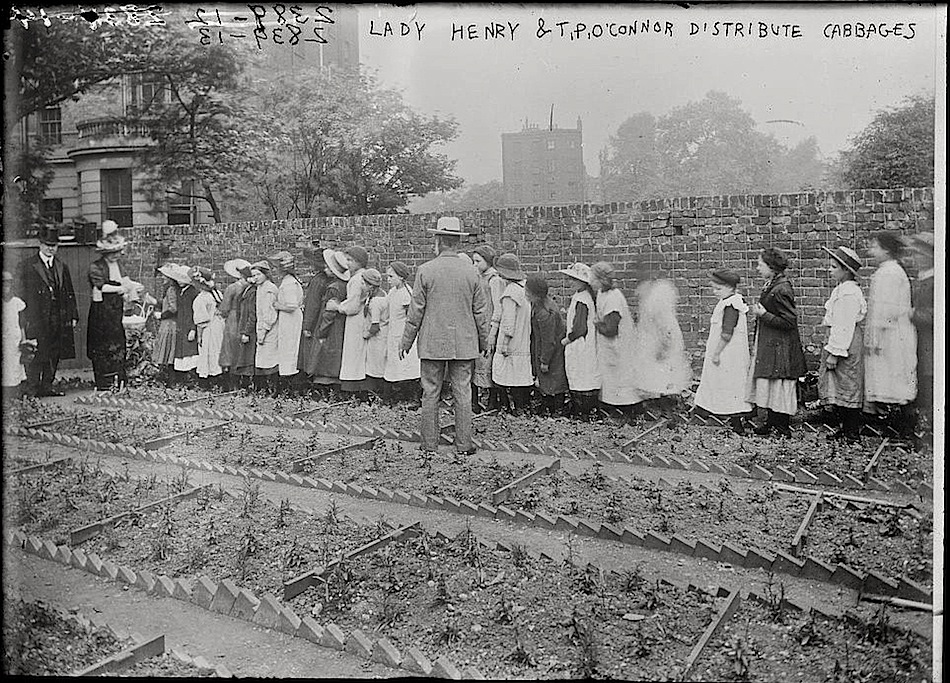
Cabbage distribution, Library of Congress
Lady Henry Somerset and T.P. O’Connor in a garden distributing cabbages to children, between ca. 1910 and ca. 1915, Bain News Service, via Library of Congress, Prints and Photographs Division.

Lady Henry  (born Lady Isabel Cocks) was an heiress who married the second son of the Duke of Beaufort.  After the couple separated, she turned to charity work on her various properties. She later became president of the British Women’s Temperance Association and a campaigner for birth control and women’s suffrage. In 1913, the readers of the London Evening News voted her their choice for first female prime minister of the United Kingdom.

Thomas Power O’Connor was an Irish journalist who founded and edited several newspapers in London. He was also a member of Parliament for the Irish Nationalist Party and later as an independent (representing Galway and then Liverpool).

I cannot tell what plants are growing in the flower (?) beds, but they are sectioned off — perhaps by bloom color?
The Sunday porch: Montgomery, Alabama

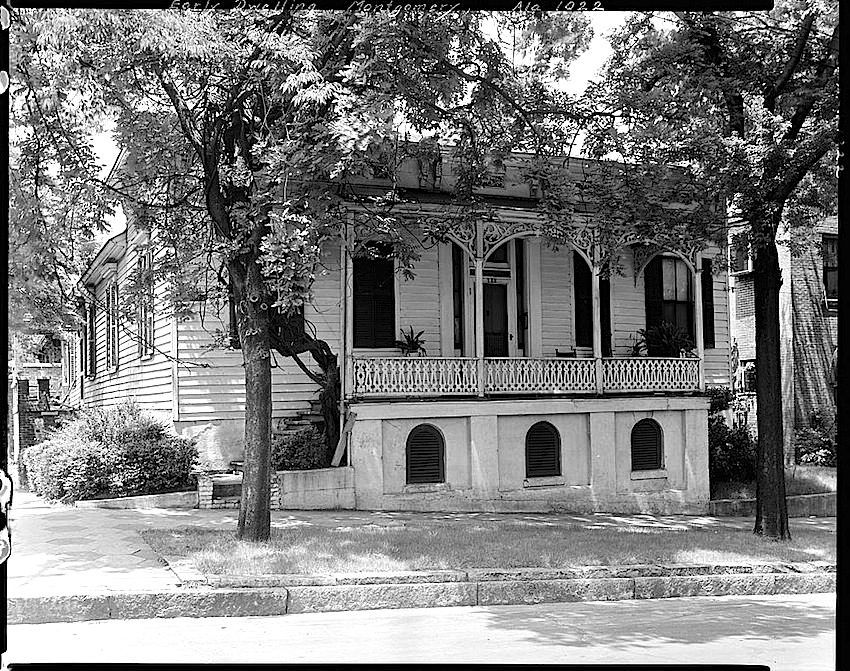
“Early dwelling, 222 S. Perry St.,” Montgomery, Alabama, 1939, by Frances Benjamin Johnstonvia Library of Congress Prints and Photographs Division.

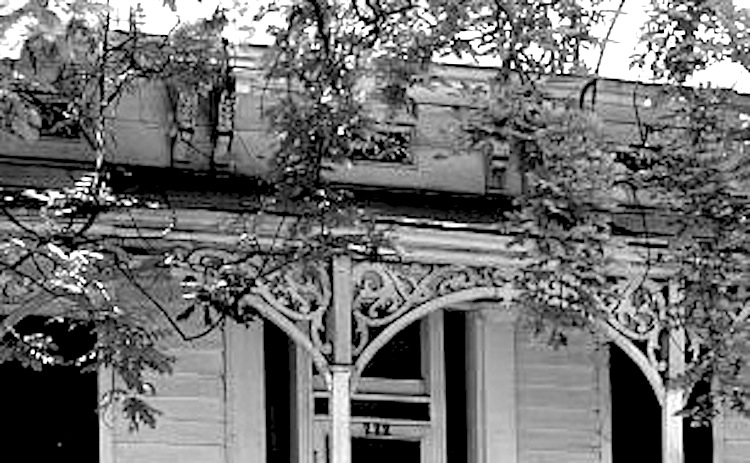
The porch woodwork pattern is echoed in the little attic windows. Click to enlarge.

A huge vine is growing beside the steps, but it seems to go up into the tree on the left, rather than onto the porch.

The sidewalk is tiled in a simple geometric pattern. The effect, with the arches of the porch and basement windows, is a little Moroccan/Andalusian.

The house no longer stands.

Englewood, New Jersey

“Beechgate,” Englewood, New Jersey, 1918, a hand-colored glass lantern slide by Frances Benjamin Johnston, via Library of Congress Prints and Photographs Division.

Some mid-week prettiness. . . . The four-acre garden was designed by Anna Gilman Hill about 1911.

Hill and her husband also owned “Grey Gardens,” the East Hampton estate later famously inhabited by Edith Bouvier Beale and “Little Edie.” She was Director of the Garden Club of America for six years in the 1920s, and, in 1938, she wrote a book about her gardening life, called Forty Years of Gardening. You can read it online here.

The Sunday porch: Williamsboro, N.C.

 “Blooming Hope” (also called “Cedar Walk”), Williamsboro, North Carolina, 1938, by Frances Benjamin Johnston, via Library of Congress Prints and Photographs Division.

I like the way the vines are a little blurry from a sudden gust of wind.

The home may have been built as early as the 1750s by a Hutchins (or possibly Robert) Burton, who called it “Blooming Hope.” He may have operated a boarding school there. It also seems to have served as an academy for young ladies later in the early 1800s, run by the Rev. Henry Patillo. At some point in its first 100 years, there was a suicide in the house (either Burton or Patillo’s son), and it acquired a reputation as haunted. It was torn down in 1967.

U.S. Botanic Garden

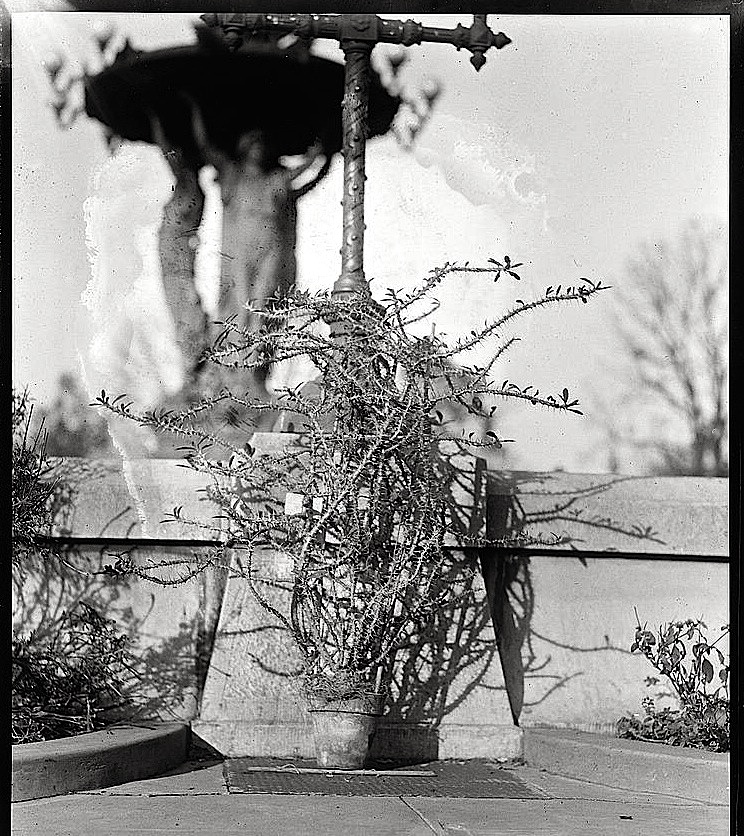
Euphorbia miliiU.S. Botanic Garden, Washington, D.C., 1920, by National Photo Company, via Library of Congress Prints and Photographs Division.

The plant is a native of Madagascar. Its common name is “crown of thorns.”