Life in gardens: wildflowers

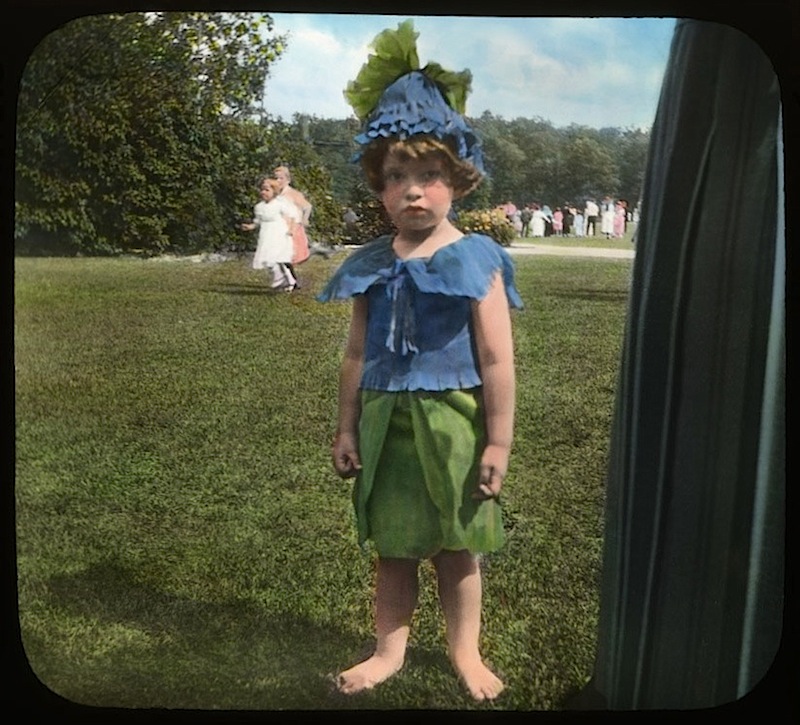
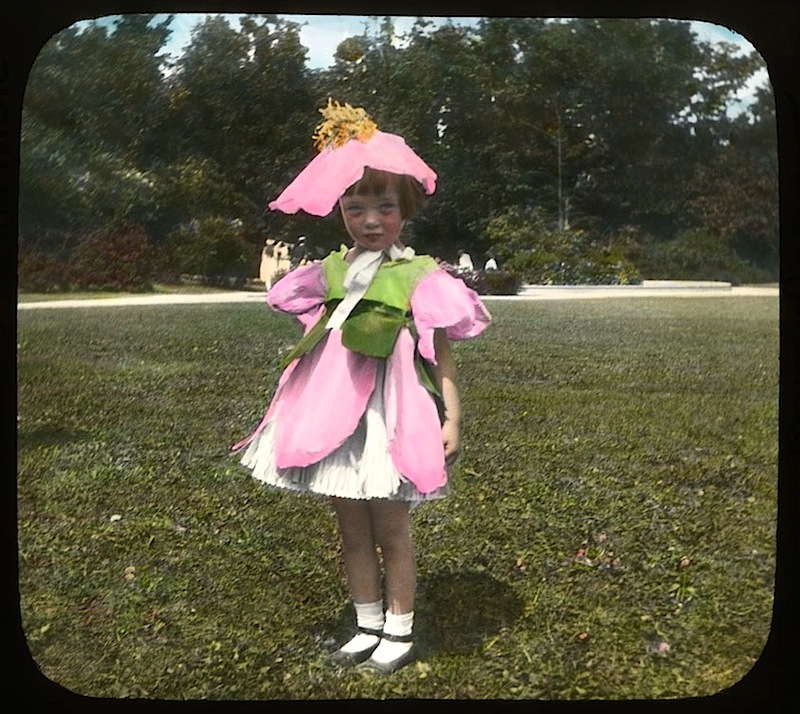
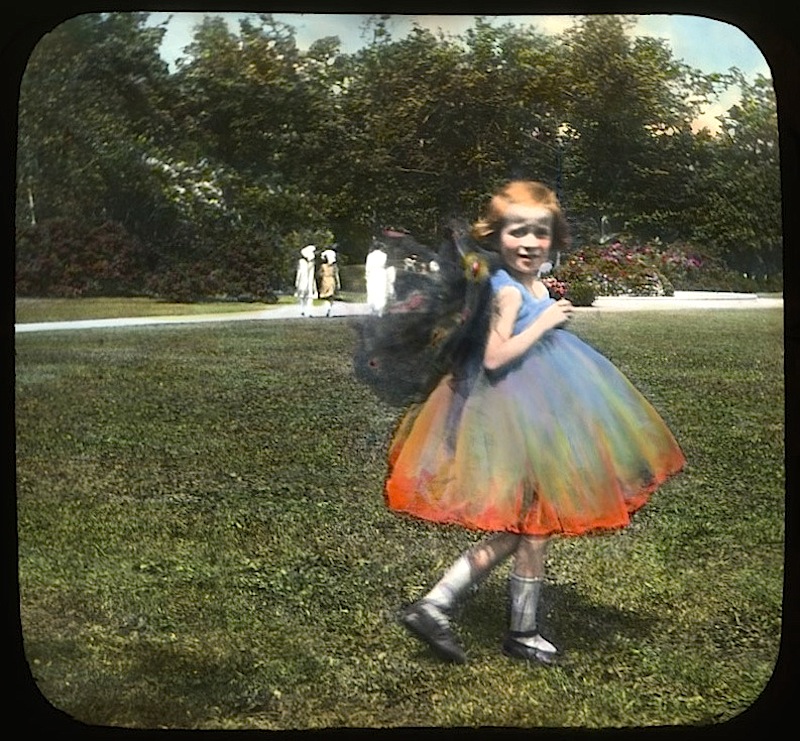
5 Child:ren in wildflower costumes, Chicago, ca. 1920, The Field Museum LibraryChildren costumed as flowers or insects for an event of the Wild Flower Preservation Society, Illinois Chapter, probably in a Chicago park, ca. 1920, hand-colored glass lantern slides by an unknown photographer, via The Field Museum Library Commons on flickr (all images here).

6 Child:ren in wildflower costumes, Chicago, ca. 1920, The Field Museum Library

The Wild Flower Preservation Society of America was founded in 1902 with money given to the New York Botanical Garden by Olivia E. and Caroline Phelps Stokes.  The funds were to be used for the protection of native plants.

1 Child:ren in wildflower costumes, Chicago, ca. 1920, The Field Museum Library

The Society dissolved in 1933, but much of its work was taken up by the Garden Club of America and by another Wild Flower Preservation Society, founded in 1925 in Washington, D.C. (which seems no longer to exist).
2 Child:ren in wildflower costumes, Chicago, ca. 1920, The Field Museum Library

3 Child:ren in wildflower costumes, Chicago, ca. 1920, The Field Museum Library

4 Child:ren in wildflower costumes, Chicago, ca. 1920, The Field Museum Library

7 Child:ren in wildflower costumes, Chicago, ca. 1920, The Field Museum Library

12 Child:ren in wildflower costumes, Chicago, ca. 1920, The Field Museum LibraryAbove and below: Mayapples.9 Child:ren in wildflower costumes, Chicago, ca. 1920, The Field Museum Library

10 Child:ren in wildflower costumes, Chicago, ca. 1920, The Field Museum LibraryAbove: a bee.

13 Child:ren in wildflower costumes, Chicago, ca. 1920, The Field Museum Library
Click here to see several more of the slides.

The Sunday porch: Belvidere, Illinois

2 Palmer Hse., 1937, HABS, Library of CongressThe Palmer House, Belvidere, Illinois, 1937, by Joseph Hill for an Historic American Buildings Survey (HABS), via Library of Congress Prints and Photographs Division.

1 Palmer Hse., 1937, HABS, Library of Congress

The HABS described the stone portion of the home — built in 1851 — as “severe Greek Revival” and then noted that the front porch was “ornamented with jig-saw wood pat[t]erns which distinguish the building.”

The house is still standing, although the porch has been rebuilt (at half size) as an enclosed porch.

You can see more Sunday porches here.