The Sunday porch: Belvidere, Illinois

2 Palmer Hse., 1937, HABS, Library of CongressThe Palmer House, Belvidere, Illinois, 1937, by Joseph Hill for an Historic American Buildings Survey (HABS), via Library of Congress Prints and Photographs Division.
1 Palmer Hse., 1937, HABS, Library of Congress

The HABS described the stone portion of the home — built in 1851 — as “severe Greek Revival” and then noted that the front porch was “ornamented with jig-saw wood pat[t]erns which distinguish the building.”

The house is still standing, although the porch has been rebuilt (at half size) as an enclosed porch.

You can see more Sunday porches here.

The winter garden: San Francisco

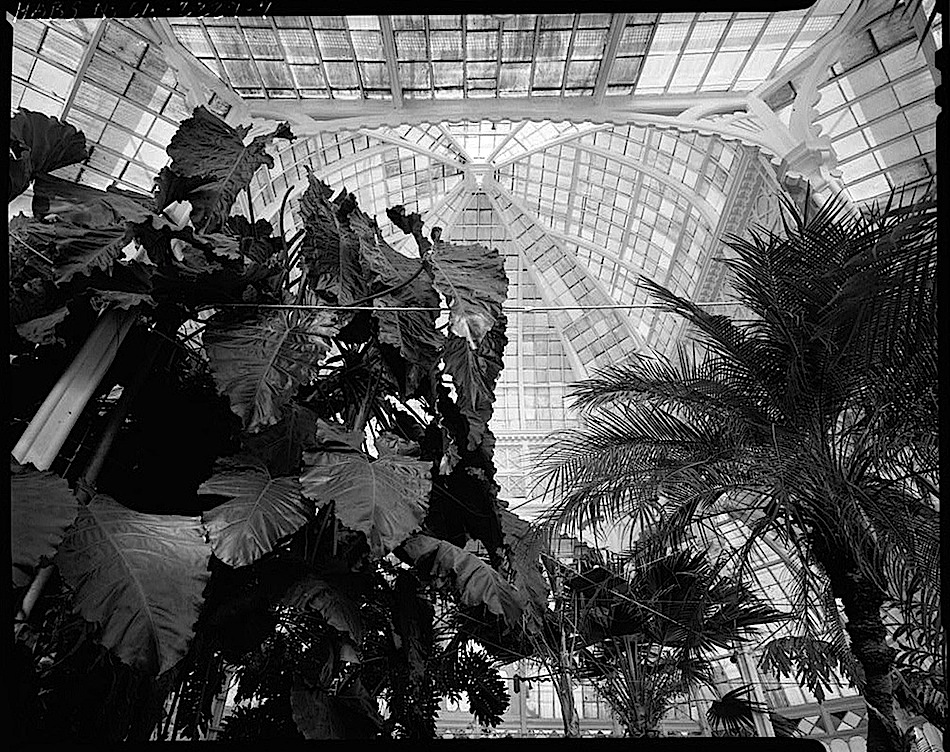
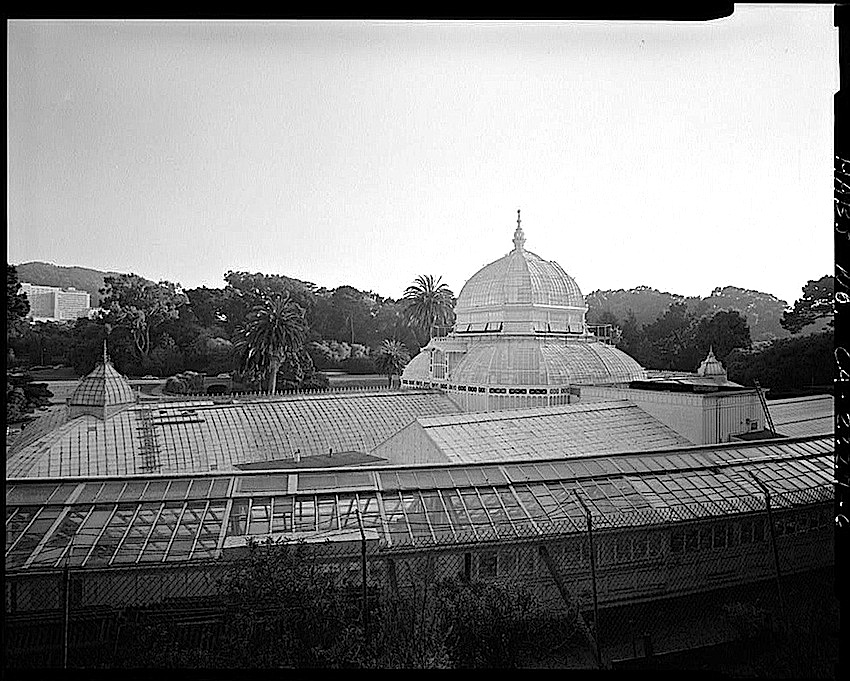
Conservatory Dome 1, by J. Lowe, 1981, San Francisco, Library of CongressThe dome of the Conservatory of Flowers, Golden Gate Park, San Francisco, California, 1981, by Jet Lowe for an Historic American Buildings Survey, via Library of Congress Prints and Photographs Division.

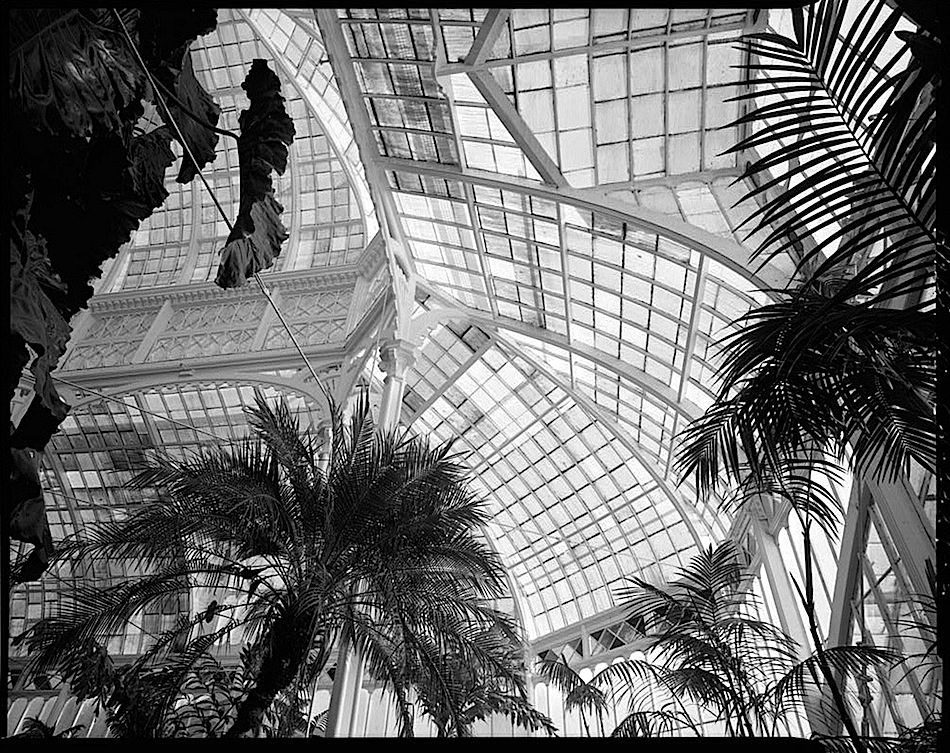
Conservatory Dome 2, by J. Lowe, 1981, San Francisco, Library of Congress

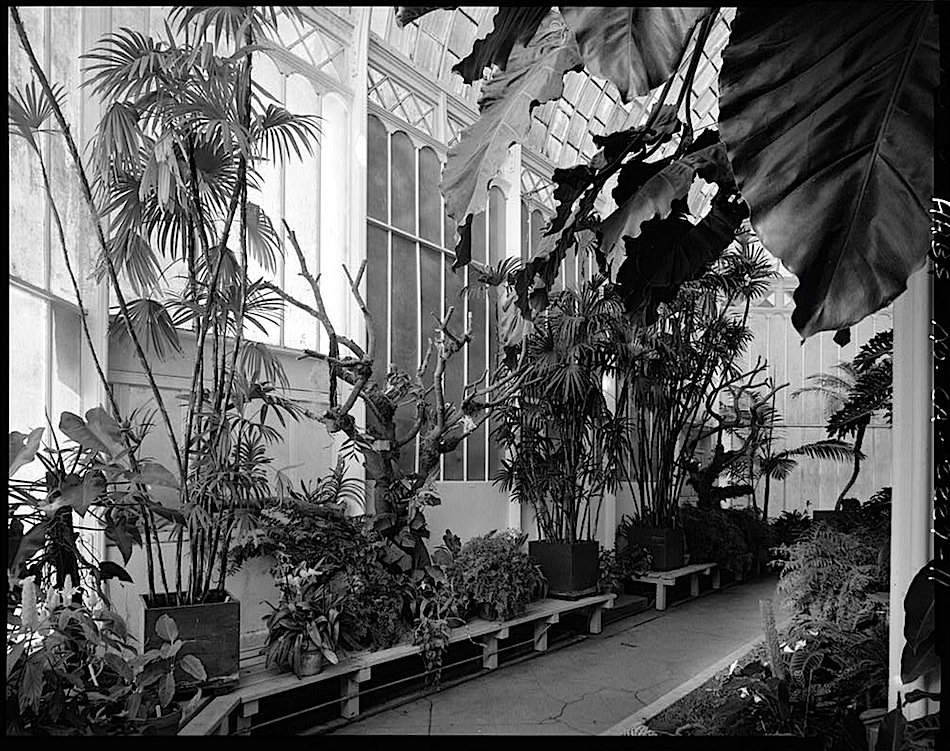
Conservatory Interior, by J. Lowe, 1981, San Francisco, Library of Congress

The Conservatory is the oldest public wood-and-glass conservatory in North America, opening to the public in 1879.

Conservatory Exterior, by J. Lowe, 1981, San Francisco, Library of Congress

The Sunday porch: shadows

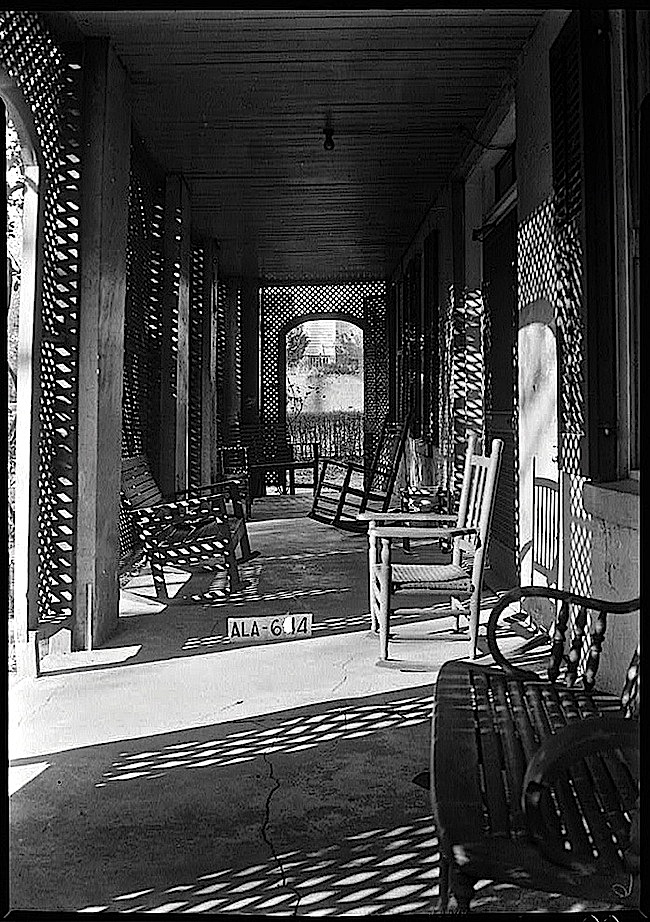
Lattice on 1935 Ala. porch, Library of  CongressFirst floor porch of the Kenneworth-Moffatt House, Montgomery, Alabama, October 1935, by W. N. Manning for an Historic American Buildings Survey (HABS), via Library of Congress Prints and Photographs Division.
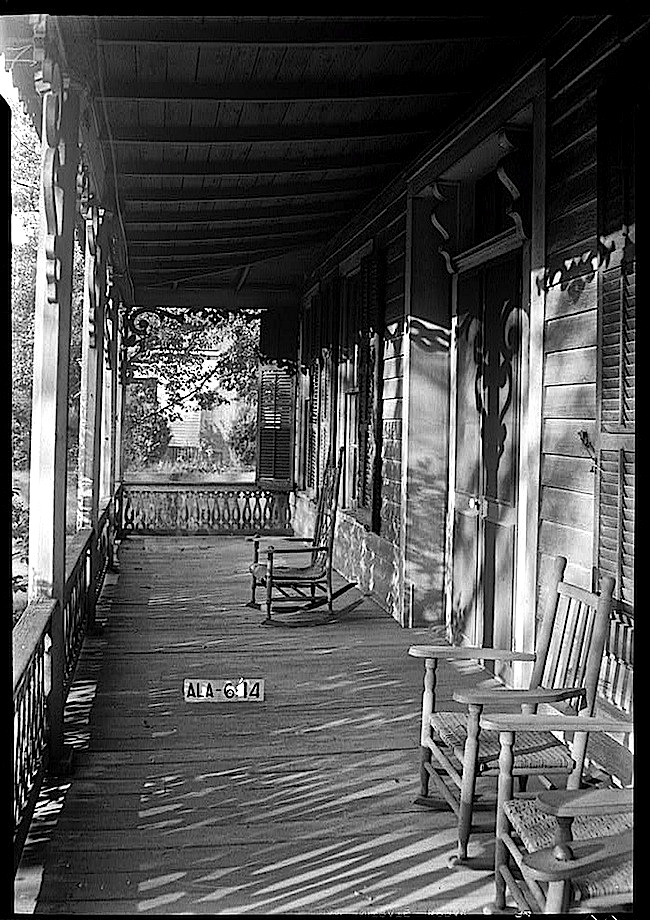
Lattice Ala. porch, upstairs, Library of  CongressSecond-floor porch of the Kenneworth-Moffatt House, Montgomery, Alabama, October 1935, by W. N. Manning.

Lattice on Ala. porch, full view, Library of  CongressFront view of the Kenneworth-Moffatt House, Montgomery, Alabama, April 1934, by W. N. Manning.

The building — constructed in 1855 — is now called the Gerald-Dowdell House and houses a law office. A recent view on Google Maps is here.

The winter garden: Rockwood

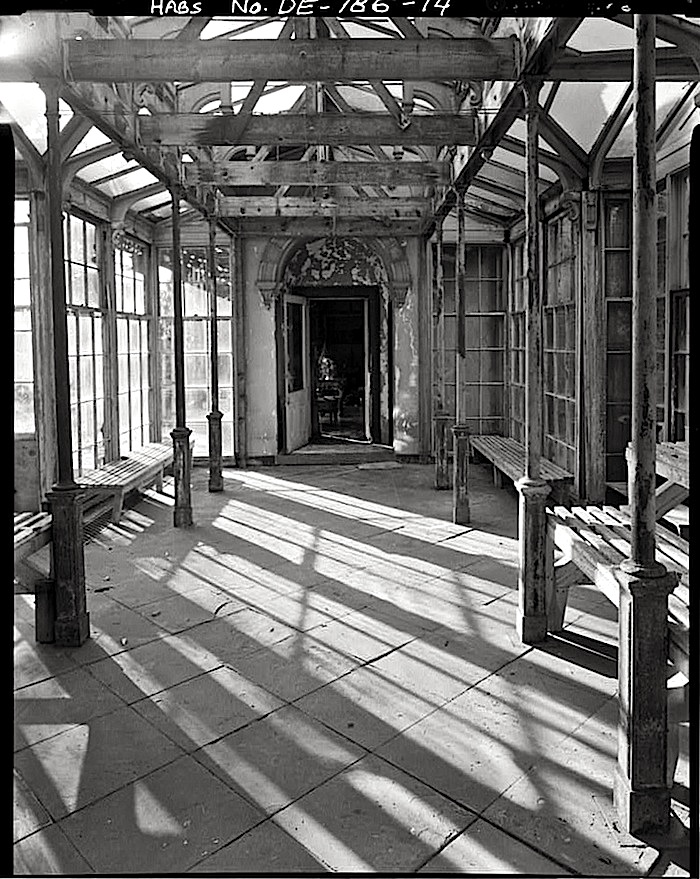
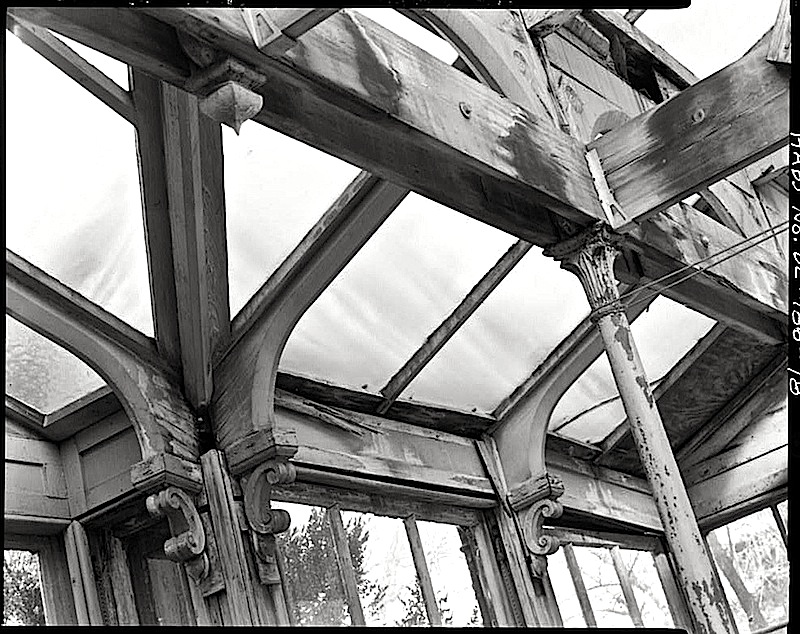
Rockwood, Delaware, 1982 HABS, Library of Congress“Conservatory interior looking southwest,” Rockwood, near Wilmington, Delaware, 1982, by David Ames, via an Historic American Buildings Survey (HABS), Library of Congress Prints and Photographs Division (all photos here).

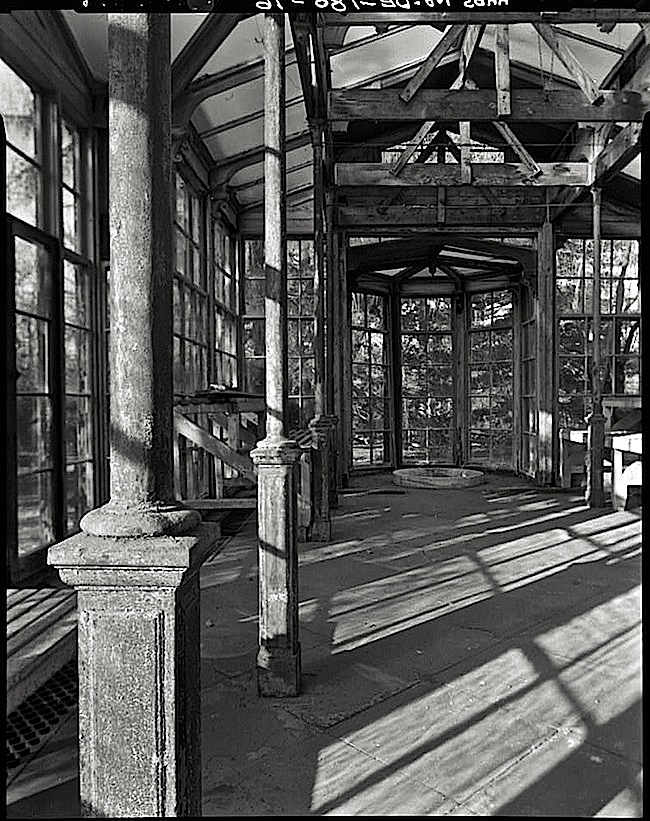
Built between 1851 and 1854 in the Rural Gothic Revival style, the estate still exists as the Rockwood Park and Museum.

Designed for Joseph Shipley, a member of one of the leading Quaker mill-owning families in the area, Rockwood is an unusually complete and effective statement of early Victorian taste in the tradition of A.J. Downing and John Clauduius Loudon. The mansion house reflects both early Victorian romanticism and the picturesque merger of irregular architecture and naturalistic landscape. When taken in conjunction, the architecture, the plan, the garden and the remaining furnishings depict a total physical sensibility that is fast vanishing from America.

— 1986 HABS report

Rockwood, Delaware, 1982 HABS, Library of Congress“Conservatory, detail of cast iron columns looking northeast.”

Rockwood, Delaware, 1982 HABS, Library of Congress“Conservatory, roof and northwest wall looking north.”

More winter gardens are here. And more abandoned greenhouses here on the blog Messy Nessy Chic.

The Sunday porch: Montana

This slideshow requires JavaScript.

W. C. Child Ranch, near Helena, Montana, ca. 1890,* from an Historic American Building Survey (HABS), via Library of Congress Prints and Photographs Division.
Mr. Child became rich from prospecting in Montana. He built this octagonal house on his 3,000-acre ranch in the late 1880s.

However, he used it not as a home, but as a party space.  (The whole second floor was a ballroom.) He and his friends — sometimes over 100 — would take the Northern Pacific train from nearby Helena for banquets and dances lasting late into the night.

By 1893, Child was broke and had to assign the ranch to another man.  He was found dead in the house a month later.

Child called the ranch “White Face Farm” for the Hereford cattle he raised there, and he built Montana’s largest barn to protect them during the winters. There are more details here.

The house and barn still exist as a special events center called Kleffner Ranch. *Both HABS pictures here were photocopies of original photographs; the originals are in the collection of the Historical Society of Montana.