Salem, Massachusetts

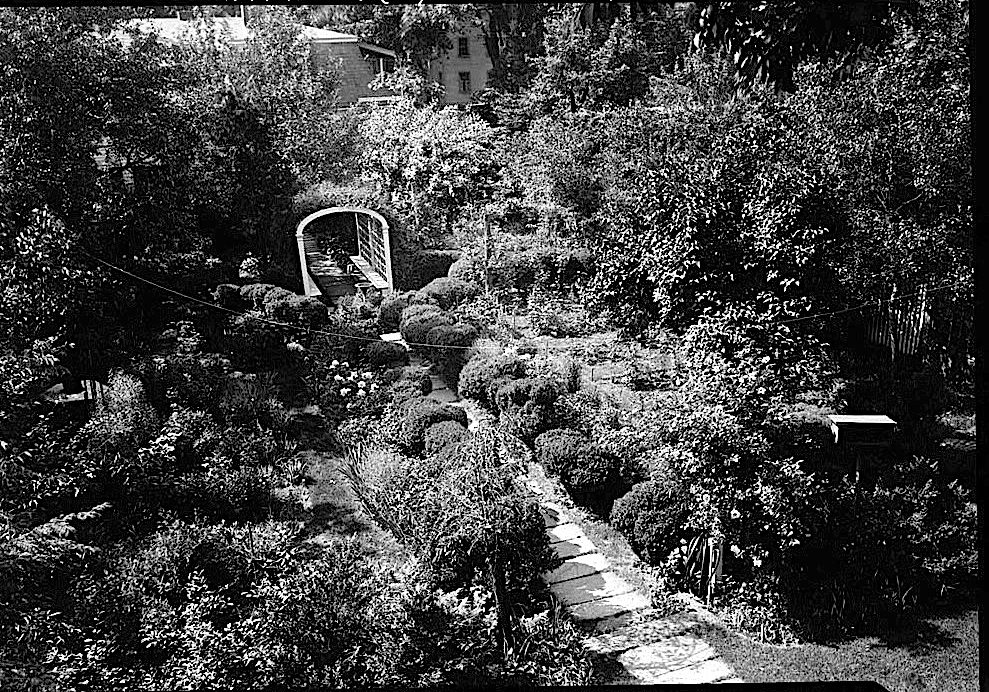
View of garden, looking south, Leverett Saltonstall Place, 41 Chestnut Street, Salem, Massachusetts, June 1940, by Frank O. Branzetti for an Historic American Buildings Survey (HABS), via Library of Congress Prints and Photographs Division (both photos).

In 1808 (or maybe 1810), Thomas Saunders built a double house for his two daughters, Caroline and Mary Elizabeth, and their husbands, brothers Nathaniel and Leverett Salstonstall.

The Leverett Salstonstalls lived in the no. 41 side, shown here.
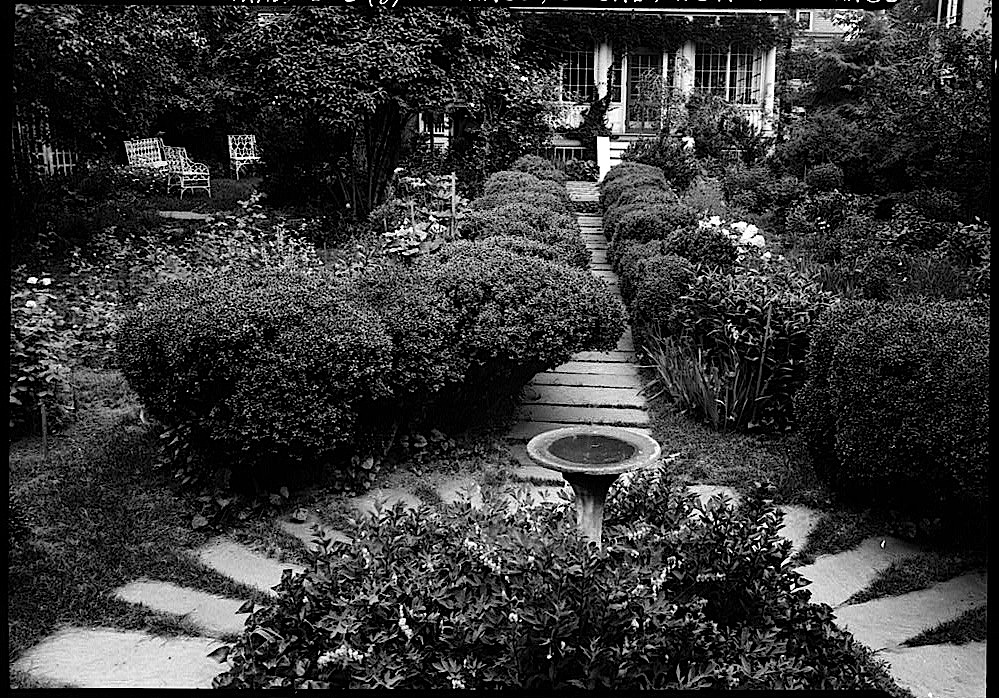
Looking north.

The garden was also laid out about 1810. Its arrangement was reportedly the same as when this drawing was made in 1937.
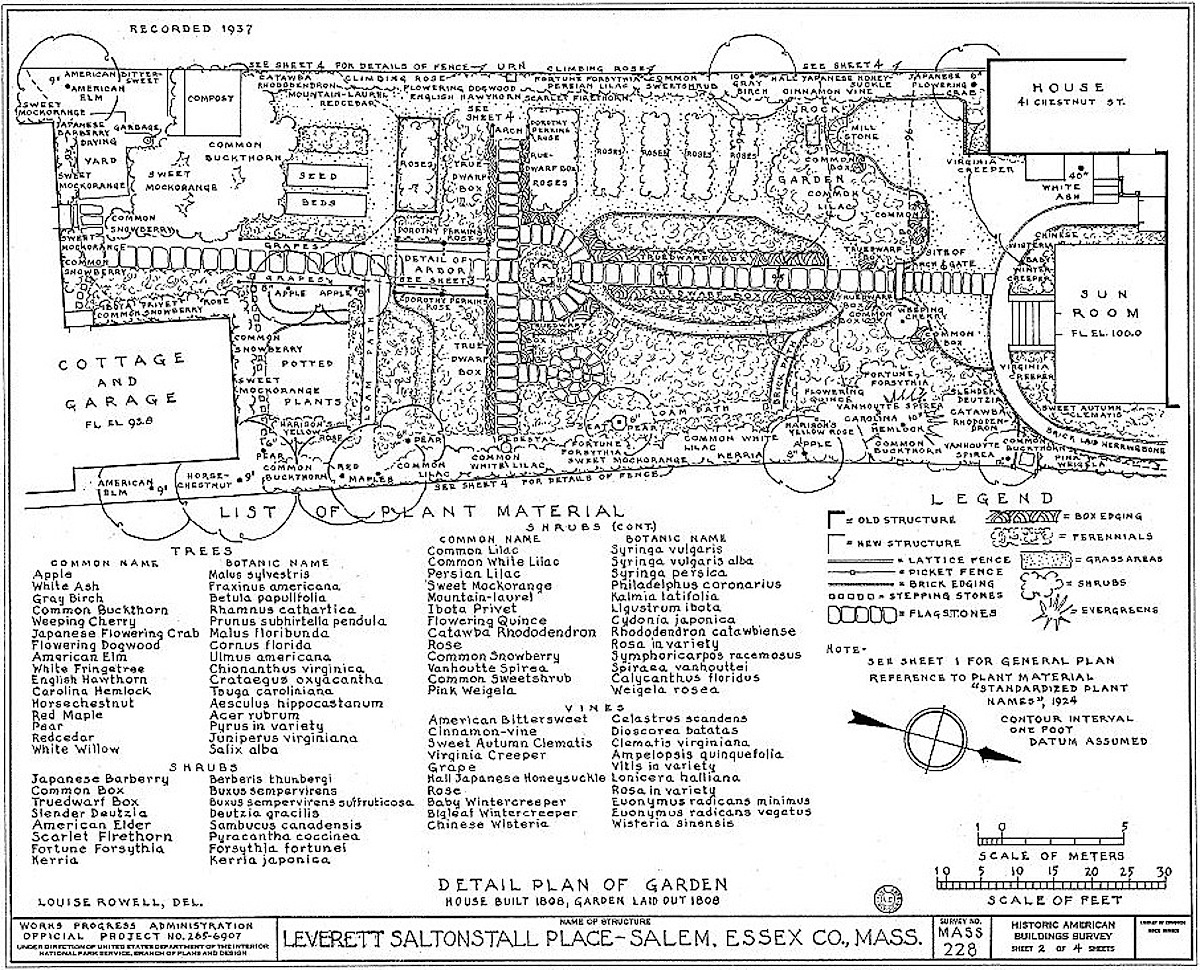
Drawing by Louise Rowell, 1937, for the same HABS. Click to enlarge.

Mary and Leverett’s granddaughter, Mary Saltonstall Parker, also lived in the house in the late 19th and early 20th centuries. She wrote several little books of sentimental verse that fed into the Colonial Revival movement of that period. During WWI, her needlework art was published in House Beautiful and other publications.
Madison, Georgia

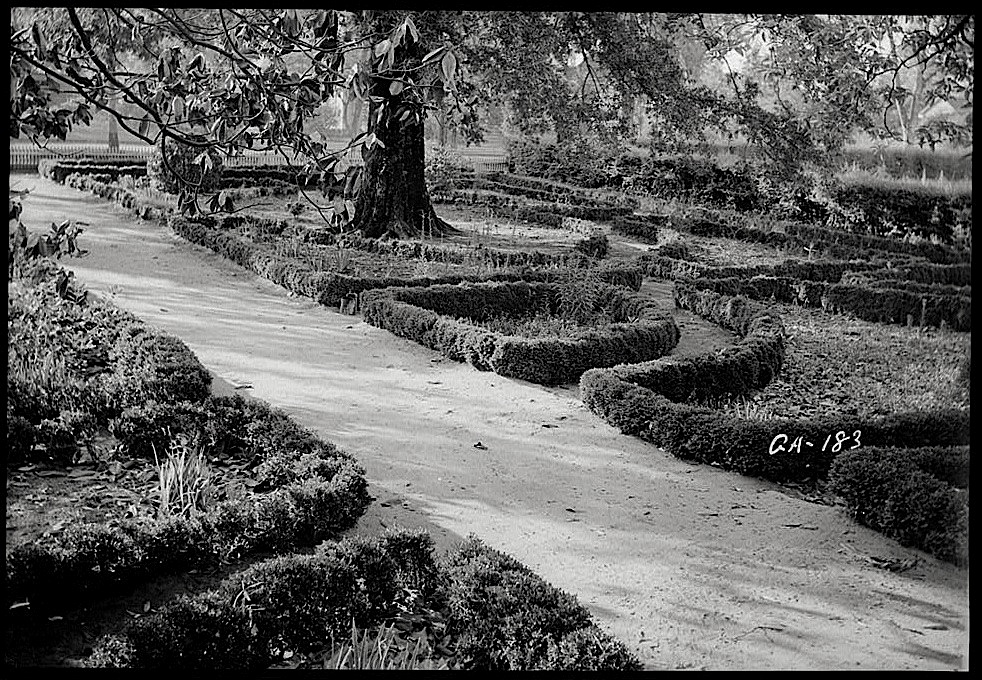
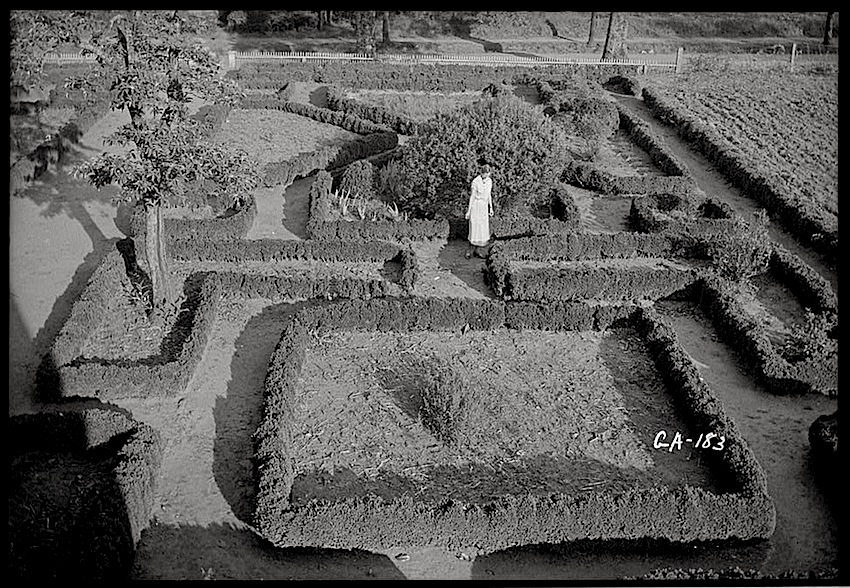
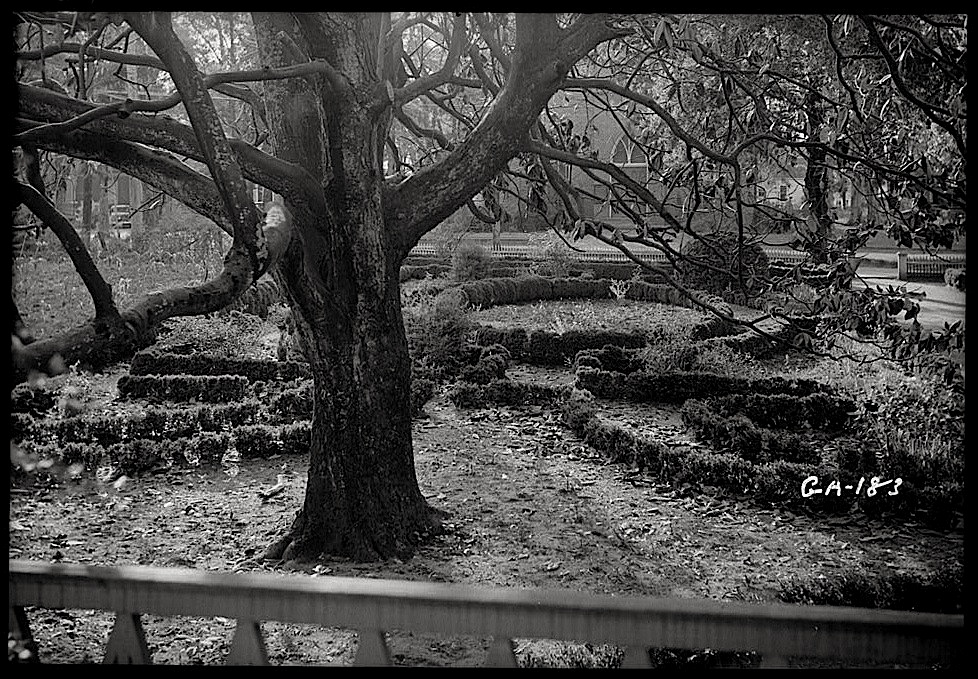
The parterre, viewed from the porch of “Boxwood” (Kolb-Pou-Newton House), Madison, Georgia, June 1936, by L. D. Andrew for an Historic American Building Survey (HABS), via Library of Congress Prints and Photographs Division (all three photos).

‘Parterre’ means ‘on the ground’ (par terre) in French.

The other side of the house, looking down from second-story window.

A parterre is a garden of planting beds laid out on level ground, typically in geometric patterns, often outlined in clipped boxwood.

This house was built about 1845; its garden was laid out about 1854. A 1935 HABS drawing of its parterres, front and back, is here.

There are more photos of the garden in this 2007 article in Garden and Gun.

Nantucket, Massachusetts

3-picket-fences-nantucket-ma-habs-library-of-congressWhitewashed picket fence, Pleasant Street, Nantucket, Massachusetts, 1969, by Jack E. Boucher for Nantucket Historical Study, HABS, via  Library of Congress Prints and Photographs Division (both photos).

Fence on Upper Main Street, Nantucket.

Is there a name for this style of picket fence — with three to four saw-tooths (saw-teeth?) on each wide board?  I feel like there must be, but I can’t find it.

The Sunday porch: Cherry Spring, Texas

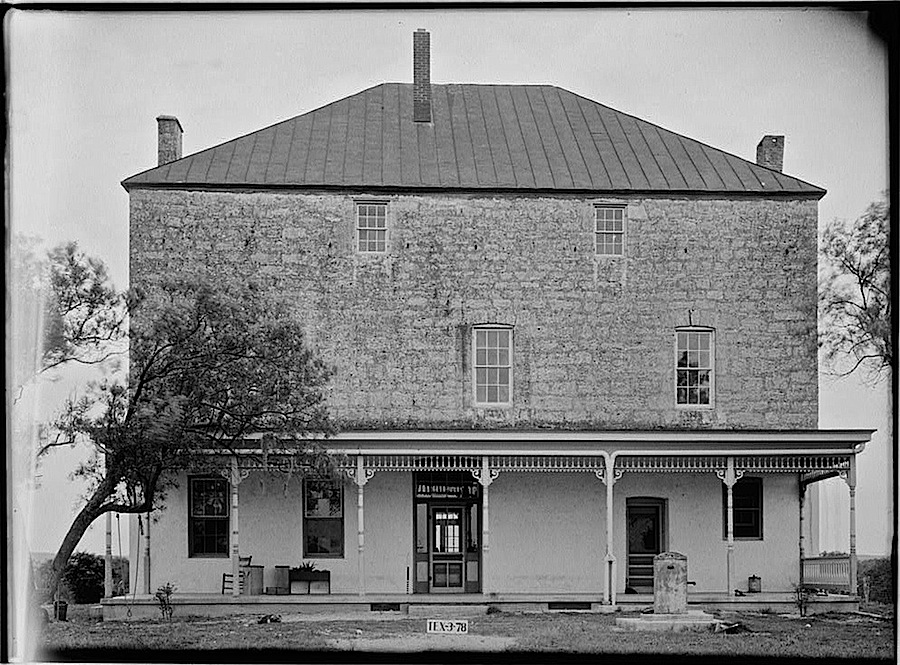
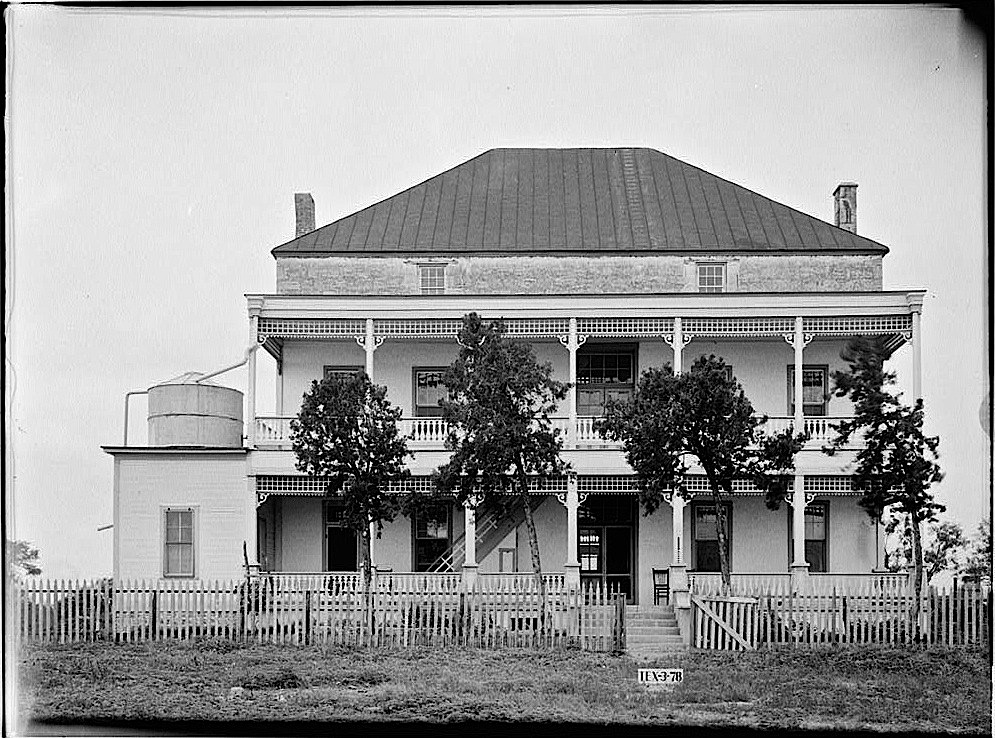
North (back) side of Rode-Kothe House, Cherry Spring, Gillespie County, Texas, May 29, 1936, by Richard MacAllister for an Historic American Buildings Survey (HABS), via Library of Congress Prints and Photographs Division (all three photos).

South (front) side of house.

The HABS says the limestone house was at least partly built in 1855 by German immigrant Dietrich Rode. (He completed it in 1879.) Rode was one of the founders of nearby Fredericksburg, as well as Cherry Spring.  He was also a lay Lutheran minister and a teacher, first in his students’ homes at night and then on the second floor of his ranchhouse shown here.

Detail of front porch.

The house may still stand near Christ Lutheran Church, which Rode helped found, but I cannot find a current picture of it.

The HABS says the building was “[s]ited to dominate its surroundings.”

Two styles

two-styles-savannah-ga-habs-library-of-congressIron and picket fences, East Henry Street, Victorian Historic District, Savannah, Georgia, 1979, by Walter Smalling, Jr., for an Historic American Buildings Survey (HABS), via Library of Congress Prints and Photographs Division.