The Sunday porch: vine-covered, par excellence

On abandon, uncalled for but called forth. . . .*
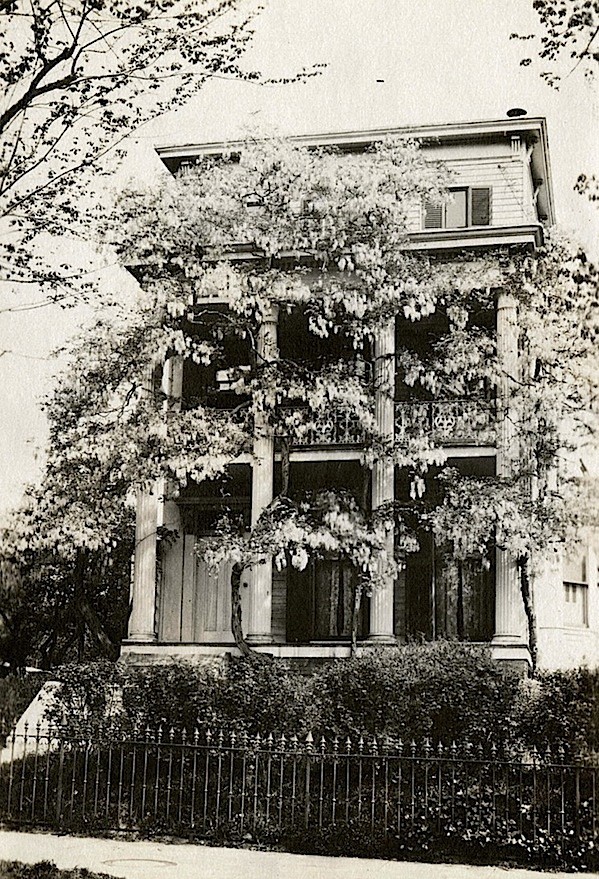
full croppedI think this is the loveliest wisteria I have ever seen.  It grew on the porch columns of “Wisteria House,” at Massachusetts Avenue and Eleventh Street, N.W., in Washington, D.C. The photo was taken in 1919, by Martin A. Gruber.**

The house was torn down in 1924 to make room for the Wisteria Mansion apartment building.
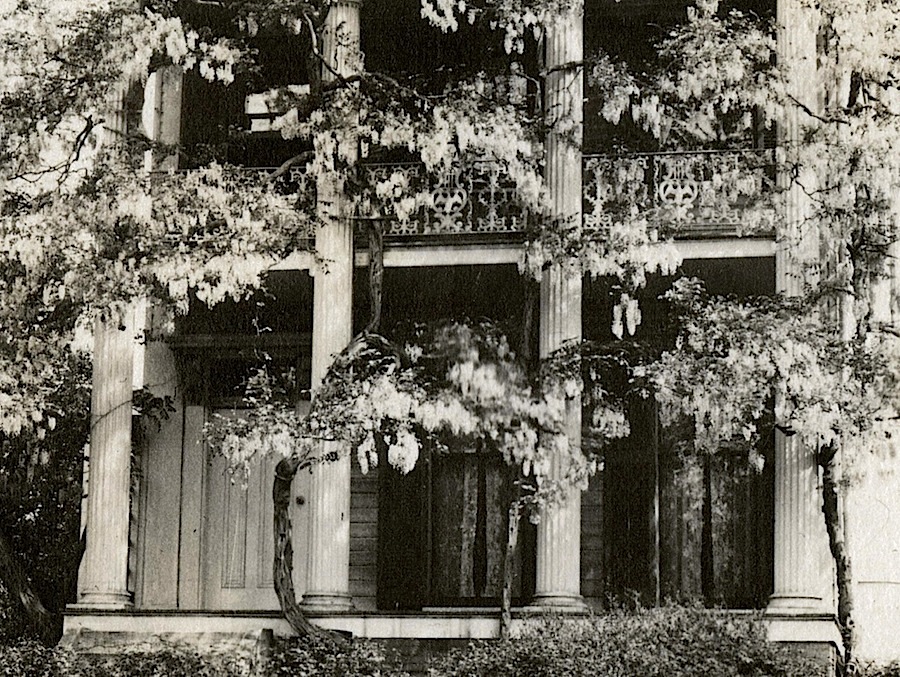
Wisteria House detail, 1919, via Smithsonian Institution CommonsA naval officer brought the vine from China and gave it to the owner of the house, probably during the 1860s, according to the blog Greater Greater Washington.
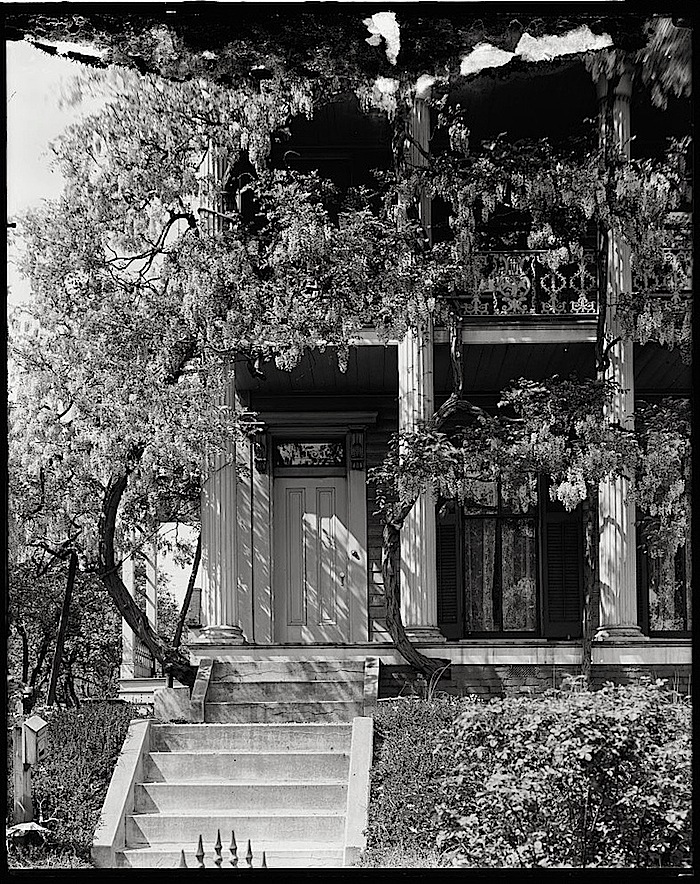
Wisteria House, Harris & Ewing photoThe Harris & Ewing** photo above, taken between 1910 and 1920, shows the trunks of the (one?) plant emerging through openings at the base of the porch.  The house was built in 1863, and the two-story portico was added in 1869 — so it looks like the wisteria was planted between those years and protected during the construction.
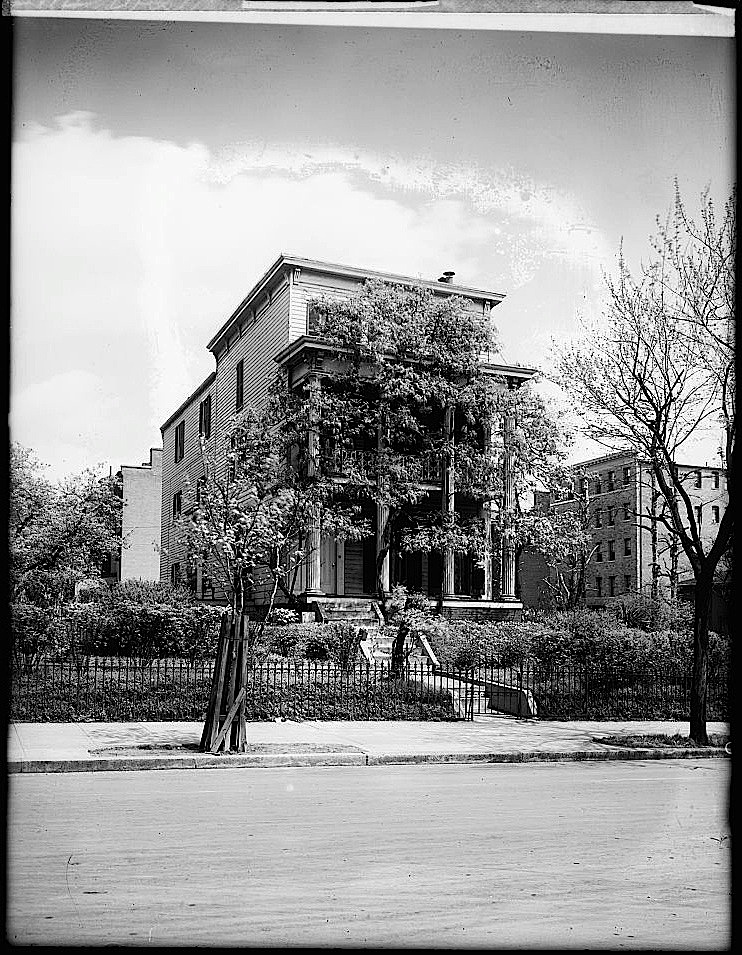
Wisteria House, LOC photoThe National Photo Company image above shows the house about 1920.


*Lucie Brock-Broido, from “Extreme Wisteria

**Top and second (a detail of the first) photos via the Smithsonian Institution Archives Commons on flickr.  Third and fourth photos via Library of Congress Prints and Photographs Division.
Vintage landscape: comfort and joy

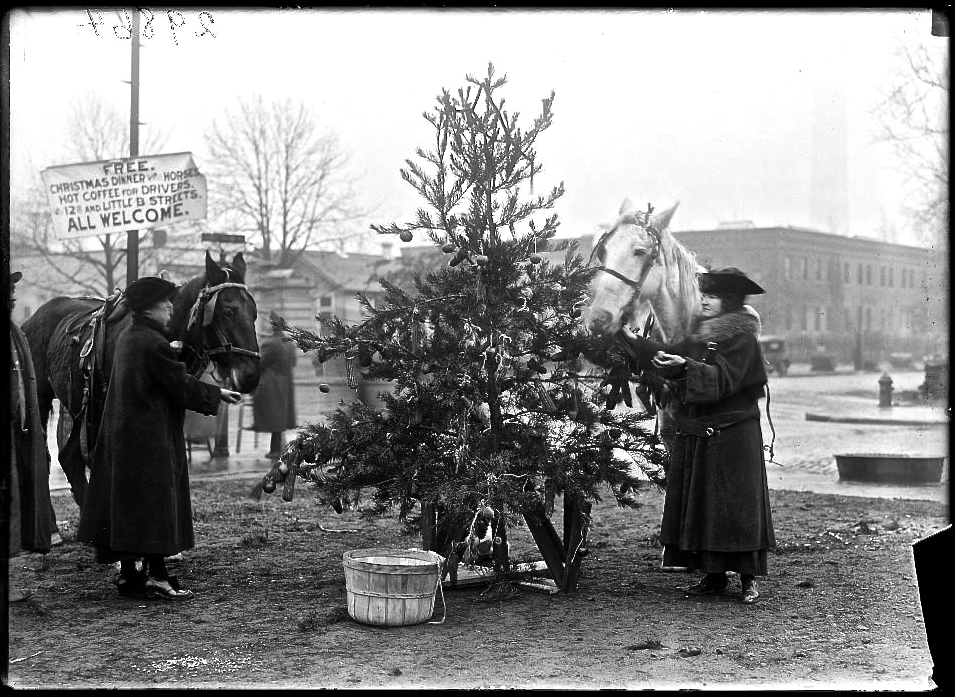
horse xmas tree 1918

In the first decades of the 20th century, horses toiled to move almost everyone and everything around the city of Washington, D.C.   But one December day a year, for several years at least, they were rewarded with Christmas trees hung with apples and corn and accompanied by troughs of grain.

“Christmas Tree for Horses” was sponsored by the Washington Animal Rescue League.  The 1918 gathering, shown in the photo above, took place at 12th and Little B Streets — the current site of the IRS offices at 12th St. and Constitution Ave., N.W.,  just south of the Old Post Office.  A 1909 map of the area shows a “Horse Fountain” at 11th and Little B Streets.

These holiday horse dinners also took place in other American cities in the early 20th century.

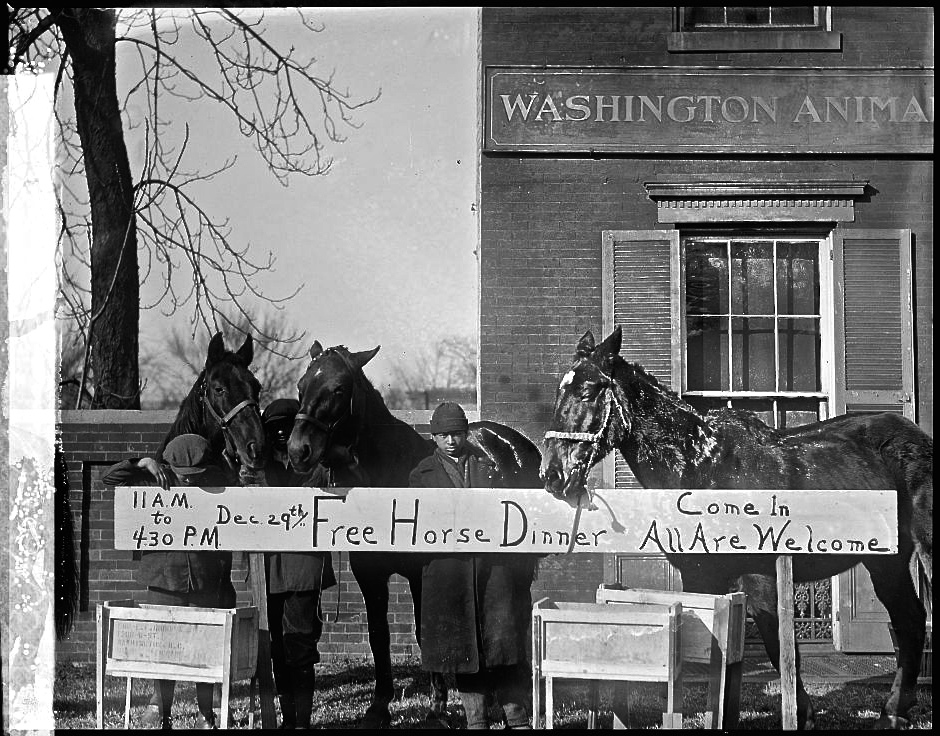
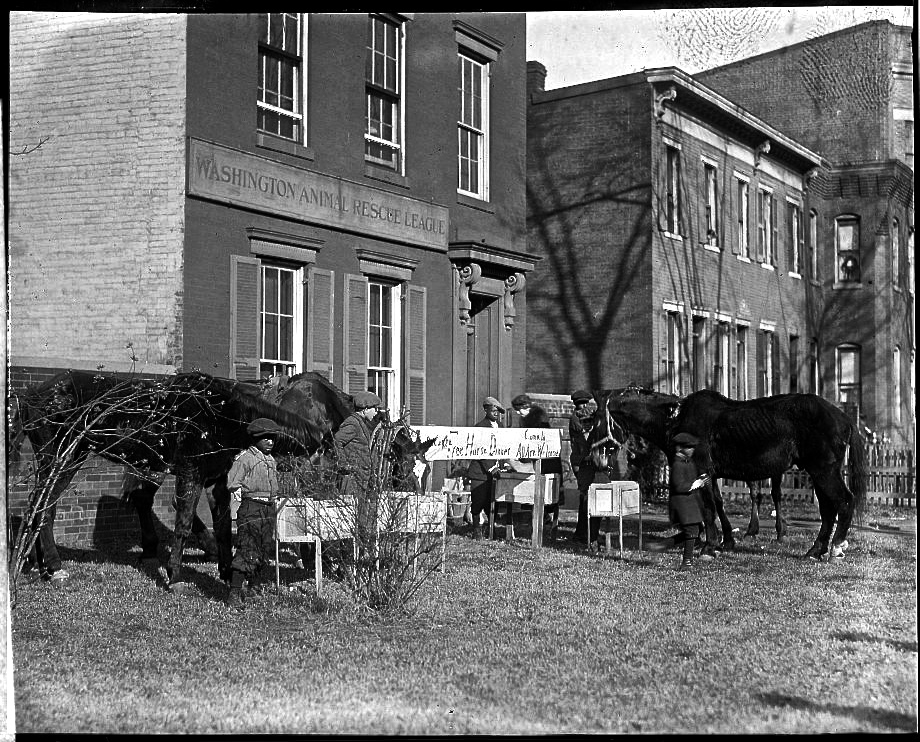
The photos below show the 1923 event in front of the League’s O Street, N.W., offices.

1923-1

The League was founded in 1914 and is the oldest animal shelter in Washington, D.C.  It is now located at 71 Oglethorpe Street, N.W.  (You can find out how to make a donation here.)

1923 -2

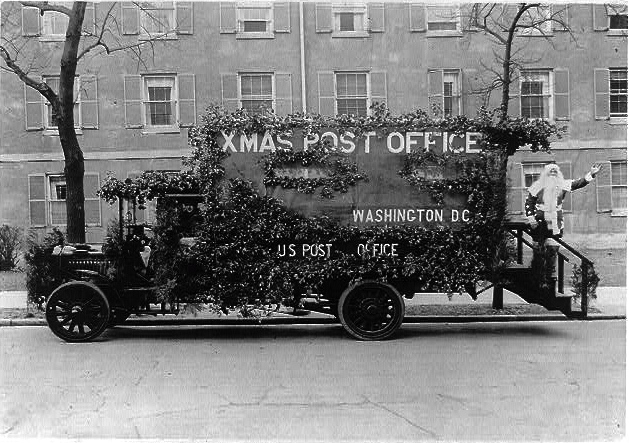
Another kind of antique seasonal cheer comes via this postal service truck liberally festooned with greenery.

mobile post office, LoC

In early December of 1921, it drove around Washington urging residents to mail their Christmas packages early.

All photos via the Library of Congress Prints and Photographs Division.  The three photos  just above  are from the National Photo Company Collection.  The top photo is by Harris & Ewing.
You know there’s a story here


“Mrs. Harriman [Florence Jaffrey] does [not] burn fences behind her. Washington, D.C. May 27 [,1927].

“In leaving for her new post as American Minister to Norway, Mrs J. Borden Harriman is not burning but leaving her fences behind her. The last time Mrs. Harriman was away from her Capitol home for any length of time she found a load of dirt from the excavation for the new home of the late Raymond T. Baker dumped on her front lawn upon her return. She sued for $23,000 but the case was settled out of court. This time she has had a high fence constructed around her property to prevent a recurrence of the same thing.”

Mrs. Harriman’s complaint said “that on the 22d of April, 1931, the defendants, ‘with force and arms, did break and enter into and upon the said ground of the plaintiff, and trod down, trampled upon, consumed, destroyed, and spoiled the grass, herbage, shrubbery, ornamental trees, then and there growing and being of great value,’ etc.”

Perhaps the fence should be even higher.

Photo by Harris & Ewing; both it and text in quotes via Library of Congress Prints and Photographs Division.  Mrs. Harriman’s home was at the intersection of Ridge and Reservoir Roads — I believe in the Pallisades neighborhood (although I haven’t found a Ridge Road that intersects with Reservoir).
Love your neighbor; yet don’t pull down your hedge.
— Benjamin Franklin, Poor Richard’s Almanack

Thanks to the blog Living in Kigali for including enclos*ure in their list of “Super Fabulous Rwanda-Related Websites.”

Vintage landscape: take water, add children

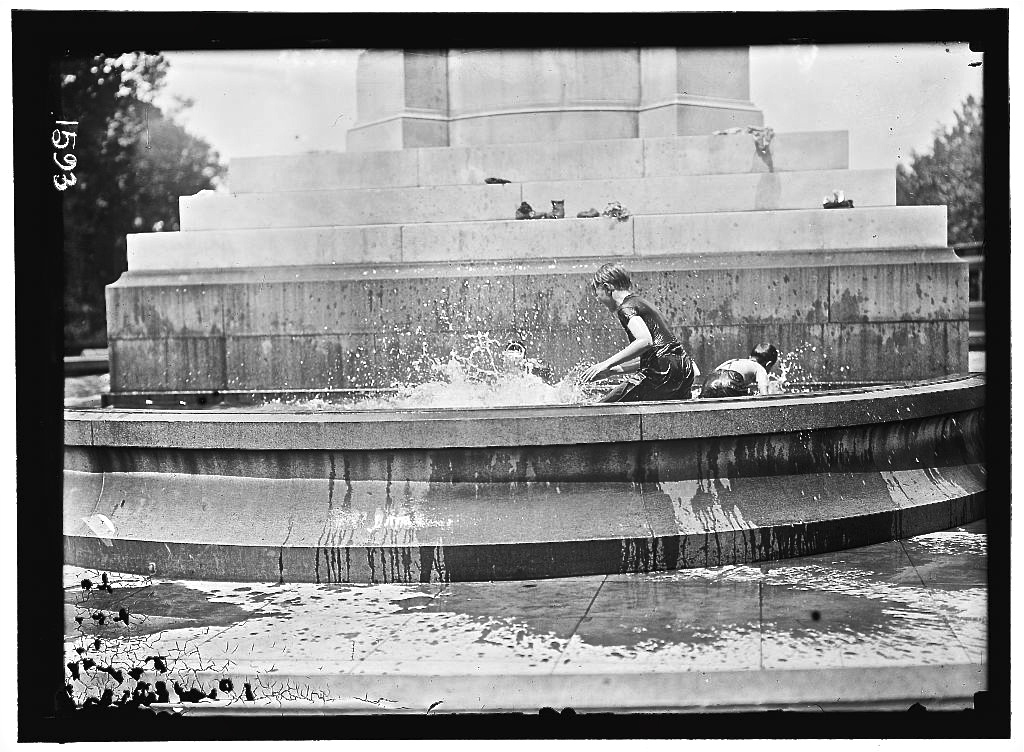
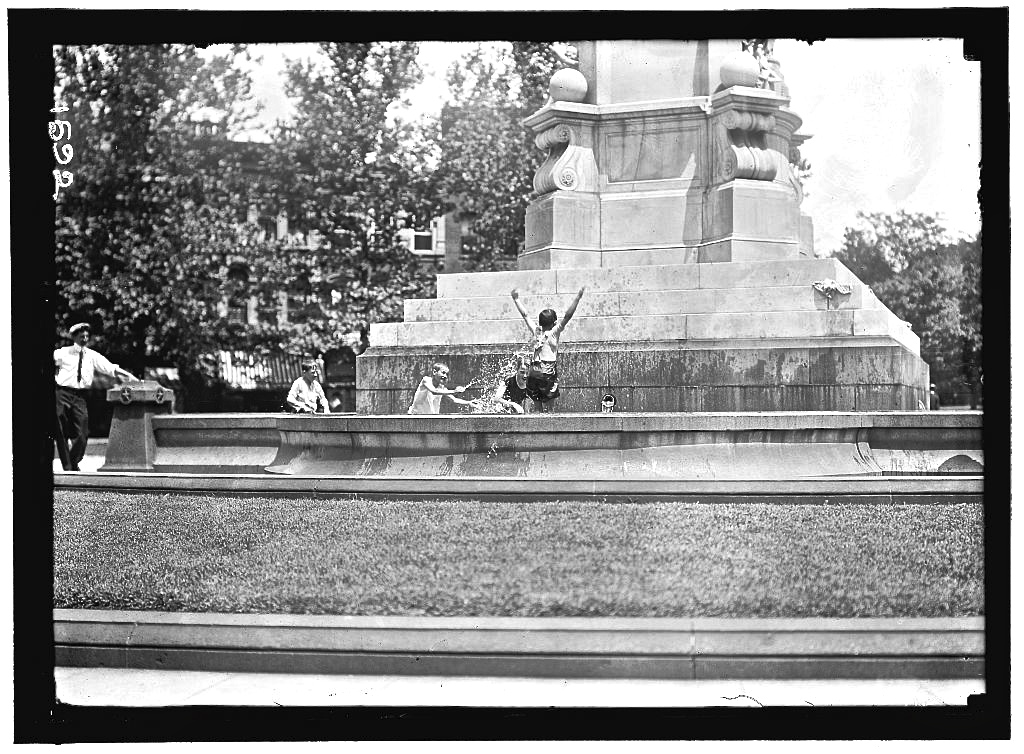
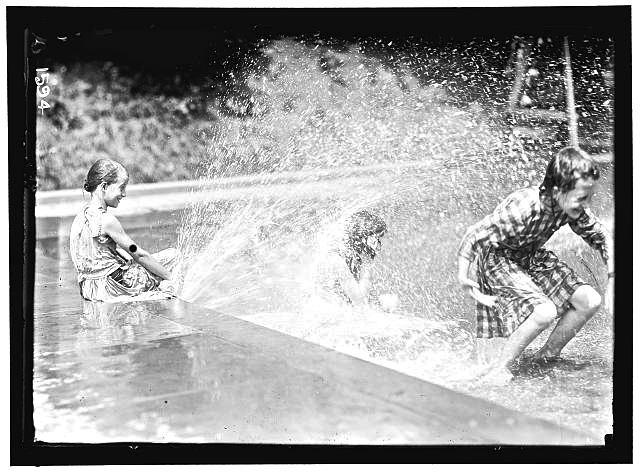
Before air conditioning, water was the best remedy for hot summer weather.

The children in the photos just above and below were enjoying a public fountain in Washington, D.C., in the summer of 1912.

The fountain is the Peace Monument on the U.S. Capitol grounds.

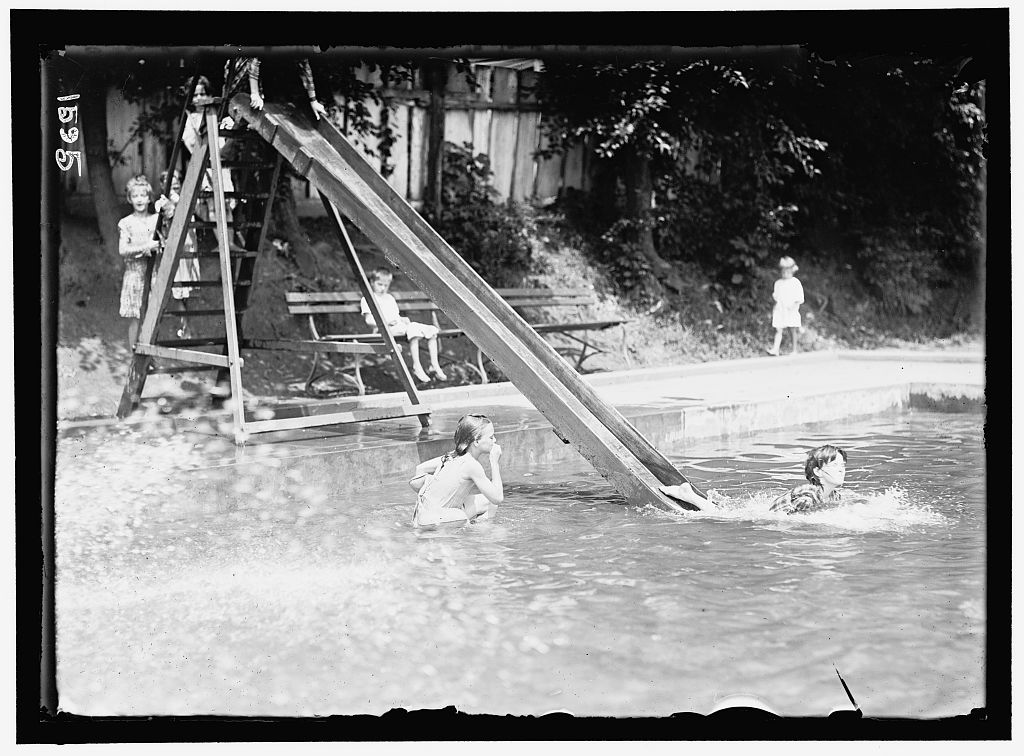
Below are children in a public pool in Washington, D.C., also in 1912.

All of the above four photos were taken by Harris & Ewing.

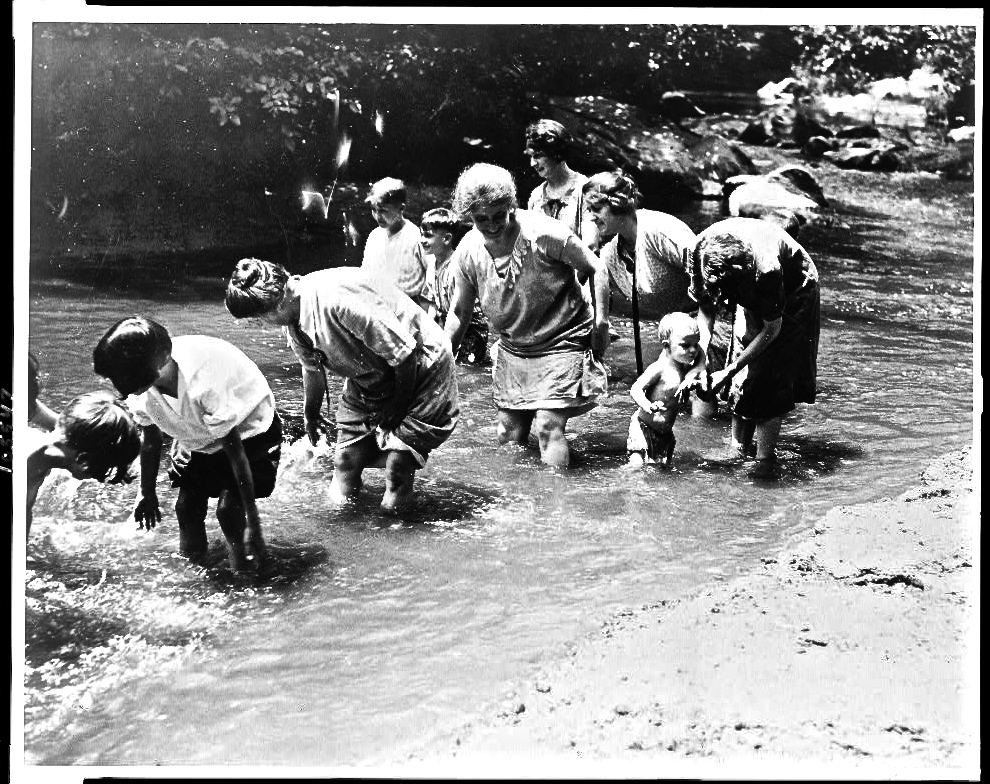
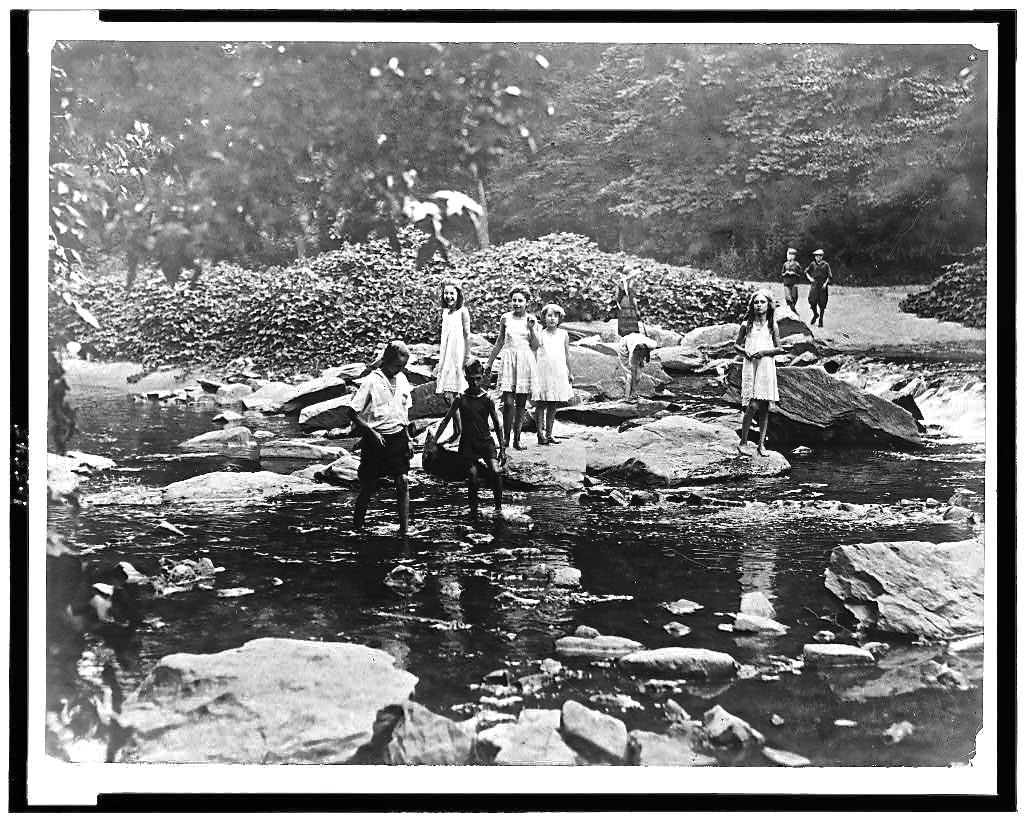
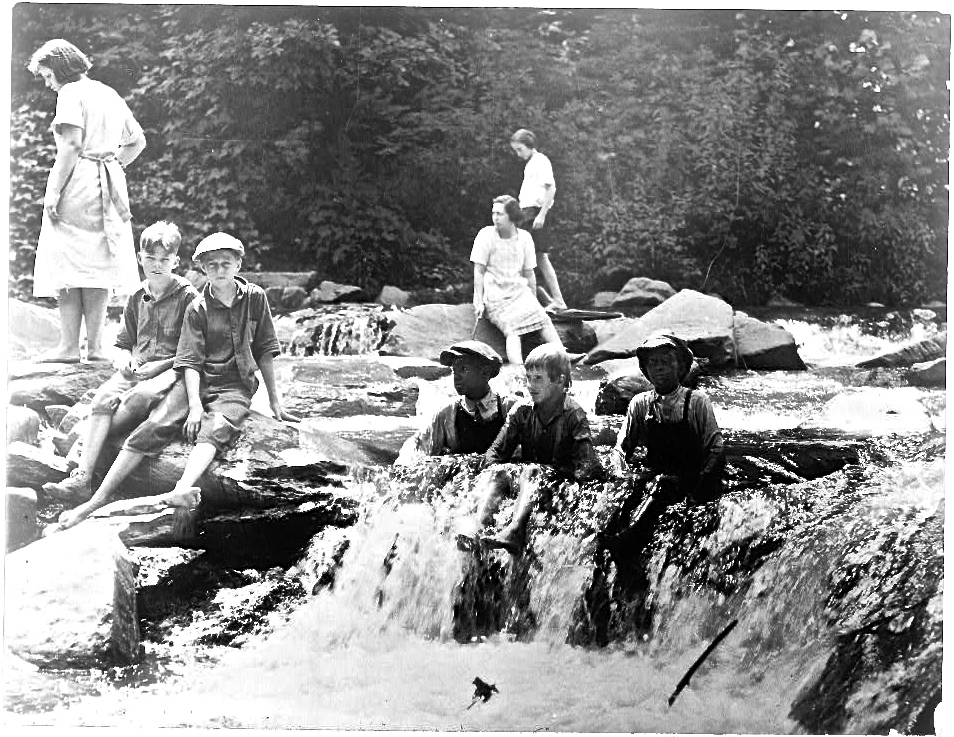
The three photos below of bathers in Rock Creek Park were taken by the National Photo Company between 1920 and 1932.

The photo label for the above picture is “Women and children find some relief by wading in the creek on one of the hottest days in the history of the Capital. Snapped in Rock Creek Park today.”

The highest temperature recorded for Washington, D.C., was 106°F, in 1918 and 1930. The city just missed matching the old record yesterday, only reaching 105°F.

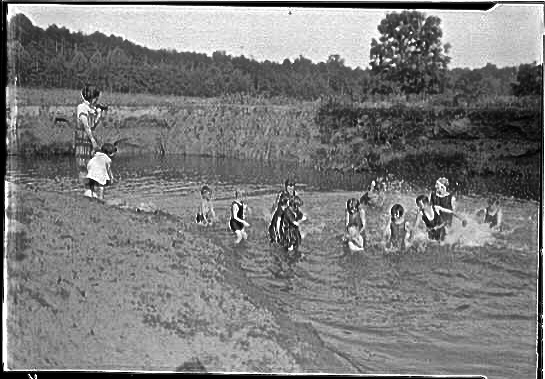
Below are children playing in an “old swimming hole” in the Washington, D.C., area. The photo was taken by Theodor Horydczak between 1920 and 1950.

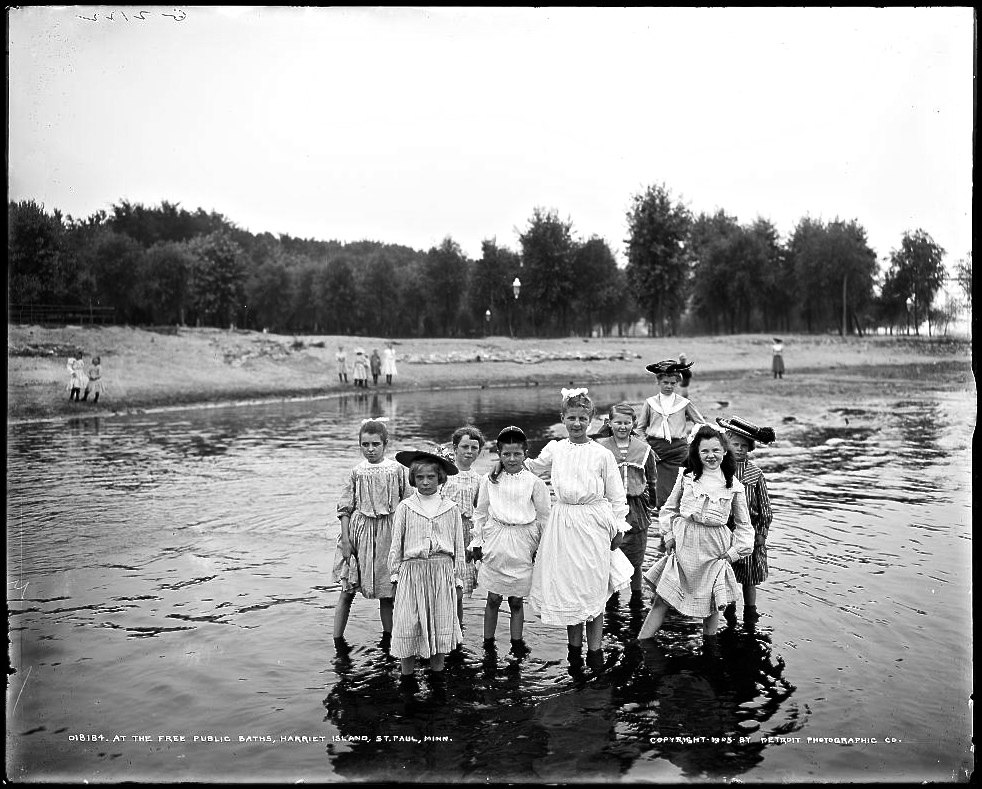
The photo below shows a group of proper young ladies at the free public baths, Harriet Island, St. Paul, Minnesota.  It was taken by the Detroit Publishing Co. around 1905.

How hard to be so dressed up at the lake!

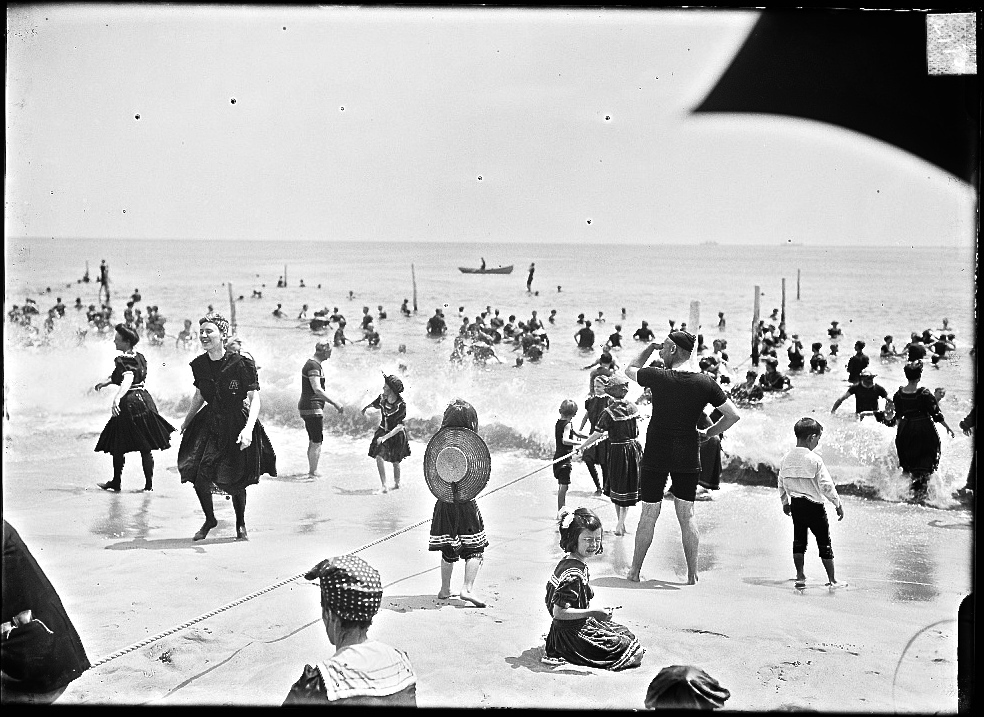
Below are children playing with a rope at a beach, possibly at Atlantic City, New Jersey.  The photo was taken between 1890 and 1910 by the Detroit Publishing Co.

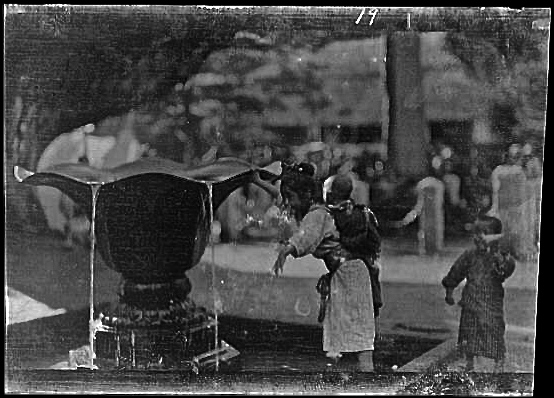
The lure of water in a fountain during hot weather is universal. Below are children in Japan or Korea in 1908. The photo was taken by Arnold Genthe.

All images via Library of Congress Prints and Photographs Division.  Click on any photo to enlarge it.