After some rain

All night the sound had
come back again,
and again falls
this quiet, persistent rain. . . .

— Robert Creeley, from “The Rain

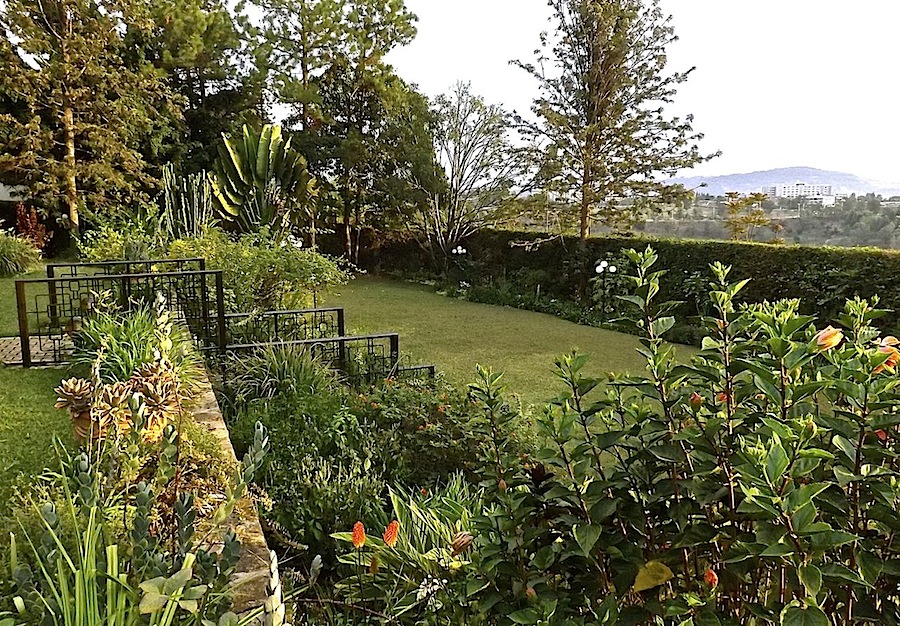
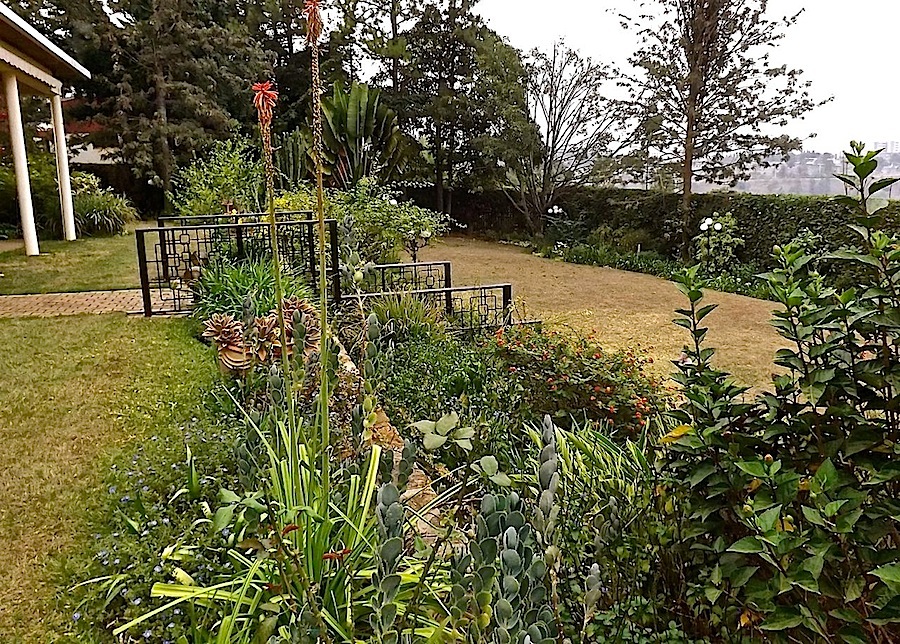
Our garden on August 31, at the end of the dry season:Our garden in the dry season/enclos*ure

And on September 11, after several days of rain:Our September garden in Rwanda/enclos*ure

Much better. After the first rain or two, everything seemed almost sparkly.

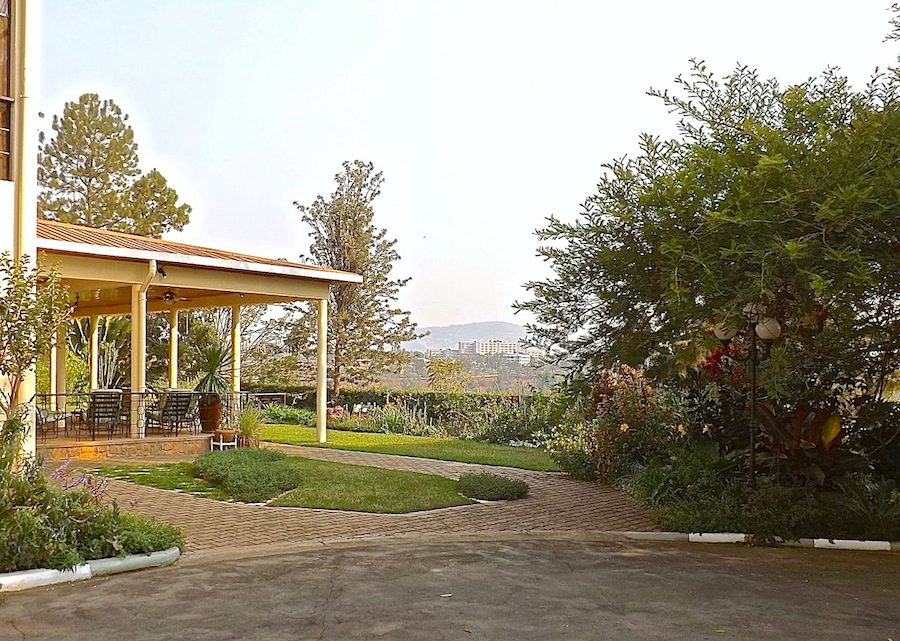
Below (click on any of the thumbnails in the gallery) is a little tour of the borders along the upper and lower lawns, taken on September 11 — just before sunset — and yesterday afternoon.

I think this will be my slightly early Garden Bloggers’ Bloom Day and Foliage Follow-Up submission for September. Please go to May Dreams Gardens (Bloom Day on September 15) and Digging (Foliage Follow-Up on September 16) to see what’s happening in other Garden Bloggers’ gardens.

Foliage Follow Up for July

Garden Bloggers' Foliage Follow Up for July, Kigali, Rwanda/enclos*ure

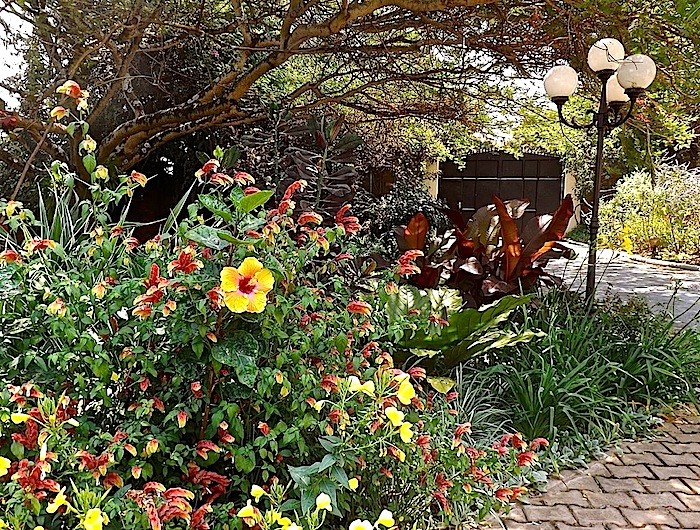
I thought I would give you a look at the plants surrounding the hibiscus and shrimp plants from yesterday’s Bloom Day.

Garden Bloggers' Foliage Follow Up for July, Kigali, Rwanda/enclos*ure

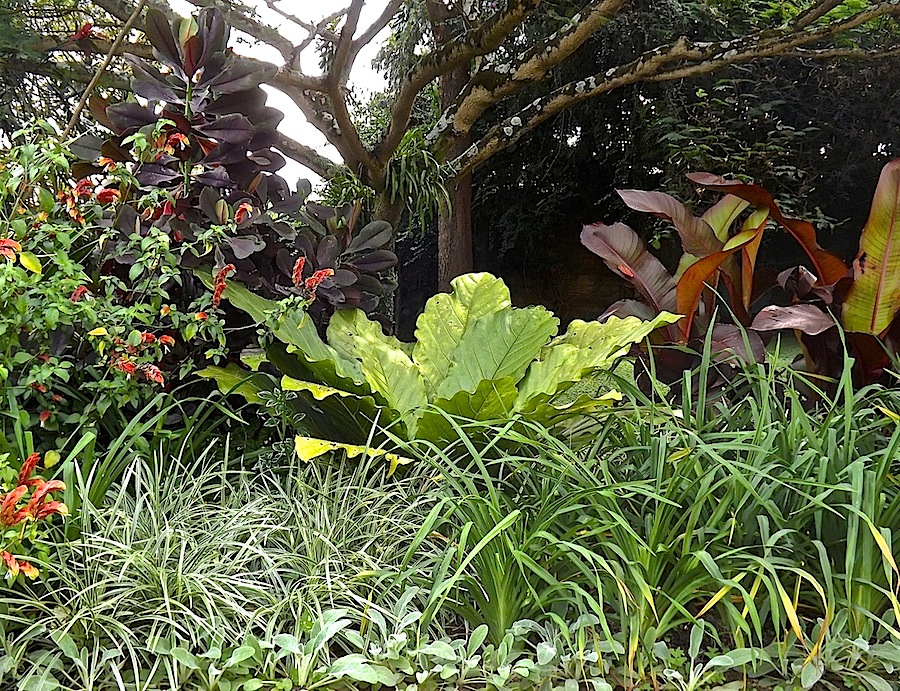
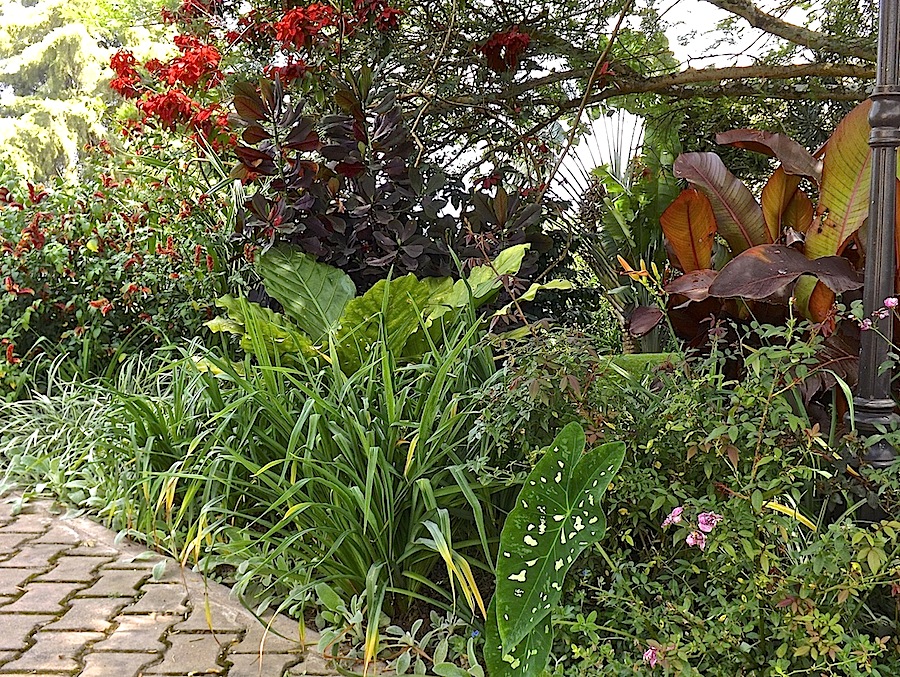
First, I would be grateful if anyone could identify the tropical plant with the very large leaves in the center above — and below with clover poking up through the leaves.

Garden Bloggers' Foliage Follow Up for July, Kigali, Rwanda/enclos*ure

When we arrived in Kigali, it was in a big pot on an upstairs porch, where I felt it was not getting the attention it deserved.  It was also really in the way — it’s over 4′ across.

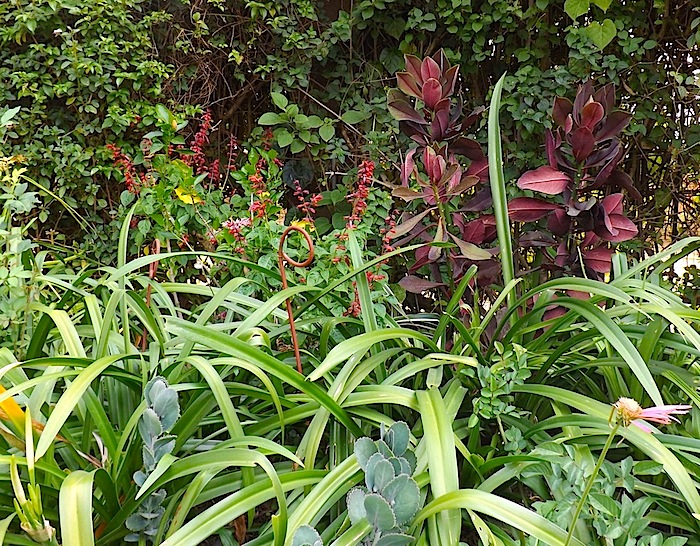
On its left above and in the photo below is a large burgundy-colored succulent — sedum? kalanchoe? — which I also haven’t yet identified.  Does anyone recognize it Euphorbia grantii (aka Synadenium grantii), possibly the Rubra variety.  It’s also called African milk bush and is native to East Africa.

[Thanks to Alison in Australia, who wrote me with the I.D. in November 2014.]

Garden Bloggers' Foliage Follow Up for July, Kigali, Rwanda/enclos*ure

This one is about 5′ tall, but I have seen specimens in Rwanda the size of a small tree.

Garden Bloggers' Foliage Follow Up for July, Kigali, Rwanda/enclos*ure

The burgundy leaves (red, green, and pink when the backlit by the sun — above) look good almost everywhere, so I have cuttings spread throughout the garden.

Garden Bloggers' Foliage Follow Up for July, Kigali, Rwanda/enclos*ure

In the picture above, there’s one in the back of a pink section of the long flower border — or it will be pink if the small shrub roses planted there will oblige me by growing and blooming. They are supposed to push up through the beach spiderlilies (Hymenocallis littoralis).

Below is one of two original plants that were here when we moved in.

Garden Bloggers' Foliage Follow Up for July, Kigali, Rwanda/enclos*ure

In the same planting bed with my two mystery plants are burgundy cannas, variegated liriope, yellow daylilies, and some lamb’s ear that I grew from seed from my parent’s garden in Virginia.

Garden Bloggers' Foliage Follow Up for July, Kigali, Rwanda/enclos*ure

At the ends are shrimp plants, “Fairy” roses, a caladium, and a small cycad (not in the picture).

This planting bed is on the right in the photo below.
Garden Bloggers' Foliage Follow Up for July, Kigali, Rwanda/enclos*ure

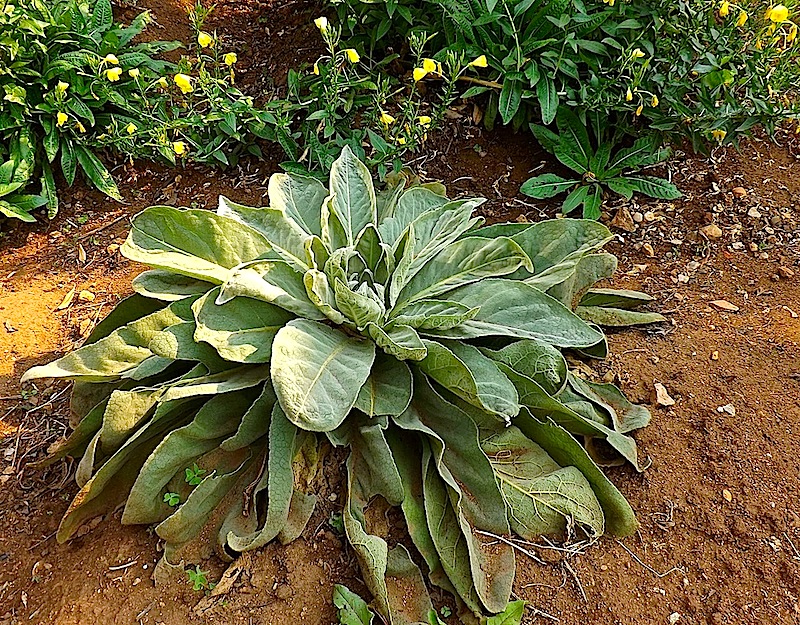
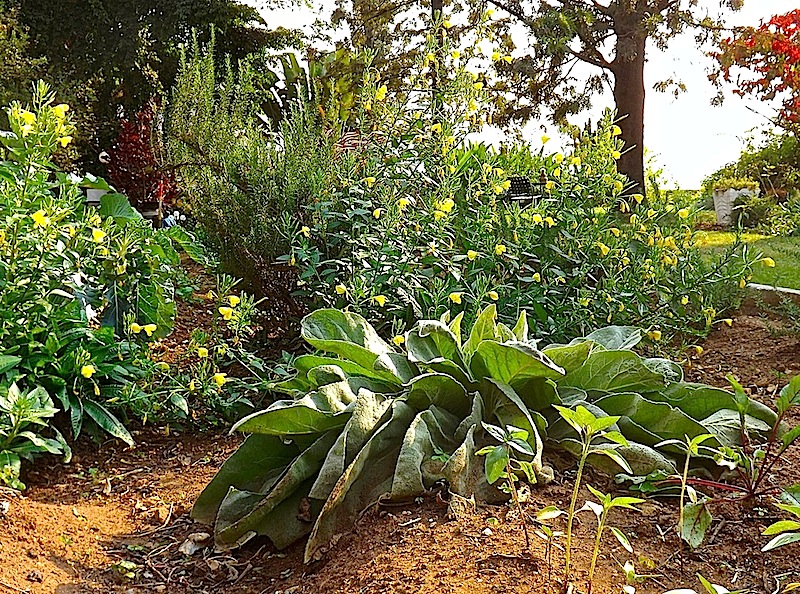
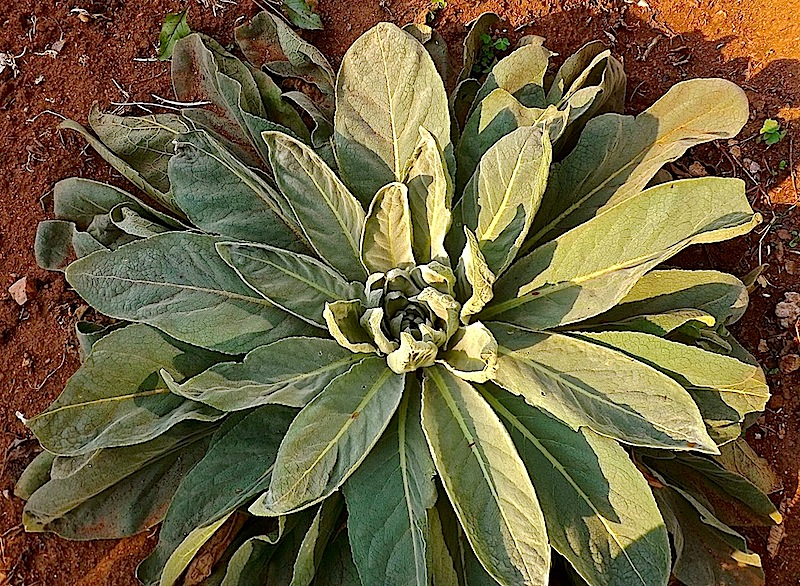
I also wanted to show you one of the common mulleins (Verbascum thepus) that I grew from seed taken from my parent’s garden last year.

Garden Bloggers' Foliage Follow Up for July, Kigali, Rwanda/enclos*ure

This one (located not very artistically in the vegetable garden) is 3′ across. The other plants are only 12″.

Garden Bloggers' Foliage Follow Up for July, Kigali, Rwanda/enclos*ure

The plant is something of a roadside weed in the mid-Atlantic region of the U.S., but it can send up a yellow flower stalk to 10′ tall. The garden writer, Henry Mitchell* liked tall mulleins so much that he wrote, “O for a lute of fire to sing their merits.”

Garden Bloggers' Foliage Follow Up for July, Kigali, Rwanda/enclos*ure

Thanks to Pam at Digging for hosting Garden Bloggers’ Foliage Follow Up the 16th of every month.


*in The Essential Earthman.

Foliage Follow Up: two sedums

[Ahem, make that two succulents.]

Sedums:enclos*ure

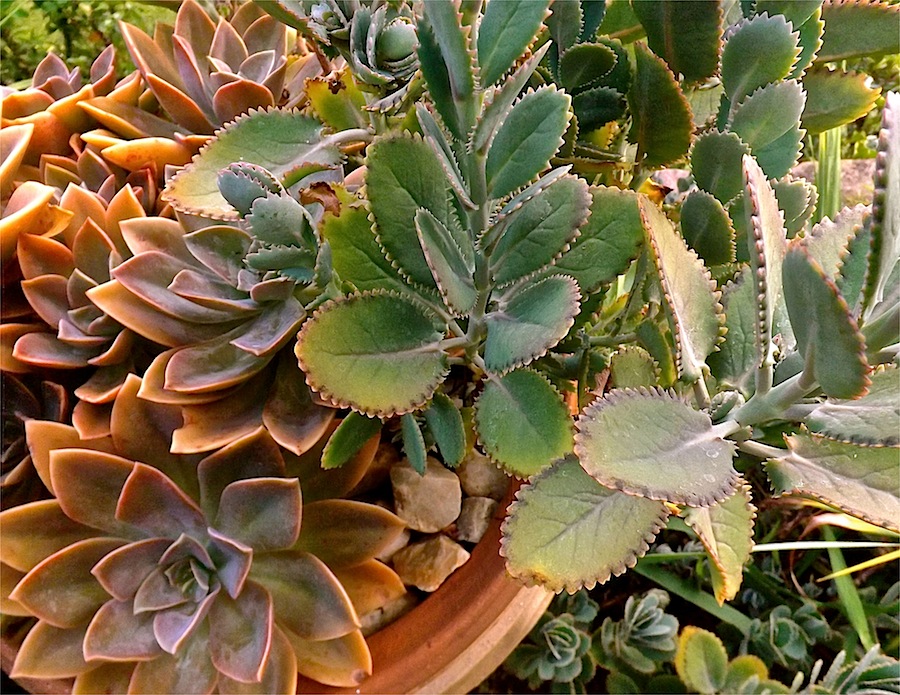
I’d be grateful if anyone could identify these sedums succulents — both came with the garden.

Sedums:enclos*ure

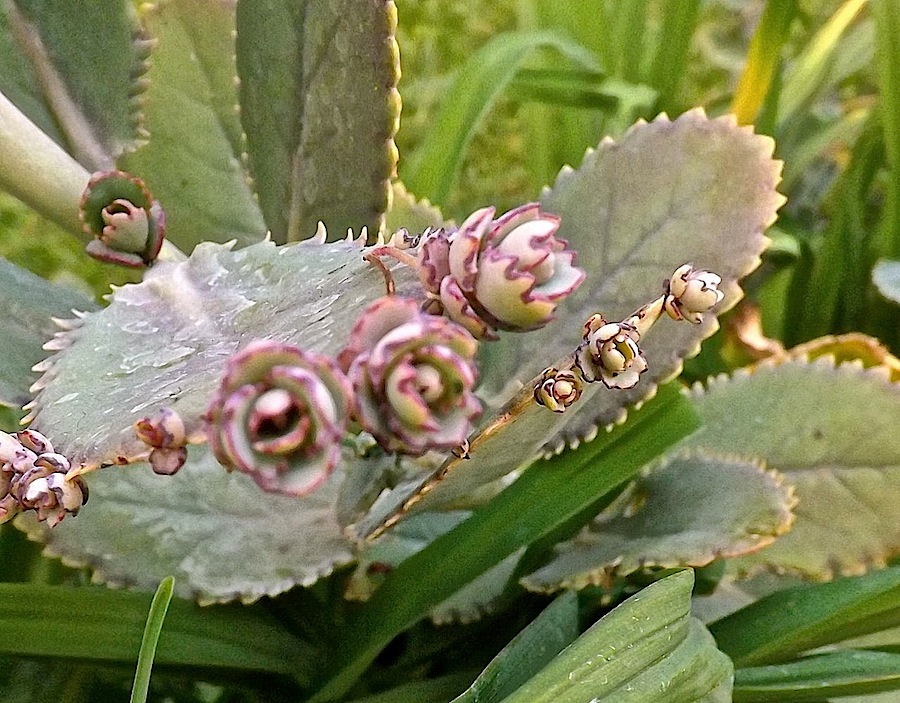
I’ve had the tall, bluish one in at least two other African gardens.

[It’s a Kalanchoe, possibly a variety of “mother of millions,” K. daigremontiana.]

Sedums:enclos*ure

It’s nice in combination with the pink small and miniature shrub roses; otherwise their effect would be too sweet.

Sedums:enclos*ure

Sedums:enclos*ure

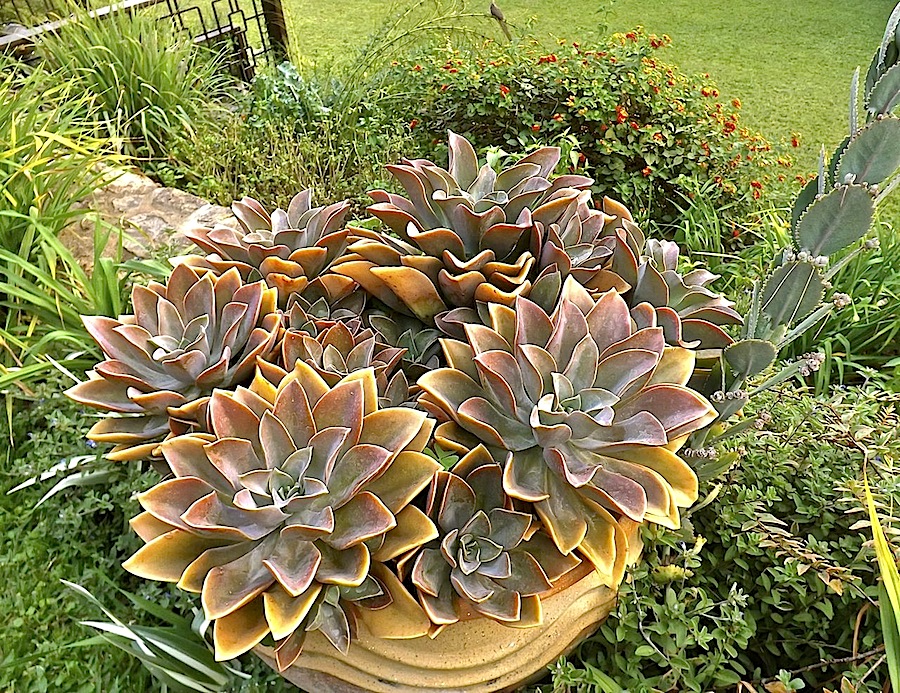
I didn’t realize until I took these pictures that the rosette-type sedum almost exactly matches the two-tone clay pot.  They also match the terracotta colors in the landscape beyond the hedge.

[It’s probably a Graptopetalum.]

Sedums:enclos*ure

Sedums:enclos*ure

Garden Bloggers’ Foliage Follow Up — the 16th of every month — is hosted by Pam at Digging.

(A bit belated) Bloom Day for January

Here are a few of the flowers blooming in our garden this month.
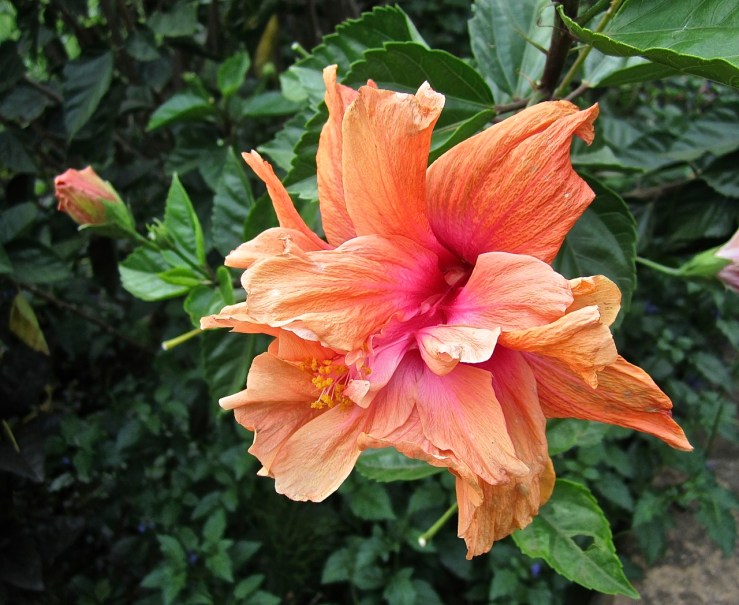
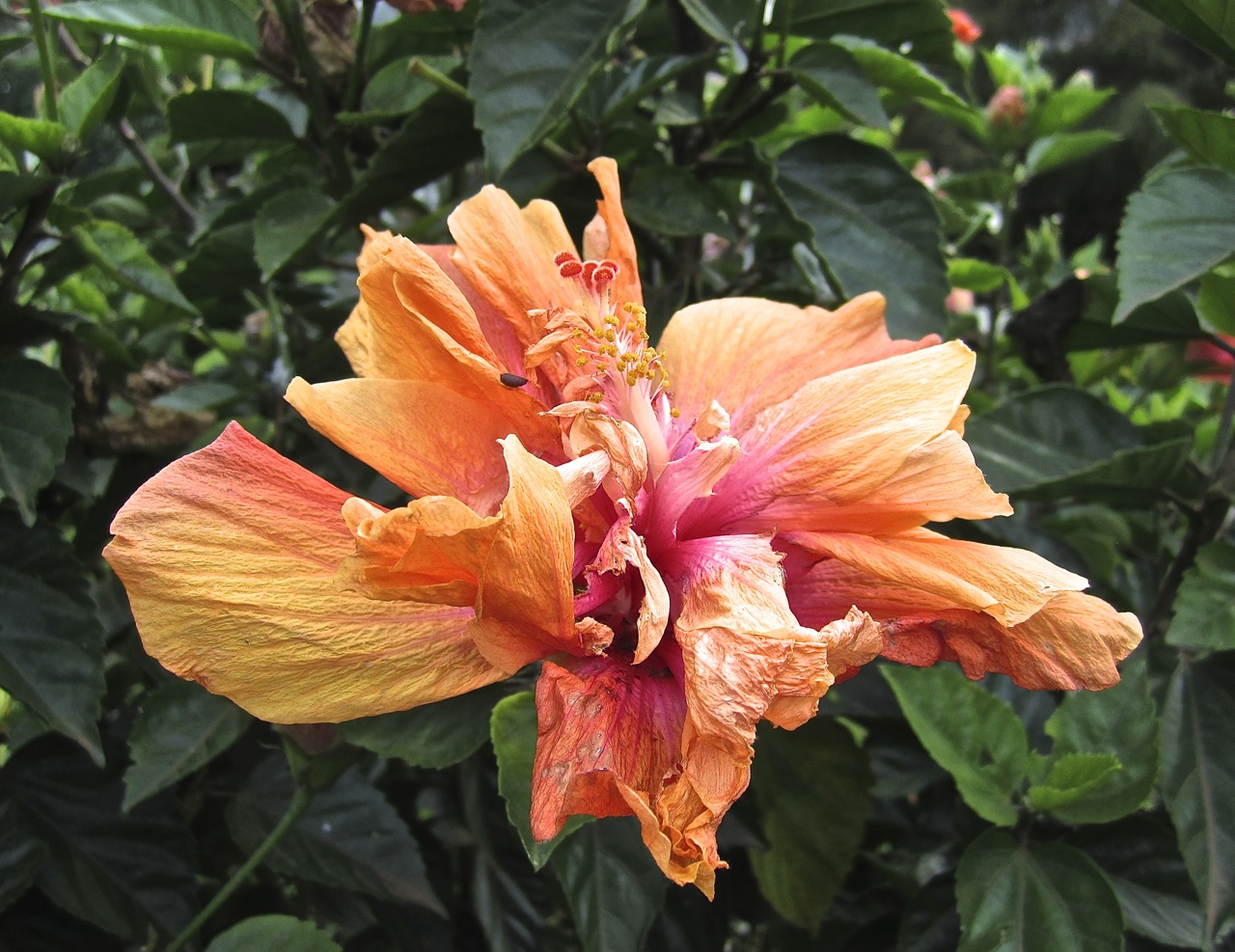
orange tropical hibiscus

This beautiful light orange tropical hibiscus — this large shrub is growing on the middle level of the retaining walls along the front lawn.

orange tropical hibiscus

Below:  Rudbeckia laciniata or cutleaf coneflowers — this is a double variety, possibly ‘Goldquelle,’ ‘Hortensia,’ or ‘Goldenglow.’
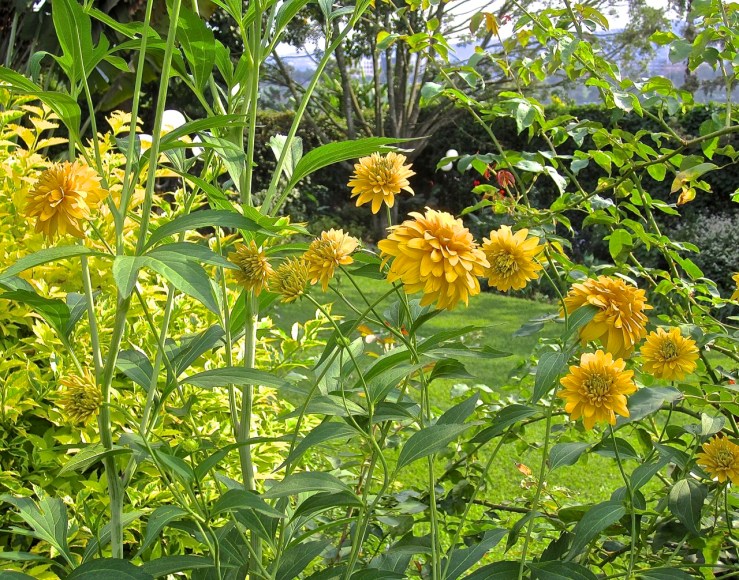
Double Rudbeckia

This 3′ to 5′ rudbeckia — usually seen with single coneflower blooms — is native to eastern North America. A double variety appeared in 1897 and became popular as an “outhouse flower,” planted to shield privies from view.

When we arrived in Rwanda, there was one clump in the garden. I divided it, and now, because it is a “vigorous spreader,” I have about 25 plants.

Rudbeckia

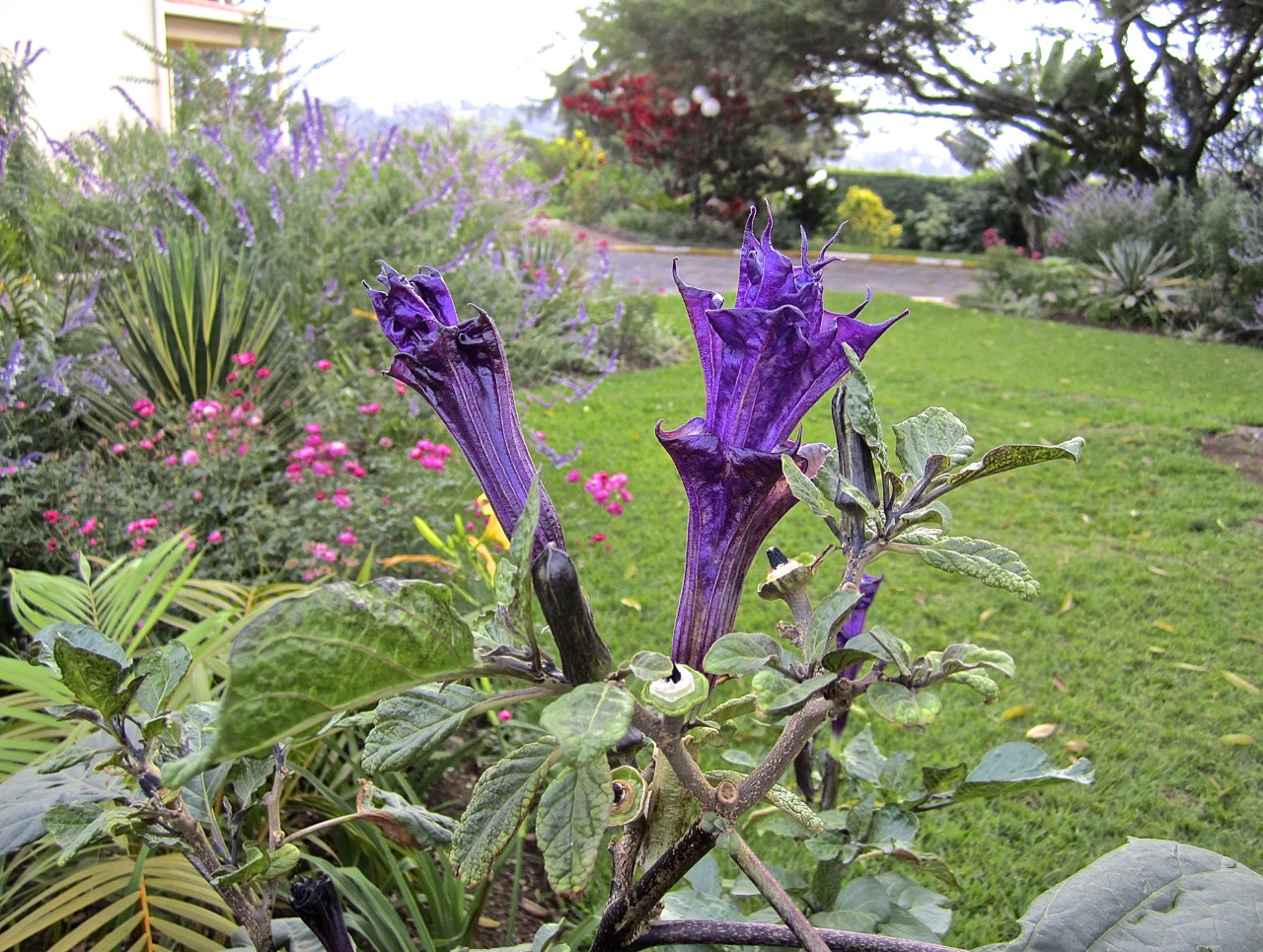
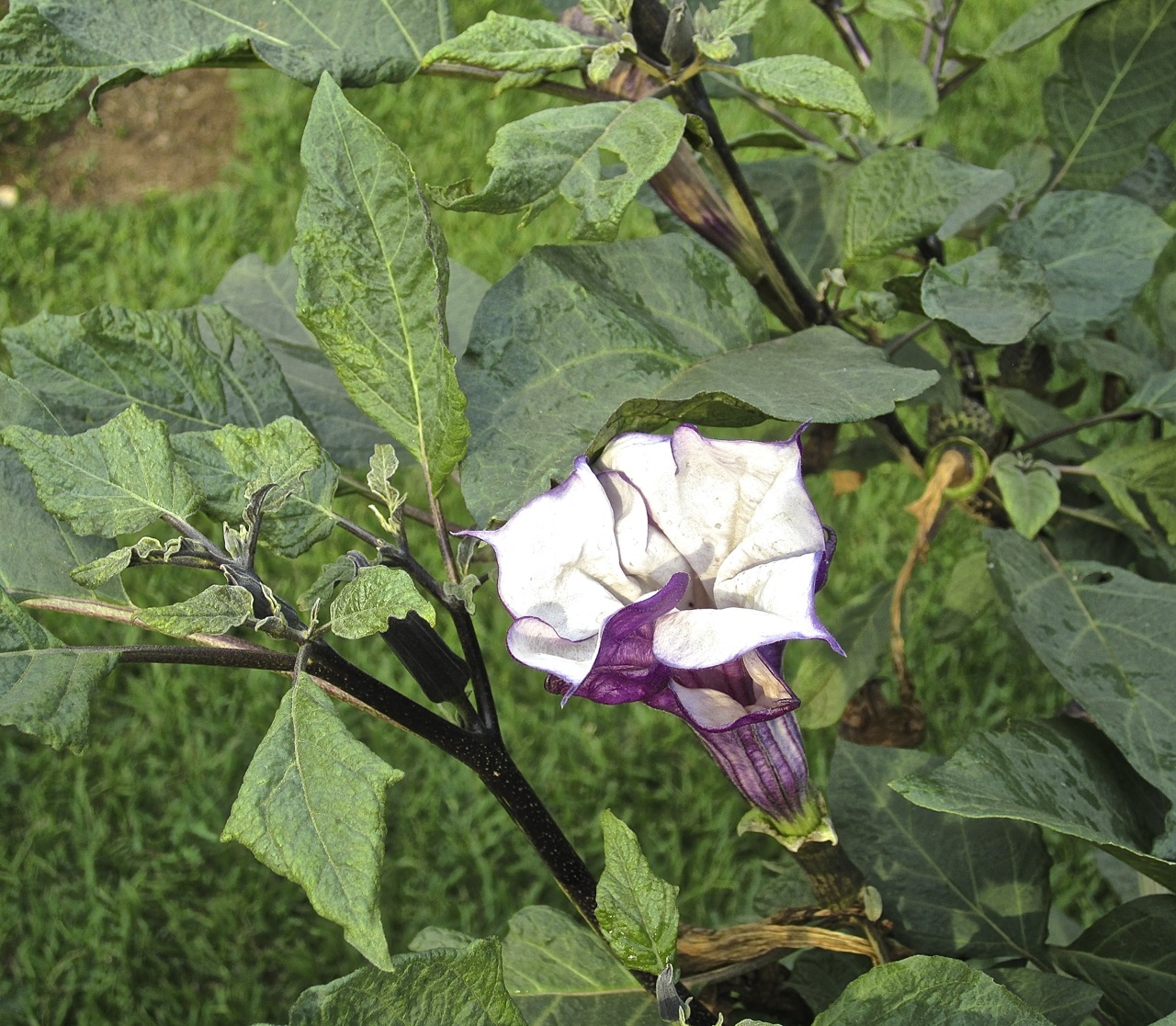
I’m pretty sure the plant below is another American native in our garden: Datura stramonium or Jimson weed or Jamestown weed.

entrance and jimson weed

Because all parts of the plant can produce delirium or bizarre behavior if ingested or smoked, it played a small role in colonial American history when it drugged British soldiers sent to quell a 1676 uprising in Virginia.

The James-Town Weed . . . , being an early plant, was gather’d very young for a boil’d salad, by some of the soldiers sent thither to quell the rebellion of Bacon; and some of them ate plentifully of it, the effect of which was a very pleasant comedy, for they turned natural fools upon it for several days: one would blow up a feather in the air; another would dart straws at it with much fury; and another, stark naked, was sitting up in a corner like a monkey, grinning and making mows [grimaces] at them; a fourth would fondly kiss and paw his companions, and sneer in their faces with a countenance more antic than any in a Dutch droll.

In this frantic condition they were confined, lest they should, in their folly, destroy themselves. . . .  [A]fter eleven days [they] returned themselves again, not remembering anything that had passed.

The History and Present State of Virginia, 1705
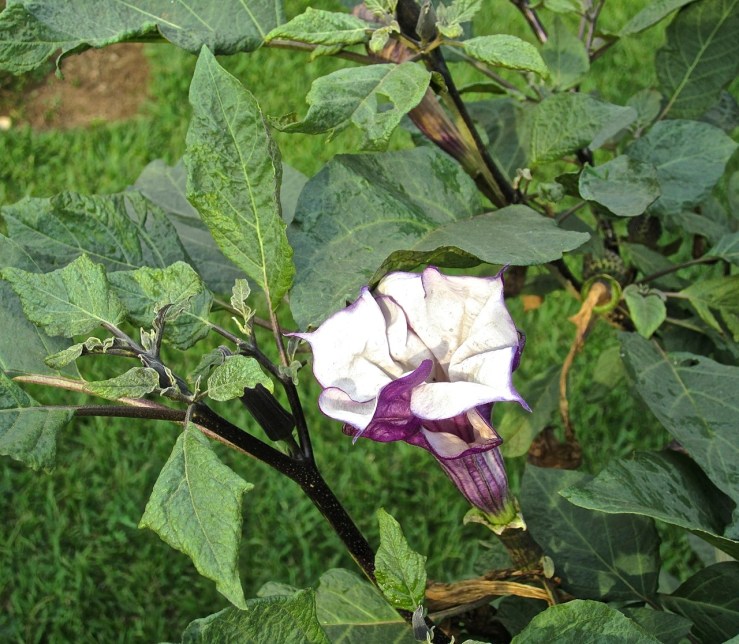
jimson weed

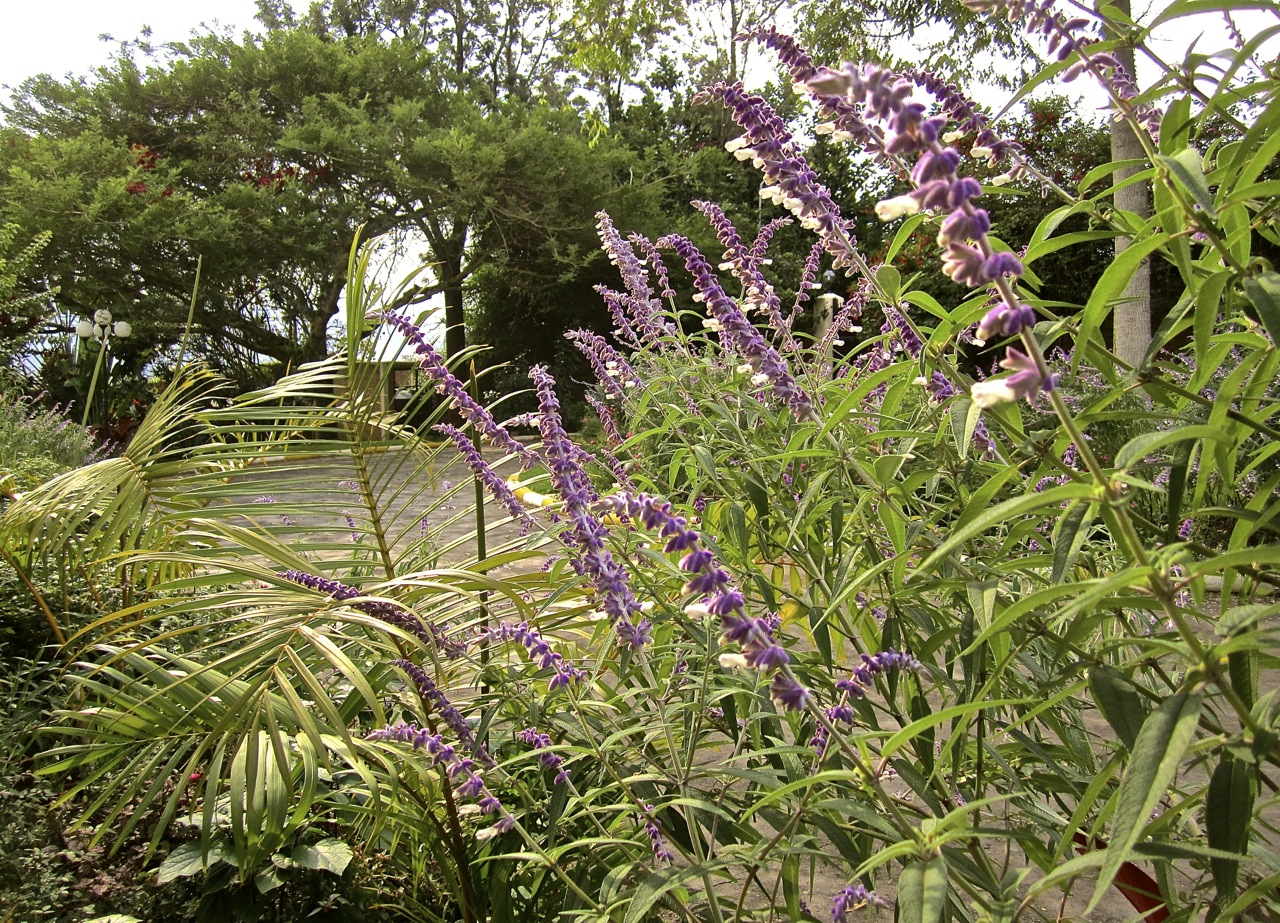
Below:  Salvia leucantha or Mexican sage — when we moved in over a year ago, there was one clump near the driveway.  I divided it, and now we have the purple and white flowers all around the semi-circle of pavement.

mexican sage

I like its tall, twisty, rather floppy nature, but I think those same attributes annoy our gardener, who keeps trying to stake it upright.

mexican sage and driveway 2

The driveway area is mainly planted with the sage, ‘Fairy’ (I think) roses, yellow daylilies, Jimson weed, and orange lantana. There are also several palm trees, which will eventually add some vertical interest. I’m thinking of adding either some tall, dark pink celosia, burgundy sunflowers, or cranberry-colored hardy hibiscus.

mexican sage and driveway

I am not responsible for the bright yellow and white paint on the curbs, by the way.  I go back and forth about whether I like it or not.

Below:  We have finally stopped using the cutting garden as a holding area for various plants being moved from one place to another.
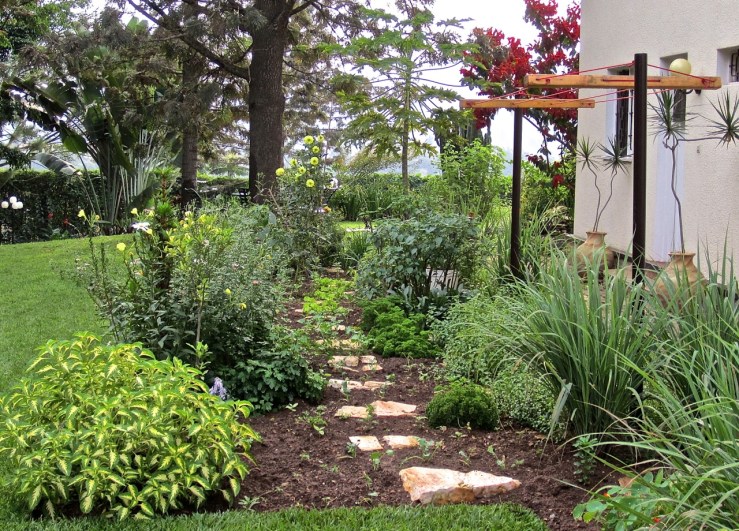
cutting garden

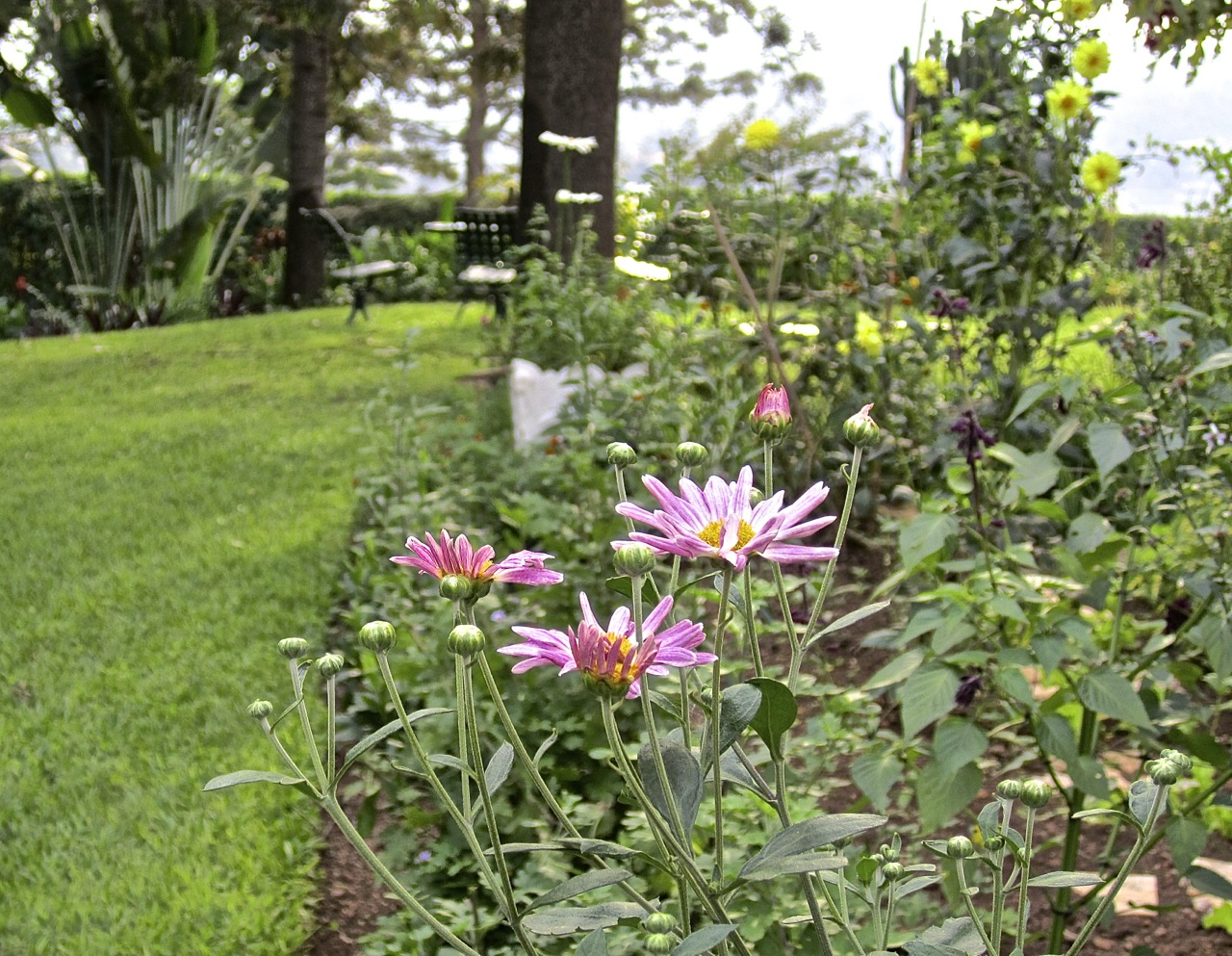
It is now planted out with zinnias, borage, and cosmos seedlings, as well as some perennials, like the pink chrysanthemums below.

pink chrysatheums in cutting garden

I have really tried to like those acid yellow dahlias in the background, but I just can’t, and I think they are going into the compost pile quite soon.

Garden Bloggers’ Bloom Day is the 15th day of each month. To see what’s blooming in other garden bloggers’ gardens, check out May Dreams Gardens.

Foliage Follow Up

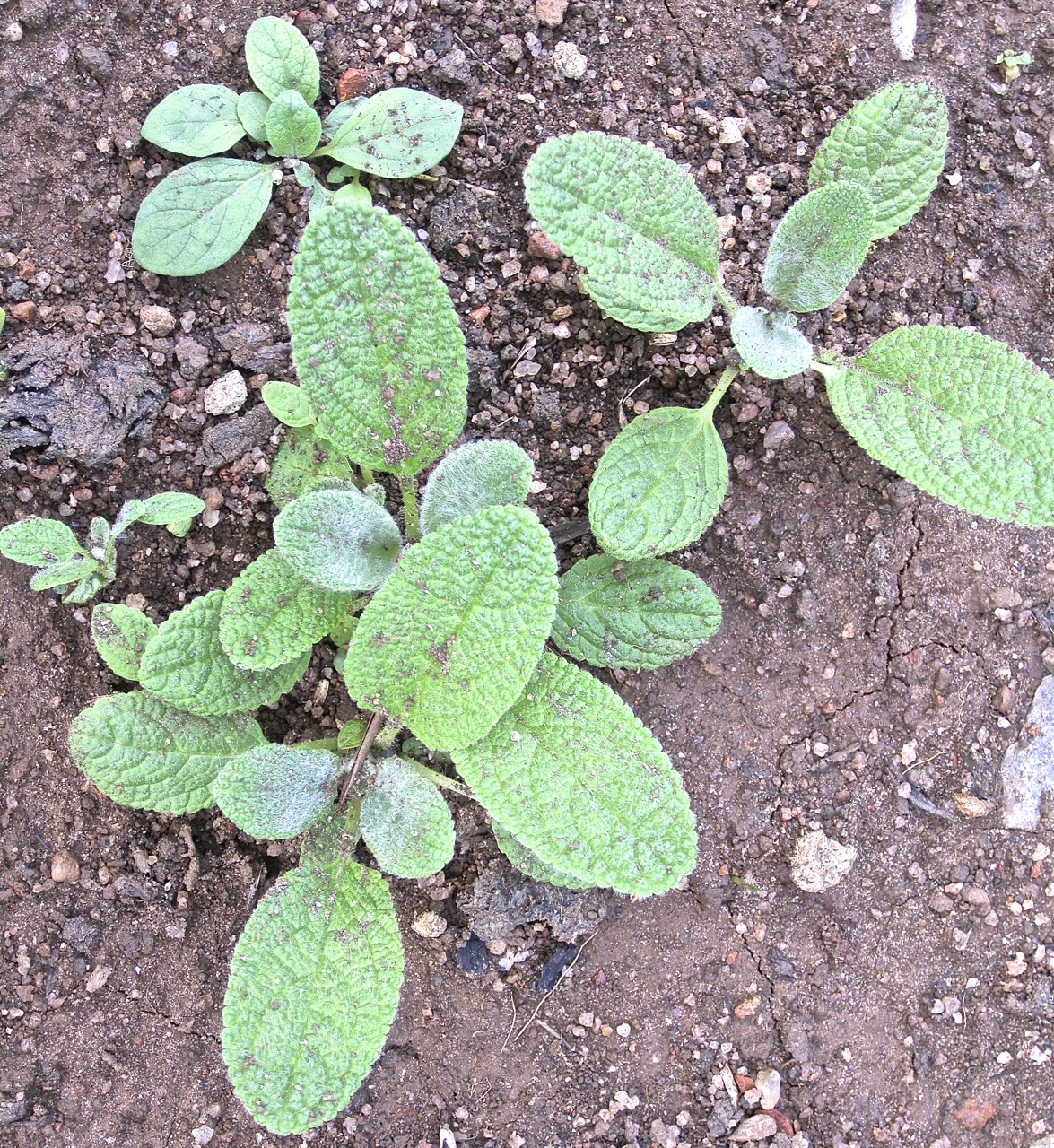
When we were at my parents’ house in September, I went around the garden and gathered seeds from their purple coneflowers, lamb’s ear, and wild mullein.  I put them all in one baggie because I thought I would recognize the seedlings as they emerged.  Of course, now I have no idea whether this is lambs ear or mullein.  I hope it’s mostly lamb’s ear, because I should only need a few of the tall, wide mulleins.
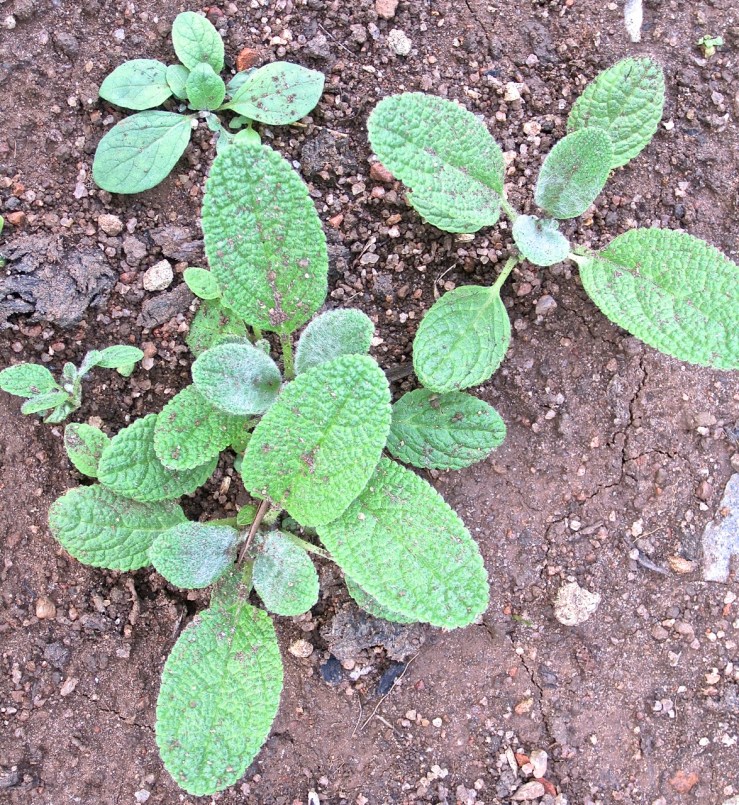
mullein or lambs ear

My mother also gave me some kale seeds, which I forgot about and then mixed in with all the other seeds. Then I went and bought a packet of kale seeds and planted them. So now my vegetable garden is about half kale.  Oh well, it does seem to be the vegetable of the moment.

Thanks to Digging for hosting Garden Bloggers’ Foliage Follow Up the 16th of every month.

Garden Bloggers’ Foliage Follow Up: Whittemore House

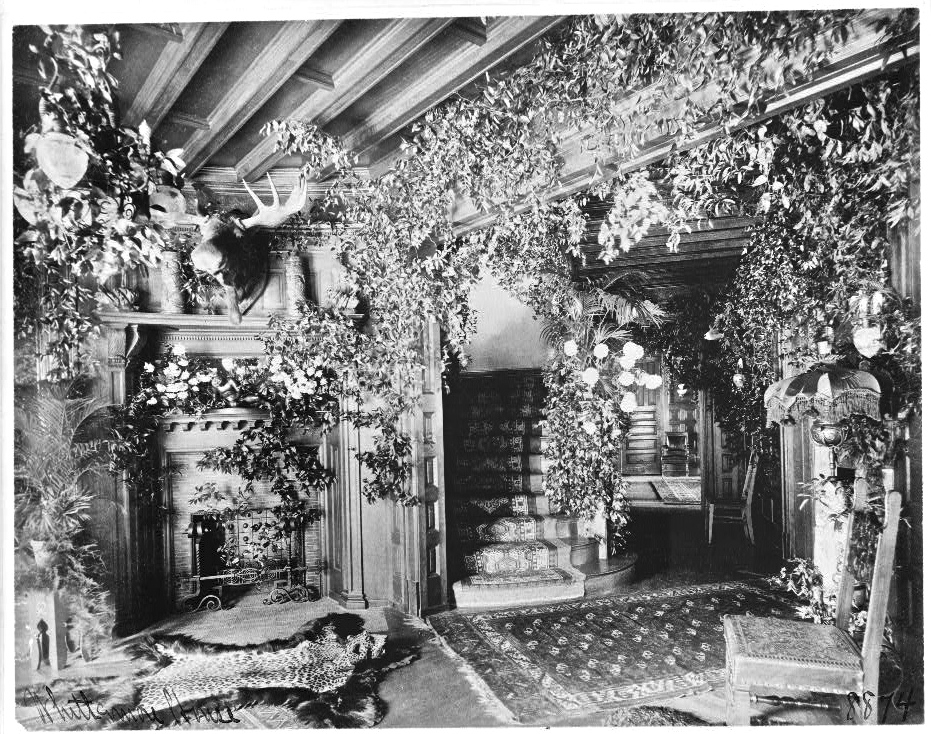
It’s wet and gloomy again this morning (the rainy season) and nothing in the garden really inspires me at the moment. So I went back to the Frances Benjamin Johnston Collection at the Library of Congress website and searched ‘foliage.’

This was what came up, and it’s quite something.

It was the interior of Whittemore House, at Dupont Circle* in Washington, D.C.  Johnston took the photo sometime between 1890 and 1920.  In addition to the copious foliage, it features a leopard rug and a moose head.

The house has been the home of The Women’s National Democratic Club since 1927 and is listed on the National Register of Historic Places. Unfortunately, judging from the club’s website, the current decoration, while pretty, is more conventional. (Rooms are available for private parties, weddings, and special events.)

Whittemore House was built from 1892 to 1894 for opera singer Sarah Adams Whittemore, a descendant of President John Adams. She lived there until her death in 1907. The interior in the photo may be hers, as Johnston took her portrait in 1900.

Thanks to Pam at Digging for hosting Garden Bloggers’ Foliage Follow Up the 16th of every month.

*1526 New Hampshire Avenue, N.W.