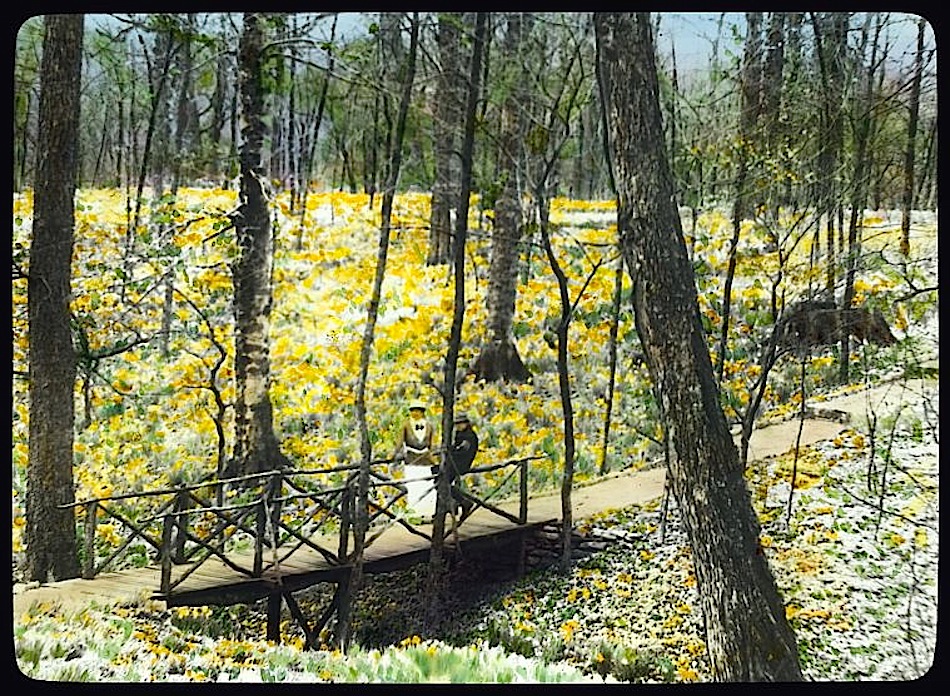
Vintage landscape: Lob’s Wood

Lob's Wood, Ohio, ca. 1920, via Library of Congress“‘Lob’s Wood,’ . . . Perintown (Milford), Ohio. Woodland daffodils,” ca. 1920, a hand-colored lantern slide by Frances Benjamin Johnston, via Library of Congress Prints and Photographs Division.

The 97-acre property pictured above was purchased in 1898 by Carl H. Krippendorf, a Cincinnati businessman who had spent childhood summers in the surrounding area.  He wanted to save the woodland from being turned into a tobacco field.

Krippendorf soon built a house there for his new wife, Mary Greene, and began planting daffodils and other bulbs. They originally called the land Karlsruhe, meaning “Karl’s place of peace” in German. After World War I, the name was changed to Lob’s Wood.  

In 1919, during “Daffodil Days at the Krippendorf Farm at Perintown,” $2,700* was raised for war-devastated France. In one afternoon, they sold 15,000 cut daffodils.

Carl became a friend and correspondent of the garden writer Elizabeth Lawrence.  She wrote about his garden in The Little Bulbs and Lob’s Wood.

 The Krippendorfs lived on the property (eventually 175 acres) for 64 years.  Today the house and woods are part of the Cincinnati Nature Center.

What explains poetry is that life is hard
But better than the alternatives,
The no and the nothing. Look at this light
And color, a splash of brilliant yellow

Punctuating an emerald text. . .

Alicia Ostriker, from “Daffodils

*about $34,000 today.

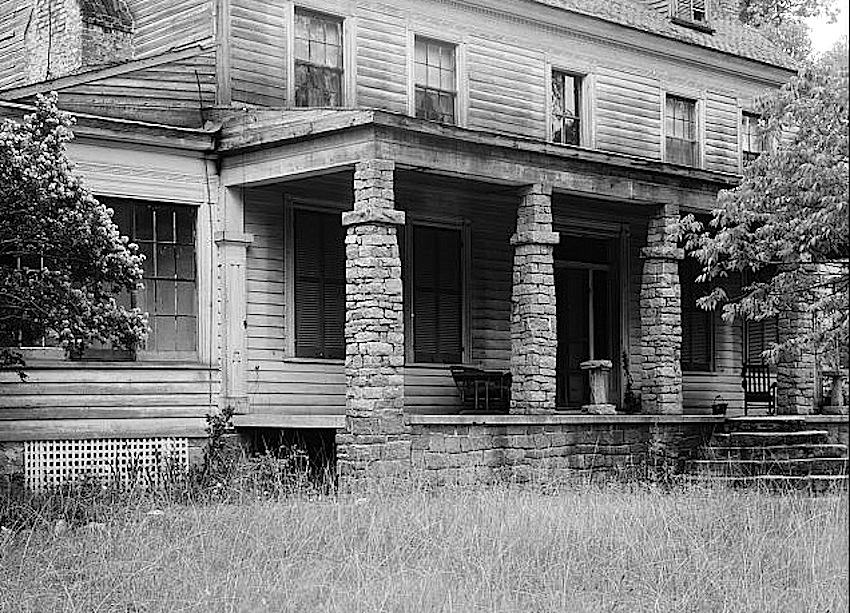
The Sunday porch: Pleasant Hill, N.C.

Pleasant Hill, N.C. F.B. Johnston, Library of Congress

Pleasant Hill, Vance County, North Carolina, 1938, by Frances Benjamin Johnston for the Carnegie Survey of the Architecture of the South via Library of Congress Prints and Photographs Division.

Pleasant Hill,cropped, N.C. F.B. Johnston, Library of Congress
Detail of photo above.

The plantation house, later known as Rivenoak, was built sometime between 1750 and 1780 by Philemon Hawkins, Jr.

A 2011 view of the house is here.  Unfortunately the stone columns are gone.

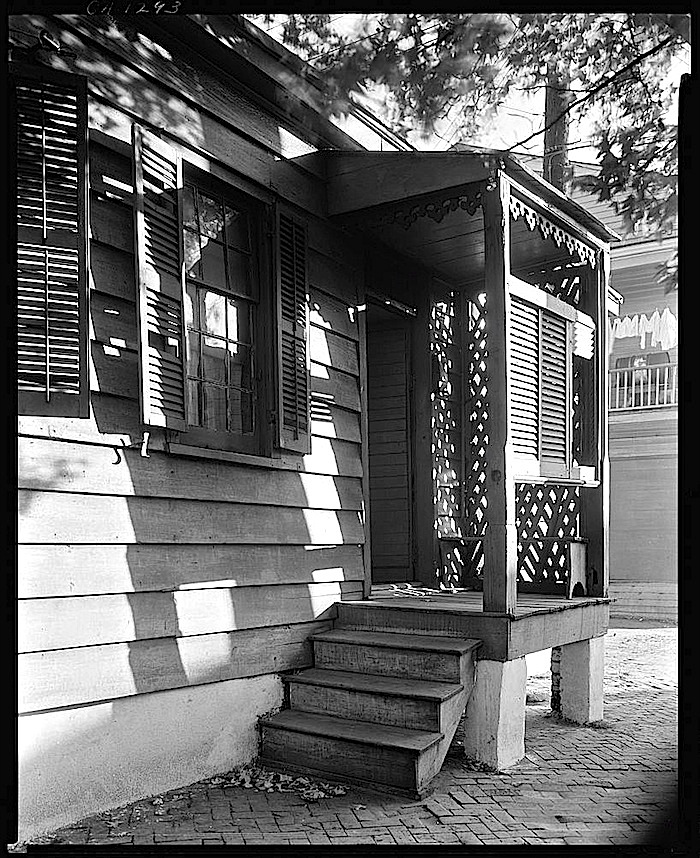
The Sunday porch: Savannah, Ga.

Price Street, F.B. Johnston, via Library of Congress“Price Street corner York Lane,” Savannah, Georgia, 1939 or 1944, by Frances Benjamin Johnston, via Library of Congress Prints and Photographs Division.

The Library of Congress catalogue entry for the image above includes the note: “Once in the ‘Restricted District,’ hence the lattice work” — meaning the house had been a bordello. (That would also explain the panel of shutters across the front.)

Looking at Google Maps street view, a very similar house (built 1828) at one of the four possible corner sites still stands in good condition. Across York Lane from it is a two-story building that was probably there at the time of the photo. There are new condos on the other side of Price Street.

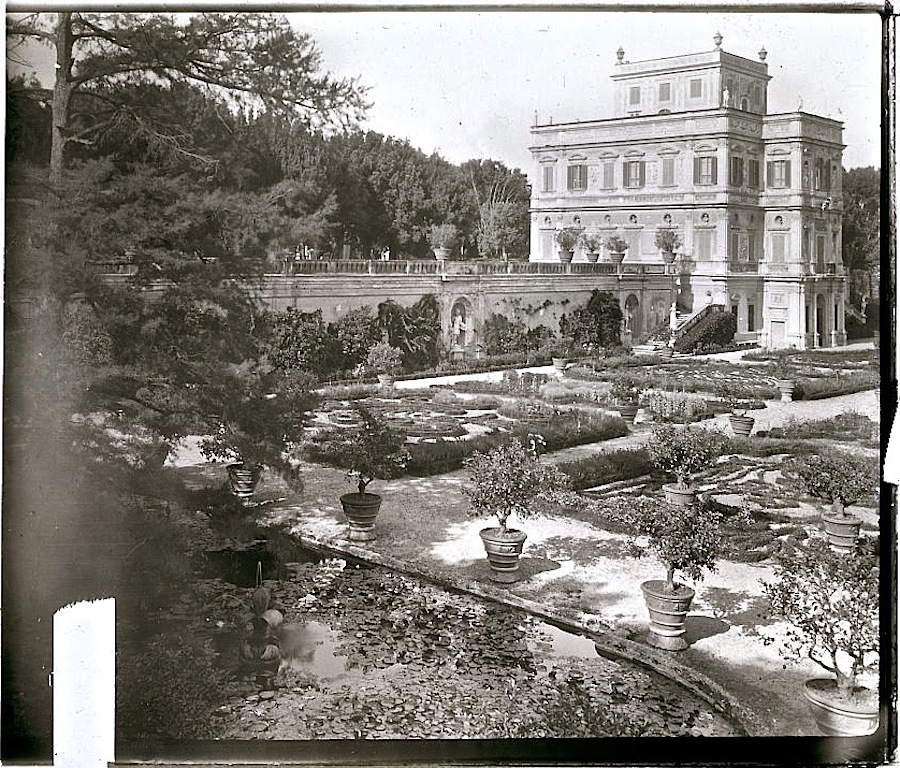
Vintage landscape: Villa Doria Pamphili

Italian villaVilla Doria-Pamphili and parterre in the Monteverde section of Rome, Italy, in the summer of 1925. Photo by Frances Benjamin Johnston via Library of Congress Prints and Photographs Division.

Today, the 17th c. Villa Doria Pamphili is part of the largest landscaped public park in Rome.

Click the photo for a better view. I like the fountain at the bottom on the left.

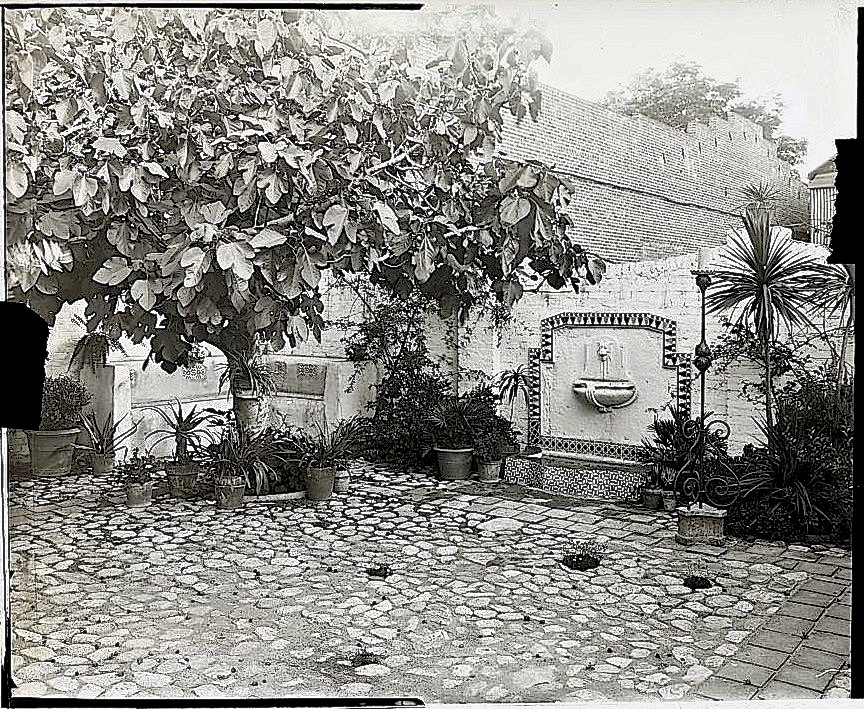
Vintage landscape: Pasadena, Calif.

Vroman's Bookstore, Pasadena, CA, FBJohnston, Library of CongressThe patio at Vroman’s Bookstore, 60 E. Colorado Street, Pasadena, California, Spring 1923, by Frances Benjamin Johnston, via Library of Congress Prints and Photographs Division.

Vroman’s Bookstore was founded in 1894 by Adam Clark Vroman and is still a Pasadena cultural institution, with three locations in the city.

However, the little patio above, with its fig tree and fountain, no longer exists. Vroman’s moved to 695 E. Colorado Street in 1929.

Johnston used this image in her garden and historic house lectures.