The Sunday porch: Williamsboro, N.C.

 “Blooming Hope” (also called “Cedar Walk”), Williamsboro, North Carolina, 1938, by Frances Benjamin Johnston, via Library of Congress Prints and Photographs Division.

I like the way the vines are a little blurry from a sudden gust of wind.

The home may have been built as early as the 1750s by a Hutchins (or possibly Robert) Burton, who called it “Blooming Hope.” He may have operated a boarding school there. It also seems to have served as an academy for young ladies later in the early 1800s, run by the Rev. Henry Patillo. At some point in its first 100 years, there was a suicide in the house (either Burton or Patillo’s son), and it acquired a reputation as haunted. It was torn down in 1967.

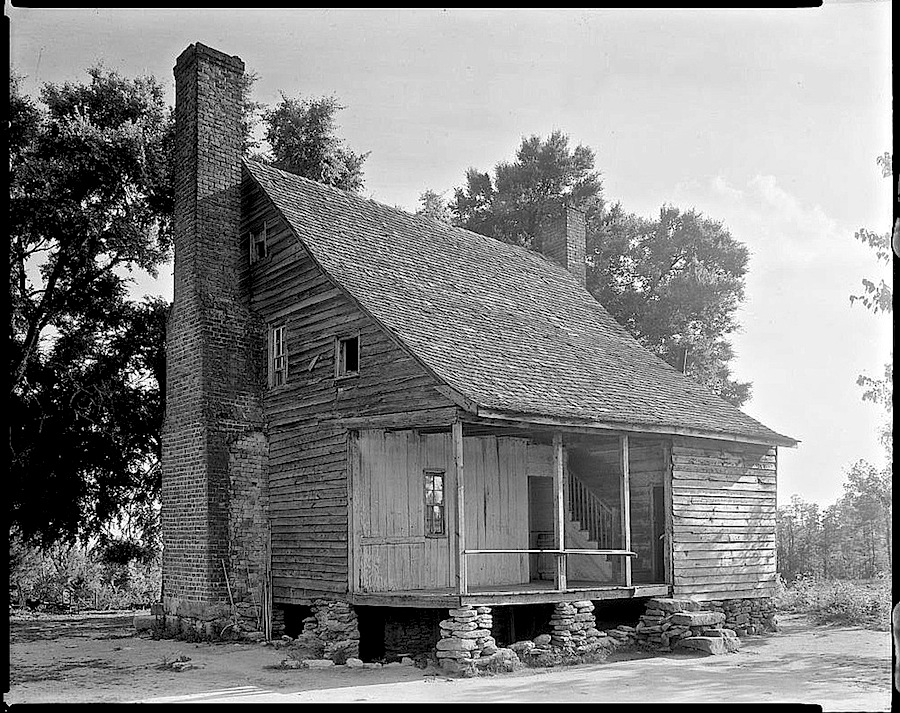
The Sunday porch: Louisburg, North Carolina


“A Peggy Wright Farm,” Louisburg, North Carolina, 1938, by Frances Benjamin Johnston, via Library of Congress Prints and Photographs Division.

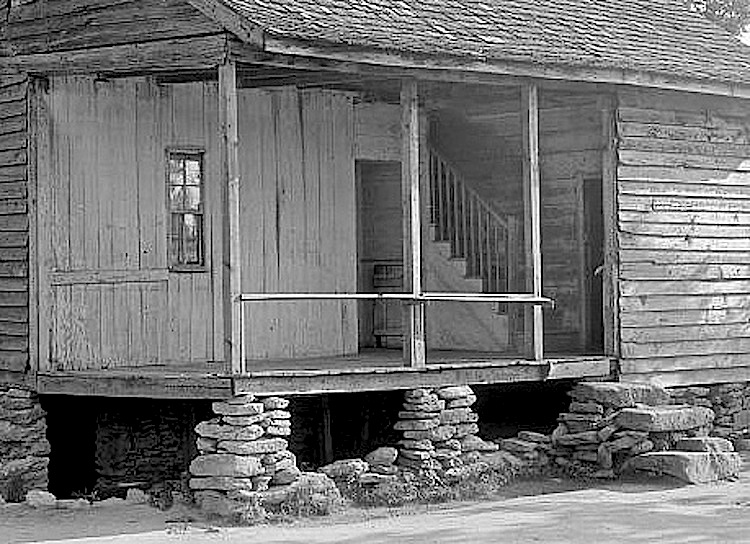
Detail of above photo.

All three Johnston photos of this house are captioned “A Peggy Wright Farm,” so Peggy may have been a woman who owned several properties. (The other two pictures are here and here.)

The Library’s online catalogue notes say that the building dates from 1780 and that this is the place “where Peggy was killed by lightning.”

Mount Vernon

A repeat “Vintage” from 2012. . .

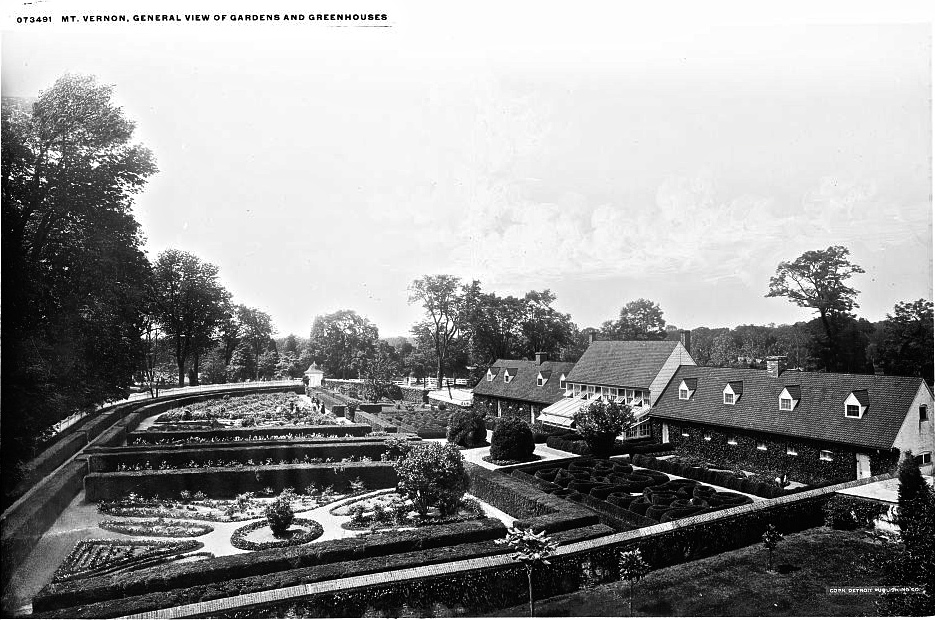
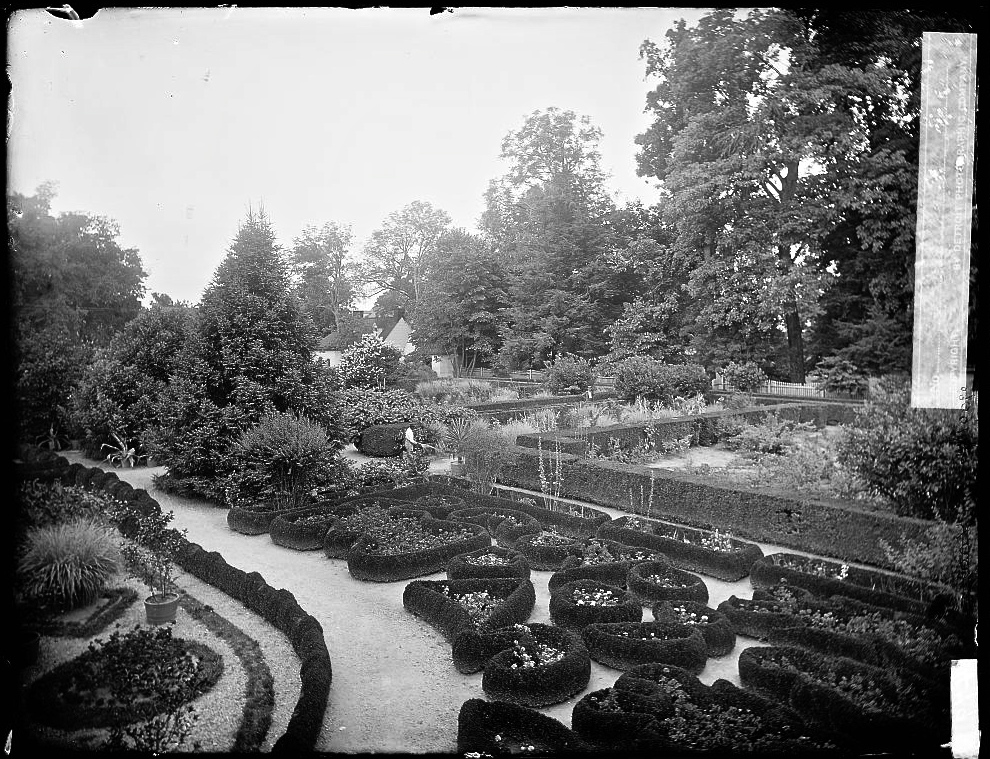
I love this 1902 photograph of the Upper Garden at George Washington’s home, Mount Vernon. It’s so high Colonial Revival.

Early American Gardens has a post this week,  “Mount Vernon after George Washington’s death,” with images from the 19th century.  While looking at them I remembered the picture above and the two below.
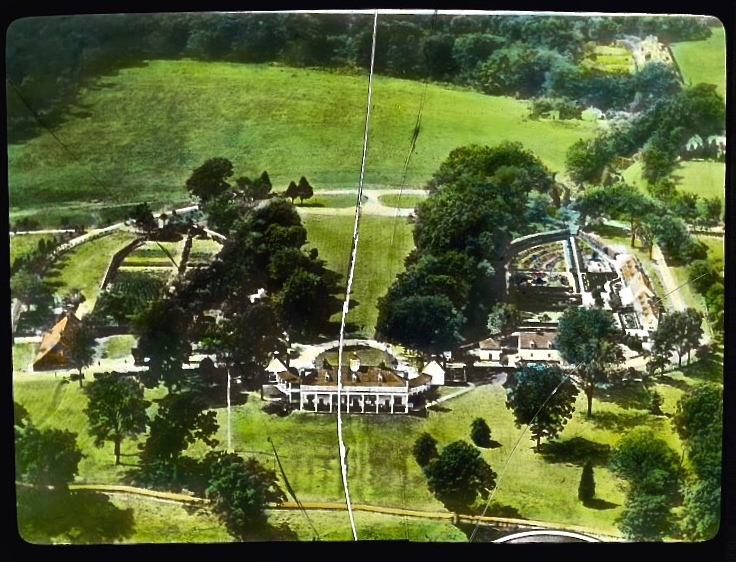
Above is a hand-colored slide from a 1929 aerial photo, part of the lantern slides collection of Frances Benjamin Johnston.  The Upper Garden is on the right side.

And here is a general view (c.1910 – 1920) of the the Upper Garden by the Detroit Publishing Co.  All three images above via the Library of Congress Prints and Photographs Division.

The 20th century photos are pretty, but they don’t accurately represent the Upper Garden of Washington’s time.  In the late 19th century, restorers thought that the boxwood parterres (many filled with hybrid tea roses) were original to Washington’s time, but research in the 1980s found that they were actually planted in the 1860s or 70s (although they may have been rooted from Washington’s boxwood).

The garden was substantially re-worked in 1985, but such is the romantic power of a boxwood hedge that the mid-19th century bushes were largely “kept in place by their own mythology and the mythology they supported of Washington as American royalty,” according to The History Blog, here.

But by the early 2000s, those boxwoods were dying, so the Mount Vernon Ladies’ Association, which owns the estate, decided to make an extensive (six-year) archaeological dig on the site.  This culminated in a “new” (1780s) design in 2011.  The area now holds large open beds of vegetables and flowers.  They are bordered by low boxwood hedges and centered by a 10′ wide gravel walkway.

You can read about the restoration in this Washington Post article, here.  And I really recommend watching this very interesting 30-minute C-Span video about the research and archaeology that informed it.

(There’s more about the garden in 2017 here.)
Nature class

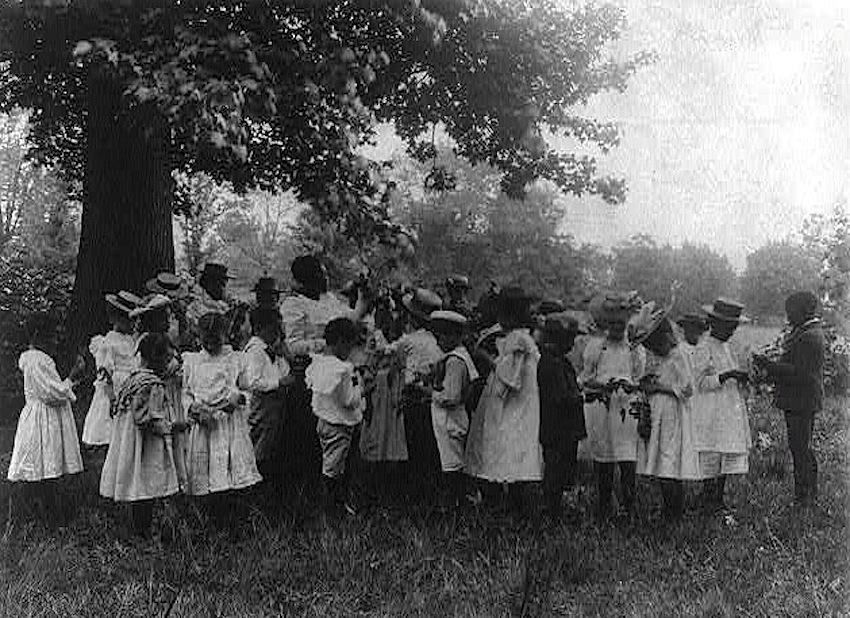
Schoolchildren in nature class, FB Johnston, Library of Congress

Seventh Division schoolchildren and teacher studying leaves out of doors, Washington, D.C., ca. 1899, by Frances Benjamin Johnston via Library of Congress Prints and Photographs Division.
In 1899, Johnston became interested in progressive education and made a photo survey of students at public schools in Washington, D.C.

The Sunday porch: Edgemont

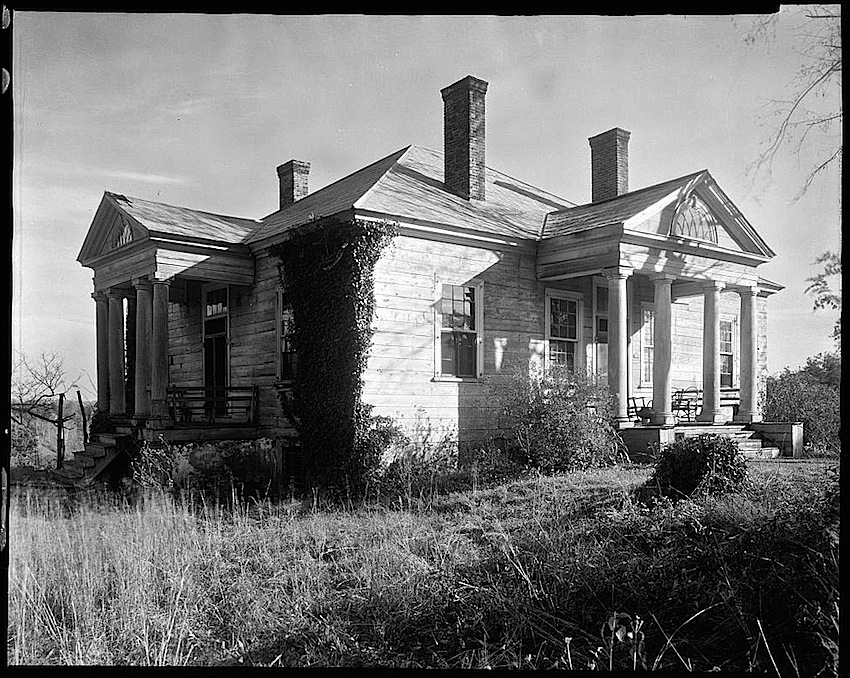
Edgemont, Covesville, VA, Library of CongressEdgemont (or Cocke Farm), Albemarle County, Virginia, 1935, by Frances Benjamin Johnston, via Library of Congress Prints and Photographs Division.
Built ca. 1796 for James Powell Cocke, Edgemont is significant as a very early example of a country residence in the combination Palladian and French manner promulgated by Thomas Jefferson. Although the design of the house has been credited to Jefferson for several decades, precise documentation of the authorship remains yet to be established. The character* of the compact and sophisticated dwelling is uniquely Jeffersonian, however, and exhibits the influence he had on the architecture of his region. . . .

from the 1980 nomination to the National Register of Historic Places

At the time of the photo, only two porticoes of the probable original four still existed. The house was restored and renovated in the late 1930s and 1940s. There are more F.B.J. photos here and 1996 photos here.

* “a formality and classical correctness devoid of monumentality. . .”